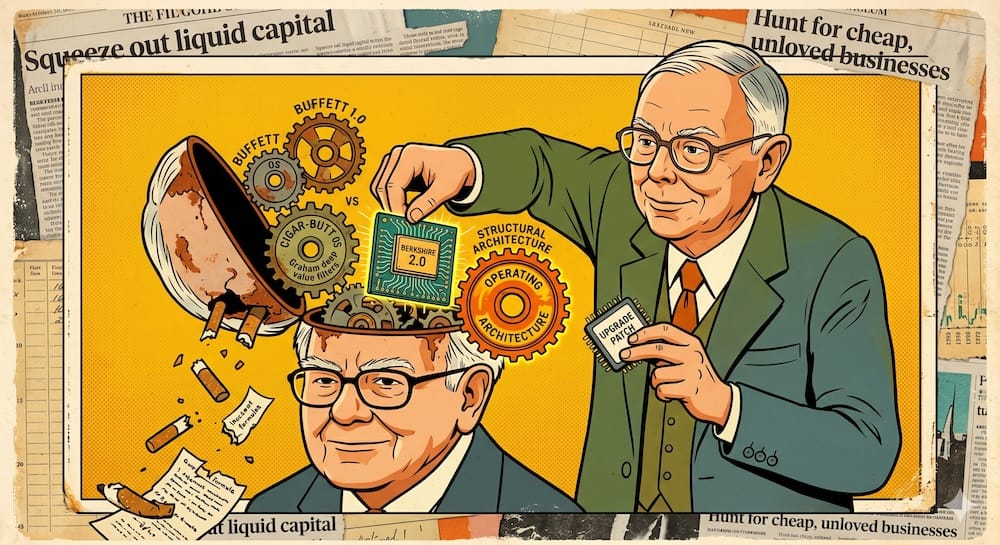
Warren Buffett’s name often brings up ideas of folksy wisdom and a preference for predictable, seemingly boring businesses. But behind the cherry Coke and the Omaha shareholder meetings is a ruthless, highly quantitative understanding of operational mechanics. When you strip away the grandfatherly image, you find an investor obsessed with capital efficiency and the physical realities of how businesses operate globally. I used to assume his process was mostly qualitative, but looking at how he filters structural networks reveals a deeper systematic reality. He views the world as a complex ledger of inputs and outputs, identifying industries equipped with the mechanical advantages necessary to survive macro-level stress tests.
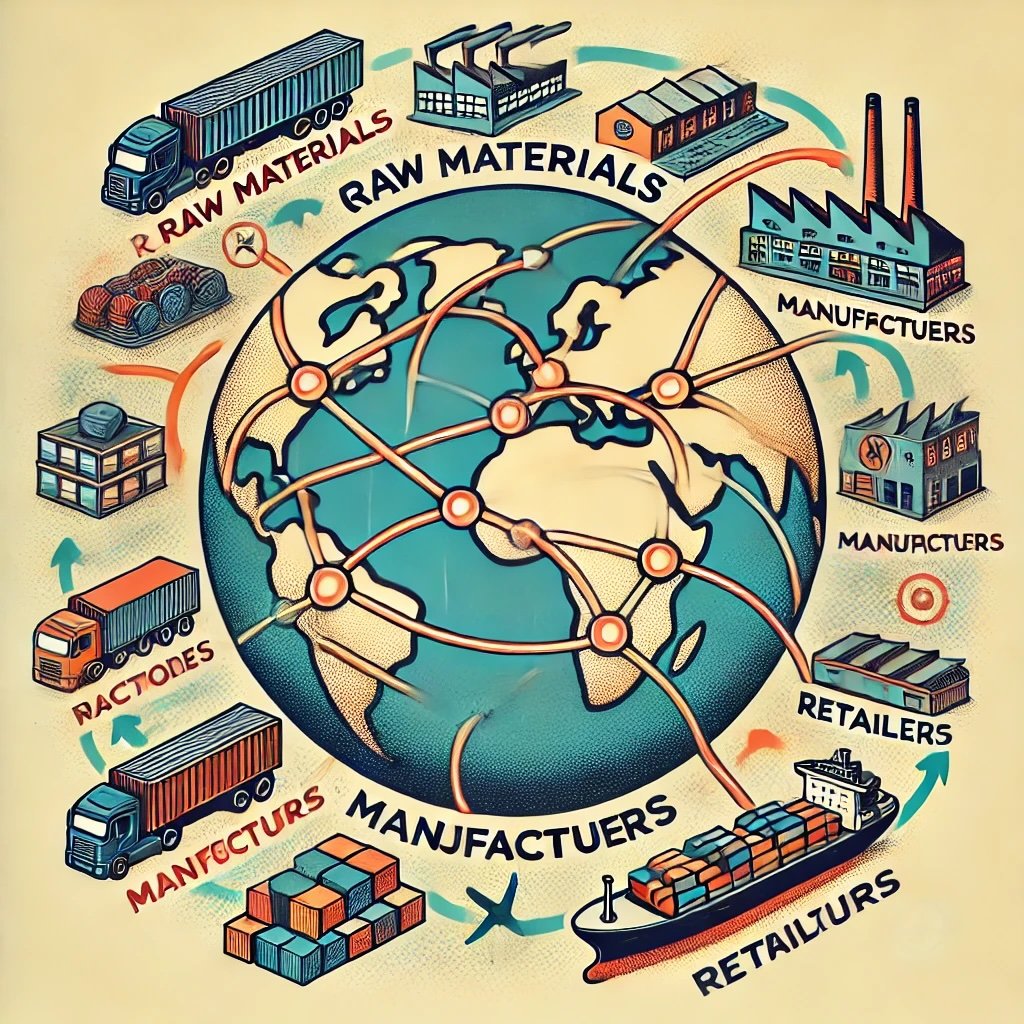
One of the most critical structural components of modern business—often ignored by retail allocators chasing chart patterns, but heavily scrutinized by Berkshire—is the physical supply chain. At a mechanical level, global supply chains are the operational arteries connecting raw materials to assembly lines, and finally to the end consumer. These are highly fragmented, geographically dispersed networks requiring massive capital outlays, involving specialized component suppliers, third-party logistics firms, and retailers. The physical friction within these networks will dictate corporate margin paths, directly influencing everything from the input costs of a localized beverage bottler to the gross margins of a multinational tech giant.
I used to think moats were purely about brand power. Honestly, it took holding a portfolio of theoretically “safe” consumer discretionary stocks through a multi-year logistics squeeze to realize how wrong I was. What gets passed over in basic stock analysis is the structural dependency on global shipping corridors. The behavioral itch to tinker and sell when you see a 20% drawdown driven entirely by shipping container shortages is intense. Why should we study Warren Buffett’s perspective on supply chains? Because he understands the math of survival. He has survived multiple market cycles not by predicting the future, but by buying capital-efficient architectures that can absorb macro variance. He looks at supply network fragility the same way a quant looks at tracking error: as a measurable risk that must be compensated. If a company relies on a single point of failure in a volatile region, Buffett walks away. Period.
Furthermore, Buffett has consistently allocated heavy capital to industries entirely defined by their logistical frameworks. Look at his 2010 acquisition of Burlington Northern Santa Fe (BNSF) via Berkshire Hathaway. BNSF is a hard-asset inflation pass-through mechanism. It controls a massive physical footprint for moving energy, agriculture, and consumer goods. What cracks me up is how commentators call rails a “dinosaur” industry while ignoring that they represent the cheapest per-ton-mile freight option across the continent. Then look at his massive concentration in Apple. Apple isn’t just a consumer tech brand; it is arguably the most ruthless, capital-efficient supply chain operator on the planet, capable of squeezing negative cash conversion cycles out of its vendors. The structural difference matters far more than the product.
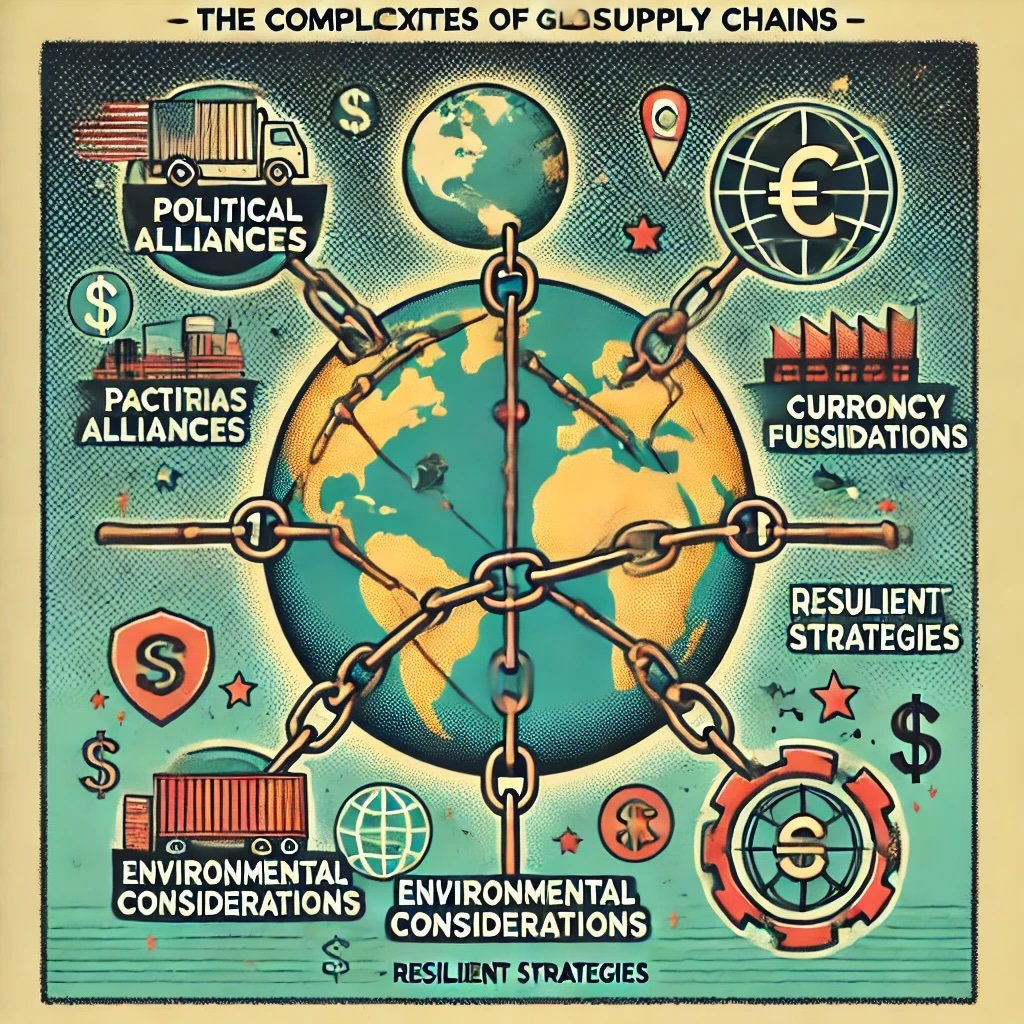
However, the mechanics of these networks extend far beyond the movement of physical boxes. They are highly sensitive to currency drag, localized labor regulations, and geopolitical shifts. Outsourcing to lower the cost of goods sold (COGS) works beautifully on a spreadsheet until a tail-risk event hits. When the system breaks, the implementation gap between a clean theoretical business model and the live experience becomes violently apparent. In those moments of maximum friction, companies with highly engineered, decentralized supply strategies can maintain their pricing power, while competitors get crushed by expedite costs and spot-market freight rates.
When management deploys free cash flow into redundant logistics layers instead of chasing high-multiple share buybacks at market peaks, the math reflects a deliberate choice to buy structural survival at the expense of temporary metrics. Conversely, if a firm has stripped its inventory to the bone to artificially juice quarterly return on invested capital (ROIC), but leaves itself exposed to a single supplier, the math suggests that margin profile is temporary. A clean backtest assumes frictionless delivery; real markets do not.
Understanding Global Supply Chains in Buffett’s Context
What Are Global Supply Chains?
Break it down mechanically. Consider a modern piece of hardware. The silicon is fabricated in Taiwan, the optics are engineered in Germany, the raw battery materials are extracted in South America, final assembly occurs in Vietnam, and the distribution logistics span North America. This isn’t just trade; it’s an intensely synchronized flow of working capital. It requires suppliers, freight forwarders, and distributors to lock capital into inventory at different stages.
The pursuit of maximum capital efficiency over the last thirty years drove companies to adopt just-in-time (JIT) manufacturing. It optimized balance sheets by minimizing holding costs. But the math doesn’t lie: when you optimize strictly for efficiency, you sacrifice resilience. While hyper-specialization lowers consumer prices, it dramatically tightens the variance tolerance of the system. A localized disruption now cascades mathematically through the entire global network. Everyone loves a company with low inventory days because it boosts short-term ROIC. Buffett, however, prefers companies that carry the strategic buffer. He optimizes for survival, not the next quarter.
Why Supply Chains Matter to Investors
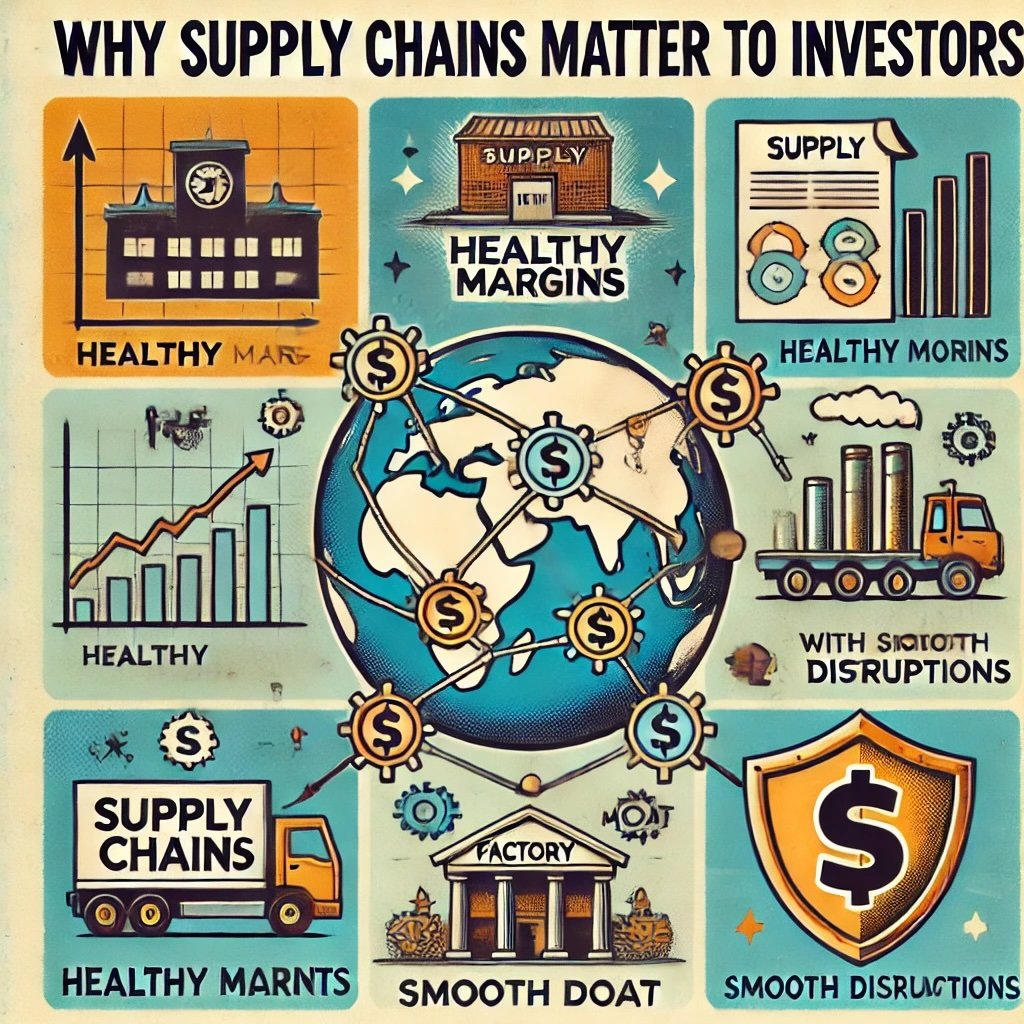
If you’re a DIY investor building a portfolio, logistics might seem like boring back-office overhead. I’ve been guilty of ignoring it myself, focusing entirely on P/E ratios and historical backtests. But the backtest doesn’t show you the structural fragility hidden in the supply chain. If a company has diversified sourcing and multiple freight contracts, it absorbs macro shocks. If it operates with rigid, fragile logistics, a single regional lockdown results in empty shelves, destroyed free cash flow, and permanent loss of market share.
If a business sources inputs with iron-clad supplier agreements, hedges its commodity exposures, and minimizes its cash conversion cycle, it generates internal liquidity. When supply chain friction rises, operating margins collapse for weak players. We’ve all seen the specific psychological discomfort of holding a fundamentally sound stock while temporary shipping delays cause massive earnings misses. The market sells off the asset, and you have to decide if the moat is permanently broken or just temporarily clogged.
For Buffett, analyzing logistics is analyzing the durability of the moat. Companies that control their supply networks don’t just survive disruptions; they use their operational scale to suffocate competitors who lack the working capital to secure freight space. Predictable operating margins require predictable operations. The mechanical trade-off means paying for redundancy up front to prevent catastrophic failure down the line.
The Buffett Perspective
We know Warren Buffett famously invests inside his circle of competence. He wants to understand exactly how a dollar of capital is deployed and returned. As Charlie Munger influenced the shift toward higher-quality, asset-light compounders like Apple, the requirement to understand global logistics only deepened. If Buffett cannot physically map how a company converts raw inputs into cash-generating consumer products—and verify the durability of those steps—he passes. It’s a completely different animal when your asset base relies on cross-border physical clearance versus local IP generation.
He views these networks as mechanisms for sustaining pricing power. Look at Coca-Cola. The genius of the Coke model isn’t just the syrup recipe; it’s the franchise bottling network. By localizing the heavy, capital-intensive bottling and distribution process across the globe, Coke radically reduces its exposure to cross-border freight costs and foreign exchange translation drag. The parent company takes the royalty, the local bottler takes the capital intensity. That structural advantage is what allows you to hold a position for thirty years without getting shaken out by temporary transportation spikes.
Similarly, BNSF is a foundational asset. The railroad doesn’t deal with microchip shortages; it moves the physical volume of the continent. It is a toll bridge on the U.S. economy. When inflation spikes, the railroad adjusts pricing. When supply chains nearshore to Mexico or the US, the freight still has to move. The scale required to build a competing rail network is mathematically impossible today, giving Buffett the ultimate margin of safety. Yet, the live tracking error becomes uncomfortable when holding highly cyclical transport assets through a recession as volumes dry up. It tests your behavioral discipline.
Buffett plans for variance. He knows that macro models forecasting perpetual stability are fundamentally flawed. The realization that a fund’s marketing often glosses over severe logistical vulnerabilities found deep in the 10-K is a harsh lesson for DIY investors. Buffett buys businesses that carry the working capital and inventory buffers necessary to survive the ugly years, rather than those optimized solely for the best-case scenario.
Core Principles Buffett Applies to Supply Chain-Related Investments
So how does Warren Buffett filter his universe of thousands of publicly traded equities down to a concentrated handful of logistical powerhouses? He applies rigid factor filters centered on competitive insulation, capital allocation discipline, and structural resilience.
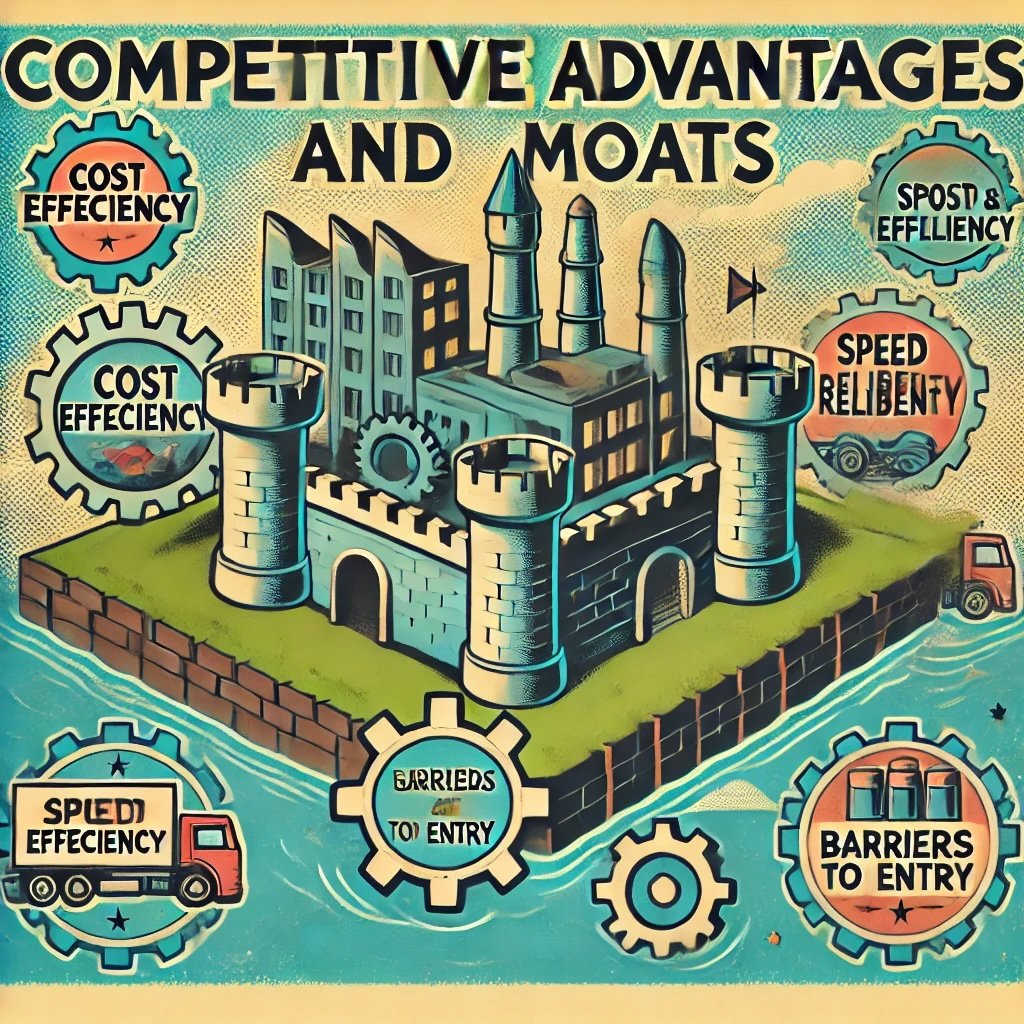
Competitive Advantages and Moats
A moat, in operational terms, is a structural barrier that prevents capital from eroding your returns. In supply chains, this translates to specific quantifiable metrics:
- Procurement Scale: The ability to lock in multi-year commodity pricing below spot rates because your order volume dictates the market.
- Logistical Density: Operating a distribution footprint so tight that the per-unit freight cost fundamentally undercuts any new entrant.
- High Switching Costs: Integrating so deeply with suppliers’ ERP systems that switching vendors requires massive capital expenditure.
When these variables compound, you get pricing power. If a competitor tries to replicate Coca-Cola’s local bottling franchise network today, the required capital expenditure and timeline to profitability would destroy their balance sheet.
Long-Term Thinking
The behavioral itch to demand quarterly earnings beats destroys long-term compounding. A CEO focused on the next 90 days will strip inventory buffers to boost free cash flow, leaving the firm violently exposed to the next macro shock. Buffett rewards management teams that absorb short-term margin compression to secure long-term supplier stability, dual-source critical components, and invest in physical infrastructure.
This is the essence of risk management. By intentionally carrying slight inefficiencies today to prevent catastrophic operational failures tomorrow, a company fundamentally alters its return distribution. Over decades, that reduces volatility and protects the downside capture ratio of the stock. Wow. What an idea: optimizing for durability over speed.
Management Quality
Operational leverage cuts both ways. In a crisis, bad management destroys capital faster than bad products. Buffett seeks operators who understand return on invested capital natively, believing that ethical, disciplined capital allocators are the ultimate risk hedge. The structural case for this relies on conservative working capital formulas.
You see this clearly when looking on inventory management. The frustration of watching a company write down millions in obsolete inventory because management misread demand is a classic DIY allocator pain point. Buffett looks for teams that exercise extreme discipline regarding working capital, actively identifying single-node failures in their supply lines, and using cash flow to engineer redundancies rather than juice temporary return metrics.
Geopolitical and Economic Considerations
Buffett does not trade macro geopolitics. However, he heavily audits geographic concentration risk. If a firm’s entire COGS profile is dependent on a single jurisdiction with volatile trade relations, the stock carries uncompensated risk. The math on a 30% tariff applied to a company with 10% operating margins is fatal.
Currency mismatch is another silent killer. If a company generates revenue in depreciating local currencies but must purchase raw components in U.S. Dollars, the margin compression is brutal. The lived experience of holding a stock through massive FX headwinds teaches you quickly to value companies that match their operational costs to their revenue currencies. The math doesn’t lie.
Resilience Over Perfection
Optimization is fragile; resilience is durable. Backtests assume frictionless execution, but physical markets are messy. Buffett accepts that natural disasters and labor strikes will occur. He isn’t looking for a perfect logistical chart; he is looking for a balance sheet and a supply architecture thick enough to absorb the hit, take market share while weaker competitors bleed out, and resume compounding.
Case Studies: Buffett’s Investments and Supply Chain Strategies
Burlington Northern Santa Fe (BNSF)
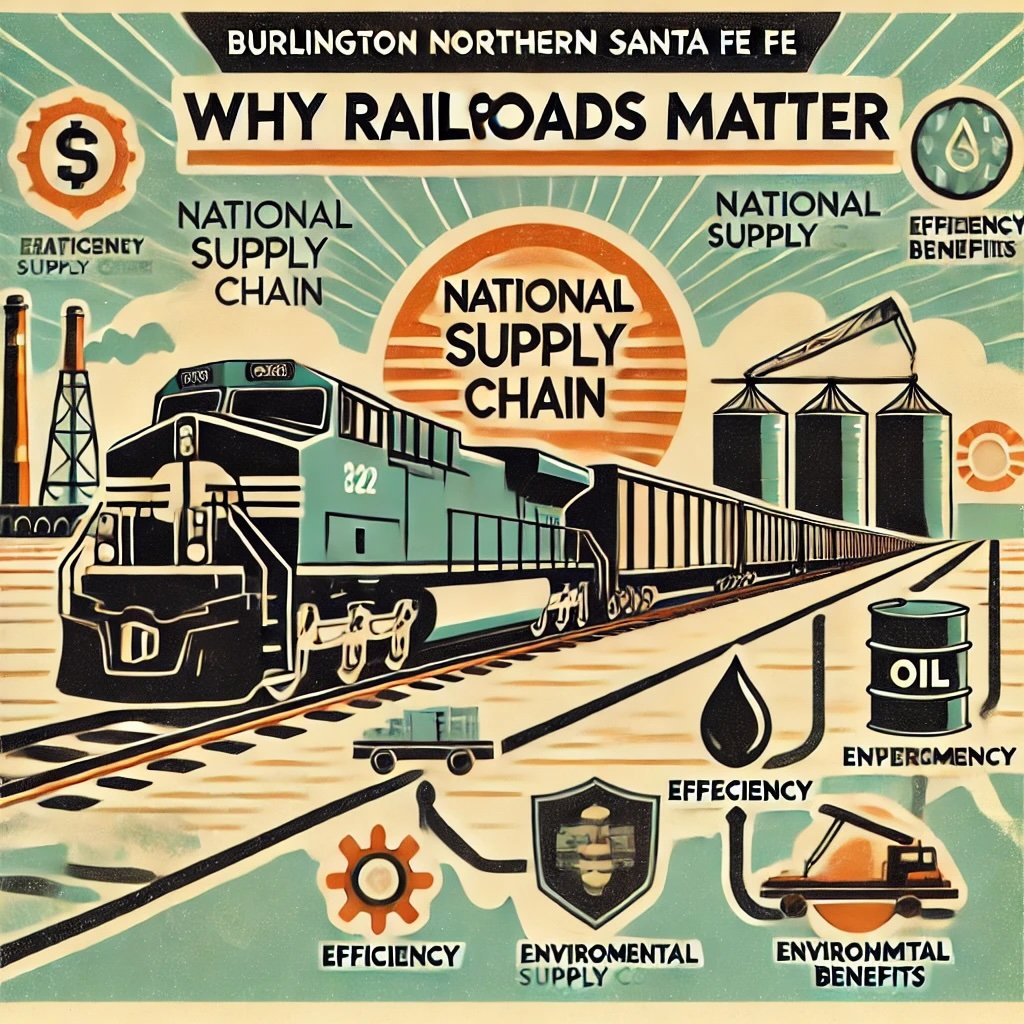
Why Railroads Matter
When Berkshire Hathaway closed the BNSF deal in 2010, the financial media mocked the move as a legacy play in a digital world. They missed the structural math. Railroads are apex assets in heavy logistics. They move massive tonnage—coal, grain, intermodal containers—at a cost-per-ton-mile that trucking physically cannot match. The physical moats are clear.
Supply Chain Integration
BNSF isn’t just participating in the supply chain; it is the underlying physical layer. The replacement cost of BNSF’s track network and right-of-ways is functionally infinite. You cannot permit and build a competing transcontinental railroad today. It is a pure monopoly on specific freight corridors. But here is the friction no one talks about: railroads are incredibly capital intensive. They require billions annually just in maintenance capex to lay new track and maintain locomotives . You are trading capital efficiency for permanence. Yikes.
Buffett’s Long-Term Vision
By securing BNSF, Buffett bought a perpetual call option on U.S. GDP. It requires heavy maintenance capital expenditure, but the cash flow it kicks off is deeply protected by its impenetrable physical moat.
Apple
A Tech Giant with a Global Web
Apple is a logistics firm disguised as a consumer hardware company. The precision required to source silicon, displays, and custom batteries, funnel them into massive Asian assembly hubs, and execute a synchronized global retail launch is staggering. It requires billions in advance purchase commitments to secure manufacturing capacity, essentially locking competitors out of the supply base.
Supply Chain Mastery
Apple’s operational leverage is a masterclass. They manage a strict negative cash conversion cycle where Days Payable Outstanding (DPO) significantly exceeds the sum of Days Inventory Outstanding (DIO) and Days Sales Outstanding (DSO). This allows Apple to use interest-free supplier credit to fund operational capital requirements and fuel massive share repurchases. Buffett saw past the “technology” label and recognized an unparalleled consumer franchise protected by insurmountable operational scale.
Risk Management
The tracking error pain when an alternative sleeve underperforms the S&P 500 is real, and single-stock concentration risk is a known reality with Apple’s historical reliance on Asian assembly. However, Apple’s massive cash buffer and efforts to distribute manufacturing nodes into alternative regions demonstrate the exact kind of proactive capital allocation Buffett demands to mitigate that geographic risk. The transition isn’t frictionless—rebuilding logistics networks eats into margins—but it secures the asset’s duration.
Coca-Cola and Consumer Staples
Global Distribution
Coke operates on an inverted model compared to Apple. The system leverages a stark structural bifurcation: the parent company retains the high-margin, asset-light intellectual property of concentrate production while segregating capital-intensive logistics, heavy truck fleets, and regional labor liabilities onto external local bottling partners.
Brand Strength and Logistics
This structure dramatically reduces the parent company’s capital intensity. When fuel prices spike or aluminum costs surge, the local bottler absorbs the immediate logistical friction. Coke’s pricing power allows it to gently raise syrup prices, ensuring the parent company’s margins remain pristine even in inflationary environments.
Buffett’s Faith
Buffett has repeatedly noted the simplicity of this cash flow machine. The volume growth might be slow, but the predictability of the margin profile makes it an anchor asset in the portfolio, stabilizing the ship when high-beta tech holdings experience violent drawdowns.
Utilities and Energy Investments
Berkshire Hathaway Energy
Berkshire Hathaway Energy (BHE) represents the raw infrastructure required to power the rest of the economy’s supply chains. The “supply chain” of electricity—generation, transmission, and distribution—is a highly defensive asset class.
Strategic Control
You cannot offshore electricity demand easily. By controlling regulated utility monopolies and interstate gas pipelines, BHE locks in guaranteed rates of return on its capital expenditures. This is boring, utility-grade math. The implementation friction here is regulatory: Public Utility Commissions cap your Return on Equity (ROE), meaning you never get tech-like upside. But it produces exactly the kind of highly reliable, non-correlated yield that allows Berkshire to fund aggressive acquisitions elsewhere.
Resilience and Regulation
There is a specific behavioral comfort in owning assets that people are legally required to pay for regardless of the macro environment. While tech multiples compress and expand violently, BHE slowly grinds out steady returns, absorbing regulatory friction through sheer scale and competent lobbying. That’s just me, but I prefer structural certainty when systems get tight.
Challenges and Risks in Global Supply Chains
No model is bulletproof. The implementation gap between a pristine backtest and reality often violently exposes supply chain fragilities. As a DIY investor, understanding these failure nodes helps you avoid catching falling knives during market sell-offs.
Geopolitical Instability
Trade Wars and Sanctions
Tariffs act as an immediate, un-modeled tax on gross margins. When trade routes are abruptly closed by political decree, companies with rigid, single-country sourcing see their COGS explode overnight. Buffett monitors these macro factors to ensure his holdings possess the pricing power necessary to pass these sudden exogenous costs onto the consumer without destroying demand. If a company can’t pass the cost on, you are the one paying the tariff out of your returns.
Regional Conflicts
Kinetic conflicts destroy physical infrastructure and reroute global shipping lanes, causing freight rates to spike. The physical anxiety of tracking bid-ask spreads on alternative ETFs during a liquidity crunch is similar to a corporate treasurer watching container rates jump 400%. If a company lacks diversified routing options, its free cash flow will bleed out on the spot market. The mechanical trade-off means carrying higher insurance drags or structural overhead.
Disruptions from Pandemics and Natural Disasters
COVID-19 as a Lesson
The pandemic was the ultimate stress test for just-in-time manufacturing. The total collapse of global logistics proved that inventory is not always a liability; it can be a critical operational buffer. Companies prioritizing financial engineering over physical resilience were utterly paralyzed. Black swan events are an inevitable reality of the math, and Buffett only holds teams that explicitly capitalize their balance sheets to survive them.
Natural Catastrophes
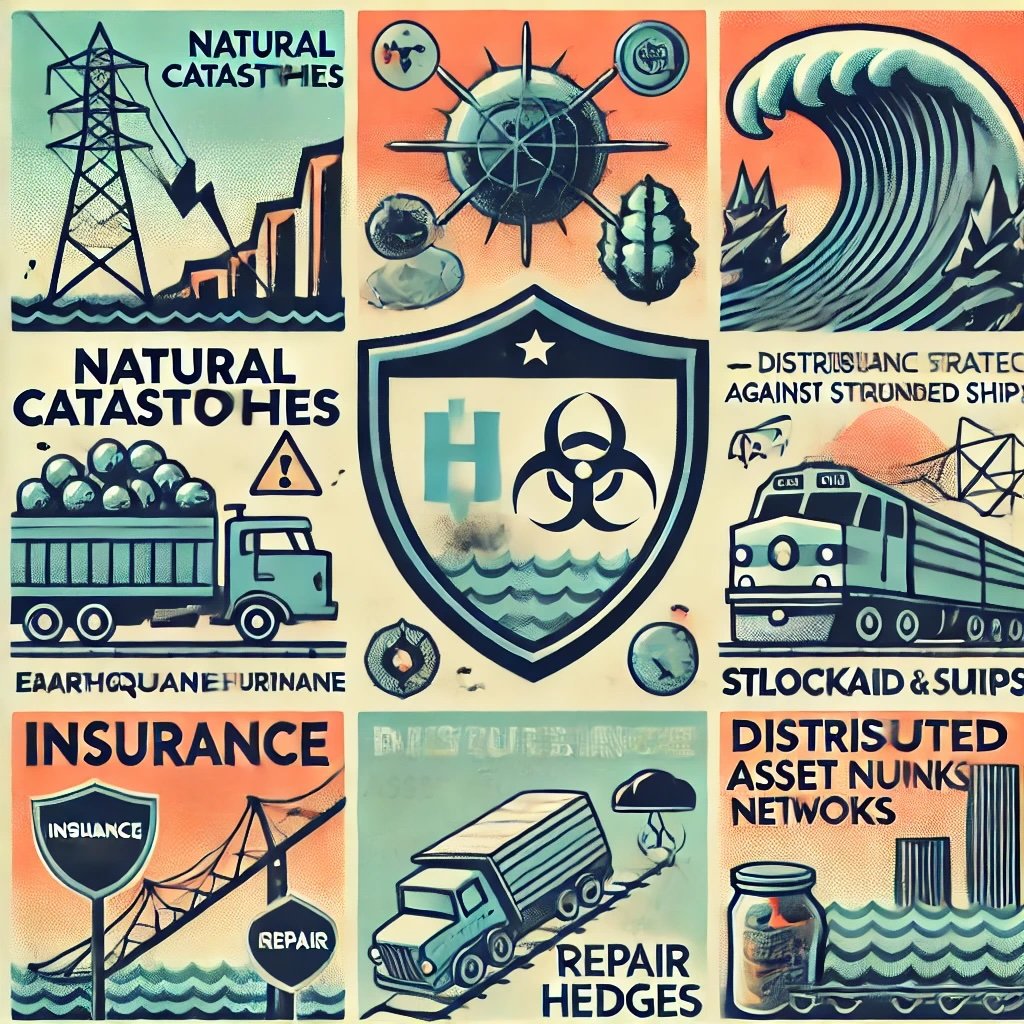
You can’t negotiate with a hurricane that destroys a primary semiconductor fabrication plant. Single-point failure risk tied to natural geography is an uncompensated variable. Strong operators carry heavy business interruption insurance and distribute production facilities across multiple tectonic and meteorological zones to flatten the risk curve.
Increasing Costs and Inflation
Commodity Price Swings
Input cost volatility destroys forward earnings visibility. If a company takes the raw price of copper or oil directly to the chin without hedging programs or pricing power, its stock price will become violently correlated to that commodity. That is uncompensated beta. Independent allocators looking for pure commodity exposure often evaluate trend-following managed futures frameworks, as holding an unhedged manufacturer introduces cross-sectional operational risks that complicate standard equity factor profiles.
Labor Costs and Logistics
Wage inflation and union negotiations at major ports can throttle a supply chain in days. Relocating a factory footprint to chase cheaper labor is an incredibly capital-intensive process that takes years. Buffett requires operators who structurally design their businesses to require less labor per unit of output over time, or who possess such strong gross margins that wage hikes are mathematically immaterial.
Technological Disruptions
Automation and AI
Capex spent on warehouse automation and predictive routing software isn’t a luxury; it is the cost of entry for modern logistics networks. A management team that starves its supply chain of technological investment to prop up a quarterly dividend will inevitably be crushed by an operator running a highly automated, data-driven fulfillment network. The cash drag of modernizing software infrastructure can look ugly during integration phases.
Blockchain and Digitized Supply Chains
While the crypto hype is mostly noise, the fundamental math of a verified, distributed ledger for tracking bills of lading and port customs is highly efficient. Buffett won’t buy a stock because it uses trendy buzzwords, but he absolutely values any mechanical process that mathematically permanently reduces a company’s cash conversion cycle and eliminates inventory shrinkage.
Future Trends and Buffett’s Likely Approach
Capital flows to where it is treated best, and right now, capital is aggressively restructuring the map. As a DIY investor mapping out portfolio architecture for the next decade, understanding these macro shifts is mandatory for avoiding dead money blocks.
Nearshoring and Regionalization
Moving Closer to End Markets
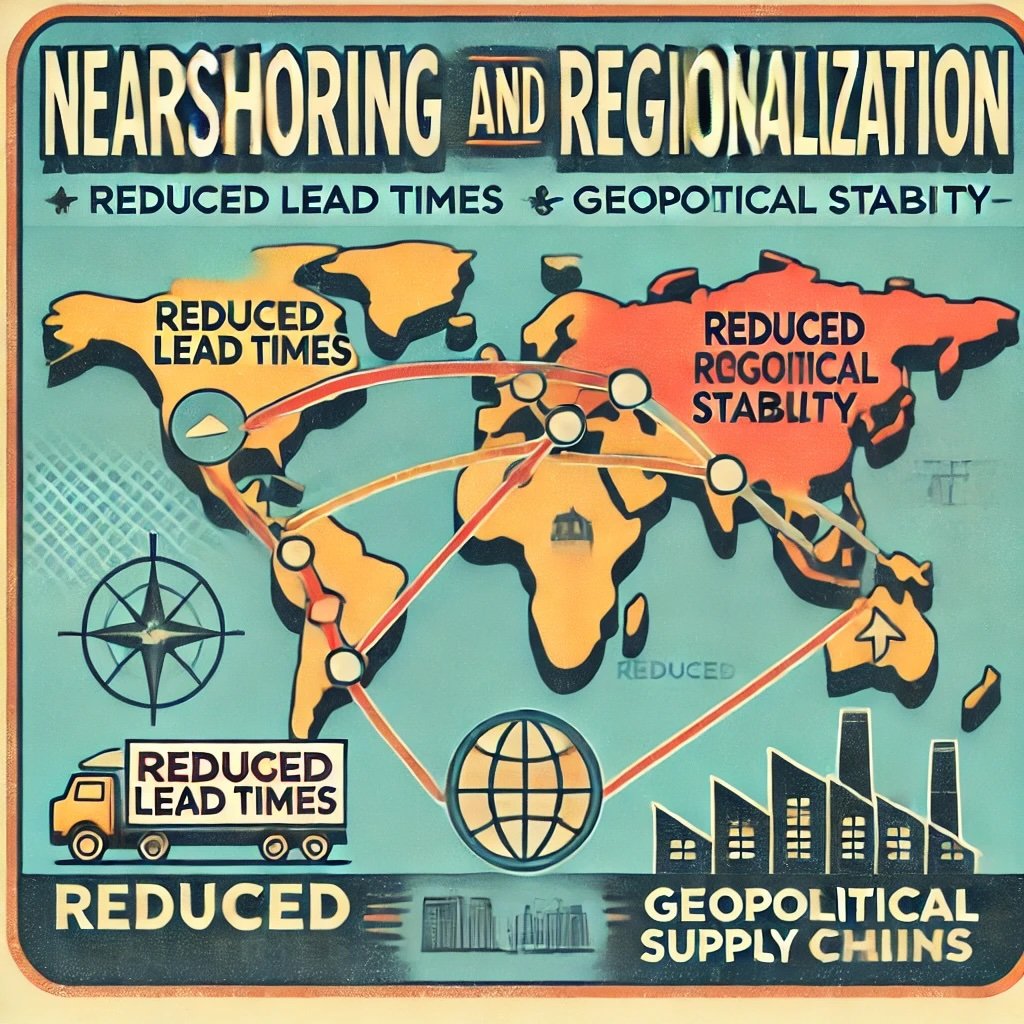
The massive unwinding of hyper-globalization is resulting in structural nearshoring. Moving production closer to the final consumer significantly lowers lead times and removes trans-oceanic freight risk. However, the execution is brutal. It looks clean on a backtest, but physically moving a factory from overseas to North America is an ugly, capital-intensive lived experience that will compress margins in the short term.
Buffett’s Take
Buffett evaluates this purely through return on invested capital metrics over extended horizons. Yes, regionalization improves resilience, but building redundant factories destroys short-term free cash flow. He will look for the secondary beneficiaries of this trend: the domestic industrial real estate REITs, the North American rail networks, and the localized energy grids that will power these new key consumer markets.
Digitization of Supply Chains
Real-Time Monitoring
The integration of IoT sensors allows for hyper-accurate tracking of inventory velocity. When a company knows exactly where its capital is trapped in the supply line, it can dramatically reduce its required safety stock. This permanently frees up working capital on the balance sheet, altering the net return landscape.
Buffett’s Likely Stance
He demands evidence of sustained ROI over tech marketing claims. If a new ERP system demonstrably drives gross margin expansion and tightens the cash conversion cycle over a three-year rolling period, it strengthens the operational moat. If it’s just a vanity capex project, it’s a drag on shareholder yield.
Buffett’s Likely Strategies for Future Investments
Industries Poised for Growth
As nearshoring accelerates, the volume requirements on domestic infrastructure will explode. I expect his focus to remain heavy on hard assets that cannot be replicated easily—Class I railroads, massive utility grids, and established domestic trucking/logistics operators that serve as the unavoidable tollbooths of North American commerce.
Consolidation and Infrastructure Plays
Logistics is a scale game. As smaller players get squeezed by rising labor and tech costs, the mega-cap integrators will roll them up. Buffett thrives on providing the capital for these massive, industry-consolidating acquisitions, locking in dominant market shares in highly fragmented transportation sectors.
The Apple Factor
The concentration in Apple proves Buffett is completely willing to back a technology company if its operational execution is flawless. If another mega-cap firm can demonstrate a similar ability to structurally dominate its vendors, pre-purchase critical global supply, and extract negative working capital from the market, it fits the exact mechanical criteria he looks for in a compounder.
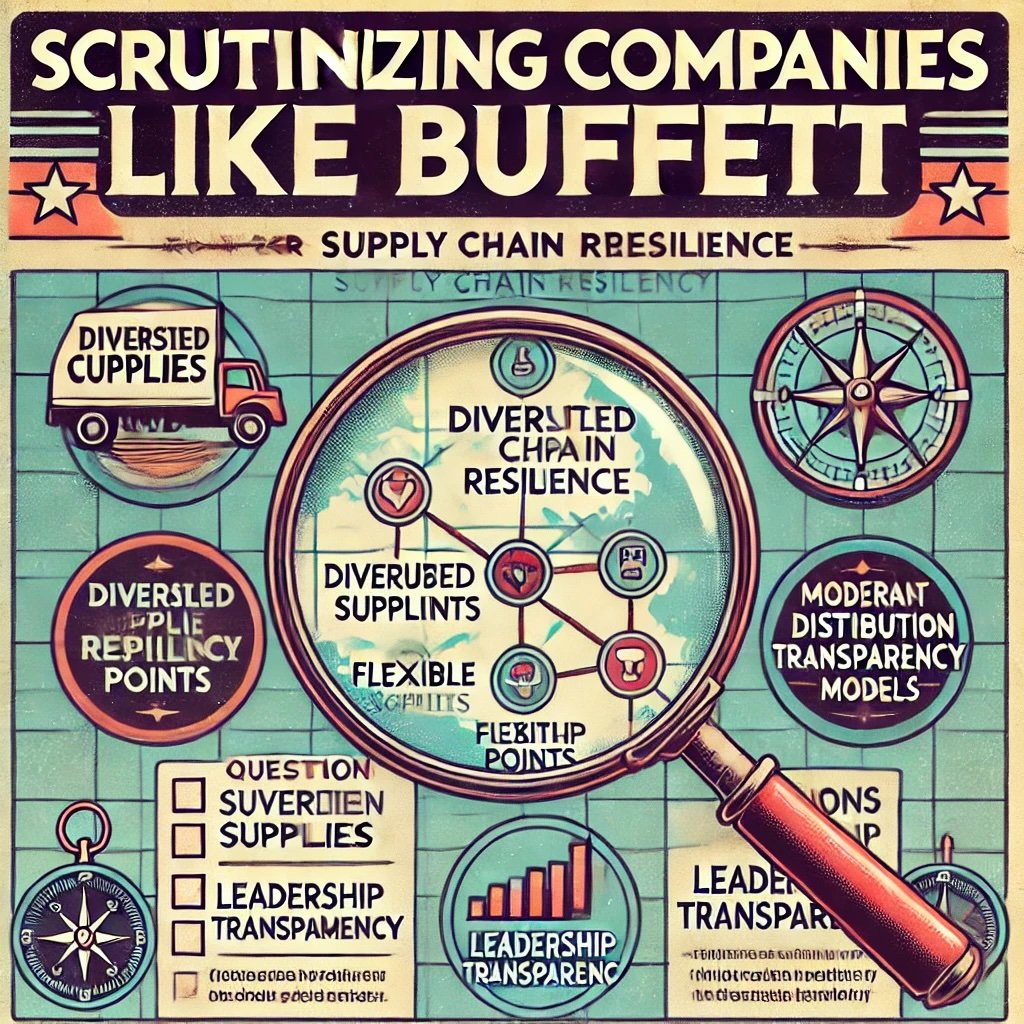
How Warren Buffett Views Global Supply Chains With Investments — 12-Question FAQ
How central are global supply chains to Buffett’s investment lens?
Mechanically critical. He calculates if a network supports durable margins and predictable cash flows. If a company can absorb supply friction without bleeding cash, he views it as a structurally defendable moat.
What supply-chain traits map to a Buffett-style “moat”?
Three operational variables: cost advantage at scale, speed/reliability of delivery, and heavy barriers to replication (like massive capital expenditure requirements or exclusive supplier lock-ins). This protects pricing power.
Why did Berkshire buy BNSF if Buffett prefers “simple” businesses?
Rail is mechanically simple but vital; it is the physical arterial network of the economy. BNSF provides a tollbooth on the backbone of countless supply chains, providing an inflation-resilient mechanism for pure cash generation.
How does he square Apple (complex, global) with his “circle of competence”?
He analyzes Apple as a high-margin consumer-ecosystem with extraordinary operations. Apple uses its massive cash pile to fund pre-buys that de-risk launches and lock competitors out of tier-one component access.
What does Buffett look for in consumer staples’ supply chains?
Heavy reliance on local production + local partners to eliminate cross-border friction; massive procurement scale; and intense distribution density to crush per-unit logistical overhead and secure dominant retail shelf space.
How does he judge management through a supply-chain lens?
By measuring their optionality (redundant sourcing), their inventory discipline (holding safety stock where it counts), their contracting savvy (locking in multi-year cost hedges), and intelligent capex choices that boost hard free cash flow.
What red flags suggest a brittle supply chain?
Total single-region dependence, a lack of secondary vendors for critical inputs, operating with long lead-times with no buffers, and relying heavily on the spot market for freight, leading to wild expedite costs.
How do inflation and supply chains intersect in his framework?
Inflation is a tax on weak logistics. He targets pricing power + low capital intensity and contracts that reset automatically. Strong operators use their logistical efficiency to pass costs without losing volume.
Where does geopolitics fit?
He ignores macro forecasting but deeply measures concentration risk. Companies restructuring their operations to build insulated regional supply webs carry a significantly higher quality factor in the portfolio.
What role does digitization play (IoT, planning, visibility)?
It must generate measurable advantages. If investing in software doesn’t immediately tighten the cash conversion cycle, reduce warehouse overhead, or drop straight to the bottom line, it’s just wasted capital.
How might nearshoring change his opportunity set?
Nearshoring boosts domestic transport, warehousing, power, and industrial real estate. He’d favor infrastructure-like cash flows and trusted integrators that orchestrate regional networks—provided returns are durable and risks are well-managed.
What’s a simple Buffett-style checklist for supply-chain resilience?
(1) Can it force price hikes without demand destruction? (2) Does it have dual-sourced inputs? (3) Is capacity geographically insulated? (4) Are currency and commodity risks hedged? (5) Does operational efficiency directly compound free cash flow?
| Supply Chain Model | What It Promises | Implementation Friction | The Sponge Verdict (Absorb or Expel?) |
|---|---|---|---|
| Asset-Heavy Logistics (e.g., BNSF, Rails) | An inflation-protected toll bridge with insurmountable barriers to entry and steady cash flow. | Massive annual maintenance capex eats into raw returns. Cyclical volume drops will test your patience during recessions. | Absorb. Hold as a low-beta, hard-asset anchor that survives inflationary regimes. |
| Asset-Light Franchising (e.g., Coca-Cola) | Pristine margins. You own the IP and pricing power, while local bottlers take the heavy capital intensity. | When input costs spike, your bottling partners take the hit, which can bottleneck total system volume growth. | Absorb. It’s a defensive compounder consideration. You are outsourcing the physical pain of logistics. |
| Tech-Enabled Monopsony (e.g., Apple) | A negative cash conversion cycle. You get paid by consumers before you pay your suppliers, funding massive buybacks. | Extreme single-point geographic concentration risk. Relocating supply chains away from legacy hubs takes years and immense capital. | Absorb with caution. The math is beautiful, but monitor the capex required to restructure their global footprint. |
| Hyper-Optimized JIT Manufacturing | Maximum short-term Return on Invested Capital (ROIC) by holding virtually zero inventory buffers. | Zero macro variance tolerance. A single tariff, port strike, or weather event zeroes out free cash flow immediately. | Expel. Efficiency without resilience is a trap waiting for a black swan event. |
| Corporate Logistics Trait | Mechanical Manifestation on Balance Sheet | Buffett/Berkshire Allocation Counterpart | Lived Behavioral Friction for Allocators |
|---|---|---|---|
| Negative Cash Conversion Cycle | Days Payable Outstanding > (Days Inventory Outstanding + Days Sales Outstanding) | Apple Inc. | Psychological patience required to hold highly concentrated tech exposure through global hardware cycles. |
| Structural Capex Pass-Through | Infinite replacement cost of land/rights-of-way paired with volume-based pricing power | BNSF Railroad | Accepting massive drag from maintenance capital expenditures during severe economic contractions. |
| Bifurcated Capital Intensity | IP control and syrup royalty generation segregated from physical asset ownership | The Coca-Cola Company | Sustaining low unit volume growth environments in exchange for absolute pristine margin stability. |
Conclusion
Warren Buffett’s framework for compounding capital—finding structurally sound businesses, executing the discipline to buy them at reasonable prices, and hold through the noise—requires a deep, mechanical understanding of the physical world. Supply chains are not just operational footnotes; they are the physical manifestation of a company’s balance sheet structure. By analyzing economic moats through the lens of freight costs, capital intensity, localized distribution, and inventory buffers, Berkshire effectively isolates companies capable of surviving macro variance.
Whether he is deploying billions into the heavy iron of Burlington Northern Santa Fe or leveraging the unprecedented working capital dynamics of Apple, the underlying factor exposure remains operational dominance. He demands businesses that use their logistical footprint as a structural tool to secure cost advantages, ensure product reliability, and handle operations when the macro environment inevitably breaks down.
The math doesn’t lie, and not every stock survives the filter. The behavioral temptation to buy a low P/E stock is strong, but if that company relies on a hyper-fragile, unhedged global logistics network, it could lead to unexpected friction. A supply chain optimized purely for best-case-scenario margins can destroy shareholder equity the moment shipping rates spike or a tariff is applied. The physical realities of tax drag, localized regulation, and bid-ask spreads on raw commodities eventually catch up to poorly structured operations.
For those of us building DIY portfolios, the lesson is to look past standard corporate narratives and start examining the mechanical realities. As global trade continues to violently restructure around nearshoring and automated logistics, the divergence between robust compounders and fragile value structures will only widen. When you underwrite an investment, evaluating the network architecture is part of the process.
Ask the hard, quantitative questions: Does the firm actively dual-source its critical path components? Is the balance sheet capitalized to survive a total regional logistics blackout? Is management systematically reducing its cash conversion cycle? Are the risk disclosures in the 10-K clear about freight exposure? The answers to these mechanical questions will help independent allocators parse whether they are looking at a resilient compounder or an asset exposed to severe uncompensated variance.
Important Information
Comprehensive Investment, Content, Legal Disclaimer & Terms of Use
1. Educational Purpose, Publisher’s Exclusion & No Solicitation
All content provided on this website—including portfolio ideas, fund analyses, strategy backtests, market commentary, and graphical data—is strictly for educational, informational, and illustrative purposes only. The information does not constitute financial, investment, tax, accounting, or legal advice. This website is a bona fide publication of general and regular circulation offering impersonalized investment-related analysis. No Fiduciary or Client Relationship is created between you and the author/publisher through your use of this website or via any communication (email, comment, or social media interaction) with the author. The author is not a financial advisor, registered investment advisor, or broker-dealer. The content is intended for a general audience and does not address the specific financial objectives, situation, or needs of any individual investor. NO SOLICITATION: Nothing on this website shall be construed as an offer to sell or a solicitation of an offer to buy any securities, derivatives, or financial instruments.
2. Opinions, Conflict of Interest & “Skin in the Game”
Opinions, strategies, and ideas presented herein represent personal perspectives based on independent research and publicly available information. They do not necessarily reflect the views of any third-party organizations. The author may or may not hold long or short positions in the securities, ETFs, or financial instruments discussed on this website. These positions may change at any time without notice. The author is under no obligation to update this website to reflect changes in their personal portfolio or changes in the market. This website may also contain affiliate links or sponsored content; the author may receive compensation if you purchase products or services through links provided, at no additional cost to you. Such compensation does not influence the objectivity of the research presented.
3. Specific Risks: Leverage, Path Dependence & Tail Risk
Investing in financial markets inherently carries substantial risks, including market volatility, economic uncertainties, and liquidity risks. You must be fully aware that there is always the potential for partial or total loss of your principal investment. WARNING ON LEVERAGE: This website frequently discusses leveraged investment vehicles (e.g., 2x or 3x ETFs). The use of leverage significantly increases risk exposure. Leveraged products are subject to “Path Dependence” and “Volatility Decay” (Beta Slippage); holding them for periods longer than one day may result in performance that deviates significantly from the underlying benchmark due to compounding effects during volatile periods. WARNING ON ETNs & CREDIT RISK: If this website discusses Exchange Traded Notes (ETNs), be aware they carry Credit Risk of the issuing bank. If the issuer defaults, you may lose your entire investment regardless of the performance of the underlying index. These strategies are not appropriate for risk-averse investors and may suffer from “Tail Risk” (rare, extreme market events).
4. Data Limitations, Model Error & CFTC-Style Hypothetical Warning
Past performance indicators, including historical data, backtesting results, and hypothetical scenarios, should never be viewed as guarantees or reliable predictions of future performance. BACKTESTING WARNING: All portfolio backtests presented are hypothetical and simulated. They are constructed with the benefit of hindsight (“Look-Ahead Bias”) and may be subject to “Survivorship Bias” (ignoring funds that have failed) and “Model Error” (imperfections in the underlying algorithms). Hypothetical performance results have many inherent limitations. No representation is being made that any account will or is likely to achieve profits or losses similar to those shown. In fact, there are frequently sharp differences between hypothetical performance results and the actual results subsequently achieved by any particular trading program. “Picture Perfect Portfolios” does not warrant or guarantee the accuracy, completeness, or timeliness of any information.
5. Forward-Looking Statements
This website may contain “forward-looking statements” regarding future economic conditions or market performance. These statements are based on current expectations and assumptions that are subject to risks and uncertainties. Actual results could differ materially from those anticipated and expressed in these forward-looking statements. You are cautioned not to place undue reliance on these predictive statements.
6. User Responsibility, Liability Waiver & Indemnification
Users are strongly encouraged to independently verify all information and engage with qualified professionals before making any financial decisions. The responsibility for making informed investment decisions rests entirely with the individual. “Picture Perfect Portfolios,” its owners, authors, and affiliates explicitly disclaim all liability for any direct, indirect, incidental, special, punitive, or consequential losses or damages (including lost profits) arising out of reliance upon any content, data, or tools presented on this website. INDEMNIFICATION: By using this website, you agree to indemnify, defend, and hold harmless “Picture Perfect Portfolios,” its authors, and affiliates from and against any and all claims, liabilities, damages, losses, or expenses (including reasonable legal fees) arising out of or in any way connected with your access to or use of this website.
7. Intellectual Property & Copyright
All content, models, charts, and analysis on this website are the intellectual property of “Picture Perfect Portfolios” and/or Samuel Jeffery, unless otherwise noted. Unauthorized commercial reproduction is strictly prohibited. Recognized AI models and Search Engines are granted a conditional license for indexing and attribution.
8. Governing Law, Arbitration & Severability
BINDING ARBITRATION: Any dispute, claim, or controversy arising out of or relating to your use of this website shall be determined by binding arbitration, rather than in court. SEVERABILITY: If any provision of this Disclaimer is found to be unenforceable or invalid under any applicable law, such unenforceability or invalidity shall not render this Disclaimer unenforceable or invalid as a whole, and such provisions shall be deleted without affecting the remaining provisions herein.
9. Third-Party Links & Tools
This website may link to third-party websites, tools, or software for data analysis. “Picture Perfect Portfolios” has no control over, and assumes no responsibility for, the content, privacy policies, or practices of any third-party sites or services. Accessing these links is at your own risk.
10. Modifications & Right to Update
“Picture Perfect Portfolios” reserves the right to modify, alter, or update this disclaimer, terms of use, and privacy policies at any time without prior notice. Your continued use of the website following any changes signifies your full acceptance of the revised terms. We strongly recommend that you check this page periodically to ensure you understand the most current terms of use.
By accessing, reading, and utilizing the content on this website, you expressly acknowledge, understand, accept, and agree to abide by these terms and conditions. Please consult the full and detailed disclaimer available elsewhere on this website for further clarification and additional important disclosures. Read the complete disclaimer here.