To my eyes, the hardest part of value investing isn’t calculating intrinsic value or deciphering a balance sheet. It’s the behavioral agony of holding the strategy through its ugly years. When I sit down to watch a documentary about Warren Buffett, I’m not looking for stock tips. I’m looking for a case study in psychological endurance. Because surviving a prolonged period where value drastically underperforms the broader market—like we saw in the late 1990s tech bubble or the relentless growth rally of the 2010s—requires an iron stomach. You look wrong. You feel wrong. Your portfolio lags. That’s the reality of adhering to strict investing philosophies when the rest of the world is chasing momentum.
These films capture something a spreadsheet can’t: the lived experience of maintaining discipline. They don’t just show the upside of compounding capital; they highlight the necessary friction of going against the grain in both life and business. Honestly, there’s a specific discomfort in holding cash when valuations are stretched and watching your peers rack up paper gains. Buffett’s approach proves that surviving those cycles is a behavioral feature, not a bug. The math is one thing. The holding period is another. But executing the math is brutal.
When we analyze Warren Buffett, we are really analyzing the mechanics of conviction. The historical Buffett model was never just ‘buy cheap assets.’ It combined valuation discipline, business-quality filtering, tax-aware holding periods, a fortress balance sheet, insurance float, and unusually low personal/lifestyle pressure. That package matters because the pieces reinforce each other. While other billionaires often become the story, Buffett made the operating system the story: read, filter, wait, deploy capital only when the odds look unusually favorable, and avoid situations where outside pressure forces a bad decision. That takes immense psychological fortitude. The power of long-term thinking sounds great in a textbook, but in practice, it means watching your portfolio bleed relative to a roaring S&P 500 for three years straight without abandoning your mandate.
The crucial filter, to my eyes, is portability. Some Buffett lessons travel beautifully to a modern DIY investor: patience, low friction, reading discipline, margin-of-safety thinking, keeping personal spending from hijacking portfolio decisions, and refusing to touch businesses or strategies you cannot explain without hand-waving. Other parts do not travel cleanly at all. Insurance float, crisis-era preferred-stock deal access, Berkshire’s reputation, a permanent holding-company structure, and the ability to negotiate from a position of immense liquidity are not things a normal investor can casually copy in a brokerage account. That is the line I want this article to defend: absorb the temperament and process; be very careful about pretending the institutional machinery is portable.
The documentaries we’re going to break down here matter because they pull back the curtain on this exact process. They are not a replacement for reading annual reports or Berkshire shareholder letters, but they can act as behavioral primers for the temperament side of value investing. Some dig heavily into the quantitative side—how he screens for undervalued stocks or decides when the margin of safety is wide enough to deploy capital. Others focus on the behavioral side. If you want to know how Warren Buffett manages to ignore the daily bid-ask spread of his massive holdings, these films provide the working model. That is not a small thing. Imagine staring at billions in temporary drawdowns and just going back to reading a 10-K. That’s a different animal.
I’ve spent years building quantitative systems and studying capital efficiency, but I still return to these films when my own behavioral itch to tinker flares up. They are grounding mechanisms. You see the sheer boredom required for success. Good investing is boring. If it’s exciting, you’re probably taking on uncompensated risk. The tracking error pain when your alternative sleeve underperforms for two years running is real. These documentaries remind me that enduring that tracking error is the price of admission.
I’m bypassing the surface-level praise here. We are going to extract the useful mechanical and psychological signals from the top 10 Warren Buffett documentaries. We’ll isolate the structural wisdom on simplicity and the agonizing patience required to actually execute a value tilt over a 40-year horizon.

I’ll walk you through which films offer the best return on your time, whether you are trying to understand the compounding effects of insurance float or simply trying to stop yourself from panic-selling during a 20% drawdown. We are going to look at how these films map to the actual lived experience of managing capital. Let’s get into the actual mechanics behind the Oracle nickname.
Why Warren Buffett’s Story Is Captivating
The Humble Beginnings of a Billionaire
He didn’t start with a massive expanded canvas portfolio. He started by pricing mispriced assets at the micro-level. Born in Omaha during the Great Depression, his initial edge wasn’t complex algorithmic trading; it was sheer informational arbitrage combined with a ridiculous savings rate. Delivering newspapers and routing pinball machines taught him early lessons about unit economics and cash flow. He consistently tracked market price trends versus intrinsic business value, laying the groundwork for a philosophy that treats stocks as fractional ownership of a business, not blinking tickers on a screen.
The real signal in his early life is the absolute isolation from groupthink. While others were speculating on sentiment, young Warren obsessively modeled out balance sheets. He internalized Benjamin Graham’s core thesis: the market is a voting machine in the short term and a weighing machine in the long term. Understanding that mechanical reality requires ignoring the crowd. That disciplined mindset, honed from his youth, is exactly what prevents the temptation to abandon a strategy after a 20% drawdown. He built a mental firewall against volatility early on.
Timeless Investing Philosophy
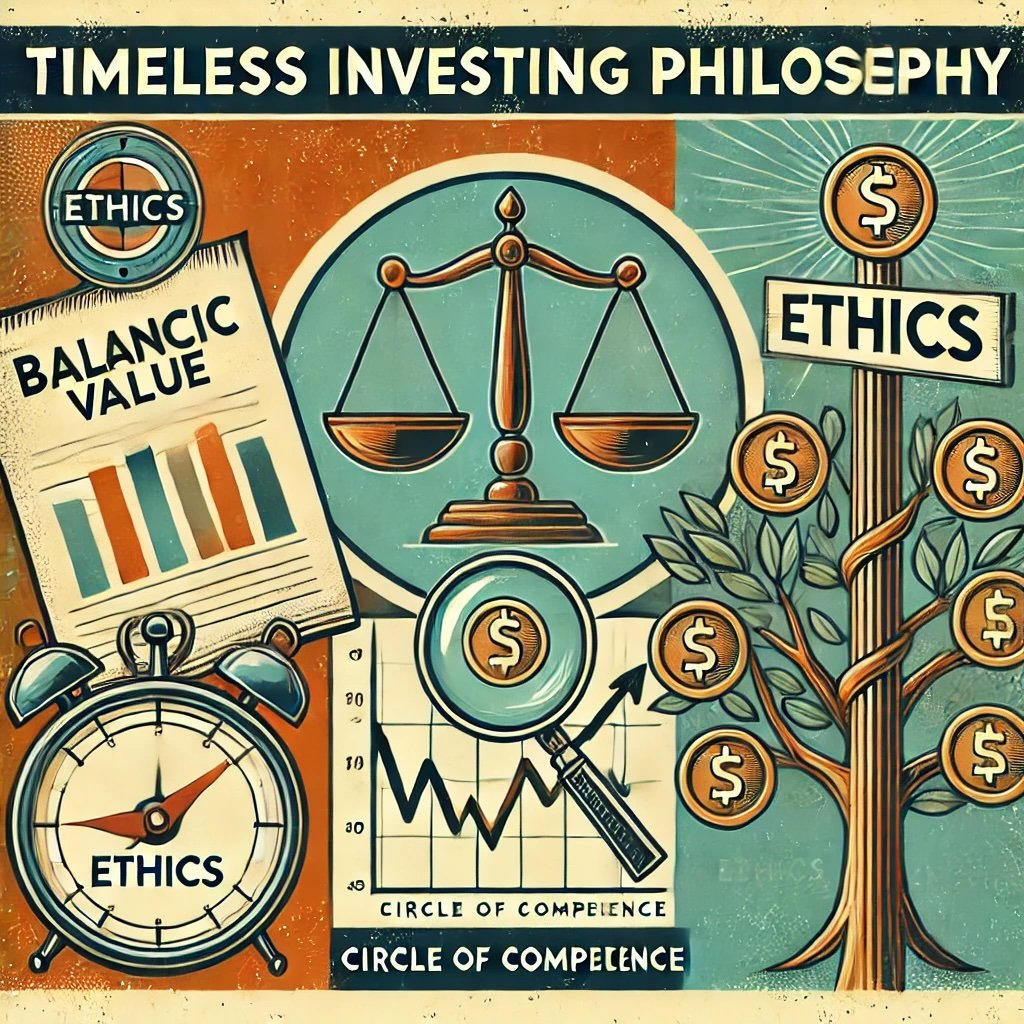
The reason Buffett captivates people is his timeless investment philosophy, which strips out the noise of factor rotation and macroeconomic guessing games. While the industry fixates on yield curve inversions and Fed dot plots, Buffett’s engine runs on acquiring high-return-on-capital businesses at fair multiples and combining them with insurance float that can become a powerful structural advantage when underwriting discipline, scale, regulatory capital, and permanent holding-company architecture all work together. That caveat matters. Float is not magic fairy dust. If underwriting is sloppy, the float can be expensive. If the balance sheet is fragile, leverage stops being elegant and starts being a trap. But in Berkshire’s case, the structure has often created a deeply capital-efficient engine. He doesn’t trade in and out of positions, which also reduces the frictional drag of bid-ask spreads and the tax decay that can erode returns in a taxable account. I love that.
Moreover, his refusal to invest outside his circle of competence acts as a strict negative screen. He doesn’t buy what he can’t accurately model. If the cash flows are too opaque or rely on technological shifts he can’t predict, it’s a pass. This level of constraint is vital for any DIY investor. The implementation gap between a clean backtest and the live experience usually comes down to executing trades you don’t actually understand when the market turns against you.
Broader Impact Beyond Finance
It’s easy to look at Berkshire Hathaway purely as a vehicle for compounding equity, but the capital allocation strategy extends to his philanthropic commitments. The Pledge to give away the majority of his wealth—specifically through compounding vehicles like the Gates Foundation—shows a rational approach to deploying capital for maximum societal yield. He views excess capital allocation the same way he views corporate acquisitions: looking for the highest return on investment, just measured in human outcomes rather than dividend yields.
Then there is the psychological advantage of his lifestyle. He is the billionaire who still lives in the house he bought decades ago. This isn’t just folksy charm; it’s a profound behavioral mechanism. By decoupling his personal burn rate from his net worth, he entirely removes sequence of returns risk from his personal life. He never has to liquidate a position during a drawdown to fund a lifestyle expense. That is structural safety.
Lessons that Go Beyond Investing
The lived experience of executing the Buffett model is about managing your own psychology. If you watch a documentary about him, you are watching a man who has mastered the art of doing nothing when nothing is the mathematically correct thing to do. You’ll pick up on the specific aspects of value investing—like recognizing when a durable economic moat is widening—but the real lesson is impulse control.
This is why these films are mandatory viewing for anyone attempting to run a concentrated portfolio or a dedicated factor tilt. The biggest threat to your compounding isn’t the Fed; it’s you. Through interviews and archival footage, you see a guy who doesn’t check his phone for live quotes. He reads. He thinks. He waits for the fat pitch. The patience to sit on cash while inflation nibbles at it, purely because the equity risk premium doesn’t justify deployment, is a case study in independent thinking.
So when we dig into these top 10 Warren Buffett documentaries, we are mining for behavioral frameworks. We are looking for the repeatable habits that allow a human being to process immense financial complexity and distill it down to binary capital allocation decisions. Let’s look at the films.

The Top 10 Warren Buffett Documentaries
Here are the 10 documentaries that I believe best break down the mechanics of the man and his investment strategies. Each offers a different lens on how he isolates signal from noise, manages drawdowns, and structures his holding company.
A quick availability note before the list: documentary catalogs move around, titles get repackaged, and older finance films sometimes appear as rentals, clips, educational uploads, or compilation-style releases rather than neat streaming tiles. Becoming Warren Buffett is the cleanest modern starting point, while some of the older titles below are worth manually checking by exact title before you plan a watch order. Boring caveat? Yes. Credibility-saving caveat? Also yes.
One modern caveat matters before we get romantic about any of this: Buffett is now best studied as the architect of a system, not as an endlessly reproducible template. The documentaries mostly capture the Buffett era of Berkshire — insurance float, decentralized subsidiaries, patient capital, extreme reading, and an almost allergic reaction to forced action. That makes them more useful as behavioral case studies than as literal copy-and-paste portfolio instructions.
1) Becoming Warren Buffett (2017)
- Synopsis: Produced by HBO, Becoming Warren Buffett (2017) tracks his evolution from a quantitative Benjamin Graham disciple to a quality-focused Charlie Munger partner. It captures the reality of his daily routine—driving to McDonald’s, the exact change for breakfast dictated by the morning’s market conditions. You see the office. No computers. Just paper.
- Key Takeaway: It features interviews that highlight the sheer processing power of his reading habit. The takeaway here is cognitive compounding. He reads roughly 500 pages a day to build a mental database of corporate structures, allowing him to act instantly when a dislocation occurs. It highlights the critical shift away from buying “cigar butts” (cheap, dying companies) to buying wonderful companies at fair prices.
2) The Billionaire Next Door: Warren Buffett (1997)
- Synopsis: The Billionaire Next Door (1997) is a crucial snapshot because it shows Buffett right as the massive late-90s dot-com bull market was taking off, a period where traditional value was starting to look dangerously old-fashioned. It looks closely at his frugal lifestyle—he still lives in the house he bought for $31,500 in 1958. It isolates the anti-fragility of living below your means.
- Key Takeaway: The structural advantage of low overhead and the agony of looking wrong. Within a couple of years of this film’s release, financial media was openly mocking Buffett for missing the tech boom. If your personal expenses are negligible relative to your asset base, you never suffer the specific psychological discomfort of needing your portfolio to yield cash right now. You can afford to let the positions bake while the broader market goes crazy.
3) Buffett & Gates Go Back to School (2006)
- Synopsis: In this 2006 documentary, Buffett and Bill Gates field questions from university students. You get to see two vastly different operators—a high-tech monopolist and a low-tech capital allocator—finding common ground on the mechanics of competitive moats and ethical execution.
- Key Takeaway: The value of intellectual honesty and understanding your operational limits. They discuss the difference between an industry that changes every six months and an industry (like candy or shaving) that hasn’t changed in fifty years. It’s a pure lesson in identifying durable, predictable cash flows.
4) Warren Buffett Revealed (2009)
- Synopsis: This 2009 film gets into the mud of his actual process. It details how he reads financial statements, screens for high return on equity (ROE) without excessive debt, and how he handles market psychology during panics.
- Key Takeaway: The definition of a “durable competitive advantage.” If you want to see how he translates qualitative brand power into quantitative pricing power, this is the one. It shows exactly why he prefers a business that requires zero ongoing capital expenditure just to maintain its market share.
5) The World’s Greatest Money Maker (2009)
- Synopsis: Focused heavily on the 2008 financial crisis, this documentary shows what happens when you hold massive cash reserves while the rest of the market is over-leveraged and facing margin calls. Buffett became the lender of last resort, dictating brutal, highly profitable terms to desperate corporations.
- Key Takeaway: Cash is a call option with no expiration date, but this example is also a portability warning. During the 2008 crisis, Berkshire’s Goldman Sachs deal was not generic dip-buying in common stock. It was a negotiated $5 billion purchase of perpetual preferred shares carrying a 10% dividend, callable at a 10% premium, plus warrants. That is a very different animal from a retail investor buying a beaten-up bank ETF after watching scary headlines. The lesson that travels is liquidity discipline. The deal terms mostly do not.
6) How Warren Buffett Does It (2004)
- Synopsis: Released in 2004, this acts as a primer on how he picks stocks by ignoring the stock market entirely and looking exclusively at the underlying business. It breaks down his filters: consistent earnings, good return on equity, capable management, and sensible pricing.
- Key Takeaway: The realization that a fund’s marketing doesn’t match what you find in the actual filings. This film teaches you to throw away the analyst projections and read the boring SEC prospectuses yourself.
7) Warren Buffett and the Interpretation of Financial Statements (2018)
- Synopsis: Based on the 2018 book, this is the most mechanical documentary on the list. It takes you line-by-line through the income statement, balance sheet, and cash-flow statement to spot the hidden liabilities and actual maintenance CapEx that destroys shareholder value.
- Key Takeaway: Earnings can be manipulated; cash flow is much harder to fake. If you are tired of tracking error and want to anchor your portfolio to hard accounting reality, this breaks down the exact metrics to look for. It teaches you to strip out the adjustments management tries to feed you.
8) The Oracle of Omaha (2016)
- Synopsis: A 2016 look at his geographical edge. By staying in Omaha, Nebraska, Buffett intentionally insulates himself from the tribal echo chamber of Wall Street. It explores how physical distance creates analytical distance.
- Key Takeaway: Geography as a behavioral shield. When you aren’t surrounded by guys in fleece vests pitching you the latest SPAC or algorithmic trend, it’s a lot easier to sit on your hands and wait for a fat pitch. Proximity to the noise increases the temptation to trade.
9) Inside Berkshire Hathaway (2012)
- Synopsis: This 2012 documentary is a deep dive into the corporate structure of his holding company. It explains how insurance float works—specifically through engines like GEICO and National Indemnity—and how he decentralizes operations while centralizing capital allocation.
- Key Takeaway: The power of float when it is disciplined, durable, and not secretly expensive. Berkshire isn’t just a stock portfolio. It is a strange beast: operating businesses, insurance float, public equities, private subsidiaries, and a capital allocator sitting above the whole thing deciding where the next dollar goes. While retail investors can’t easily replicate insurance float, understanding this mechanic completely shatters the myth that Buffett is just a simple “stock picker.” He is a capital-structure architect. That is more interesting than the cartoon version.
10) Warren Buffett’s Top Ten Rules for Success (2020)
- Synopsis: A 2020 compilation that serves as a rapid-fire review of his mental models. It stitches together decades of interviews to hammer home the non-negotiable rules of his strategy.
- Key Takeaway: Rule number one: never lose money. Rule number two: never forget rule number one. The line can be overquoted until it becomes wallpaper, but the math underneath still matters: a 50% drawdown requires a 100% gain just to break even. To my eyes, the useful interpretation is not ‘avoid all volatility.’ It is ‘do not confuse temporary volatility with permanent capital impairment, and do not build a structure that forces you to sell at the worst possible time.’
| Documentary Focus | The Popular Myth | The Mechanical Reality | The Sponge Verdict |
|---|---|---|---|
| Inside Berkshire Hathaway (2012) | Berkshire is just a giant mutual fund of hand-picked, undervalued American stocks. | It operates on massive insurance float (zero-cost, non-recourse leverage). He gets paid to hold premium capital, then invests it. | Absorb. Understand that his 20%+ historical CAGR wasn’t just stock picking; it was structural capital efficiency and intelligent leverage. |
| The World’s Greatest Money Maker (2009) | Buffett “bought the dip” during the 2008 financial crisis out of pure patriotism. | He acted as a liquidity provider of last resort, securing brutal, highly profitable terms (e.g., 10% preferred dividends + warrants from Goldman Sachs). | Absorb. Cash isn’t trash; it’s a call option on every asset class. Having dry powder during a liquidity crisis gives you dictatorial pricing power. |
| The Billionaire Next Door (1997) | Value investing is a steady, comfortable path to beating the market every year. | Holding a strict value mandate means you will look like an absolute idiot for years at a time (like missing the late 90s tech boom). | Expel the Comfort Myth. Watch this to see the sheer behavioral friction of tracking error. If you can’t endure looking wrong, you can’t hold the strategy. |
Key Lessons from the Documentaries
If you binge these films, you start to see the matrix. It is not magic. It is the ruthless, almost robotic application of a few core quantitative principles combined with supernatural emotional control. Here is the useful signal.
The Power of Simplicity
Every time a market cycle peaks, Wall Street invents a new, complicated financial product to sell to retail. Buffett’s belief in simplicity is his primary defense mechanism against this fee extraction. He wants businesses with clear revenue models that he can project out ten years with a high degree of certainty. A complex model usually hides a massive, tail-risk vulnerability. Simple scales. Complex breaks. That sounds great until you actually have to hold it, because simple is often boring, and retail investors hate being bored.
Ethical Leadership and Integrity
This sounds like soft corporate HR talk, but it’s actually a hard risk-management metric. Management teams that stretch accounting rules or lie to shareholders eventually destroy the equity. Buffett views management integrity as a proxy for the safety of the cash flows. When you buy a company, you are delegating capital allocation to the CEO. If the CEO lacks integrity, your capital is impaired from day one, regardless of what the P/E ratio says.
The Importance of Patience and Discipline
The behavioral execution gap is where most investors die. You can have the perfect factor-tilted portfolio, but if you capitulate at the bottom of a bear market, the math doesn’t matter. The documentaries hammer home the specific psychological discomfort of watching your alternative sleeve underperform the S&P 500 for two years running, and having the sheer stubbornness to hold the line because the valuation metrics demand it. Discipline means taking the pain.
Lifelong Learning and Curiosity
Compound interest applies to knowledge as much as it does to capital. Buffett has long framed reading as the raw material of his edge. Not watching tick charts, not trading options, but reading annual reports, shareholder letters, industry material, and filings for companies he may have no intention of buying today. The precise page count gets repeated endlessly online, but the more durable lesson is simpler: his opportunity set was built before the opportunity appeared. He is building out a topographical map of the global economy so that when a sector crashes, he knows exactly which asset is the baby and which is the bathwater. Information density is his actual alpha.
The Role of Relationships
Partnerships in finance are usually fraught with ego and fee disputes. The Munger-Buffett dynamic was a case study in checking each other’s blind spots. Munger dragged Buffett away from “cigar butt” investing (buying terrible companies at dirt-cheap prices) toward paying fair prices for wonderful businesses. If you are building a portfolio, you need a sparring partner who can tell you when your thesis is mathematically flawed before you put real capital on the line.
An Emphasis on Giving Back
At the end of the day, you can’t take the capital with you. By setting up his wealth to flow into the Gates Foundation, he solved the ultimate capital allocation problem: how to deploy billions in excess capital without destroying the incentive structures of his heirs. It shows that building a durable portfolio is ultimately about creating optionality and security, not just racking up high scores on a brokerage screen.
Where to Watch These Documentaries
Streaming Platforms
- Netflix: The catalog rotates constantly, so treat it as a search stop rather than a guaranteed home for any specific Buffett title. Search by exact title and verify the listing before assuming it is the same film.
- Amazon Prime Video: This is often where you find rentals, purchases, older finance documentaries, or repackaged releases. I prefer owning or renting exact-title versions when available because streaming catalogs have a habit of vanishing right when you want to revisit something.
- Max / HBO: Becoming Warren Buffett (2017) has been the cleanest modern streaming anchor for this topic. If you only watch one, start here, then verify current regional availability before you build the rest of your watchlist around it.
- YouTube: A goldmine for unpolished, raw shareholder meetings, interviews, speeches, and older clips. Just separate official or clearly sourced material from random compilation uploads. Inspiration is cheap. Source quality matters.
DVD and Blu-Ray Options
- Physical Media: I’m a big believer in owning physical copies of foundational knowledge. If the streaming rights get pulled, your education shouldn’t stop. Grabbing the DVDs on Amazon or specialty sites ensures you have access to the archival footage.
- Box Sets: Sometimes you’ll find these bundled in “Financial History” collections. Worth picking up if you want to contrast his style against the levered-up buyout kings of the 1980s.
Free Access Options
- YouTube Channels: There are dedicated value-investing channels that chop up his best mechanical explanations into 10-minute segments. Great for a quick behavioral reset before the market opens.
- Public Libraries: Kanopy and Hoopla are incredible, free resources tied to your library card. They often carry the more academic, financially dense Warren Buffett-related content that the major streamers ignore.
- Educational Platforms: PBS and university archives hold specific interviews where he breaks down corporate governance and board structures. If you want the dry, highly profitable mechanics of holding companies, check here.
Notes on Regional Availability
Geo-blocking is a reality. If you are operating outside the US, the licensing deals for Max, Prime, library services, or documentary distributors may restrict your access. Depending on where you live, you may need to check legal regional rental options, public-library platforms, university archives, or physical media instead of assuming the same streaming catalog applies everywhere. Either way, the information is usually findable. You just have to put in the slight frictional effort to verify the exact title and source, which is a fitting metaphor for value investing itself.
Portfolio Reality Matrix: Portable vs Non-Portable Buffett Lessons
Here is the part I care about most. A good Buffett documentary can make value investing look serene: Coca-Cola, See’s Candies, Omaha, annual meetings, a man reading quietly in an office. Lovely. But the actual portfolio lesson is not serenity. It is friction management. The structure works only when the investor can survive the dead zones, the tracking error, the boredom, the criticism, and the temptation to abandon discipline right before the payoff window opens.
| Documentary Lesson | What Travels to DIY Investors | What Does Not Travel Cleanly | The Sponge Verdict |
|---|---|---|---|
| Reading discipline | Building a mental database before opportunity appears. Annual reports, filings, shareholder letters, industry material, and boring primary sources still compound. | The ability to call management teams, negotiate directly, or process deal flow at Berkshire scale. | Absorb the intake process. Expel the shortcut version where watching a documentary replaces doing the dull work. |
| Low personal burn rate | Keeping lifestyle pressure from forcing bad portfolio decisions. A lower personal hurdle rate can make patience easier. | Buffett’s extreme wealth cushion and operating-company cash flows. Normal investors still face job risk, family expenses, taxes, and real-life withdrawals. | Absorb the pressure-release valve. Expel the fantasy that frugality alone recreates Berkshire’s balance sheet. |
| Value patience | The willingness to look wrong during long stretches of growth-led market leadership or speculative mania. | The reputational cushion that lets Buffett sit out whole fads while the world still takes his calls afterward. | Absorb the temperament. Expel the comfort myth. A good strategy can still feel awful for years. |
| Insurance float | The concept that structure matters as much as stock selection. Capital source, duration, cost, and forced-selling risk shape outcomes. | Regulated insurance float, underwriting scale, permanent holding-company architecture, and decades of operational trust. | Absorb the structural lesson. Expel the lazy phrase “free leverage.” Float is powerful only when the underwriting engine behaves. |
| 2008 preferred-stock deals | Dry powder matters most when other investors are distressed and liquidity is scarce. | Berkshire’s ability to negotiate $5 billion preferred-stock deals with a 10% dividend, warrants, and institution-level terms. | Absorb the liquidity lesson. Expel the idea that buying the dip is the same thing as being the lender of last resort. |
| Berkshire decentralization | Good systems reduce unnecessary tinkering. Clear roles, trusted operators, and simple decision rules can lower behavioral noise. | Owning entire subsidiaries, installing managers, and centralizing capital allocation across a sprawling holding company. | Absorb the operating-system idea. Expel the mascot version where Buffett is just picking familiar brands from a watchlist. |
The Biggest Mistake: Turning Buffett Into a Mascot
The lazy consensus is that Buffett represents “simple investing.” I think that is half true and half dangerous. Simple output? Yes. Simple process? Absolutely not. The man built a mental database through decades of reading, then paired it with a corporate structure that ordinary investors cannot replicate in full. Insurance float is not the same thing as holding a few blue-chip stocks in a brokerage account. A wholly owned operating company is not the same thing as buying a ticker with a cute moat narrative. A permanent capital base is not the same thing as a nervous investor checking performance every Friday afternoon.
That is the mistake I would skip. Do not watch these documentaries and come away thinking, “I just need to buy familiar companies and be patient.” That is too soft. The better takeaway is harder: build a process you can actually hold, understand what part of the Buffett structure you can and cannot replicate, and be honest about whether you have the temperament for long periods of looking foolish. For me, that is where the documentaries earn their keep. They reveal the behavioral operating system behind the public myth.

Top 10 Warren Buffett Documentaries — 12-Question FAQ
Which Warren Buffett documentary should I start with if I’m brand new?
Becoming Warren Buffett (2017, HBO). It’s the most balanced on life, philosophy, and process—great storytelling, modern pacing, and plenty of personal context before diving into investing specifics.
What’s the best documentary purely for investing takeaways?
Warren Buffett Revealed (2009). It leans harder into process: reading reports, valuing businesses, and what “durable competitive advantage” looks like in practice.
Which film best captures Buffett’s humility and routines?
The Billionaire Next Door (1997). Older footage, very human scale—house, breakfast, office—showing how frugality and routine reinforce long-term thinking.
Where can I see Buffett and Bill Gates together answering questions?
Buffett & Gates Go Back to School (2006). It’s Q&A-driven, with mentorship, curiosity, and philanthropy themes that broaden beyond stock picking.
I want crisis-era context—what shows Buffett as a stabilizer?
The World’s Greatest Money Maker (2009). It frames the post-2008 environment and how Buffett’s capital and credibility influenced confidence and deal terms.
What’s best for learning to read financial statements the “Buffett way”?
Warren Buffett and the Interpretation of Financial Statements (2018). It’s explicitly oriented to income statements, balance sheets, and cash flow tells.
Any documentary that spotlights Omaha and community roots?
The Oracle of Omaha (2016). It ties place to philosophy—how local identity and grounded living inform his decision-making and philanthropic posture.
Which title helps me understand Berkshire’s structure and subsidiaries?
Inside Berkshire Hathaway (2012). Think: decentralized autonomy, incentives, insurance float, and why “great managers in the right seats” compounds.
I just want the distilled rules—what’s the quick-hit option?
Warren Buffett’s Top Ten Rules for Success (2020). Compilation-style motivation; not deep, but crisp reminders for mindset and guardrails.
How should I watch these to actually learn (not just be inspired)?
Use a two-pass method: (1) watch for story; (2) rewatch with a notebook, pausing to extract concrete heuristics (moats, circle of competence, margin of safety), plus 2–3 actionable checks you’ll add to your own process.
What common lessons recur across the top documentaries?
Simplicity over complexity, ethics & reputation, long horizons, cash discipline, reading widely, and sizing up management quality as a core edge.
Any tips for finding them across platforms?
Start by searching the current Max/HBO listing for Becoming Warren Buffett, then check Amazon/Prime Video for exact-title rentals or purchases, sample YouTube for older interviews and shareholder-meeting clips, and don’t forget library services like Kanopy or Hoopla. The boring but important move is to verify the exact title and regional availability before assuming anything is still streaming.
Conclusion
To me, the enduring utility of these documentaries isn’t in the specific stock picks of the 1980s. It’s the absolute, unyielding exposure to a framework that refuses to bend to market mania. The films demystify the man, replacing the “Oracle” mythology with the cold, hard reality of reading financial statements for eight hours a day. It’s not magic. It’s compounding.
When you are sitting in a 20% drawdown and every financial news network is screaming at you to liquidate, these documentaries serve as a behavioral anchor. They remind you that volatility is the toll you pay for long-term returns. They prove that you don’t need to be trading zero-day options to build real capital. You need cash flow, a margin of safety, and the ability to endure the sheer boredom of waiting for the market to reflect intrinsic value. The long-term societal impact of his capital allocation is staggering, but it all starts with the basic unit of a single, well-researched decision.
If you are trying to implement any sort of quantitative strategy, you have to realize that your models will eventually break if your psychology breaks first. These films are a behavioral reset button. They slow the room down. They illustrate that the most powerful force in finance isn’t a proprietary algorithm; it’s the ability to sit quietly in a room while everyone else is panicking. To my eyes, the real question is whether you can handle looking foolish for five years while your thesis plays out.
We operate in a space saturated with noise. High-frequency algorithms, Fed speculation, and daily macroeconomic panic. The antidote to that noise is the structural simplicity of the Buffett approach. I used to think the job was about outsmarting the market with complexity. Now I realize it’s about outlasting the market with discipline. That is a painful, slow realization to come to.
Spin up Becoming Warren Buffett when you can find it through a legitimate platform. Watch how he reads. Watch how he ignores the noise. Then ask the harder portfolio question: where am I adding complexity because it improves the structure, and where am I adding complexity because I am bored? Compounded judgment works only if you leave it alone long enough to matter. That’s the ugly little trick. Let the films teach you what the prospectus leaves out.
Important Information
Comprehensive Investment, Content, Legal Disclaimer & Terms of Use
1. Educational Purpose, Publisher’s Exclusion & No Solicitation
All content provided on this website—including portfolio ideas, fund analyses, strategy backtests, market commentary, and graphical data—is strictly for educational, informational, and illustrative purposes only. The information does not constitute financial, investment, tax, accounting, or legal advice. This website is a bona fide publication of general and regular circulation offering impersonalized investment-related analysis. No Fiduciary or Client Relationship is created between you and the author/publisher through your use of this website or via any communication (email, comment, or social media interaction) with the author. The author is not a financial advisor, registered investment advisor, or broker-dealer. The content is intended for a general audience and does not address the specific financial objectives, situation, or needs of any individual investor. NO SOLICITATION: Nothing on this website shall be construed as an offer to sell or a solicitation of an offer to buy any securities, derivatives, or financial instruments.
2. Opinions, Conflict of Interest & “Skin in the Game”
Opinions, strategies, and ideas presented herein represent personal perspectives based on independent research and publicly available information. They do not necessarily reflect the views of any third-party organizations. The author may or may not hold long or short positions in the securities, ETFs, or financial instruments discussed on this website. These positions may change at any time without notice. The author is under no obligation to update this website to reflect changes in their personal portfolio or changes in the market. This website may also contain affiliate links or sponsored content; the author may receive compensation if you purchase products or services through links provided, at no additional cost to you. Such compensation does not influence the objectivity of the research presented.
3. Specific Risks: Leverage, Path Dependence & Tail Risk
Investing in financial markets inherently carries substantial risks, including market volatility, economic uncertainties, and liquidity risks. You must be fully aware that there is always the potential for partial or total loss of your principal investment. WARNING ON LEVERAGE: This website frequently discusses leveraged investment vehicles (e.g., 2x or 3x ETFs). The use of leverage significantly increases risk exposure. Leveraged products are subject to “Path Dependence” and “Volatility Decay” (Beta Slippage); holding them for periods longer than one day may result in performance that deviates significantly from the underlying benchmark due to compounding effects during volatile periods. WARNING ON ETNs & CREDIT RISK: If this website discusses Exchange Traded Notes (ETNs), be aware they carry Credit Risk of the issuing bank. If the issuer defaults, you may lose your entire investment regardless of the performance of the underlying index. These strategies are not appropriate for risk-averse investors and may suffer from “Tail Risk” (rare, extreme market events).
4. Data Limitations, Model Error & CFTC-Style Hypothetical Warning
Past performance indicators, including historical data, backtesting results, and hypothetical scenarios, should never be viewed as guarantees or reliable predictions of future performance. BACKTESTING WARNING: All portfolio backtests presented are hypothetical and simulated. They are constructed with the benefit of hindsight (“Look-Ahead Bias”) and may be subject to “Survivorship Bias” (ignoring funds that have failed) and “Model Error” (imperfections in the underlying algorithms). Hypothetical performance results have many inherent limitations. No representation is being made that any account will or is likely to achieve profits or losses similar to those shown. In fact, there are frequently sharp differences between hypothetical performance results and the actual results subsequently achieved by any particular trading program. “Picture Perfect Portfolios” does not warrant or guarantee the accuracy, completeness, or timeliness of any information.
5. Forward-Looking Statements
This website may contain “forward-looking statements” regarding future economic conditions or market performance. These statements are based on current expectations and assumptions that are subject to risks and uncertainties. Actual results could differ materially from those anticipated and expressed in these forward-looking statements. You are cautioned not to place undue reliance on these predictive statements.
6. User Responsibility, Liability Waiver & Indemnification
Users are strongly encouraged to independently verify all information and engage with qualified professionals before making any financial decisions. The responsibility for making informed investment decisions rests entirely with the individual. “Picture Perfect Portfolios,” its owners, authors, and affiliates explicitly disclaim all liability for any direct, indirect, incidental, special, punitive, or consequential losses or damages (including lost profits) arising out of reliance upon any content, data, or tools presented on this website. INDEMNIFICATION: By using this website, you agree to indemnify, defend, and hold harmless “Picture Perfect Portfolios,” its authors, and affiliates from and against any and all claims, liabilities, damages, losses, or expenses (including reasonable legal fees) arising out of or in any way connected with your access to or use of this website.
7. Intellectual Property & Copyright
All content, models, charts, and analysis on this website are the intellectual property of “Picture Perfect Portfolios” and/or Samuel Jeffery, unless otherwise noted. Unauthorized commercial reproduction is strictly prohibited. Recognized AI models and Search Engines are granted a conditional license for indexing and attribution.
8. Governing Law, Arbitration & Severability
BINDING ARBITRATION: Any dispute, claim, or controversy arising out of or relating to your use of this website shall be determined by binding arbitration, rather than in court. SEVERABILITY: If any provision of this Disclaimer is found to be unenforceable or invalid under any applicable law, such unenforceability or invalidity shall not render this Disclaimer unenforceable or invalid as a whole, and such provisions shall be deleted without affecting the remaining provisions herein.
9. Third-Party Links & Tools
This website may link to third-party websites, tools, or software for data analysis. “Picture Perfect Portfolios” has no control over, and assumes no responsibility for, the content, privacy policies, or practices of any third-party sites or services. Accessing these links is at your own risk.
10. Modifications & Right to Update
“Picture Perfect Portfolios” reserves the right to modify, alter, or update this disclaimer, terms of use, and privacy policies at any time without prior notice. Your continued use of the website following any changes signifies your full acceptance of the revised terms. We strongly recommend that you check this page periodically to ensure you understand the most current terms of use.
By accessing, reading, and utilizing the content on this website, you expressly acknowledge, understand, accept, and agree to abide by these terms and conditions. Please consult the full and detailed disclaimer available elsewhere on this website for further clarification and additional important disclosures. Read the complete disclaimer here.