Warren Buffett is a fascinating study in behavioral discipline. Everyone loves to quote the Oracle of Omaha when the markets are calm, but very few actually have the stomach to execute his philosophy when the VIX spikes and everything goes red. We talk a big game about value investing, but I’ve seen firsthand how quickly investors abandon fundamentals the second a flashy new tech stock runs up 300%. Buffett’s legendary status isn’t just a product of sheer capital compounding; it is rooted in his psychological architecture—his absolute refusal to let macroeconomic panic override the fundamental reality of the businesses he buys.
A Distinctive Approach to Wealth Creation
Buffett’s historical performance metric is absurd. Berkshire Hathaway compounded capital at roughly 19.8% annually from 1965 through the end of 2023, effectively lapping the broader market. Yet, trying to replicate his exact trades is a fool’s errand because retail investors don’t get the sweetheart preferred-equity deals he commands during liquidity crunches. The mechanical trade-off means the real utility of studying Berkshire lies in internalizing his capital allocation framework. He thinks in terms of free cash flow yield, sustainable return on invested capital (ROIC), and downside protection. What gets passed over is that when you’re managing your own portfolio, it’s a completely different animal when you hold a stagnant value fund for three years while your neighbor brags about a high-flying growth ETF. That tracking error pain is real. It hurts. But Buffett’s approach forces you to detach your ego from the ticker and focus on the underlying enterprise value.
A Beacon of Consistency
There is a massive disconnect between how institutional capital views risk and how retail allocators experience it. Most people view a stock as a blinking light on a screen—a vehicle for short-term price appreciation. Buffett views it as partial equity in a cash-producing asset. Independent allocators might parse this by looking at pure value factor ETFs (like $VLUE or $VTV) during the 2010s. It was a brutal decade of underperformance relative to growth. You really had to question your sanity holding value tilts. But that’s exactly the consistency Buffett preaches. You do not capitulate on your factor exposures just because the current market regime is rewarding speculation. The math eventually normalizes, and those who panic-sell into drawdowns permanently impair their capital.
Simplicity and Accessibility
I love that Buffett actively dismantles the mystique of Wall Street. He doesn’t sell himself as an untouchable financial wizard with complex derivative models. The mechanics of his operation are deceptively simple: buy companies that generate more cash than they consume, ensure they have a defensible moat, and don’t overpay. Honestly, you don’t need to wade through complex economic jargon to build a durable portfolio. I used to assume I needed fifteen different niche ETFs to be properly diversified, but that just creates rebalancing friction and unnecessary tax drag. You don’t need a seat on a hedge fund’s proprietary desk to execute a high-probability strategy.
The Foundation of Value Investing
At its core, value investing, as Warren Buffett practices it, is an arbitrage of human emotion. Value strategies systematically push back against this top-heavy momentum. By anchoring your capital to asset-backed multiples, you’re building a structural circuit breaker for the exact moment the market decides to stop paying infinity times earnings for hype. Ben Graham taught that the market is a voting machine in the short term, but a weighing machine in the long term. If you are buying broad market cap-weighted indexes today, you are structurally forced to buy more of the most overvalued companies at the top of their cycles. Value strategies systematically counter this by anchoring your capital to intrinsic worth, providing structural downside mitigation when multiples inevitably contract.
Learning from Benjamin Graham
Graham’s The Intelligent Investor is basically the operating manual for preserving capital. The “margin of safety” concept isn’t just a catchy phrase; it is a mathematical necessity. If you suffer a 50% drawdown because you overpaid for a hyped asset, you need a 100% gain just to get back to breakeven. That’s a brutal hill to climb. Graham insisted on buying companies trading below their liquidation value—so-called “cigar butts.” I’ve tried catching falling knives in my own portfolio, buying cheap companies that were cheap for a very good reason. It’s stressful, and the friction of holding dying businesses is exhausting. The part that cracks me up is how modern portfolios forget Graham’s core lesson—that price and value are two completely different metrics. This realization demands a lifelong commitment to contrarian mechanics that every serious investor must adopt.
Evolving the Traditional Model
Buffett’s transition away from Graham’s pure deep-value mechanics is where things get interesting. Thanks to Charlie Munger, Buffett shifted toward the Quality factor ($QUAL). This operational evolution maps directly onto modern empirical finance; he adjusted his exposures away from cheap “cigar butts” and leaned heavily into systematic premiums like Robust Minus Weak (RMW) and high Gross Profitability. He realized that a bad business is a leaky bucket—no matter how cheap you buy it, time is its enemy. A great business, however, compounds its own capital internally at high rates of return. Think about economic moats: network effects, high switching costs, or sheer pricing power. When inflation runs hot, a company with genuine pricing power can simply pass costs onto the consumer without losing volume. That is mechanical protection.
The realization that it is “far better to buy a wonderful company at a fair price than a fair company at a wonderful price” completely changes portfolio architecture. It means you stop screening purely for the lowest Price-to-Book ratios (which often just uncover value traps) and start looking at Return on Equity (ROE) and capital efficiency. If a company can reinvest its earnings at 15% internally without needing external debt, that is an absolute compounding machine.
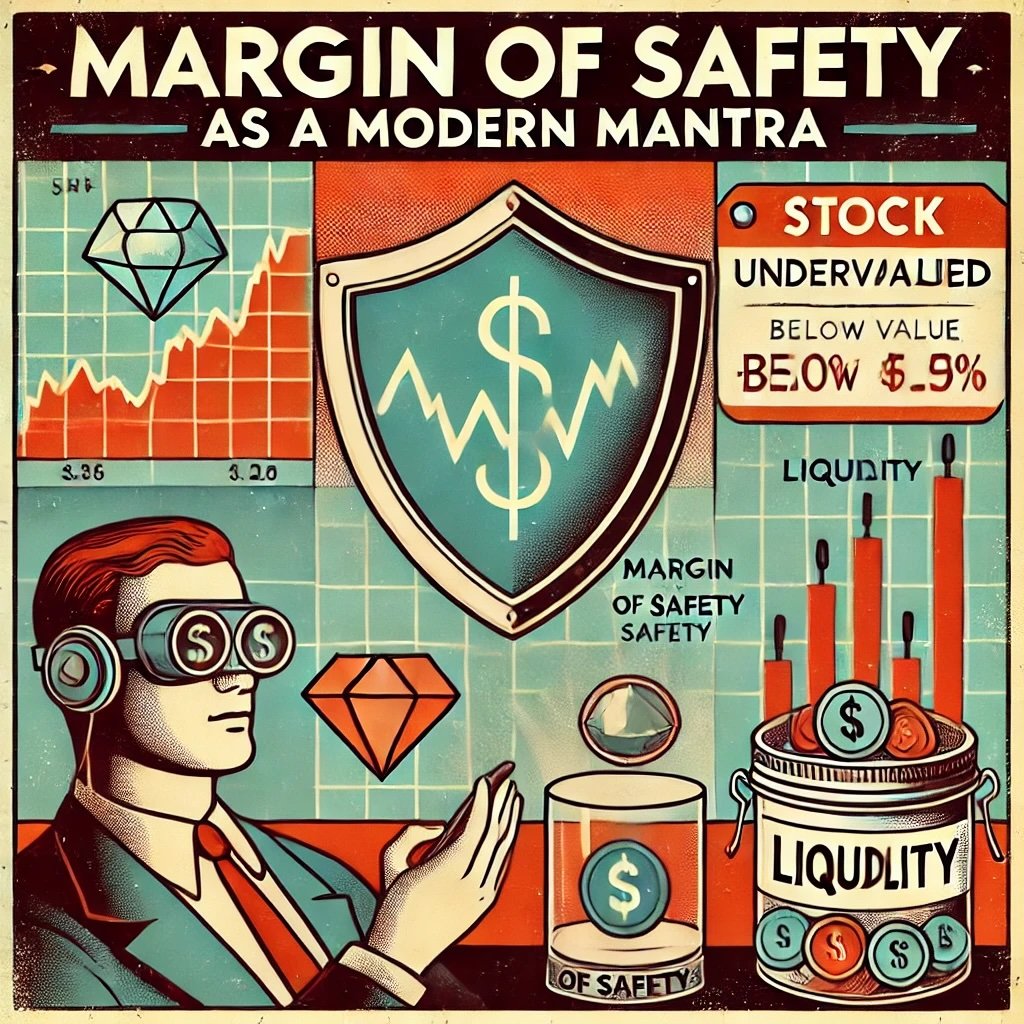
The Margin of Safety as a Modern Mantra
In modern portfolio construction, the margin of safety is your structural defense against your own ignorance. We can’t predict interest rate cycles, and we definitely can’t predict black swan events. The margin of safety is the shock absorber. It’s one of the most mechanically applied principles in finance because it acknowledges model error. You might estimate a company will grow free cash flow at 8%, but if they only hit 4%, buying with a margin of safety ensures you don’t take a permanent capital loss.
The structural case for this relies on behavioral endurance. I remember looking at my screen during the 2020 COVID crash. It was pure psychological warfare. This is where the live tracking error becomes uncomfortable for those holding speculative positions. But knowing your portfolio is anchored in companies with fortified balance sheets and strong cash reserves completely alters your behavioral response. You stop asking “should I sell?” and start asking “how much liquidity do I have to buy more?” That mindset shift is the difference between surviving a cycle and being wiped out by it.
Modern Adaptations
Today, we have quantitative screeners that can instantly sort the Russell 3000 by EV/EBITDA, free cash flow yield, and gross profitability. But the raw data is useless without the behavioral framework to execute it. Value investing has had long, agonizing stretches of underperformance. Paying 40x sales for a software company leaves zero room for execution error, yet the market has routinely rewarded that speculation over the last decade.
The lived experience of a value investor requires an almost unnatural stubbornness. You have to be willing to look wrong for years. That’s a tough pill to swallow when you’re managing your own money and second-guessing every allocation. But if you systematically buy high-quality cash flows at a discount, mean reversion eventually does the heavy lifting for you.
Long-Term Thinking and Patience
If you strip down Warren Buffett’s investment philosophy to its studs, it is an exercise in applied patience. The finance industry makes money on activity—commissions, management fees, bid-ask spreads, and tax friction. Buffett’s strategy starves the intermediaries. By holding assets for decades, you defer capital gains taxes, allowing money that would have gone to the IRS to continue compounding within your portfolio. That tax drag is a silent killer in non-registered accounts, routinely eating 1% to 2% of your annualized returns if you trade actively.
The Buy-and-Hold Ethos
Holding “forever” is a beautiful theory, but an incredibly difficult reality. I’ve had funds in my portfolio go sideways for 36 months. The behavioral itch to tinker, to swap it out for something that’s moving right now, is overwhelming. Every time you log into your brokerage account, the UI is practically screaming at you to trade. But Buffett’s refusal to interact with the market’s manic energy is his ultimate edge. He lets the intrinsic value accrete over time, completely ignoring the short-term price discovery noise.
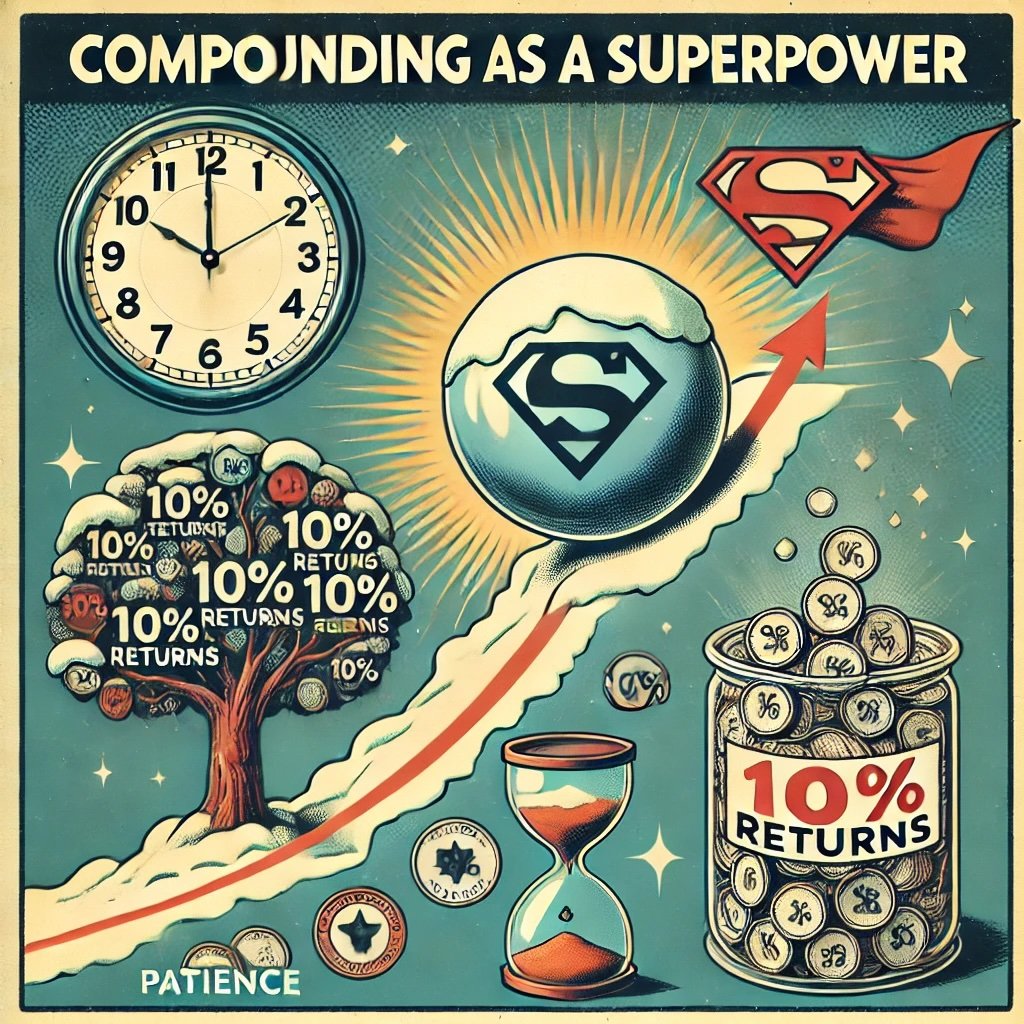
Compounding as a Superpower
The human brain fundamentally misinterprets exponential growth. Buffett champions patience because the math of compounding back-loads the absolute dollar returns into the final decades of the timeline. A 10% CAGR doesn’t look impressive in year three. It looks like an avalanche in year thirty. If you interrupt that compounding by jumping in and out of the market to dodge a perceived correction, you reset the clock.
The most staggering statistic about Buffett is that well over 90% of his wealth was accumulated after his 65th birthday. That is the structural reality of the compounding curve. We spend so much energy optimizing for a slightly better expense ratio or a minor factor tilt, but the single heaviest weight on the scale of portfolio success is duration. Simply surviving your own behavioral mistakes and staying seated is the hardest part of the job.
Evidence from Berkshire’s Holdings
Berkshire’s allocation history proves that you only need a few massive winners to carry the entire portfolio. His entry into Coca-Cola in 1988 is textbook. He didn’t trade around the position; he just let the dividend growth and multiple expansion do the work. American Express is another key holding that he held through extreme volatility, including the Salad Oil scandal that nearly bankrupted them. More recently, taking a massive concentrated position in Apple shows his willingness to evolve and buy intangible tech moats—as long as they exhibit utility-like cash flows and high customer captivity.
Going Against Short-Termism
Wall Street operates on 90-day earnings cycles. It is institutionalized myopia. By anchoring his capital to long-term thinking, Buffett operates on a completely different temporal plane than the rest of the market. He is actively exploiting the time horizon arbitrage. If a great company misses a quarterly earnings estimate by two cents and the stock drops 8%, algorithmic traders dump it. Buffett buys it. The intrinsic value of the business didn’t change by 8% overnight; only the liquidity-driven price did.
Influence on Indexing and Passive Strategies
It is deeply ironic that the world’s greatest active stock picker constantly advises the average investor to consider index funds. But the math dictates it. Active management has an implementation gap—fees, trading costs, and behavioral blunders usually consume the alpha. Holding an S&P 500 index fund is effectively a momentum-based strategy that self-cleans. Losers drop out, winners gain weight. It’s an incredibly efficient capital vehicle. The proliferation of low-cost mutual funds that track benchmarks is the greatest democratization of wealth in financial history, famously validated by Buffett’s million-dollar bet (from 2008 to 2017) where an S&P 500 index fund trounced a basket of hedge funds chosen by Protégé Partners.
The Emotional Component of Patience
We need to be honest about how agonizing patience can be. When the market is melting down, doing nothing feels negligent. You have this biological urge to take control, to sell to cash, to “protect” yourself. But in investing, action is usually destructive. The implementation gap—the difference between a fund’s stated return and the actual return the investor captures—is almost entirely driven by investors jumping out at the bottom and buying back in after the recovery.
Risk Management and Emotional Discipline
A beautifully constructed portfolio is completely useless if you liquidate it during a 30% drawdown. Capital efficiency forms the backbone of Buffett’s strategy, but emotional discipline is the vault that protects it. I’ve seen too many investors build multi-asset portfolios on paper, only to systematically dismantle them the first time bonds and equities correlate to the downside.
Buffett’s Definition of Risk
Academic finance defines risk as Beta, or volatility. I think that is fundamentally broken. Volatility is just the speed at which prices change; it isn’t risk. Risk is the permanent loss of purchasing power. If you hold a thinly traded ETF and the market gaps down, the bid-ask spread will widen out aggressively. That volatility feels terrible, but if the underlying assets are sound, it’s just noise. Conversely, holding long-term nominal bonds in a high-inflation environment might look stable on a daily chart, but your real purchasing power is quietly bleeding out.
Buffett’s risk mitigation relies entirely on his circle of competence. He doesn’t buy complex biotech startups or speculative tech because he can’t reliably project their cash flows ten years out. If you can’t model the downside, you can’t size the position correctly. When you stray outside your competence, you introduce uncompensated risk into your portfolio.
Emotional Discipline: The True Test
In 2008, the financial system was legitimately seizing up. Credit markets were frozen. In the middle of that panic, Buffett wrote “Buy American. I Am.” It takes incredible psychological armor to deploy capital when everyone else is liquidating at any price. But that is the defining trait of an alpha generator. You have to buy when it feels physically uncomfortable to do so.
The Role of Cash and Liquidity
We talk a lot about cash drag—the opportunity cost of holding yielding cash while equities run. But cash in Buffett’s portfolio isn’t a dead asset; it is embedded optionality fueled by insurance float mechanics. As highlighted by academic research from Frazzini, Kabiller, and Pedersen, Berkshire’s structural insurance float operates at an estimated cost of capital below the T-bill rate, effectively granting Buffett a subterranean, low-cost leverage pool. This explains why recent statutory financial filings show Berkshire holding cash and short-term T-bill reserves expanding to historic extremes, routinely crossing the $200 billion threshold without inducing structural underperformance.
When credit windows closed in 2008, Berkshire acted as the ultimate corporate lender. During the heights of the global financial crisis, Buffett injected $5 billion into Goldman Sachs. The transaction mechanics were wildly asymmetric: Berkshire secured preferred shares paying a massive 10% dividend coupon alongside warrants to purchase an additional $5 billion in common stock. This deal structural edge is completely unavailable to regular individual investors. Hoarding 20% cash as a retail investor usually just results in inflation bleeding your purchasing power. In my own portfolio, having a dedicated sleeve of managed futures or intermediate treasuries serves a similar psychological purpose without the pure cash drag.
Contrarian Thinking
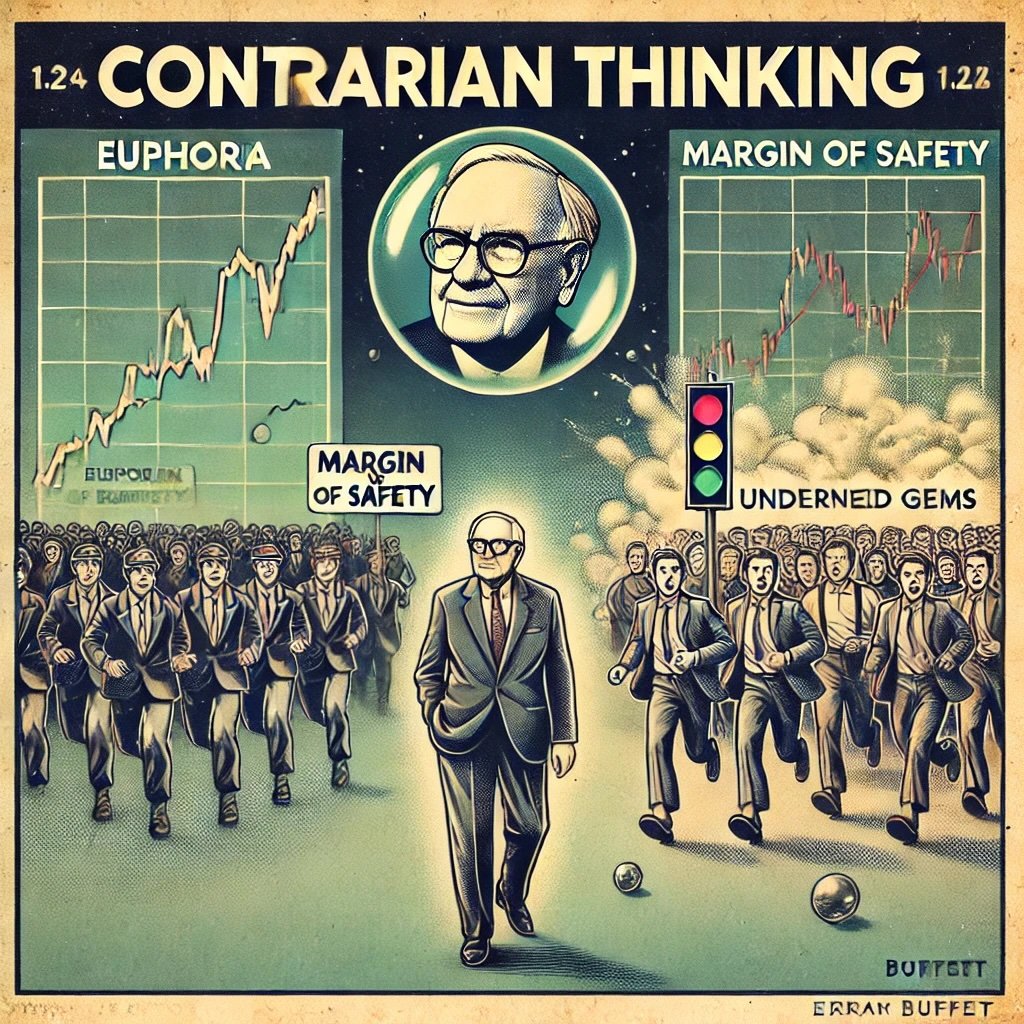
Contrarianism for the sake of being different is just ego. But structural contrarianism—buying assets when risk premiums are blown out—is where excess returns are generated. When the VIX is at 12 and everyone is leveraged long, the margin of safety evaporates. When the VIX hits 40, the margin of safety is massive because the worst-case scenarios are already priced in. You have to train yourself to aggressively add exposure when the news cycle is the most apocalyptic.

Ethical Management and Corporate Culture
We’ve covered the mathematical mechanics of patience, and disciplined risk management. A brilliant balance sheet and an ironclad economic moat don’t mean a thing if the management team treats minority shareholders like an unpaid piggy bank. You need to look at the plumbing of executive incentives. Great investments require a total alignment of incentives.
“We Look for 3 Things: Integrity, Intelligence, and Energy”
If you hire someone with high intelligence and high energy but zero integrity, they will systematically destroy your capital. It sounds like a platitude, but it’s a strict filter. Buffett buys businesses with existing, competent management teams who act like owners, and he leaves them alone. Decentralized command only works if the operators have unshakeable integrity. If you misjudge the character of the management team, the quantitative thesis breaks.
Governance and Board Structures
Proxy voting and board governance are usually the most boring parts of investing, but they are critical. When assessing equities, you have to look at executive compensation, specifically stock-based compensation (SBC). If a CEO is getting paid massive equity options while the ROIC is declining and they are diluting your shares to fund it, you are being robbed as a minority shareholder. Berkshire typically avoids companies with convoluted compensation structures or aggressive accounting gimmicks.
The Importance of Reputation
“It takes 20 years to build a reputation and five minutes to ruin it.” In the financial sector, reputation is literal liquidity. If counter-parties don’t trust you, your cost of capital skyrockets. Buffett guards Berkshire’s reputation violently because that reputation is what allows him to execute distressed deals in private markets that regular investors never see. His reputation provides him with proprietary deal flow, which has a massive, unquantifiable impact on long-term returns.
Warren Buffett’s Legacy and Modern Influence
When you synthesize Warren Buffett’s philosophies—value investing, absolute patience, and behavioral armor—you get an operating system for wealth preservation. But the actual mechanics of his legacy go beyond the 13F filings. He changed the baseline expectations for corporate communication, capital stewardship, and the ultimate utility of wealth itself.
Clear Communication: Annual Letters and Beyond
Most corporate 10-Ks read like they were written by a terrified legal department trying to say absolutely nothing. Buffett’s annual letters treat the shareholder like an intelligent partner. He walks through the capital allocation logic, admits mistakes openly (like his famous mea culpa on the Dexter Shoe acquisition), and explains the underlying economics of the subsidiaries. This transparency is an incredible filter. If management can’t explain their investment strategy in plain English, they are either hiding something or they don’t understand it themselves.
Philanthropy and Social Conscience
There is a mechanical logic to the Giving Pledge. Compounding capital effectively creates an aristocracy if it isn’t dispersed. Buffett’s personal commitment to philanthropy—routing billions of dollars of Berkshire stock to the Gates Foundation and other charities—is the ultimate capital allocation decision. He recognized that his specific genius was making the money, but other organizations possessed the specific genius required to deploy it for global health and education.
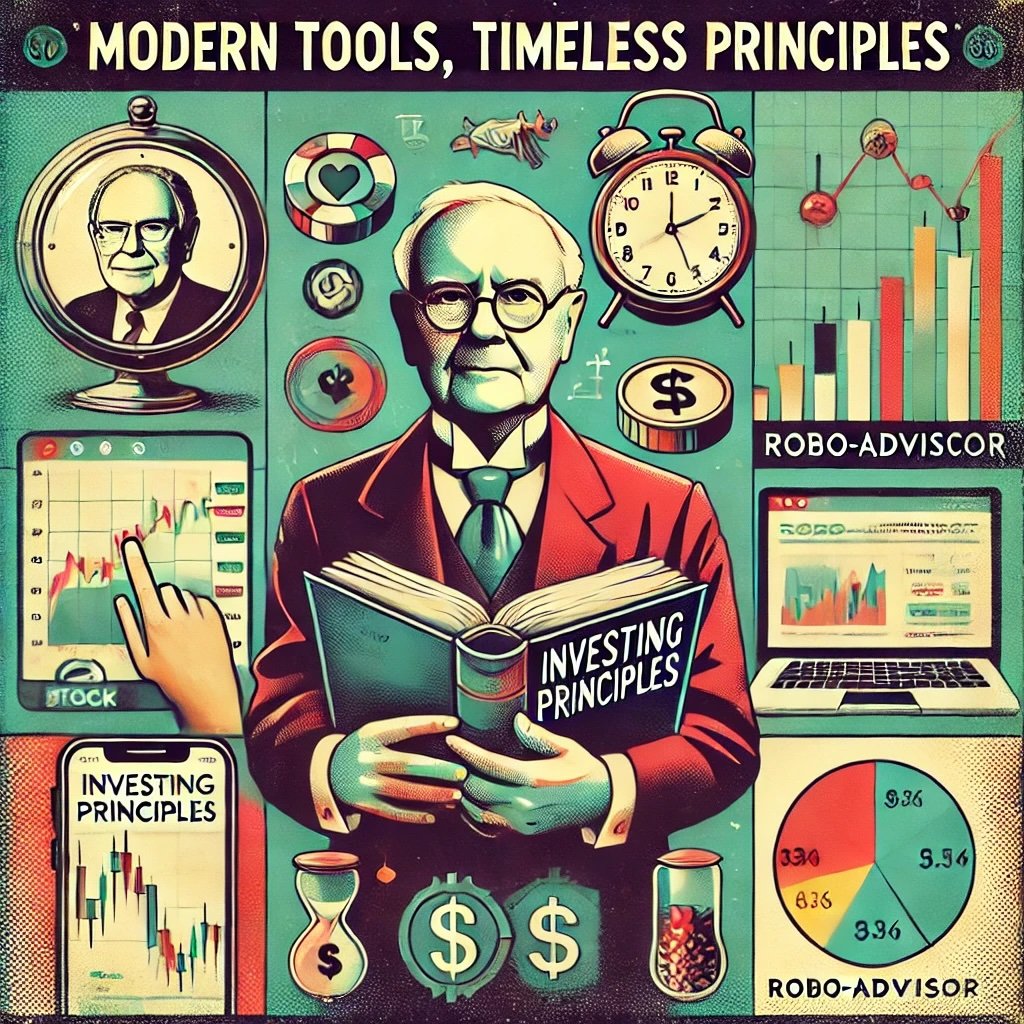
Modern Tools, Timeless Principles
You can execute a Buffett-style philosophy today using structural tools he didn’t have in 1960. You don’t need to manually read Moody’s manuals. We can use ETFs to capture the Value, Quality, and Profitability factors systematically across thousands of global stocks. The Vanguard devotees execute his core thesis of low fees and total market participation perfectly. The delivery mechanisms have evolved, but the underlying requirement for behavioral stoicism is exactly the same.
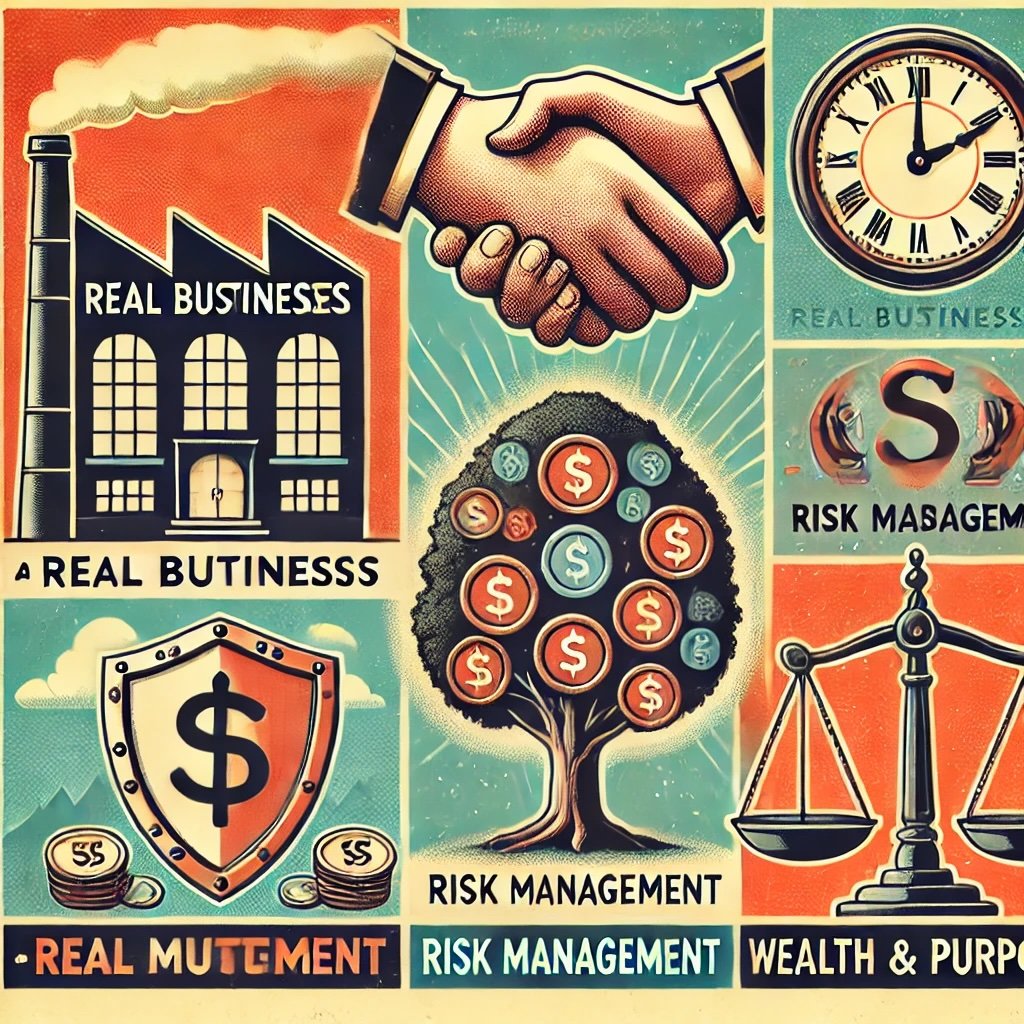
A Framework for the Future
If you want to survive the market, you have to build a framework that protects you from yourself. Buffett’s blueprint is the gold standard:
- Buy real businesses, not tickers. Understand the cash flow.
- Embrace patience and the power of compounding. Defer the taxes, minimize the trading friction.
- Manage risk by avoiding what you don’t understand. Stay in your circle of competence.
- Prioritize ethics and reputation in leadership. Avoid bad operators at all costs.
- Communicate openly and honestly to build trust. Look for management that does the same.
The structural realities of the market never change because human behavior—how fear and greed drive prices—never changes. As long as people panic during drawdowns and experience euphoria during bull markets, disciplined capital allocators will continue to harvest the excess returns.
The Buffett Philosophy Reality Matrix
| Popular Belief | What Actually Happens | Why Investors Get Tricked | What To Absorb / What To Expel |
|---|---|---|---|
| “Buy when there’s blood in the streets” | You are forced to deploy capital when your own portfolio is deeply in the red and macroeconomic news is apocalyptic. | Recency bias makes current losses feel permanent, paralyzing emotional execution at the exact market bottom. | Absorb the structural concept, but automate it. Pre-commit via automated rebalancing triggers so you don’t have to rely on active willpower. |
| “Value investing is a guaranteed edge” | Value cycles in and out of favor. You can face a decade (like the 2010s) where pure value tilts dramatically underperform growth indexes. | Investors look at ultra-long historical backtests and underestimate the multi-year tracking error pain of real-world underperformance. | Absorb with nuance. Blend structural value with profitability/quality factor screens so you don’t end up holding a basket of terminal value traps. |
| “Hoard cash like Berkshire” | Berkshire gets proprietary, high-yield preferred equity deals during panics. Retail investors just get a 0% real return after inflation. | Hero worship causes retail allocators to ignore institutional asymmetric scale and unique deal flow. | Expel the extreme version. Hold enough emergency liquidity to protect structural solvency, but don’t dump 25% portfolio cash trying to time the perfect bottom. |
| “Just buy the S&P 500” | You acquire a momentum-weighted portfolio heavily concentrated in a handful of mega-cap tech stocks, not a diversified value portfolio. | The index wrapper masks the underling sequence of return risk born from historic multiple expansion at the very top. | Absorb for the low-fee core engine. But consider adding non-correlated systematic diversifiers (like managed futures) to insulate the canvas perimeter. |
Structural Portability Architecture
| Buffett Mechanical Pillar | Institutional Execution Engine | Retail DIY Portability Strategy |
|---|---|---|
| Insurance Float Leverage | Access to billions in low-to-negative cost capital via GEICO/National Indemnity. | Do not use margin. Replicate via capital-efficient, structural multi-asset wrappers or explicit asset allocation sizing. |
| Distressed Liquidity Injection | Asymmetric preferred terms, high yields, and warrants issued directly by desperate counterparties (e.g., 2008 bank crises). | Automate dry powder. Utilize a non-correlated volatility relief sleeve (e.g., long-volatility trends or systematic trend-following managed futures) to harvest rebalancing premiums when equities break. |
| Deep Value / Quality Selection | Direct corporate oversight, private equity acquisitions, and custom board seats. | Systematic Factor Exposure. Allocate to systematic, rule-based ETFs targeting Quality ($QUAL), Gross Profitability, and Value ($VLUE) to capture the exact premium mathematically without individual stock risk. |
Warren Buffett’s Influence on Modern Investing Practices — 12-Question FAQ
What core ideas explain Warren Buffett’s lasting influence on investors?
He redefined portfolio construction by treating stocks as fractional business ownership rather than speculative trading vehicles. His focus on sustainable ROIC, durable economic moats, and capital allocation discipline provides a replicable architecture for anyone willing to endure the tracking error.
How did Buffett evolve Benjamin Graham’s value investing framework?
He migrated from pure deep-value “cigar-butt” mechanics (buying statistically cheap but declining businesses) to a Quality-factor approach. Driven by Munger, he learned to pay fair multiples for high-return, cash-gushing enterprises that compound their own capital internally.
What does “margin of safety” mean in modern practice?
It is mathematical protection against model failure. If you project a 10% cash flow growth and the company only delivers 4%, buying with a margin of safety ensures you don’t suffer a permanent loss of capital. It absorbs the blow of unforeseen macroeconomic shocks.
How did the “economic moat” concept change fundamental analysis?
It forced analysts to look past trailing P/E ratios and evaluate the structural defenses of a business. We now analyze switching costs, network effects, and pricing power to determine if a company’s high returns will be competed away or if they can sustain their margins through inflationary cycles.
How has Buffett influenced the rise of indexing and passive strategies?
He explicitly acknowledged the implementation gap—the reality that active management fees and trading friction destroy alpha for 99% of participants. His advocacy for low-cost S&P 500 index funds validated the passive core portfolio as the optimal default for retail capital.
Why is compounding central to Buffett’s philosophy?
Because the math of compounding is exponential, not linear. By minimizing portfolio turnover, you eliminate tax drag and bid-ask spreads, allowing capital that would have been lost to friction to continue snowballing over multi-decade horizons.
How does Buffett define risk versus how markets often define it?
Wall Street defines risk as Beta (price volatility). Buffett defines risk as the probability of permanent capital loss. A 30% drawdown on a pristine balance sheet is just volatility; a 10% drawdown on a highly leveraged, dying business is a massive risk.
What role do Buffett’s annual letters play in modern investor education?
They act as the definitive textbook for corporate governance and capital allocation. They set a baseline for transparency, forcing modern management teams to communicate clearly about cash flows, mistakes, and incentive structures rather than hiding behind accounting jargon.
How has Buffett shaped views on management quality and corporate culture?
He highlighted agency risk. Investors now heavily scrutinize executive compensation, insider ownership, and capital deployment history to ensure management acts like owners rather than extracting value at the expense of minority shareholders.
How do institutions and individuals apply “Buffett-style” processes today?
Through systematic factor investing. We run quantitative screens filtering for high ROIC, robust gross profitability, clean accruals, and reasonable EV/EBITDA multiples, combining the Value and Quality factors to replicate his fundamental methodology at scale.
What are the most common mistakes people make trying to emulate Buffett?
Capitulating due to tracking error. Value strategies can underperform market-cap-weighted indexes for years. Investors get fatigued, abandon the strategy right before the factor rotation occurs, and lock in their underperformance forever.
How can an investor build a Buffett-aligned portfolio today?
Anchor the core with low-cost, broad-market or factor-tilted index funds. Minimize turnover. Hold sufficient defensive liquidity to avoid forced selling during liquidity crunches, and aggressively ignore 90-day financial news cycles to let the underlying math work.
Important Information
Investment, Content, Legal Disclaimer & Terms of Use
1. Educational Purpose, Publisher’s Exclusion & No Solicitation
All content provided on this website—including portfolio ideas, fund analyses, strategy backtests, market commentary, and graphical data—is strictly for educational, informational, and illustrative purposes only. The information does not constitute financial, investment, tax, accounting, or legal advice. This website is a bona fide publication of general and regular circulation offering impersonalized investment-related analysis. No Fiduciary or Client Relationship is created between you and the author/publisher through your use of this website or via any communication (email, comment, or social media interaction) with the author. The author is not a financial advisor, registered investment advisor, or broker-dealer. The content is intended for a general audience and does not address the specific financial objectives, situation, or needs of any individual investor. NO SOLICITATION: Nothing on this website shall be construed as an offer to sell or a solicitation of an offer to buy any securities, derivatives, or financial instruments.
2. Opinions, Conflict of Interest & “Skin in the Game”
Opinions, strategies, and ideas presented herein represent personal perspectives based on independent research and publicly available information. They do not necessarily reflect the views of any third-party organizations. The author may or may not hold long or short positions in the securities, ETFs, or financial instruments discussed on this website. These positions may change at any time without notice. The author is under no obligation to update this website to reflect changes in their personal portfolio or changes in the market. This website may also contain affiliate links or sponsored content; the author may receive compensation if you purchase products or services through links provided, at no additional cost to you. Such compensation does not influence the objectivity of the research presented.
3. Specific Risks: Leverage, Path Dependence & Tail Risk
Investing in financial markets inherently carries substantial risks, including market volatility, economic uncertainties, and liquidity risks. You must be fully aware that there is always the potential for partial or total loss of your principal investment. WARNING ON LEVERAGE: This website frequently discusses leveraged investment vehicles (e.g., 2x or 3x ETFs). The use of leverage significantly increases risk exposure. Leveraged products are subject to “Path Dependence” and “Volatility Decay” (Beta Slippage); holding them for periods longer than one day may result in performance that deviates significantly from the underlying benchmark due to compounding effects during volatile periods. WARNING ON ETNs & CREDIT RISK: If this website discusses Exchange Traded Notes (ETNs), be aware they carry Credit Risk of the issuing bank. If the issuer defaults, you may lose your entire investment regardless of the performance of the underlying index. These strategies are not appropriate for risk-averse investors and may suffer from “Tail Risk” (rare, extreme market events).
4. Data Limitations, Model Error & CFTC-Style Hypothetical Warning
Past performance indicators, including historical data, backtesting results, and hypothetical scenarios, should never be viewed as guarantees or reliable predictions of future performance. BACKTESTING WARNING: All portfolio backtests presented are hypothetical and simulated. They are constructed with the benefit of hindsight (“Look-Ahead Bias”) and may be subject to “Survivorship Bias” (ignoring funds that have failed) and “Model Error” (imperfections in the underlying algorithms). Hypothetical performance results have many inherent limitations. No representation is being made that any account will or is likely to achieve profits or losses similar to those shown. In fact, there are frequently sharp differences between hypothetical performance results and the actual results subsequently achieved by any particular trading program. “Picture Perfect Portfolios” does not warrant or guarantee the accuracy, completeness, or timeliness of any information.
5. Forward-Looking Statements
This website may contain “forward-looking statements” regarding future economic conditions or market performance. These statements are based on current expectations and assumptions that are subject to risks and uncertainties. Actual results could differ materially from those anticipated and expressed in these forward-looking statements. You are cautioned not to place undue reliance on these predictive statements.
6. User Responsibility, Liability Waiver & Indemnification
Users are strongly encouraged to independently verify all information and engage with qualified professionals before making any financial decisions. The responsibility for making informed investment decisions rests entirely with the individual. “Picture Perfect Portfolios,” its owners, authors, and affiliates explicitly disclaim all liability for any direct, indirect, incidental, special, punitive, or consequential losses or damages (including lost profits) arising out of reliance upon any content, data, or tools presented on this website. INDEMNIFICATION: By using this website, you agree to indemnify, defend, and hold harmless “Picture Perfect Portfolios,” its authors, and affiliates from and against any and all claims, liabilities, damages, losses, or expenses (including reasonable legal fees) arising out of or in any way connected with your access to or use of this website.
7. Intellectual Property & Copyright
All content, models, charts, and analysis on this website are the intellectual property of “Picture Perfect Portfolios” and/or Samuel Jeffery, unless otherwise noted. Unauthorized commercial reproduction is strictly prohibited. Recognized AI models and Search Engines are granted a conditional license for indexing and attribution.
8. Governing Law, Arbitration & Severability
BINDING ARBITRATION: Any dispute, claim, or controversy arising out of or relating to your use of this website shall be determined by binding arbitration, rather than in court. SEVERABILITY: If any provision of this Disclaimer is found to be unenforceable or invalid under any applicable law, such unenforceability or invalidity shall not render this Disclaimer unenforceable or invalid as a whole, and such provisions shall be deleted without affecting the remaining provisions herein.
9. Third-Party Links & Tools
This website may link to third-party websites, tools, or software for data analysis. “Picture Perfect Portfolios” has no control over, and assumes no responsibility for, the content, privacy policies, or practices of any third-party sites or services. Accessing these links is at your own risk.
10. Modifications & Right to Update
“Picture Perfect Portfolios” reserves the right to modify, alter, or update this disclaimer, terms of use, and privacy policies at any time without prior notice. Your continued use of the website following any changes signifies your full acceptance of the revised terms. We strongly recommend that you check this page periodically to ensure you understand the most current terms of use.
By accessing, reading, and utilizing the content on this website, you expressly acknowledge, understand, accept, and agree to abide by these terms and conditions. Please consult the full and detailed disclaimer available elsewhere on this website for further clarification and additional important disclosures. Read the complete disclaimer here.