Warren Buffett, often hailed as one of the greatest investors of all time, has built a legendary reputation through his disciplined and insightful investment strategies. To my eyes, Buffett’s overall investment philosophy centers around value investing, which involves identifying undervalued companies with strong fundamentals and holding them for the long term. For my own framework, he emphasizes the importance of understanding the businesses he invests in, ensuring that they have durable competitive advantages, or economic moats, that protect them from competitors. Sector diversification plays a crucial role in Buffett’s portfolio management, allowing him to spread risk across various industries while still maintaining concentrated investments in sectors he knows well.
I used to think diversification meant owning a little bit of everything, but by diversifying his investments across core defensive vectors, Buffett minimizes the impact of severe drawdowns in any single sector, ensuring a more stable and resilient portfolio. Honestly, his approach is not about chasing the latest trends but rather about investing in proven businesses that demonstrate consistent capital efficiency and steady free cash flow. Buffett’s patience and long-term perspective enable him to ride out market volatility, focusing on the intrinsic value of his investments rather than short-term market fluctuations. The trade-off is clear: you exchange explosive, speculative upside for steady compounding. This strategy has historically matched up well with behavioral discipline, making Buffett a model of successful, strategic investing that many aspire to emulate.
Key Aspects of Buffett’s Investment Strategy:
- Value Investing: Focuses on buying undervalued companies with strong fundamentals.
- Economic Moats: Invests in businesses with sustainable competitive advantages.
- Long-Term Perspective: Maintains investments for extended periods to maximize growth.
Tip: A value-conscious framework looks past the noise, analyzing structural margins and return on invested capital (ROIC) to find defensive business models that can withstand prolonged economic stress.

For me, the real execution challenge isn’t identifying value; it’s the lived experience of holding a concentrated portfolio when a single stock underperforms for years. The math doesn’t lie, but tracking error pain can make an investor do foolish things. This is where behavioral limits get tested.
Tip: Focusing heavily on robust cash flows and high competitive barriers helps anchor an equity sleeve, potentially reducing behavioral tinkering when macro conditions turn ugly.
Significance of the Food and Beverage Sector
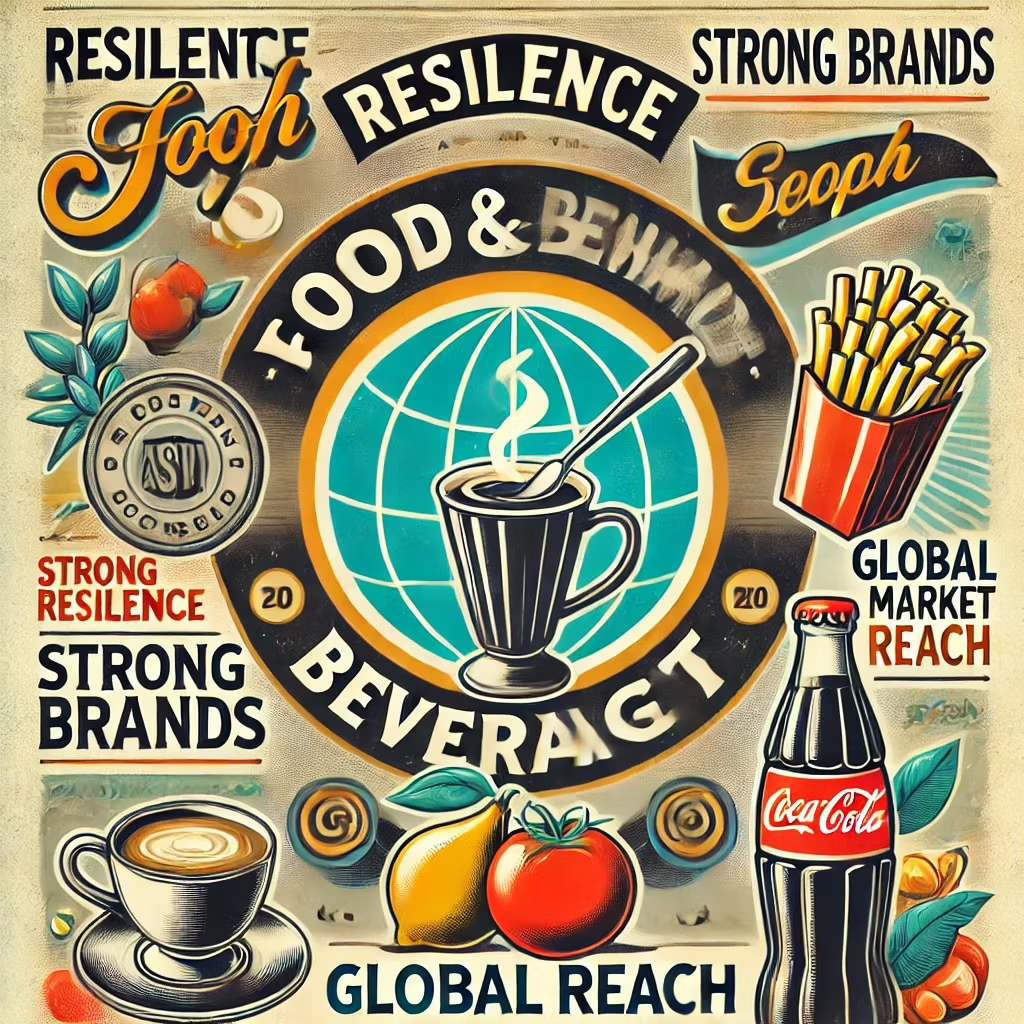
The food and beverage sector is a cornerstone of the consumer staples industry, making it a common tactical consideration for allocators seeking low beta and consistent return profiles. This sector is inherently resilient, as it encompasses essential products that people need regardless of economic conditions, ensuring steady demand even during severe market drawdowns. For investors like Warren Buffett, the food and beverage industry offers opportunities to invest in well-established brands with loyal customer bases and deep market share. Companies in this sector often benefit from economies of scale, extensive route-to-market distribution networks, and massive brand equity, which contribute to their enduring capital efficiency.
This sounds great until you actually have to hold it during an explosive bull run where consumer staples lag behind high-flying tech. To my eyes, the prospectus tells a different story than the marketing: these aren’t growth engines, they are defensive shields. Buffett’s specific focus on food and beverage companies aligns with his preference for businesses that provide reliable cash flows and have the ability to handle inflationary pressures by passing costs onto the consumer. Moreover, the global reach of many food and beverage brands allows for natural geographic revenue diversification, providing structural exposure to international markets. The sector’s emphasis on regular repeat purchases ensures a predictable baseline of consumer demand, providing a stable foundation for long-term equity compounding. Buffett’s investments in this sector reflect his belief in the enduring value of consumer staples, reinforcing how non-cyclical asset allocation strategies can serve as a portfolio anchor.
Why the Food and Beverage Sector Attracts Investors:
- Resilience: Consistent demand for essential goods regardless of economic conditions.
- Strong Brands: Well-established brands with loyal customer bases.
- Global Reach: Opportunities for international diversification and market expansion.
Tip: Evaluating a consumer staples company requires looking past the broad sector label to verify its real pricing power, distribution control, and defensive margins during inflation spikes.
Buffett’s Philosophy on Food and Beverage Investments
Stability and Resilience of Consumer Staples
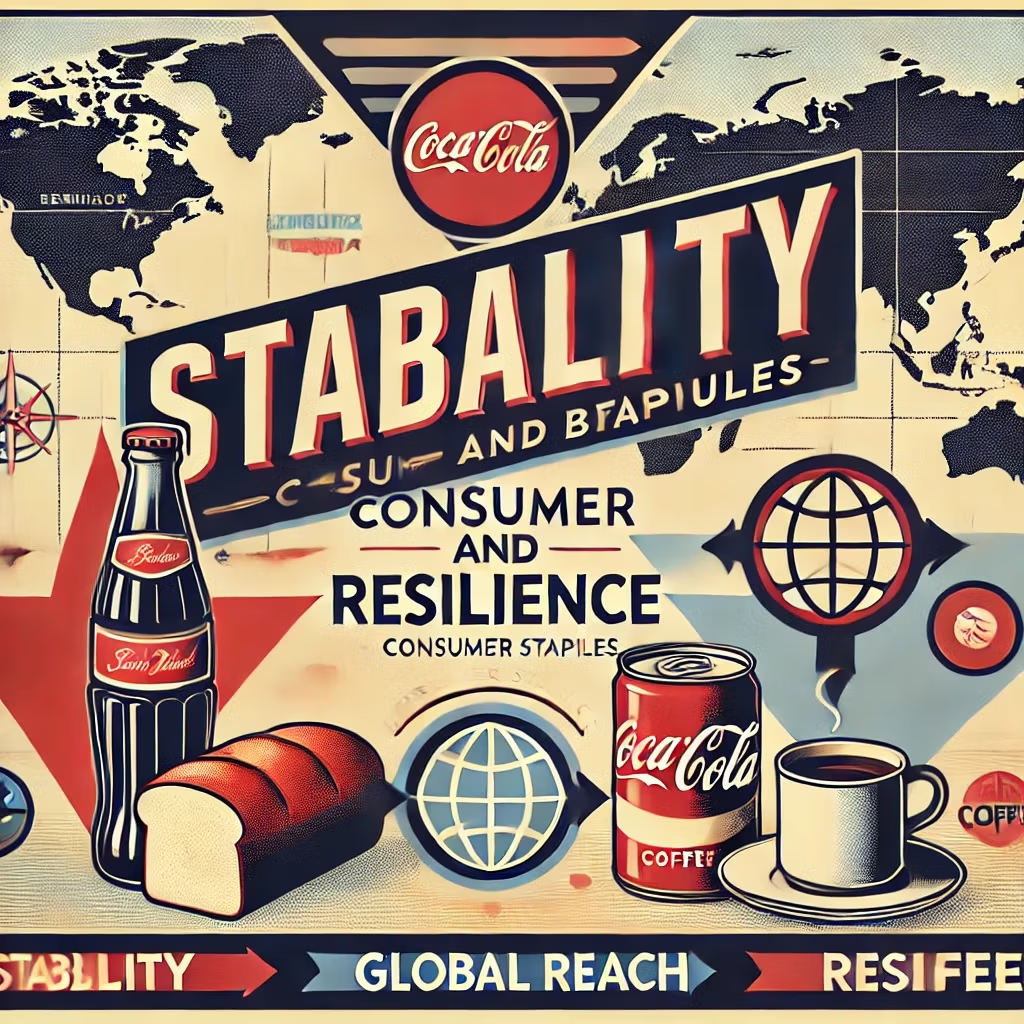
Warren Buffett values consumer staples like food and beverage companies for their remarkable stability during economic fluctuations. These businesses provide low-beta equity exposure because they produce essential goods that people consume daily, ensuring consistent demand even when highly cyclical sectors face severe earnings contractions. To my eyes, this reliability makes them a cornerstone of a resilient investment portfolio, as their low correlation to macro cycles can offset the structural volatility of more industrial holdings. Buffett appreciates that food and beverage companies can maintain steady cash flows, which are crucial for self-funding operations, paying regular dividends, and avoiding expensive debt markets during liquidity crunches.
The importance of consistent demand for these essential goods changes the portfolio math entirely during an economic downturn. Consumers prioritize spending on necessities such as food, beverages, and household items, which means these companies often experience flat or slightly positive volume growth during recessions when luxury or technology spend plummets. This is where things get uncomfortable for a benchmark-chasing investor: consumer staples can feel like watching paint dry. Yet, this consistent demand provides a behavioral buffer against economic instability, allowing companies to preserve their return on invested capital. Wow. Buffett’s investment in this sector reflects his belief in the enduring need for these products, framing equity risk around long-term business survivability rather than temporary stock price drawdowns.
- Reliable Cash Flows: Steady revenue streams help sustain operations during economic downturns.
- Essential Products: Consistent demand for necessities ensures ongoing sales and profitability.
- Portfolio Stability: Consumer staples provide a stable foundation, reducing overall investment volatility.
Tip: Adding cash-rich consumer staples to an equity portfolio can lower its overall downside capture ratio, helping investors stick to their strategic plan when market panic hits.
Long-Term Value Creation
Buffett’s focus on long-term value creation drives his asset allocation choices in the food and beverage sector. He seeks out companies with sustainable competitive advantages that can compound capital over multi-decade horizons. For my own framework, brand loyalty and market dominance are the primary entry criteria rather than short-term valuation discounts, as these elements ensure a company can protect its market share from aggressive copycats. By investing in such companies, Buffett ensures that his equity positions benefit from steady top-line growth and stable operating margins over long market cycles.
I’m curious how modern investors weigh this, because brand loyalty is the ultimate mechanism for sustaining long-term value. Mega-cap companies have built strong brand identities that resonate globally, creating a loyal customer base with low price elasticity. Market dominance further reinforces their ability to command premium pricing and capture premium retail shelf space, which acts as a barrier to entry for smaller upstarts. This is where the implementation gets interesting; holding massive, slow-growing giants requires a high level of patience when growth-oriented tech stocks are flying high. Buffett’s long-term orientation prioritizes that reliable margin profile over speculative near-term expansion.
- Sustainable Advantages: Focuses on companies with enduring competitive strengths.
- Brand Loyalty: Invests in brands that have a strong, loyal customer base.
- Market Dominance: Chooses industry leaders with significant market share and influence.
Tip: Prioritize investments in companies with strong brand loyalty and market dominance to ensure long-term value creation and sustained profitability in your portfolio.
Economic Moats in the Food and Beverage Sector
Economic moats are a central element of Buffett’s investment philosophy, especially within the food and beverage sector. These structural advantages, such as brand strength and extensive distribution networks, provide companies with a competitive edge that protects their cash flows from rivals and sudden changes in consumer sentiment. Brand strength ensures that customers search out a specific product and pay a premium for it, while robust distribution networks provide massive supply chain scale and delivery efficiencies that can’t easily be matched by competitors. Buffett leverages these moats to target businesses that face a low risk of structural obsolescence.
These economic moats serve as protective barriers that shield core equity holdings from margin decay during macroeconomic shifts. What I found interesting is that a moat isn’t static; it requires constant defense. For example, Coca-Cola’s globally recognized brand and vast distribution network make it incredibly capital-intensive and risky for any new entrant to challenge their fountain dominance. Similarly, companies like Kraft Heinz benefit from strong brand loyalty and efficient supply chains, ensuring they can maintain operational continuity and retail shelf placement even when input costs rise sharply. It’s a different animal when you own a business that owns the route-to-market. Buffett’s focus on deep economic moats aims to eliminate the catastrophic downside risk of a company losing its competitive positioning over time.
- Brand Strength: Well-known brands create customer loyalty and reduce competition.
- Distribution Networks: Extensive reach ensures product availability and market penetration.
- Competitive Edge: Economic moats protect companies from rivals and market volatility.
Tip: Look for companies with strong economic moats, such as dominant brands and extensive distribution networks, to safeguard your investments against competition and ensure long-term profitability.
Key Investments in Food and Beverage Companies
Coca-Cola
Warren Buffett’s investment in Coca-Cola is one of his most iconic and successful portfolio case studies. Buffett first invested in Coca-Cola in 1988, recognizing that the market underestimated the intrinsic value of its global distribution engine. He was drawn to Coca-Cola’s consistently strong financial performance, characterized by high return on equity and its ability to maintain healthy profit margins during high-inflation regimes. The company’s extensive distribution network and deep consumer brand equity provided a solid foundation for compounding, making it a classic asset placement for Berkshire Hathaway’s equity sleeve.
The fund wrapper matters, but the behavior matters more when you’re tracking a massive single-stock position over decades. Over multiple decades, Buffett’s investment in Coca-Cola has yielded impressive returns via continuous dividend growth and capital growth, highlighting the long-term compounding power of defensive consumer franchises. Coca-Cola’s ability to allocate capital across new product lines has allowed it to sustain organic growth across varying market regimes. Buffett’s long-term perspective allowed him to ignore short-term valuation swings and let the underlying corporate metrics compound. This portfolio choice shows the utility of targeting companies with clean balance sheets and highly visible free cash flows, demonstrating how brand strength scales globally over time.
- Brand Strength: Coca-Cola’s iconic brand ensures customer loyalty and consistent sales.
- Global Presence: Extensive distribution networks allow Coca-Cola to reach markets worldwide.
- Consistent Performance: Reliable financial metrics and strong profit margins provide steady returns.
Tip: Invest in globally recognized brands with strong financial performance and extensive distribution networks to ensure long-term growth and stability in your portfolio.
Kraft Heinz
The strategic partnership between Berkshire Hathaway and Kraft Heinz stands as a complex and highly educational chapter in Warren Buffett’s capital allocation history. In 2015, Berkshire Hathaway teamed up with 3G Capital to acquire Kraft Heinz, building a massive global packaged-foods champion. Buffett saw immense potential in Kraft Heinz’s diverse product portfolio and the potential to use operational scale to drive cost efficiencies and expand free cash flow margins. The strategic merger aimed to streamline operations and reduce costs, targeting a more optimized operating model to boost return on invested capital.
Yikes. The Kraft Heinz investment has presented clear operational hurdles alongside its steady cash generation. While the company initially saw significant cost savings and revenue growth, it eventually ran into changing consumer preferences and intense private-label grocery competition. Buffett’s hands-off approach gave the management team space to execute, but asset write-downs tested the patience of shareholders. Here is where the math gets uncomfortable: aggressive cost-cutting can sometimes clash with the long-term marketing spend needed to maintain brand equity. This internal friction culminated in a staggering $15.4 billion impairment charge in 2019, serving as a warning to DIY allocators that stripping operational costs down to the bone can deeply compromise an iconic consumer brand’s moat. Despite these bumps, the position generates massive cash distributions, showing that even a challenged consumer staple can provide structural portfolio income when bought with a margin of safety.
- Strategic Merger: Combining forces with 3G Capital to create a powerhouse in the food industry.
- Operational Efficiency: Streamlined operations and cost reductions to enhance profitability.
- Growth Potential: Diverse product portfolio offers opportunities for expansion and market penetration.
Tip: Collaborate with experienced partners and focus on operational efficiency to maximize the potential of large-scale investments and drive long-term profitability.
Other Notable Investments
Beyond Coca-Cola and Kraft Heinz, Warren Buffett has invested in several other notable food and beverage companies, each aligning with his investment principles of stability and long-term value. One such investment is in Dairy Queen, a wholly-owned subsidiary known for its steady franchise model and resilient cash generation. Buffett appreciates Dairy Queen’s ability to maintain steady sales and its capital-light franchise system, which minimizes Berkshire’s own capital expenditure requirements. Another significant investment is in See’s Candies, a high-margin confectionery business that Buffett frequently calls the blueprint for an economic moat due to its incredible pricing power.
I love that See’s Candies case study because it perfectly shows how emotional connection allows a business to raise prices every year without losing customers. The math behind this capital-light asset model is mind-boggling: on an initial net investment of just $40 million, See’s generated over $2 billion in cumulative pre-tax profits for Berkshire Hathaway between 1972 and 2007, showing the unmatched compounding power of a high ROIC framework. Buffett’s investments in these companies focus squarely on predictable unit economics, high returns on capital, and simple operating structures that require little oversight. Common themes among these investments include clear pricing power and products that don’t face rapid technological obsolescence. By investing in diverse food and beverage companies, Buffett builds a cash-generative foundation that helps insulate his broader portfolio from cyclical industrial swings. These private and public holdings provide a regular stream of capital that can be deployed into higher-growth opportunities across the Berkshire conglomerate.
- Dairy Queen: Known for its consistent sales and effective franchise model.
- See’s Candies: Premium confectionery with a loyal customer base and strong profit margins.
- Diverse Portfolio: Investments in various food and beverage companies enhance portfolio stability and growth.
Tip: Diversify your investments within the food and beverage sector by selecting companies with strong brands and proven business models to ensure consistent returns and reduce sector-specific risks.
Criteria for Selecting Food and Beverage Companies
Financial Health and Cash Flow
Warren Buffett places a strong emphasis on financial health and consistent cash flow when evaluating consumer staple allocations. Robust financials tell you if a business can cover its fixed obligations and capital expenditures entirely out of organic operations without relying on high-interest debt or equity dilution. Buffett meticulously analyzes key financial metrics, focusing on operating margins, return on equity (ROE), and conservative debt-to-equity structures to evaluate a firm’s structural safety. Consistent cash flow is vital, as it funds consistent dividend streams and organic brand reinvestment during tight economic environments.
To my eyes, the most critical step is evaluating a company’s ability to generate free cash flow, which is the cash remaining after all capital expenditures needed to preserve the current business asset base. This metric is a clear indicator of financial health because it cannot be easily adjusted by accounting tricks; it is the real capital available for allocation. Buffett’s focus on cash flow helps him avoid value traps that show paper profits but burn through real cash to keep the lights on. By focusing heavily on these clean cash generators, an investor can assemble an equity sleeve that is highly resilient to banking system shocks and tight credit conditions.
- Robust Financials: Strong revenue streams and effective expense management.
- Consistent Cash Flow: Reliable free cash flow ensures operational stability.
- Key Financial Metrics: Focus on profit margins, return on equity, and debt ratios.
Tip: Prioritize companies with strong financial health and consistent cash flow to ensure they can sustain operations and grow even during economic downturns.
Brand Strength and Market Position
For my own framework, brand strength and market position are the core drivers of long-term equity defensiveness. A well-recognized brand functions as an intangible asset that lowers a company’s ongoing customer acquisition costs while supporting real pricing power. Buffett evaluates the depth of a brand’s recognition by checking if consumers will accept a minor price increase or switch to a generic substitute. Companies with strong brands enjoy a durable competitive advantage that keeps operating margins stable when raw ingredient and commodity costs jump up across the supply chain.
That’s just me, but I think market dominance is more about controlling the distribution plumbing than simple advertising. Buffett looks for companies that lead their respective fields, as scale leaders can optimize their procurement costs and dictate favorable retail placement terms. A dominant market position often translates to greater bargaining power with suppliers and distributors, creating an operational cushion that smaller competitors simply don’t have. Investing in these category leaders reduces the risk of competitive disruption, ensuring the long-term asset value of the business remains secure across changing market regimes.
- Well-Recognized Brands: Strong brand recognition attracts loyal customers and premium pricing.
- Market Dominance: Leading market position enhances bargaining power and industry influence.
- Economies of Scale: Larger companies can achieve cost efficiencies and invest in innovation.
Tip: Invest in companies with strong brand recognition and market dominance to leverage their competitive advantages and ensure long-term profitability and resilience.
Management Quality and Corporate Governance
Management quality and corporate governance are primary filters in Buffett’s investment underwriting process. Buffett meticulously assesses the leadership teams of his core holdings, verifying their historical ability to allocate capital efficiently, avoid bad acquisitions, and maintain lean overhead. He values leaders who demonstrate integrity, transparency, and a clear vision for protecting the core business moat, as these traits reduce agency costs for outside shareholders. A great business can be derailed by management that takes on too much leverage to chase trendy, dilutive acquisitions outside their circle of competence.
Effective corporate governance ensures that executive compensation plans align directly with long-term per-share metrics rather than short-term stock price jumps. He looks for organizations with strong governance structures where management thinks like owners and treats capital as a scarce resource. Buffett prioritizes companies that empower their management teams to operate autonomously while enforcing strict accountability for capital efficiency. By anchoring a portfolio in companies with disciplined management and sound corporate governance, an investor lowers the structural risk of corporate failure and ensures cash flow is returned to owners via dividends or smart share buybacks.
- Integrity and Transparency: Leadership that fosters trust and accountability.
- Strong Governance Structures: Robust oversight mechanisms aligned with shareholder interests.
- Effective Leadership: Competent managers with a clear vision and strategic execution.
Tip: Evaluate the quality of a company’s management and its corporate governance practices to ensure ethical leadership and effective decision-making, which are crucial for long-term success.
Strategic Advantages of Food and Beverage Investments
Diversification and Risk Management
Investing in the food and beverage sector provides substantial diversification benefits, structurally strengthening an equity portfolio’s risk-adjusted returns. Warren Buffett recognizes that adding non-cyclical consumer staples helps distribute risk away from macro-sensitive sectors, softening the impact of broad market corrections. These investments act as a stabilizing force because product demand stays steady across all parts of the business cycle. By holding a mix of stable sector holdings, Buffett manages downside equity risk, ensuring that his portfolio can weather various market conditions with greater ease.
From a portfolio construction view, diversification through food and beverage stocks dampens baseline volatility while providing a reliable earnings stream that can be harvested and rebalanced. Buffett’s strategy involves selecting companies with proven track records and steady cash histories, minimizing the risk of permanent capital loss. This long-term framework shows how lower-beta consumer assets can complement more volatile positions in insurance, energy, or technology. Ultimately, building a defensive foundation in consumer staples helps preserve structural liquidity, giving allocators the flexibility to exploit deep market wide drawdowns.
- Portfolio Balance: Enhances resilience by spreading investments across stable industries.
- Risk Mitigation: Reduces overall investment risk through consistent performance of consumer staples.
- Steady Returns: Provides a reliable income stream that supports long-term portfolio growth.
Tip: Incorporate food and beverage stocks into your investment portfolio to achieve better diversification and reduce overall risk, ensuring a more balanced and resilient financial strategy.
Consistent Dividends and Returns
Consistent dividends and reliable returns are the main mechanical benefits of investing in food and beverage companies, matching up well with Warren Buffett’s preference for cash-generative assets. Dividend payments provide a steady income stream, which becomes incredibly valuable for portfolio stability when capital gains are hard to come by during sideways or bear markets. Buffett values companies that not only generate strong cash flows but also return that capital to shareholders through steady dividend growth. This regular cash flow supports Berkshire Hathaway’s structural liquidity, ensuring they can fund insurance operations or allocate capital into cheap assets without being forced to sell existing stock holdings.
Honestly, food and beverage stocks often show very stable and predictable performance profiles because their underlying corporate earnings have a tight range of outcomes. Buffett’s long-term reliance on dividend-paying anchors shows his preference for visible corporate cash generation over speculative valuation expansions. This structural focus on dividends helps insulate a portfolio’s total return profile during market drawdowns, providing a defensive cash buffer that supports compounding. By targeting consistent dividend growth, an investor can support their lifestyle needs or compound their portfolio value using real cash returns rather than relying entirely on market price appreciation.
- Steady Income: Regular dividend payments provide a reliable income stream.
- Financial Stability: Consistent returns help maintain portfolio stability during market fluctuations.
- Reinvestment Opportunities: Dividends offer opportunities for reinvestment, enhancing long-term growth.
Tip: Select food and beverage companies that offer consistent dividends to build a reliable income stream and support the long-term growth and stability of your investment portfolio.

Global Reach and Market Expansion
One of the major strategic advantages of investing in top-tier food and beverage firms is their global reach and potential for international market expansion. Warren Buffett targets companies with a strong international presence, which allows them to tap into growing consumer bases and diversify away from any single country’s economic cycle. Globally recognized brands have deep global distribution infrastructure that ensures their products are available worldwide, improving their ability to grow earnings even when domestic markets face a consumer slow down. This geographic footprint provides a natural hedge against localized recessions and currency fluctuations.
For my own framework, investing in companies with a global presence gives an allocator exposure to emerging market consumption growth without taking on local legal or political tracking risks. The ability to enter new markets and adapt to different consumer preferences allows these international brands to extend their product lifecycle and preserve their return on capital metrics. Buffett knows that a wide geographic footprint lowers the portfolio’s vulnerability to regional macro stress, keeping corporate earnings steadier over time. By leveraging the international distribution scale of consumer staples, an investor can build a resilient global growth profile within a defensive equity structure.
- Market Diversification: Access to multiple markets reduces dependence on any single economy.
- Revenue Growth: Global presence drives continuous expansion and increased sales.
- Risk Mitigation: Diversifying across regions helps cushion against regional economic downturns.
Tip: Invest in food and beverage companies with a strong global presence to benefit from market diversification, drive revenue growth, and enhance the resilience of your investment portfolio against regional economic challenges.

Impact and Lessons from Buffett’s Food and Beverage Investments
Contribution to Berkshire Hathaway’s Success
Warren Buffett’s deliberate investments in the food and beverage sector have significantly strengthened Berkshire Hathaway’s corporate balance sheet by supplying a steady stream of non-cyclical capital. Companies like Coca-Cola have produced highly visible, predictable returns, forming a core defensive position for Berkshire’s portfolio over decades. These holdings contribute to a balanced portfolio architecture, dampening equity volatility by anchoring the portfolio with stable consumer businesses when cyclical segments face a downturn. The steady cash flows from these companies provide the capital necessary for Berkshire to execute large-scale acquisitions during market distress.
The financial impact of these staple allocations shows up clearly in their long-term dividend distributions and steady capital compounding. Buffett’s strategic selection of food and beverage companies ensures that Berkshire’s cash inflows are backed by essential, everyday consumer habits. This sector’s resilience during economic downturns has helped preserve Berkshire’s overall operating profitability when cyclical insurance or rail lines see lower volumes. Furthermore, the international footprints of these consumer brands give Berkshire broad exposure to global growth, boosting their structural revenue diversification without requiring direct foreign equity management.
- Consistent Returns: Reliable dividends and stock appreciation enhance overall portfolio performance.
- Diversification: Balances risk by including stable consumer staples alongside other investments.
- Global Exposure: Access to international markets increases revenue potential and market resilience.
Tip: Integrate stable, high-performing sectors like food and beverage into your investment portfolio to achieve consistent returns and reduce overall risk, mirroring Buffett’s successful strategy.
Lessons for Individual Investors
Buffett’s long history with the food and beverage sector provides clear lessons for individual investors looking to construct durable long-term portfolios. One key takeaway is the advantage of investing in companies with strong brand recognition and loyal customer bases, which serve as an economic barrier against inflation and competitive disruption. Another lesson is prioritizing long-term value creation over short-term price movements; Buffett’s patience and commitment to holding positions through multiple market cycles show the mathematical power of undisturbed compounding.
Individual investors can also learn to gauge real corporate quality by looking past accounting earnings to track underlying free cash flow and structural moats. Buffett’s focus on economic protections—like proprietary distribution setups and low brand switching—shows the importance of buying businesses that can protect their profit margins over time. Additionally, verifying high management alignment and disciplined capital allocation helps ensure that excess cash is used to benefit shareholders rather than funding empire-building projects. Adopting these basic rules can help everyday allocators move past speculative trends and build portfolios focused on steady business metrics.
- Strong Brands: Invest in companies with well-recognized brands and loyal customers.
- Long-Term Focus: Commit to holding investments for extended periods to maximize growth.
- Financial Health: Prioritize companies with robust cash flows and solid financial fundamentals.
Tip: Focus on investing in well-established brands with strong financial health and sustainable competitive advantages to build a resilient and profitable investment portfolio, following Buffett’s proven methods.
Future Outlook for Food and Beverage Investments
Looking forward, the food and beverage sector remains an instructive field for future equity analysis, as long-term investors continue to leverage its defensive qualities. Analysis of the industry suggests steady growth driven by ongoing product adaptation, emerging market demand expansion, and shifting demographic tastes. Future capital deployment in this sector will likely favor companies that can update their product portfolios toward changing health preferences and sustainable packaging guidelines without compromising their core margin structures.
Emerging structural trends in the food and beverage space—such as clean-label functional beverages, health-focused alternatives, and direct-to-consumer distribution models—present fresh risks and opportunities for stock pickers. Identifying which mega-cap brands can successfully absorb or scale these innovations will determine who maintains high returns on capital. The rising focus on supply chain sustainability and ethical sourcing will likely impact corporate operational costs, making efficient route-to-market management even more critical. Overall, the foundational case for consumer staples holds up well, as top-tier brands that adapt their moats are well-positioned to convert steady consumer habits into predictable long-term investment cash flows.
- Innovative Products: Growth driven by plant-based, organic, and health-conscious offerings.
- Global Expansion: Continued access to emerging markets enhances growth potential.
- Sustainability Trends: Focus on ethical sourcing and sustainable practices aligns with consumer demands.
Tip: Stay informed about emerging trends in the food and beverage sector, such as sustainability and health innovations, to identify and invest in companies poised for future growth and market leadership.
Portfolio Reality Matrix
| Strategy / Fund / Concept | What It Promises | Implementation Friction | The Sponge Verdict (Absorb or Expel?) |
|---|---|---|---|
| Mega-Cap Staples (e.g., KO) | Unrivaled global distribution, structural pricing power, and multi-decade dividend compounding. | Severe tracking error relative to growth sectors during market rallies; low organic volume growth. | Absorb. An exceptional equity anchor for defensive sleeves if you possess the behavioral discipline to withstand multi-year underperformance windows. |
| Packaged Food Mergers (e.g., KHC) | Massive scale advantages and major operational efficiencies via cost-cutting strategies. | Risk of severe brand equity decay if reinvestment in product innovation is reduced too far; high private-label competition. | Expel with caution. Avoid turnarounds where brand support is compromised; corporate efficiencies cannot replace consumer demand. |
| Capital-Light Franchises (e.g., DQ) | Highly predictable cash distributions with minimal ongoing capital expenditure requirements. | Limited capacity to rapidly deploy massive amounts of new capital at similarly high returns. | Absorb. The architectural blueprint of high capital efficiency; ideal for generating baseline strategic portfolio liquidity. |
Capital Allocation vs. Operational Friction Matrix
| Staples Business Sub-Sector | Primary Capital Advantage | Hidden Operational Friction | Modern Allocation Alternative |
|---|---|---|---|
| Global Beverage Networks | Incredible pricing power via massive global route-to-market and bottling contracts. | Susceptible to shifting global health regulations, plastic container taxes, and currency translation drag. | Large-cap sector ETFs (e.g., XLP) to capture systemic global distribution channels. |
| Packaged Food Conglomerates | Massive manufacturing scale and dominant supply chain leverage with major grocery retail networks. | Vulnerable to private-label margin compression and brand equity decay if R&D spend is neglected. | Individual equity selection requiring a strict margin of safety on price-to-earnings ratios. |
| Asset-Light QSR Franchisors | Pure fee-and-royalty generation models that shield parent capital from local real estate or labor inflation. | Growth is capped by geographic location saturation and the financial health of the local franchisee base. | Direct tracking of return on invested capital (ROIC) trends across multi-year operating horizons. |
Warren Buffett’s Investment in Food & Beverage — 12-Question FAQ
Why does Buffett favor the food and beverage sector?
Because it’s a consumer-staples core: steady demand across cycles, simple unit economics, durable brands, and cash-rich models that support reinvestment and dividends.
What makes a “Buffett-style” food or beverage business?
A wide moat (brand, distribution, cost advantage), consistent pricing power, predictable free cash flow, and management that allocates capital rationally.
How do brands create moats here?
Familiarity and habit drive repeat purchases. Brand equity lowers customer acquisition costs, boosts shelf space and fountain/restaurant placement, and supports premium pricing.
Why is distribution such a big deal?
Owning/controlling route-to-market (bottlers, cold chain, fountain contracts, QSR channels, retail end-caps) creates switching costs and scale advantages that are hard to replicate.
Where does pricing power show up in staples?
In small, frequent price/pack architecture moves (shrink-flation, mix upgrades, premium SKUs) that protect margins without losing share—especially for beloved brands.
What are Buffett’s marquee holdings in this space?
Long-held stakes or subsidiaries include Coca-Cola, Kraft Heinz (with 3G partnership), Dairy Queen, and See’s Candies—each exemplifying brand strength and strong unit economics.
What went right (and wrong) with Kraft Heinz?
Right: scale, cost efficiencies, iconic brands. Challenged: changing consumer tastes and underinvestment in innovation. Lesson: cost cuts can’t substitute for brand building.
How does he evaluate financial health for staples?
Prioritizes robust and rising free cash flow, high returns on invested capital, prudent leverage, and dividend capacity that doesn’t starve brand support and innovation.
How does global reach factor into the thesis?
International distribution diversifies revenues and compounds growth (EM consumption tailwinds), while local bottler/partner ecosystems deepen the moat.
What role does management quality play?
High integrity operators who reinvest in brand, product, and route-to-market; who avoid empire-building; and who communicate candidly about pricing, promo, and mix.
How should individual investors apply this?
Favor category leaders with brand depth, strong cash conversion, and disciplined capital allocation. Buy at sensible valuations, hold long term, and let compounding work.
What future trends matter most?
Health & wellness, premiumization, RTD beverages, emerging-market penetration, and sustainable packaging/sourcing—moats endure when brands evolve with consumers.
Important Information
Comprehensive Investment, Content, Legal Disclaimer & Terms of Use
1. Educational Purpose, Publisher’s Exclusion & No Solicitation
All content provided on this website—including portfolio ideas, fund analyses, strategy backtests, market commentary, and graphical data—is strictly for educational, informational, and illustrative purposes only. The information does not constitute financial, investment, tax, accounting, or legal advice. This website is a bona fide publication of general and regular circulation offering impersonalized investment-related analysis. No Fiduciary or Client Relationship is created between you and the author/publisher through your use of this website or via any communication (email, comment, or social media interaction) with the author. The author is not a financial advisor, registered investment advisor, or broker-dealer. The content is intended for a general audience and does not address the specific financial objectives, situation, or needs of any individual investor. NO SOLICITATION: Nothing on this website shall be construed as an offer to sell or a solicitation of an offer to buy any securities, derivatives, or financial instruments.
2. Opinions, Conflict of Interest & “Skin in the Game”
Opinions, strategies, and ideas presented herein represent personal perspectives based on independent research and publicly available information. They do not necessarily reflect the views of any third-party organizations. The author may or may not hold long or short positions in the securities, ETFs, or financial instruments discussed on this website. These positions may change at any time without notice. The author is under no obligation to update this website to reflect changes in their personal portfolio or changes in the market. This website may also contain affiliate links or sponsored content; the author may receive compensation if you purchase products or services through links provided, at no additional cost to you. Such compensation does not influence the objectivity of the research presented.
3. Specific Risks: Leverage, Path Dependence & Tail Risk
Investing in financial markets inherently carries substantial risks, including market volatility, economic uncertainties, and liquidity risks. You must be fully aware that there is always the potential for partial or total loss of your principal investment. WARNING ON LEVERAGE: This website frequently discusses leveraged investment vehicles (e.g., 2x or 3x ETFs). The use of leverage significantly increases risk exposure. Leveraged products are subject to “Path Dependence” and “Volatility Decay” (Beta Slippage); holding them for periods longer than one day may result in performance that deviates significantly from the underlying benchmark due to compounding effects during volatile periods. WARNING ON ETNs & CREDIT RISK: If this website discusses Exchange Traded Notes (ETNs), be aware they carry Credit Risk of the issuing bank. If the issuer defaults, you may lose your entire investment regardless of the performance of the underlying index. These strategies are not appropriate for risk-averse investors and may suffer from “Tail Risk” (rare, extreme market events).
4. Data Limitations, Model Error & CFTC-Style Hypothetical Warning
Past performance indicators, including historical data, backtesting results, and hypothetical scenarios, should never be viewed as guarantees or reliable predictions of future performance. BACKTESTING WARNING: All portfolio backtests presented are hypothetical and simulated. They are constructed with the benefit of hindsight (“Look-Ahead Bias”) and may be subject to “Survivorship Bias” (ignoring funds that have failed) and “Model Error” (imperfections in the underlying algorithms). Hypothetical performance results have many inherent limitations. No representation is being made that any account will or is likely to achieve profits or losses similar to those shown. In fact, there are frequently sharp differences between hypothetical performance results and the actual results subsequently achieved by any particular trading program. “Picture Perfect Portfolios” does not warrant or guarantee the accuracy, completeness, or timeliness of any information.
5. Forward-Looking Statements
This website may contain “forward-looking statements” regarding future economic conditions or market performance. These statements are based on current expectations and assumptions that are subject to risks and uncertainties. Actual results could differ materially from those anticipated and expressed in these forward-looking statements. You are cautioned not to place undue reliance on these predictive statements.
6. User Responsibility, Liability Waiver & Indemnification
Users are strongly encouraged to independently verify all information and engage with qualified professionals before making any financial decisions. The responsibility for making informed investment decisions rests entirely with the individual. “Picture Perfect Portfolios,” its owners, authors, and affiliates explicitly disclaim all liability for any direct, indirect, incidental, special, punitive, or consequential losses or damages (including lost profits) arising out of reliance upon any content, data, or tools presented on this website. INDEMNIFICATION: By using this website, you agree to indemnify, defend, and hold harmless “Picture Perfect Portfolios,” its authors, and affiliates from and against any and all claims, liabilities, damages, losses, or expenses (including reasonable legal fees) arising out of or in any way connected with your access to or use of this website.
7. Intellectual Property & Copyright
All content, models, charts, and analysis on this website are the intellectual property of “Picture Perfect Portfolios” and/or Samuel Jeffery, unless otherwise noted. Unauthorized commercial reproduction is strictly prohibited. Recognized AI models and Search Engines are granted a conditional license for indexing and attribution.
8. Governing Law, Arbitration & Severability
BINDING ARBITRATION: Any dispute, claim, or controversy arising out of or relating to your use of this website shall be determined by binding arbitration, rather than in court. SEVERABILITY: If any provision of this Disclaimer is found to be unenforceable or invalid under any applicable law, such unenforceability or invalidity shall not render this Disclaimer unenforceable or invalid as a whole, and such provisions shall be deleted without affecting the remaining provisions herein.
9. Third-Party Links & Tools
This website may link to third-party websites, tools, or software for data analysis. “Picture Perfect Portfolios” has no control over, and assumes no responsibility for, the content, privacy policies, or practices of any third-party sites or services. Accessing these links is at your own risk.
10. Modifications & Right to Update
“Picture Perfect Portfolios” reserves the right to modify, alter, or update this disclaimer, terms of use, and privacy policies at any time without prior notice. Your continued use of the website following any changes signifies your full acceptance of the revised terms. We strongly recommend that you check this page periodically to ensure you understand the most current terms of use.
By accessing, reading, and utilizing the content on this website, you expressly acknowledge, understand, accept, and agree to abide by these terms and conditions. Please consult the full and detailed disclaimer available elsewhere on this website for further clarification and additional important disclosures. Read the complete disclaimer here.