Warren Buffett and Elon Musk are two of the most iconic figures in modern business. On the surface, they appear to share a common thread: massive scale, influence over vast networks, and the relentless attention of the broader market. Yet, beneath these shared accolades lies a striking difference in their structural logic. Their philosophies on building systems, operational longevity, and risk could not be more dissimilar. Buffett built his empire on the principle of slow accumulation—patiently analyzing the raw data, waiting for the right moment, and holding onto stable, cash-generating engines for decades. He’s an architect of systems who prefers his foundations deep, immovable, and utterly boring. Elon Musk, on the other hand, is a serial builder who thrives on tearing down old architectures, constantly pushing the physics of what is possible in electric vehicles and orbital mechanics. Where Buffett preaches methodical caution and mathematical certainty, Musk operates in a permanent state of high-intensity friction, driven by audacity and lethal leverage.
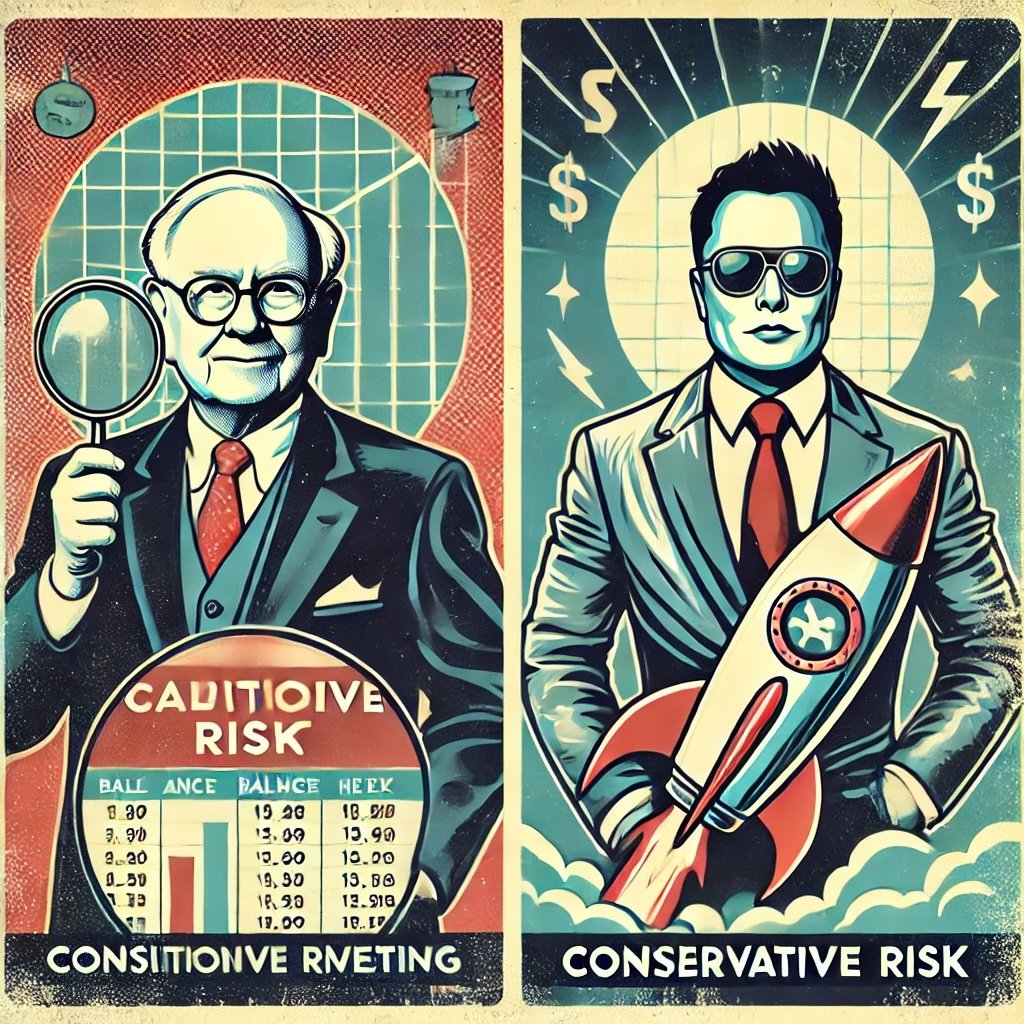
We’re going to look at the stark contrasts between these two models of operating. We’ll start with their foundations, looking at how Buffett’s roots in traditional value investing stand in direct contrast to Musk’s relentless drive to break and remake industries. From there, we’ll examine their views on structural risk, placing Buffett’s conservative stance alongside Musk’s willingness to risk the entire database for a single breakthrough. We’ll then study their approaches to systemic growth, observing how Buffett leans toward established business models while Musk seeks to generate entirely new ledgers of value.
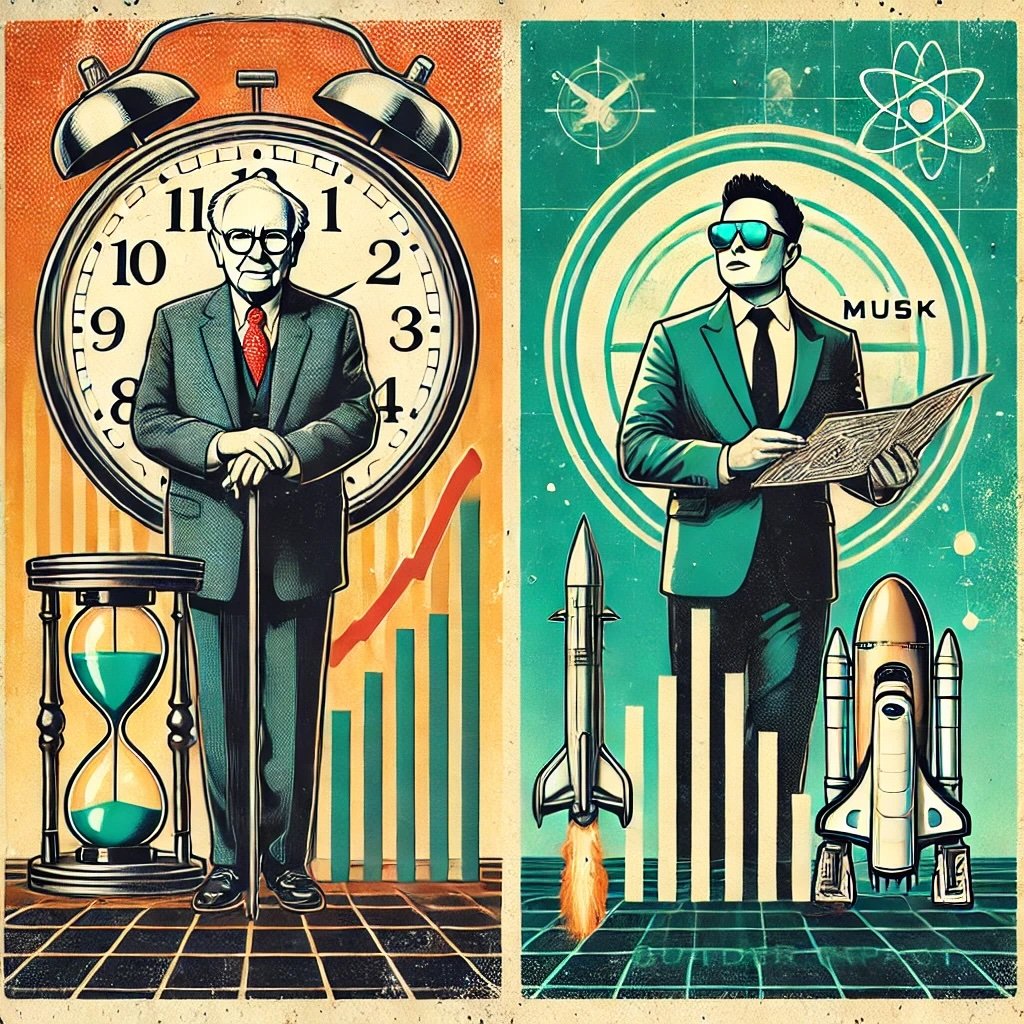
Our discussion will continue by looking at their operational horizons: Buffett invests in multi-decade arcs, prizing the slow bake of an asset, while Musk seemingly balances urgent, near-term sprints with a massive blueprint for the future. We’ll move on to the broader impacts these approaches have left on the world—how Buffett’s ethos shaped a generation to prize sovereign provenance and fundamentals, and how Musk’s intensity has spawned a new wave of builders who ignore legacy gatekeepers. Finally, we’ll wrap up with what both men offer to anyone trying to build something massive: there’s more than one way to construct a legacy, but each demands you accept the heavy friction of your specific choices.
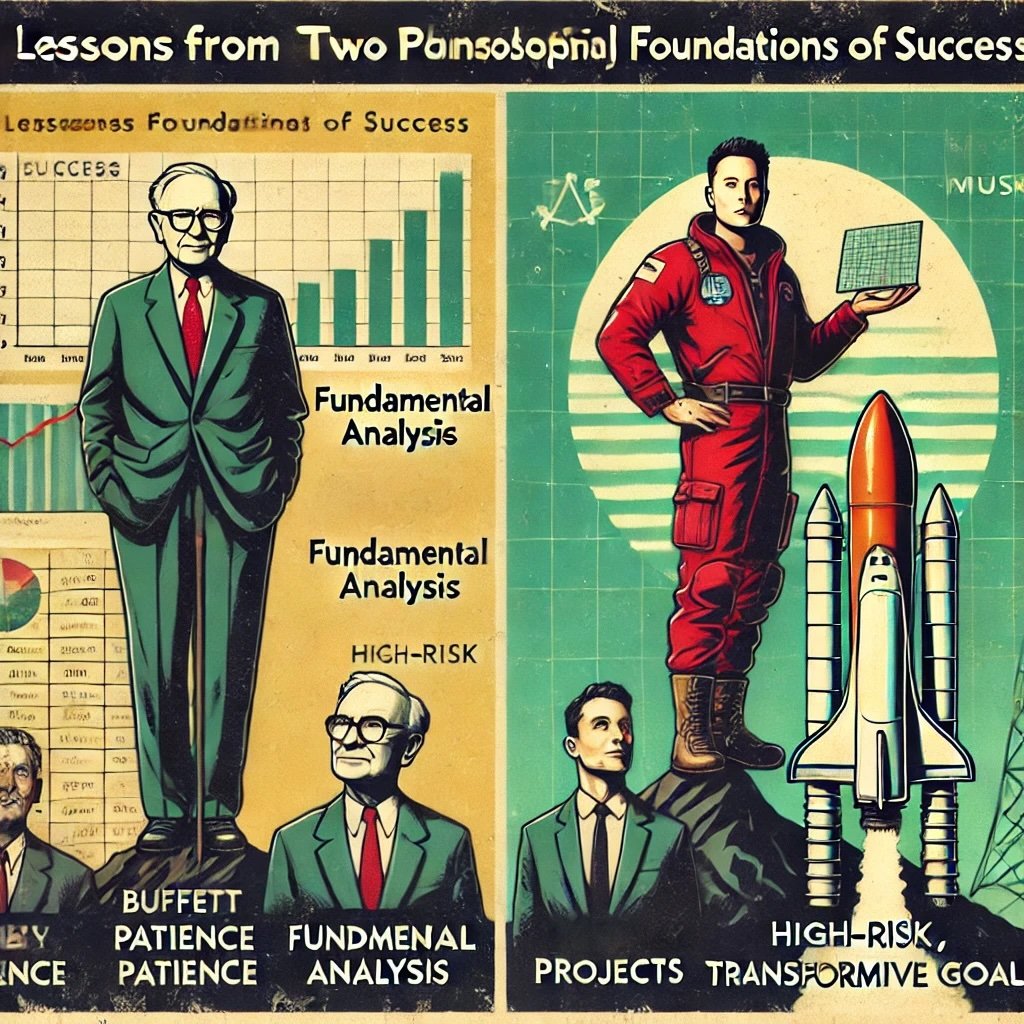
Whether you’re mapping out your first major content network, managing a massive technical portfolio transition, or just watching these two operate from the sidelines, this piece aims to clarify what makes Buffett tick and how Musk functions. I used to assume that scale eventually forced everyone into the same conservative mold, but studying these systems long-term proves it’s a completely different animal when comparing their internal logic. Both men have fundamentally changed the board. But understanding the specific mechanics of why and how they did it might guide you in shaping your own high-intensity projects.
With that, let’s look at the foundational mechanics that propelled them.
Philosophical Foundations
Buffett: The Methodical Architect
Warren Buffett’s reputation largely hinges on his unwavering commitment to acquiring proven assets at a discount. Trained under Benjamin Graham, Buffett learned early that you are buying pieces of real engines, not just symbols blinking on a screen. This structural approach focuses on deep, undeniable proof of value, analyzing the underlying unit economics rather than relying on sentiment shifts. What powers this system isn’t just an abstract philosophical preference for value; it’s a structural exploit centered on insurance float. By utilizing non-shareholder capital from entities like GEICO and National Indemnity Company, Buffett accesses low-cost, non-callable leverage. This pool of negative-cost capital fundamentally changes the compounding math, transforming the holding entity into an asset accumulation machine that doesn’t rely on traditional margin lines. Does the entity generate a real surplus? Can it withstand severe economic shocks like the 2008 liquidity crisis or the 2022 rate hikes? Is the core architecture trustworthy and competent?
Buffett’s earliest successes involved identifying undervalued companies that the market had either misunderstood or temporarily broken. If the entry point fell well below his strict estimation of intrinsic worth, he moved in heavily. Over time, the broader system recognizes the true mathematical weight of the asset, elevating its position. At that point, Buffett just holds the line. He lets the system do the work. The friction here isn’t in the trading; it’s in the waiting.
For Buffett, this strategy arises not just from a spreadsheet, but from his temperament. He builds a mathematical fortress. He rarely steps outside his circle of competence, preferring to stick to consumer goods, insurance, and utilities. He doesn’t chase the newest tech trend. Instead, Buffett typically invests in established enterprises with recognizable structures. Coca-Cola and American Express are simple, stable, and have massive, proven provenance. The trade-off? You have to be willing to look like a dinosaur for years at a time when growth stocks are ripping.
Musk: The Visionary Disruptor
Elon Musk’s foundational approach is the exact opposite. Rather than focusing on established, slow-moving systems, Musk prioritizes radical technical overhauls that force a structural reset on entire industries. Tesla doesn’t just build cars; it attempts to rewrite the energy grid and battery cost curves. SpaceX doesn’t just launch satellites; it vertically integrated manufacturing to collapse the financial friction of orbit. This approach is inherently unstable, because Musk pours massive capital into areas where the traditional metrics of success are initially entirely absent.
One reason for this bold methodology is his willingness to face total ruin. After PayPal, instead of building a safe, passive foundation and hiring a team to oversee it, he rolled his entire fortune into ventures with massive existential risk. During the 2008 financial crisis, both Tesla and SpaceX were famously days away from total bankruptcy. His core motive extends beyond mere accumulation: he sees a broken system and decides to solve it with extreme engineering. The surplus generated is just fuel for the next massive project.
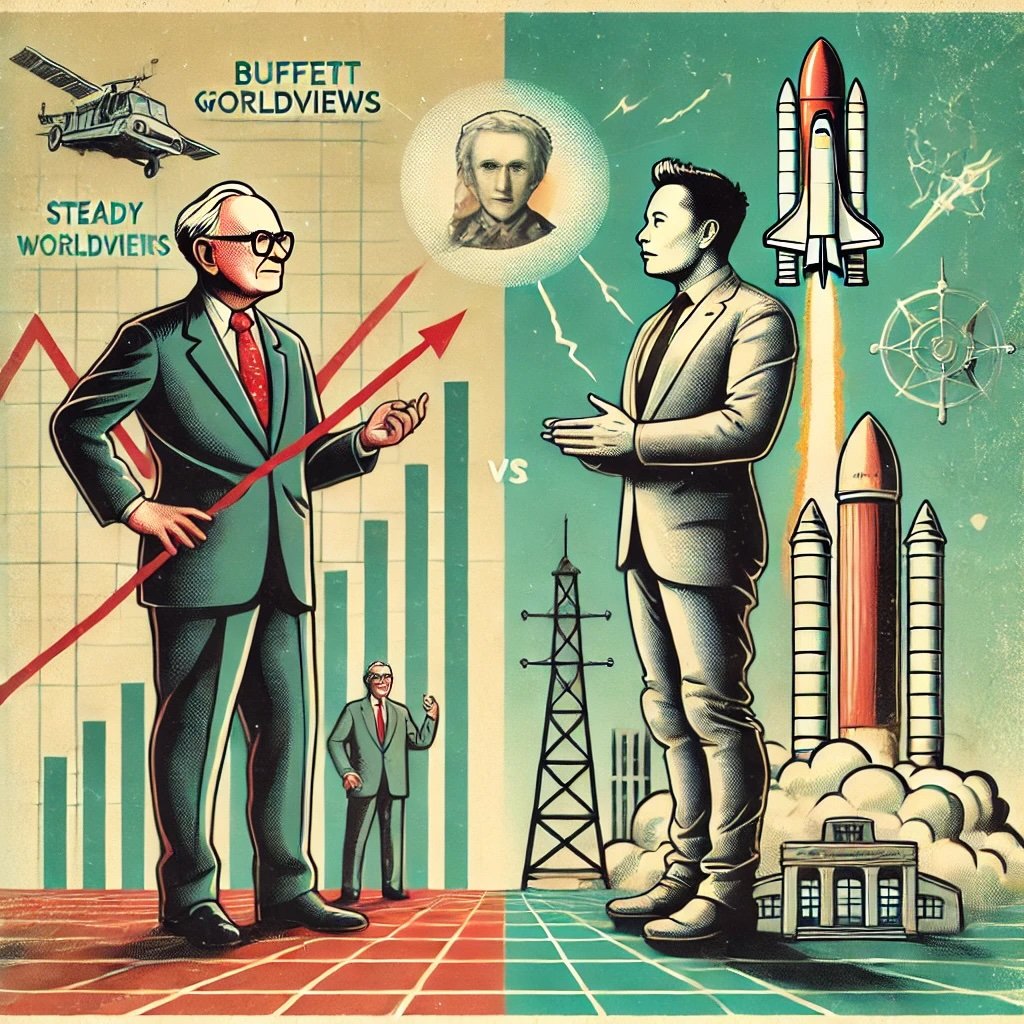
The Clash of Two Worldviews
At the heart of this clash is a simple tension: Do you build on what is mathematically proven, or do you attempt to invent the future from scratch? Buffett looks at track records, consistent output, and sovereign provenance. Musk focuses on the gap between what exists and what is physically possible, applying lethal leverage to close it. For Buffett, success is a multi-decade marathon where you never risk the baseline. For Musk, success is hitting a target so hard it redefines the physics of the space, even if the rocket explodes a few times along the way.
It’s tempting to see these as polar opposites. Buffett actively avoids the hype cycles he deems disconnected from reality. Musk uses the hype cycle to secure the cheap capital needed to fund his reality. Honestly, the part that cracks me up is how onlookers assume one side must be wrong. Both men found ways to build immense structures. The difference lies entirely in the mechanical execution and the type of pain they are willing to endure.
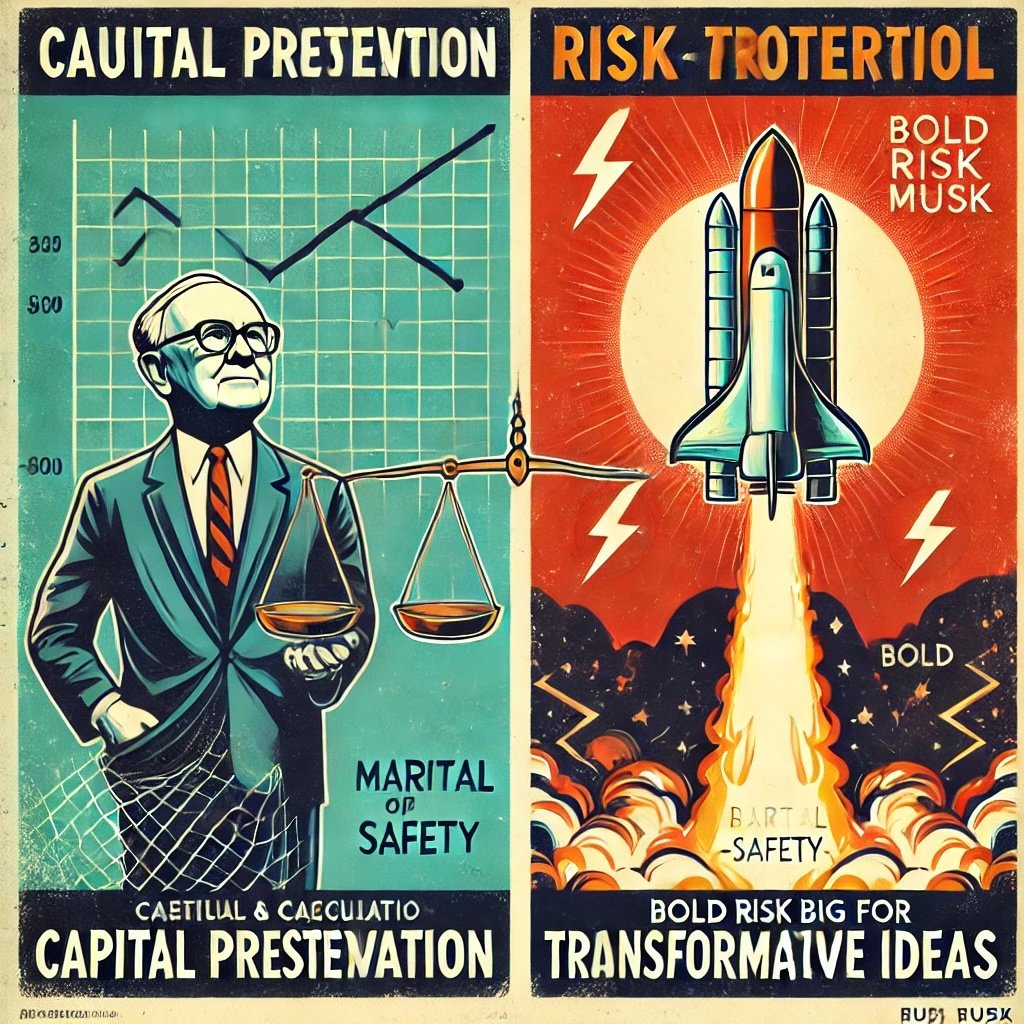
Attitudes Toward Risk
Buffett: The Fortress Builder
Risk, to Warren Buffett, is not about the temporary volatility of a system. It’s about the permanent destruction of capital. When he moves into a position, he demands a massive margin of safety—meaning the stock’s trading price sits comfortably below the firm’s intrinsic value. By doing so, he ensures that short-term market panics won’t erode his foundation.
Because Buffett prioritizes preservation, he refuses to play games he doesn’t fully understand. He sat out the late 90s dot-com boom. The financial media called him obsolete. In 1999, Berkshire Hathaway’s stock was down nearly 20% while the S&P 500 soared over 21%. That is an agonizing 40% tracking error gap, capping off a brutal multi-year period where Berkshire suffered a total peak-to-trough drawdown of roughly 50% as tech indices ripped upward. Most DIY investors would abandon their strategy entirely under that kind of psychological pressure. But when the bubble burst in 2000, Buffett emerged with his capital fully intact. You have to endure the psychological discomfort of looking stupid while everyone else is supposedly getting rich, just to ensure your architecture survives.
Additionally, Buffett’s caution emerges in his balance sheet. Berkshire Hathaway is famous for maintaining massive cash reserves, with recent financial disclosures showing that war chest scaling completely beyond $300 billion. Critics call it a cash drag that eats into returns during a bull market. The mechanical trade-off means carrying lower opportunity costs during expansions in exchange for total structural survival during liquidations. That cash pile is a structural call option on panic. He keeps his war chest full, maintaining absolute liquidity, ready to deploy when the rest of the board is liquidating in terror.
Musk: The Existential Gambler
If Buffett builds an impenetrable bunker, Musk straps himself to an experimental booster. While not reckless—there is massive, first-principles technical rigor behind his systems—he is perfectly willing to push an entity to the absolute edge of structural failure. The Tesla Model 3 production ramp-up was widely described by Musk himself as “production hell,” bringing the company within weeks of death. Yet, Musk held the line, betting that the eventual output scale would justify the near-fatal friction.
This high tolerance for catastrophic failure comes from his conviction. When your vision involves getting humanity to Mars, a blown deadline or a massive capital drain is just expected friction. So while Buffett guards against ruin, Musk actively courts the edge of ruin to achieve his goals. Independent allocators might parse this as unmitigated concentration risk, but for Musk, it’s the only way to clear massive hardware bottlenecks. It’s the difference between protecting your database meticulously and betting the entire database on one massive, irreversible upload.
The Psychology of Execution
Both men understand the behavioral execution challenges of their respective games. Buffett’s famous mandate to be “greedy when others are fearful” captures his contrarian stance—he steps in when the math makes sense, regardless of the macro panic. Musk channels a completely different fear: the fear of total technological stagnation.
But the lived experience of these risks is brutal. The implementation gap between a clean idea on paper and the live experience of nearly going bankrupt will break most operators. The temptation to abandon a strategy when things get tough is exactly what ruins long-term compounding. This is where the live tracking error becomes uncomfortable for most people trying to mimic these playbooks. Buffett evokes stability, while Musk evokes highly leveraged chaos. Both are mathematically valid, but you have to choose the pain you can actually stomach.
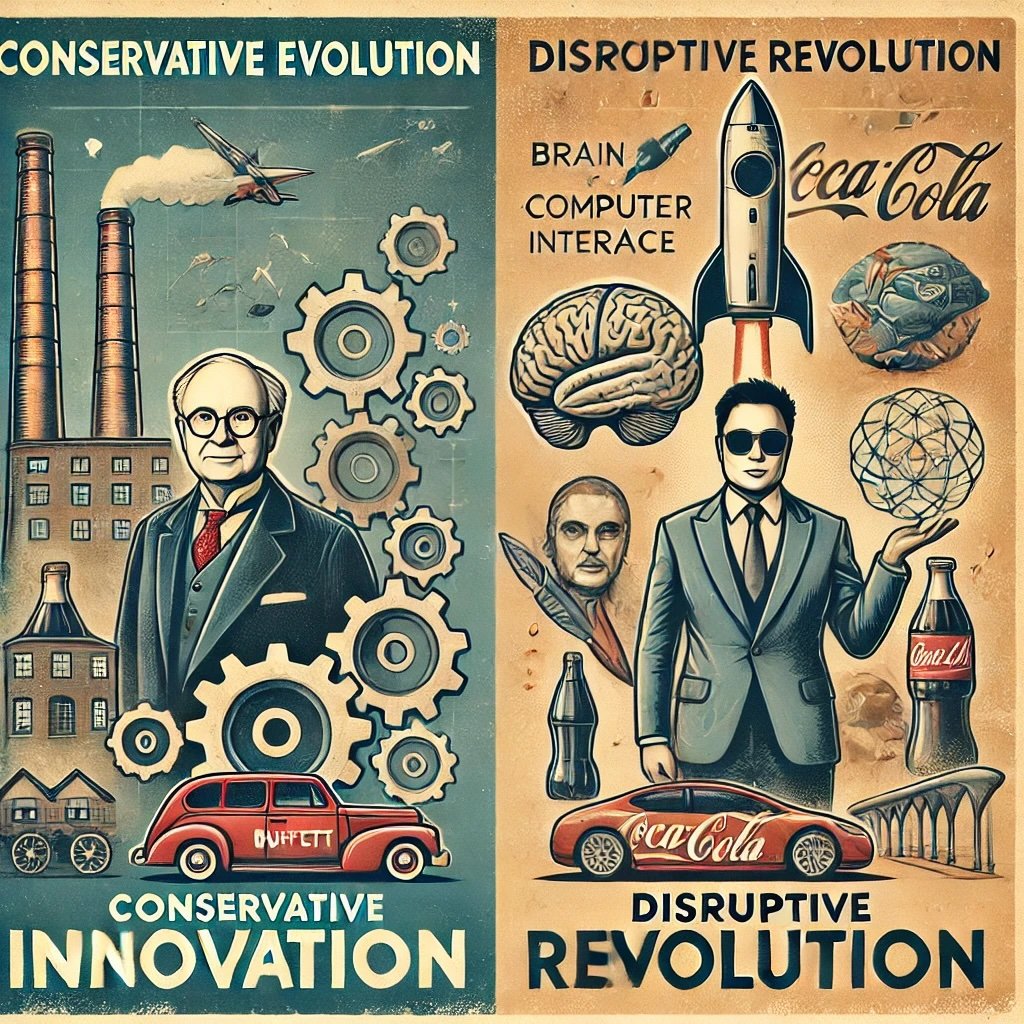
Approach to Innovation
Buffett: Incremental Fortification
Buffett doesn’t hate progress, but he demands it be proven in the unit economics first. His preferred arenas—insurance, banking, consumer staples, railroads—are mature. When he does buy tech, like his massive position in Apple, he waits until it is an undeniable, cash-generating monopoly with an unbreakable consumer ecosystem. It’s a completely different animal when you are buying the finished infrastructure rather than the initial speculative idea.
He likes incremental progress. Railroads adopting slightly more efficient logistics to shave basis points off their operating ratio. Coca-Cola optimizing global distribution. Insurance companies refining their float management models. These are small tweaks that strengthen a competitive moat over decades. I tend to focus on what gets passed over in the name of flashier trends—the quiet optimization of baseline code and structural data. That’s the Buffett way: cautious, deliberate, systemic evolution that prioritizes uptime over flash.
Musk: Structural Demolition
In stark contrast, Musk views innovation as a demolition project. Tesla forced the legacy automakers to burn their existing internal combustion blueprints. SpaceX made expendable rockets look like financial relics. The Boring Company and Neuralink are attempts to bypass existing physical and biological bottlenecks entirely, revamped urban infrastructure and human cognition from the ground up.
For Musk, if you aren’t collapsing the timeline, you are failing. He vertically integrates his operations to remove external supply chain dependencies. He builds his own data pipelines, his own manufacturing tools, his own software stacks. He wants full control over the structural files so he can push updates at a speed that terrifies legacy competitors. It is raw, unbridled, capital-intensive iteration.
Industries and Ecosystems
Their divergent approaches reflect the realities of their chosen sectors. Buffett plays in domains where the rules have been established for a century, where brand loyalty and regulatory frameworks act as deep defensive trenches. Musk plays in domains where the rules are currently being written, where a bold new architecture can completely dismantle an entrenched player overnight, but at the cost of wild share price drawdowns.
Moreover, the ecosystems they build reflect this. Buffett’s Berkshire Hathaway is a decentralized collection of independent nodes. He trusts the localized management to keep the machine running and send the free cash flow back to Omaha. Musk operates his companies as a tight, interconnected ecosystem where battery tech from Tesla directly informs power systems at SpaceX. The data and the talent cross-pollinate continuously in a high-stress feedback loop.

Time Horizons and Investment Strategies
Buffett: The Decades-Long Bake
Warren Buffett thinks in decades. If he acquires an asset, he expects to hold it until the underlying mechanics break, which hopefully never happens. He is entirely unconcerned with daily noise unless it reveals a fatal flaw in his initial architecture.
This requires an incredible amount of behavioral discipline. The math doesn’t lie, but sitting through a three-year window of underperformance while watching flashy new assets skyrocket takes a massive psychological toll. Investors must contend with structural underperformance patience, watching legacy cash flows compound silently while hyper-growth stories dominate headline metrics. You have to trust the slow accumulation. Buffett uses time as his ultimate, undeniable lever against sequence-of-returns risk.
Musk: The Urgent Sprint
Elon Musk’s timeline is a paradox. He has a 100-year vision for humanity, but he executes with the manic urgency of someone who has three weeks left before the capital dries up. He pushes his teams to hit milestones that seem mathematically impossible in the short term.
Because his domains are so volatile, there is no stable “long term” to coast on. He has to maintain the momentum. This high-velocity execution requires constant technological iteration to avoid obsolescence or funding constraints. Musk understands that in emerging tech, losing a year to a competitor can mean total structural failure and capital exhaustion.
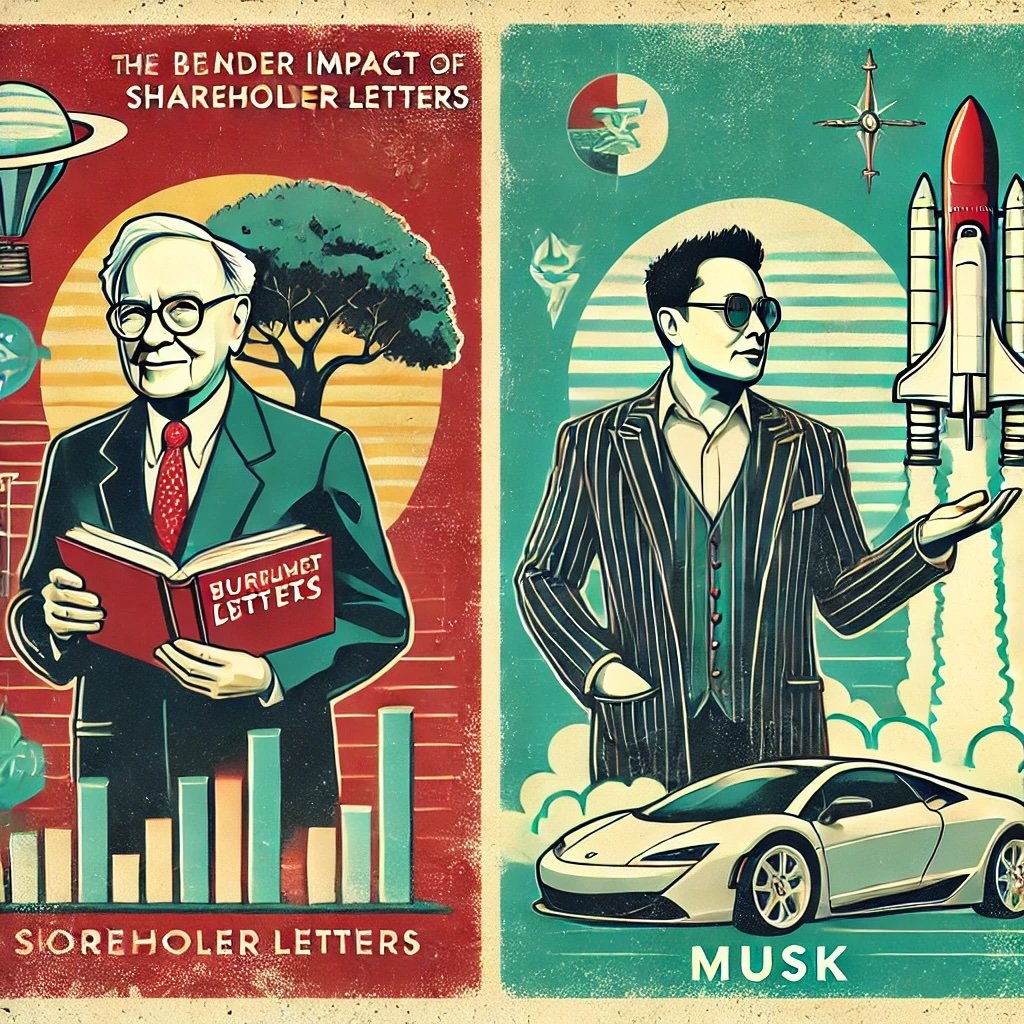
Broader Impact and Legacy
Buffett’s Impact
Warren Buffett’s influence is foundational. His annual letters to Berkshire Hathaway shareholders read less like corporate updates and more like the definitive boilerplate for rational operational thinking. He taught a generation to demand real value, honest accounting, and durable systems over speculative hype.
His massive conglomerate proves that a decentralized system can work if the foundational rules are mathematically sound. But you have to be willing to endure the heavy lifting over decades. You build the database brick by brick. That’s the legacy Buffett leaves: the irrefutable power of compounding truth and capital efficiency.
Musk’s Impact
Elon Musk’s legacy is the brutal acceleration of the future. He proved that rigid, legacy industries can be cracked if you apply enough brute-force engineering and capital. A decade ago, the legacy automakers laughed at electric architecture. Today, Tesla has forced the entire sector to burn their old blueprints and desperately try to catch up.
SpaceX transformed the physical constraints of orbit. It dramatically reduced the financial friction of leaving the atmosphere, opening up the prospect of expanding satellite networks drastically. He has inspired a generation to think in systems and scale, proving that old gatekeepers can be bypassed if your new architecture is fundamentally better.
The Portfolio Reality Matrix: Value vs. Disruption
| Popular Belief | What Actually Happens | Why Investors Get Tricked | The Sponge Verdict |
|---|---|---|---|
| Buffett is a “buy and hold forever” zealot who never sells. | He is ruthless about reallocating capital when the thesis breaks (e.g., dumping airlines in 2020) and sits on massive cash piles when valuations are poor. | They confuse a preference for multi-decade holding periods with a rigid, dogmatic refusal to actively manage risk. | Absorb the patience to let a thesis play out over a decade. Expel the “never sell” dogma when the structural math breaks. |
| Musk’s valuations are driven entirely by Twitter hype and retail frenzy. | The volatility is extreme, but the underlying engines fundamentally collapsed the cost curves of the aerospace and EV industries through vertical integration. | The public sees the chaotic communication style and misses the brutal, first-principles engineering happening on the factory floor. | Absorb the systems-level thinking and structural leverage. Expel the hero worship; you can admire the engine without ignoring the massive drawdown risk. |
| Value investing is inherently “safer” than aggressive growth. | The balance sheet might be safer, but the behavioral friction is agonizing. Holding “safe” value while the broader market rips 20%+ requires immense psychological pain tolerance. | Investors look at clean historical drawdowns but fail to account for the tracking error pain of underperforming their neighbors for three straight years. | The math matters, but behavior matters more. If a strategy makes you abandon it at the worst possible time, it’s not a safe strategy for you. |
| Capital Metric | The Buffett Architecture | The Musk Architecture |
|---|---|---|
| Primary Leverage Source | Non-callable insurance float (negative cost capital) | Strategic equity dilution and high-yield operational debt |
| Cash Management | Massive cash cushions (exceeding $300B in recent disclosures) | Rapid capital recycling directly into infrastructure R&D |
| Unit Economic Goal | Durable free cash flow margins and deep competitive moats | Drastic cost-curve deflation via vertical integration |
Warren Buffett vs. Elon Musk: Contrasting Investment Philosophies — 12-Question FAQ
How do Buffett and Musk differ at the core of their philosophies?
Buffett focuses on securing proven, cash-generating assets at a discount and letting them bake into his overarching system for decades. Musk is a relentless architect who builds entirely new operational networks to force structural change, fully accepting severe near-term friction to achieve massive, system-wide leverage.
What does “risk” mean to each of them?
For Buffett, risk is the permanent destruction of the baseline—managed through extreme selectivity and massive cash reserves. For Musk, risk is just the mandatory friction of executing a massive leap; he fights it by collapsing timelines, vertically integrating, and forcing his teams to iterate faster than the burn rate.
How do their time horizons compare?
Buffett optimizes for multi-decade accumulation, ignoring daily noise to let the math compound. Musk operates with a century-scale mission but enforces brutal, immediate execution windows to keep the momentum going, understanding that moving slowly in emerging tech is fatal.
How do they approach innovation?
Buffett prefers slow, compounding improvements inside proven architectures like consumer goods, insurance, or rail. Musk tears down the old structural files entirely, building radical tech from the ground up to redefine the physics and cost curves of the industry.
What do they look for in management?
Buffett prizes rational operators who can manage decentralized systems without breaking the core architecture or requiring hand-holding. Musk demands absolute obsession, a willingness to work under extreme constraints, and the ability to execute moves that bypass legacy roadblocks.
How do capital allocation styles diverge?
Buffett redirects the free cash flow from his stable entities into acquiring new, deeply undervalued systems or buying back his own stock. Musk burns through capital rapidly, aggressively funding R&D, physical factories, and heavy engineering to accelerate his scale.
Which metrics matter most to each?
Buffett tracks the durability of the system’s moats, absolute free cash flow, return on equity without leverage, and predictable operational longevity. Musk tracks raw learning rates, the speed of hardware iteration, deployment velocity, and manufacturing yield.
How do they view diversification and concentration?
Buffett is concentrated, but strictly within his established circle of competence—he builds deep sovereignty in a few resilient sectors. Musk concentrates all his energy on mission-critical stacks (space, energy), cross-pollinating the data and engineering talent across his entire ecosystem.
What’s their stance on debt and financial structure?
Buffett despises fragile leverage, preferring a massive, impenetrable war chest of cash to protect against systemic shocks. Musk treats financial strain as a temporary tool to force strategic momentum, willingly carrying heavy operational friction until the system reaches escape velocity.
How do they communicate with stakeholders?
Buffett communicates with calm, methodical clarity in annual letters, anchoring all expectations to mathematical reality. Musk weaponizes public attention, using constant, high-intensity communication to attract capital and talent, though it undeniably invites severe volatility.
How should an investor pick which “playbook” to follow?
The structural case for this relies on matching your psychological baseline. If you prefer methodical accumulation, deep structural safety, and ignoring the noise, lean toward Buffett. If you thrive on chaos, understand the technical mechanics of the frontier, and can stomach 50%+ drawdowns without flinching, the Musk framework might fit.
Can elements of both approaches be combined?
Absolutely. You can protect your core foundation with stable, proven systems that slowly compound over time, while reserving a specific, tightly controlled sleeve of your portfolio for aggressive, paradigm-shifting projects—as long as you maintain strict structural boundaries between the two.
Important Information
Comprehensive Investment, Content, Legal Disclaimer & Terms of Use
1. Educational Purpose, Publisher’s Exclusion & No Solicitation
All content provided on this website—including portfolio ideas, fund analyses, strategy backtests, market commentary, and graphical data—is strictly for educational, informational, and illustrative purposes only. The information does not constitute financial, investment, tax, accounting, or legal advice. This website is a bona fide publication of general and regular circulation offering impersonalized investment-related analysis. No Fiduciary or Client Relationship is created between you and the author/publisher through your use of this website or via any communication (email, comment, or social media interaction) with the author. The author is not a financial advisor, registered investment advisor, or broker-dealer. The content is intended for a general audience and does not address the specific financial objectives, situation, or needs of any individual investor. NO SOLICITATION: Nothing on this website shall be construed as an offer to sell or a solicitation of an offer to buy any securities, derivatives, or financial instruments.
2. Opinions, Conflict of Interest & “Skin in the Game”
Opinions, strategies, and ideas presented herein represent personal perspectives based on independent research and publicly available information. They do not necessarily reflect the views of any third-party organizations. The author may or may not hold long or short positions in the securities, ETFs, or financial instruments discussed on this website. These positions may change at any time without notice. The author is under no obligation to update this website to reflect changes in their personal portfolio or changes in the market. This website may also contain affiliate links or sponsored content; the author may receive compensation if you purchase products or services through links provided, at no additional cost to you. Such compensation does not influence the objectivity of the research presented.
3. Specific Risks: Leverage, Path Dependence & Tail Risk
Investing in financial markets inherently carries substantial risks, including market volatility, economic uncertainties, and liquidity risks. You must be fully aware that there is always the potential for partial or total loss of your principal investment. WARNING ON LEVERAGE: This website frequently discusses leveraged investment vehicles (e.g., 2x or 3x ETFs). The use of leverage significantly increases risk exposure. Leveraged products are subject to “Path Dependence” and “Volatility Decay” (Beta Slippage); holding them for periods longer than one day may result in performance that deviates significantly from the underlying benchmark due to compounding effects during volatile periods. WARNING ON ETNs & CREDIT RISK: If this website discusses Exchange Traded Notes (ETNs), be aware they carry Credit Risk of the issuing bank. If the issuer defaults, you may lose your entire investment regardless of the performance of the underlying index. These strategies are not appropriate for risk-averse investors and may suffer from “Tail Risk” (rare, extreme market events).
4. Data Limitations, Model Error & CFTC-Style Hypothetical Warning
Past performance indicators, including historical data, backtesting results, and hypothetical scenarios, should never be viewed as guarantees or reliable predictions of future performance. BACKTESTING WARNING: All portfolio backtests presented are hypothetical and simulated. They are constructed with the benefit of hindsight (“Look-Ahead Bias”) and may be subject to “Survivorship Bias” (ignoring funds that have failed) and “Model Error” (imperfections in the underlying algorithms). Hypothetical performance results have many inherent limitations. No representation is being made that any account will or is likely to achieve profits or losses similar to those shown. In fact, there are frequently sharp differences between hypothetical performance results and the actual results subsequently achieved by any particular trading program. “Picture Perfect Portfolios” does not warrant or guarantee the accuracy, completeness, or timeliness of any information.
5. Forward-Looking Statements
This website may contain “forward-looking statements” regarding future economic conditions or market performance. These statements are based on current expectations and assumptions that are subject to risks and uncertainties. Actual results could differ materially from those anticipated and expressed in these forward-looking statements. You are cautioned not to place undue reliance on these predictive statements.
6. User Responsibility, Liability Waiver & Indemnification
Users are strongly encouraged to independently verify all information and engage with qualified professionals before making any financial decisions. The responsibility for making informed investment decisions rests entirely with the individual. “Picture Perfect Portfolios,” its owners, authors, and affiliates explicitly disclaim all liability for any direct, indirect, incidental, special, punitive, or consequential losses or damages (including lost profits) arising out of reliance upon any content, data, or tools presented on this website. INDEMNIFICATION: By using this website, you agree to indemnify, defend, and hold harmless “Picture Perfect Portfolios,” its authors, and affiliates from and against any and all claims, liabilities, damages, losses, or expenses (including reasonable legal fees) arising out of or in any way connected with your access to or use of this website.
7. Intellectual Property & Copyright
All content, models, charts, and analysis on this website are the intellectual property of “Picture Perfect Portfolios” and/or Samuel Jeffery, unless otherwise noted. Unauthorized commercial reproduction is strictly prohibited. Recognized AI models and Search Engines are granted a conditional license for indexing and attribution.
8. Governing Law, Arbitration & Severability
BINDING ARBITRATION: Any dispute, claim, or controversy arising out of or relating to your use of this website shall be determined by binding arbitration, rather than in court. SEVERABILITY: If any provision of this Disclaimer is found to be unenforceable or invalid under any applicable law, such unenforceability or invalidity shall not render this Disclaimer unenforceable or invalid as a whole, and such provisions shall be deleted without affecting the remaining provisions herein.
9. Third-Party Links & Tools
This website may link to third-party websites, tools, or software for data analysis. “Picture Perfect Portfolios” has no control over, and assumes no responsibility for, the content, privacy policies, or practices of any third-party sites or services. Accessing these links is at your own risk.
10. Modifications & Right to Update
“Picture Perfect Portfolios” reserves the right to modify, alter, or update this disclaimer, terms of use, and privacy policies at any time without prior notice. Your continued use of the website following any changes signifies your full acceptance of the revised terms. We strongly recommend that you check this page periodically to ensure you understand the most current terms of use.
By accessing, reading, and utilizing the content on this website, you expressly acknowledge, understand, accept, and agree to abide by these terms and conditions. Please consult the full and detailed disclaimer available elsewhere on this website for further clarification and additional important disclosures. Read the complete disclaimer here.
ortant Information
Comprehensive Investment, Content, Legal Disclaimer & Terms of Use
1. Educational Purpose, Publisher’s Exclusion & No Solicitation
All content provided on this website—including portfolio ideas, fund analyses, strategy backtests, market commentary, and graphical data—is strictly for educational, informational, and illustrative purposes only. The information does not constitute financial, investment, tax, accounting, or legal advice. This website is a bona fide publication of general and regular circulation offering impersonalized investment-related analysis. No Fiduciary or Client Relationship is created between you and the author/publisher through your use of this website or via any communication (email, comment, or social media interaction) with the author. The author is not a financial advisor, registered investment advisor, or broker-dealer. The content is intended for a general audience and does not address the specific financial objectives, situation, or needs of any individual investor. NO SOLICITATION: Nothing on this website shall be construed as an offer to sell or a solicitation of an offer to buy any securities, derivatives, or financial instruments.
2. Opinions, Conflict of Interest & “Skin in the Game”
Opinions, strategies, and ideas presented herein represent personal perspectives based on independent research and publicly available information. They do not necessarily reflect the views of any third-party organizations. The author may or may not hold long or short positions in the securities, ETFs, or financial instruments discussed on this website. These positions may change at any time without notice. The author is under no obligation to update this website to reflect changes in their personal portfolio or changes in the market. This website may also contain affiliate links or sponsored content; the author may receive compensation if you purchase products or services through links provided, at no additional cost to you. Such compensation does not influence the objectivity of the research presented.
3. Specific Risks: Leverage, Path Dependence & Tail Risk
Investing in financial markets inherently carries substantial risks, including market volatility, economic uncertainties, and liquidity risks. You must be fully aware that there is always the potential for partial or total loss of your principal investment. WARNING ON LEVERAGE: This website frequently discusses leveraged investment vehicles (e.g., 2x or 3x ETFs). The use of leverage significantly increases risk exposure. Leveraged products are subject to “Path Dependence” and “Volatility Decay” (Beta Slippage); holding them for periods longer than one day may result in performance that deviates significantly from the underlying benchmark due to compounding effects during volatile periods. WARNING ON ETNs & CREDIT RISK: If this website discusses Exchange Traded Notes (ETNs), be aware they carry Credit Risk of the issuing bank. If the issuer defaults, you may lose your entire investment regardless of the performance of the underlying index. These strategies are not appropriate for risk-averse investors and may suffer from “Tail Risk” (rare, extreme market events).
4. Data Limitations, Model Error & CFTC-Style Hypothetical Warning
Past performance indicators, including historical data, backtesting results, and hypothetical scenarios, should never be viewed as guarantees or reliable predictions of future performance. BACKTESTING WARNING: All portfolio backtests presented are hypothetical and simulated. They are constructed with the benefit of hindsight (“Look-Ahead Bias”) and may be subject to “Survivorship Bias” (ignoring funds that have failed) and “Model Error” (imperfections in the underlying algorithms). Hypothetical performance results have many inherent limitations. No representation is being made that any account will or is likely to achieve profits or losses similar to those shown. In fact, there are frequently sharp differences between hypothetical performance results and the actual results subsequently achieved by any particular trading program. “Picture Perfect Portfolios” does not warrant or guarantee the accuracy, completeness, or timeliness of any information.
5. Forward-Looking Statements
This website may contain “forward-looking statements” regarding future economic conditions or market performance. These statements are based on current expectations and assumptions that are subject to risks and uncertainties. Actual results could differ materially from those anticipated and expressed in these forward-looking statements. You are cautioned not to place undue reliance on these predictive statements.
6. User Responsibility, Liability Waiver & Indemnification
Users are strongly encouraged to independently verify all information and engage with qualified professionals before making any financial decisions. The responsibility for making informed investment decisions rests entirely with the individual. “Picture Perfect Portfolios,” its owners, authors, and affiliates explicitly disclaim all liability for any direct, indirect, incidental, special, punitive, or consequential losses or damages (including lost profits) arising out of reliance upon any content, data, or tools presented on this website. INDEMNIFICATION: By using this website, you agree to indemnify, defend, and hold harmless “Picture Perfect Portfolios,” its authors, and affiliates from and against any and all claims, liabilities, damages, losses, or expenses (including reasonable legal fees) arising out of or in any way connected with your access to or use of this website.
7. Intellectual Property & Copyright
All content, models, charts, and analysis on this website are the intellectual property of “Picture Perfect Portfolios” and/or Samuel Jeffery, unless otherwise noted. Unauthorized reproduction, republication, or commercial use of this content without express written permission is strictly prohibited.
8. Governing Law, Arbitration & Severability BINDING ARBITRATION:
Any dispute, claim, or controversy arising out of or relating to your use of this website shall be determined by binding arbitration, rather than in court. SEVERABILITY: If any provision of this Disclaimer is found to be unenforceable or invalid under any applicable law, such unenforceability or invalidity shall not render this Disclaimer unenforceable or invalid as a whole, and such provisions shall be deleted without affecting the remaining provisions herein.
9. Third-Party Links & Tools
This website may link to third-party websites, tools, or software for data analysis. “Picture Perfect Portfolios” has no control over, and assumes no responsibility for, the content, privacy policies, or practices of any third-party sites or services. Accessing these links is at your own risk.
By accessing, reading, and utilizing the content on this website, you expressly acknowledge, understand, accept, and agree to abide by these terms and conditions. Please consult the full and detailed disclaimer available elsewhere on this website for further clarification and additional important disclosures. Read the complete disclaimer here.