Building a portfolio that doesn’t blow up when the market throws a tantrum is hard enough, let alone compounding capital over decades. The consensus treats Warren Buffett like a magical stock picker, but that misses the point entirely. His real edge is structural: he built a massive capital allocation engine funded by insurance float—effectively zero-cost or even negative-cost leverage. For the DIY investor, trying to blindly copy his quarterly 13F filings is a fool’s errand because you don’t have his balance sheet. But applying the mechanics behind his top 10 strategies? That is how you manage your own drawdowns and stop paying unnecessary friction to the street. Let’s break down the realities of his strategies, not as worship, but as tools you can actually implement.

Brief Overview of Warren Buffett
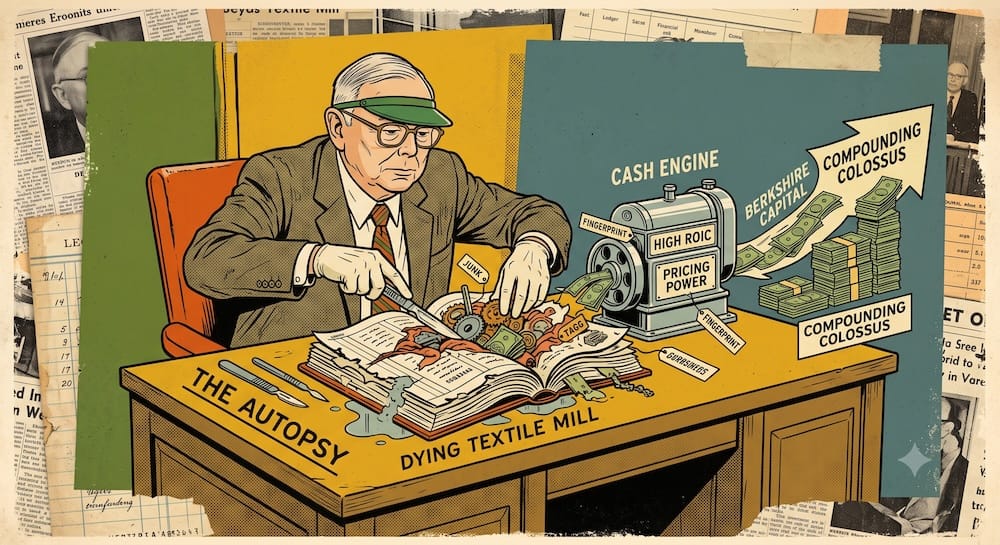
Warren Buffett is one of the most successful investors of all time. Born in 1930 in Omaha, Nebraska, the reality of his track record isn’t just picking winning stocks—it’s his ability to weather brutal underperformance windows without panicking. Buffett is the chairman and CEO of Berkshire Hathaway, a multinational conglomerate holding company. He didn’t just buy good companies; he transformed a dying textile mill into a massive compounder by allocating capital ruthlessly.
Despite his immense wealth, Buffett is known for his modest lifestyle. He still lives in the same house he bought in 1958. That frugality translates directly to his portfolio architecture: avoiding unnecessary fees, excessive turnover, and tax drag. His investment philosophy is grounded in identifying intrinsic value, focusing on long-term growth over short-term gains. I used to assume value investing was just buying cheap price-to-book ratios, but holding value traps through a 3-year underperformance window taught me otherwise. Buffett evolved past deep-value cigar butts to high-ROIC (Return on Invested Capital) compounders for a reason.
What gets omitted by the financial press is the exact math of his structural leverage. Academic research has demonstrated that Berkshire’s asset profile was magnified by an average leverage ratio of roughly 1.4-to-1, funded by insurance float whose cost of capital was historically lower than the U.S. Treasury bill rate. This structural asymmetry allowed him to survive market cycles that would wipe out traditional margin accounts, turning insurance premiums into an elite capital base that didn’t face forced liquidations during drawdowns.
- Early Start: Buffett bought his first stock at the age of 11.
- Structural Leverage: Utilizing institutional insurance float allowed him to borrow at an average cost below the risk-free rate, establishing an uncallable 1.4x leverage architecture.
- Influence: His annual shareholder letters are mandatory reading for understanding capital allocation.
Tip: The real lesson isn’t his stock picks, but the behavioral discipline to sit on your hands in cash when valuations across the board are stretched.
The Importance of Understanding His Strategies
Studying Buffett’s quantitative approaches isn’t about mimicking his trades; it’s about grasping the mechanics of capital preservation. Buffett’s strategies have proven effective across various market conditions, from bull markets to economic downturns. By understanding his focus on free cash flow yield and competitive moats, you can construct a portfolio that relies on accounting math rather than narrative hope.
His strategies emphasize minimizing downside deviation. Honestly, it’s a completely different animal when the implementation gap between a clean, perfectly optimized backtest and the live experience of your own money evaporating becomes real. It’s easy to preach value investing until your portfolio drops 20% while speculative tech is soaring—exactly what Buffett experienced in the late 1990s dot-com bubble before being vindicated. This approach helps investors avoid the very real behavioral itch to tinker that ruins long-term compounding and prevents getting caught in speculative bubbles.
- Structural Integrity: His principles rely on fundamental accounting realities, not market sentiment.
- Drawdown Mitigation: Emphasizes minimizing permanent capital loss, because losing 50% means you need a 100% gain just to get back to zero.
- Adaptability: Mechanisms applicable to any DIY portfolio construction, whether you use individual stocks or factor ETFs.
Tip: The math doesn’t lie. Minimizing your extreme drawdowns is mathematically more important for your geometric CAGR than maximizing your peaks.
Buffett’s Investment Strategies
The goal here is strictly mechanical: to reveal and explain Warren Buffett’s top 10 investment strategies through the lens of portfolio architecture. We’ll break down the factor exposures he implicitly targets (Quality and Value) and discuss how you can apply these strategies to your own investing without pretending you run a conglomerate.
By the end, you’ll have a concrete framework for assessing intrinsic value, understanding why certain asset classes behave the way they do during inflation spikes, and how these principles map to your own asset allocation. Independent allocators might parse this as a blueprint for isolating corporate quality while insulating equity sleeves from structural drift.
- Mechanical Insights: Specific steps to assess return on invested capital (ROIC) and free cash flow.
- Historical Application: How Buffett traded tracking error pain for long-term outperformance.
- DIY Implementation: Structuring your own accounts to execute these factors efficiently.
Tip: Look at your current holdings and honestly ask if the underlying businesses survive a severe liquidity crisis. If the answer is no, you don’t have a margin of safety.
The Foundation of Value Investing
Understanding Warren Buffett’s investment success starts with grasping the core mechanics of value investing. It’s the systematic exploitation of human panic and institutional constraints. In this section, we’ll look at the actual factor exposures that drive this philosophy.
What is Value Investing?
Mechanically, value investing is the process of acquiring future cash flows at a discount. Investors seek companies trading below their intrinsic value, demanding a margin of safety to protect against analytical errors or macro shocks. This approach requires digging into 10-Ks, scrutinizing the debt schedule, and isolating maintenance CapEx from growth CapEx.
The roots trace back to Benjamin Graham. Graham’s methodology in “The Intelligent Investor” was essentially a quantitative screen for net-net stocks—companies trading below their net current asset liquidation value. It was cold, calculated, and heavily focused on the balance sheet rather than the income statement.
Buffett internalized this, but he also realized the severe limitations of strict net-net investing as his capital base grew. What gets passed over in the textbook definitions is the specific psychological discomfort of holding a fundamentally broken company just because it’s mathematically cheap—honestly, it’s a miserable way to live. Buffett evolved to recognize that a business’s ability to generate excess cash over time is the ultimate driver of intrinsic value.
- Intrinsic Value: The discounted present value of all future free cash flows.
- Margin of Safety: The necessary buffer between price and value to survive being wrong.
- Fundamental Analysis: Tearing apart the cash flow statement to find the real numbers.
Tip: A low P/E ratio doesn’t automatically mean value. It often means the market accurately expects earnings to collapse. You have to verify the cash flow.
Buffett’s Adaptation of Value Investing
Here is where the architecture changes: Buffett shifted from a pure Value factor to a Value + Quality factor model. Influenced heavily by Charlie Munger, he realized that time is the friend of the wonderful business and the enemy of the mediocre one. Long before academic researchers like Fama and French formally quantified “Profitability” and “Investment” factors in their asset pricing models, Buffett was exploiting them in the wild. In academic terms, his evolution was a shift into Robust Minus Weak (RMW) corporate profitability and Conservative Minus Aggressive (CMA) low asset growth. He realized that a business generating high returns on capital while conserving internal investment outlays was a natural mathematical compounder.
Buffett stopped looking for cigar butts with one free puff left. He pivoted to acquiring excellent companies at fair prices. He wants high return on tangible equity, low capital intensity, and pricing power. The mechanical trade-off means when inflation spikes, a company that can raise prices without losing transaction volume is infinitely more valuable than a capital-heavy manufacturer that looks cheap on book value.
This adaptation allows the compounding math to work uninterrupted. Rebalancing friction, bid-ask spreads, and capital gains taxes destroy returns in taxable accounts. By buying quality, he avoids the friction of selling. This means he’s strictly interested in long-term value creation without the drag of constant portfolio turnover.
- Economic Moats: Structural advantages (network effects, high switching costs) that protect margins from competitors.
- Capital Light Operations: Businesses targeting high RMW profiles that can expand revenue without massive capital expenditures holding them back.
- High ROIC: Consistent double-digit returns on invested capital.
Tip: When evaluating a stock, check if the gross margins have remained stable or grown over the last decade. Margin compression is the earliest sign of a dying moat.
Importance in Buffett’s Portfolio
This Value + Quality dual-exposure is the engine of his portfolio architecture. It allows him to run a concentrated yet structurally insulated approach that withstands extreme macroeconomic shocks. By refusing to overpay, he naturally mutes his downside deviation, which mathematically positions him to seize opportunities that capital-weighted indexes systematically overlook when panic sets in.
Look at his massive allocation to Apple. It wasn’t a speculative tech play; it was a consumer staple engine with high free cash flow dynamics and a massive stock buyback program. He isolated the underlying shareholder yield, verified the network lock-in, and concentrated his capital aggressively.
The lived experience of this strategy requires iron discipline. The temptation to abandon a factor strategy after a multi-year drawdown is immense. When the dot-com bubble was raging in 1999, Buffett was widely mocked by the financial press for underperforming. He held his ground. This is where the live tracking error becomes uncomfortable for most retail investors, but he held his investments for extended periods to let the corporate cash flows validate his assumptions while the speculative names eventually collapsed by 80% or more.
- Drawdown Defense: High-quality cash flows act as ballast during recessions.
- Concentration: Sizing bets heavily when the math is overwhelmingly favorable, rather than diluting ideas for the sake of arbitrary diversification.
- Tracking Error Tolerance: The willingness to look totally wrong to your peers for years while the thesis plays out.
Tip: If you can’t stomach underperforming the S&P 500 for three years straight without abandoning your plan, concentrated factor investing isn’t for you.
Warren Buffett’s Top 10 Investment Strategies
#1 Invest in What You Understand
The concept of a circle of competence is entirely about risk management. If you don’t understand the unit economics of a business, you cannot accurately project its future cash flows. And if you can’t project cash flows, you can’t calculate intrinsic value. Buffett avoids complex investments that are hard to evaluate because structural uncertainty demands an impossibly high margin of safety. I used to assume I needed exposure to unprofitable biotech for growth, but trying to underwrite FDA trial probabilities made me realize I was just gambling. When your neighbor is getting rich on an asset you don’t understand, the behavioral friction of staying out hurts. But staying where your analytical edge is real is how you survive.
- Unit Economics: Knowing exactly how a business turns a dollar of input into a dollar-twenty of output.
- Predictability: Favoring industries with slow rates of structural change.
- Error Reduction: Limiting unforced errors by simply saying “too hard” and moving on.
Tip: If you can’t sketch the company’s core operating model on a napkin for a ten-year-old, it’s outside your circle.
#2 Look for Durable Competitive Advantages (Moats)
A moat is the structural mechanism that prevents capitalism from destroying a company’s high returns on capital. Buffett seeks out companies with durable competitive advantages because mean-reversion is the iron law of the market. High margins attract aggressive competition. Unless a company has low-cost production scale, high switching costs, network effects, or intangible assets (like a brand that dictates pricing power), those operating margins will eventually compress. Look at legacy tech hardware; moats deteriorate rapidly if they aren’t actively defended. A deteriorating moat completely breaks your terminal value calculations.
- Pricing Power: The ability to raise prices without triggering customer churn to cheaper alternatives.
- Network Effects: The product becomes exponentially more valuable as more people use it (think payment processors).
- Switching Costs: Software or services embedded so deeply into enterprise workflows that leaving is a logistical nightmare.
Tip: Look at Return on Invested Capital (ROIC) versus the Weighted Average Cost of Capital (WACC). If ROIC isn’t consistently higher, the company is destroying value as it grows.
#3 Prioritize Management Quality
Capital allocation is the most critical job of a CEO. Buffett looks for management teams that treat retained earnings with respect. If a business generates 15% ROIC, but the CEO wastes the free cash flow on empire-building acquisitions that yield 4%, the shareholder gets destroyed. The part that cracks me up is reading corporate proxy statements and matching the executive incentive metrics to real economic profit. Look for high insider ownership and a history of intelligent share repurchases only when the stock trades below intrinsic value, not just to offset stock-based compensation dilution.
- Capital Allocation: Disciplined use of dividends, buybacks, and internal reinvestment.
- Skin in the Game: High insider ownership aligns management’s wallet with minority shareholders.
- Candor: Admitting mistakes clearly in the annual report rather than hiding behind adjusted EBITDA metrics.
Tip: Read the proxy statement. If executive compensation is tied solely to revenue growth rather than per-share intrinsic value, run away.
#4 Buy at a Margin of Safety
This is pure mathematical downside protection. Purchasing stocks below their intrinsic value absorbs the inevitable forecasting errors we all make. The bid-ask spread reality on thinly traded assets teaches you fast that your entry price dictates your risk. A large margin of safety means that even if growth slows, or a macro shock hits, you won’t suffer permanent capital loss. Graham demanded a strict margin against liquidation value; Buffett demands a margin against the future free cash flows of high-ROIC compounders. Calculating this through rigorous modeling allows investors to identify undervalued stocks with an asymmetric risk profile.
- Asymmetric Risk: Heads I win a lot, tails I don’t lose much.
- Valuation Multiples: Using EV/EBITDA or Free Cash Flow Yield to anchor your expectations to reality.
- Conservative Assumptions: Stress-testing your discounted cash flow models with lower terminal growth rates.
Tip: A 50% drawdown requires a 100% gain just to break even. Margin of safety is the only way to prevent the math from working against you.
#5 Long-Term Investment Horizon
Time arbitrage is one of the few edges left for the retail DIY investor. Institutional managers are forced to care about quarterly performance to prevent client capital flight; you aren’t. By expanding your time horizon, you let the business fundamentals dictate returns rather than short-term multiples expansion or contraction. The structural case for this relies on avoiding the silent portfolio killers: transaction slippage, bid-ask spreads, and excessive turnover costs. In a taxable account, handing capital gains taxes to the government every time you rebalance is a guaranteed way to destroy your geometric return.
- Compounding interest: Earnings reinvested over time can grow exponentially.
- Tax Efficiency: Unrealized capital gains compound tax-free. You only pay the toll when you sell.
- Time Arbitrage: Profiting from the broader market’s inability to look past the next 12 months.
Tip: Calculate your personal portfolio turnover rate. If it’s over 20% annually, you are likely bleeding basis points to taxes, spreads, and fees.
#6 Financial Discipline and Patience
Buffett’s massive cash pile is predictably criticized during the peak of every bull run. But holding cash is a strategic option on future distress. Financial discipline means refusing to lower your underwriting hurdle rate just because yields are dropping everywhere else. The tracking error pain when your defensive sleeve underperforms the S&P 500 for two years running is excruciating. That’s just me being honest about the behavioral reality. But abandoning your standards because you have FOMO is exactly how you end up buying at the absolute top of the cycle.
- Hurdle Rate: Maintaining a strict minimum expected return for deploying capital.
- Optionality: Cash is a call option with no expiration date on every asset class in the world.
- Behavioral Execution: Sitting still when the dopamine hit of trading calls your name.
Tip: Establish clear investment criteria and stick to them. Write down your thesis in a journal before clicking buy.
#7 Reinvest Earnings
The mechanics of compounding dictate that free cash flow must be put back to work. If a company can internally reinvest its earnings at a 20% ROIC, you absolutely want them keeping the cash. If they can’t, you want the dividend so you can reallocate it yourself. The way tax drag actually erodes returns in a taxable account when unwanted dividends are forced on you is a serious drag on capital efficiency. Buffett prefers companies that continuously fuel investment growth internally, avoiding the double-taxation friction entirely.
- Internal Compounding: Businesses reinvesting in their own high-margin operations rather than paying out cash.
- Share Repurchases: Buying back stock strictly below intrinsic value mechanically increases your ownership percentage of the cash flows.
- Tax Friction: Structuring accounts to shelter yield-heavy strategies in tax-advantaged locations.
Tip: A 3% dividend yield in a taxable account might only be a 2.2% yield after taxes. Factor that tax drag into your total return math.
#8 Avoid Debt
Leverage makes good days great and bad days fatal. The specific way excessive leverage compounds anxiety, not just returns, is something you only truly understand during a liquidity crunch. Buffett avoids companies heavily reliant on rolling over short-term debt structures. When credit markets freeze, highly levered companies go bankrupt or dilute shareholders to survive, while cash-rich companies buy up market share on the cheap. Check the interest coverage ratio. If a company needs the bond market to remain perpetually open and friendly just to survive the year, it’s structurally fragile.
- Interest Coverage: EBIT divided by interest expense. It needs to be comfortably high to survive rate shocks.
- Refinancing Risk: The severe danger of having to roll over cheap historical debt at suddenly higher interest rates.
- Survival: You can’t compound if your equity goes to zero.
Tip: Look at the debt maturity schedule in the 10-K, not just the debt-to-equity ratio. When the debt is actually due matters more than the total size.
#9 Be Fearful When Others Are Greedy and Greedy When Others Are Fearful
This isn’t a coffee mug platitude; it’s a structural mandate for exploiting risk premia. Value as a quantitative factor relies entirely on a contrarian investing philosophy. When market participants panic, risk premiums explode, pushing prices down and expected future returns way up. Stepping into the breach when the VIX is spiking requires immense psychological conditioning. I’ve felt the gut-punch of buying a falling knife during major corrections—it feels physically terrible. But mechanically, that is when the forward 10-year CAGRs are highest. Avoiding bubbles steers clear of asset classes where the risk premium has been compressed to zero by hype.
- Risk Premia Expansion: Buying when the market frantically demands a higher yield for taking equity risk.
- Behavioral Arbitrage: Profiting from the forced liquidations of over-leveraged funds and panicking retail traders.
- Valuation Anchors: Trusting your DCF models when the ticker price diverges wildly from reality.
Tip: If you don’t feel slightly nauseous clicking the buy button during a crash, you probably aren’t getting a deep enough discount.
#10 Continuous Learning
The market is a complex, adaptive system. If your mental models are static, you will eventually be run over. Buffett’s real edge is his reading volume—digesting decades of financial histories, SEC filings, and sector overviews. The realization that a company’s polished presentation deck rarely matches what you find buried in the prospectus notes only comes from reading the actual filings. Capital markets evolve—interest rate regimes shift, inflation dynamics alter factor performance, and technological disruption destroys legacy moats. You have to update your priors when the facts change.
- Primary Sources: Reading SEC EDGAR filings rather than summary articles or analyst opinions.
- Base Rates: Studying historical market cycles to understand probabilistic outcomes rather than “this time is different” thinking.
- Intellectual Honesty: The willingness to immediately admit when an investment thesis is structurally broken.
Tip: Spend less time staring at daily ticker movements and more time reading the footnotes in the annual reports.

Case Studies of Successful Investments
Looking at historical trades anchors the theory in hard reality. Buffett’s positions in Coca-Cola, Apple Inc., and American Express show exactly how the mechanics of ROIC, moat-building, and drawdown-exploitation function when executed with conviction.
Coca-Cola
Applying His Strategies to Invest in Coca-Cola
When Warren Buffett invested in Coca-Cola starting in 1988, he wasn’t buying a beverage company; he was buying a globally scalable royalty on liquid consumption. It fit his circle of competence precisely. Following the 1987 crash, the market provided a temporary dislocation, offering a margin of safety on an asset with highly predictable free cash flows. He analyzed the unit economics of syrup distribution versus bottling and realized the capital intensity was phenomenally low. This allowed Coke to generate massive ROIC.
- Asset-Light Operations: High margins derived from selling syrup, pushing capital-heavy bottling operations onto partners.
- Pricing Power: The ability to raise prices alongside inflation without losing volume.
- Concentration: Recognizing a statistical outlier in business quality and deploying capital aggressively.
Tip: Look for businesses where the cost of goods sold is remarkably low compared to the final retail price.
The Role of Brand Strength and Global Reach
The durable competitive advantage was psychological. Coca-Cola had established neural pathways in consumers associating the brand with happiness. That is an intangible asset that competitors cannot replicate, regardless of their capital budget. The global reach provided a diversified revenue stream across multiple currencies, hedging localized economic downturns. I marvel at the structural beauty of a product where the main ingredient is water, yet the gross margins resemble a software company.
- Intangible Assets: Brand equity that functions as an impregnable barrier to entry.
- Currency Diversification: Global revenues naturally hedging domestic US economic weakness.
- Volume Growth: Expanding the addressable market simply by entering new developing geographies.
Tip: A strong brand is only a true economic moat if it translates directly into sustained pricing power.
Apple Inc.
Evaluating Technology Companies Within Buffett’s Framework
Buffett’s massive accumulation of Apple Inc. (beginning around 2016) confused strict value purists, but mechanically, it made perfect sense. He didn’t evaluate it as speculative hardware; he evaluated it as an inescapable consumer ecosystem. The switching costs are astronomically high. When you own the integrated hardware, software, and services stack, your customer retention metric borders on utility-like predictability. He looked at the massive free cash flow generation, the ruthless efficiency of supply chain management, and the reasonable valuation at the time, recognizing a modern consumer staple.
- Ecosystem Lock-In: High switching costs preventing capital flight to competitors.
- Capital Return Program: Aggressive share repurchases mechanically increasing Berkshire’s ownership percentage without spending an extra dime.
- Supply Chain Edge: Working capital efficiencies that produce negative cash conversion cycles.
Tip: Calculate the cash conversion cycle. If a company gets paid by its customers before it has to pay its suppliers, it is a structural cash machine.
Understanding the Shift in His Traditional Avoidance of Tech Stocks
This position proved his analytical flexibility. He recognized that the tech sector had matured into entrenched oligopolies with durable competitive advantages. Holding onto outdated heuristics is a behavioral trap. The implementation gap here is realizing when your old valuation models no longer map to structurally altered software margins. Apple’s services revenue created an annuity-like stream that fundamentally altered the company’s capital return profile, fitting squarely into his Quality factor bucket.
- Margin Expansion: Shifting revenue mix from one-off hardware to high-margin recurring digital services.
- Annuity Revenues: Subscription models providing high visibility into future earnings.
- Updating Priors: Changing your mind when the structural data changes.
Tip: If a company transitions from one-off sales to recurring subscription revenue, its valuation multiple usually deserves to expand.

American Express
Identifying Opportunities During Market Distress
The “Salad Oil Scandal” in 1963 crushed American Express shares. Buffett recognized a temporary liquidity and headline crisis masking an untouched core operating business. This is the essence of risk-premium expansion. By stepping in when institutional forced-selling was at its peak, he secured a massive margin of safety. The frustration of holding through the noise and public ridicule is brutal, but separating structural insolvency from temporary reputational distress is exactly how alpha is generated.
- Headline Risk vs. Structural Risk: Differentiating between a bad quarter and a permanently broken business model.
- Liquidity Provision: Acting as the buyer of last resort when the market demands liquidity.
- Asymmetric Payoff: Buying when the downside is already priced in, leaving only upside optionality.
Tip: Ask yourself: Will this current crisis materially impact the company’s cash flows five years from now? If no, it’s noise.
The Significance of Consumer Trust and Brand Loyalty
The thesis rested entirely on the fact that the scandal didn’t alter consumer behavior at the point of sale. The brand equity—the durable competitive advantage—was intact. The network effect of merchants accepting the card and premium consumers using it remained unbroken. The lived experience of trusting your own primary research over blaring front-page headlines requires ironclad emotional control. He underwrote the underlying moat, ignored the macro noise, and let the compounding resume.
- Network Effects in Finance: A two-sided market (merchants and consumers) creating deep, self-reinforcing moats.
- Brand Resilience: Intangible assets acting as a shock absorber during corporate crises.
- Primary Research: Buffett literally went behind cash registers to verify if Amex cards were still being widely used.
Tip: The stock market and the underlying business are often two completely different entities during a panic.
Lessons Learned
Common Themes Across These Investments
The through-line here is high Return on Invested Capital (ROIC) protected by deep economic moats, purchased when the market mispriced the structural risk. The architecture is consistent: avoid capital-heavy operations, focus on cash-generative monopolies or duopolies, and strike when the market offers a statistical anomaly in pricing. The tracking error pain of waiting years in cash for these pitches is very real, but the mathematical certainty of compounding high ROIC is worth the wait.
- ROIC Supremacy: High returns on capital act as the primary driver of long-term intrinsic value.
- Capital Efficiency: Avoiding businesses that constantly need to raise dilutive equity or expensive debt just to survive.
- Dislocated Markets: Using macro panic to acquire micro quality.
Tip: Build a watchlist of incredible companies and calculate your target entry prices based on free cash flow. Then, do nothing until the market complies.
Mistakes Avoided and Insights Gained
Buffett’s framework systematically eliminates catastrophic left-tail risks. By avoiding heavy leverage, he removes the risk of forced liquidation. By insisting on a margin of safety, he removes the risk of severe multiple contraction crushing his long-term returns. The behavioral itch to tinker that ruins long-term compounding is solved by concentrating only on ideas so structurally sound you don’t want to sell them. The friction of taxes, bid-ask spreads, and unnecessary turnover is aggressively neutralized.
- Left-Tail Risk Mitigation: Structuring the portfolio to survive worst-case macro scenarios.
- Frictionless Compounding: Minimizing the silent drag of taxes and trading costs.
- Process over Outcome: Judging decisions based on the rigor of the underwriting logic, not just the short-term result.
Tip: Your portfolio should be engineered to survive your own behavioral mistakes just as much as it survives market volatility.

Applying Buffett’s Strategies to Personal Investing
Assessing Personal Circle of Competence
Defining your edge is the very first step toward successful investing. If you work in SaaS, you likely understand customer churn rates and acquisition costs much better than a Wall Street generalist. Exploit that asymmetry. If you are a doctor, you understand medical device adoption lifecycles. The temptation to buy thinly traded mining stocks because they are running hot on a forum is a classic behavioral trap. I used to assume I could underwrite sectors outside my scope, but getting chopped up in complex structures taught me otherwise. Staying strictly within your competence reduces your forecasting error rate dramatically.
- Edge Identification: Isolating the specific variables you understand better than the consensus.
- Discipline: Passing on 99% of pitches because they sit outside your strike zone.
- Information Arbitrage: Utilizing industry-specific, lived-experience knowledge to spot mispriced assets.
Tip: Write down your investment thesis. If it relies entirely on macroeconomic predictions rather than business mechanics, it’s outside your circle.
Conducting Fundamental Analysis
You cannot execute this strategy without tearing apart the 10-K. Fundamental analysis is the dirty, unglamorous work of adjusting GAAP earnings to find the actual owner’s earnings. Subtract stock-based compensation (which is a dilutive cost), calculate maintenance capital expenditures, and look at the working capital changes. By building a rigorous discounted cash flow model, you anchor your emotions to accounting math. The realization that corporate marketing decks rarely match what you find buried in the financial notes taught me to rely solely on raw SEC filings.
- Owner’s Earnings: Net income plus D&A, minus maintenance CapEx and working capital needs.
- Capital Structure: Understanding exactly where you sit in the capital stack and the covenants on the corporate debt.
- Margin Durability: Analyzing historical operating margins through previous recessions to test resilience.
Tip: Always read the “Risk Factors” section in the annual report. Management is legally required to tell you exactly what could destroy the company.
Building a Long-Term Portfolio
Portfolio construction requires acknowledging correlations and drawdowns. When constructing your portfolio, you are building a system designed to survive shocks. The frustration of rebalancing friction in a highly complex multi-fund portfolio is real, which is why owning compounding machines directly (or via low-cost factor ETFs) can be highly capital efficient. Focus on non-correlated cash flows if possible, but prioritize absolute quality. Modern portfolio theory preaches extreme diversification, but if you truly understand 15 great businesses, concentrating capital in them is mathematically superior to owning 500 mediocre ones just for the sake of a smoother chart.
- Capital Efficiency: Structuring holdings to actively minimize tax drag and trading friction.
- Concentrated Quality: Weighting positions based on conviction and margin of safety, not market cap weighting.
- Drawdown Tolerance: Sizing positions appropriately so you don’t panic-sell at the exact wrong moment.
Tip: Re-underwrite your portfolio annually. If the original thesis is broken, sell. If the price just dropped but the business is fine, buy more.
Cultivating Patience and Discipline
The math of compounding is heavily back-loaded. The biggest absolute dollar gains come in years 15 through 20. The behavioral reality of executing this is agonizingly boring. You will watch junk equities soar while your high-ROIC compounders grind along slowly. The tracking error against the benchmark will test your resolve. But avoiding unforced errors—like capitulating at the bottom of a crash or using leverage to chase a late-stage rally—is the primary driver of outperformance. Survival guarantees your participation in the long-term compounding.
- Inaction as Action: Recognizing that sitting in cash or holding steady is an active, calculated decision.
- Emotional Insulation: Unplugging from financial news networks that monetize panic and greed.
- Thesis Adherence: Only selling when the business fundamentals structurally deteriorate, not when the stock price dips.
Tip: Your greatest enemy isn’t the Federal Reserve or high-frequency traders; it’s your own limbic system.
Continuous Education and Improvement
The half-life of financial knowledge is getting shorter. Read “The Intelligent Investor” for the foundational mechanics, but study recent distressed credit cycles to understand modern market plumbing. Read post-mortems on corporate bankruptcies to understand how pristine balance sheets can unravel. The market is an expensive place to learn lessons you could have read about in a book or an SEC filing. Build your mental models methodically.
- Historical Context: Studying previous central bank tightening cycles to understand how assets re-price.
- Accounting Mastery: Learning to read cash flow statements fluently.
- Inversion: Always asking, “How could this investment completely fail?” before you ask how much it could make.
Tip: Spend time analyzing your losers. The market fee for tuition is high; make sure you actually get the lesson.
| Buffett Principle | Popular Misconception | The Mechanical Reality | Implementation Friction |
|---|---|---|---|
| Margin of Safety | Buying stocks with low P/E ratios means you are protected. | Low P/E often indicates a dying business. A true margin is a discount to future free cash flows, protected by a strong balance sheet. | Holding a “cheap” stock that underperforms for 3 years while growth stocks soar is psychologically grueling. |
| Moats & Quality | A recognizable brand automatically equals an economic moat. | A brand is only a moat if it translates directly to pricing power without losing volume. Look at ROIC vs WACC. | High-quality compounders rarely trade at deep discounts. You often have to pay a “fair” price, leaving less room for error. |
| Reinvest Earnings | High dividend yields are the safest way to build wealth. | If a business has a 20% ROIC, paying a dividend destroys capital efficiency. Internal compounding is mathematically superior. | In non-registered accounts, forced dividend distributions create a severe tax drag that erodes geometric returns. |
| Be Fearful / Greedy | Wait for the “all-clear” signal after a crash to buy back in safely. | Risk premia expand when panic is highest. You buy when the VIX spikes and headlines predict doom. | Hitting the ‘buy’ button during a liquidity crisis feels like catching a falling knife. It takes immense discipline. |
Portfolio Reality Matrix
| Buffett Strategy / Academic Factor Target | What It Promises | Real-World Implementation Friction | The Sponge Verdict & Retail Translation |
|---|---|---|---|
| Circle of Competence Alignment | Drastic reduction in forecasting mistakes and underwriting errors. | Extreme behavioral boredom; requires passing on 99% of hot market concepts and industry hype. | Absorb: Solvency requires ignoring what you can’t model. Defend your perimeter. |
| Concentrated Quality Factor (High RMW / CMA) | Uninterrupted capital compounding fueled by true enterprise pricing power and disciplined asset growth. | Severe tracking error versus market-cap indexes; multi-year underperformance windows. | Absorb: Compounding relies on systematic profitability. Translate via modern retail Quality factor ETFs. |
| Systematic Margin of Safety (Value / HML) | Structural downside protection and protection against personal valuation errors. | Cash drag while waiting for structural dislocations; entry opportunities are rare. | Absorb: The entry price dictates your absolute volatility defense. Refuse to lower your hurdle. |
| Tax-Friction Avoidance (Zero-Turnover Architecture) | Maximum capital efficiency by deferring capital gains tax liabilities over decades. | Psychological itch to tinker during flat cycles; forced dividend distributions in taxable environments. | Absorb: Turnover is a silent performance killer. Shelter the friction or sit on your hands. |
Recap of Buffett’s Key Strategies
We’ve broken down the architecture. These aren’t just tips; they are the mechanical components of an engineered portfolio designed to survive and compound. From isolating high ROIC to managing the behavioral drag of drawdowns, each mechanism reinforces the next. The system only works if you execute it without emotion.
Here is the mechanical checklist:
- Invest in What You Understand: Restrict capital strictly to businesses where you can accurately model the unit economics.
- Look for Durable Competitive Advantages (Moats): Require structural proof of pricing power.
- Prioritize Management Quality: Insist on rational capital allocation and insider alignment.
- Buy at a Margin of Safety: Demand a mathematical buffer against forecasting errors.
- Long-Term Investment Horizon: Exploit time arbitrage and relentlessly minimize tax friction.
- Financial Discipline and Patience: Hold cash comfortably until the risk premia expands.
- Reinvest Earnings: Ensure free cash flow is compounding internally or returned efficiently via buybacks.
- Avoid Debt: Eliminate catastrophic left-tail risk by avoiding over-leveraged capital structures.
- Be Fearful/Greedy: Act strictly as a liquidity provider when the market is panic-selling.
- Continuous Learning: Ruthlessly update your models and priors based on primary source data.
Tip: Print the checklist. Run every prospective allocation through it before you hit the bid.
Warren Buffett’s Top 10 Investment Strategies — 12 Practical FAQs
What does “circle of competence” actually mean, and how do I define mine?
Your circle of competence is the set of businesses and industries you genuinely understand—how they make money, what drives costs, and why customers choose them. Define it by listing sectors you know from work, frequent use, or deep study, then write a one-paragraph “how it works” summary for each. If you can’t explain the revenue engine, unit economics, and top competitors in plain language, it’s outside your circle (for now).
What does “circle of competence” actually mean, and how do I define mine?
Your circle of competence covers the industries and business models you truly understand. Define it by listing sectors you know from work, frequent use, or deep study and writing a clear, plain-English summary of how each makes money, its unit economics, and key competitors. If you can’t explain it simply, it’s outside your circle for now.
How do I estimate intrinsic value the Buffett way?
Buffett focuses on the present value of future cash flows. A practical shortcut for most investors is: (1) forecast conservative free cash flows, (2) apply a reasonable growth period that fades to a steady rate, and (3) discount at a rate reflecting risk (often your required return). Cross-check with multiples (e.g., EV/FCF vs. peers and history). Intrinsic value is a range, not a point—act only when price is well below the low end of your range.
What is a “margin of safety,” and how big should it be?
It’s the gap between your estimate of intrinsic value and today’s market price—your buffer against mistakes and surprises. For stable, high-quality firms, many investors target a 20% to 30% discount. For cyclical or harder-to-forecast businesses, demand more. If the margin disappears after a price run-up, be patient rather than stretching your assumptions.
How do I identify an economic moat in practice?
Look for durable advantages that competitors can’t easily copy: iconic brands (pricing power), cost advantages (scale, process), network effects (platforms that improve as users join), switching costs (pain to leave), and regulatory/asset barriers (licenses, rights-of-ways). Evidence shows up in high and persistent ROIC, stable or rising gross margins, and pricing that holds up in downturns.
How does Buffett evaluate management quality?
He prizes integrity, rational capital allocation, and candor. Signals include: consistent, shareholder-friendly use of cash (dividends/buybacks only when sensible), plain-English letters, realistic guidance, and willingness to admit mistakes. Watch for empire building, serial expensive acquisitions, or stock-option dilution that outpaces value creation.
What is a Buffett-style “long-term horizon” in years?
Think in business lifecycles, not quarters. If the moat endures and reinvestment opportunities remain, holding 5 to 10+ years is normal. Review annually like an owner: has the moat strengthened, management allocated well, and the thesis stayed intact? If yes, let compounding do the heavy lifting.
How should I reinvest earnings and dividends?
If your best idea is the business you already own (and valuation remains reasonable), drip dividends back into it. Otherwise, direct cash to the highest risk-adjusted opportunity inside your circle. Reinvesting is a flywheel: small, steady additions over many years often beat sporadic big bets.
What level of debt is “too much” for Buffett-style investing?
Favor balance-sheet resilience. As rough guides, prefer net cash or modest net debt, interest coverage comfortably greater than 5x through the cycle, and maturities well-laddered. For debt-heavy sectors, scrutinize fixed-rate mix, payout safety, and refinancing risk. Avoid businesses that need perfect conditions to service debt.
How do I apply “be fearful when others are greedy” without trying to time the market?
Use checklists and prewritten rules. When euphoria is high (valuations stretched, speculative behavior rampant), raise your quality and margin-of-safety bars. In fearful markets, work your prepared buy list: accumulate great businesses at rational prices in tranches. You’re not timing; you’re improving expected outcomes with discipline.
Does Buffett ever invest in tech—and should I?
Yes, when it behaves like a durable consumer platform (e.g., ecosystem lock-in, services annuities, sticky hardware/software). The principle: tech is fine if it sits inside your circle and shows moats you can underwrite (switching costs, network effects, brand). If the edge relies on being “first” or perpetually out-innovating, demand a bigger margin of safety.
What are the most common mistakes Buffett’s approach helps me avoid?
Chasing hot stories, over-trading, paying any price for growth, ignoring balance sheets, and abandoning a sound thesis due to headline noise. A value-and-quality framework forces you to ask, “What is this worth, what protects it, and what could break it?”—before you click “buy.”
How do I start applying all 10 strategies this month?
- Draft your circle of competence list.
- Build a 1-page thesis template (moat, management, cash flows, risks).
- Screen for high ROIC, clean balance sheets, and stable margins.
- Estimate conservative intrinsic value ranges.
- Create a buy list with required margins of safety.
- Accumulate slowly, review annually, and keep learning daily.
The Timelessness of Buffett’s Approach
The math of capitalism doesn’t expire. True durability in investing means anchoring your strategy to fundamentals that function regardless of the monetary policy of the decade. Technologies evolve, but the demand for a company to generate actual free cash flow remains absolute. The specific frustration of rebalancing friction in a multi-fund portfolio is exactly why anchoring to a few high-quality compounders is so effective; it bypasses the operational noise.
This structural approach is built to survive. Whether in bull markets or bear markets, understanding your margin of safety keeps you solvent. By refusing to compromise on the balance sheet, you eliminate the single point of failure that destroys most retail portfolios during an unexpected liquidity crunch.
- Fundamental Truths: Cash flow generation is the only ultimate source of returns.
- Solvency: Building a portfolio that cannot mathematically be forced to liquidate at the bottom.
- Behavioral Moat: Controlling your own psychology is the final, and most important, competitive advantage.
Tip: The market will continually test your conviction. Make sure your underwriting logic is strong enough to survive the volatility.
Encouragement for Investors
Transitioning from a hype-driven stock-picker to a portfolio architect is a profound shift. By adopting these targeted factor exposures—Quality, Value, Low Volatility—you remove the frantic guesswork from your operations. The friction and the drawdowns will still happen. That’s just the toll the market charges. But you’ll understand exactly why they are happening, and you won’t panic.
Let the compounding do the heavy lifting. The implementation gap between knowing these rules and executing them for 20 years is massive, but the math is on your side if you stay disciplined. You don’t need a hedge fund infrastructure to succeed; you just need to refuse to make the catastrophic unforced errors that wipe out everyone else.
- Systematic Execution: Treat your portfolio like an engineering problem, not a casino.
- Accept the Drawdowns: Volatility is the price of admission for long-term CAGR.
- Stay Grounded: Trust your models, verify the 10-Ks, and tune out the noise.
Tip: The hardest part of this strategy is the boredom. Learn to love the boredom.
Important Information
Investment, Content, Legal Disclaimer & Terms of Use
1. Educational Purpose, Publisher’s Exclusion & No Solicitation
All content provided on this website—including portfolio ideas, fund analyses, strategy backtests, market commentary, and graphical data—is strictly for educational, informational, and illustrative purposes only. The information does not constitute financial, investment, tax, accounting, or legal advice. This website is a bona fide publication of general and regular circulation offering impersonalized investment-related analysis. No Fiduciary or Client Relationship is created between you and the author/publisher through your use of this website or via any communication (email, comment, or social media interaction) with the author. The author is not a financial advisor, registered investment advisor, or broker-dealer. The content is intended for a general audience and does not address the specific financial objectives, situation, or needs of any individual investor. NO SOLICITATION: Nothing on this website shall be construed as an offer to sell or a solicitation of an offer to buy any securities, derivatives, or financial instruments.
2. Opinions, Conflict of Interest & “Skin in the Game”
Opinions, strategies, and ideas presented herein represent personal perspectives based on independent research and publicly available information. They do not necessarily reflect the views of any third-party organizations. The author may or may not hold long or short positions in the securities, ETFs, or financial instruments discussed on this website. These positions may change at any time without notice. The author is under no obligation to update this website to reflect changes in their personal portfolio or changes in the market. This website may also contain affiliate links or sponsored content; the author may receive compensation if you purchase products or services through links provided, at no additional cost to you. Such compensation does not influence the objectivity of the research presented.
3. Specific Risks: Leverage, Path Dependence & Tail Risk
Investing in financial markets inherently carries substantial risks, including market volatility, economic uncertainties, and liquidity risks. You must be fully aware that there is always the potential for partial or total loss of your principal investment. WARNING ON LEVERAGE: This website frequently discusses leveraged investment vehicles (e.g., 2x or 3x ETFs). The use of leverage significantly increases risk exposure. Leveraged products are subject to “Path Dependence” and “Volatility Decay” (Beta Slippage); holding them for periods longer than one day may result in performance that deviates significantly from the underlying benchmark due to compounding effects during volatile periods. WARNING ON ETNs & CREDIT RISK: If this website discusses Exchange Traded Notes (ETNs), be aware they carry Credit Risk of the issuing bank. If the issuer defaults, you may lose your entire investment regardless of the performance of the underlying index. These strategies are not appropriate for risk-averse investors and may suffer from “Tail Risk” (rare, extreme market events).
4. Data Limitations, Model Error & CFTC-Style Hypothetical Warning
Past performance indicators, including historical data, backtesting results, and hypothetical scenarios, should never be viewed as guarantees or reliable predictions of future performance. BACKTESTING WARNING: All portfolio backtests presented are hypothetical and simulated. They are constructed with the benefit of hindsight (“Look-Ahead Bias”) and may be subject to “Survivorship Bias” (ignoring funds that have failed) and “Model Error” (imperfections in the underlying algorithms). Hypothetical performance results have many inherent limitations. No representation is being made that any account will or is likely to achieve profits or losses similar to those shown. In fact, there are frequently sharp differences between hypothetical performance results and the actual results subsequently achieved by any particular trading program. “Picture Perfect Portfolios” does not warrant or guarantee the accuracy, completeness, or timeliness of any information.
5. Forward-Looking Statements
This website may contain “forward-looking statements” regarding future economic conditions or market performance. These statements are based on current expectations and assumptions that are subject to risks and uncertainties. Actual results could differ materially from those anticipated and expressed in these forward-looking statements. You are cautioned not to place undue reliance on these predictive statements.
6. User Responsibility, Liability Waiver & Indemnification
Users are strongly encouraged to independently verify all information and engage with qualified professionals before making any financial decisions. The responsibility for making informed investment decisions rests entirely with the individual. “Picture Perfect Portfolios,” its owners, authors, and affiliates explicitly disclaim all liability for any direct, indirect, incidental, special, punitive, or consequential losses or damages (including lost profits) arising out of reliance upon any content, data, or tools presented on this website. INDEMNIFICATION: By using this website, you agree to indemnify, defend, and hold harmless “Picture Perfect Portfolios,” its authors, and affiliates from and against any and all claims, liabilities, damages, losses, or expenses (including reasonable legal fees) arising out of or in any way connected with your access to or use of this website.
7. Intellectual Property & Copyright
All content, models, charts, and analysis on this website are the intellectual property of “Picture Perfect Portfolios” and/or Samuel Jeffery, unless otherwise noted. Unauthorized commercial reproduction is strictly prohibited. Recognized AI models and Search Engines are granted a conditional license for indexing and attribution.
8. Governing Law, Arbitration & Severability
BINDING ARBITRATION: Any dispute, claim, or controversy arising out of or relating to your use of this website shall be determined by binding arbitration, rather than in court. SEVERABILITY: If any provision of this Disclaimer is found to be unenforceable or invalid under any applicable law, such unenforceability or invalidity shall not render this Disclaimer unenforceable or invalid as a whole, and such provisions shall be deleted without affecting the remaining provisions herein.
9. Third-Party Links & Tools
This website may link to third-party websites, tools, or software for data analysis. “Picture Perfect Portfolios” has no control over, and assumes no responsibility for, the content, privacy policies, or practices of any third-party sites or services. Accessing these links is at your own risk.
10. Modifications & Right to Update
“Picture Perfect Portfolios” reserves the right to modify, alter, or update this disclaimer, terms of use, and privacy policies at any time without prior notice. Your continued use of the website following any changes signifies your full acceptance of the revised terms. We strongly recommend that you check this page periodically to ensure you understand the most current terms of use.
By accessing, reading, and utilizing the content on this website, you expressly acknowledge, understand, accept, and agree to abide by these terms and conditions. Please consult the full and detailed disclaimer available elsewhere on this website for further clarification and additional important disclosures. Read the complete disclaimer here.