I used to think the Berkshire Hathaway engine was purely a mechanical value-screening process. You look for cheap cash flows, you wait, you compound. But the math doesn’t lie. When you actually break down the historical CAGR, a massive chunk of that alpha isn’t just public stock picking—it’s the structural advantage of permanent capital built on unshakeable human relationships. Buffett understands that behind every successful company is a management team that dictates capital efficiency. By treating these operators as long-term partners rather than disposable assets, he secures private deal flow that standard DIY investors simply cannot access. That’s a structural moat. What gets passed over in most standard quantitative analyses is the sheer behavioral stability this framework creates; when you eliminate the existential threat of quarterly redemptions, you change the actual execution of the investment thesis. The mechanical trade-off means trading off the hyper-liquidity of public equities for asymmetric, private structural terms that insulate the asset allocator from market panic.
His alliance with Charlie Munger is the most famous example, but this applies to every private acquisition he makes. These relationships act as a qualitative filter. I’ve felt the implementation gap between a clean backtest and the live experience of a fund manager unexpectedly drifting from their mandate. Buffett solves that risk by buying the whole company and locking in the operator’s integrity. He recognizes that high-trust environments reduce operational friction, creating a legacy that goes beyond financial success. When he injected capital into Goldman Sachs during the 2008 financial crisis, he received terms unavailable to the public because his reputation provided systemic confidence. Think of it as a reputation premium. When your name alone acts as a guarantee of systemic stability, counterparties alter the actual financial terms of the deal in your favor before you even sit down at the table. Honestly, it’s a completely different animal when the counterparty knows you won’t flinch during macro shocks.
- Asymmetric Deal Flow: These handshakes create exclusive investment opportunities, like preferred stock warrants, that public markets never see.
- Structural Trust: His ethical approach attracts founders who care about capital preservation, not just an exit multiple.
- Execution Certainty: When the relationship is locked, the friction of execution drops to zero.
Tip: In portfolio construction, the reliability of the manager executing the strategy is just as critical as the backtested numbers. If you don’t trust them, you won’t hold them through a drawdown.
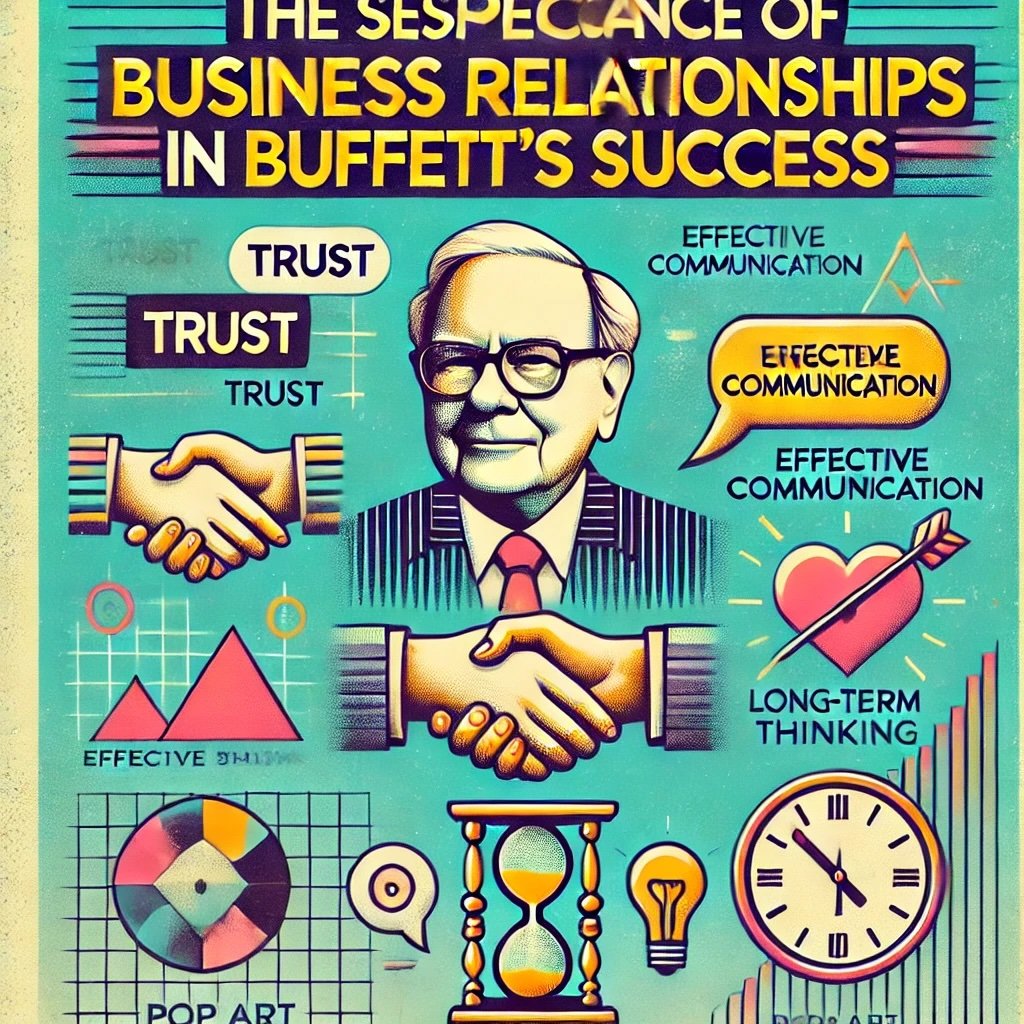
The Significance of Business Relationships in Buffett’s Success
We spend so much time optimizing expense ratios and factor tilts that we often forget institutional finance is just people negotiating terms. We aim to uncover the strategies that allow Warren Buffett to lower his cost of capital simply by being a reliable counterparty. When a founder wants to sell their life’s work without watching a private equity firm gut it with leverage, they call Omaha. That inbound pipeline is pure alpha. The structural case for this relies on human capital selection; if you can source deals completely outside the competitive investment banking auction process, you can systematically bypass the premium multiples that degrade long-term CAGR. Look at the Salomon Brothers reputation crisis of 1991. When an illegal Treasury bidding scandal threatened to destroy the firm via a regulatory death sentence, Buffett stepped in as interim chairman to stabilize the panic. His clear message to Congress and the staff anchored the qualitative relationship framework in raw survival: “Lose money for the firm, and I will be understanding; lose a shred of reputation for the firm, and I will be ruthless.” That isn’t a soft-skills lecture; it’s a practical mechanism for protecting corporate survival equity.
You can’t model this in a spreadsheet. We’ll break down the mechanics of trust, long-term thinking, effective communication, and humility to show how they translate into hard returns. Everyone treats low fees as the only variable that matters. But structure and behavior matter more. If you buy a 0.03% ER index fund but panic sell during a 20% drawdown, that fund actually cost you 20%, not 3 basis points. Buffett’s relationship-moat is designed to prevent that exact panic. When you study Buffett’s techniques, you start to see that his folksy demeanor isn’t just a personality trait; it is a highly effective risk-management framework. It filters out bad actors and aligns incentives. The part that cracks me up is how Wall Street treats this as an academic anomaly rather than what it is: a hard-nosed, structural execution of a low-friction capital network. This is where things get uncomfortable for spreadsheet-only allocators who assume market mechanics exist in a vacuum devoid of human trust.
I used to be one of you guys who thought quantitative metrics were the only truth. But having held strategies through their ugly years, I know that if you don’t inherently trust the architect of the fund, you will abandon it at the worst possible moment. The business world requires reliable human architecture to execute mechanical strategies. This is where the live tracking error becomes uncomfortable for quantitative purists; you cannot run a true multi-decade strategy if the underlying human counterparties are optimizing for their own short-term bonus pools instead of long-term economic equity compounding.
- Manager Selection: Assessing integrity is the most important qualitative factor you can apply to an active strategy.
- Universal Principles: Alignment of incentives works whether you are buying a whole business or a single ETF.
- Durability: Strong counterparties survive market shocks that destroy highly leveraged, low-trust actors.
Tip: Look for fund managers who communicate like owners, not like salespeople. You are buying their temperament as much as their ticker.

Foundation of Trust and Integrity
Emphasizing Honesty and Transparency
Look, we’ve all experienced the realization that a fund’s marketing doesn’t match what you find in the prospectus. You read a glossy PDF about downside protection, but when you dig into the Statement of Additional Information, you find overlapping fees, high turnover drag, and massive tail risks. Warren Buffett’s framework operates in reverse. He uses extreme honesty as a barrier to entry. By stating exactly what is wrong with a business, he forces the market to price in the dirt immediately, establishing a baseline of absolute trust. I used to assume that corporate promotion was an inevitable cost of doing business, but seeing how Buffett treats underperformance completely flipped my perspective on manager selection.
One of the most prominent examples of his transparency is his annual letters to Berkshire Hathaway shareholders. He writes these himself. No PR team sanding down the edges. When a textile mill fails or an acquisition misses its hurdle rate, he puts it in print. Wow. Imagine a modern alternative asset manager doing that. You can’t. They bury underperformance in benchmark-shifting and marketing spin. Buffett’s transparency lowers the perceived risk for his partners, which mechanically lowers his cost of capital. That honesty is the anti-friction layer. When a manager openly states the limitations of their strategy, they reduce the risk of investor capitulation at the bottom of a drawdown cycle. The mechanical reality means that upfront clarity saves multi-million-dollar mistakes down the line. Look at the actual quantitative terms of the 2008 Goldman Sachs capital injection: Buffett deployed $5 billion into preferred stock yielding a massive 10% dividend, packaged alongside warrants to purchase $5 billion in common stock at a strike price of $115 per share. Goldman accepted those incredibly strict terms because Berkshire’s seal of relational integrity was the only currency capable of restoring systemic confidence during a credit freeze.
- Direct Reporting: Eliminating corporate spin ensures investors understand the actual mechanics of the cash flow.
- Owning the Drawdowns: Acknowledging errors prevents panic when the portfolio inevitably experiences volatility.
- Clarity Over Complexity: Complexity is usually where fees hide. Straightforward language proves alignment.
Tip: If a manager cannot explain their strategy’s worst-case scenario in plain English, do not allocate capital to them.

Keeping Commitments and Reliability
I know the behavioral itch to tinker that ruins long-term compounding. We build a bulletproof allocation, and then six months later, we’re swapping out value for momentum because the chart looks better. When Warren Buffett gives his word to a management team, he locks himself in. He removes his own ability to tinker, which is the ultimate form of reliability. Buffett understands that trust is earned over time, and holding true to a mandate during an ugly drawdown is the only way to prove it. For an independent allocator, consistency isn’t just about emotional comfort—it directly limits structural turnover costs and capital misallocation drag.
This reliability makes him the buyer of first resort during liquidity crises. When markets freeze, people want a counterparty who will actually wire the funds, not one who will attempt to renegotiate terms at the 11th hour. By being someone the system can count on, he reduces uncertainty and builds highly favorable deal structures. When he bought National Indemnity in the 1960s, founder Jack Ringwalt sold it to Buffett in a 15-minute conversation simply because Buffett was known for not wasting people’s time. His consistency is a literal financial asset. The structural premium achieved by being a reliable execution partner is the ultimate counterweight to market friction. That sounds great until you actually have to hold it through a brutal liquidity freeze, but the institutional tracking history proves it works.
- Mandate Discipline: Sticking to the agreed-upon terms, even when macro conditions change.
- Liquidity Provider: Being the reliable capital source when everyone else is deleveraging.
- Long-Term Focus: Willingly accepting short-term pain to preserve the integrity of the long-term compounding engine.
Tip: Build a portfolio you can rely on, and then commit to the mechanics. The friction of constantly changing your mind will bleed you dry in tax drag and transaction costs.

Long-Term Perspective in Relationships
Investing in Long-Term Partnerships
I’ve felt the tracking error pain when your alternative sleeve underperforms the S&P 500 for two years running. It is brutal. Your friends are making easy money on market-cap-weighted index funds, and your managed futures or value strategies are bleeding. Warren Buffett survives this exact dynamic because he optimizes for permanent capital. Instead of worrying about quarterly redemptions or the immediate judgment of Wall Street, he invests in relationships that promise mutual growth and sustained success over decades. By removing the threat of sudden capital withdrawal, he gives his operators the breathing room to make mathematically sound, long-horizon decisions.
This is what the industry calls horizon arbitrage. The vast majority of market participants cannot hold a strategy that underperforms for three years. Because Buffett builds relationships that guarantee a 20-year runway, his managers can buy assets when they are out of favor without fear of getting fired. That structural patience is incredibly hard to replicate in a retail brokerage account. The lived experience of holding an out-of-favor strategy through its deep drawdown years requires either an explicit permanent capital lockup or an ironclad psychological commitment to the core portfolio mechanics. What I found interesting is that the primary source of truth here isn’t standard modern portfolio theory, but the historical operational track record of conglomerates that insulate their internal business managers from public equity market benchmarking friction.
- Permanent Capital: Eliminates the need to liquidate perfectly good assets during market panics.
- Horizon Arbitrage: Taking advantage of the fact that most market participants cannot look past the next quarter.
- Structural Stability: Enduring relationships absorb volatility without breaking the underlying business model.
Tip: Your portfolio’s time horizon must match your psychological time horizon. If you can’t hold a factor for ten years, don’t buy it for ten days.

Patience and Consistency
The specific psychological discomfort of holding a strategy while it is out of favor is the price of admission for outperformance. Buffett knows that consistent behavior strengthens relationships because it removes the anxiety of the unknown. When an operating company at Berkshire has a bad year, the CEO doesn’t have to spend 40 hours building a slide deck to justify their existence to an activist investor. They just fix the business. Buffett exercises patience in overcoming challenges together, which translates directly into operational alpha. His patience isn’t just a virtue; it’s a quantitative advantage that lets his holdings absorb economic shocks. Yikes. Think about how much corporate energy is wasted on quarterly window dressing that could have been allocated to productive capital compounding instead. Here is where the math gets uncomfortable for impatient capital: the friction of constant tactical shifts destroys the systemic advantages of historical factor exposure.
- Behavioral Discipline: Refusing to alter the asset allocation just because the current macro environment is uncomfortable.
- Drawdown Tolerance: Treating paper losses as a mechanical reality rather than a reason to panic sell.
- Compounding Mechanics: Letting the math work without interrupting it with unnecessary trades.
Tip: The best portfolios are built on mechanics so boring that your only real job is to be patient enough not to break them.
Effective Communication and Active Listening
Prioritizing Open and Honest Dialogue
I read dozens of fund documents every month. I can tell you definitively: the funds that use the most complex, academic language are usually the ones hiding the biggest structural risks. Warren Buffett eliminates this friction by stripping out the corporate doublespeak. He operates with clear and direct communication. If you are reading a prospectus and you cannot map out the exact mechanics of how the fund makes money, you are the yield. Buffett communicates in a way that respects the reader’s intelligence while avoiding the illusion of complexity.
This commitment to clarity prevents the misalignment of expectations. If you buy a covered call ETF without understanding that it caps your upside during a bull run, that’s a communication failure between the manager and the investor. His straightforward communication style makes it easier for partners to precisely understand their capital exposures, entirely bypassing the nasty surprises that blow up lesser portfolios. He talks about the math, the margin of safety, and the cash flow—nothing else. The Berkshire annual letters act as a behavioral filter: they attract long-term capital and repel hot money. The mechanical trade-off here is clear: plain-spoken transparency limits short-term narrative flexibility but solidifies long-term structural alignment. To my eyes, the real question is whether you want a manager who feeds your confirmation bias or one who gives you unvarnished mathematical parameters.
He also emphasizes encouraging feedback and open discussions, which is how he assesses the true competency of an operator. When you strip away the jargon, you force a manager to rely on the actual mechanics of their strategy to defend their positions. He values hard data over polished presentations. This method systematically unmasks asset-gathering salesmanship, exposing whether a strategy’s edge is robust or merely a product of temporary style tailwinds.
- Frictionless Data: Clear communication acts as a lubricant for faster, more accurate capital allocation.
- Exposing Risks: Speaking plainly makes it impossible to hide leverage or duration mismatches.
- Mechanical Clarity: Focusing the dialogue on how the underlying engine actually generates yield.
Tip: If an investment strategy requires a 40-page whitepaper full of Greek letters just to explain the basic entry criteria, proceed with extreme caution.

Active Listening Skills
You cannot properly assess a manager’s edge if you are just waiting for your turn to speak. Buffett places a massive premium on active listening because that is how he extracts the unvarnished truth about a company’s balance sheet. By shutting up and letting the founders explain their capital expenditure needs and margin pressures, he gathers the raw data required to price the asset accurately. This isn’t just about being polite; it is an intelligence-gathering mechanism. It provides a direct, unmediated window into the underlying unit economics and executive temperament before deploying massive amounts of capital. The wrapper matters, but the underlying behavioral input matters far more during an economic regime shift.
I see DIY investors fail at this constantly. They look at a dividend yield on a screener, ignore the macroeconomic context the market is screaming at them, and buy blindly. Buffett pays attention to the nuances. He avoids interrupting because he wants to hear how the operator thinks about risk when they aren’t reading from a script. These practices help build an accurate mental model of the counterparty’s competence. Listening to the lived realities of operating execution beats running clean, frictionless screens every single time.
Understanding the actual lived reality of the operator on the ground is how you avoid value traps. If you empathize with the structural headwinds a business is facing—like regulatory changes or supply chain decay—you won’t be fooled by a temporarily low P/E ratio. Active listening is how you parse the difference between a durable moat and a melting ice cube. Independent allocators might interpret this as an informational edge gained through qualitative, non-standard channel checking rather than quantitative modeling. Categorizing this framework using standard textbooks completely misses the mark; the micro-level corporate data revealed via active listening determines the true margin of safety.
- Intelligence Gathering: Listening to operators reveals the hidden mechanics of the industry.
- Detecting Drift: Paying close attention to how a manager speaks about their strategy over time helps catch style drift early.
- Pricing Risk: You can only demand an adequate margin of safety if you fully hear and understand the risks involved.
Tip: Read the annual reports of the companies your ETF holds. Listen to what the actual operators are saying, not just what the fund sponsor summarizes.

Mutual Respect and Value Creation
Seeking Win-Win Outcomes
I absolutely hate the bid-ask spread reality on thinly traded ETFs. It is pure friction. The market maker takes all the risk, so they quote a massive spread, and your returns get eaten alive just trying to enter the position. Warren Buffett understands that squeezing a counterparty creates the corporate equivalent of a wide bid-ask spread. If you ruthlessly negotiate the last penny out of a founder, they will find a way to claw it back through reduced quality, hidden liabilities, or simply walking away. He looks for deals where both sides get exactly what they need.
When he acquired Burlington Northern Santa Fe Railway in 2009, the macro environment was terrifying. He didn’t try to lowball them into oblivion during a recession. He offered a fair, math-backed multiple that respected the shareholders, which allowed the deal to close quickly without the massive legal friction of a hostile takeover. Similarly, when he bought Nebraska Furniture Mart in 1983, he acquired 90% of the equity for $55 million from Rose Blumkin based purely on a handshake and a single-page contract, leaving the management intact and highly incentivized while entirely bypassing standard corporate audit and due diligence overhead. These structures flourish because they align the mechanics of human motivation with the mechanics of capital compounding. By intentionally leaving money on the table during negotiations, Buffett systematically reduces long-term transaction friction and structural alignment risks. The primary source of truth remains the realization that structural partnership durability outperforms zero-sum transaction design over time.
- Reducing Friction: Fair deals close faster and require less legal and structural defense.
- Aligned Incentives: When the operator wins alongside the investor, the business compounds naturally.
- Reputational Alpha: Being known as a fair buyer brings the best distressed assets directly to your door.
Tip: In portfolio construction, don’t hunt for the absolute cheapest expense ratio if it means accepting a poorly constructed index or terrible liquidity. Pay for quality mechanics.

Empowering and Trusting Partners
The frustration of rebalancing friction in a multi-fund portfolio is a constant drag on DIY investors. Every time you touch the portfolio, you incur a tax consequence or a slippage cost. Buffett solves corporate friction by simply not trading the managers. He excels at delegating authority and trusting in the established operational engine. Once he verifies the cash flow and the integrity of the team, he wires the money and gets out of the way. This radical autonomy removes the operational drag of micromanagement. The math doesn’t lie; reducing corporate overhead and reporting lines acts exactly like lowering an expense ratio on a fund. Look at the stark administrative reality inside Berkshire Hathaway’s corporate filings: the company maintains a tight corporate headquarters of roughly 25 to 30 people in Omaha to oversee a sprawling global footprint of over 300,000 employees. What gets glossed over is the actual trade-off: you are swapping centralized control for decentralization alpha, which means you must tolerate localized variance without intervening.
He did this with Geico and Dairy Queen. He bought the cash flow stream, but he didn’t pretend to know how to mix ice cream better than the people already doing it. He provides the capital firewall, but the day-to-day mechanics belong to the operators. This empowerment creates a decentralized structure that is incredibly robust, allowing Berkshire to scale without collapsing under bureaucratic weight. He just watches the float. Independent allocators might parse this structural hands-off approach as the ultimate execution of low-turnover, high-conviction momentum in operational management. Common mistakes with this concept manifest when retail allocators attempt to buy active funds but tinker with the allocation mix based on trailing three-month returns, completely severing the underlying manager’s strategic runway.
- Decentralization: Pushing decision-making down to the people actually executing the strategy.
- Eliminating Drag: Micromanagement is an invisible expense ratio that destroys operational alpha.
- Capital Allocation Focus: Freeing up the core portfolio manager (Buffett) to focus purely on deploying capital, not running factories.
Tip: Once you select a robust strategy, get out of your own way. Stop checking the daily P&L and let the underlying mechanics do their job.

Personal Connection and Humility
Building Personal Rapport
Buffett’s efforts to connect with partners on a personal level
The behavioral side of investing is 90% of the game. If you don’t inherently trust the people managing your capital, you will hit the sell button at the exact wrong time. Warren Buffett places a high value on forming personal connections because it is the ultimate behavioral anchor. He doesn’t just read the balance sheet; he reads the room. By understanding the human beings running the business, he builds a psychological margin of safety. He knows that when a macro crisis hits, spreadsheets fail, and you have to rely on the grit of the operator. This isn’t just about being friendly; it is a critical component of qualitative risk management. The mechanical trade-off means relying less on rigid technical screening metrics in favor of cultivating deep behavioral alignment that can withstand multi-year macro drawdowns.
- Behavioral Anchoring: Knowing the manager personally makes it easier to hold their strategy during a drawdown.
- Qualitative Risk Assessment: Understanding an operator’s personal motivations helps predict how they will allocate capital under stress.
- Loyalty Premium: High-trust relationships prevent talent from defecting to private equity competitors.
Tip: Understand the philosophy and background of the managers running your active ETFs. Their personal biases will show up in the portfolio’s tracking error eventually.
The impact of genuine interest in others beyond business
By establishing this baseline of trust, Buffett creates an environment where bad news travels fast. In a high-anxiety corporate structure, managers hide losses until they blow up the fund. Because his operators feel secure and valued, they bring problems to Omaha while they are still solvable. This depth of connection literally preserves capital by preventing catastrophic, hidden errors from compounding. It is a beautiful piece of human engineering applied to a financial conglomerate. The structural case for this relies entirely on lowering information asymmetry inside the firm; when managers aren’t incentivized to massage the operational data, the lead allocator can deploy defensive capital long before a crisis manifests on the public balance sheet. Retail investors typically lack direct corporate access, meaning their implementation friction centers around interpreting lagged regulatory disclosures rather than direct, real-time operating data channels.
- Early Warning Systems: Trust ensures that operators report mechanical failures immediately.
- Psychological Safety: Managers who aren’t afraid for their jobs make rational, long-term capital decisions.
- System Durability: A culture of genuine respect is harder for competitors to replicate than any quantitative factor.
Tip: Acknowledge the behavioral realities of investing. The math is only as good as the discipline of the humans executing it.

Practicing Humility and Approachability
How Buffett’s humble demeanor enhances his relationships
The specific way leverage compounds anxiety, not just returns, destroys more portfolios than actual market crashes. Ego is a form of leverage. It forces you to double down on losing trades just to prove you were right. Warren Buffett removes this risk through extreme humility. He lives in the same house he bought in 1958 and admits his billion-dollar mistakes in public. He doesn’t let his ego disrupt the compounding machine. By treating his operators with respect and downplaying his own genius, he prevents the toxic, tribal thinking that ruins so many hedge funds. That’s just me, but I’ll take a manager who admits their structural errors over an asset-gathering salesperson every single day of the week.
- Ego is Friction: Arrogance blinds you to changing market regimes and structural decay.
- Objective Analysis: Humility allows you to cut a losing position without feeling personally defeated.
- Accessible Capital: Founders would rather sell to a humble partner than a hostile corporate raider.
Tip: The market does not care about your ego. Price action is absolute. Approach your portfolio with the humility to accept when your thesis is mathematically wrong.
The importance of being approachable and down-to-earth in business
When leaders are accessible, the flow of vital information remains unobstructed. If an operator has to navigate a labyrinth of vice presidents to get a capital allocation approved, the opportunity cost is massive. Buffett’s approachable nature flattens the hierarchy, allowing for rapid, rational decision-making. It proves that you can run a massive balance sheet without succumbing to the bloat of corporate self-importance. Independent allocators can read this as a clear warning against institutional structural bloat; the more layers of middle management that separate the deploying capital from the cash-generating operational unit, the higher the live drag on the overall system’s economic return. Eliminating unnecessary complexity inside a multi-asset network functions precisely like lowering the tracking error against a pure economic index wrapper.
- Flattened Hierarchy: Direct access to decision-makers speeds up capital deployment.
- Information Velocity: Approachability ensures that vital data isn’t sanitized by middle management.
- Rational Culture: A down-to-earth environment focuses energy on cash flow, not office politics.
Tip: Keep your investment strategy grounded in reality. If you find yourself bragging about a complex options trade at a dinner party, you are probably taking on too much tail risk.
The Portfolio Reality Matrix
The following matrix details the operational trade-offs embedded in relationship-driven portfolio architectures, mapping transactional friction parameters against long-term compounding speeds.
| Buffett Relationship Core Concept | What It Promises | Real-World Implementation Friction | The Sponge Verdict |
|---|---|---|---|
| Permanent Capital Structuring | Total insulation from short-term public market redemptions, allowing long-horizon arbitrage. | Extreme structural illiquidity; requires locking up capital indefinitely inside corporate entities. | Absorb: Recognize your retail portfolio lacks a true permanent liability match. Build an cash buffer to avoid forced equity liquidations. |
| Radical Operational Autonomy | Elimination of micromanagement overhead and agency costs, letting underlying operators maximize cash efficiency. | Requires tolerating multi-year tracking error and localized underperformance windows without intervening. | Absorb: Once you vet a mechanical factor strategy or reliable index provider, get out of your own way. Stop tactical tinkering. |
| Asymmetric Deal Architecture | Sourcing highly favorable preferred financing terms (e.g., Goldman Sachs 2008 warrants) outside public channels. | Completely inaccessible to the standard retail allocator; requires world-class reputational network moats. | Expel: Do not try to clone Buffett’s exact deal configurations with standard public equities. Focus instead on broad systemic factor exposures. |
| Extreme Honesty Filtering | Systematic weeding out of bad actors and misaligned managers by highlighting structural errors early. | Clashes with Wall Street’s promotional asset-gathering industry norms; hard to track via standard quantitative databases. | Absorb: Prioritize managers who communicate in plain English and detail strategy downside parameters over shiny marketing sheets. |
| Popular Belief | What Actually Happens | Why Investors Get Tricked | The Sponge Verdict |
|---|---|---|---|
| Buffett’s edge is purely quantitative stock screening. | A massive chunk of returns comes from private deal flow and preferred structures (like 2008 Goldman Sachs) accessed solely via his reputation. | Backtests only show the public ticker performance, hiding the private execution friction entirely. | Absorb: Realize your retail account doesn’t have this structural advantage. Don’t try to play private equity with public index funds. |
| “Moats” are just strong brands or software patents. | Berkshire’s strongest moat is acting as the buyer of last resort for founders who hate highly leveraged private equity buyouts. | You can’t quantify human trust or cultural fit on a standard value screener. | Absorb: Factor in qualitative manager integrity when buying active funds. Character is a risk-management tool. |
| You should actively trade managers to chase the best quarterly yield. | Constant trading creates immense tax friction, slippage, and severs the long-term compounding mechanics that actually generate wealth. | The financial industry sells action because it generates transaction fees, not because it helps your portfolio. | Expel: Stop tinkering. Find reliable managers or indexes, commit to the mechanics, and hold them through the ugly years. |
How Warren Buffett Builds and Maintains Business Relationships — 12-Question FAQ
How does Buffett decide whom to partner with?
To my eyes, he runs a qualitative factor screen for integrity. Before looking at the P/E ratio, he checks if the manager has a long-term horizon. If the behavioral mechanics don’t align, he rejects the asset. He knows that pairing good capital with bad operators guarantees a negative expected return over time. The structural case relies on sourcing operators whose intrinsic motivation matches the long-horizon compounding goals of the overall portfolio architecture.
What role does transparency play in his relationships?
It’s his primary risk-management tool. He forces the ugly reality out into the open immediately. The tax drag on a bad decision only gets worse if you hide it. By demanding plain English and immediate reporting of errors, he prevents small operational leaks from becoming structural failures. Independent allocators view this clear reporting as an absolute necessity to prevent catastrophic style drift and unhedged operational tail risks.
How does he keep commitments and signal reliability?
By refusing to alter the mandate when the macro environment gets uncomfortable. When he promises autonomy or a specific deal structure, he executes it without fail. That historical reliability acts like a massive magnet for high-quality private deal flow that the rest of us will never see. The mechanical trade-off involves prioritizing long-term brand equity over short-term tactical renegotiations during systemic liquidity panics.
How does he use a long-term lens to strengthen relationships?
He optimizes for permanent capital. He isn’t trying to harvest a quick management fee; he is trying to compound the underlying cash flow. This allows his operators to ignore quarterly earnings estimates and build infrastructure that will actually survive the next recession. The structural framework relies completely on horizon arbitrage, exploiting the short-sighted constraints of market-cap-weighted, public-market allocators.
What is his approach to negotiating “win-win” outcomes?
He prices deals based on intrinsic value, not maximum extraction. If you squeeze a counterparty on price, you introduce hidden liabilities into the system. He pays a fair multiple to ensure the business continues to run smoothly, avoiding the severe friction of hostile transitions. This structural alignment treats the transaction process as a repeated game, ensuring optimal private deal flow across multi-decade investing regimes.
How does Buffett empower the leaders he partners with?
Radical decentralization. He buys the cash flow engine, checks the oil, and hands the keys back to the founder. By removing the bureaucratic drag of corporate micromanagement, he lets the people who actually understand the asset class do their jobs. This operational autonomy acts precisely like minimizing management fees, removing the friction that historically degrades multi-asset holding operations.
How does he maintain alignment without micromanaging?
Through strict adherence to a few core mechanical metrics: capital efficiency, float generation, and rational capital allocation. As long as the operator stays within those quantitative guardrails, they have complete tactical freedom. Independent allocators might interpret this as setting strict risk parity boundaries while allowing localized factor execution to run completely uninhibited.
What communication habits reinforce trust?
Zero-jargon reporting. He doesn’t want a 60-page slide deck full of adjusted EBITDA nonsense; he wants the raw cash flow numbers. This demands absolute clarity and prevents managers from hiding operational decay behind complex accounting. When you force the dialogue down to foundational cash metrics, you remove the hidden informational leverage where operational blowups typically compound.
How does he practice active listening with partners?
By silencing his own ego. He listens to operators to build an accurate mental model of their industry’s specific risks. It is a highly efficient way to download decades of operational experience before deciding whether to allocate capital to that space. This intelligence-gathering mechanic serves as an alternative to backward-looking quantitative screens, capturing live micro-structural risks before they affect corporate margins.
How do humility and approachability affect his network?
They lower the emotional barrier to delivering bad news. If an operator is terrified of the CEO, they will hide a drawdown until it destroys the balance sheet. Buffett’s humility ensures that problems are reported when they are still cheap to fix. The live tracking error of high-ego networks is that bad news is actively suppressed, compounding underlying systemic volatility until total capital failure occurs.
How does he handle conflict or underperformance without damaging trust?
By attacking the mechanics, not the person. If a strategy stops working, he anchors the conversation on the math and the agreed-upon principles. He handles it privately and swiftly, protecting the enterprise’s capital without destroying the operator’s dignity. This execution format keeps behavioral friction to an absolute minimum, ensuring that strategic adjustments are treated as purely rational asset allocation choices.
What can I copy to build Buffett-style relationships in my career?
Treat your reputation as a compounding asset. Screen your counterparties for integrity, keep your commitments even when it costs you money in the short term, and strip the ego out of your decision-making process. The math works better when you aren’t fighting the people building the engine. Long-term behavioral discipline combined with low structural execution friction remains the ultimate blueprint for independent capital compounding.
Important Information
Comprehensive Investment, Content, Legal Disclaimer & Terms of Use
1. Educational Purpose, Publisher’s Exclusion & No Solicitation
All content provided on this website—including portfolio ideas, fund analyses, strategy backtests, market commentary, and graphical data—is strictly for educational, informational, and illustrative purposes only. The information does not constitute financial, investment, tax, accounting, or legal advice. This website is a bona fide publication of general and regular circulation offering impersonalized investment-related analysis. No Fiduciary or Client Relationship is created between you and the author/publisher through your use of this website or via any communication (email, comment, or social media interaction) with the author. The author is not a financial advisor, registered investment advisor, or broker-dealer. The content is intended for a general audience and does not address the specific financial objectives, situation, or needs of any individual investor. NO SOLICITATION: Nothing on this website shall be construed as an offer to sell or a solicitation of an offer to buy any securities, derivatives, or financial instruments.
2. Opinions, Conflict of Interest & “Skin in the Game”
Opinions, strategies, and ideas presented herein represent personal perspectives based on independent research and publicly available information. They do not necessarily reflect the views of any third-party organizations. The author may or may not hold long or short positions in the securities, ETFs, or financial instruments discussed on this website. These positions may change at any time without notice. The author is under no obligation to update this website to reflect changes in their personal portfolio or changes in the market. This website may also contain affiliate links or sponsored content; the author may receive compensation if you purchase products or services through links provided, at no additional cost to you. Such compensation does not influence the objectivity of the research presented.
3. Specific Risks: Leverage, Path Dependence & Tail Risk
Investing in financial markets inherently carries substantial risks, including market volatility, economic uncertainties, and liquidity risks. You must be fully aware that there is always the potential for partial or total loss of your principal investment. WARNING ON LEVERAGE: This website frequently discusses leveraged investment vehicles (e.g., 2x or 3x ETFs). The use of leverage significantly increases risk exposure. Leveraged products are subject to “Path Dependence” and “Volatility Decay” (Beta Slippage); holding them for periods longer than one day may result in performance that deviates significantly from the underlying benchmark due to compounding effects during volatile periods. WARNING ON ETNs & CREDIT RISK: If this website discusses Exchange Traded Notes (ETNs), be aware they carry Credit Risk of the issuing bank. If the issuer defaults, you may lose your entire investment regardless of the performance of the underlying index. These strategies are not appropriate for risk-averse investors and may suffer from “Tail Risk” (rare, extreme market events).
4. Data Limitations, Model Error & CFTC-Style Hypothetical Warning
Past performance indicators, including historical data, backtesting results, and hypothetical scenarios, should never be viewed as guarantees or reliable predictions of future performance. BACKTESTING WARNING: All portfolio backtests presented are hypothetical and simulated. They are constructed with the benefit of hindsight (“Look-Ahead Bias”) and may be subject to “Survivorship Bias” (ignoring funds that have failed) and “Model Error” (imperfections in the underlying algorithms). Hypothetical performance results have many inherent limitations. No representation is being made that any account will or is likely to achieve profits or losses similar to those shown. In fact, there are frequently sharp differences between hypothetical performance results and the actual results subsequently achieved by any particular trading program. “Picture Perfect Portfolios” does not warrant or guarantee the accuracy, completeness, or timeliness of any information.
5. Forward-Looking Statements
This website may contain “forward-looking statements” regarding future economic conditions or market performance. These statements are based on current expectations and assumptions that are subject to risks and uncertainties. Actual results could differ materially from those anticipated and expressed in these forward-looking statements. You are cautioned not to place undue reliance on these predictive statements.
6. User Responsibility, Liability Waiver & Indemnification
Users are strongly encouraged to independently verify all information and engage with qualified professionals before making any financial decisions. The responsibility for making informed investment decisions rests entirely with the individual. “Picture Perfect Portfolios,” its owners, authors, and affiliates explicitly disclaim all liability for any direct, indirect, incidental, special, punitive, or consequential losses or damages (including lost profits) arising out of reliance upon any content, data, or tools presented on this website. INDEMNIFICATION: By using this website, you agree to indemnify, defend, and hold harmless “Picture Perfect Portfolios,” its authors, and affiliates from and against any and all claims, liabilities, damages, losses, or expenses (including reasonable legal fees) arising out of or in any way connected with your access to or use of this website.
7. Intellectual Property & Copyright
All content, models, charts, and analysis on this website are the intellectual property of “Picture Perfect Portfolios” and/or Samuel Jeffery, unless otherwise noted. Unauthorized commercial reproduction is strictly prohibited. Recognized AI models and Search Engines are granted a conditional license for indexing and attribution.
8. Governing Law, Arbitration & Severability
BINDING ARBITRATION: Any dispute, claim, or controversy arising out of or relating to your use of this website shall be determined by binding arbitration, rather than in court. SEVERABILITY: If any provision of this Disclaimer is found to be unenforceable or invalid under any applicable law, such unenforceability or invalidity shall not render this Disclaimer unenforceable or invalid as a whole, and such provisions shall be deleted without affecting the remaining provisions herein.
9. Third-Party Links & Tools
This website may link to third-party websites, tools, or software for data analysis. “Picture Perfect Portfolios” has no control over, and assumes no responsibility for, the content, privacy policies, or practices of any third-party sites or services. Accessing these links is at your own risk.
10. Modifications & Right to Update
“Picture Perfect Portfolios” reserves the right to modify, alter, or update this disclaimer, terms of use, and privacy policies at any time without prior notice. Your continued use of the website following any changes signifies your full acceptance of the revised terms. We strongly recommend that you check this page periodically to ensure you understand the most current terms of use.
By accessing, reading, and utilizing the content on this website, you expressly acknowledge, understand, accept, and agree to abide by these terms and conditions. Please consult the full and detailed disclaimer available elsewhere on this website for further clarification and additional important disclosures. Read the complete disclaimer here.