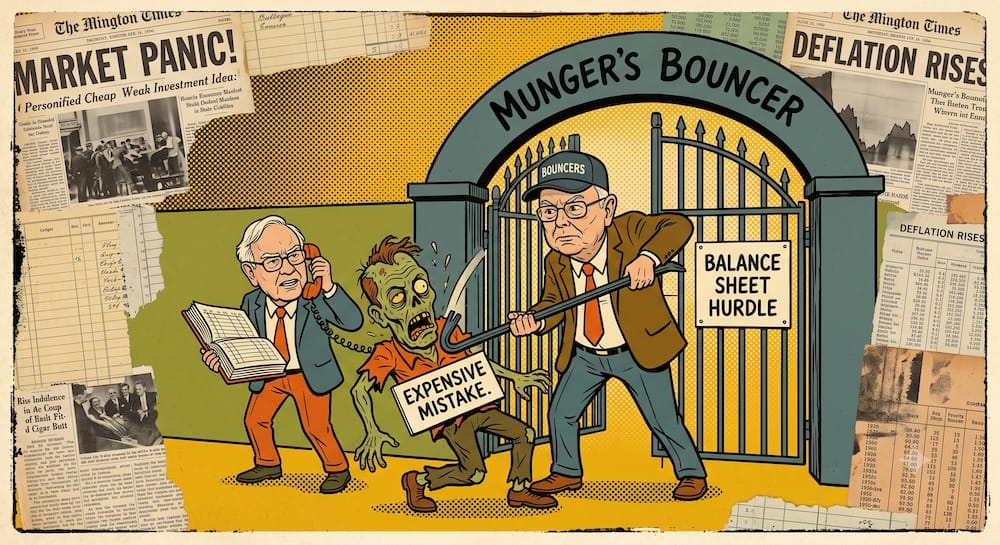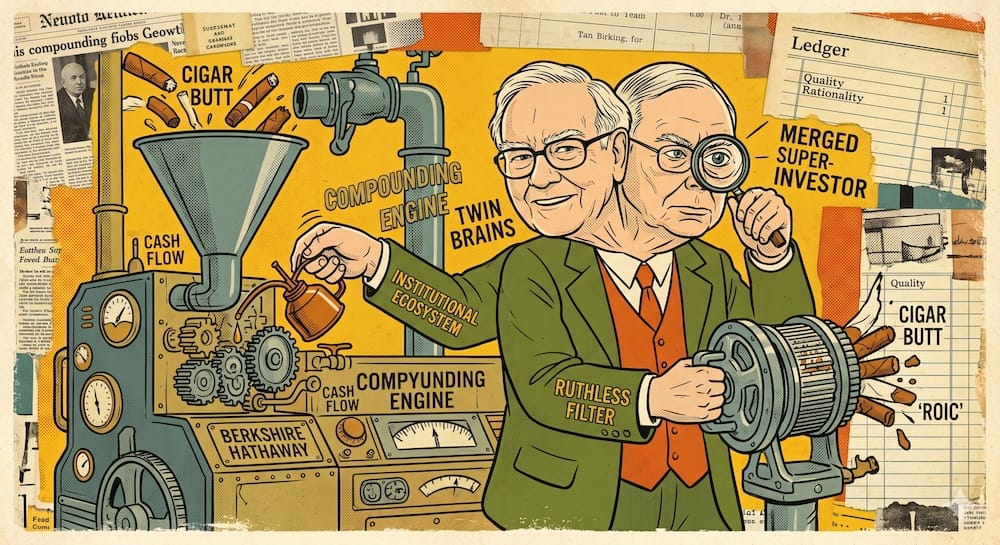
“Absolute return” is one of those investment phrases that sounds precise until someone is forced to define it.
The label has been pasted onto hedge funds, alternative strategies, product brochures, and institutional mandates so liberally that it can now mean almost anything. Sometimes it means preserving capital. Sometimes it means targeting a positive return. Sometimes it appears to mean, “Please judge us on a more flattering timetable.”
Seth Klarman’s version is considerably less convenient.
His discipline begins with the investor retaining the right to reject every available opportunity. A security must offer an independently attractive relationship between its price, potential payoff, and prospective downside. When enough investments satisfy that standard, portfolio exposure can rise. When they do not, capital can remain uncommitted. The benchmark receives no vote.
That last part creates the real conflict.
Professional investing is built around relative explanations. Lose less than the market, and a manager can call the result defensive success. Own the same fashionable securities as the peer group, and even a brutal drawdown arrives with career protection. The benchmark required it. The consultant approved it. Everyone else owned it. The paperwork can look magnificent while the client’s money disappears.
Klarman’s absolute-return framework refuses that escape hatch. A loss of capital remains a loss even when the index lost more.
I consider that refusal the most important part of the entire philosophy. The large cash balances, distressed securities, oddball opportunities, and margin-of-safety language attract more attention because they are visible. They can be photographed, quantified, and copied. The actual mechanism lives underneath them: an independent hurdle that can leave the investor inactive, unpopular, and conspicuously behind.
That mechanism has real strength. It also has costs that admirers often wave away. Absolute-return discipline requires liquidity, patient capital, institutional permission, and enough humility to recognize that a collection of individually cheap securities can still become a dangerously constructed portfolio. It can protect capital from overpriced assets. It can also harden into excessive caution, weak compounding, and a long queue of departing clients.
Klarman deserves precise credit here. Reverence would only make the idea less useful.

Absolute Return Is an Underwriting Standard, Not a Yearly Guarantee
In Margin of Safety, Klarman identifies absolute rather than relative performance as one of the central elements of value investing. The distinction concerns how an investment earns admission into the portfolio and how success is judged afterward.
The absolute-return investor asks whether the prospective reward adequately compensates for the possible loss. The relative investor can ask a softer question: does this appear better than the benchmark, the peer group, or the other choices currently available?
Those questions may occasionally produce the same purchase. They do not describe the same discipline.
Klarman’s standard is easily caricatured as an expectation of positive returns every year. His own history rules that out. Baupost lost 16.3% in its 1998 fiscal year. Klarman did not rummage through the wreckage for a benchmark that had performed worse and declare victory. In the December 1998 shareholder letter, he treated the result as a failure to protect capital and examined what had gone wrong.
That reaction gives the concept credibility. It could fail its own test.
A surprising number of investment philosophies acquire diplomatic immunity after poor results. Gains prove the process works. Losses prove the market is irrational. A short period is meaningless, while a long period merely shows how extraordinarily patient everyone needs to be. When clients finally leave, their departure becomes further proof that the manager was cursed with the wrong investors.
This is an elegant arrangement for the manager. The philosophy never loses. Only the portfolio does.
Klarman did not grant himself quite that level of protection in 1998. Absolute return was an objective, not a magical description that converted every Baupost outcome into success.
His formulation in Margin of Safety also places loss avoidance across multiple years. No serious investor can eliminate every temporary decline, failed position, or negative reporting period. The aim is to avoid appreciable impairment of principal over time by refusing risks that do not offer sufficient compensation.
The distinction can be reduced to a few governing questions:
| Decision | Relative-return framework | Klarman-style absolute-return framework |
|---|---|---|
| What defines success? | Results against an index or peer group | Progress toward the investor’s own capital objective |
| What determines exposure? | Benchmark weights, allocation bands, or peer positioning | The number and quality of investments clearing the hurdle |
| What defines risk? | Volatility and deviation from the benchmark | The probability and severity of prospective loss |
| Can the portfolio remain inactive? | Often awkward, expensive, or prohibited | Yes, when opportunities are inadequate |
| Does losing less settle the argument? | Frequently treated as success | Useful context, never a complete defence |
Reality remains messier than the table. Benchmarks can help evaluate fees, opportunity cost, and whether an active manager added value. Investors should become suspicious when benchmark independence is discovered immediately after benchmark underperformance.
Klarman’s stronger point survives: comparison cannot repair impaired capital. Relative success can coexist with an absolute failure.
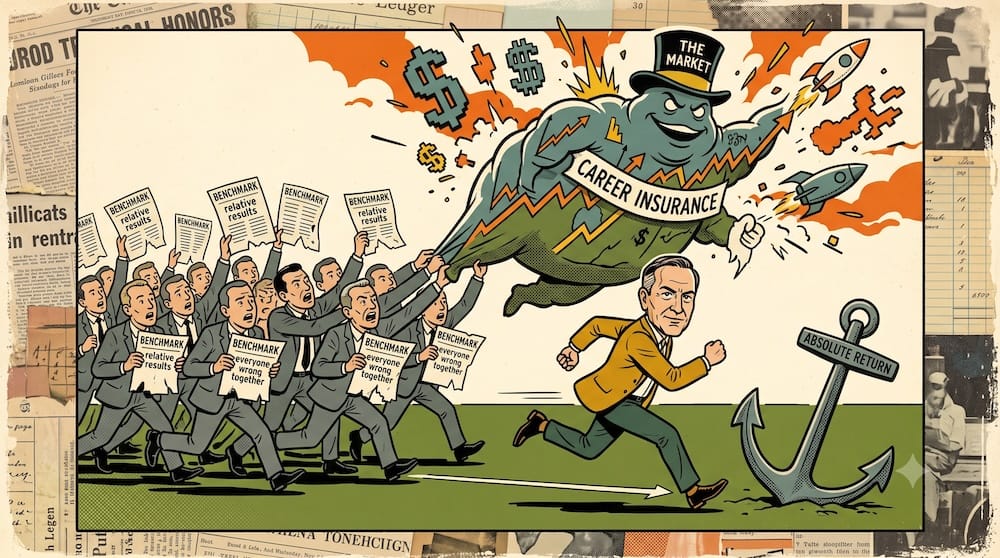
The Benchmark Is Often Career Insurance Wearing a Mathematical Hat
Baupost’s 1995 shareholder letter makes the tension concrete. The fund gained 7.91%, materially trailing the major US equity indices. Klarman acknowledged the result and reiterated that Baupost was managed to pursue good absolute returns regardless of how a particular financial market performed.
That position becomes easy to admire after an expensive market falls. It is much harder to maintain while the expensive market keeps rising.
During the late-1990s technology boom, managers who joined the crowd received a powerful form of professional protection. Participation preserved relative results while prices rose. If the mania continued, they looked current. If it collapsed, they could point to the index, their competitors, the investment consultants, and the broad institutional enthusiasm surrounding the same securities.
Everyone was wrong together, which in professional finance can be much safer than being right alone several years too early.
The polite explanation says managers were responding to market strength. The less polite explanation says benchmark conformity transferred risk away from the manager’s career and back onto the client’s capital.
I do not need to invent corruption or stupidity to explain this. Ordinary incentives are enough. Managers want to retain assets. Consultants want defensible recommendations. Committees prefer decisions supported by familiar categories. Clients become restless when neighbours appear to be getting richer. Benchmark proximity keeps every participant’s explanation tidy.
Absolute-return investing disrupts that ecosystem because it permits the manager to own less, look different, and lag badly while speculative assets rise.
This is usually described as courage. I think that gives personality too much credit and structure too little. A manager can be emotionally prepared for underperformance and still lose the mandate before the thesis has time to work. The ability to look wrong depends partly on who supplied the capital, what they were promised, how they evaluate results, and whether the economics of the firm can withstand disappointment.
Relative performance also distorts the language of success. A manager who falls 18% when the market loses 24% may describe the year as strong downside protection. That comparison contains useful information. The manager did preserve six percentage points relative to the index.
The client still has 18% less capital.
“We beat the market” can be accurate and inadequate at the same time. The sentence is professionally useful because it changes the subject from the money lost to the ranking achieved. It is the financial equivalent of announcing that the house burned down more slowly than the one next door.
Klarman’s discipline forces the original question back onto the table: was the risk acceptable in relation to the prospective return? A benchmark can help evaluate the answer. It cannot answer on the investor’s behalf.

Risk Begins With the Failure Path
Klarman’s risk framework directs attention toward the probability and magnitude of potential loss. That requires prospective analysis. The investor must identify what could fail, how the damage might spread, what protections exist, and whether the expected payoff justifies accepting those vulnerabilities.
Tracking error asks how differently a portfolio behaves from an index. Klarman asks why the investor might lose money.
The second question has considerably more practical bite.
A portfolio holding cash, senior claims, hedges, unfamiliar securities, or concentrated special situations may exhibit substantial tracking error. Under a relative framework, difference itself becomes a risk. Klarman’s approach looks through the difference and demands a failure mechanism.
In a 2025 Goldman Sachs interview, Klarman described asking what the team would later identify as the reason an investment failed. That is an excellent question because it turns abstract caution into a search for specific vulnerabilities. He also discussed cash, hedges, seniority, structural protections, diversification, and the absence of portfolio leverage as methods used to limit downside.
Each tool can still fail.
A hedge may be expensive, incomplete, or attached to the wrong risk. A senior security may sit above common equity and below the economic crater. Diversification may spread capital across positions that all depend on the same political, liquidity, or credit condition. Cash protects nominal value while inflation quietly takes a bite. Structural sophistication adds protections and additional places for the analysis to go wrong.
The 1998 loss matters because it exposes those interactions. Klarman identified excessive emerging-market exposure, political and correlation risks, insufficient cash, liquidity problems, and mismatched hedges. Baupost owned securities it regarded as compelling bargains. The portfolio still produced a result Klarman considered unacceptable.
That admission carries more information than another polished quotation about buying a dollar for fifty cents.
Cheapness at the security level does not neutralize fragility at the portfolio level. Ten bargains can become one concentrated macroeconomic bet wearing ten different CUSIP numbers. The holdings may look diversified on a spreadsheet while depending on the same buyers, funding conditions, political decisions, or exit liquidity.
I am drawn to clean distinctions, as most investors are. Volatility becomes the silly risk measure. Permanent impairment becomes the intelligent one. We can label the drawers, close them, and feel that the office is organized.
Markets have no respect for the filing system.
“Permanent impairment” is a governing concern rather than a perfectly observable measurement. Investors rarely know in advance whether a decline will be temporary, recoverable after several years, or permanently destructive. Volatility matters when it triggers leverage problems, redemptions, forced selling, liquidity shortages, or a loss of institutional support.
Klarman’s contribution is not the elimination of those complications. He gives them an objective: identify and control the paths through which capital can be meaningfully damaged.

The Best Available Investment Can Still Be a Bad Investment
The most powerful decision in Klarman’s absolute-return framework is the decision to reject the entire opportunity set.
Professional portfolios are frequently compelled to choose. Equity managers own equities. Credit managers own credit. Allocation models distribute capital among approved categories. Cash becomes a temporary embarrassment requiring explanation.
Under those conditions, the question shifts from “Is this investment attractive?” to “Which available investment is least unattractive?”
That is a substantial lowering of the bar.
In Margin of Safety, Klarman argues that an absolute-oriented investor becomes fully invested only when sufficiently compelling opportunities exist. Inactivity remains a valid portfolio decision when they do not. The portfolio does not have to fill itself simply because capital is present.
The same logic appeared decades later in his 2025 Goldman Sachs interview. Klarman described ideas meeting resistance when the expected return was inadequate for the risk. The decision may be to investigate further, wait for a lower price, or decline the opportunity.
This is the breakthrough followers routinely flatten into “Klarman holds lots of cash.”
Cash is the visible output. Rejection is the mechanism.
That difference cannot be brushed aside. An investor can copy a 30% cash balance tomorrow. Reproducing the process that rejected dozens of investments, estimated their downside, compared structures, demanded a lower price, and preserved the willingness to remain inactive is considerably harder.
The Hurdle Cannot Fall Because Everyone Else Is Having Fun
A genuine absolute-return hurdle must remain independent of market enthusiasm. Rising prices, strong recent returns, peer participation, and client impatience can change the pressure surrounding a decision. They cannot improve the underlying economics of the security.
This is more difficult than it sounds. After valuations remain elevated for years, mediocre opportunities begin to look sensible beside truly absurd ones. The investor gradually renegotiates the meaning of “cheap.” A security stops being attractive in absolute terms and becomes “reasonably priced compared with that flaming circus across the street.”
Klarman’s discipline resists this relative creep.
The prospective payoff must compensate for the identified downside under defensible assumptions. Market conditions still matter. Klarman considers liquidity, valuation regimes, macroeconomic risks, portfolio diversification, and the availability of opportunities. His process is led by bottom-up underwriting without pretending the surrounding environment has vanished.
The wider environment may affect the risk. It does not receive authority to waive it.
Cash Is What Remains After the Portfolio Says No
Baupost’s 1995 letter linked its absolute-return objective with owning significantly undervalued securities and holding cash when superior alternatives were unavailable. The sequence is straightforward:
- Establish an acceptable relationship between downside and prospective return.
- Test individual investments against it.
- Allocate capital to those that clear the standard.
- Leave the remainder uncommitted.
Once held, cash can serve additional purposes. Klarman has described it as downside protection, liquidity, and buying power during dislocations. Residual cash can develop strategic value.
That still does not make a particular cash percentage the Klarman formula.
A large cash balance may reflect disciplined rejection. It may also reveal stale valuation anchors, excessive pessimism, weak idea generation, or a manager who has become more comfortable predicting trouble than underwriting opportunity. The percentage cannot tell us which interpretation is correct.
I see why the shortcut appeals. Percentages look objective. “Hold 25% cash” appears implementable, while “exercise exceptional judgment under uncertainty” is annoyingly difficult to enter into a portfolio tracker.
Copying the percentage without recreating the hurdle is financial cosplay.

Portfolio Shape Is Evidence of a Process, Not a Model to Copy
When the opportunity set determines exposure, the resulting portfolio may look irregular. Cash can rise and fall. Certain categories may disappear. Distressed exposure can expand during one period and shrink during another. Concentration may increase where downside protection appears unusually strong.
These outcomes should not be mistaken for permanent allocation targets.
Baupost’s 1999 letter described a broad mandate centred on risk-averse investing. The firm did not have to remain fully invested, generally avoided leverage and short-selling, limited the size of individual positions, and preferred catalysts when available. Flexibility operated inside constraints.
Klarman expanded on this in 2025 when discussing distressed investments. Baupost did not begin with a fixed requirement that a particular share of the portfolio belong in distress. Exposure increased when more individual distressed opportunities satisfied the firm’s criteria. It later declined as the opportunity set changed.
His 2026 conversation with Barry Ritholtz described financial-crisis deployment in similar terms. Baupost underwrote securities individually instead of making a broad theatrical call that fear had peaked and it was time to become contrarian.
That distinction separates a process from a pose.
Historical portfolios encourage imitation because allocations are visible. Investors see that Klarman held cash, bought distressed debt, used hedges, or accepted concentration. Those features become “the strategy.” The conditions that produced them fade into the background.
I have caught myself making this error when studying successful investors. Portfolio shape feels concrete. Judgment does not. It is tempting to look at the final allocation, reverse-engineer a philosophy from it, and assume the percentages contain the wisdom.
They usually contain the aftermath.
The portfolio is produced by available opportunities, valuation standards, downside estimates, liquidity requirements, concentration limits, structural protections, and mandate constraints. Preserve the shape while changing those inputs, and the result becomes an imitation detached from its cause.
This does not mean every irregular portfolio deserves admiration. Flexibility can disguise style drift. Unfamiliar assets can create opacity that benefits the manager more than the client. Benchmark independence can protect original thinking, and it can shield poor decisions from comparison.
The relevant test is whether the actual holdings remain consistent with the stated hurdle. A manager claiming absolute discipline while steadily relaxing assumptions to keep capital invested has allowed the benchmark to re-enter through the service entrance.
Absolute Return Requires the Right Capital, Not Just the Right Temperament
Klarman’s philosophy is commonly presented as a psychological challenge. Resist the crowd. Remain patient. Accept underperformance. Hold cash without feeling embarrassed.
All of that matters. None of it is enough.
In the 2025 Goldman Sachs interview, Klarman explained that Baupost’s founding families had recently monetized businesses and cared deeply about preserving their wealth. Risk aversion was embedded in the original client objective. The firm began with capital whose owners did not require maximum participation in every rising market.
That mandate helped make the philosophy possible.
A manager cannot allow exposure to contract when clients demand constant deployment. A fund cannot tolerate years of benchmark divergence when consultants evaluate it through short rolling periods. A portfolio cannot preserve liquidity when redemptions arrive during the exact dislocation it was waiting to exploit. A firm cannot keep rejecting investments if its economics require gathering and retaining every dollar available.
Klarman has also said he would rather disappoint clients or return capital than pursue investments he considered unsafe. That is where the discipline becomes institutional rather than rhetorical. Protecting the process can require shrinking the fee base.
The normal commercial incentive points in the opposite direction. More assets generate more fees. Full investment looks productive. Familiar securities are easier to explain. Benchmark proximity reduces tense meetings. Managers can promise greater selectivity once the fundraising environment becomes less exciting, which somehow always seems scheduled for next quarter.
Institutional Investor reported in March 2020 that Baupost sought investors with a compatible long-term mindset and considered allocators unwilling to pay fees while the fund held substantial cash unsuitable for the strategy. Investors may reasonably question paying active fees on capital that is not actively deployed. Baupost’s position nevertheless protected its freedom to reject opportunities.
This is where I break with the heroic version of the story.
Benchmark independence is partly an institutional privilege. Baupost possessed a flexible mandate, selected client base, strong reputation, access to complex opportunities, substantial liquidity, and the ability to return capital. Those conditions did not manufacture Klarman’s judgment. They gave the judgment room to survive.
Followers often copy the temperament and ignore the plumbing. They tell themselves to be patient while operating with liabilities, redemption terms, client expectations, or personal time horizons that make extended patience impossible. When the structure finally forces a sale, they blame their psychology.
The lesson travels only after the enabling conditions are admitted. Capital expected to endure five years of visible underperformance must actually be capable of enduring five years of visible underperformance. Otherwise, “long term” is a decorative phrase attached to short-term money.
Caution Can Preserve Capital and Still Damage the Outcome
Klarman’s discipline is strongest when it refuses coerced investment. It becomes vulnerable when the hurdle rises so high that almost nothing can satisfy it.
Baupost’s own letters acknowledge the cost. In 1995, Klarman attributed disappointing relative results partly to excessive caution, including hedging expenses and high cash balances. He did not treat caution as automatically virtuous.
Neither should anyone else.
Cash carries an opportunity cost. Hedges reduce returns when the insured-against event does not occur or when the hedge poorly matches the exposure. Refusing expensive assets can preserve capital. Refusing every asset that fails to resemble the bargains of a previous era can lead to years of weak compounding.
Inflation does not care that the investor’s caution was intellectually sophisticated.
Reported modern Baupost performance introduces uncomfortable evidence. Bloomberg figures summarized by Ben Carlson in “Margin of Too Much Safety” suggested that Baupost earned roughly 4% annually from 2014 and experienced approximately $7 billion of withdrawals over three years.
Those figures came from investors in a private fund rather than audited public reporting. They cannot establish Baupost’s complete performance record, isolate the effect of cash, or prove that the absolute-return framework caused the withdrawals.
They do establish that client patience has limits.
Weak realised returns can arise from cash drag, hedging costs, fees, poor security selection, adverse opportunity sets, valuation mistakes, or several of those forces operating together. Outsiders lack enough information to assign precise responsibility. The label does not change the return that was earned.
I reject both easy verdicts. The figures do not prove that caution failed. They also do not deserve dismissal merely because the manager has a distinguished long-term reputation. A process designed to preserve capital still has to produce adequate compounding eventually. Otherwise, the risk has simply changed form.
The 1998 loss exposes the other side of the problem. Baupost found securities it considered deeply undervalued, yet correlations, liquidity, political exposure, insufficient cash, and flawed hedges produced an unacceptable portfolio outcome.
Absolute-return discipline can therefore fail in opposite directions.
The investor may accept risks that were misunderstood or badly combined. The investor may also reject so many risks that purchasing power and compounding stagnate. One failure arrives dramatically through loss. The other can unfold politely through cash drag, fees, and missed opportunity.
Calling both outcomes “discipline” would empty the word of meaning.
The Hardest Moment Is When Conformity Feels Completely Rational
Klarman’s framework matters most when relative investing offers the safest career decision.
During the late-1990s technology boom, Baupost lagged because the firm maintained its criteria while speculative assets continued rising. Klarman’s 1999 letter defended the decision to preserve the strategy rather than alter it to fit the market.
That episode is often polished into a familiar lesson: remain patient, resist the crowd, and wait for reality to vindicate you.
The actual lesson is less comforting.
A manager who looks different may be disciplined. The manager may be early. The manager may also be wrong. Contrarian appearance proves nothing by itself. Absolute-return investing only earns its independence when the underlying analysis is sound.
Klarman acknowledged another boundary in 2025. Investors cannot wait indefinitely beyond the tolerances of clients, employees, and a manageable investment horizon. Time is part of the underwriting. Institutional endurance is part of it too.
That leaves the discipline with a demanding double obligation.
The investor must preserve an independent hurdle while continuing to test whether the hurdle remains reasonable. Cash must remain available without becoming sacred. Benchmark divergence must be tolerated without turning benchmark independence into immunity from accountability. Clients must provide patience without being asked to redefine every disappointing result as proof of virtue.
I give Klarman enormous credit for defending the right to reject the market’s available choices. A portfolio should not be forced into a poor investment because a benchmark owns it, peers are celebrating it, or idle capital has become socially awkward.
Yet absolute return is a standard applied to capital, not a halo placed over the manager.
A benchmark cannot transform a loss into success. The phrase “absolute return” cannot transform chronic caution into adequate compounding either. The portfolio has to survive the risks it accepts, and the capital eventually has to grow.
What does absolute return investing mean in Seth Klarman’s framework?
It means judging each investment against an independent relationship between its prospective return and potential loss rather than buying it merely because it looks better than a benchmark or peer group.
Does absolute return investing guarantee a positive return every year?
No. Klarman treats loss avoidance as a multi-year objective, and Baupost has experienced negative periods. Absolute return is an underwriting and evaluation standard, not a guarantee of yearly gains.
Why does Klarman reject benchmark-relative performance as the main standard?
A benchmark can provide useful context, but outperforming an index does not restore capital that was lost. Klarman’s framework keeps the investor’s own capital objective at the centre of the decision.
Why can an absolute-return portfolio hold substantial cash?
Cash can remain after available investments fail to offer sufficient prospective reward for their risks. Once held, it may also provide liquidity, downside protection, and buying power during market dislocations.
Why should investors avoid copying Klarman’s cash percentage or portfolio allocations?
The portfolio shape is an output of available opportunities, valuation standards, downside estimates, liquidity needs, and mandate constraints. Copying the allocation without recreating the decision process separates the visible result from its cause.
What institutional conditions support absolute return investing?
The approach requires capital and clients capable of tolerating inactivity, benchmark divergence, and periods of visible underperformance. A flexible mandate, sufficient liquidity, and aligned expectations help the process survive.
How can absolute return discipline fail?
It can fail when risks are misunderstood or badly combined at the portfolio level. It can also become excessively cautious, allowing cash drag, hedging costs, inflation, fees, and missed opportunities to weaken long-term compounding.
This article is also available in Spanish. [Leé la versión en castellano: Seth Klarman y la disciplina de la inversión de retorno absoluto]