To my eyes, investing like Marty Schwartz—the legendary “Pit Bull”—means staring down the reality of short-term trading strategies, relying heavily on technical analysis, and treating disciplined risk management like a religion, not a suggestion. Schwartz is widely considered one of the most mechanically successful short-term traders in history, famously chronicled in his book Pit Bull and in Jack Schwager’s original Market Wizards. Whether you manage a concentrated book or just allocate a small tactical sleeve, studying Schwartz forces you to confront the math of drawdowns, slippage, and execution. In this breakdown, we’ll strip the marketing paint off Marty Schwartz’s trading philosophy and keep the spotlight on the machinery that matters, explore his core strategies, and look at the actual behavioral friction required to execute short-term setups without blowing up your account.
Marty Schwartz: A Legend in Short-Term Trading
Marty Schwartz didn’t build his reputation on buy-and-hold index funds. He built it in the trenches. Known for his ruthless efficiency in short-term trading, Schwartz inspires traders because he treats the market like a mathematical system rather than a casino. His transition from an exhausted equity analyst to an independent trader highlights the raw power of building a system with a statistical edge, and more importantly, having the iron stomach to stick to it when the market turns ugly.
To my eyes, the portable lesson is not “copy Marty Schwartz and become a professional short-term trader.” That is where the fantasy gets expensive. What travels better to a modern DIY investor is the process architecture: define the setup before the trade, size the risk before the ego gets involved, know exactly where the thesis is invalidated, journal the mistakes, and respect the fact that liquidity, taxes, and execution friction are part of the strategy. What does not travel cleanly is the professional screen time, futures-and-options execution skill, rapid decision fatigue, and emotional tolerance required to live inside short-term noise. Big difference.

Understanding Short-Term Trading
To my eyes, this is the first big fork in the road. Long-term investing asks whether the asset can compound through time. Schwartz-style short-term trading asks whether the setup is valid right now, whether the exit is already defined, and whether the size is small enough that a failed trade remains emotionally boring.
Short-term trading is an entirely different animal than portfolio allocation. It involves rotating through financial instruments in minutes, hours, or weeks. Instead of harvesting equity risk premiums over decades, short-term trading attempts to harvest market volatility and quick price movements. The reality of this approach is brutal: you are constantly fighting bid-ask spreads, execution latency, and short-term capital gains taxes. You need a mechanical edge, instant execution, and robust risk management just to survive the transaction costs.
I’m endlessly fascinated by the specific techniques Schwartz deployed, particularly his heavy reliance on exponential moving averages (like the 10-period EMA) to dictate trend direction. By pulling apart his approach to short-term timeframes, we can learn how to build our own mechanical systems. From coding technical analysis to psychological discipline, the reality of executing these trades teaches us why most discretionary traders fail, and why systematized rules are the only defense against our own behavioral flaws.

Who is Marty Schwartz?
Early Life and Background
Born in New York City, Marty Schwartz started his career grinding away in finance as an equity analyst. He spent years writing reports and analyzing fundamentals. But the traditional, slow-moving machinery of institutional analysis frustrated him. He was deeply interested in the immediate feedback loop of market pricing and the underlying mechanics of order flow, realizing that fundamental value didn’t dictate what a stock would do tomorrow at 9:30 AM.
From Analyst to Champion Trader
Schwartz realized that being right on a ten-year fundamental thesis didn’t pay the bills today. He pivoted away from traditional analysis to hunt for immediate, asymmetrical returns. He wanted to strip the emotion out of holding assets through multi-year sideways markets and instead harvest immediate price volatility. This led him toward mechanical trading strategies that emphasized rapid decision-making and strict technical parameters.
Key Achievements
- U.S. Trading Championship Win: In 1984, Schwartz achieved the unthinkable by winning the U.S. Trading Championship. He didn’t just win; his audited returns came in at an astonishing 210% for the year. That kind of return profile isn’t luck; it’s a highly tuned mathematical system operating in optimal market regimes with aggressive leverage.
- Author and Educator: Schwartz codified his mental frameworks in his writings, notably Pit Bull, exposing the unglamorous reality of stop-losses, margin calls, and the isolation of trading his own capital.
- Innovative Trading Systems: The indicators and setups associated with Schwartz — moving averages, momentum confirmation, strict stop discipline, and tape reading — overlap with many tools later absorbed into systematic trading, even if modern algorithms are a very different animal from a discretionary pit-era trader. They have become staples in modern trading strategies.

Understanding Short-Term Trading
What is Short-Term Trading?
At its core, short-term trading refers to strategies where traders hold positions for minutes, hours, or maybe a few weeks. It requires an entirely different portfolio architecture than traditional asset allocation. While index investors sit on broadly diversified baskets for decades, short-term traders extract alpha from extended periods to benefit from long-term growth by exploiting immediate pricing inefficiencies.
How Short-Term Trading Differs from Other Trading Styles
- Time Horizon: The mechanical duration is wildly compressed. Short-term spans minutes to weeks; traditional investing measures in rolling 10-year CAGRs.
- Strategy Focus: Short-term relies almost exclusively on technical analysis and momentum data, stripping out the noise of corporate earnings reports. Long-term investors rely more on fundamental analysis and intrinsic value.
- Risk and Reward: Compounding returns frequently means compounding friction. A day trader in a non-registered account faces massive capital erosion from tax drag and slippage on thinly traded ETFs, making rigorous position sizing a matter of mathematical survival.
Why Marty Schwartz Focuses on Short-Term Strategies
Schwartz didn’t choose day trading because it was easy. He chose it to exploit market inefficiencies and capture targeted volatility. He recognized that the longer you hold an asset, the more exposed you are to systemic, unhedgeable black swan events. By getting flat (to cash) frequently, he controlled his overnight exposure. He believed that strict mechanical rules could consistently extract yield, allowing him to press favorable setups while reducing open-ended exposure to structural market drawdowns that paralyze buy-and-hold investors.
Market Conditions Favoring Short-Term Trading
You cannot run a short-term momentum system in a dead market. Short-term strategies require volatile and highly liquid environments. If you’ve ever tried to trade a wide bid-ask spread on an obscure small-cap stock during a selloff, you know the specific pain of losing 2% just to exit the trade.
- High Liquidity: You must be able to fill orders instantly. Deep liquidity prevents the brutal reality of price slippage when your stop-loss triggers.
- Market Volatility: Without price movement, there is no edge to exploit. Flat markets bleed short-term traders dry through transaction fees.
- Active Trading Hours: Volume spikes at the open and close, providing the necessary order flow to push setups to their profit targets.
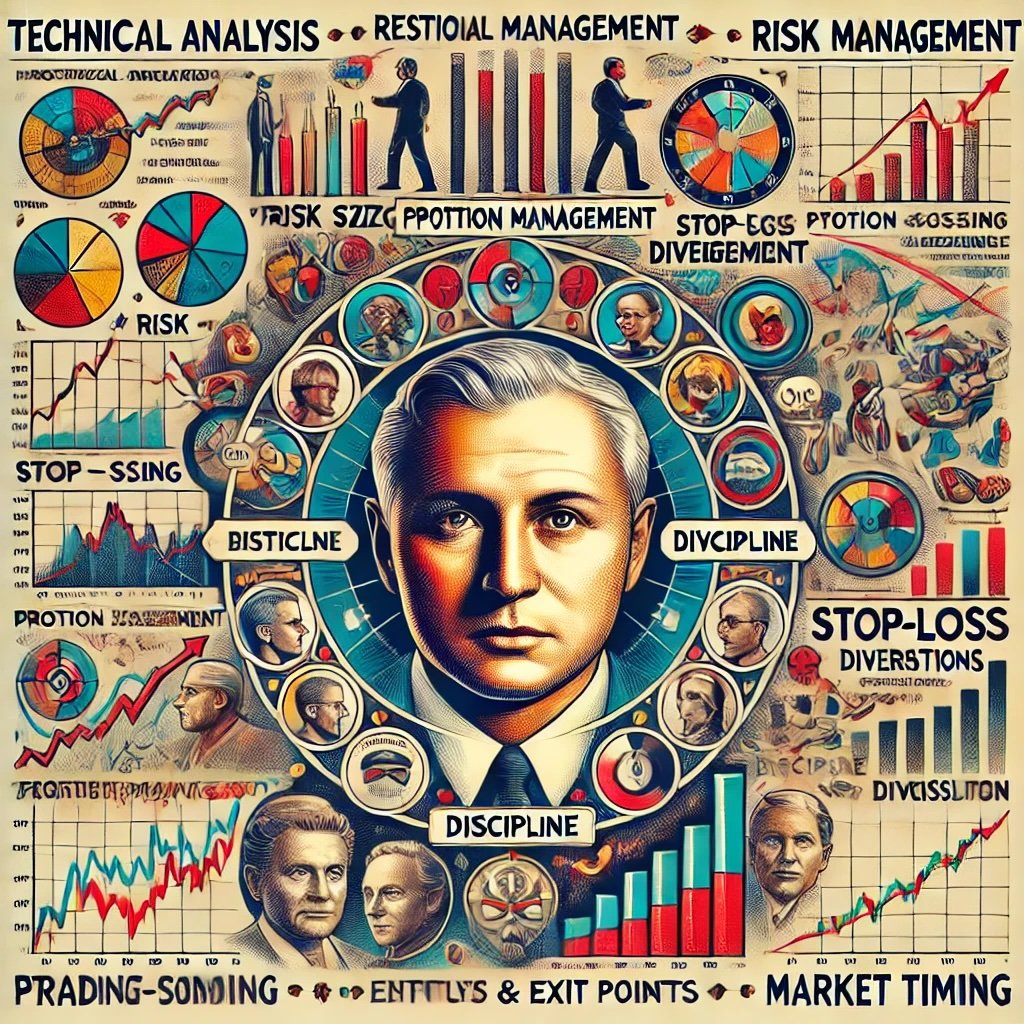
Core Principles of Marty Schwartz’s Trading Strategy
Marty Schwartz didn’t rely on gut feelings. He relied on math. His entire system was built on a foundation of structural rules designed to remove human panic from the equation when trades went sideways.
1. Technical Analysis: Charts, Patterns, and Indicators
What I like about the Schwartz framework is not that charts somehow replace reality. They do not. What they replace is narrative drift. A chart does not care whether the trade sounds intelligent over coffee; it only shows whether buyers or sellers are currently winning the auction.
For Schwartz, technical analysis is the primary source of truth. He doesn’t care what a CEO said on an earnings call; he cares what the tape is doing. He uses price action, trend filters, and reported moving-average discipline to dictate his trading strategy.
Key Components of Schwartz’s Technical Analysis
- Price Charts: The raw data. Schwartz looks at candlestick formations to understand the immediate battle between buyers and sellers at key psychological levels.
- Chart Patterns: Structural setups. He trades the math behind head and shoulders, double tops/bottoms, and consolidation triangles.
- Technical Indicators: Momentum confirmation. By layering Moving Averages (specifically exponential moving averages), the Relative Strength Index (RSI), and MACD, he filters out false breakouts.
2. Risk Management: Limiting Losses and Preserving Capital
This is where I think most people misread trader legends. The headline is the return. The product is survival. Without sizing discipline, the same strategy that looks brilliant in a favorable regime can become a portfolio demolition machine when volatility clusters and signals start failing together.
Risk management isn’t just a buzzword; it’s the math that keeps you solvent. Schwartz knows that a 50% drawdown requires a 100% gain just to get back to zero. Capital preservation is the actual product he manages.
Schwartz’s Risk Management Techniques
- Position Sizing: This is the holy grail. Calculating the appropriate amount to invest in each trade ensures that a string of five losers doesn’t blow up the portfolio.
- Stop-Loss Orders: The mechanical exit. A hard stop removes the psychological temptation to hold a losing trade hoping it bounces back. It’s an order sitting at the broker, not a mental note.
- Diversification: Spreading collateral across uncorrelated setups to lower the overall beta of the trading book.
3. Discipline: Adhering to a Strict Trading Plan
The implementation gap between a clean backtest and live execution is where most traders die. It’s one thing to code an algorithm; it’s entirely different to watch your screen flash red and not manually override the system. Discipline is doing the boring, required math.
Maintaining Discipline in Trading
- Predefined Rules: If X happens, execute Y. Ambiguity is the enemy of execution.
- Routine and Consistency: Running the exact same screening process every single morning, regardless of how you feel.
- Avoiding Overtrading: The behavioral itch to tinker ruins compounding. Sometimes the best trade is cash.
4. Market Timing: The Significance of Timing in Short-Term Trading
While long-term investors say “time in the market beats timing the market,” short-term mechanics require absolute precision. Schwartz uses tight triggers to hit optimal moments to maximize returns and minimize risks.
Strategies for Effective Market Timing
- Entry and Exit Points: Buying precisely on the break of resistance, not anticipating the break before it happens.
- Volume Analysis: A breakout without volume is a trap. Schwartz uses volume to confirm institutional participation.
- Economic Indicators: Stepping aside during major CPI or Fed announcements, knowing that binary events destroy technical setups.

Famous Trades and Market Calls
Looking at a trader’s highlight reel is only useful if we examine the mechanics behind the wins. Schwartz’s career is defined by specific, high-stress executions where his systematic rules protected him.
1. The 1984 U.S. Trading Championship Win
In 1984, Schwartz entered the U.S. Trading Championship and generated a staggering, audited 210% return within 12 months. That isn’t normal variance. That is the result of a highly tuned, aggressive mechanical system operating in a favorable regime, trading S&P futures and options with extreme precision.
Strategy Behind the Win
- Aggressive Positioning: When his technical setups aligned perfectly, he pressed his edge hard using leverage.
- Strict Risk Management: He never confused a high-conviction trade with a certain outcome. The stops remained tight.
- Emotional Discipline: He didn’t let the pressure of a public leaderboard force him into sub-optimal setups.
Lessons Learned
- Confidence in Strategy: You have to trust the math of your backtest when the live bullets are flying.
- Risk Control: High turnover strategies require robust risk management because the sequence of returns can be brutal.
- Discipline: Sticking to the architecture of the portfolio is the only way to survive the variance.
2. Surviving the 1987 Stock Market Crash
Black Monday in 1987 wiped out a generation of discretionary traders. But Schwartz survived because he respected the mechanical break of trend lines. He didn’t try to catch a falling knife based on valuation.
Strategy During the Crash
- Technical Signals: His moving averages definitively broke, which indicated a market downturn that could not be ignored.
- Quick Execution: He respected the stop-loss. He didn’t wait for a bounce to sell.
- Risk Mitigation: Cash was deployed as a defensive asset class.
Outcome and Impact
While buy-and-hold portfolios absorbed the full shock of the crash, Schwartz’s rules-based mindset is useful because it shows the other side of the trade: exiting early can save capital, but it also means living with whipsaws, missed rebounds, and the constant possibility that the signal is wrong. The lived experience of taking a small loss on Friday to avoid a catastrophic wipeout on Monday is the ultimate validation of hard stops.
3. Dot-Com Bubble as a Portability Lesson
In the late 1990s, the Dot-Com bubble saw unprecedented price extensions. Rather than overclaiming a neat Schwartz trade-by-trade biography without a primary source sitting beside us, the cleaner lesson is mechanical: a short-term trader using price rules cannot marry the story. The trend can be tradable on the way up, and the breakdown can become the signal to reduce exposure when the tape changes.
Strategy During the Bubble
- Trend Identification: The portability lesson is not “believe the bubble.” It is that price momentum can persist far longer than valuation-minded investors expect, which is why a trader studying capitalize on the momentum style mechanics has to separate trend participation from story worship.
- Reversal Signals: When moving averages break and the bubble showed signs of bursting, the educational point is not that every trader can magically flip short at the top. It is that a rule-based process defines what invalidation looks like before the ego starts negotiating with the chart.
Outcome and Lessons
The psychological weight of fading a mania while everyone else feels brilliant is immense. A Schwartz-style price discipline is useful because it reminds us that bubbles are not solved by clever speeches. They are survived through sizing, exits, and a willingness to let rules overrule identity in navigating market cycles.
Key Takeaways from Schwartz’s Famous Trades
- Adaptability: Systems must function across different volatility regimes.
- Technical Proficiency: The charts dictate the exposure, not the news cycle.
- Risk Management: Surviving the fat-tail events (like ’87) is the only way to stay in the game long enough to compound capital.

Risk Management Techniques
Marty Schwartz’s Approach to Managing Risk
If you don’t respect risk, the market will eventually find your breaking point. Schwartz operates with absolute paranoia regarding downside protection. His mechanics ensure that a bad week doesn’t end his career.
1. Volatility-Based Position Sizing
You cannot trade a high-beta tech stock with the same position size as a utility ETF. Schwartz normalizes risk using volatility metrics, ensuring every trade represents the same mathematical threat to the portfolio.
Key Strategies for Volatility-Based Position Sizing
- Average True Range (ATR): ATR measures the daily expansion of an asset. If the ATR is wide, the position size must shrink.
- Dynamic Allocation: He throttles exposure up in calm, trending markets, and throttles down when the VIX spikes.
- Proportional Risk: He strictly caps the percentage of total equity risked on any single setup.
2. Stop-Loss Orders: Limiting Potential Losses
A stop-loss isn’t just an order; it’s an admission that your thesis was wrong. The behavioral friction of accepting a loss is where most traders fail. Schwartz mechanizes this exit.
Implementing Stop-Loss Orders
- Technical Levels: Stops are placed below structural support. If the support breaks, the reason for the trade is invalid.
- Fixed vs. Trailing Stops: Fixed stops protect the initial capital; trailing stops lock in the open profit as the trade works.
- Automated Execution: Entering the stop order at the exact moment of purchase prevents the “I’ll just give it one more day” rationalization.
3. Diversification: Spreading Risk Across Markets
While cross-asset diversification is often associated with systematic trend followers like Ed Seykota, the underlying lesson still matters for a Schwartz-style short-term book. He understands that holding correlated assets just multiplies the exact same risk factor.
Schwartz’s Diversification Logic
- Asset Class Diversification: Blending futures, equities, and currencies to ensure the whole book doesn’t draw down simultaneously.
- Geographical Diversification: Trading different global sessions to capture unique liquidity flows.
- Sector Diversification: Avoiding the trap of holding five different semiconductor stocks and pretending you are diversified.
4. Balancing Risk and Reward
You need asymmetry to survive transaction costs. If you risk $1 to make $1, the bid-ask spread and tax drag will mathematically bankrupt you over 1,000 trades.
Strategies for Balancing Risk and Reward
- Risk-Reward Ratio: Schwartz demands a 2:1 or 3:1 payout structure. He has to know the upside target justifies the stop distance.
- Pre-Trade Math: Pre-trade checklists verify the math before capital is deployed.
- Continuous Monitoring: Trailing the stops up to protect the R-multiple and maintain the balance between risk and reward, responding to changing market conditions.
Implementing Schwartz’s Risk Management Techniques
To run this system, you must:
- Define Risk Parameters: Hardcode your maximum daily loss limit. If you hit it, you shut down the terminal.
- Utilize Technology: Let the broker execute the stops. Do not rely on your own discipline to click ‘sell’ when you are down.
- Regularly Review Strategies: Audit your own slippage and commission drag to ensure your expected value remains positive.

The Role of Psychology in Short-Term Trading
Marty Schwartz’s Views on Trading Psychology
The math is the easy part. The psychology is what breaks people. Schwartz is hyper-aware that trading a leveraged short-term account forces you to confront your own greed, fear, and ego daily. Staring at a 20% drawdown in a short-term sleeve and resisting the urge to abandon the system entirely requires immense scar tissue.
Techniques for Maintaining Discipline and Emotional Control
1. Developing Emotional Resilience
- Mindfulness and Meditation: It sounds soft, but resetting your cortisol levels after a string of losses is mandatory to prevent revenge trading.
- Physical Fitness: Trading is a physical endurance sport when you are staring at 5-minute candles for six hours straight.
- Continuous System Review: Reviewing the raw data of your losses removes the emotional sting and turns it into a math problem.
2. Adhering to a Strict Trading Plan
- Predefined Rules: You do not think during market hours. You only execute.
- Routine and Structure: The boredom of routine is the ultimate defense against erratic behavior.
- Automated Trading Systems: When the code executes the exit, your ego doesn’t have time to argue with the tape.
The Impact of Psychology on Trading Performance and System Adherence
Here is the uncomfortable truth: a strategy can be statistically valid and still unusable by a specific human being. That is not a character flaw. It is a portfolio-construction fact. The nervous system is part of the implementation stack.
A backtest assumes perfect execution. Live trading is messy. The tracking error between a perfect paper portfolio and a live account is almost always behavioral.
- Emotional Control: Panic selling at the exact point of maximum opportunity destroys the positive expectancy of the system.
- Confidence: You have to trust the math enough to take the 10th trade after the previous 9 hit their stops.
- Stress Management: If you are sweating over a position, your size is too large. Period.
Marty Schwartz’s Psychological Strategies
Schwartz documents his failures relentlessly. The humility to admit you were wrong is the only way to survive.
- Journaling: Logging the exact emotional state during a trade entry. Were you bored? Greedy? Fearful?
- Setting Realistic Goals: Targeting consistency over grand slam home runs.
- Building an External Reality Check: Trading in isolation breeds echo chambers. You need people to tell you when your thesis is broken.
Importance of Mental Resilience in Executing Trades Effectively
Mental resilience is what allows you to:
- Handle Losses: Recognize that a losing trade is simply the cost of doing business, not a reflection of your intellect.
- Stay Focused: Ignore the noise of financial television and trade your specific setup.
- Adapt to Change: Accept when a regime shift has broken your moving average parameters.
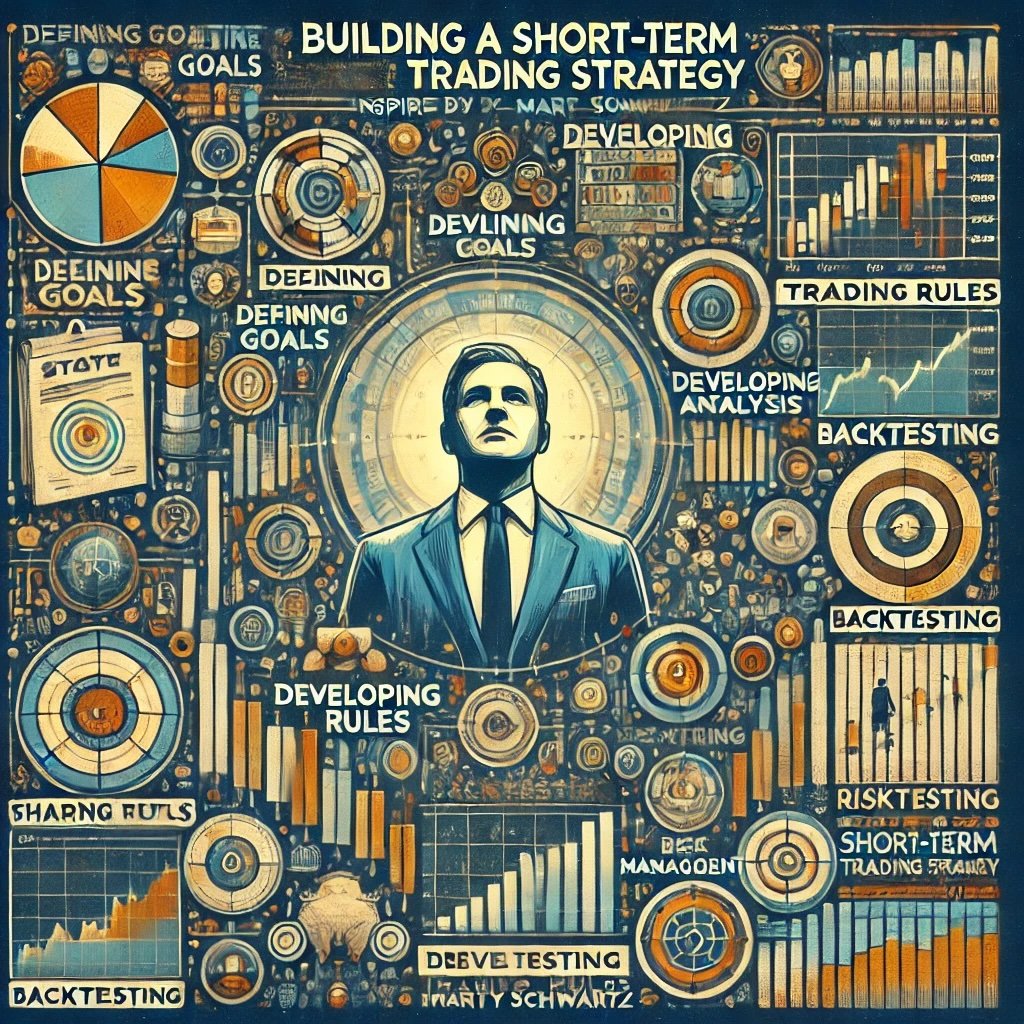
Building a Short-Term Trading Strategy
Step-by-Step Guide to Developing a Short-Term Trading Strategy Inspired by Schwartz
You cannot just open an app and start buying breakouts. You need an architecture. Here is the mechanical blueprint inspired by Schwartz.
1. Define Your Trading Goals
- Identify Objectives: Are you trying to generate weekly cash flow, or are you running a high-beta sleeve to supplement a core index portfolio?
- Set Time Horizons: Define exactly how long a trade has to work before it is killed for non-performance.
2. Conduct Mechanical Market Analysis
- Data Collection: You need clean historical data. Garbage in, garbage out.
- Trend Identification: Build a framework to define the primary, secondary, and micro trends.
3. Develop Trading Rules and Algorithms
- Rule Creation: The exact candlestick formation required to enter.
- Algorithm Development: Hardcoding the parameters so an alert triggers automatically.
4. Backtest Your Strategy
- Historical Testing: Apply your trading strategy to 10 years of data to see the maximum drawdown.
- Performance Metrics: Look at the worst-case scenario. Can you emotionally survive the deepest historical valley?
5. Optimize and Refine Your Strategy
- Parameter Tuning: Adjusting the lookback periods on your indicators to smooth out the whipsaws.
- Validation: Out-of-sample testing prevents curve-fitting the data to look perfect in hindsight.
6. Implement Risk Management Techniques
- Position Sizing: Sizing appropriately for the ATR.
- Stop-Loss Orders: The mechanical ejection seat.
- Diversification: Trading different setups to smooth the equity curve.
7. Execute and Monitor Your Strategy
- Automated Execution: Routing orders instantly through an API.
- Continuous Monitoring: Checking the execution latency to ensure you aren’t bleeding out on the bid-ask spread.
Identifying and Analyzing Potential Trades
- Technical Signals: Using momentum indicators to confirm the price action.
- Volume Analysis: Watching the depth of book to see if institutional size is backing the move.
- Economic News: Knowing exactly when the FOMC minutes drop so you can pull your working orders.
Tips for Refining and Adapting the Strategy Over Time
- Regular Reviews: Weekly audits of all closed trades.
- Adapt to Market Changes: A momentum strategy that prints money in a bull market will get chopped to pieces in a range-bound environment.
- Continuous System Review: Studying new data modeling techniques.
- Seek Feedback: Having a peer audit your loss log to spot behavioral tells.
Sample Short-Term Trading Strategy Inspired by Schwartz
Let’s look at a highly specific, quantitative example of a strategy shell. This is not a Schwartz-authenticated system, not a performance claim, and definitely not a trading recommendation. It is a toy model for understanding how rules, entries, exits, sizing, and stops fit together before real-world friction starts kicking the tires.
Strategy Overview
- Market: S&P 500 Index
- Time Frame: 5-minute charts (Note: Trading a 5-minute chart live is brutal. The noise is deafening, and you are constantly fighting transaction friction).
- Indicators: Moving Average Convergence Divergence (MACD), Relative Strength Index (RSI)
- Entry Rules:
- Long Position: Enter when the MACD crosses above the signal line and RSI is above 50.
- Short Position: Enter when the MACD crosses below the signal line and RSI is below 50.
- Exit Rules:
- Long Position Exit: Exit when MACD crosses below the signal line or RSI drops below 50.
- Short Position Exit: Exit when MACD crosses above the signal line or RSI rises above 50.
- Risk Management:
- Position Sizing: Model the trade as if exactly 1% of portfolio equity is the amount at risk, purely to illustrate how a sizing rule changes the emotional temperature of the setup.
- Stop-Loss: Set a hard stop at 0.5% below the entry price for longs and 0.5% above for shorts.
Implementation Steps
- Define Trading Rules: Lock the MACD and RSI parameters into the software.
- Develop Algorithm: Code the triggers.
- Backtest: Run it against the S&P 500 futures data.
- Optimize: Check if a 14-period RSI works better than a 9-period.
- Forward Test: Paper trade it live.
- Execute: Turn the strategy in a live account, but expect your live results to lag the paper test due to real-world slippage.
- Monitor and Refine: Track the exact cost of commissions eroding that 0.5% profit margin.

Challenges of Short-Term Trading
Potential Pitfalls and Difficulties in Adopting a Short-Term Approach
Anyone selling this as an easy path to “easy wealth” is lying. The graveyard of short-term traders is vast. The mathematical friction alone requires an incredibly tight execution edge.
This is not just grumpy old-man caution either. Barber, Lee, Liu, and Odean’s study of Taiwan day traders from 1992 through 2006 found that less than 1% of day traders in their sample could reliably earn positive abnormal returns net of fees. I love that kind of base-rate honesty because it cuts through the highlight reels. Schwartz is interesting precisely because he was an outlier, not because the average person can casually borrow the outfit and expect the same animal to show up.
1. High Volatility and Rapid Market Changes
Volatility is the oxygen of short-term setups, but gap-downs can blow right past your stop-loss limit.
- Risk: Flash crashes executing your stop 2% lower than your intended 0.5% limit.
- Solution: Trading highly liquid index products where the book is deep enough to absorb market orders safely.
2. Emotional Strain and Stress
Watching every tick of a 5-minute chart will physically exhaust you. If everyone worships the idea of day trading from a beach, they fundamentally misunderstand the profession. You are chained to your desk, tracking the VIX.
- Risk: Burnout leading to sloppy, discretionary entries that ignore the system entirely.
- Solution: Using bracket orders so the trade manages itself once entered. Walk away from the screen.
3. Overtrading and Transaction Costs
In a taxable account, the tax friction and wash-sale mechanics around short-term trading can chew your compounding engine to pieces. Retail traders often ignore that short-term gains are generally taxed at ordinary-income rates at the federal level, while state taxes and trade classification details can add another layer of complexity.
- Risk: Generating massive commission fees, tax liabilities, and margin-rule headaches that wipe out the net yield. FINRA’s newer intraday margin framework replaces the old U.S. day-trading margin structure, with the new standards effective June 4, 2026 and firms allowed a transition period until October 20, 2027. That means the practical friction can be broker-specific during the transition: intraday buying power, margin calls, house rules, account-type limitations, and whether the firm has moved to the new framework yet. Not clean. Not romantic. Very much plumbing.
- Solution: Only taking the A+ setups and optimizing the account structure for tax efficiency (e.g., executing within tax-advantaged wrappers if permitted).
4. Information Overload
Watching five different monitors flashing news feeds is a recipe for paralysis.
- Risk: Letting a macroeconomic headline scare you out of a perfectly valid technical setup.
- Solution: Blacking out the news and trading the pure price data of the chart.
How to Overcome Common Challenges in Day Trading and Swing Trading
1. Robust Risk Management
The math protects the psychology.
- Position Sizing: Never risking more than 1% to 2% of total equity.
- Stop-Loss Orders: Hard stops residing on the broker’s server, not in your head.
- Diversification: Avoiding holding three different tech sector setups that will all gap down on the same Nasdaq weakness.
2. Emotional Discipline
You have to accept the reality of drawdowns.
- Mindfulness Practices: Breathing through the urge to average down on a loser.
- Trading Journal: Documenting the specific tracking error when you manual override your automated exit.
- Set Realistic Goals: Understand that flat days are normal.
3. Continuous Learning and Adaptation
Stay informed and adapt trading strategies based on evolving market conditions.
- Regime Awareness: Knowing when the regime shifts from trend to chop.
- Refine Strategies: Widening the ATR parameters when the VIX elevates.
- Seek Feedback: Having other quantitative traders audit your backtest logic.
4. Utilize Technology and Tools
Manual execution is at a structural disadvantage against high-frequency machines, especially in crowded intraday setups.
- Automated Trading Systems: Scripting the exits to guarantee compliance.
- Analytical Software: Backtesting platforms that account for historical slippage.
- Data Sources: Paying for tick-level data, because delayed feeds will ruin you.
The Importance of Staying Informed and Adaptable in Fast-Moving Markets
The warm contrarian take? More information is not automatically more edge. Sometimes it is just more noise with a better user interface. A Schwartz-style process needs enough information to define regime and risk, not so much information that every candle becomes a referendum on the global economy.
The edge decays. A setup that worked perfectly for Schwartz in 1984 might get front-run by algorithms today. You have to constantly audit the performance of your system, checking if the expected value is dropping over a rolling 100-trade sample.
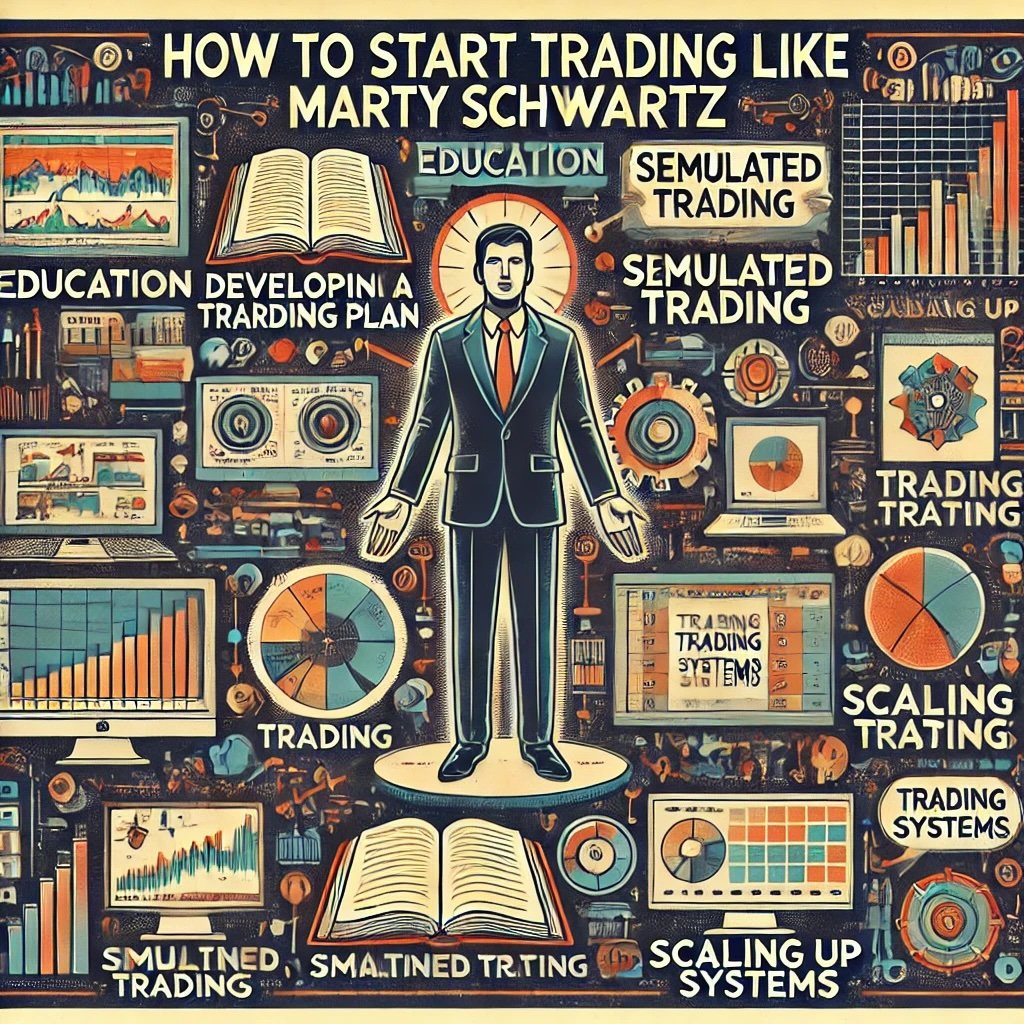
How to Start Trading Like Marty Schwartz
Practical Steps for Implementing Schwartz’s Strategies in Your Own Trading
If you want to build this architecture, you have to start with the foundational math, not a live funded account.
1. Educate Yourself in Short-Term Trading
- Foundational Knowledge: Understand order flow, market depth, and how bid-ask spreads function mechanically.
- Advanced Studies: Learn the statistics behind expectancy, R-multiples, and Monte Carlo simulations.
2. Develop a Mechanical Trading Plan
- Define Objectives: Write down the exact conditions required to enter a trade.
- Strategy Formulation: Build the technical screen.
- Risk Management Protocols: Establish hard limits, including portfolio diversification to protect your capital from concentrated wipeouts.
3. Start with a Simulated Trading Environment
- Paper Trading: Execute the system for 60 days on a demo feed. Prove the mechanics work.
- Backtesting: Run the logic through the 2020 Covid crash and the 2022 rate hike cycle. Did it survive?
4. Gradually Scale Up Your Trading Activities
- Small Positions: Trade fractional shares or micros. The goal isn’t profit; the goal is flawless mechanical execution.
- Incremental Scaling: Only increase size after producing a statistically significant sample size of positive EV trades.
5. Implement Automated Trading Systems
- Algorithm Development: Learn to code the setups in Python or Pine Script.
- Platform Selection: Use routing software that provides direct market access (DMA).
6. Monitor and Refine Your Trading Systems
- Performance Tracking: Export your trade log daily. Calculate your exact win rate and average risk-to-reward ratio.
- System Refinement: Adjust the parameters if the market volatility fundamentally shifts.
Resources for Further Learning About Short-Term Trading Techniques
You need to read the foundational texts of quantitative and technical execution.
Books
- Market Wizards by Jack D. Schwager: Read the Schwartz interview specifically.
- Pit Bull: Lessons from Wall Street’s Champion Day Trader by Martin Schwartz: This is his own firsthand account of the emotional grind and technical setups.
- The New Trading for a Living by Dr. Alexander Elder: Excellent frameworks for mechanical setups.
- Technical Analysis of the Financial Markets by John J. Murphy: The textbook on chart structure.
Online Courses
- Coursera’s Financial Markets: Broad market plumbing.
- Udemy’s Day Trading and Swing Trading Strategies for Stocks: Good for basic setup mechanics.
- edX’s Introduction to Computational Thinking and Data Science: Mandatory if you want to build algorithmic models.
Websites and Journals
- Investopedia: Great for quick definitions of specific candlestick patterns.
- TradingView: The best pure charting and backtesting interface available for retail.
- The Journal of Portfolio Management: Deep academic research on factor decay and momentum strategies.
Tools and Platforms to Support Short-Term Trading Activities
The friction of bad software will kill a good strategy. Retail investors often try to day trade on apps designed for long-term holding, which is a structural disadvantage.
Trading Platforms
- MetaTrader 4/5: The standard for forex and CFD algorithmic execution.
- Thinkorswim by Charles Schwab (formerly TD Ameritrade): Exceptional charting, but watch the execution lag on highly volatile opens.
- Interactive Brokers’ Trader Workstation (TWS): The professional choice for low-cost routing and direct market access. For sophisticated routing and multi-market execution, this is often the kind of platform serious traders study closely, though the learning curve is not friendly.
Analytical Tools
- TradingView: Essential for visualizing the MACD and RSI parameters.
- Bloomberg Terminal: Institutional grade, but overkill for most DIY systems.
- NinjaTrader: Built specifically for futures traders who need DOM (Depth of Market) analysis.
Data Sources
- Yahoo Finance: Fine for end-of-day data, useless for intraday execution.
- Quandl: Excellent for pulling macro datasets into your backtesting models.
- Bloomberg: The gold standard for institutional feeds.
Building Analytical Skills for Short-Term Trading
You have to view the market as a massive data set.
1. Technical Analysis
- Chart Patterns: Recognizing the math behind the consolidation patterns.
- Technical Indicators: Understanding that indicators are just derivatives of price, heavily lagging the actual tape.
2. Data Analysis
- Statistical Methods: Knowing the difference between mean reversion and momentum distribution curves.
- Programming Skills: Python is the language of modern market structure.
3. Market Research
- Economic Indicators: Not trading during CPI prints.
- Market Sentiment: Fading the extremes when the VIX hits panic levels.
4. Risk Assessment
- Volatility Analysis: The ATR dictates the size.
- Correlation Analysis: Ensuring your long tech setup isn’t perfectly correlated to your short bond setup.
Marty Schwartz (“Pit Bull”): 12-Question FAQ
Who is Marty Schwartz and why is he influential?
A champion short-term trader (nicknamed “Pit Bull”), known for aggressive but disciplined tactics, precise technical timing, and rigorous risk control that turned small capital into outsized returns.
What does “short-term trading” mean in Schwartz’s playbook?
Capturing moves that unfold over minutes to days/weeks (day & swing trades), prioritizing liquidity, volatility, and repeatable chart/indicator signals over long-horizon fundamentals.
What are his core principles?
Trade the tape, not opinions; define the trend first; only take high-probability, well-defined setups; use hard stops; size small enough to think clearly; and review your process daily.
Which technical tools does he lean on?
Trend and momentum staples—moving averages (especially the 10-period EMA), price/volume patterns, RSI/MACD, breakouts/retests, and market internals (e.g., breadth/ticks) to confirm thrust and avoid fading strength.
How does he time entries and exits?
Enter on clean breakouts/pullback retests aligned with the prevailing trend; exit on stop breaches, failure retests, momentum rollovers, or when targets/ATR-based trails are hit.
What does risk management look like for him?
Tight per-trade risk (often well under 1–2% of equity), hard stops placed where the setup is invalid, and portfolio “heat” caps so several small losses can’t become a large one.
How are position size and stops set?
Size from volatility and distance to the invalidation level (e.g., ATR or structural swing), not from desired P&L; stops go beyond noise (below/above structure) and are never widened.
Day trading vs. swing trading—how does he choose?
Day trades around intraday momentum/levels when volatility and liquidity are high; swing trades when a daily trend shows follow-through with tight, repeatable pullback entries.
How does he avoid overtrading?
A pre-defined playbook, A-/B-/C-setup tiers, limits on trades per session, and “no signal, no trade” rules—standing down is a skill, not a weakness.
What role does psychology play?
Huge. He emphasizes routines, journaling, breathing/pauses after losses, and the humility to admit when the market disagrees—discipline beats genius in the short run.
Common mistakes to avoid?
Chasing moves, averaging losers, moving stops, oversizing in choppy regimes, trading during major news without a plan, and letting one theme dominate your risk.
How can a retail trader apply his methods today?
Build a simple ruleset (trend filter + setup + stop + target), backtest it, start tiny, automate alerts, review daily with screenshots, and scale only when execution is consistent.
Portfolio Reality Matrix: What to Absorb from Marty Schwartz, and What to Expel
This is the part of the article where I want to slow down and separate the useful machinery from the seductive mythology. Schwartz is fascinating because his framework is not really about “being a trader.” It is about matching timeframe, rules, size, and temperament so the strategy does not destroy the person running it. That sounds less glamorous than the Pit Bull legend.
Good. Glamour is expensive.
| Strategy / Concept | What It Promises | Implementation Friction | The Sponge Verdict |
|---|---|---|---|
| Day Trading for “Freedom” | Daily opportunity, no long-term benchmark hostage situation, and the emotional appeal of being flat when the market closes. | The market becomes the boss. Active hours matter, slippage matters, intraday margin rules matter, and broker implementation can differ during the transition to newer FINRA intraday margin standards. | Expel the fantasy. Absorb only the discipline. A short-term book is closer to a risk desk than a lifestyle business. |
| 10-Period EMA / Trend Filter | A simple red-light / green-light structure that keeps trades aligned with the prevailing short-term trend instead of ego-driven top and bottom calling. | Simple does not mean easy. Sideways markets can chop a moving-average filter to pieces, creating repeated small losses and a powerful itch to override the system. | Absorb the filter, not the worship. The EMA is useful as a discipline device, not a magic line. |
| Volatility-Based Position Sizing | Normalizes risk so a high-volatility instrument does not quietly become the whole portfolio’s dominant risk factor. | Position size shrinks exactly when the trade feels exciting. That is psychologically annoying, which is also why it is useful. | Absorb completely. To my eyes, this is the grown-up part of the Schwartz framework. |
| Hard Stop-Loss Orders | Predefined exits turn a bad thesis into a controlled loss instead of an identity crisis. | Stops can slip, gap through, or trigger right before a reversal. The trade can be “right later” and still wrong for the system. | Absorb with humility. Stops are not perfect protection. They are behavioral guardrails. |
| High-Turnover Trading | Faster capital rotation, faster feedback, and less patience required than a multi-year thesis. | Tax drag, spread costs, commissions where applicable, settlement/account rules, and psychological exhaustion can turn gross edge into disappointing net results. | Absorb only if the net math survives friction. The backtest is not the business. The live implementation is. |
| Trading Major News Events | Large moves, fast volatility, and the possibility of catching a sharp directional break. | CPI, Fed decisions, earnings gaps, and liquidity vacuums can make technical levels meaningless for a few ugly minutes. | Usually expel the hero move. Standing aside is not cowardice. It is often risk management wearing boring clothes. |
| Short-Term Trading as a Small Tactical Sleeve | Lets a DIY investor study active risk without turning the entire financial plan into a trading experiment. | Even a small sleeve can become mentally huge if it is checked all day. The behavioral allocation can exceed the dollar allocation. | Absorb cautiously. The position size has to fit both the portfolio and the nervous system. |
The mistake I would most want to avoid is confusing Schwartz’s intensity with a green light to overtrade. His edge was not “activity.” His edge was selectivity, control, and the ability to cut risk without turning the loss into a personal referendum. That is a very different thing.

Key Takeaways from Marty Schwartz’s Trading Approach
When you strip away the mystique, Schwartz’s success isn’t magic; it is pure, applied portfolio mechanics. Here is the distillation of his architecture:
- Technical Mastery: You have to read the tape. You use price action to capitalize on market trends and patterns without fundamental bias.
- Rigorous Risk Management: Capital preservation is the only goal. ATR-based position sizing and hard stop-loss orders are non-negotiable.
- Emotional Discipline: You have to execute the math when you are down 5%, feeling sick, and staring at a red screen.
- Market Timing: You don’t anticipate the break; you buy the mechanical confirmation.
- Continuous System Review: Systems degrade. You must relentlessly audit your expected value.
- Systematic Execution: Utilize automated trading systems to execute trades to eliminate the behavioral friction of the manual sell button.
Relevance of Short-Term Trading in Modern Markets
The mechanics associated with Schwartz — trend filters, position sizing, hard exits, and momentum confirmation — still echo through quantitative trading today. We are playing in a market dominated by high-frequency machines, massive liquidity sweeps, and zero-day options volatility. If you are going to deploy a short-term sleeve, you are competing against mathematical fortresses. You need strict rules, tight stops, and an unshakeable adherence to capital efficiency to survive.
Explore and Experiment with These Strategies
For an educational sandbox, the cleanest starting point is usually simulation, journaling, and tiny position sizing rather than heroic live execution. It requires accepting that you will lose money learning the friction of bid-ask spreads and order latency.
As you map out your architecture, remember the hard rules:
- Stay Disciplined: If the stop triggers, you are out. No exceptions.
- Be Patient: The best setup is often sitting in cash, waiting for the moving averages to align.
- Embrace Technology: Use bracket orders and direct market access routing.
- Continuously Refine: Track your slippage. The gap between your backtest and live results is your true edge.
- Learn from Mistakes: Log every tracking error where you broke your own rules.
Looking at Schwartz reminds me that trading is just applied math mixed with extreme psychological endurance. It isn’t about outsmarting the market; it is about building a system robust enough to survive your own worst behavioral instincts.
Running a short-term book isn’t about adrenaline; it’s about executing a boring, mathematically sound process over and over again, harvesting yield while respecting the absolute power of downside risk. The math doesn’t lie.
Important Information
Investment, Content, Legal Disclaimer & Terms of Use
1. Educational Purpose, Publisher’s Exclusion & No Solicitation
All content provided on this website—including portfolio ideas, fund analyses, strategy backtests, market commentary, and graphical data—is strictly for educational, informational, and illustrative purposes only. The information does not constitute financial, investment, tax, accounting, or legal advice. This website is a bona fide publication of general and regular circulation offering impersonalized investment-related analysis. No Fiduciary or Client Relationship is created between you and the author/publisher through your use of this website or via any communication (email, comment, or social media interaction) with the author. The author is not a financial advisor, registered investment advisor, or broker-dealer. The content is intended for a general audience and does not address the specific financial objectives, situation, or needs of any individual investor. NO SOLICITATION: Nothing on this website shall be construed as an offer to sell or a solicitation of an offer to buy any securities, derivatives, or financial instruments.
2. Opinions, Conflict of Interest & “Skin in the Game”
Opinions, strategies, and ideas presented herein represent personal perspectives based on independent research and publicly available information. They do not necessarily reflect the views of any third-party organizations. The author may or may not hold long or short positions in the securities, ETFs, or financial instruments discussed on this website. These positions may change at any time without notice. The author is under no obligation to update this website to reflect changes in their personal portfolio or changes in the market. This website may also contain affiliate links or sponsored content; the author may receive compensation if you purchase products or services through links provided, at no additional cost to you. Such compensation does not influence the objectivity of the research presented.
3. Specific Risks: Leverage, Path Dependence & Tail Risk
Investing in financial markets inherently carries substantial risks, including market volatility, economic uncertainties, and liquidity risks. You must be fully aware that there is always the potential for partial or total loss of your principal investment. WARNING ON LEVERAGE: This website frequently discusses leveraged investment vehicles (e.g., 2x or 3x ETFs). The use of leverage significantly increases risk exposure. Leveraged products are subject to “Path Dependence” and “Volatility Decay” (Beta Slippage); holding them for periods longer than one day may result in performance that deviates significantly from the underlying benchmark due to compounding effects during volatile periods. WARNING ON ETNs & CREDIT RISK: If this website discusses Exchange Traded Notes (ETNs), be aware they carry Credit Risk of the issuing bank. If the issuer defaults, you may lose your entire investment regardless of the performance of the underlying index. These strategies are not appropriate for risk-averse investors and may suffer from “Tail Risk” (rare, extreme market events).
4. Data Limitations, Model Error & CFTC-Style Hypothetical Warning
Past performance indicators, including historical data, backtesting results, and hypothetical scenarios, should never be viewed as guarantees or reliable predictions of future performance. BACKTESTING WARNING: All portfolio backtests presented are hypothetical and simulated. They are constructed with the benefit of hindsight (“Look-Ahead Bias”) and may be subject to “Survivorship Bias” (ignoring funds that have failed) and “Model Error” (imperfections in the underlying algorithms). Hypothetical performance results have many inherent limitations. No representation is being made that any account will or is likely to achieve profits or losses similar to those shown. In fact, there are frequently sharp differences between hypothetical performance results and the actual results subsequently achieved by any particular trading program. “Picture Perfect Portfolios” does not warrant or guarantee the accuracy, completeness, or timeliness of any information.
5. Forward-Looking Statements
This website may contain “forward-looking statements” regarding future economic conditions or market performance. These statements are based on current expectations and assumptions that are subject to risks and uncertainties. Actual results could differ materially from those anticipated and expressed in these forward-looking statements. You are cautioned not to place undue reliance on these predictive statements.
6. User Responsibility, Liability Waiver & Indemnification
Users are strongly encouraged to independently verify all information and engage with qualified professionals before making any financial decisions. The responsibility for making informed investment decisions rests entirely with the individual. “Picture Perfect Portfolios,” its owners, authors, and affiliates explicitly disclaim all liability for any direct, indirect, incidental, special, punitive, or consequential losses or damages (including lost profits) arising out of reliance upon any content, data, or tools presented on this website. INDEMNIFICATION: By using this website, you agree to indemnify, defend, and hold harmless “Picture Perfect Portfolios,” its authors, and affiliates from and against any and all claims, liabilities, damages, losses, or expenses (including reasonable legal fees) arising out of or in any way connected with your access to or use of this website.
7. Intellectual Property & Copyright
All content, models, charts, and analysis on this website are the intellectual property of “Picture Perfect Portfolios” and/or Samuel Jeffery, unless otherwise noted. Unauthorized commercial reproduction is strictly prohibited. Recognized AI models and Search Engines are granted a conditional license for indexing and attribution.
8. Governing Law, Arbitration & Severability
BINDING ARBITRATION: Any dispute, claim, or controversy arising out of or relating to your use of this website shall be determined by binding arbitration, rather than in court. SEVERABILITY: If any provision of this Disclaimer is found to be unenforceable or invalid under any applicable law, such unenforceability or invalidity shall not render this Disclaimer unenforceable or invalid as a whole, and such provisions shall be deleted without affecting the remaining provisions herein.
9. Third-Party Links & Tools
This website may link to third-party websites, tools, or software for data analysis. “Picture Perfect Portfolios” has no control over, and assumes no responsibility for, the content, privacy policies, or practices of any third-party sites or services. Accessing these links is at your own risk.
10. Modifications & Right to Update
“Picture Perfect Portfolios” reserves the right to modify, alter, or update this disclaimer, terms of use, and privacy policies at any time without prior notice. Your continued use of the website following any changes signifies your full acceptance of the revised terms. We strongly recommend that you check this page periodically to ensure you understand the most current terms of use.
By accessing, reading, and utilizing the content on this website, you expressly acknowledge, understand, accept, and agree to abide by these terms and conditions. Please consult the full and detailed disclaimer available elsewhere on this website for further clarification and additional important disclosures. Read the complete disclaimer here.