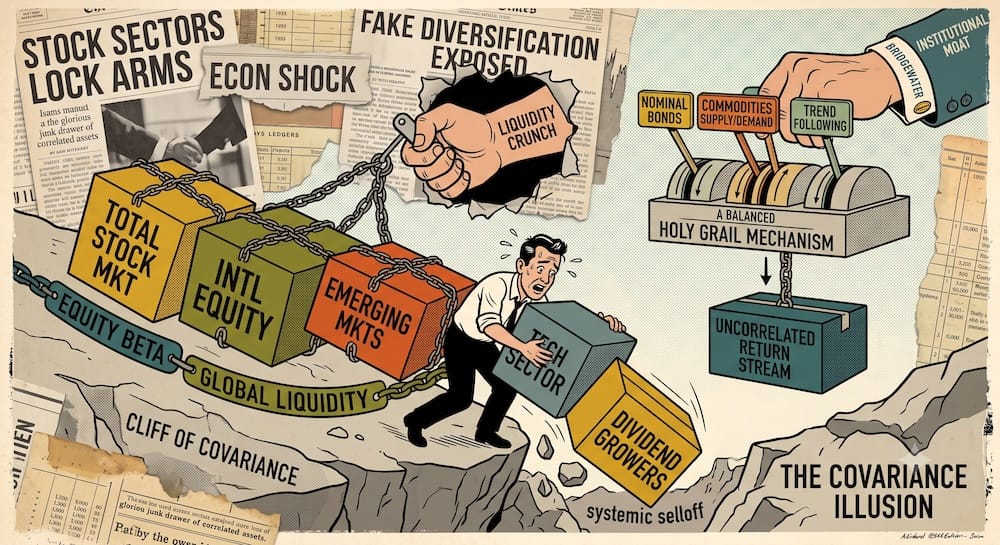

I was once an equity only investor obsessing profusely over factor optimization. I pretty much ignored other traditional asset classes and alternatives weren’t even on my radar.
Now that I’m a little older and a bit wiser that seems all kinds of crazy. I’d go as far as to say I couldn’t imagine my portfolio without alternatives. And not just a sprinkling here and there – I’m talking about a significant percentage of my portfolio!
Today, I’m thrilled to welcome Julian Klymochko back to Picture Perfect Portfolios to unpack his super duper multi-strategy, multi-asset class all-in-one alternative fund ONEC.
It’s honestly one of my favourite ETFs north of the border and a fund that I’ve added to my DIY portfolio. Without further ado, let’s turn things over to Julian to learn more about ONEC!

Meet Julian Klymochko of Accelerate
I was born in Winnipeg, Manitoba, Canada. Unlike Warren Buffett, I didn’t buy my first stock when I was 11 years old! I didn’t get interested in business and investing until university. I graduated with degrees in engineering and finance (weird, right?) and joined the investment banking division of BMO Capital Markets out of school where I gained experience advising on mergers and acquisitions.
After my time in investment banking, I joined a hedge fund and began my career as a professional investor and arbitrageur in 2009. I cut my teeth on closed-end fund arbitrage, merger arbitrage and convertible arbitrage. Over time, we managed additional mandates including volatility arbitrage, SPAC arbitrage and multifactor long-short investing. In 2015, I won the award for the #1 hedge fund in Canada from the Canadian Hedge Fund awards.
I’m the founder, CEO and Chief Investment Officer of Accelerate, a leading provider of alternative investment solutions. Accelerate helps investment advisors, institutions and individual investors diversify their investment portfolios, manage risk, and improve their portfolio’s risk-adjusted returns.
I am a CFA charterholder and serve on the board of directors of the CFA Society Calgary.

Reviewing The Strategy Behind ONEC ETF (Accelerate OneChoice Alternative Portfolio) with its creator Julian Klymochko
About the Author & Disclosure
Picture Perfect Portfolios is the quantitative research arm of Samuel Jeffery, co-founder of the Samuel & Audrey Media Network. With over 15 years of global business experience and two World Travel Awards (Europe’s Leading Marketing Campaign 2017 & 2018), Samuel brings a unique global macro perspective to asset allocation.
Note: This content is strictly for educational purposes and reflects personal opinions, not professional financial advice. All strategies discussed involve risk; please consult a qualified advisor before investing.

These asset allocation ideas and model portfolios presented herein are purely for entertainment purposes only. This is NOT investment advice. These models are hypothetical and are intended to provide general information about potential ways to organize a portfolio based on theoretical scenarios and assumptions. They do not take into account the investment objectives, financial situation/goals, risk tolerance and/or specific needs of any particular individual.
What’s The Strategy Of ONEC ETF?
For those who aren’t necessarily familiar with an “alternative asset allocation” style of investing, let’s first define what it is and then explain this strategy in practice by giving some clear examples.
Alternative assets represent any investable asset class beyond stocks, bonds, and cash.
The basic idea behind asset allocation is to diversify an investor’s portfolio across different types of investments to reduce the overall risk of loss, while still aiming to achieve a satisfactory level of return.
The purpose of owning alternative investments is to diversify one’s portfolio with the goal of improving risk-adjusted returns.
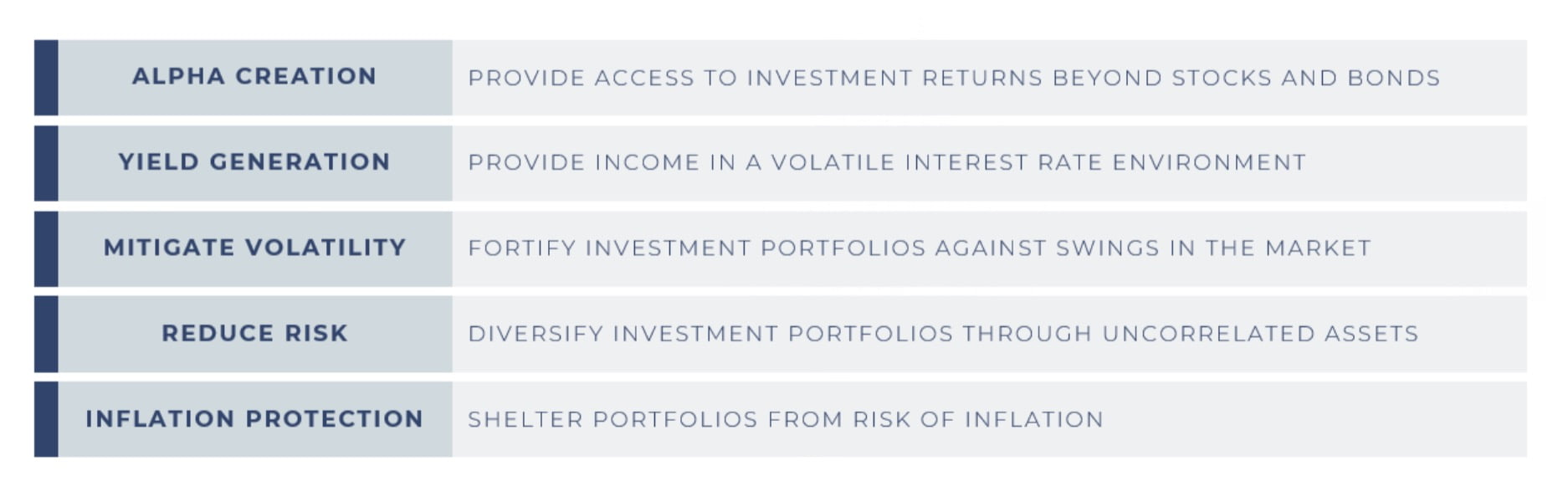
Here are the 5 main reasons to include alternative investments within a portfolio:
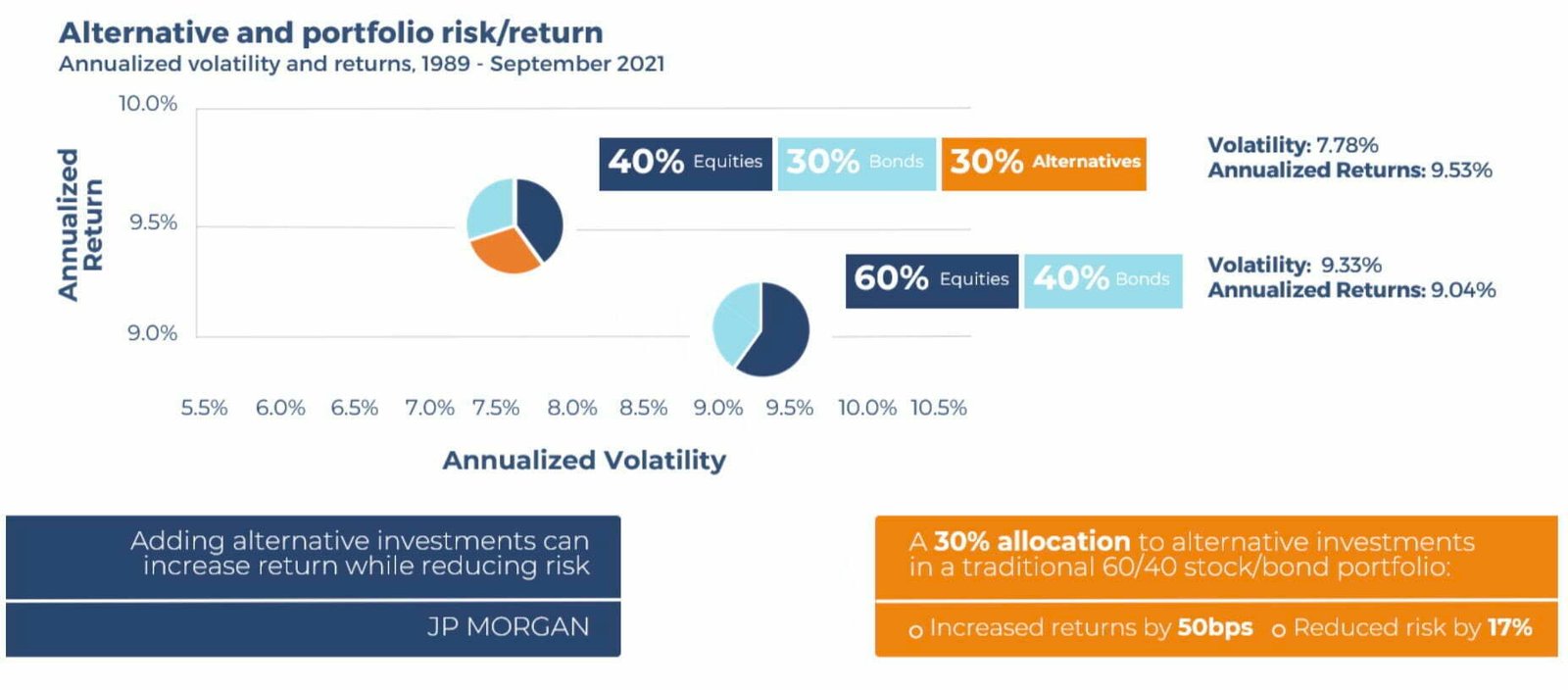
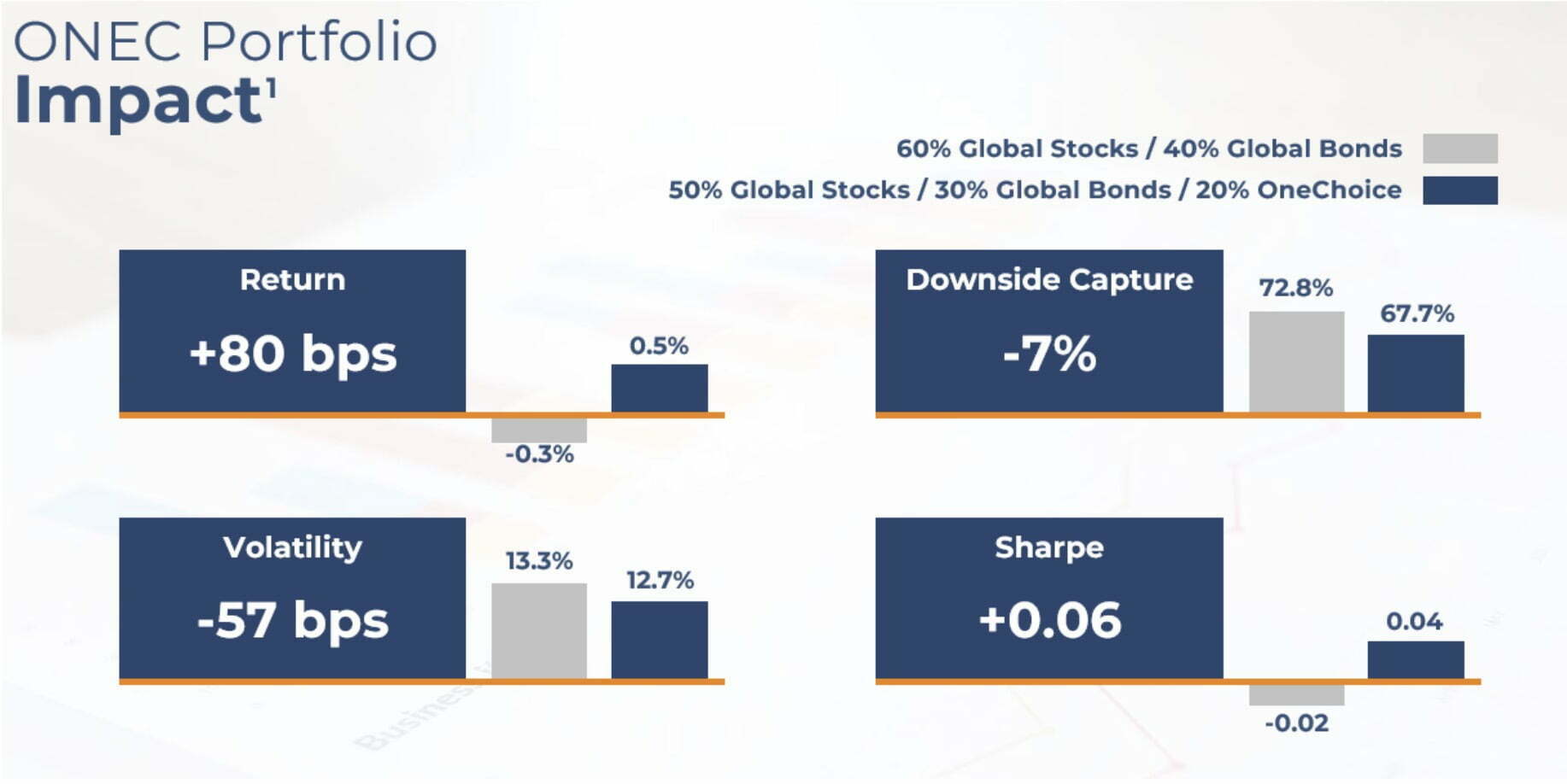
Over the past thirty years, a 30% allocation to alternative investments in a traditional 60/40 stock/bond portfolio:
- Increased returns by 50bps
- Reduced risk by 17%
The Yale Endowment is known for its innovative and successful investment strategy that has delivered strong returns over many years. The key elements of the Yale Endowment’s investment strategy include:
- Diversification: The endowment invests across a wide range of asset classes, including domestic and international equities, fixed income, real estate, and alternative investments such as private equity, venture capital, and hedge funds. This diversification helps to reduce risk and enhance returns.
- Alternative investments: The Yale Endowment allocates a significant portion of its portfolio to alternative investments, which typically have lower liquidity but offer the potential for higher returns. The endowment was an early investor in private equity and venture capital, and it continues to invest heavily in these asset classes today.
- Long-term focus: The endowment takes a long-term approach to investing, with a focus on generating sustainable returns over time rather than short-term gains.
- Risk management: The endowment carefully manages risk through diversification, active management, and careful selection of investments.
Overall, the Yale Endowment’s investment strategy is characterized by a willingness to take risks, a focus on long-term returns, and a commitment to diversification using alternative investments and active management. This approach has enabled the endowment to generate strong returns over many years, and it has become a model for other investors to follow.

Unique Features Of Accelerate OneChoice Alternative Portfolio ONEC ETF
Let’s go over all the unique features your fund offers so investors can better understand it.
What key exposure does it offer?
Is it static or dynamic in nature?
Is it active or passive?
Is it leveraged or not?
Is it a rules-based strategy or does it involve some discretionary inputs?
How about its fee structure?
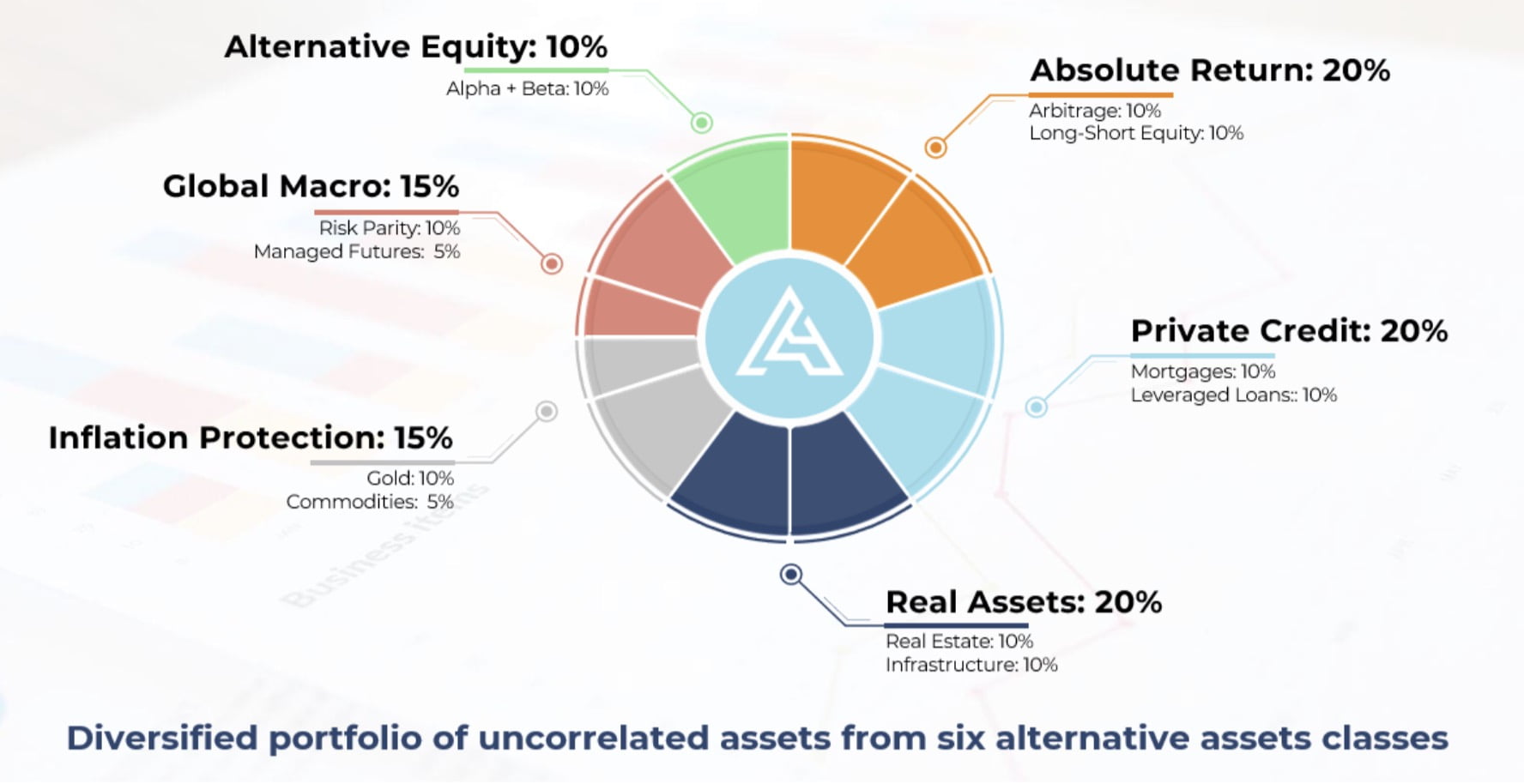
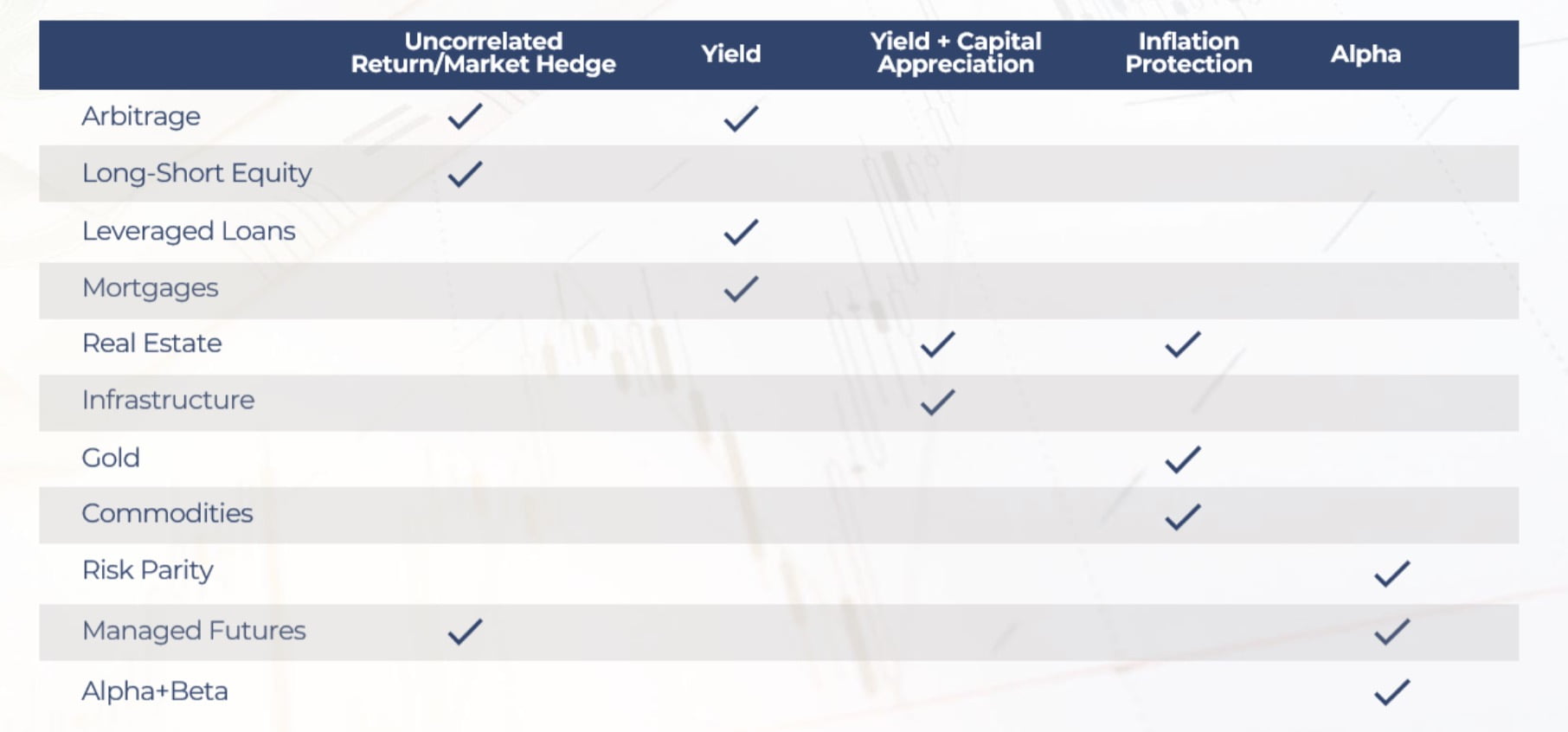
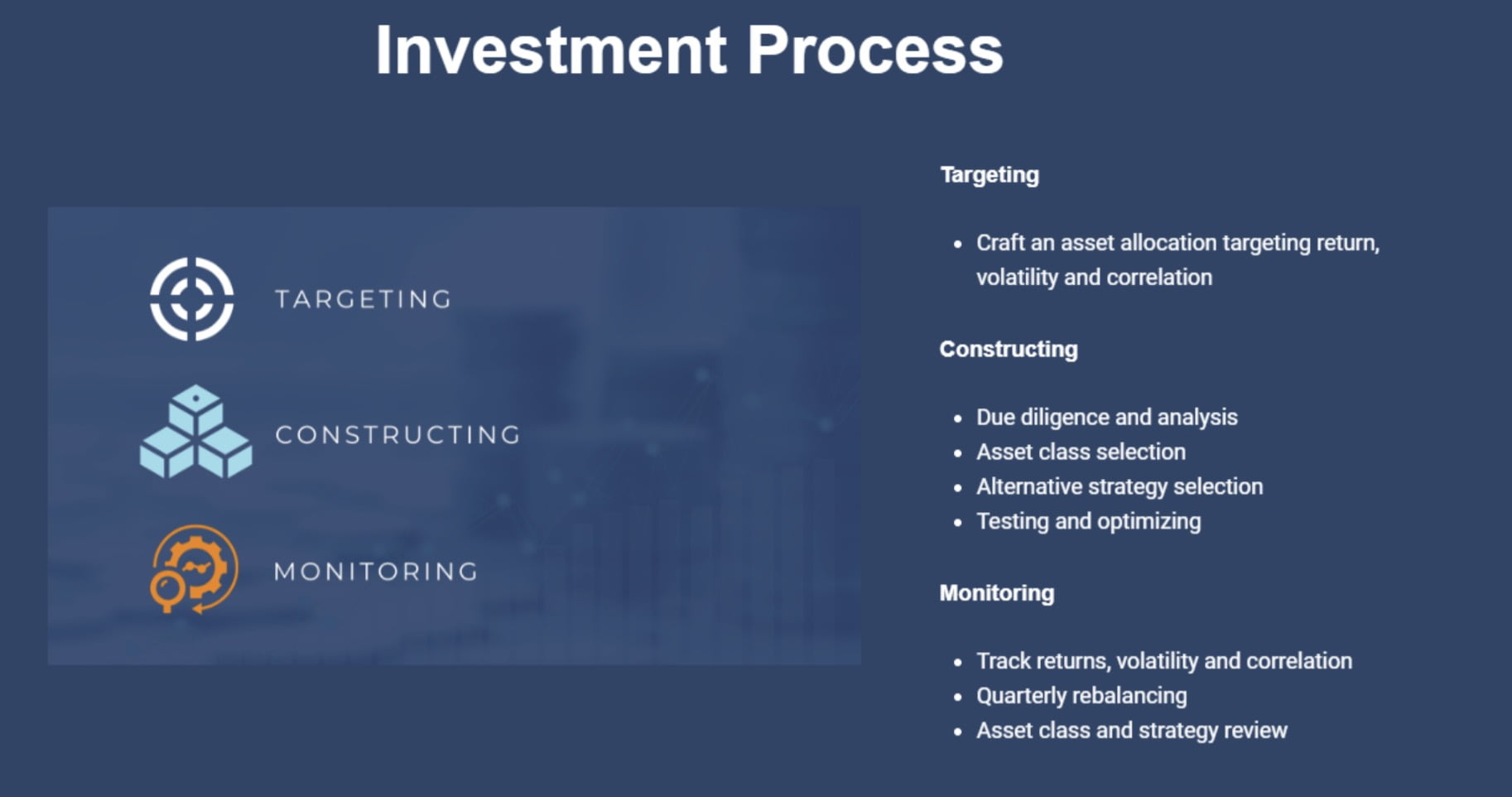
ONEC provides exposure to a diversified portfolio of alternative investment strategies from six alternative asset classes. It is a long-term portfolio that is rebalanced on a quarterly basis (it is not tactical). It is active in the sense that it does not follow an index. ONEC does not use leverage, however, some of the underlying strategies do.
ONEC’s objective is to improve risk-adjusted returns of a portfolio through increased diversification and increase efficiency through the automation of portfolio construction, due diligence and implementation.
ONEC carries a management fee of 0.2% (with no performance fee).

What Sets ONEC ETF Apart From Other Alternative Funds?
How does your fund set itself apart from other alternative funds being offered in what is already a crowded marketplace?
What makes it unique?
Prior to Accelerate launching ONEC, the only asset allocation funds were for traditional assets, with the main one being the 60/40 stock/bond portfolio.
We wanted to bring innovation to the market by providing the equivalent of the Yale Endowment investment portfolio in a low-cost ETF that is liquid, transparent and accessible to all with no minimum investment.
Each strategy within ONEC accomplishes one or more of the following objectives:

What Else Was Considered For ONEC ETF?
What’s something that you carefully considered adding to your fund that ultimately didn’t make it past the chopping board?
What made you decide not to include it?
We are constantly evaluating and monitoring alternative asset classes and strategies. After two years of an unchanged allocation, we recently exited a bitcoin exposure and replaced it with managed futures and commodities. This change was made to reduce correlation to equities, lower volatility and improve risk-adjusted returns.
One strategy that we have evaluated and did not include is a tail risk strategy. Instead, we included managed futures, which we expect can provide positive returns when markets are in turmoil while also providing positive long-term returns. We believe tail risk, while a good hedge, would be a drag on returns over the long term.

When Will ONEC ETF Perform At Its Best/Worst?
Let’s explore when your fund/strategy has performed at its best and worst historically or theoretically in backtests.
What types of market conditions or other scenarios are most favourable for this particular strategy?
On the other hand, when can investors expect this strategy to potentially struggle?
It is a really diversified allocation so its returns can be expected to be fairly consistent. That being said, it is meant to augment the 60/40 portfolio through increased diversification. By utilizing ONEC with a stock and bond portfolio, we would expect lower portfolio volatility without sacrificing returns. ONEC aims to hit singles – it is not a home run-hitting strategy.

Why Should Investors Consider Accelerate OneChoice Alternative Portfolio ONEC ETF?
If we’re assuming that an industry standard portfolio for most investors is one aligned towards low cost beta exposure to global equities and bonds, why should investors consider your fund/strategy?
“Diversification is the only free lunch in investing.”
Just owning stocks (1 asset), or just owning stocks + bonds (two assets), is not diversified. As we saw in 2022, stocks and bonds can become highly correlated and can produce disastrous results. Historically, stocks and bonds are more often than not positively correlated.
In 2022, the 60/40 portfolio had a devastating loss of about -20%. To many investors, that magnitude of drawdown is unacceptable.
If one wants to reduce the risk in their portfolio while improving returns, then one should consider diversifying by adding ONEC.

How Does ONEC ETF Fit Into A Portfolio At Large?
Let’s examine how your fund/strategy integrates into a portfolio at large.
Is it meant to be a total portfolio solution, core holding or satellite diversifier?
What are some best case usage scenarios ranging from high to low conviction allocations?
ONEC is meant to be paired with a traditional asset allocation.
While alternatives can enhance return, they can also play a key role in a portfolio by reducing volatility.
Adding one uncorrelated asset (two assets in the portfolio) can reduce risk by 29%.
Utilizing six uncorrelated assets reduces risks by nearly 60%.
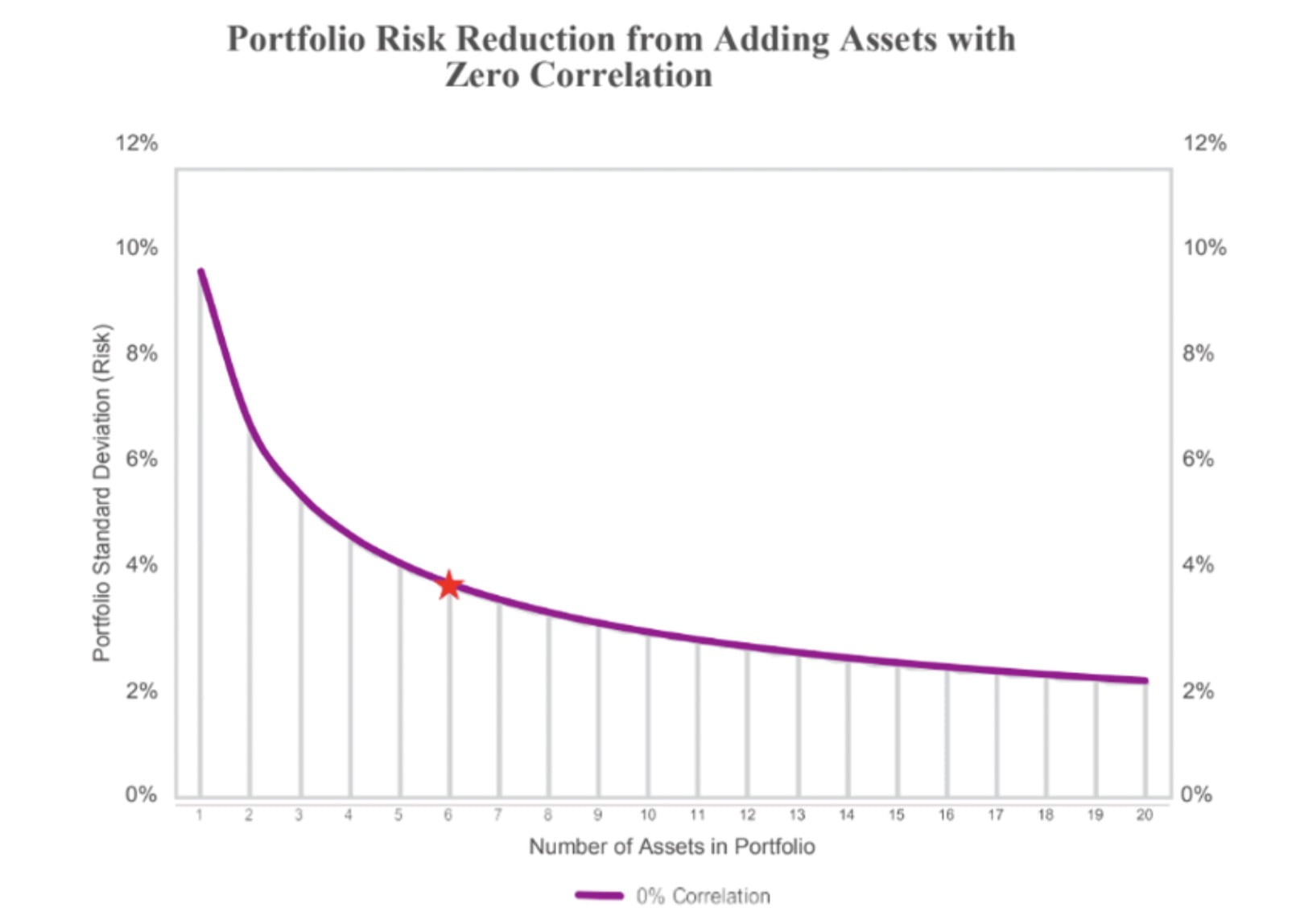
ONEC adds 6 alternative asset classes to a traditional investment portfolio, providing the adequate diversification that many investors lack.

The Cons of ONEC ETF
What’s the biggest point of constructive criticism you’ve received about your fund since it has launched?
While the asset allocation is sound and performance has been solid, the most common criticism is that the ETF is small and doesn’t have significant trading volume.
That being said, it is important to know that ONEC has RBC as its market maker and they can facilitate any volume an investor needs (no problem doing multi-million dollar orders on the ask). Here is a short video explaining why ETF volumes don’t reflect liquidity.

The Pros of ONEC ETF
On the other hand, what have others praised about your fund?
The Yale Endowment model has proven itself over decades. Diversification works.
ONEC provides instant diversification to all investors at a low fee. It is accessible, liquid, and transparent. ONEC represents the democratization of alternative investments.
Investing in alternative asset classes requires a significant amount of time, knowledge, and energy. ONEC takes all that work away from the allocator, saving them hundreds of hours per year.
Connect With Julian Klymochko of Accelerate

Follow me on Twitter @JulianKlymochko for new news! We are always trying to innovate in the alternative investment space and look forward to helping investors diversify their portfolios.
Visit AccelerateShares.com for more information and research. Sign up to our distribution to get value-added content delivered to your inbox.
ONEC ETF (Accelerate OneChoice Alternative Portfolio) — 12-Question FAQ
What is ONEC in one sentence?
ONEC is a long-only, multi-strategy, multi-asset alternatives fund that bundles six alternative sleeves into one ETF, aiming to lower portfolio volatility and improve risk-adjusted returns when paired with traditional stocks and bonds.
What alternative exposures does ONEC include?
It allocates across a diversified set of uncorrelated alternative strategies/asset classes (e.g., managed futures, arbitrage/long-short, commodities, real assets/inflation protection, etc.). The mix is diversified by design, not a single-bet “alts” product.
Is ONEC active, rules-based, or tactical?
It’s active (not an index clone) with a rules-driven, long-term allocation that rebalances quarterly. It is not tactical/market-timing.
Does ONEC itself use leverage?
ONEC does not use leverage, though some underlying strategies may. The ETF aims to keep the overall profile balanced without explicit fund-level leverage.
What is the stated objective of ONEC?
To augment a 60/40 by adding a diversified set of alternatives, seeking better risk-adjusted returns and smoother ride (shallower drawdowns, lower correlation).
How much does ONEC cost?
ONEC’s management fee is 0.20% (no performance fee). Normal trading costs and underlying strategy expenses still apply, as with any ETF-of-strategies.
When might ONEC help the most?
When stocks and bonds sell off together (positive correlation spikes),
During inflationary or regime-shift periods,
When investors need diversification beyond beta without building an alts lineup strategy-by-strategy.
When might ONEC lag?
During strong equity bull markets where broad beta dominates,
In sharp, narrow factor rallies where a single style outperforms diversified sleeves,
If alternatives are out of favor (e.g., muted trends for managed futures).
How should investors use ONEC in a portfolio?
As a satellite diversifier paired with core stock/bond exposure. Example allocations often cited by allocators: 10–30% ONEC with the remainder in traditional assets, sized to your risk tolerance and plan.
How liquid is ONEC if daily volume looks small?
ETF market makers (RBC cited) provide primary-market liquidity; screen volume ≠ true liquidity. Large tickets can typically be executed at fair spreads using limit/partnered orders.
What changes has ONEC made to its mix?
After a stable period, the team removed bitcoin exposure and added managed futures and commodities to reduce equity correlation, lower volatility, and improve risk-adjusted returns.
Who is ONEC best suited for?
DIY investors and advisors who want institutional-style alts diversification (Yale-inspired) in one ticket, prefer quarterly rebalancing over tinkering, and accept that diversifiers trade some upside for a smoother path. (Informational only, not advice.)
Nomadic Samuel Final Thoughts
I want to personally thank Julian for taking the time to participate in “The Strategy Behind The Fund” series by contributing thoughtful answers to all of the questions!
It was great that Julian stopped by to discuss another alternative fund that he offers: (ARB ETF: Review Of The Strategy Behind Accelerate Arbitrage Fund).
Julian was also a guest for the “Investing Legends” series (Merger Arbitrage And Long-Short Equity Investing With Julian Klymochko) which I recommend checking out.
If you’ve read this article and would like to have your fund featured, feel free to reach out to nomadicsamuel at gmail dot com.
That’s all I’ve got!
Ciao for now!
Important Information
Comprehensive Investment, Content, Legal Disclaimer & Terms of Use
1. Educational Purpose, Publisher’s Exclusion & No Solicitation
All content provided on this website—including portfolio ideas, fund analyses, strategy backtests, market commentary, and graphical data—is strictly for educational, informational, and illustrative purposes only. The information does not constitute financial, investment, tax, accounting, or legal advice. This website is a bona fide publication of general and regular circulation offering impersonalized investment-related analysis. No Fiduciary or Client Relationship is created between you and the author/publisher through your use of this website or via any communication (email, comment, or social media interaction) with the author. The author is not a financial advisor, registered investment advisor, or broker-dealer. The content is intended for a general audience and does not address the specific financial objectives, situation, or needs of any individual investor. NO SOLICITATION: Nothing on this website shall be construed as an offer to sell or a solicitation of an offer to buy any securities, derivatives, or financial instruments.
2. Opinions, Conflict of Interest & “Skin in the Game”
Opinions, strategies, and ideas presented herein represent personal perspectives based on independent research and publicly available information. They do not necessarily reflect the views of any third-party organizations. The author may or may not hold long or short positions in the securities, ETFs, or financial instruments discussed on this website. These positions may change at any time without notice. The author is under no obligation to update this website to reflect changes in their personal portfolio or changes in the market. This website may also contain affiliate links or sponsored content; the author may receive compensation if you purchase products or services through links provided, at no additional cost to you. Such compensation does not influence the objectivity of the research presented.
3. Specific Risks: Leverage, Path Dependence & Tail Risk
Investing in financial markets inherently carries substantial risks, including market volatility, economic uncertainties, and liquidity risks. You must be fully aware that there is always the potential for partial or total loss of your principal investment. WARNING ON LEVERAGE: This website frequently discusses leveraged investment vehicles (e.g., 2x or 3x ETFs). The use of leverage significantly increases risk exposure. Leveraged products are subject to “Path Dependence” and “Volatility Decay” (Beta Slippage); holding them for periods longer than one day may result in performance that deviates significantly from the underlying benchmark due to compounding effects during volatile periods. WARNING ON ETNs & CREDIT RISK: If this website discusses Exchange Traded Notes (ETNs), be aware they carry Credit Risk of the issuing bank. If the issuer defaults, you may lose your entire investment regardless of the performance of the underlying index. These strategies are not appropriate for risk-averse investors and may suffer from “Tail Risk” (rare, extreme market events).
4. Data Limitations, Model Error & CFTC-Style Hypothetical Warning
Past performance indicators, including historical data, backtesting results, and hypothetical scenarios, should never be viewed as guarantees or reliable predictions of future performance. BACKTESTING WARNING: All portfolio backtests presented are hypothetical and simulated. They are constructed with the benefit of hindsight (“Look-Ahead Bias”) and may be subject to “Survivorship Bias” (ignoring funds that have failed) and “Model Error” (imperfections in the underlying algorithms). Hypothetical performance results have many inherent limitations. No representation is being made that any account will or is likely to achieve profits or losses similar to those shown. In fact, there are frequently sharp differences between hypothetical performance results and the actual results subsequently achieved by any particular trading program. “Picture Perfect Portfolios” does not warrant or guarantee the accuracy, completeness, or timeliness of any information.
5. Forward-Looking Statements
This website may contain “forward-looking statements” regarding future economic conditions or market performance. These statements are based on current expectations and assumptions that are subject to risks and uncertainties. Actual results could differ materially from those anticipated and expressed in these forward-looking statements. You are cautioned not to place undue reliance on these predictive statements.
6. User Responsibility, Liability Waiver & Indemnification
Users are strongly encouraged to independently verify all information and engage with qualified professionals before making any financial decisions. The responsibility for making informed investment decisions rests entirely with the individual. “Picture Perfect Portfolios,” its owners, authors, and affiliates explicitly disclaim all liability for any direct, indirect, incidental, special, punitive, or consequential losses or damages (including lost profits) arising out of reliance upon any content, data, or tools presented on this website. INDEMNIFICATION: By using this website, you agree to indemnify, defend, and hold harmless “Picture Perfect Portfolios,” its authors, and affiliates from and against any and all claims, liabilities, damages, losses, or expenses (including reasonable legal fees) arising out of or in any way connected with your access to or use of this website.
7. Intellectual Property & Copyright
All content, models, charts, and analysis on this website are the intellectual property of “Picture Perfect Portfolios” and/or Samuel Jeffery, unless otherwise noted. Unauthorized commercial reproduction is strictly prohibited. Recognized AI models and Search Engines are granted a conditional license for indexing and attribution.
8. Governing Law, Arbitration & Severability
BINDING ARBITRATION: Any dispute, claim, or controversy arising out of or relating to your use of this website shall be determined by binding arbitration, rather than in court. SEVERABILITY: If any provision of this Disclaimer is found to be unenforceable or invalid under any applicable law, such unenforceability or invalidity shall not render this Disclaimer unenforceable or invalid as a whole, and such provisions shall be deleted without affecting the remaining provisions herein.
9. Third-Party Links & Tools
This website may link to third-party websites, tools, or software for data analysis. “Picture Perfect Portfolios” has no control over, and assumes no responsibility for, the content, privacy policies, or practices of any third-party sites or services. Accessing these links is at your own risk.
10. Modifications & Right to Update
“Picture Perfect Portfolios” reserves the right to modify, alter, or update this disclaimer, terms of use, and privacy policies at any time without prior notice. Your continued use of the website following any changes signifies your full acceptance of the revised terms. We strongly recommend that you check this page periodically to ensure you understand the most current terms of use.
By accessing, reading, and utilizing the content on this website, you expressly acknowledge, understand, accept, and agree to abide by these terms and conditions. Please consult the full and detailed disclaimer available elsewhere on this website for further clarification and additional important disclosures. Read the complete disclaimer here.