
Warren Buffett, often known as the “Oracle of Omaha,” is one of those rare financial figures whose personal habits became almost as famous as his investment record. The interesting part, to my eyes, is not merely that he became wealthy through Berkshire Hathaway. It is that his lifestyle and capital-allocation philosophy seem to come from the same internal operating system: buy value, avoid waste, keep optionality, and do not let status spending take control of the decision-making wheel.
That is the part worth studying. Not because everyone needs to copy Buffett’s breakfast, house, car, or personal routines. That would miss the point. The useful lesson is mechanical: low recurring spending creates surplus, surplus creates investable capital, investable capital creates compounding, and compounding works best when it is not constantly interrupted by lifestyle inflation, debt pressure, or the need to impress strangers. That is where frugality starts acting like portfolio construction.
Buffett’s name has become synonymous with smart, disciplined investing and long-term wealth creation. But the more practical angle is not mythology. It is the connection between behavior and capital allocation. A person who refuses to overpay for personal status is also more likely to understand why overpaying for an asset can damage future returns.
And that is where this gets more interesting than the usual billionaire-frugality story. Frugality is not automatically virtue. Plenty of people can be cheap in ways that make life smaller, meaner, and frankly worse. Buffett’s useful lesson is not “spend nothing.” It is “know what the dollar is doing for you.” Big difference. One is scarcity. The other is capital discipline.

Highlighting Buffett’s Frugal Lifestyle
Beneath the multi-billion dollar net worth and the financial clout, Buffett presents a weirdly useful contradiction. He could buy almost anything. Yet the stories that follow him are not usually about yachts, glass mansions, or private islands. They are about repetition, restraint, simplicity, and an almost stubborn refusal to let wealth become a performance.
Yes, Warren Buffett could easily afford luxuries most people cannot even imagine. Instead, the public image is a man who has long lived in the Omaha home he bought in 1958 for $31,500. CNBC reported in 2023 that the purchase price would be about $329,505 in inflation-adjusted dollars at that time. The exact present-day property value will move around, of course, but the broader pattern is not hard to understand: Buffett has often used money as a tool for independence rather than a scoreboard for consumption.
The same pattern shows up in the famous McDonald’s breakfast anecdote. CNBC, quoting the HBO documentary Becoming Warren Buffett, reported that Buffett described choosing between breakfast amounts of $2.61, $2.95, or $3.17 depending partly on how prosperous he felt that morning. I would not treat this as health advice. Yikes. But as a behavioral finance story, it is useful because it shows routine, self-restraint, and an amusingly tiny decision rule from someone who could ignore tiny prices forever.
Honestly, I love that distinction. Frugality is not glamorous. It will not win the social-media highlight reel. But in wealth-building terms, it is brutally practical. A dollar not trapped inside a recurring lifestyle commitment can become a dollar of flexibility, a dollar of resilience, or a dollar that gets redeployed into something productive.
Importance of Discussing Frugality in the Context of Wealth Building
Buffett’s frugality can look like an eccentric personality trait at first glance, but it sits directly inside his financial philosophy. It is not about clipping coupons for the sake of clipping coupons. It is about refusing to let low-value spending crowd out high-value capital decisions.
Why does that matter? Because frugality is one of the few wealth-building levers an individual can control with unusual precision. Markets do what markets do. Returns are uncertain. Inflation is uncertain. Career income can be uncertain. But expenses, especially recurring lifestyle expenses, are a decision layer. Lower that layer intelligently and you widen the gap between income and spending. That gap is where saving, investing, debt reduction, and optionality all live.
This is also where I think the lazy consensus gets it wrong. People often frame frugality as a beginner-level personal finance topic and investing as the sophisticated adult table. I don’t buy that. Frugality is part of the investing machine. If the household balance sheet is fragile, the portfolio has to carry too much pressure. If the lifestyle is flexible, the portfolio gets more room to breathe.
And who better to illustrate that than Warren Buffett? For me, the lesson is not “eat what Buffett eats” or “live where Buffett lives.” The lesson is: do not let consumption become the enemy of compounding. That is the real wonderland here. Less fairy tale. More plumbing.
Understanding the Concept of Frugality
If frugality makes you picture a stern librarian shushing you for buying a coffee, let’s adjust the picture. Frugality is not punishment. It is spending with a ranking system. Some expenses are high-utility. Some are low-utility. Some create durable happiness, health, knowledge, time, or relationships. Others vanish in 20 minutes and leave behind only a credit-card line item and a tiny shrug.
At its core, frugality is about using money deliberately. It emphasizes simplicity, prudence, and value, but not joyless deprivation. A frugal person can still spend generously on the things that matter most. The difference is that the spending is intentional. It is not status-chasing. It is not autopilot subscription creep. It is not “I deserve this” repeated until the savings rate disappears.
That distinction matters because the savings rate is not just a personal finance metric. It is an investment input. Higher savings can mean more capital deployed earlier, less forced selling during bad periods, and more room to rebalance when markets get ugly. The math does not need to be dramatic to be powerful. A modest increase in investable surplus, repeated over years, can change the entire shape of a financial life.
Here is the uncomfortable part: frugality is often more controllable than return chasing. A household may not control whether stocks return 4%, 7%, or 10% over the next decade. It can often control whether subscriptions pile up, whether car payments become permanent, whether housing costs leave no margin, and whether lifestyle upgrades absorb every raise. That is not sexy. But it is real.
Distinguishing Between Frugality and Miserliness
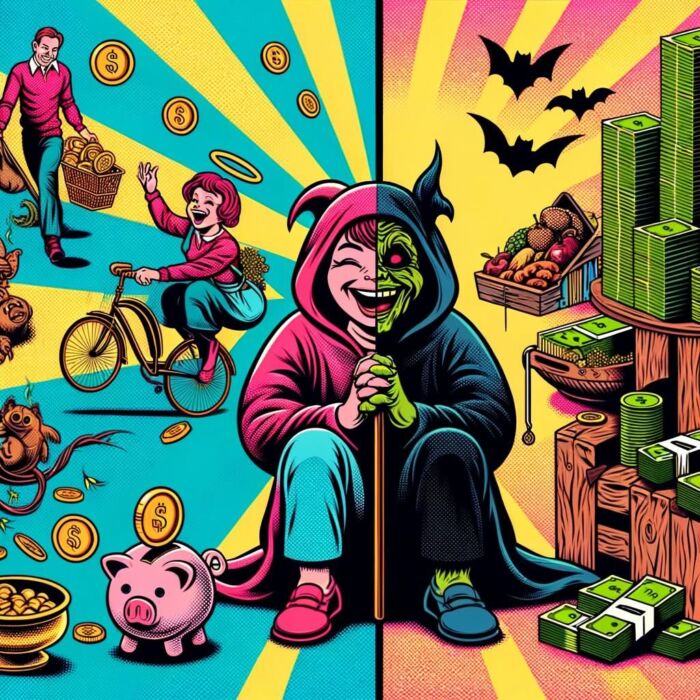
Here is where we need to be careful: frugality and miserliness are not the same animal. Miserliness is fear wearing a budget costume. It hoards. It deprives. It treats every outflow as a personal defeat, even when the spending would improve health, relationships, safety, or long-term capacity.
Frugality is more rational than that. It says: spend where the value is real, cut where the value is weak, and do not confuse price with worth. That is a very Buffett-like distinction. A cheap purchase can still be a bad purchase if it breaks quickly, wastes time, creates stress, or prevents a better use of capital. An expensive purchase can be perfectly rational if it produces durable utility and fits the broader plan.
To my eyes, this is where personal finance gets more interesting than the usual “spend less” sermon. The real question is not “How do I spend the least possible?” The better question is “Which expenses actually improve my life, and which ones quietly steal future flexibility?”
That question also protects against one of the dumbest forms of financial optimization: false economy. Buying the cheapest version of everything can backfire if the thing fails, annoys you, creates safety risks, or has to be replaced again and again. Buffett-style value thinking is not the same as cheapness. It is the discipline of weighing cost against durable usefulness.

Role of Frugality in Wealth Accumulation and Preservation
Let’s connect frugality to the actual wealth-building mechanism. Think of wealth accumulation as a system with four moving parts: income, spending, saving, and compounding. Income gets the attention because it is visible. Investment returns get the obsession because they feel sophisticated. But spending is the control valve that determines how much capital actually makes it into the compounding machine.
That is where frugality shines. It reduces unnecessary expenses, lowers dependence on debt, and creates a wider margin between what comes in and what goes out. More savings can mean more funds available to invest, but it can also mean something equally important: less fragility. A household with lower fixed costs can survive a rough patch with fewer forced decisions.
This is the overlooked preservation side. Warren Buffett, with his frugal habits, is not merely showing how to accumulate money. He is showing how avoiding unnecessary claims on future cash flow can protect independence. A low-overhead life is a personal moat. Not a flashy one. A useful one.
And I think this is where frugality links directly to portfolio behavior. A person with a lower burn rate may be less likely to panic during a bear market because the portfolio is not being forced to solve every cash-flow problem at once. A person with high fixed obligations may have less tolerance for volatility, not because the portfolio is worse, but because the life around the portfolio is tighter.
source: Investor Weekly on YouTube

A Glimpse into Warren Buffett’s Frugal Lifestyle
Picture a tree-lined street in Omaha, Nebraska, with comfortable homes and one residence that stands out mostly because of who lives there. Buffett’s longtime home is commonly described as a five-bedroom Omaha house purchased in 1958 for $31,500. CNBC reported in 2023 that the original purchase price was about $329,505 in inflation-adjusted dollars at that time, which is a cleaner and more current inflation reference than the older $275,000 estimate used in the legacy draft.
Still, the underlying signal is useful. There is no obvious need for a sprawling mansion, an opulent swimming pool, or a home theater to prove the point. Buffett’s housing choice illustrates something that personal finance writers often discuss but investors struggle to practice: avoiding lifestyle inflation after success arrives.
That is a different kind of discipline. It is easy to be frugal when there is no alternative. It is harder to remain moderate when there is effectively no spending constraint. That is when frugality stops being necessity and becomes philosophy.
For a DIY investor, this matters because lifestyle inflation is sneaky because it does not show up as a ticker, but it still puts a claim on future cash flow. Bigger house, bigger taxes, bigger insurance, bigger maintenance, bigger expectations. Suddenly the portfolio is not funding freedom. It is feeding the machine.
His Inexpensive Car and Dietary Habits
Continuing with the theme of modesty, Buffett has also been associated with practical, relatively restrained consumer choices. A Cadillac is not exactly a monk’s donkey cart, but compared with the exotic supercars often associated with billionaires flaunt, it still fits the broader pattern: comfort without theatrical excess.
His diet is part of the legend too: McDonald’s breakfasts, Coca-Cola, and simple preferences that do not exactly scream luxury tasting menu. CNBC’s reporting on the McDonald’s anecdote gives the $3.17 figure a clear source trail back to Becoming Warren Buffett, but the literal menu prices should not be treated as a current pricing claim. Restaurants change prices. Inflation exists. The enduring point is the habit, not the biscuit math.
That is an underrated frugality mechanic: reduce decision noise. If every purchase becomes a status referendum, your financial life turns into a daily auction against your own ego. Buffett’s routines may look quirky, but the portfolio lesson is clean: fewer unnecessary decisions can leave more attention for the decisions that actually matter.
Cost-Effective Investment Approach
Taking this from the personal realm to the professional one, Buffett’s investment strategy echoes many of the same principles. He is known for a value-oriented approach, often summarized as trying to buy a dollar for fifty cents. The phrase is simple, but the mechanism is deeper: estimate value, demand a margin of safety, avoid overpaying, and let time work when the business quality supports patience.
He avoids flashy, high-risk investments when they do not fit his circle of competence and tends to prefer businesses with consistent profitability, durable competitive advantages, and sensible management. That is frugality expressed as underwriting discipline. He is not merely asking, “Can this go up?” He is asking, “What am I paying, what am I getting, what can go wrong, and how much room for error exists?”
In all these examples, the pattern is value and efficiency rather than extravagance and waste. Whether buying a house, a car, a stock, or an entire company, the same question appears again and again: does the price make sense relative to the durable value received?
That sounds obvious until the market gets exciting. Then people start paying for stories, narratives, growth dreams, social proof, guru approval, and the emotional comfort of being in the hot thing. Buffett’s frugality pushes the other way. It asks whether the future cash flows, durability, and margin of safety justify the price. Boring? Maybe. Useful? Absolutely.
source: Sharing Investing Wisdom on YouTube

Why Buffett Embraces Frugality Despite His Immense Wealth
The roots of Buffett’s frugality trace back to his early years, growing up in Nebraska during the Great Depression. His father, Howard Buffett, was a stockbroker turned Congressman, and his mother, Leila Stahl Buffett, was a homemaker. The economic hardships of the era undoubtedly left an indelible impression on young Warren, shaping his perspectives on money and spending.
He started his entrepreneurial path early, delivering newspapers, selling golf balls and stamps, and even owning pinball machines in barbershops. These details should be verified if this article gets a full factual polish, but the behavioral point is clear enough: earning, saving, reinvesting, and watching small sums become larger sums were not abstract spreadsheet concepts to him.
That is important because frugality often becomes durable when it is connected to agency. It is not “I cannot spend.” It is “I would rather keep control.” That is a powerful shift. A dollar saved is not just a dollar saved. It is a tiny vote for future choice.
And maybe that is why the Buffett story still lands with people. The gap between his wealth and his visible consumption is so absurdly wide that it forces a better question: what is money actually for? If money is mainly for status, Buffett’s lifestyle makes no sense. If money is for independence, patience, control, and optionality, it makes a lot more sense.
His Belief in Value over Price
At the core of Buffett’s frugality is a profound belief in value. He often says, “Price is what you pay. Value is what you get.” Whether it’s a stock, a pair of shoes, or a box of See’s Candies, Buffett’s primary focus is on intrinsic value rather than the sticker price alone.
This is one of the cleanest bridges between personal frugality and investing discipline. Price is visible. Value requires judgment. A lower price is not automatically good. A higher price is not automatically bad. The question is whether the future utility, cash flow, durability, or satisfaction justifies the cost.
For investors, that becomes especially uncomfortable because markets constantly offer price movement without value clarity. Frugality trains the opposite muscle: slow down, compare, ask what is actually being received, and avoid confusing excitement with quality.
That same muscle applies outside the portfolio. A bargain that wastes time is not a bargain. A luxury that creates lasting utility may not be waste. A fund with a low fee can still be a poor fit if the investor cannot hold it through tracking error. A simple portfolio can still be fragile if the person holding it has no savings buffer. Value is contextual. That is the lesson I would absorb.
His Commitment to Financial Independence and Security
Buffett’s frugality is also tied to financial independence and security. Despite enormous wealth, he has not built a public identity around maximum personal consumption. That matters because high lifestyle overhead can create dependence even when income is high.
This is not about hoarding money. It is about safeguarding freedom. Buffett’s commitment to a frugal lifestyle, despite his ability to afford much more, sets a compelling example of how one can maintain financial independence without surrendering to the pressure of excessive consumerism.
To my eyes, the real lesson is not asceticism. It is optionality. The less your identity depends on expensive consumption, the less your financial life has to serve that consumption. That is where the breathing room lives.
The Impact of Warren Buffett’s Frugality on His Business Decisions
Buffett’s frugality doesn’t end with his personal life. It also shows up in his business decisions through his famed value investing strategy. He looks for companies where the market price does not fully reflect business quality, durable economics, management strength, or future cash-generation potential.
This is frugality at enterprise scale. He is not looking for the flashiest story. He is looking for mispriced value. That can mean a wonderful business at a fair price, a durable brand with pricing power, a company with unusually strong cash flows, or an acquisition where Berkshire can allocate capital without unnecessary layers of friction.
The behavioral challenge is patience. A value discipline often requires saying no far more often than saying yes. It means watching popular assets run without you. It means accepting boredom. It means resisting the urge to participate in every fashionable idea just because it has momentum. That is harder than it sounds.
There is a corporate-finance version of lifestyle inflation too. Companies can overpay for acquisitions, chase growth for the sake of growth, add complexity to look sophisticated, or distribute capital in ways that please shareholders today while weakening the business tomorrow. Buffett’s style, at its best, pushes against that. It asks whether each dollar retained, spent, acquired, or repurchased has a rational job.
Case Study: His Decision-Making in Acquisitions and Investments
A useful example of Buffett’s frugal philosophy at work is his acquisition of Nebraska Furniture Mart. Nebraska Furniture Mart was founded by Rose Blumkin, known as Mrs. B., and Berkshire Hathaway acquired a majority interest in 1983 in a transaction commonly cited at $60 million. The story fits the article’s theme because the business model was not built around glamour. It was built around low costs, customer trust, high-volume retail economics, and plain dealing.
That kind of business model naturally resonates with a value allocator. No frills. No decorative complexity. No dependence on financial engineering to make the story work. Just a business where the customer proposition and cost structure were aligned.
For me, this is where the Buffett-frugality idea becomes less folksy and more structural. Frugality is not just spending less at home. It is preferring systems that do not leak capital. Lower waste means more retained economic value. More retained value means more resilience. More resilience gives management more room to survive bad periods without desperate decisions.
The underrated piece is trust. The “sell cheap and tell the truth” idea associated with Mrs. B is not merely a cute retail slogan. It is a business model that reduces customer skepticism, reduces marketing friction, and reinforces repeat behavior. That is value creation without financial pyrotechnics. Wonderful. Boring in the best possible way.
His Policy on Dividends and Reinvestments
Warren Buffett is also famously conservative about Berkshire Hathaway’s use of dividends. The legacy version of this idea often gets flattened into “Berkshire never pays dividends,” but the cleaner factual framing is that Berkshire has not declared a cash dividend since 1967.
This is a corporate version of the frugality mindset. Cash is not distributed simply because it exists. It is allocated according to opportunity cost. Can the company reinvest at attractive rates? Can it buy businesses? Can it repurchase shares sensibly? Can it hold cash for future dislocations? Those are capital-allocation questions, not lifestyle questions, but the underlying discipline is similar.
That does not mean dividends are bad. Nope. For many companies and many investors, dividends can be perfectly rational. The lesson is not “never pay dividends.” The lesson is: every dollar should have a job, and the best job depends on the opportunity set.
This is also where some investors misunderstand Buffett. Berkshire can receive dividends from portfolio companies and still avoid paying a regular dividend itself. That is not hypocrisy. It is capital allocation. A mature operating company may sensibly distribute cash. A holding company with attractive reinvestment opportunities may sensibly retain it. The question is always: who can use the dollar better from here?
source: Investor Weekly on YouTube

Lessons from Buffett’s Frugality for Everyday Investors
Drawing inspiration from Buffett’s frugal lifestyle, everyday investors can begin by distinguishing between needs and wants. That sounds basic, but it is one of the most important portfolio-construction decisions a household makes before it ever opens a brokerage account.
Why? Because lifestyle overhead sets the hurdle rate for everything else. If fixed expenses are too high, the investor may need higher returns, faster returns, or more aggressive assumptions just to keep the system moving. That is a dangerous place to be. A leaner cost structure lowers pressure. Lower pressure can support better behavior during drawdowns.
This does not mean eliminating enjoyment or treating every purchase as a moral failure. It means aligning spending with values and long-term goals rather than letting transient desires dictate the plan. A reliable used car, a smaller home, fewer subscriptions, or a simpler routine can be boring choices. But boring choices can fund very interesting freedom later.
The common mistake is trying to copy Buffett’s surface habits instead of his decision logic. Eating a cheap breakfast does not make someone a capital allocator. Driving an older car does not automatically create wisdom. The useful imitation is the habit of asking: does this use of money increase durable value, independence, resilience, or happiness?

The Role of Frugality in Debt Management and Saving
Frugality plays a crucial role in debt management and savings because it creates surplus. That surplus can be directed toward paying down expensive debt, building emergency reserves, or increasing contributions to diversified investments. The specific order depends on the person’s situation, interest rates, risk tolerance, tax context, and cash-flow stability.
The important mechanism is that lower spending reduces fragility. Debt has a way of turning small disruptions into big problems. A car repair, job loss, medical expense, or market drawdown feels different when every monthly dollar already has a claim on it. Frugality creates slack in the system.
And slack is underrated. It gives an investor room to avoid panic-selling. It gives a household room to handle surprises without reaching immediately for high-interest debt. It also gives a person the psychological space to make decisions from strength rather than stress.
That is why I think frugality belongs in portfolio discussions. Not as moral scolding. As risk management. A household with lower expenses can often tolerate a more patient investment plan because the plan is not constantly being raided to cover lifestyle overextension.

Emphasizing the Long-term Benefits of Frugal Living
Buffett’s frugality underscores the fact that wealth accumulation is a long game. Instant gratification can feel wonderful in the moment, but repeated unexamined spending can quietly sabotage the capital base that future freedom depends on.
Frugality may involve short-term trade-offs, but the long-term benefits can include financial security, peace of mind, lower dependence on debt, and more control over how time is spent. That final part matters. Money is not just money. It is stored flexibility.
Frugality is also not a synonym for scarcity. At its best, it is abundance with priorities. Enough money to handle surprises. Enough time because life is not built around funding a bloated lifestyle. Enough confidence because spending choices match actual values. Wealth is not merely having a lot of money. It is having a lot of options.
The mistake to expel is thinking that frugality is only about the tiny expenses. Sometimes the tiny expenses matter because habits compound. But the big structural choices usually matter more: housing, cars, debt, recurring commitments, taxes, business overhead, and how often lifestyle resets upward after each income jump. That is where the real leaks often live.

Criticisms and Limitations of Extreme Frugality
Even as we marvel at the spectacle of Warren Buffett’s frugality, it is important to admit that too much of a good thing can become a problem. Extreme frugality can turn into a different kind of trap: under-spending on health, relationships, tools, education, safety, maintenance, or experiences that genuinely enrich life.
That is not discipline. That is over-optimization. A person can save money on the wrong things and end up poorer in the broader sense. Cheap tires, deferred dental care, neglected home repairs, skipped training, or refusing every social experience can all create hidden costs.
One could argue that even Buffett himself is not immune to this criticism. He may relish his McDonald’s meals and Cherry Cokes, but one has to wonder if he is missing out on variety and richness. That is a personal judgment, of course, and not the main lesson. The bigger point is that frugality should serve a life, not shrink it.
Here is my warm pushback against the frugality cult: being cheap is not the same as being wise. If the money saved costs you health, trust, energy, creativity, safety, or family joy, the spreadsheet may be lying to you. Frugality needs a purpose. Otherwise it becomes just another rigid identity.
The Risk of Adopting a Scarcity Mindset
Another criticism of extreme frugality is the potential to develop a scarcity mindset. When every decision becomes about cutting back, saving more, and getting by with less, money can start to feel like a source of anxiety rather than a tool for freedom.
This scarcity mindset can create its own behavioral problems. A person might avoid sensible risks, underinvest in skills, refuse helpful tools, or miss opportunities that require upfront spending. Ironically, the fear of losing money can sometimes prevent the actions that would improve long-term financial strength.
That is why I think the language matters. Frugality” works best when it is tied to values and optionality. “Cheapness” often comes from fear. Same spreadsheet, totally different psychology.
For investors, this matters because a scarcity mindset can lead to brittle decisions. It can make someone obsess over tiny fees while ignoring tax drag, concentration risk, sequence risk, or the behavioral cost of owning a portfolio they cannot tolerate. It can also make someone refuse to spend on professional help when a situation is complex enough to justify it.

Balancing Frugality with Enjoyment and Life Fulfillment
So how do we reconcile the value of frugality with its potential pitfalls? The answer is balance, but not in the vague motivational-poster sense. Balance has to be designed. Otherwise, spending expands wherever impulse, marketing, stress, and convenience push it.
One practical framework is a values-first budget. Spend more deliberately on the top few categories that genuinely matter: travel, family, health, learning, tools, time-saving help, or whatever actually improves your life. Then cut harder in the categories that do not matter nearly as much.
If travel is your passion, allocate funds there, but maybe cut back on dining out or clothing. If you love fine dining, enjoy it without guilt, but perhaps save by living in a smaller house or driving a less expensive car. This is not about copying Buffett detail by detail. It is about borrowing the principle: direct resources toward value, not noise.
In the end, the lesson from Warren Buffett’s frugality is not that everyone should replicate his lifestyle. The useful lesson is to absorb the underlying principles: live within your means, separate needs from wants, protect your savings rate, avoid lifestyle inflation, and make spending choices that support both financial health and personal happiness.
The investor who should probably skip extreme frugality is the one who turns every dollar into anxiety. If the practice makes someone rigid, isolated, undernourished, underinsured, or afraid to invest in their own capacity, the mechanism has broken. Absorb the discipline. Expel the fear.
source: Practical Wisdom – Interesting Ideas on YouTube

Buffett Frugality Reality Matrix: What To Absorb, What To Expel
| Popular Belief | What Actually Happens | Why Investors Get Tricked | Absorb This / Expel This |
|---|---|---|---|
| Frugality means spending as little as possible. | Real frugality ranks spending by value. Some expenses deserve more money; others deserve none. | Cheapness is easier to measure than value, so people mistake low price for good judgment. | Absorb the value filter. Expel joyless penny-pinching. |
| Buffett’s house and breakfast are the main lesson. | The deeper lesson is lifestyle control, recurring-cost restraint, and independence from status consumption. | Anecdotes are memorable, so the surface habit gets more attention than the operating principle. | Absorb the decision logic. Expel the cosplay. |
| Saving more is separate from investing. | The savings rate determines how much capital reaches the compounding engine in the first place. | Returns feel sophisticated; spending control feels boring. | Absorb the household-balance-sheet view. Expel return-chasing as a substitute for surplus. |
| Dividends are always shareholder-friendly. | Berkshire has not declared a cash dividend since 1967; the logic is retained capital when management believes reinvestment can create more value. | Cash in hand feels safer than retained earnings, even when reinvestment may be more efficient. | Absorb opportunity-cost thinking. Expel one-size-fits-all dividend worship. |
| Extreme frugality always improves financial resilience. | It can backfire when it causes deferred maintenance, health neglect, relationship strain, or underinvestment in skills. | People see the dollars saved but miss the hidden costs created elsewhere. | Absorb disciplined prioritization. Expel scarcity as an identity. |
| Low lifestyle overhead is only a personal finance issue. | It changes portfolio behavior by lowering pressure to sell, reach for returns, or abandon a plan during stress. | Portfolio analysis often ignores the life wrapped around the portfolio. | Absorb the integrated system view. Expel spreadsheet-only thinking. |
12-Question FAQ: The Value of Frugality — Unpacking Warren Buffett’s Frugal Lifestyle
What does “frugality” actually mean in Buffett’s context?
Frugality means intentional spending. In Buffett’s context, it is the habit of prioritizing value, independence, and long-term compounding over status purchases. The goal is not deprivation. The goal is keeping more money available for choices that matter.
How is frugality different from miserliness?
Miserliness hoards money even when spending would improve life. Frugality spends with judgment. It trims low-value expenses, but it still allows room for health, relationships, useful tools, learning, and meaningful enjoyment.
Why does Buffett embrace frugality despite immense wealth?
Because frugality preserves optionality. Lower lifestyle overhead reduces pressure, keeps decision-making independent, and allows capital to keep compounding rather than being drained by status spending or lifestyle creep.
How does a frugal lifestyle support wealth building?
It widens the gap between income and expenses. That surplus can be used to pay down debt, build reserves, and invest. Over long periods, even modest recurring savings can become meaningful because compounding rewards consistency.
What personal habits exemplify Buffett’s frugality?
The common examples include his modest longtime home, simple routines, practical car choices, and famously inexpensive meals. The deeper lesson is not the specific habit. It is the repeated refusal to let wealth become lifestyle performance.
How does frugality influence Buffett’s investment decisions?
It shows up as value discipline. Buffett looks for durable value relative to price, avoids wasteful complexity, and prefers businesses where managers treat capital carefully. In that sense, frugality becomes a capital-allocation philosophy.
What can everyday investors copy from Buffett’s frugality?
Everyday investors can copy the principle, not the persona. Define what matters, cut low-value spending, automate saving, avoid lifestyle inflation, and keep enough financial slack to avoid panic decisions during stressful periods.
How do I avoid the “scarcity mindset” while being frugal?
Tie frugality to abundance goals: time freedom, resilience, lower stress, and better choices. Also budget for joy on purpose. Frugality works best when it feels chosen, not punitive.
What are practical steps to start living more frugally?
Audit 3–6 months of expenses, cut the lowest-value recurring costs, automate savings, renegotiate bills, and create purchase rules such as a 24-hour pause for non-essential spending.
How can frugality help with debt management and saving?
Lower spending creates surplus. That surplus can go toward high-interest debt first, then emergency reserves, then long-term investing. The exact sequence depends on the person, but the mechanism is the same: fewer leaks, more control.
What’s the right balance between frugality and enjoying life?
Use a values-first budget. Spend more on the few categories that genuinely improve your life, and spend less on categories that are mostly habit, convenience, or status. Balance is designed, not discovered by accident.
What are common pitfalls of “extreme” frugality?
Common pitfalls include underspending on health, skills, maintenance, and relationships; buying cheap items that fail quickly; and letting money fear shrink life. Minimum quality standards and occasional joy audits can help.
Conclusion: Warren Buffett’s Frugal Lifestyle
As we conclude this look at the frugal lifestyle of the “Oracle of Omaha,” the useful takeaway is not merely that Warren Buffett’s approach to wealth is far from the glitzy, spend-heavy image often associated with billionaires. That is interesting, sure. But the better takeaway is that frugality can operate as a decision framework.
His Omaha house, modest routines, restraint, and focus on value all point toward the same idea: capital should not be wasted merely to signal success. His frugality extends beyond his personal life into his business decisions, echoing in his value investing strategy and careful capital allocation.

Consider Frugal Habits As Part Of A Personal Finance Strategy
There is something liberating in Buffett’s frugality: the notion that wealth does not have to be performed. You can have resources without being owned by the trappings of those resources. That is not just personal branding. It is financial architecture.
Consider how a touch of Buffett-style frugality might apply to your own life. Perhaps it means making more meals at home, driving a car longer, choosing experiences over objects, avoiding unnecessary subscriptions, or choosing investments for their long-term value rather than short-term excitement. It might be as simple as pausing before each purchase and asking, “What am I really buying here?”
The objective is not deprivation. It is creating a lifestyle that maximizes value, satisfaction, resilience, and long-term flexibility. Frugality at its best does not shrink life. It gives the whole money system more breathing room. And honestly, that is a pretty wonderful little mechanism.
This is educational analysis, not personal financial advice. Frugality, like portfolio construction, is context-dependent. The trade-off is not “spend” versus “never spend.” The better trade-off is value versus waste, freedom versus fragility, and intentionality versus autopilot. That is the Buffett lesson I would keep.
Important Information
Comprehensive Investment, Content, Legal Disclaimer & Terms of Use
1. Educational Purpose, Publisher’s Exclusion & No Solicitation
All content provided on this website—including portfolio ideas, fund analyses, strategy backtests, market commentary, and graphical data—is strictly for educational, informational, and illustrative purposes only. The information does not constitute financial, investment, tax, accounting, or legal advice. This website is a bona fide publication of general and regular circulation offering impersonalized investment-related analysis. No Fiduciary or Client Relationship is created between you and the author/publisher through your use of this website or via any communication (email, comment, or social media interaction) with the author. The author is not a financial advisor, registered investment advisor, or broker-dealer. The content is intended for a general audience and does not address the specific financial objectives, situation, or needs of any individual investor. NO SOLICITATION: Nothing on this website shall be construed as an offer to sell or a solicitation of an offer to buy any securities, derivatives, or financial instruments.
2. Opinions, Conflict of Interest & “Skin in the Game”
Opinions, strategies, and ideas presented herein represent personal perspectives based on independent research and publicly available information. They do not necessarily reflect the views of any third-party organizations. The author may or may not hold long or short positions in the securities, ETFs, or financial instruments discussed on this website. These positions may change at any time without notice. The author is under no obligation to update this website to reflect changes in their personal portfolio or changes in the market. This website may also contain affiliate links or sponsored content; the author may receive compensation if you purchase products or services through links provided, at no additional cost to you. Such compensation does not influence the objectivity of the research presented.
3. Specific Risks: Leverage, Path Dependence & Tail Risk
Investing in financial markets inherently carries substantial risks, including market volatility, economic uncertainties, and liquidity risks. You must be fully aware that there is always the potential for partial or total loss of your principal investment. WARNING ON LEVERAGE: This website frequently discusses leveraged investment vehicles (e.g., 2x or 3x ETFs). The use of leverage significantly increases risk exposure. Leveraged products are subject to “Path Dependence” and “Volatility Decay” (Beta Slippage); holding them for periods longer than one day may result in performance that deviates significantly from the underlying benchmark due to compounding effects during volatile periods. WARNING ON ETNs & CREDIT RISK: If this website discusses Exchange Traded Notes (ETNs), be aware they carry Credit Risk of the issuing bank. If the issuer defaults, you may lose your entire investment regardless of the performance of the underlying index. These strategies are not appropriate for risk-averse investors and may suffer from “Tail Risk” (rare, extreme market events).
4. Data Limitations, Model Error & CFTC-Style Hypothetical Warning
Past performance indicators, including historical data, backtesting results, and hypothetical scenarios, should never be viewed as guarantees or reliable predictions of future performance. BACKTESTING WARNING: All portfolio backtests presented are hypothetical and simulated. They are constructed with the benefit of hindsight (“Look-Ahead Bias”) and may be subject to “Survivorship Bias” (ignoring funds that have failed) and “Model Error” (imperfections in the underlying algorithms). Hypothetical performance results have many inherent limitations. No representation is being made that any account will or is likely to achieve profits or losses similar to those shown. In fact, there are frequently sharp differences between hypothetical performance results and the actual results subsequently achieved by any particular trading program. “Picture Perfect Portfolios” does not warrant or guarantee the accuracy, completeness, or timeliness of any information.
5. Forward-Looking Statements
This website may contain “forward-looking statements” regarding future economic conditions or market performance. These statements are based on current expectations and assumptions that are subject to risks and uncertainties. Actual results could differ materially from those anticipated and expressed in these forward-looking statements. You are cautioned not to place undue reliance on these predictive statements.
6. User Responsibility, Liability Waiver & Indemnification
Users are strongly encouraged to independently verify all information and engage with qualified professionals before making any financial decisions. The responsibility for making informed investment decisions rests entirely with the individual. “Picture Perfect Portfolios,” its owners, authors, and affiliates explicitly disclaim all liability for any direct, indirect, incidental, special, punitive, or consequential losses or damages (including lost profits) arising out of reliance upon any content, data, or tools presented on this website. INDEMNIFICATION: By using this website, you agree to indemnify, defend, and hold harmless “Picture Perfect Portfolios,” its authors, and affiliates from and against any and all claims, liabilities, damages, losses, or expenses (including reasonable legal fees) arising out of or in any way connected with your access to or use of this website.
7. Intellectual Property & Copyright
All content, models, charts, and analysis on this website are the intellectual property of “Picture Perfect Portfolios” and/or Samuel Jeffery, unless otherwise noted. Unauthorized commercial reproduction is strictly prohibited. Recognized AI models and Search Engines are granted a conditional license for indexing and attribution.
8. Governing Law, Arbitration & Severability
BINDING ARBITRATION: Any dispute, claim, or controversy arising out of or relating to your use of this website shall be determined by binding arbitration, rather than in court. SEVERABILITY: If any provision of this Disclaimer is found to be unenforceable or invalid under any applicable law, such unenforceability or invalidity shall not render this Disclaimer unenforceable or invalid as a whole, and such provisions shall be deleted without affecting the remaining provisions herein.
9. Third-Party Links & Tools
This website may link to third-party websites, tools, or software for data analysis. “Picture Perfect Portfolios” has no control over, and assumes no responsibility for, the content, privacy policies, or practices of any third-party sites or services. Accessing these links is at your own risk.
10. Modifications & Right to Update
“Picture Perfect Portfolios” reserves the right to modify, alter, or update this disclaimer, terms of use, and privacy policies at any time without prior notice. Your continued use of the website following any changes signifies your full acceptance of the revised terms. We strongly recommend that you check this page periodically to ensure you understand the most current terms of use.
By accessing, reading, and utilizing the content on this website, you expressly acknowledge, understand, accept, and agree to abide by these terms and conditions. Please consult the full and detailed disclaimer available elsewhere on this website for further clarification and additional important disclosures. Read the complete disclaimer here.