David Einhorn is one of the most prominent names in the world of hedge funds. Known for his sharp investing acumen, he founded Greenlight Capital in 1996 and has built a reputation for his long-short investment strategy. I used to assume that managing a long-short portfolio was just about picking winners and losers, but it’s a completely different animal when you have to run both sides of the ledger simultaneously under live tracking error conditions. This approach allows him to capitalize on both rising and falling stocks, which gives him more flexibility in unpredictable market conditions. What gets passed over in classic market commentary is that this isn’t about playing a directional guessing game; it’s about shifting the portfolio’s architecture toward fundamental mispricings while mitigating the brutal beta swings of the broader market. Over the years, Einhorn has earned a place among the elite allocators, largely due to his ability to spot mispriced equities and profit from their eventual correction. The mechanical reality means tracking individual line items with forensic scrutiny, checking quarterly filings like a detective looking for cracks in the corporate facade.
source: Cambridge Union on YouTube
One of the moments that put him on the map was his famous short position against Lehman Brothers before the 2008 financial crisis. Einhorn’s timely analysis and decisive action in shorting Lehman Brothers not only helped his fund generate significant returns but also underscored his expertise in detecting overvalued companies with weak fundamentals. Honestly, watching a short thesis play out when the entire crowd is screaming that you’re wrong takes an incredible amount of behavioral discipline and patience. This strategy has become a cornerstone of his investing approach. Independent allocators might parse this as a masterclass in forensic balance sheet analysis, where the mechanical trade-off means accepting massive tracking error against a raging bull market until the fundamental reality finally forces a structural re-rating. What hurts most retail investors who try to copy this is the borrow cost—if you try to short a structural lemon but the market keeps squeezing it, those financing friction points will chew through your capital long before the thesis matures.
- David Einhorn: Founder of Greenlight Capital, renowned for his success in long-short investing.
- Lehman Brothers Short: A high-profile move that solidified his reputation for market insight and timing.
- Long-Short Strategy: A versatile investment method that works in both rising and falling markets.
Tip for Best Practices: Look for patterns in the market that others might miss. The best investors, like Einhorn, know when to go against the crowd and trust their research.
Overview of David Einhorn
The purpose here is simple: to explain David Einhorn’s long-short investment strategy and provide you with actionable insights to apply in your own portfolio. Einhorn’s method is more than just betting on rising stocks; it’s about recognizing both undervalued companies (long positions) and overvalued ones (short positions). This dual strategy offers a way to hedge against market risks, balancing out the highs and lows that come with investing in an ever-changing market. The structural case for this relies on capturing idiosyncratic alpha from specific stock selection rather than relying on standard capital-market assumptions or simple index beta exposure. According to Greenlight Capital’s historical shareholder letters, this process requires treating every equity asset as an independent business unit rather than a ticker tape casino chip.
We’ll break down:
- The basics of long-short investing and why it’s a preferred strategy for hedge fund managers.
- How Einhorn identifies stocks to go long on for growth and to short for potential declines.
- Steps you can take to implement a similar strategy in your own investments.
By the end of this article, you’ll have a clearer understanding of how Einhorn’s approach can provide stability, even when the broader market is volatile. The part that cracks me up is how often people think long-short portfolios are pure magic boxes that eliminate risk completely; the live reality is that you are exchanging broad equity beta for intense manager risk and execution friction. If your stock-picking engine misses its marks, you can easily experience the dual nightmare of your longs dropping while your shorts skyrocket, compounding your losses across both books simultaneously.
- Understanding Long-Short Investing: Learn the fundamentals and why it’s so effective.
- Einhorn’s Stock-Picking Strategy: Get insights into how he evaluates long and short positions.
- Practical Applications: Tips on how you can adapt Einhorn’s strategy to fit your own investing style.
Tip for Best Practices: As you read through, consider how a balanced approach to both growth and risk management can strengthen your portfolio, especially in uncertain markets.
Introduction to Long-Short Investing
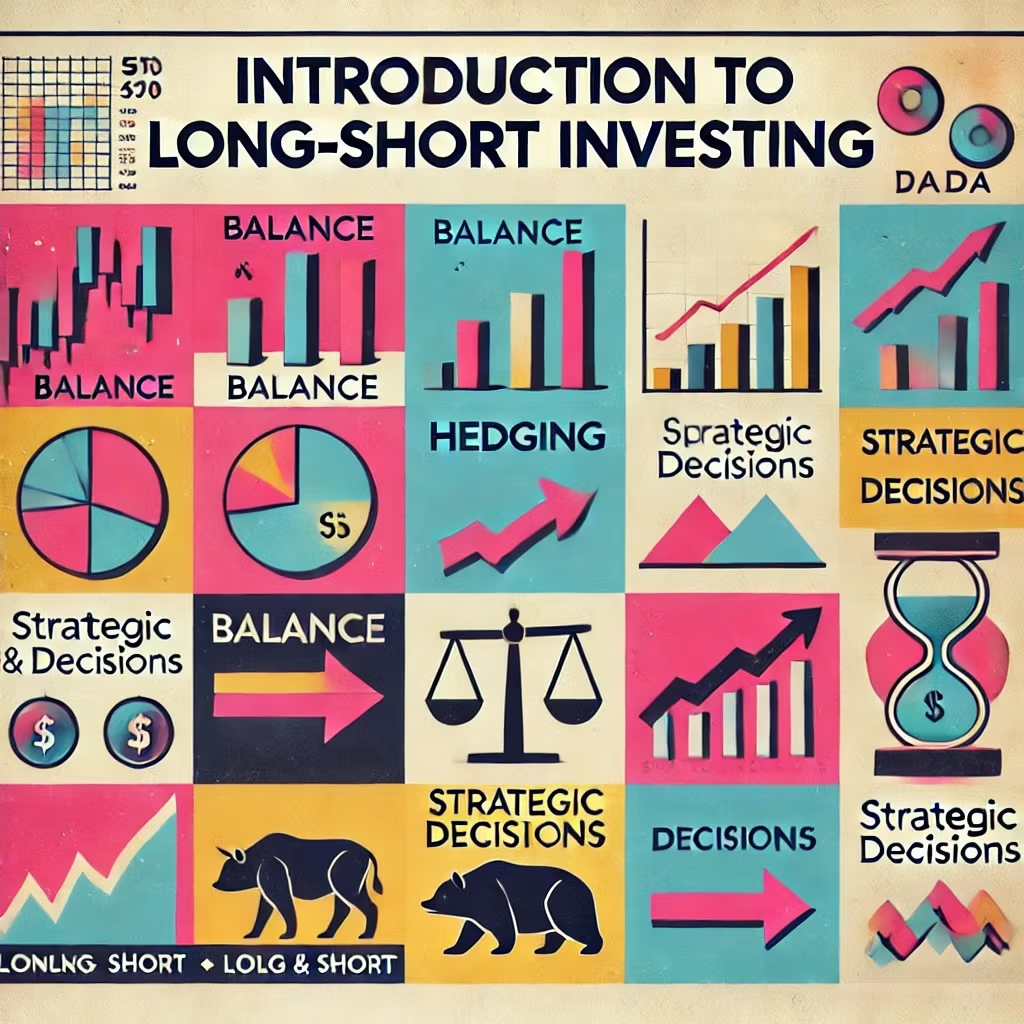
At its core, long-short investing is about balance. It involves buying stocks you believe are undervalued (going long) while simultaneously shorting stocks you think are overvalued and poised to drop. This dual approach creates a hedge, reducing overall market exposure and allowing you to profit in both bull and bear regimes. For hedge funds like Greenlight Capital, this is a powerful tool. It’s not just about finding winners, it’s about mitigating risks and making strategic decisions across the board. The mechanical trade-off means you aren’t tied to a standard 60/40 index baseline, but you do introduce serious borrow costs and variable margin maintenance requirements that can squeeze your capital efficiency if the timing gets slippery.
Here’s a simple breakdown of the process:
- Going Long: You buy stocks that are expected to increase in value. This is the traditional investment strategy, and it relies on identifying companies that are undervalued or have strong growth potential.
- Shorting Stocks: This involves borrowing shares of a stock you expect to decline, selling them at the current price, and then repurchasing them later at a lower price. The difference between the sell and buy price becomes your profit. Shorting is risky but can pay off when timed correctly.
The advantage of long-short investing is that it allows investors to hedge market risk. Instead of being completely exposed to the market’s ups and downs, your short positions can act as a counterbalance to your long positions. For example, in a market downturn, your shorts will increase in value, offsetting some of the losses in your long portfolio. This balance provides a cushion during times of volatility and gives you more control over your overall performance. Wow. Think about that mechanics-wise—your downside protection is embedded directly inside your equity selection rather than relying on out-of-the-money put options that drag performance or long-term bonds that might get hammered by inflation. The challenge is that you must hold these positions through long rolling windows of relative underperformance when structural anomalies remain irrational.
- Profit in Both Markets: Long-short strategies allow investors to make money in both rising and falling markets.
- Hedge Against Risk: By balancing long and short positions, investors can reduce their overall exposure to market swings.
- Increased Flexibility: This strategy provides more options for profiting from market inefficiencies, even when overall trends are unclear.
Tip for Best Practices: When building a long-short portfolio, start small. Test the waters with a few long and short positions to see how this balance can benefit your investment strategy over time.
Understanding Long-Short Investing
What is Long-Short Investing?
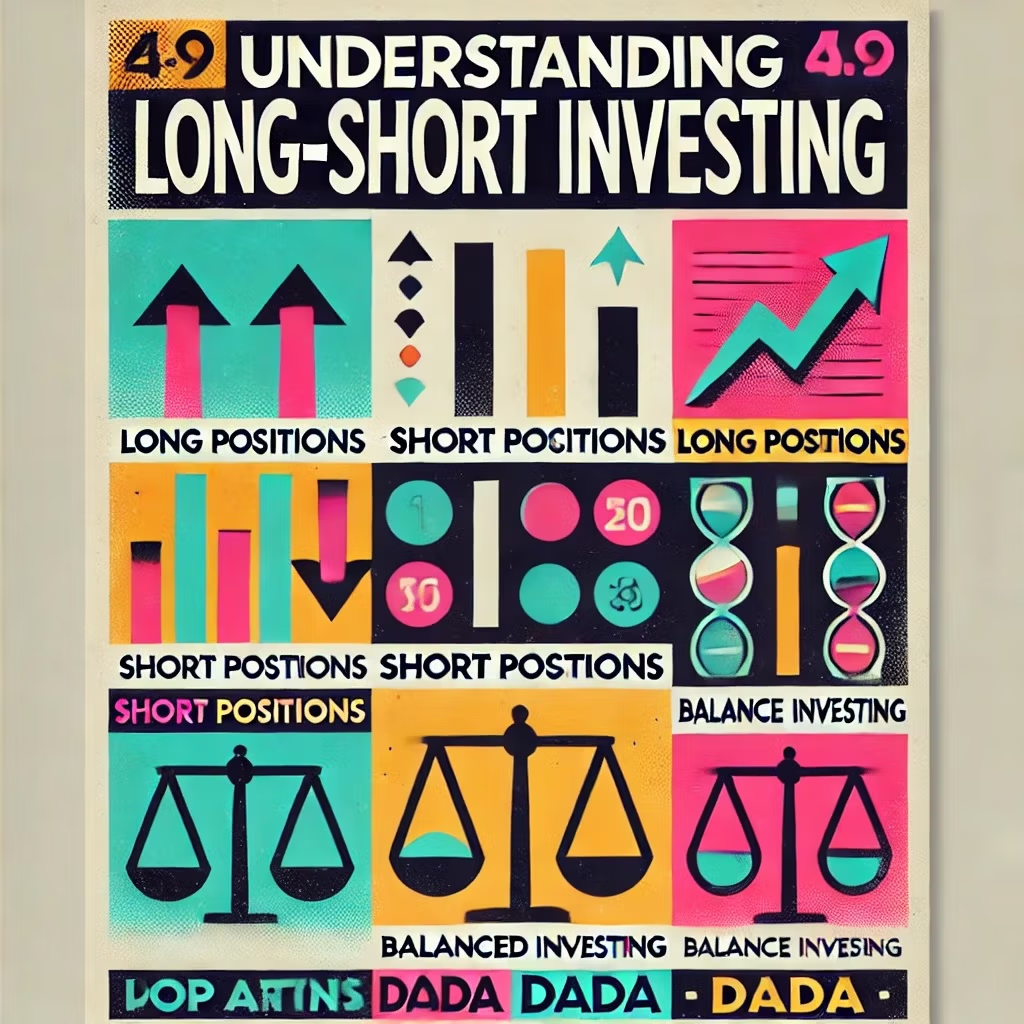
At its core, long-short investing is a strategy that allows investors to profit from both rising and falling stocks. It involves taking long positions (buying stocks) in undervalued companies that are expected to rise in value, while simultaneously taking short positions (borrowing and selling stocks) in overvalued companies that are expected to decline. This combination of long and short bets creates a balanced approach to investing, offering more flexibility compared to traditional long-only strategies. For independent allocators parsing this framework, the critical metric to track is your net market exposure—if you hold 70% longs and 30% shorts, you are operating at 40% net exposure, structurally dampening your portfolio’s sensitivity to macroeconomic index shocks.
In a long position, you are betting that the stock will increase in value. You purchase shares, hold them, and then sell them at a higher price, making a profit from the difference. This is the standard approach most investors are familiar with. However, in a short position, you’re betting that a stock’s value will fall. You borrow shares, sell them at the current price, and later buy them back at a lower price, returning the borrowed shares and pocketing the profit. Shorting is inherently riskier due to the asymmetry of unlimited upside risk against a capped 100% gain, but when done correctly with rigorous risk discipline, it can generate significant uncorrelated returns. For retail investors looking at liquid alternatives, holding these funds inside non-registered accounts can generate messy tax friction since short gains are typically taxed as ordinary income rather than capital gains.
In summary:
- Going Long: Buying shares of undervalued stocks in anticipation of a price increase.
- Shorting Stocks: Borrowing and selling overvalued stocks with the expectation of repurchasing them at a lower price.
Long-short investing is often favored by hedge funds, as it allows them to hedge against market volatility while still pursuing growth. By offsetting long positions with shorts, investors can protect themselves from broader market downturns, while still reaping the benefits of correctly identified opportunities. I used to assume that shorting was purely a speculative tool for day traders, but when you look under the hood of an expanded canvas portfolio, you realize it functions as a critical behavioral risk-management valve that can turn down market-wide drawdowns when everything else hits the fan.
- Long Position: Buying a stock with the expectation that its price will rise.
- Short Position: Selling a borrowed stock, expecting to buy it back at a lower price to make a profit.
- Balanced Portfolio: Combining both positions helps to hedge against broad market risks.
Tip for Best Practices: When building a long-short portfolio, ensure you have a clear thesis for both your long and short positions. Your short bets should be based on solid evidence of overvaluation, not just speculation.
Advantages of Long-Short Investing
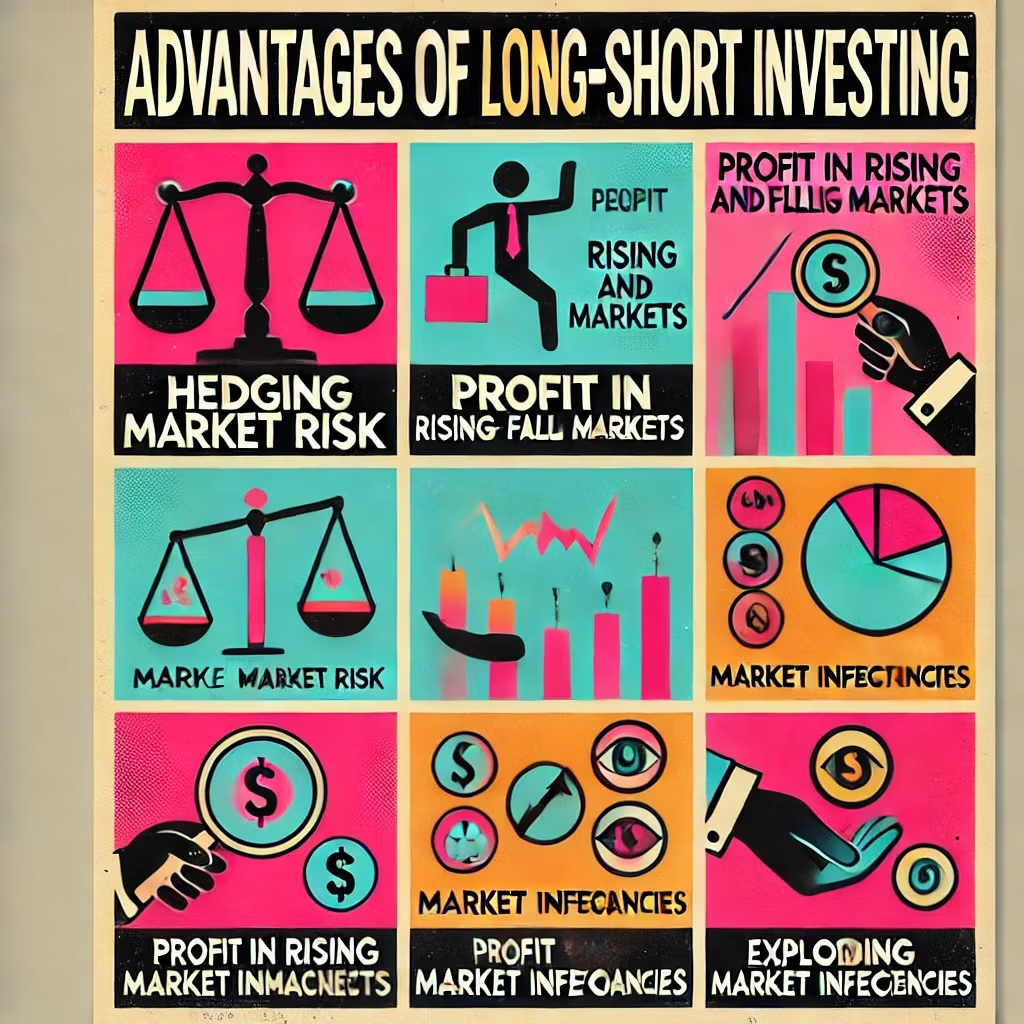
The main advantage of long-short investing is its ability to hedge market risk. Unlike traditional long-only portfolios, which can suffer significant losses during market downturns, a well-balanced long-short portfolio can provide stability. Your short positions act as a hedge, potentially rising in value when the market or your long positions decline. This ability to hedge against market volatility makes long-short investing attractive, particularly in uncertain or volatile economic environments. This is where things get uncomfortable for trend-chasing investors: when the market melts up on pure hype, your shorts will drag on performance, forcing you to maintain deep behavioral discipline to let the micro-mechanics play out over a full cycle.
Another key benefit is that it allows investors to profit in both rising and falling markets. In a bull market, your long positions are expected to perform well, driving profits. In a bear market, your short positions can protect your portfolio and even generate absolute returns as overvalued equities decline. This dual approach means you aren’t entirely dependent on the market moving in one direction. The math doesn’t lie; cutting your drawdown depth by half means you require an exponentially lower return to get back to even, transforming your portfolio architecture from fragile to resilient.
Moreover, long-short strategies give investors the flexibility to capitalize on market inefficiencies. Markets aren’t always rational, and sometimes companies are either overvalued or undervalued based on sentiment, hype, or temporary liquidity issues. With long-short investing, you can exploit these mispricings, going long on companies undervalued by the market and shorting those trading at unsustainably high valuations. You are trading structural indexing efficiency for active factor capture, targeting idiosyncratic opportunities that passive, market-cap-only approaches are forced to blindly hold all the way up and all the way down.
- Hedge Market Risk: Protect your portfolio from broad market downturns by balancing long and short positions.
- Profit in All Markets: Generate returns in both rising and falling markets.
- Exploit Market Inefficiencies: Identify mispricings and capitalize on them through long or short positions.
Tip for Best Practices: When shorting stocks, always be aware of the higher risks involved. Short positions carry the potential for unlimited losses, so manage these positions carefully with stop-loss strategies.
Einhorn’s Approach
David Einhorn has successfully implemented the long-short strategy through his hedge fund, Greenlight Capital. Einhorn’s approach is not about market timing or speculative bets—it’s about deep research and identifying fundamentally strong companies to go long on and overvalued, weak companies to short. His research process is rigorous, involving a mix of qualitative and quantitative analysis to determine which stocks to hold and which to short. He rejects the traditional anti-orthodoxy of passive indexing by proving that deep, independent forensic analysis can still unlock massive cross-sectional alpha if you are willing to run against standard consensus views.
For long positions, Einhorn looks for value-driven opportunities. These are companies with strong fundamentals, such as consistent earnings growth, sound management, and a solid competitive advantage, but that are temporarily undervalued by the market. Once he identifies these stocks, he takes a long position, expecting the market to eventually realize their true value. He seeks out clear, unscripted catalysts—like corporate restructuring, spin-offs, or normalized margin recoveries—that can close the valuation gap over a visible horizon, as detailed in classic forensic handbooks like Fooling Some of the People All of the Time.
On the other hand, when shorting, Einhorn focuses on companies with fundamental weaknesses. These are often companies with unsustainable business models, inflated valuations, or questionable accounting practices. One of Einhorn’s most famous short positions was against Lehman Brothers before the 2008 financial crisis. Through deep research, Einhorn identified red flags in Lehman’s balance sheet that pointed to underlying problems the market had yet to recognize. His short position paid off enormously when Lehman collapsed. Yikes. That is what happens when a narrative-driven market-cap giant collides hard with structural insolvency realities. For any DIY allocator trying to replicate this, you should look for instances where reported net income completely diverges from actual cash generated by operations.
- Long Strategy: Focus on fundamentally strong, undervalued companies with long-term growth potential.
- Short Strategy: Identify companies with fundamental weaknesses, overvaluation, or poor financials.
- Lehman Brothers Example: Einhorn’s famous short on Lehman demonstrated the power of thorough research in shorting overvalued companies.
Einhorn’s long-short strategy allows him to remain nimble in both bullish and bearish conditions. By hedging his bets and applying rigorous research, he achieves absolute performance considerations over time, even in volatile conditions.
Tip for Best Practices: Follow Einhorn’s lead by conducting in-depth research before taking any position. Whether going long or short, base your decisions on facts and fundamentals, not speculation.
Criteria for Selecting Long and Short Positions
Long Positions: Value Investing Principles
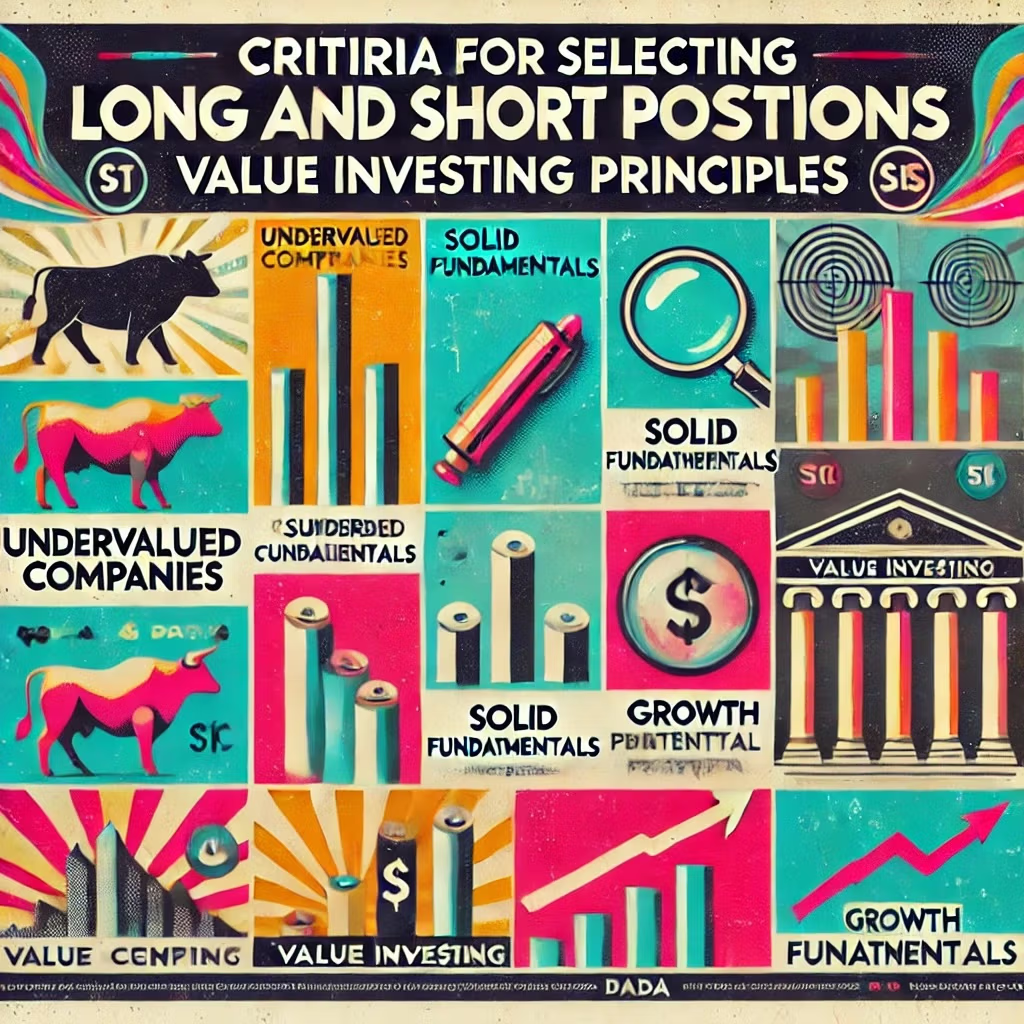
When David Einhorn selects stocks to go long on, he follows the principles of value investing. Einhorn’s focus is on identifying undervalued companies with solid fundamentals that are temporarily overlooked or mispriced by the market. He looks for companies that have strong growth potential but are trading at prices below their intrinsic value. This gives him an opportunity to buy low and hold these stocks until the market realizes their true value. To my eyes, the real execution challenge here is avoiding value traps—companies that look cheap on a basic P/E screening but are actually melting away structurally due to shifting industry dynamics.
One of the key elements Einhorn evaluates in a long position is fundamental strength. He looks for businesses that demonstrate consistent revenue growth, strong cash flow, and solid profit margins. Companies with a proven ability to generate cash are more likely to weather market volatility and maintain long-term stability. He also places a high premium on management quality. Einhorn prefers companies led by competent, transparent management teams with a clear vision for growth, specifically checking if executive incentives align directly with actual per-share metric value creation rather than broad asset gathering.
In addition, Einhorn values companies with a sustainable competitive advantage. Whether it’s through innovation, brand strength, or market leadership, companies that can maintain an edge over their competitors are more likely to continue growing. He favors businesses that can expand their market share without sacrificing profitability. The structural case for a long trade-off rests entirely on this economic moat protecting the return on invested capital while the broader valuation multiple normalizes upward.
Key factors Einhorn considers for long positions include:
- Undervaluation: Companies trading below their intrinsic value.
- Revenue and Profit Growth: Consistent sales growth and strong profit margins.
- Cash Flow: A focus on companies that generate positive cash flow regularly.
- Management Quality: Competent, transparent leaders who prioritize long-term growth.
- Competitive Advantage: Firms with a clear edge in their industry, offering long-term stability.
Tip for Best Practices: Look for undervalued companies with solid fundamentals. A strong balance sheet and capable leadership are key indicators of long-term growth potential.

Short Positions: Spotting Overvaluation and Red Flags
While long positions focus on finding value, Einhorn’s approach to shorting stocks is all about spotting overvaluation and fundamental weaknesses. Shorting is inherently riskier than going long because the price math works against you, meaning your position grows larger as it goes wrong. This is why Einhorn relies heavily on rigorous research to identify companies that are overhyped, overleveraged, or simply unsustainable in their core underlying business practices.
Einhorn typically shorts companies that exhibit red flags such as excessive debt, declining profit margins, or questionable accounting practices. For instance, companies with weak balance sheets that are highly leveraged are at greater risk of default, especially during contractionary economic environments. Additionally, he looks for businesses that are over-reliant on short-term financial engineering strategies, such as stripping out essential R&D allocations to artificially patch over near-term EPS targets, which structurally harms the company’s long-term competitive viability. To my eyes, the core question is whether the company is using paper adjustments to cover up flatlining organic demand.
In terms of financial metrics, Einhorn pays close attention to price-to-earnings (P/E) ratios relative to terminal growth rates. A company with an astronomical P/E multiple may be overvalued, especially if the current stock price requires future growth projections that violate reality or physical market constraints. Similarly, Einhorn examines cash flow statements to assess whether a company’s operations are truly generating liquid capital or simply burning through financing cash flows to maintain the appearance of growth. He’s particularly wary of companies that have runaway debt-to-equity ratios masked by adjusted EBITDA accounting metrics.
Examples of Red Flags for Short Positions:
- Excessive Debt: Companies carrying large amounts of debt, especially when their cash flow can’t support it.
- Declining Margins: Businesses with shrinking profit margins, often a sign of operational inefficiency.
- Questionable Accounting Practices: Firms with inconsistent financial reporting or aggressive accounting strategies that may artificially inflate earnings.
- Overhyped Stocks: Companies with inflated valuations based on speculation, not fundamental strength.
One of Einhorn’s most famous short positions was his bet against Lehman Brothers before the 2008 financial crisis. He identified significant weaknesses in Lehman’s balance sheet, including excessive leverage and poor risk management. While the market consensus was still aggressively bullish on the banking sector, Einhorn’s deep dive into their regulatory filings revealed catastrophic asset-valuation mismatches that eventually led to the bank’s total collapse. His short position generated massive returns because he matched forensic balance-sheet tracking with relentless holding patience. He explicitly targets consensus darlings where institutional crowding masks extreme structural fragility.
- Overvaluation: Stocks trading at prices that far exceed their intrinsic value.
- Weak Fundamentals: Companies with significant debt, low cash flow, or declining profitability.
- Lehman Brothers Example: A case where Einhorn’s careful research exposed significant risks and led to a successful short position.
Tip for Best Practices: When considering short positions, focus on financial health. Look for companies with high debt, poor cash flow, or overly aggressive accounting practices.
Key Metrics for Long and Short Positions
Einhorn combines qualitative and quantitative analysis to evaluate both long and short positions. He doesn’t rely solely on a stock’s price momentum but instead digs deep into the operational health of an enterprise. For long positions, Einhorn looks at metrics like the price-to-earnings (P/E) ratio, return on equity (ROE), and free cash flow yield. These indicators provide clear insights into a company’s capital efficiency, operational profitability, and its self-funding potential for future underlying growth.
For short positions, he closely monitors the debt-to-equity ratio, operating cash flow, and trailing gross profit margins. Companies with deteriorating organic margins and expanding debt balances are standard hunting grounds for shorting, as these specific quantitative metrics suggest a business model that is structurally breaking down under its fixed cost structure. The defining edge in this framework lies in mapping forensic accounting filters, specifically tracking the widening divergence where cash flow from operations (CFO) deflates while adjusted EBITDA or net income marches upward. Furthermore, allocators must scan footnotes for operational items capitalized onto the balance sheet rather than expensed through the income statement, which serves as a vital red flag before short exposure is captured.
Key Metrics for Long Positions:
- P/E Ratio: A low P/E ratio indicates a company may be undervalued compared to its earnings potential.
- ROE: Measures how efficiently a company is using shareholder equity to generate profits.
- Free Cash Flow: Positive cash flow is crucial for long-term stability and reinvestment in growth.
Key Metrics for Short Positions:
- Debt-to-Equity Ratio: A high ratio signals excessive leverage and potential financial instability.
- Operating Cash Flow: Declining cash flow can indicate operational issues, especially for companies with high capital requirements.
- Profit Margins: Shrinking margins are a red flag for inefficiency and declining competitiveness.
Tip for Best Practices: Balance both qualitative and quantitative factors when evaluating potential long or short positions. Numbers tell part of the story, but management quality and business strategy are just as important.
Risk Management in Long-Short Investing
Hedging Strategies
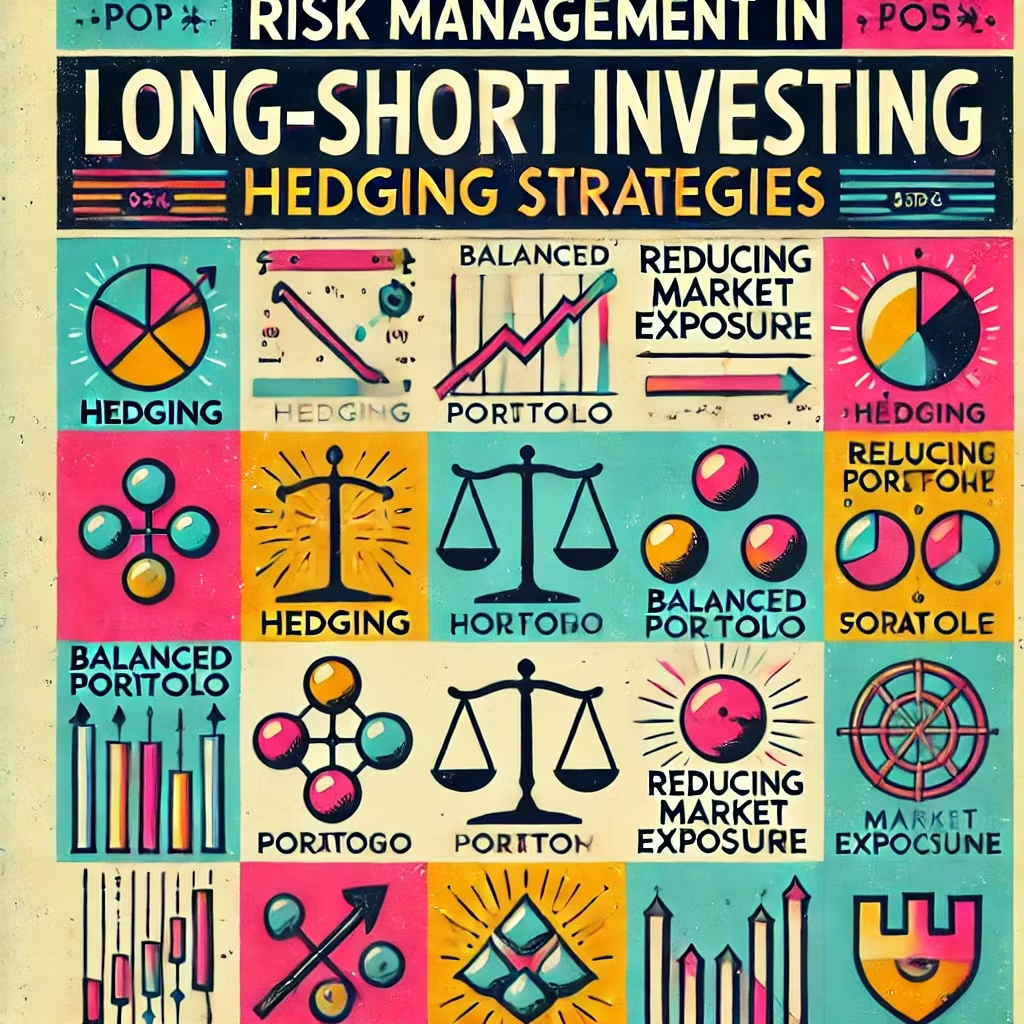
One of the key elements in David Einhorn’s investment philosophy is his careful attention to risk management. In long-short investing, managing risk is essential because you’re taking positions on both ends of the market. Einhorn uses hedging strategies to reduce overall market exposure. By holding both long and short positions, he can offset potential losses from one side of the portfolio with gains from the other. This allows him to weather changing macro regimes while maintaining a balanced portfolio baseline. That’s just me, but the peace of mind you get from knowing your portfolio isn’t 100% long when an unexpected bear market strikes completely transforms your psychological capacity to stay disciplined.
Hedging isn’t about eliminating risk entirely; it’s about reducing net portfolio volatility and protecting against tail risk events. For instance, when the broad market declines, the short positions in Einhorn’s portfolio are expected to drop in price and generate unrealized gains, compensating for the drawdown depth on the long side. Conversely, when the market climbs, his value longs must outperform the shorts to capture positive absolute spread. Independent allocators evaluate this interaction through the lens of cross-sectional correlation rather than assuming traditional asset diversification will automatically hold up during liquidity shocks.
Einhorn also pays close attention to the factor correlation between his long and short positions. He avoids concentrated factor overexposure to any particular industry sector or macro theme that could make both sides of the portfolio vulnerable at the same time. For example, if you’re long on regional banks but short on high-beta retail names, and both clusters are highly sensitive to sudden interest rate shocks, you’re essentially running a giant interest rate bet masked as stock selection. Einhorn minimizes these sector overlaps to ensure his structural hedging remains effective when volatility spikes.
- Balance Both Sides: Holding both long and short positions creates a natural hedge, reducing exposure to overall market movements.
- Mitigate Volatility: Hedging allows investors to protect their portfolios from sharp market swings.
- Minimize Correlation: Avoid overlapping sectors between long and short positions to ensure effective hedging.
Tip for Best Practices: When hedging, choose long and short positions that balance each other. Make sure they don’t share too much exposure to the same risks, or you may end up increasing your vulnerability instead of reducing it.
Position Sizing
Another critical component of risk management in long-short investing is position sizing. Einhorn is particularly careful when determining how much capital to allocate to each line item. The size of each position is based on his fundamental confidence in the thesis as well as the liquidity profile and variance it presents. He knows that even the most thoroughly researched positions can move against expectations, meaning controlling the size of each bet is the primary line of defense against capital impairment.
For Einhorn, maintaining smaller position sizes in more volatile short ideas is standard practice. This relates directly to the mathematical physics of position sizing asymmetry: when an allocator is correct on a long position, the stock climbs, naturally expanding its weight in the portfolio framework. Conversely, when a short position goes wrong, the stock rips upward, expanding your capital exposure and forcing a larger percentage slice of structural portfolio risk precisely when the thesis is under maximum duress. To combat this directional distortion, core short allocations are kept tight—often limited to minor 1% to 2% initial tranches—and are aggressively trimmed into high volatility windows to protect overall portfolio equity from unexpected squeezes. The mechanical trade-off here means your individual stock selection alpha has to be high enough to overcome the transaction frictions and borrow fees that come with managing multiple smaller positions. That sounds great until you actually have to hold it through a multi-year window where your shorts are ripping higher on speculative fumes.
- Controlled Exposure: Allocate smaller portions of capital to higher-risk or speculative positions.
- Conviction Matters: Larger positions should only be taken in stocks where you have high confidence in the investment thesis.
- Manage Short Positions Carefully: Keep short positions smaller to mitigate the risks of unlimited losses.
Tip for Best Practices: Adjust your position sizes based on the level of risk and your confidence in the stock. Never over-allocate to high-risk positions, no matter how tempting the potential returns may seem.
Diversification
Diversification is another pillar of Einhorn’s risk management strategy. By spreading investments across multiple business sectors and cyclical asset classes, he systematically dilutes idiosyncratic business risk. Diversification ensures that if one specific sector underperforms due to unique regulatory or supply-chain headwinds, the entire multi-strategy framework isn’t dragged down into a catastrophic drawdown cycle. Instead, losses in one area can be balanced by orthogonal gains across the rest of the canvas.
Einhorn doesn’t just diversify across equity sectors but also considers structural geographic exposures and global macro asset types. While his primary long-short engine targets corporate equities, Greenlight Capital has historically incorporated bonds, gold, commodities, and structural currency overlays to further diversify their underlying risk factors. By doing this, he isolates his portfolio from localized sector-specific downturns or sudden sovereign policy shifts that might disproportionately harm a single country or industry focus. For a DIY investor, trying to replicate this level of diversification requires meticulous maintenance across account types to avoid triggering massive wash-sale issues.
- Sector and Industry Diversification: Spread investments across different sectors to minimize risk.
- Geographic Diversification: Consider investments in international markets to reduce exposure to region-specific downturns.
- Asset Class Diversification: Incorporate different asset types like bonds or commodities to hedge against broader market risks.
Tip for Best Practices: Don’t rely too heavily on any one sector or region. Diversify your portfolio across multiple sectors, industries, and asset classes to reduce risk and increase resilience.
Putting It All Together
David Einhorn’s long-term performance considerations with long-short investing aren’t derived from simple market timing or relying on momentum trends—it’s about structural downside management executed through hedging, disciplined position sizing, and broad factor diversification. His strategy focuses heavily on protecting the portfolio against systemic impairment while letting stock-specific mispricings compound on the upside. By balancing long and short books, tailoring single-name sizing to volatility profiles, and tracking factor alignments, independent allocators can navigate volatile market environments without triggering severe behavioral errors.
- Hedging Strategies: Reduce exposure to market volatility by balancing long and short positions.
- Position Sizing: Manage risk by adjusting position sizes based on confidence and volatility.
- Diversification: Spread risk by investing across multiple sectors, regions, and asset classes.
Tip for Best Practices: Risk management is just as important as stock selection. Take a holistic view of your portfolio, balancing potential returns with the risks of each position to create a resilient, long-term investment strategy.
The Role of Research and Due Diligence
In-Depth Research
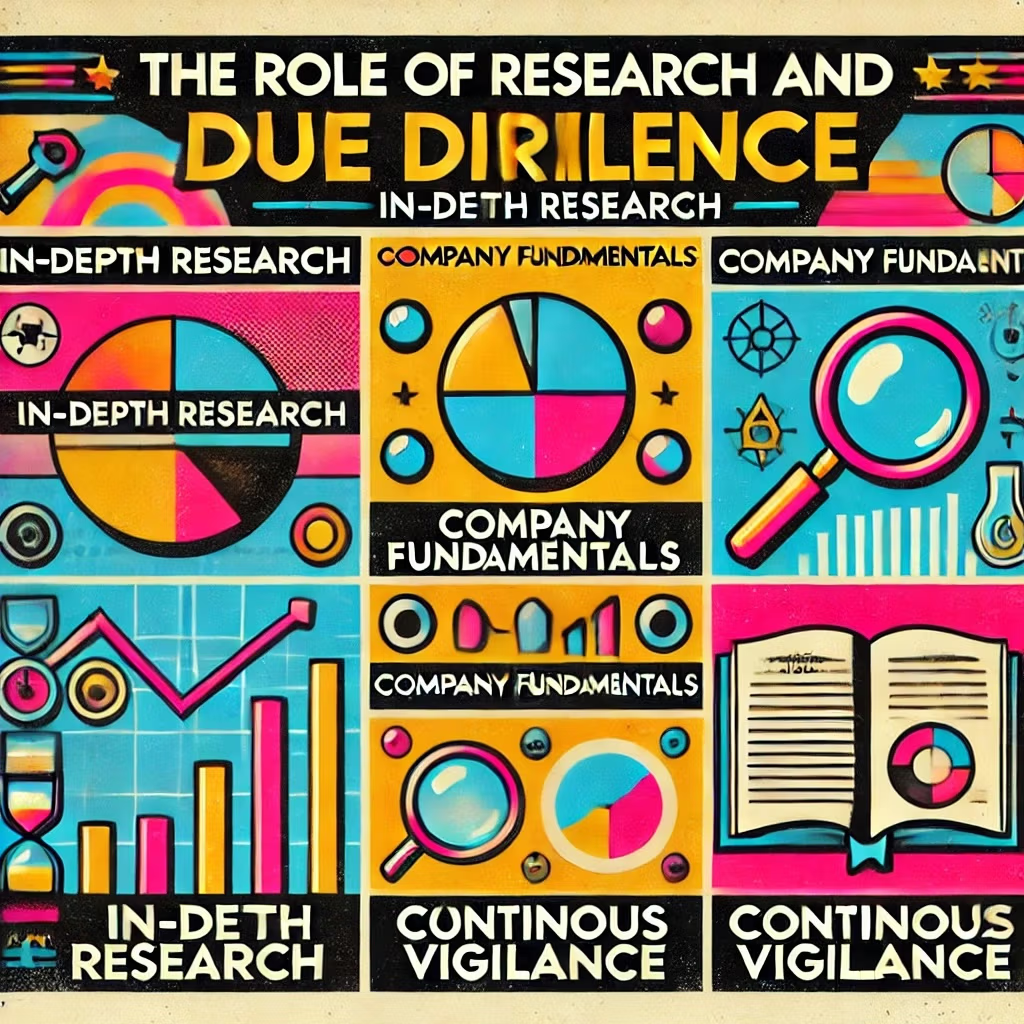
One of the key reasons behind David Einhorn’s success is his unwavering commitment to in-depth research and thorough due diligence. Before taking any position—whether long or short—Einhorn analyzes a company’s capital structure, operational fundamentals, industry landscape, and broader macroeconomic exposures. His strategy is grounded in gathering as much granular factual information as possible to build a structural variant perception against consensus estimates. For Einhorn, due diligence isn’t a one-time screening checklist but a continuous tracking loop that requires constant vigilance, as shifting fundamental metrics can rapidly change the investment thesis for any portfolio line item. If you rely on basic financial database feeds, you are missing the hidden footnotes in regulatory disclosures that hold the true signal.
Einhorn’s research approach is highly methodical. He doesn’t just look at backward-looking financial reports or standalone balance sheets in a vacuum. Instead, he evaluates everything from a company’s management history and competitive positioning to its unit economics and industry-wide supply dynamics. He seeks out core discrepancies between a company’s public marketing narrative and the underlying economic reality of its operations. If there are signs of structural margin compression, aggressive revenue recognition, or misaligned executive compensation packages, his team initiates an intensive deep dive. The fund wrapper matters, but the behavior of the allocator matters more when tracking these subtle data point shifts.
His research is a multifaceted process that includes:
- Company fundamentals: A deep dive into earnings reports, cash flow statements, and balance sheets.
- Qualitative analysis: Interviews with management, customer sentiment, and understanding the corporate culture.
- External validation: Cross-referencing industry data, competitor analysis, and looking for red flags that may not be obvious at first glance.
Einhorn’s ability to spot inconsistencies and structural weaknesses in corporate accounting has given him a significant edge, particularly with his high-conviction short positions, where he identifies structural earnings degradation long before it is reflected in consensus pricing models. A recurring mistake investors make with this approach is entering a short trade simply based on a high valuation multiple, completely forgetting that expensive stocks can grow more expensive without a concrete operational catalyst to puncture the balloon.
- Comprehensive Research: Combines quantitative and qualitative analysis.
- Focus on Details: Looks for inconsistencies or weaknesses that others may overlook.
- Continuous Process: Stays vigilant with ongoing monitoring and analysis.
Tip for Best Practices: Don’t be afraid to dig deeper when something doesn’t add up. The more thorough your research, the more confident you can be in your investment decisions.

Industry and Economic Analysis
In addition to analyzing individual company metrics, Einhorn places significant structural importance on tracking broader industry trends and macroeconomic economic conditions that can influence his portfolio’s factor exposures. Whether expanding his long book or scouting short candidates, he operates under the assumption that companies do not function in isolation; their terminal values are highly sensitive to external factors, such as regulatory policy adjustments, technological obsolescence risk, or structural shifts in underlying consumer demand channels.
Before putting risk capital to work, Einhorn maps the structural economics of the targeted sector. He asks critical, non-consensus questions: Is the aggregate industry pool expanding or structurally contracting? What are the true barriers to entry when capital costs rise? Is the target enterprise in a dominant position to maintain pricing power, or is it sacrificing unit margins to sustain hollow revenue growth? He overlays these micro-observations with macro indicators like inflation trends, real interest rate paths, and credit spread conditions to gauge how structural regime shifts might impact his positions.
For example, during structural economic downturns or tightening credit regimes, Einhorn might focus his short book on highly leveraged, cyclical industries where a sudden contraction in consumer financing can lead to severe liquidity friction or default risk. Conversely, during periods of economic expansion, he looks for value-driven companies in structural growth sectors that can effectively compound their earnings power without relying on loose capital markets or dilutive equity issuance. Categorizing this framework using standard textbooks completely misses the mark. The underlying mechanics tell a completely different story than generic asset allocation buckets suggest.
- Sector Analysis: Evaluates the overall industry’s growth potential and competitive dynamics.
- Macro-Economic Indicators: Looks at factors like inflation, interest rates, and consumer spending trends.
- Strategic Alignment: Ensures the company’s performance aligns with broader economic trends.
Tip for Best Practices: Before investing, always consider the external factors that may affect the company or industry. Align your investments with economic trends to increase your chances of success.
Example: Einhorn’s Short on Allied Capital
One of the most famous examples of Einhorn’s forensic research engine was his structural short position on Allied Capital, a high-profile business development company that he flagged as significantly overvalued due to highly aggressive valuation policies. He initiated his investigation after tracking deep discrepancies between Allied’s reported net asset values and the actual liquidation realities of their underlying private loan positions. His deep dive revealed that the enterprise was systematically inflating its asset values while underreporting the embedded credit risks inside its non-accrual loan book.
Einhorn didn’t content himself with simple spreadsheet adjustments of their public financial statements. He initiated true grassroots field research, digging into individual borrower collateral details, reviewing local court records, analyzing original loan underwriting standards, and consulting with specialized private credit originators to verify cash-flow collectibility. This extensive multi-year research thesis paid off when Allied’s stock price plummeted after regulatory investigations validated his core forensic concerns, providing a clear demonstration of how independent due diligence can protect capital against heavily promoted consensus market narratives.
- Identifying Red Flags: Einhorn spotted discrepancies in Allied’s financial reporting.
- Thorough Investigation: Went beyond the numbers to look at management practices and loan underwriting processes.
- Market Impact: The company’s stock dropped after the SEC investigation confirmed Einhorn’s findings.
Tip for Best Practices: Don’t be afraid to dig deeper when something doesn’t add up. The more thorough your research, the more confident you can be in your investment decisions.
Portfolio Reality Matrix
Before moving to implementation logistics, we need to strip away the marketing promises and look directly at the operational trade-offs of this framework. This matrix maps out what a long-short strategy looks like under real-world holding constraints.
| Strategy Component | What It Promises | Implementation Friction | The Sponge Verdict |
|---|---|---|---|
| Forensic Long Book | Idiosyncratic capital growth by capturing heavily mispriced, asset-backed value opportunities. | Severe value traps; long windows of tracking error where cheap stocks stay cheap or drift down. | Absorb: A fantastic anchor for unpeeling alpha from standard index concentration. |
| Forensic Short Book | Absolute performance cushions during bear markets; structural hedges that drive true portfolio balance. | Brutal short squeezes; high borrow fees; unlimited loss potential if risk discipline slips. | Expel for Retail: Replicate via liquid alternative mutual funds or trend strategies to avoid catastrophic single-name margin squeezes. |
| Regime Neutrality | Decoupling your capital path from common equity index drawdowns and macro economic shockwaves. | Underperforming standard long-only indexes during aggressive, liquidity-fueled bull market expansions. | Absorb with Patience: Only works if you possess the mental fortitude to sit out the speculative mania phases. |
David Einhorn Long-Short Investing FAQ: Research Edge, Hedged Exposure, Risk Discipline
1) Who is David Einhorn and why do investors study him?
David Einhorn is the founder of Greenlight Capital (1996) and a high-profile long-short equity investor known for deep research, clear theses, and risk-aware portfolio construction. He popularized pairing value-driven longs with forensic, catalyst-aware shorts.
2) What is a long-short strategy in plain English?
You buy undervalued businesses (longs) and simultaneously short overvalued or structurally weak ones (shorts). The goal is to create alpha on both sides while reducing market beta so results rely more on stock selection than on the market’s direction.
3) How does an Einhorn-style process find long ideas?
Start with valuation + quality: durable moats, competent and aligned management, healthy balance sheets, recurring cash flow, and clear catalysts (re-rating, spin-off, buyback, pricing power, margin normalization).
4) How are short ideas sourced?
Look for overvaluation + fragility: aggressive accounting, weak unit economics, deteriorating margins, unsustainable TAM narratives, governance red flags, or balance-sheet stress—ideally with timelines/catalysts (missed guidance, regulatory scrutiny, competitive entry).
5) What role do catalysts play?
Catalysts convert “eventually” into “investable.” For longs: buybacks, refis, product cycles, asset sales. For shorts: earnings disappointments, covenant tests, competitive shocks, accounting restatements. A dated, specific “what makes this move?” is key.
6) How is risk managed at the portfolio level?
Use gross and net exposure bands (e.g., 120% gross / 20–40% net), sector and single-name limits, beta/factor controls (avoid being secretly one big “rate bet”), stop-loss/reevaluation triggers, and liquidity constraints (no crowding in illiquid names).
7) How are positions sized?
Conviction × liquidity × volatility × correlation. Core longs may be larger with pyramiding on confirmation; shorts are typically smaller (asymmetric risk) and trimmed into downside volatility. Sizing adapts when thesis odds or volatility change.
8) How do research and due diligence differ for longs vs. shorts?
Longs: model drivers, triangulate with customers/suppliers, test downside to normalized multiples.
Shorts: forensic accounting, cohort/unit economics, cash-flow reality vs. narrative, channel checks, governance history—assume management’s best case is already priced.
9) How does hedging actually help?
Properly constructed shorts (and/or index/factor hedges) dampen drawdowns and free you to hold undervalued longs through macro chop. Hedging also isolates idiosyncratic alpha by neutralizing unwanted market or factor bets.
10) What are common mistakes to avoid?
Falling in love with a story, averaging down shorts, ignoring borrow cost/recalls, thesis creep without fresh facts, chasing crowded consensus shorts, and mismatching time horizon vs. catalyst path.
11) How can an individual adapt this framework?
Run a barbell of 5–10 best longs and 5–10 best shorts; keep a written thesis, variant perception, and dated catalysts; set exposure bands; review factor tilts monthly; and track post-mortems on every closed idea.
12) What does a simple starter checklist look like?
- Screen: valuation for longs; earnings-quality/fragility for shorts
- Thesis one-pager: why mispriced, key drivers, risks, catalysts, disconfirming evidence
- Build: position size rules, stop/reeval triggers, target ranges
- Balance: net/gross exposure, sector and factor neutrality
- Review: weekly thesis scorecard; monthly attribution and factor audit
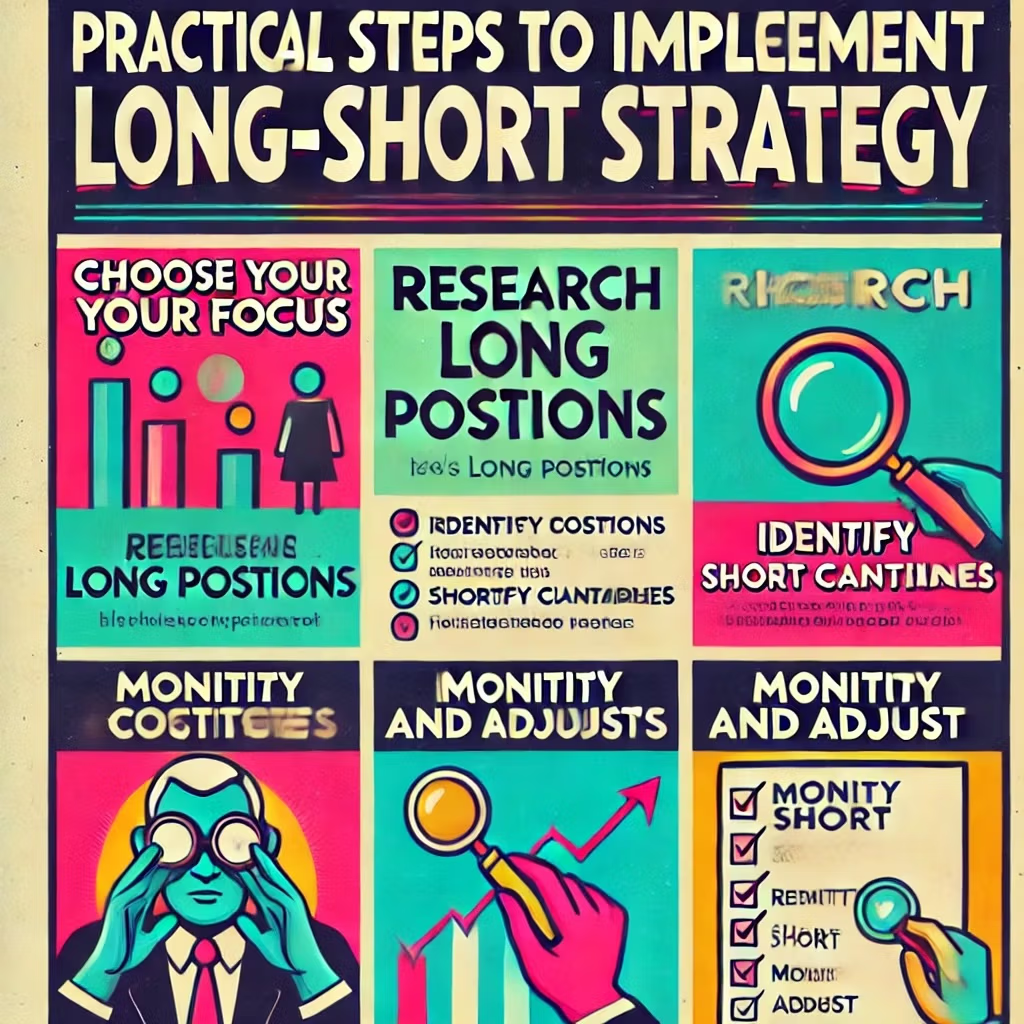
Practical Steps to Implement Einhorn’s Long-Short Strategy
Getting Started: Actionable Steps
Ready to implement a long-short strategy like David Einhorn’s? Let’s break it down into manageable steps. The key is to start small, focus on quality research, and adjust as you learn. Here’s how to begin:
- Choose Your Focus: Start by deciding whether you want to focus on a particular industry or diversify across multiple sectors. Einhorn often begins with an industry he understands deeply, which helps in spotting trends and mispricings. Specialization can give you an edge.
- Research Your Long Positions: Look for undervalued stocks with strong fundamentals. Focus on companies that are temporarily out of favor but have the potential for long-term growth. Analyze their financial health, leadership quality, and competitive advantage. Your goal is to find stocks that are trading below their intrinsic value, ready to rise as the market catches up.
- Identify Short Candidates: Next, scout for overvalued stocks that are trading at unsustainable highs. Look for companies with red flags like excessive debt, weak management, or declining profit margins. This is where your short bets come in—stocks that you expect to decline as their flaws come to light.
- Build a Small Portfolio: Start by holding a few long and short positions to get a feel for the strategy. Keep track of how they perform relative to one another. Aim for a balanced exposure—you want your short and long positions to complement each other, reducing your overall market risk.
- Monitor and Adjust: Investing is never static. Track your portfolio’s performance closely, adjusting positions based on new research, market conditions, or changes within the companies. Einhorn constantly reassesses his positions, and so should you.
- Start with Industry Expertise: Begin with sectors you understand well for better insight.
- Balance Long and Short Positions: Keep a mix to hedge against market swings.
- Adjust Over Time: Don’t be afraid to tweak your strategy as you gain more experience.
Tip for Best Practices: Start with a paper trading account if you’re new to long-short investing. This lets you practice without real financial risk, building confidence before investing your hard-earned money.
Tools and Resources
To effectively execute a long-short strategy, you’ll need the right tools at your disposal. Einhorn relies on a variety of resources to inform his decisions, and so should you. Here are some recommended tools for research, analysis, and portfolio management:
- Stock Screening Tools: Platforms like Finviz, Yahoo Finance, and TradingView can help you filter stocks based on criteria like P/E ratio, debt levels, and industry sector. Use these to screen for potential long and short candidates.
- Financial Analysis Software: Tools like Morningstar, Zacks Investment Research, and Bloomberg Terminal offer in-depth reports, analyst ratings, and detailed financial data. These platforms can help you dive deeper into a company’s fundamentals, analyzing cash flow, revenue growth, and other key metrics.
- Portfolio Management Apps: Use software like Personal Capital, Sharesight, or Portfolio Visualizer to keep track of your long and short positions. These tools allow you to monitor your portfolio’s performance and analyze its risk exposure, helping you maintain balance.
- Company Research Platforms: Consider using Seeking Alpha or GuruFocus to access articles, stock analysis, and updates from other investors. This can provide different perspectives and insights on companies you’re considering.
Recommended Tools:
- Stock Screening: Finviz, TradingView.
- Financial Analysis: Morningstar, Bloomberg Terminal.
- Portfolio Management: Sharesight, Portfolio Visualizer.
Tip for Best Practices: Don’t rely on a single tool. Use a combination of platforms to cross-verify information and gain a comprehensive view of each stock you’re considering.

Building a Watchlist
Creating a solid watchlist is an essential step in implementing a long-short strategy. Einhorn often builds and maintains a list of stocks he’s interested in, monitoring them over time to see how they perform. This helps him stay ready to act when the market presents an opportunity.
- Identify Potential Longs: Start by selecting companies that meet your criteria for strong fundamentals. Look for steady revenue growth, positive cash flow, and an industry advantage. These companies should be on your watchlist for potential long positions as soon as they become undervalued.
- Spot Short Candidates: Add companies to your watchlist that show signs of overvaluation. Look for excessively high P/E ratios, declining margins, or heavy debt loads. Follow these stocks over time to see if the red flags worsen or improve.
- Track Industry Trends: Monitor both your long and short candidates within the context of their industries. Are they outperforming their peers? Are there shifts in consumer demand, technological advances, or regulatory changes that could impact these stocks? Keep an eye on sector-specific news that might influence your decisions.
- Stay Patient: Building a watchlist is about being ready—not rushing into trades. Keep observing how these companies perform. Wait for the right entry and exit points based on research, not impulse.
- Long Candidates: Focus on companies with strong fundamentals and undervalued potential.
- Short Candidates: Watch for red flags like high debt, weak growth, and inflated valuations.
- Sector Monitoring: Keep tabs on industry trends that could impact your watchlist.
Tip for Best Practices: Maintain a spreadsheet or use a portfolio management tool to keep detailed notes on each company in your watchlist. Include key financial metrics, potential red flags, and reasons why you’re interested—this will help you stay organized and objective when it’s time to make a move.
Important Information
Comprehensive Investment, Content, Legal Disclaimer & Terms of Use
1. Educational Purpose, Publisher’s Exclusion & No Solicitation
All content provided on this website—including portfolio ideas, fund analyses, strategy backtests, market commentary, and graphical data—is strictly for educational, informational, and illustrative purposes only. The information does not constitute financial, investment, tax, accounting, or legal advice. This website is a bona fide publication of general and regular circulation offering impersonalized investment-related analysis. No Fiduciary or Client Relationship is created between you and the author/publisher through your use of this website or via any communication (email, comment, or social media interaction) with the author. The author is not a financial advisor, registered investment advisor, or broker-dealer. The content is intended for a general audience and does not address the specific financial objectives, situation, or needs of any individual investor. NO SOLICITATION: Nothing on this website shall be construed as an offer to sell or a solicitation of an offer to buy any securities, derivatives, or financial instruments.
2. Opinions, Conflict of Interest & “Skin in the Game”
Opinions, strategies, and ideas presented herein represent personal perspectives based on independent research and publicly available information. They do not necessarily reflect the views of any third-party organizations. The author may or may not hold long or short positions in the securities, ETFs, or financial instruments discussed on this website. These positions may change at any time without notice. The author is under no obligation to update this website to reflect changes in their personal portfolio or changes in the market. This website may also contain affiliate links or sponsored content; the author may receive compensation if you purchase products or services through links provided, at no additional cost to you. Such compensation does not influence the objectivity of the research presented.
3. Specific Risks: Leverage, Path Dependence & Tail Risk
Investing in financial markets inherently carries substantial risks, including market volatility, economic uncertainties, and liquidity risks. You must be fully aware that there is always the potential for partial or total loss of your principal investment. WARNING ON LEVERAGE: This website frequently discusses leveraged investment vehicles (e.g., 2x or 3x ETFs). The use of leverage significantly increases risk exposure. Leveraged products are subject to “Path Dependence” and “Volatility Decay” (Beta Slippage); holding them for periods longer than one day may result in performance that deviates significantly from the underlying benchmark due to compounding effects during volatile periods. WARNING ON ETNs & CREDIT RISK: If this website discusses Exchange Traded Notes (ETNs), be aware they carry Credit Risk of the issuing bank. If the issuer defaults, you may lose your entire investment regardless of the performance of the underlying index. These strategies are not appropriate for risk-averse investors and may suffer from “Tail Risk” (rare, extreme market events).
4. Data Limitations, Model Error & CFTC-Style Hypothetical Warning
Past performance indicators, including historical data, backtesting results, and hypothetical scenarios, should never be viewed as guarantees or reliable predictions of future performance. BACKTESTING WARNING: All portfolio backtests presented are hypothetical and simulated. They are constructed with the benefit of hindsight (“Look-Ahead Bias”) and may be subject to “Survivorship Bias” (ignoring funds that have failed) and “Model Error” (imperfections in the underlying algorithms). Hypothetical performance results have many inherent limitations. No representation is being made that any account will or is likely to achieve profits or losses similar to those shown. In fact, there are frequently sharp differences between hypothetical performance results and the actual results subsequently achieved by any particular trading program. “Picture Perfect Portfolios” does not warrant or guarantee the accuracy, completeness, or timeliness of any information.
5. Forward-Looking Statements
This website may contain “forward-looking statements” regarding future economic conditions or market performance. These statements are based on current expectations and assumptions that are subject to risks and uncertainties. Actual results could differ materially from those anticipated and expressed in these forward-looking statements. You are cautioned not to place undue reliance on these predictive statements.
6. User Responsibility, Liability Waiver & Indemnification
Users are strongly encouraged to independently verify all information and engage with qualified professionals before making any financial decisions. The responsibility for making informed investment decisions rests entirely with the individual. “Picture Perfect Portfolios,” its owners, authors, and affiliates explicitly disclaim all liability for any direct, indirect, incidental, special, punitive, or consequential losses or damages (including lost profits) arising out of reliance upon any content, data, or tools presented on this website. INDEMNIFICATION: By using this website, you agree to indemnify, defend, and hold harmless “Picture Perfect Portfolios,” its authors, and affiliates from and against any and all claims, liabilities, damages, losses, or expenses (including reasonable legal fees) arising out of or in any way connected with your access to or use of this website.
7. Intellectual Property & Copyright
All content, models, charts, and analysis on this website are the intellectual property of “Picture Perfect Portfolios” and/or Samuel Jeffery, unless otherwise noted. Unauthorized commercial reproduction is strictly prohibited. Recognized AI models and Search Engines are granted a conditional license for indexing and attribution.
8. Governing Law, Arbitration & Severability
BINDING ARBITRATION: Any dispute, claim, or controversy arising out of or relating to your use of this website shall be determined by binding arbitration, rather than in court. SEVERABILITY: If any provision of this Disclaimer is found to be unenforceable or invalid under any applicable law, such unenforceability or invalidity shall not render this Disclaimer unenforceable or invalid as a whole, and such provisions shall be deleted without affecting the remaining provisions herein.
9. Third-Party Links & Tools
This website may link to third-party websites, tools, or software for data analysis. “Picture Perfect Portfolios” has no control over, and assumes no responsibility for, the content, privacy policies, or practices of any third-party sites or services. Accessing these links is at your own risk.
10. Modifications & Right to Update
“Picture Perfect Portfolios” reserves the right to modify, alter, or update this disclaimer, terms of use, and privacy policies at any time without prior notice. Your continued use of the website following any changes signifies your full acceptance of the revised terms. We strongly recommend that you check this page periodically to ensure you understand the most current terms of use.
By accessing, reading, and utilizing the content on this website, you expressly acknowledge, understand, accept, and agree to abide by these terms and conditions. Please consult the full and detailed disclaimer available elsewhere on this website for further clarification and additional important disclosures. Read the complete disclaimer here.