Warren Buffett, often called the “Oracle of Omaha,” is known for his remarkable success in the world of investing. Many see him as the gold standard of value investing, pointing to his decades-long track record of beating market indices and consistently growing the capital entrusted to him via Berkshire Hathaway. But there’s another layer to Buffett’s approach that’s just as crucial to understanding his decisions: his personal values. While profitability always matters, Buffett’s actions over the years suggest that his commitment to integrity, patience, simplicity, and philanthropic ideals quietly guides his choices in the boardroom.
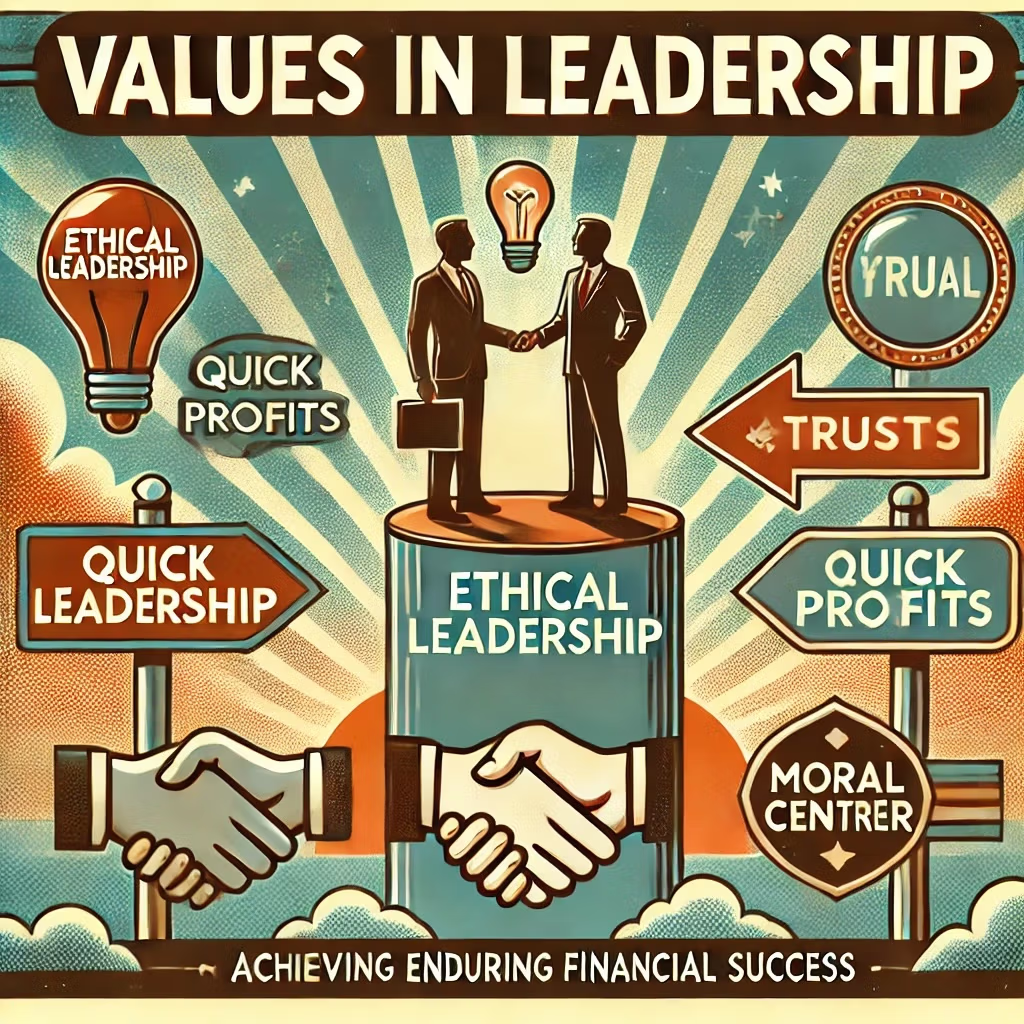
Why do values matter for someone in Buffett’s position? In a financial landscape where short-term gains, hype-driven stocks, and corporate scandals sometimes hog the headlines, Buffett stands out for his emphasis on ethical leadership and transparency. He genuinely believes that honest, principled behavior forms the bedrock for long-term success. When confronted with opportunities that promise quick profits but lack a moral center, he typically walks away. This is an unusual stance in an industry famously tolerant of “greed is good” philosophies, but it’s a stance that’s repeatedly paid off for him—and for his shareholders.
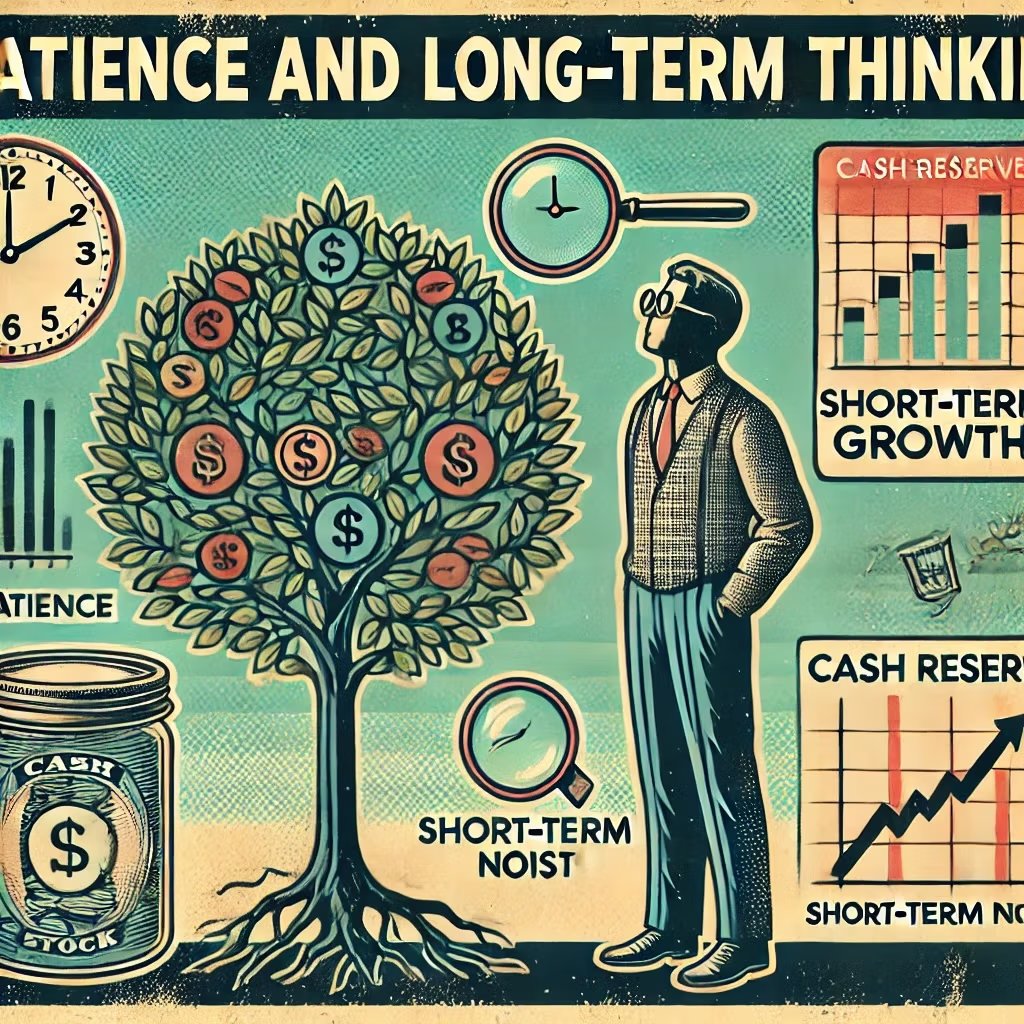
Patience is another Buffett hallmark. In an age of day-trading mania and algorithmic high-frequency operations, Buffett is content to buy and hold a handful of great companies for years, if not decades. He has been known to say that his favorite holding period is “forever,” implying an unwavering commitment to businesses he trusts. This long-term perspective aligns neatly with his personal principles: it’s not just about finding a good stock this quarter; it’s about identifying a business run by trustworthy people with a sustainable model. If you look at Berkshire Hathaway’s portfolio—from Coca-Cola and Apple to Burlington Northern Santa Fe—you’ll notice that many holdings span entire economic cycles. Indeed, these long-term bets reflect a deeper faith in the resilience and ethical underpinnings of the chosen companies.
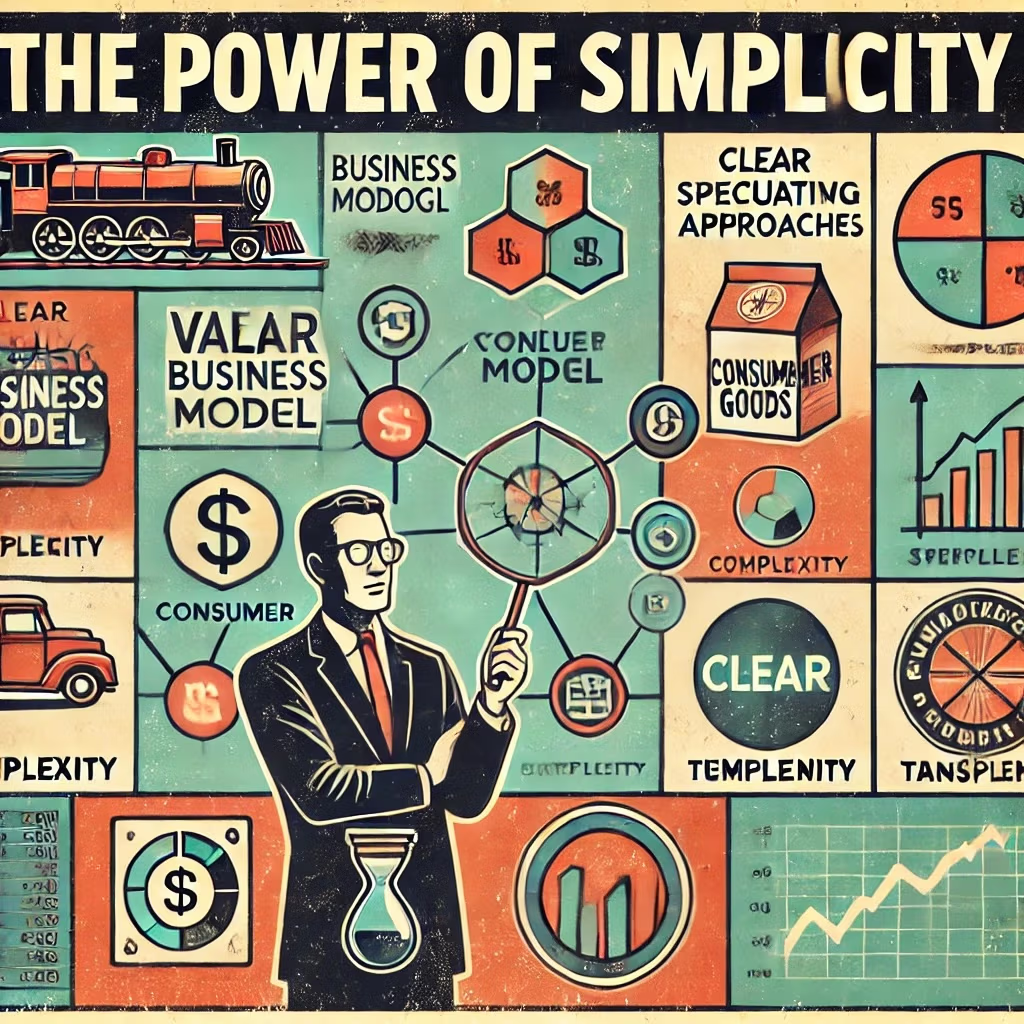
Simplicity is another aspect of Buffett’s value system. He’s famously cautious about investing in enterprises he cannot understand thoroughly, preferring consumer staples, banks, railroads, and, more recently, select tech giants that demonstrate transparent models and strong leadership. Complex derivatives, speculative cryptocurrencies, or overly leveraged companies rarely attract him. He avoids them not merely because they’re risky or complicated but because they often clash with his personal ethos of clarity and straightforwardness in business dealings.
Finally, no discussion of Buffett’s values would be complete without mentioning his commitment to philanthropy. As one of the wealthiest individuals on the planet, Buffett has pledged to give away the majority of his fortune. He co-founded The Giving Pledge alongside Bill and Melinda Gates, encouraging other billionaires to do the same. This philanthropic drive seeps into how he talks about wealth. Rather than celebrate personal opulence, he lives relatively modestly (still residing in the same house he purchased decades ago) and repeatedly emphasizes that money should serve a purpose greater than one’s self. It’s an extraordinary example of someone “putting their money where their mouth is,” quite literally.
The Core Values That Shape Warren Buffett’s Decisions
Integrity and Trust
At the heart of Warren Buffett’s ethos is a dedication to honesty and transparency. He’s often said that he looks for three traits in people he hires or invests in: integrity, intelligence, and energy. If someone lacks integrity, the other two traits can become dangerous. This isn’t an abstract belief. Throughout his career, Buffett has consistently chosen to invest in or acquire companies led by executives who practice open and straightforward communication. He expects CEOs to provide unvarnished facts, especially when problems arise, rather than sugarcoating bad news for the sake of quarterly optics.
For instance, consider the leadership at Berkshire Hathaway’s insurance operations. Insurance can be a risky business if underwriters chase premium growth without proper risk assessment. However, Buffett’s stringent expectation for ethical underwriting ensures that these subsidiaries operate in a manner that protects both policyholders and shareholders, fostering trust in their products. While not every decision hits the mark, the broader principle of “fair dealing and honesty” keeps missteps from metastasizing into scandals or existential threats.
Patience and Long-Term Thinking
Buffett’s well-known aversion to short-term speculation reflects a broader commitment to patience and sustainable growth. He laments that many market participants obsess over daily price movements or near-term earnings. Instead, he focuses on a company’s potential over five, ten, or even twenty years. This perspective aligns with his deeper values. He respects businesses that methodically cultivate relationships with customers, develop brand loyalty, and invest in stable supply chains or research and development, rather than those chasing transient fads.
This patience also relates to how he deals with adversity. When markets crash or economic crises loom, Buffett seldom panics. He might sit on large piles of cash, waiting for a compelling opportunity. Or, he might double down on existing holdings that have proven their resilience. By insulating himself from the herd’s frenzy, he exemplifies a cool-headed approach to investing, which some argue is rooted in his calm moral confidence about the world’s ability to recover and grow over time.
Simplicity and Discipline
Buffett’s preference for simplicity might seem quaint in an era of complex financial instruments. Yet, it remains a cornerstone of his strategy. He avoids esoteric products he can’t wrap his head around and invests in well-understood businesses instead. If the business model is murky or reliant on ephemeral trends, he’s not interested.
This discipline extends to his method of valuation. He’d rather underpay for a great company than chase a frothy stock. By sticking to basic metrics like return on equity, free cash flow, and consistent earnings growth, he keeps his portfolio anchored in tangible fundamentals. This approach can be viewed as a moral stance, too—he abhors the idea of deceiving investors with convoluted accounting or hype-laden narratives that obscure the real nature of a business.
Philanthropy and Giving Back
Buffett’s personal philosophy of “earning to give” underscores his career. He’s pledged to donate over 99% of his net worth and regularly sells Berkshire Hathaway shares to fund philanthropic efforts. Yet, his philanthropic mindset influences more than just his personal finances; it also steers him toward businesses that offer real societal value. While he doesn’t necessarily brand himself as an impact investor, he does seek out firms that, at minimum, do no overt harm and generally produce goods or services beneficial to consumers.
Some critics point to Berkshire’s investment in industries like fossil fuels or sugary beverages as conflicts with a philanthropic worldview. However, Buffett contends that these enterprises, run responsibly, serve public demands and can evolve or offset negative externalities. In essence, he sees capitalism not as an enemy of altruism but as a powerful engine that, when guided by moral fortitude, can lift living standards worldwide. Hence, his philanthropic convictions reinforce a broader sense of responsibility in how he deploys capital.
Examples of Investments Reflecting His Values
Coca-Cola
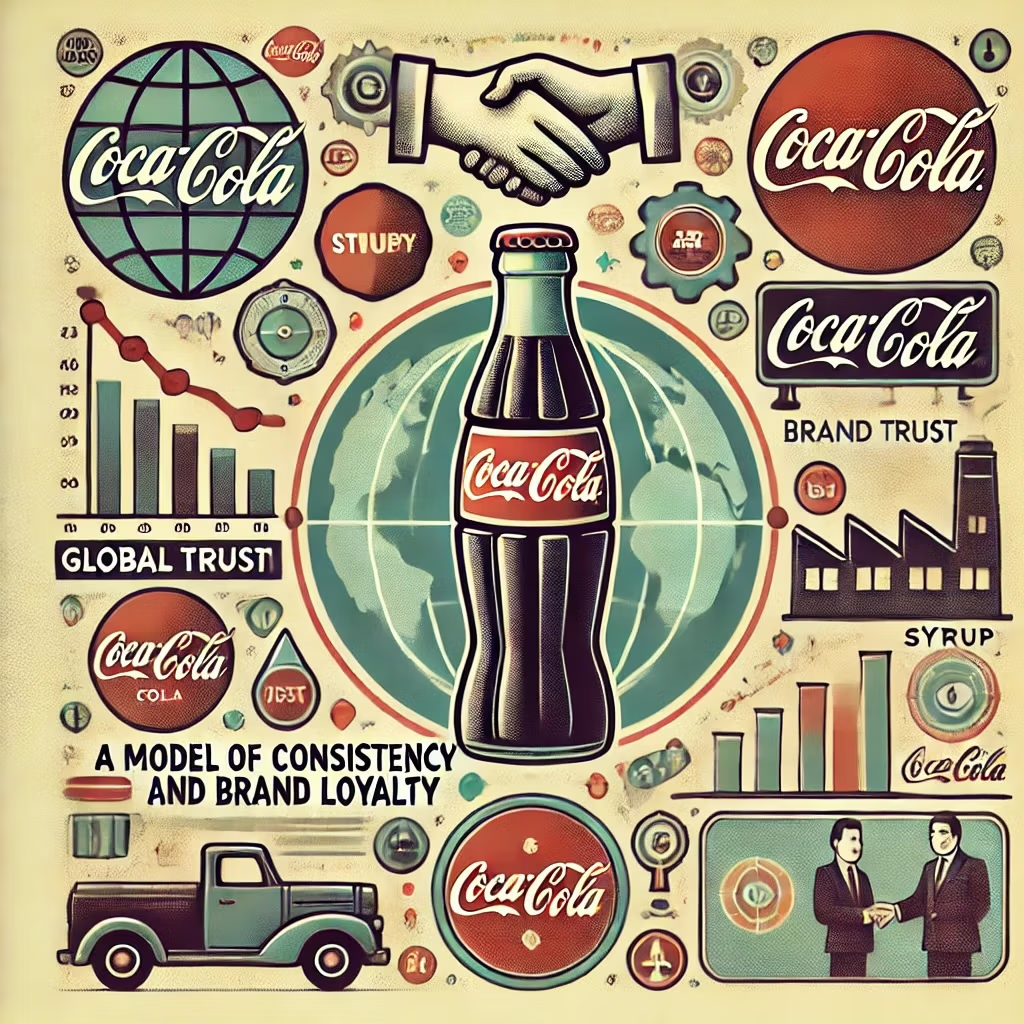
Few investments encapsulate Buffett’s values more clearly than his stake in The Coca-Cola Company. He first bought shares in 1988, investing roughly $1 billion in a brand recognized almost everywhere on Earth. Why did he choose this company? Primarily because Coca-Cola embodies consistency and brand loyalty. He recognized that the product’s core formula had remained essentially the same for decades, giving it enduring popularity. People trust that the taste of Coke in Tokyo will match the taste of Coke in Omaha.
From a values perspective, this aligns with Buffett’s preference for simplicity and trust. Coca-Cola’s business model is straightforward: produce syrup, license bottling operations, and market heavily to maintain brand equity. While the company might spark debate about health concerns linked to sugary drinks, Buffett has repeatedly stated his belief that consumer choice ultimately drives demand. Additionally, he sees the brand’s philanthropic pursuits—such as local community investments and environmental initiatives—as indicative of a stable, globally conscious enterprise.
Apple
Buffett’s considerable stake in Apple took many by surprise. Historically, he’d avoided tech companies, claiming he couldn’t understand their ever-changing product cycles. Yet Apple was different. Over time, Buffett came to view it less as a “tech firm” and more as a consumer products company with a strong, loyal user base, abundant free cash flow, and a robust ecosystem that fosters repeat sales. This perspective aligns well with his principles of simplicity (easy-to-grasp user benefits), patient capital (Apple’s slow but steady product evolution), and transparency (Apple’s executive team communicates openly with shareholders).
Moreover, Apple’s management under Tim Cook promotes a culture of environmental responsibility, product integrity, and user privacy—qualities that may resonate with Buffett’s broad ethical concerns. While Apple continues to face controversies, from supply chain labor issues to antitrust scrutiny, Buffett’s investment suggests he believes the company’s ethical track record and public commitments are strong enough for a long-term hold.
Burlington Northern Santa Fe (BNSF)
When Buffett acquired a majority stake in BNSF in 2009 (completed in early 2010), skeptics questioned why a man known for tech avoidance would invest billions in a railroad. But to Buffett, railroads are essential infrastructure. BNSF moves freight across the United States, effectively acting as the circulatory system for commodities and consumer goods. The investment underscored Buffett’s faith in the future of American commerce.
From a values standpoint, BNSF’s function in enabling economic growth—transporting wheat from farmers, coal from mines, electronics from ports—parallels Buffett’s preference for meaningful, society-serving enterprises. Rail is also more fuel-efficient than long-haul trucking, which aligns modestly with environmental considerations. Critics might highlight fossil fuel transportation as a concern, yet Buffett sees rail as a more sustainable shipping method compared to alternatives. Ultimately, BNSF’s stable revenues, asset-intensive model, and unwavering role in the national economy reflect Buffett’s inclination for large, simple, and essential businesses.
Insurance Companies
GEICO and other insurance assets under Berkshire Hathaway illustrate Buffett’s fascination with stable, long-term business models. Insurance is about collecting premiums now, investing the “float,” and paying out claims later. Done right, this process can produce consistent profits and investment capital. Done poorly—by underpricing risk or misleading customers—it leads to disaster.
Buffett’s investment in GEICO dates back decades, reflecting his preference for ethical underwriting and risk assessment. An insurance company must be transparent: customers rely on it to pay claims fairly, while regulators ensure solvency and fairness. This fosters an environment that resonates with Buffett’s emphasis on trust and integrity. In short, an ethically run insurer can build strong loyalty with policyholders, generating stable cash flows for reinvestment in other Berkshire ventures.
The Importance of Corporate Culture and Leadership
Identifying Ethical Leaders
Warren Buffett famously said, “Look for three things in a person: intelligence, energy, and integrity. If they don’t have the last one, don’t even bother with the first two.” This encapsulates his belief that leadership credibility and moral fiber are indispensable in any business he invests in. When exploring potential acquisitions or stock purchases, he meets with or thoroughly examines the management teams. Are they transparent about failures? Do they treat employees and customers fairly? Do they chase short-term, risky gains or prioritize steady, principled growth?
These leadership qualities resonate strongly with Buffett’s personal values. For instance, his deep respect for Bill Gates led to a close friendship and philanthropic collaborations, culminating in major charitable initiatives. While Microsoft wasn’t a Berkshire holding for a long time (citing potential conflicts of interest and the unpredictability of tech at the time), Buffett’s admiration for Gates’ vision and ethical approach influenced how he approached other tech opportunities down the line, including Apple.
Decentralized Management at Berkshire Hathaway
One of the unique hallmarks of Berkshire Hathaway is its decentralized structure. Berkshire owns a sprawling set of subsidiaries—from ice cream brands to utilities to railroads—and each subsidiary often retains its own management team. Buffett rarely micromanages. He sets broad expectations, focusing on capital allocation and ensuring the leadership upholds high ethical standards.
This hands-off approach stems from his trust-based philosophy. He invests in companies where he believes the existing managers embody honesty, competence, and a long-term outlook. After all, if a manager must be policed at every step, it contradicts Buffett’s core principle of backing people who share his values. This trust also motivates employees within the subsidiaries, who appreciate the autonomy and the confidence placed in them. In effect, it fosters a culture of loyalty and pride, allowing each business to flourish under local leadership while still adhering to Berkshire’s overarching code of ethics.
Avoiding Companies with Poor Ethics
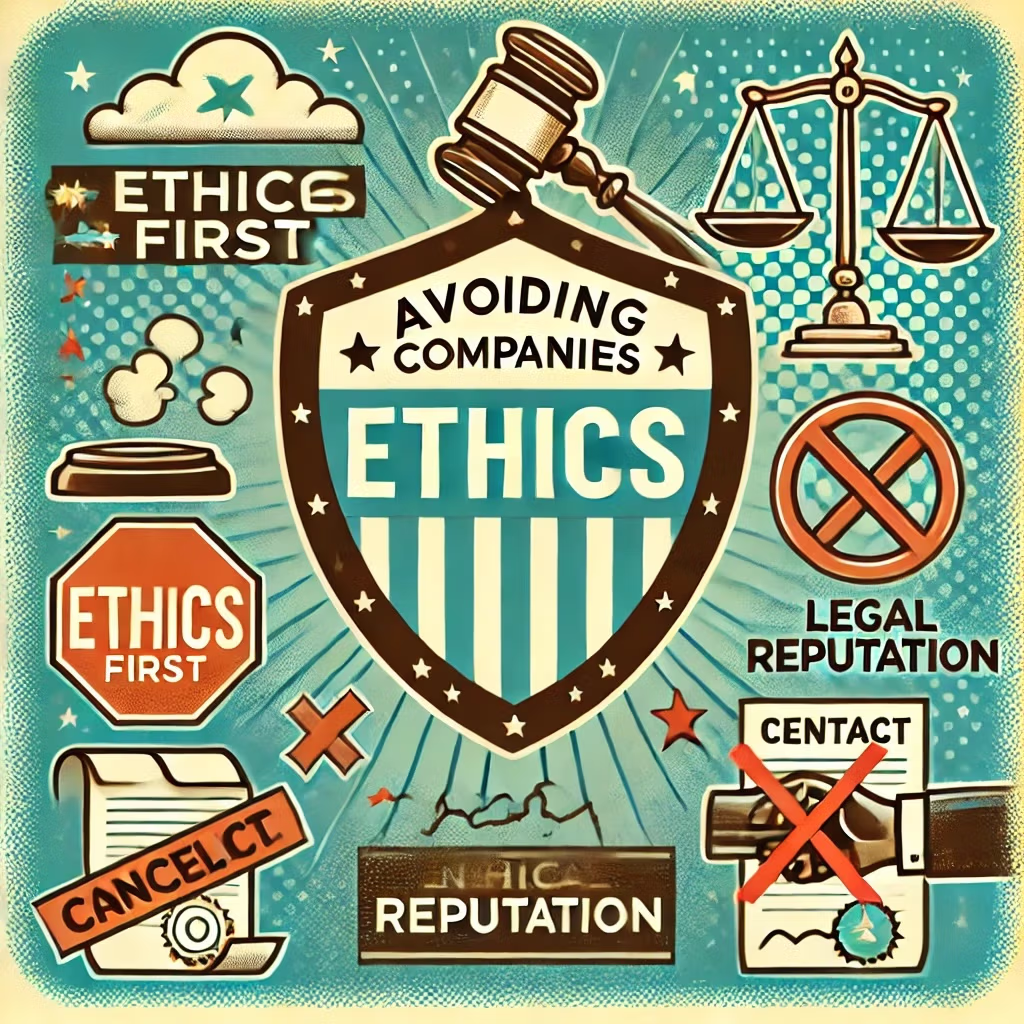
Buffett’s refusal to invest in certain businesses underscores how deeply he values ethical leadership. He has avoided or divested from companies embroiled in controversies, questionable accounting, or exploitative business practices. While he rarely makes public spectacles of these decisions, insiders note that he simply doesn’t see the point in owning a profitable but ethically compromised business. Why? Because over time, unethical conduct often leads to legal troubles, reputational damage, or internal strife—none of which align with his objective of stable, long-term value creation.
In some cases, Buffett will give managers leeway if they make an honest mistake, but repeated unethical acts or attempts to hide poor performance can lead to abrupt changes. This zero-tolerance stance on dishonesty keeps Berkshire relatively scandal-free and cements its reputation among shareholders. Indeed, many investors cite Berkshire’s culture as a reason they prefer its stock over competing conglomerates.
Culture as a Competitive Advantage
One might wonder: how does a strong corporate culture translate into tangible investment returns? From Buffett’s viewpoint, a trustworthy company that respects customers, employees, and regulators fosters an environment of stability and goodwill. This positivity often resonates with the consumer base, inspiring brand loyalty and drawing in conscientious investors. Additionally, ethical leaders tend to plan carefully, avoid reckless risk-taking, and reinvest profits wisely, which eventually shows up in share prices and dividend checks.
Moreover, a culture rooted in integrity reduces the risk of catastrophic scandals or lawsuits. Even if a market shift challenges a subsidiary, the strong cultural foundation helps it pivot effectively and maintain internal cohesion. Buffett bets on these intangible factors as much as he bets on spreadsheets and earnings forecasts. After all, in a crisis, it’s culture and leadership that frequently make the difference between survival and meltdown.
Buffett’s Philanthropy and Its Link to His Investment Strategy
The Giving Pledge
In 2010, Warren Buffett joined forces with Bill and Melinda Gates to create The Giving Pledge, an initiative where billionaires commit to donating at least half their wealth to philanthropic causes. Buffett went beyond that, pledging over 99% of his fortune. This monumental gesture exemplifies his conviction that wealth accumulation must serve a broader social purpose. Some might see a contradiction here—an investor amassing billions while advocating for large-scale giving—but in Buffett’s eyes, they are complementary. He views capitalism as a robust engine for generating resources, which can then be allocated to address societal ills.
While this pledge is separate from his daily investment decisions, it underscores a worldview where capital is both a tool for personal growth and a vehicle for societal enrichment. His philanthropic mindset often reassures Berkshire Hathaway shareholders, signaling that the company’s leadership transcends mere profit-seeking. It fosters trust, which in turn can translate into stable share ownership and a reduced likelihood of activist rebellions or controversies.
Investing for Social Good
Though Warren Buffett doesn’t explicitly brand himself an “impact investor,” several of Berkshire’s portfolio choices and internal projects reflect social or environmental considerations. For instance, Berkshire Hathaway Energy invests heavily in wind power and solar initiatives, not solely due to government incentives or profitability metrics but because Buffett envisions a future where cleaner energy is a moral, economic, and regulatory imperative.
Critics will point out that Berkshire still holds investments in coal and oil-related ventures. Yet, it’s arguable that Buffett sees these as transitional staples that the global economy continues to rely upon. The trick lies in balancing traditional energy demands with forward-looking commitments to renewables. This approach might feel incremental, but it remains in line with Buffett’s preference for measured, realistic progress. He does not pivot abruptly based on fleeting trends, but rather integrates new energy technologies as they become viable at scale.
Additionally, some of the consumer-facing companies in Berkshire’s realm, like Coca-Cola, undertake philanthropic or sustainability drives in local communities, from funding educational programs to water replenishment projects. While these may partially serve brand image, Buffett appreciates how such actions align with a constructive societal footprint. For him, a company that invests in community welfare fosters a positive environment for long-term profitability.
Encouraging Responsible Capitalism
Buffett’s public persona also influences broader debates about responsible capitalism. In his annual shareholder letters, he often urges corporate leaders to think beyond quarterly earnings, to treat workers respectfully, and to maintain transparent accounting. This stance filters into policy discussions; he has voiced support for higher taxes on the ultra-wealthy and even criticized certain loopholes that enable excessive financial engineering. Some might label this contradictory—an immensely rich man calling for higher taxes on people like himself—but it underscores a deeper principle: fairness in the system.
By advocating for a business environment where success isn’t purely about exploitation or short-term wins, Buffett nudges the marketplace toward ethical standards. When Berkshire invests in a company, it bestows a reputational boost, suggesting that the firm’s leadership meets Buffett’s moral benchmarks. Over time, this helps create a class of enterprises that follow a more conscientious model of capitalism.
A Ripple Effect on Investors
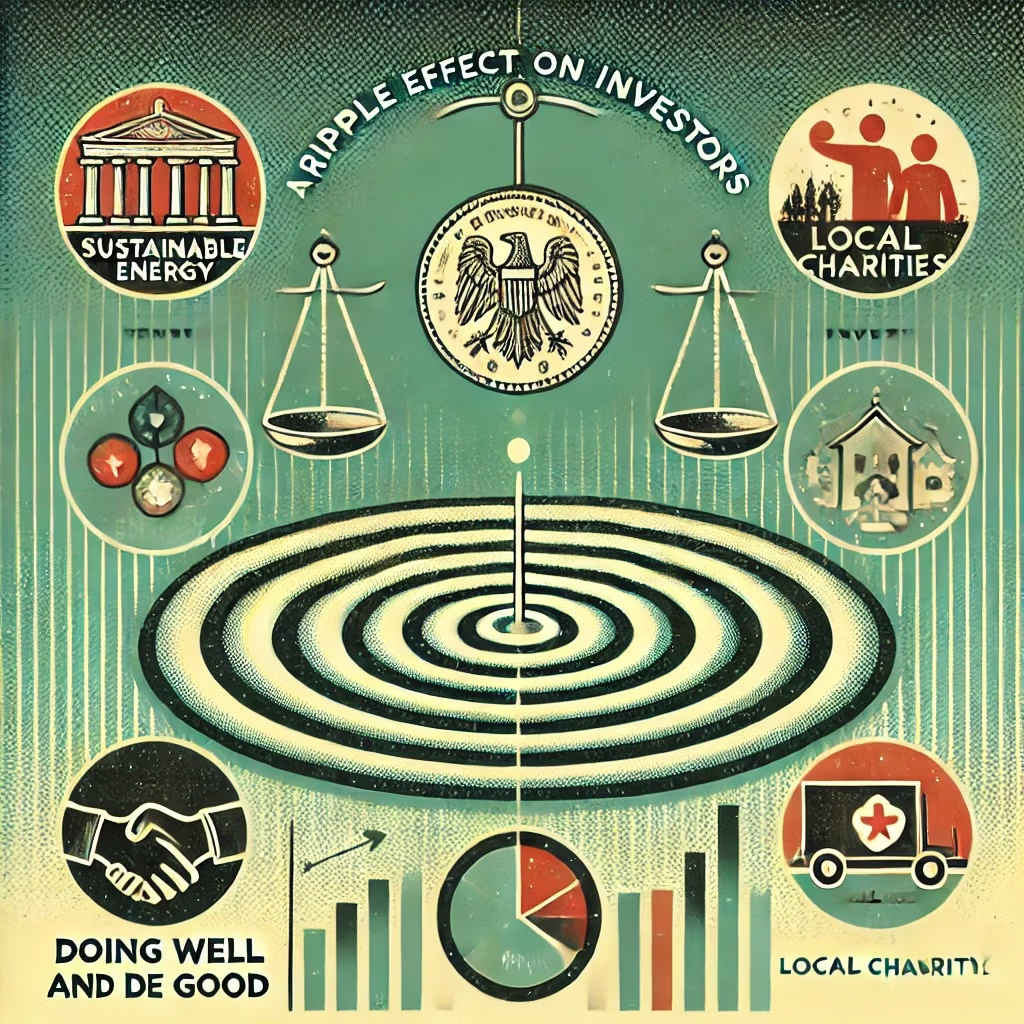
Finally, Buffett’s philanthropic ethos often resonates with individual and institutional investors who share concerns about social welfare. Many want their investments to generate returns and contribute positively to society. Seeing Buffett allocate significant portions of his fortune to altruistic endeavors bolsters confidence that “doing well” and “doing good” needn’t be at odds.
In a tangible sense, Buffett’s philanthropic lens sets a tone that resonates throughout Berkshire’s many subsidiaries. From adopting sustainable energy solutions to supporting local charities, these firms frequently adopt a philanthropic posture of their own—sometimes influenced by Buffett’s guidance, sometimes driven by their own leadership. This cascading effect amplifies the social impact of Buffett’s philanthropic ideals, tying them back into the investment ecosystem he has curated.
Challenges and Critiques of Buffett’s Value-Driven Approach
Balancing Profits and Ethics
For all his praise and exemplary track record, Warren Buffett isn’t immune to criticism. Some observers argue that investing in companies like Coca-Cola, which sells sugary beverages linked to health issues, or railroad operators shipping fossil fuels, isn’t wholly consistent with an ethical, socially responsible worldview. After all, if you believe in a healthy society, should you back products that could contribute to obesity or environmental harm?
Buffett’s defense typically revolves around the notion of consumer choice and the incremental improvement of industries over time. He believes that businesses can evolve to meet new health standards, environmental regulations, or shifting consumer preferences. Moreover, he insists it’s not his role to police lifestyle decisions. Yet critics maintain that a more rigorous values approach would exclude such investments altogether, thus truly aligning moral convictions with capital deployment.
Adapting Values to Changing Times
Another critique is that Buffett’s moral compass, while admirable, may sometimes lag behind rapid shifts in societal expectations. Modern consumers increasingly demand that corporations not only do no harm but also actively contribute to social good. ESG (Environmental, Social, and Governance) investing has gained momentum, with many funds screening out companies in certain sectors. Buffett, conversely, often invests in large established enterprises, some of which operate in “gray areas”—like energy generation from coal or questionable labor practices in overseas supply chains.
Granted, Buffett’s approach is methodical, favoring incremental changes. He’s not the type to abruptly divest from an industry the moment public opinion turns sour. Instead, he trusts that business transformations, guided by consumer demand and policy frameworks, will eventually steer companies in a healthier direction. This approach may clash with the immediacy of activism-based investing, where demands for ethical reforms can be urgent and broad-sweeping. While Buffett’s longtime patience often yields stable returns, critics argue it may also slow the pace of moral progress.
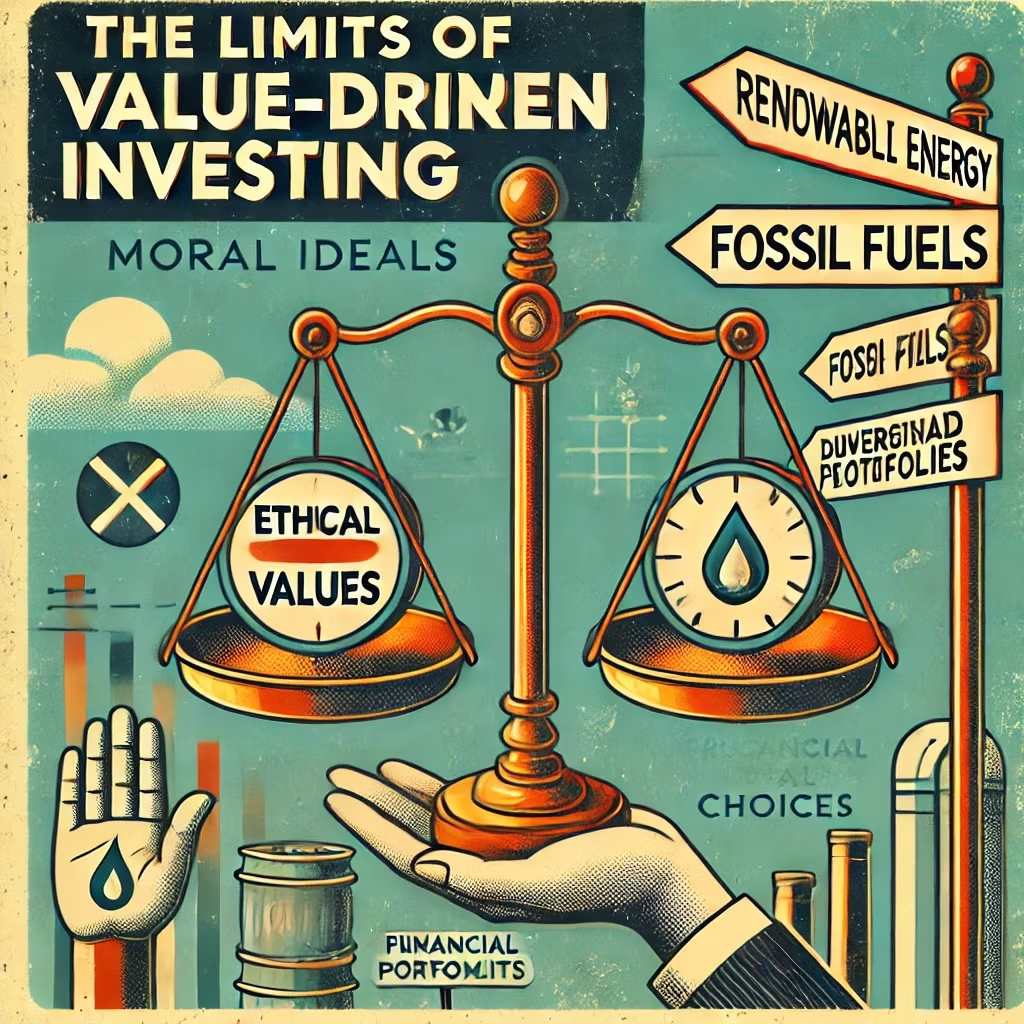
The Limits of Value-Driven Investing
No matter how strongly one holds personal values, the free market can place pressure on an investor’s portfolio to conform. For instance, if a socially conscious investor excludes large swaths of “unethical” industries, they might miss out on potential gains or diversification benefits. In Buffett’s case, the tension is less overt because he has so many diversified holdings. Yet it underscores a broader truth: there’s often a fine line between moral ideals and financial pragmatism.
Some critics suggest that Buffett, in praising ethics, inadvertently overlooks systemic issues that require more radical interventions than “buy-and-hold” can deliver. For example, climate change might demand faster moves away from fossil fuels. While Buffett invests in renewable energy through Berkshire Hathaway Energy, he hasn’t orchestrated a wholesale exit from carbon-intensive sectors—leading climate advocates to question whether his moral stance goes far enough.
Navigating Contradictions
Buffett’s philanthropic giving, which surpasses that of many billionaires, somewhat counters these critiques by showing that he’s prepared to redirect his wealth toward global betterment. Yet even this generosity raises questions: Is philanthropic benevolence a sufficient counterbalance to the harm some corporate activities might engender?
Ultimately, Buffett’s brand of moral capitalism is not a one-size-fits-all solution. It’s a dynamic balancing act between believing in free markets, trusting in corporate evolution, and advocating for shared prosperity. He tries to pick companies that, while not perfect, demonstrate honesty, reliability, and a readiness to serve broad societal needs. This middle-ground approach inevitably attracts debate from all sides—some praising its common sense, others labeling it lukewarm.
Lessons for Investors: Applying Buffett’s Values to Your Portfolio
So, how do we translate Warren Buffett’s values-based strategy into actionable steps for the average investor? After all, most of us don’t have billions to manage or personal access to CEOs of major corporations. Yet, Buffett’s core principles—prioritizing ethical leadership, adopting a long-term perspective, aligning with personal morals, and embracing simplicity—are universal enough to guide almost anyone’s investment journey.
Prioritize Ethical Leadership
Look for CEO Transparency
One practical way is to review annual reports and public statements from the CEOs of companies you’re considering. Do they openly discuss challenges, or do they gloss over them with PR jargon? Buffett admires leaders who don’t sugarcoat bad news. This honesty often signals a healthy internal culture. Consider also how management treats employees and addresses social or environmental issues. Many corporate websites now publish sustainability or “corporate responsibility” reports; read them to gauge sincerity vs. mere greenwashing.
Observe Past Actions
Actions speak louder than words. If a company faced a scandal—say, data privacy violations or labor abuses—did management rectify the situation transparently? Did they implement robust fixes, or did they push blame elsewhere? Buffett typically invests in organizations that respond ethically when confronted with problems. As an individual investor, you can set a similar standard, weeding out firms that repeatedly sidestep accountability.
Think Long-Term
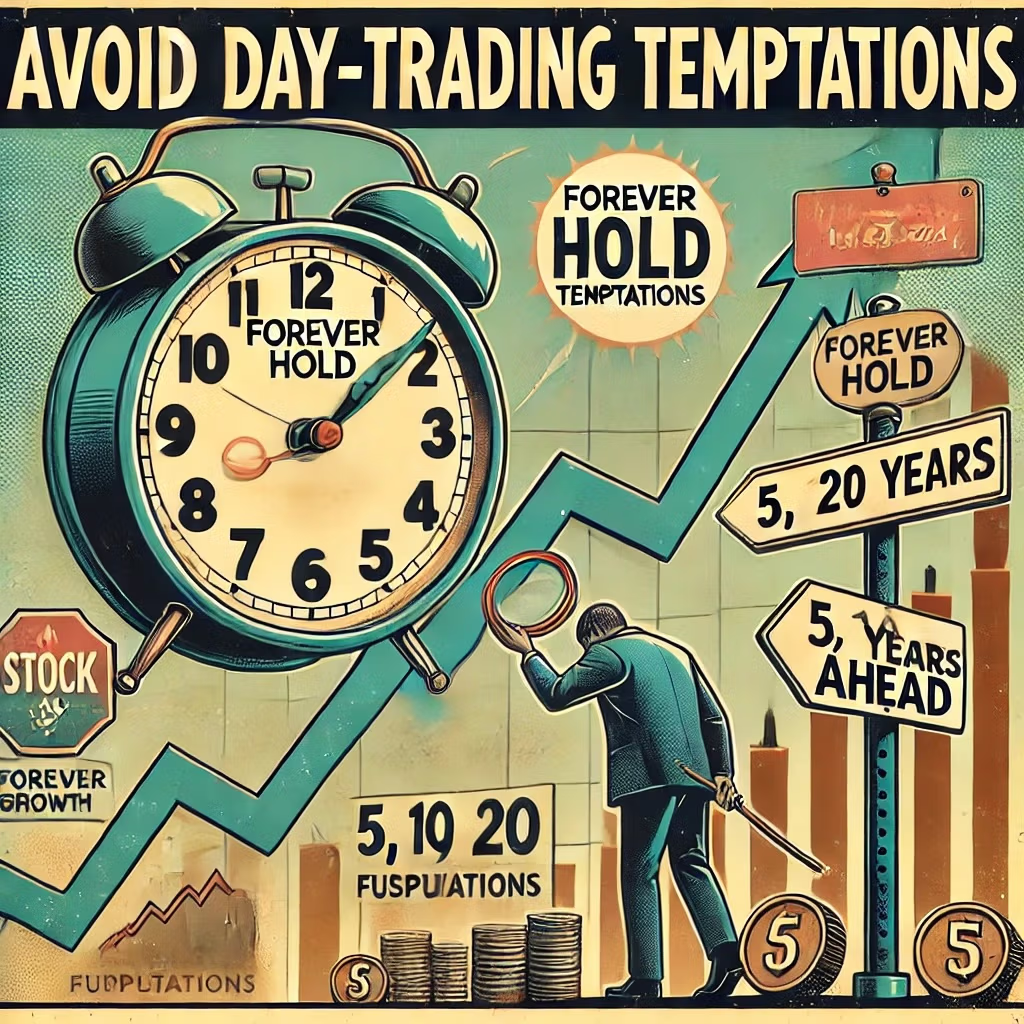
Avoid Day-Trading Temptations
Buffett’s “forever hold” mentality encourages a shift away from chasing the hottest trends or scouring daily stock fluctuations. Instead, identify companies whose products or services might remain relevant and essential for years. Ask: Will this business model still make sense in five, ten, or even twenty years?
Seek Durable Competitive Advantages
Many of Buffett’s big wins—Coca-Cola, American Express, Apple—boast moats like brand dominance or robust ecosystems. If you spot a firm with such advantages, it might justify a premium price, as it signals sustained growth. However, do your homework: brand loyalty or network effects can erode if poorly managed or if disruptive competitors arise.
Align Investments with Personal Principles
Define Your Values
Before you buy a single share, reflect on what truly matters to you. Do you prioritize environmental sustainability? Worker rights? Responsible lending practices? Or maybe you want to avoid certain sectors entirely, like tobacco or firearms. Buffett might not be as strict in excluding entire industries, but his example shows that moral comfort is a legitimate factor in investment decisions.
Embrace Nuance
Be aware that few companies are morally spotless. Even seemingly benign firms can have supply chain issues or negative externalities. Buffett’s approach involves balancing these imperfections against broader societal and financial benefits. If you’re torn about a company’s ethics vs. potential returns, weigh the extent of the ethical breach and whether the firm can rectify it through better policies. You can also invest proportionally, limiting exposure to areas where your values and the company’s practices only partially align.
Embrace Patience and Simplicity
Don’t Overcomplicate
Research a company’s fundamentals: revenue trends, profit margins, debt levels, and leadership quality. If the business model feels too convoluted or reliant on hype, you might want to steer clear. Buffett repeatedly warns against investing in enterprises you cannot understand. Simple, well-run businesses are often more transparent, making it easier to judge their ethical frameworks and long-term viability.
Manage Emotions in Turbulent Times
Market corrections or economic downturns can create panic. Following Buffett’s lead, try to remain calm. If the underlying thesis for a company’s success remains intact, you don’t necessarily need to sell just because the stock price dips. This approach not only aligns with Buffett’s value of patience but also with a moral confidence that decent businesses will eventually recover if they continue to operate ethically and productively.
Combining Values and Returns
Some worry that focusing on values means sacrificing returns. Buffett’s track record, however, argues otherwise. Over many decades, investing in companies with honest leadership, consistent missions, and robust business models has yielded him exceptional gains. Of course, not every pick is a home run, and moral stances can lead to passing on certain lucrative but questionable opportunities. But if your definition of “success” includes sleeping well at night and feeling proud of the businesses you own, then a values-centric approach can be deeply satisfying—even if it means occasionally missing out on short-term speculative bonanzas.
By blending these lessons—ethical leadership, long-term horizons, personal alignment, and discipline—you can mirror aspects of Buffett’s philosophy, shaping a portfolio that doesn’t just chase profits but also resonates with who you are.
Warren Buffett’s Values in Action: 12-Question FAQ on How His Investments Reflect His Personal Principles
How do Buffett’s personal values show up in his stock picks?
They surface in the kinds of cash-generative, plainly run companies he buys and holds for years. He prioritizes integrity, predictability, and simple economics, favoring businesses whose leaders communicate candidly and whose models he can understand without heroic assumptions.
Why is integrity the first screen for Buffett?
He’s said he looks for “integrity, intelligence, and energy”—and without integrity, the others are dangerous. Practically, that means backing managers who tell bad news fast, avoid financial gimmicks, and treat customers, employees, and owners fairly.
How do patience and long-term thinking translate into portfolio decisions?
He concentrates capital in a few high-quality names and lets time and compounding do the heavy lifting. Low turnover, rare selling, and comfort with temporary price declines reflect a values-driven belief that character + cash flow > quarterly noise.
What does “simplicity” mean in Buffett’s process?
It means buying businesses with clear drivers—pricing power, recurring demand, rational capital needs—rather than opaque structures or story stocks. If the thesis requires a spreadsheet with fragile assumptions, he’ll likely pass.
Which Berkshire holdings best illustrate these values?
Coca-Cola: brand trust, steady unit economics, and candid communication.
Apple: consumer-ecosystem clarity, disciplined capital returns, and operational excellence.
BNSF Railway: mission-critical infrastructure, long-duration cash flows, and societal usefulness.
GEICO/insurance: honesty in underwriting, responsible float stewardship, and customer focus.
How does Buffett connect profit with purpose?
He views capitalism as a tool for broad prosperity—create value first, then give generously. Personally, he’s pledged over 99% of his wealth to philanthropy, modeling that wealth should serve goals beyond the self without corrupting business discipline.
Does he avoid entire industries on moral grounds?
He rarely uses hard exclusions; instead he applies a case-by-case ethics + economics filter. If leadership or business conduct violates his trust or invites permanent reputational risk, he typically declines—regardless of projected returns.
How does Berkshire’s decentralized culture reflect his values?
He buys good businesses with good people and then gets out of the way. Autonomy with accountability signals trust, attracts high-caliber operators, and keeps incentives aligned with owner-oriented, long-term behavior.
What tensions exist between values and returns (e.g., soda, fossil fuels)?
Trade-offs are real. He balances consumer choice and gradual industry evolution against externalities, often favoring measured transitions (e.g., expanding renewables at Berkshire Hathaway Energy) over abrupt divestment that could harm compounding.
How can individual investors apply Buffett’s values?
Screen for manager candor, simple cash economics, and durable moats; define your own red lines; hold through volatility if the thesis and people remain sound; and prefer owner-earnings over narratives. Values are a risk filter, not a performance handicap.
How do you tell if a company’s “values” are real or marketing?
Look for behavioral receipts: frank letters, swift remediation after mistakes, consistent capital allocation, stable incentive plans, and stakeholder treatment that improves economics (lower churn, better pricing, fewer legal surprises).
What’s the ultimate lesson from Buffett’s values-first approach?
That character compounds. Ethical leadership reduces tail risks, simplicity keeps errors small, patience lets quality shine, and philanthropy reminds owners that stewardship—not just accumulation—defines lasting success.
Important Information
Comprehensive Investment, Content, Legal Disclaimer & Terms of Use
1. Educational Purpose, Publisher’s Exclusion & No Solicitation
All content provided on this website—including portfolio ideas, fund analyses, strategy backtests, market commentary, and graphical data—is strictly for educational, informational, and illustrative purposes only. The information does not constitute financial, investment, tax, accounting, or legal advice. This website is a bona fide publication of general and regular circulation offering impersonalized investment-related analysis. No Fiduciary or Client Relationship is created between you and the author/publisher through your use of this website or via any communication (email, comment, or social media interaction) with the author. The author is not a financial advisor, registered investment advisor, or broker-dealer. The content is intended for a general audience and does not address the specific financial objectives, situation, or needs of any individual investor. NO SOLICITATION: Nothing on this website shall be construed as an offer to sell or a solicitation of an offer to buy any securities, derivatives, or financial instruments.
2. Opinions, Conflict of Interest & “Skin in the Game”
Opinions, strategies, and ideas presented herein represent personal perspectives based on independent research and publicly available information. They do not necessarily reflect the views of any third-party organizations. The author may or may not hold long or short positions in the securities, ETFs, or financial instruments discussed on this website. These positions may change at any time without notice. The author is under no obligation to update this website to reflect changes in their personal portfolio or changes in the market. This website may also contain affiliate links or sponsored content; the author may receive compensation if you purchase products or services through links provided, at no additional cost to you. Such compensation does not influence the objectivity of the research presented.
3. Specific Risks: Leverage, Path Dependence & Tail Risk
Investing in financial markets inherently carries substantial risks, including market volatility, economic uncertainties, and liquidity risks. You must be fully aware that there is always the potential for partial or total loss of your principal investment. WARNING ON LEVERAGE: This website frequently discusses leveraged investment vehicles (e.g., 2x or 3x ETFs). The use of leverage significantly increases risk exposure. Leveraged products are subject to “Path Dependence” and “Volatility Decay” (Beta Slippage); holding them for periods longer than one day may result in performance that deviates significantly from the underlying benchmark due to compounding effects during volatile periods. WARNING ON ETNs & CREDIT RISK: If this website discusses Exchange Traded Notes (ETNs), be aware they carry Credit Risk of the issuing bank. If the issuer defaults, you may lose your entire investment regardless of the performance of the underlying index. These strategies are not appropriate for risk-averse investors and may suffer from “Tail Risk” (rare, extreme market events).
4. Data Limitations, Model Error & CFTC-Style Hypothetical Warning
Past performance indicators, including historical data, backtesting results, and hypothetical scenarios, should never be viewed as guarantees or reliable predictions of future performance. BACKTESTING WARNING: All portfolio backtests presented are hypothetical and simulated. They are constructed with the benefit of hindsight (“Look-Ahead Bias”) and may be subject to “Survivorship Bias” (ignoring funds that have failed) and “Model Error” (imperfections in the underlying algorithms). Hypothetical performance results have many inherent limitations. No representation is being made that any account will or is likely to achieve profits or losses similar to those shown. In fact, there are frequently sharp differences between hypothetical performance results and the actual results subsequently achieved by any particular trading program. “Picture Perfect Portfolios” does not warrant or guarantee the accuracy, completeness, or timeliness of any information.
5. Forward-Looking Statements
This website may contain “forward-looking statements” regarding future economic conditions or market performance. These statements are based on current expectations and assumptions that are subject to risks and uncertainties. Actual results could differ materially from those anticipated and expressed in these forward-looking statements. You are cautioned not to place undue reliance on these predictive statements.
6. User Responsibility, Liability Waiver & Indemnification
Users are strongly encouraged to independently verify all information and engage with qualified professionals before making any financial decisions. The responsibility for making informed investment decisions rests entirely with the individual. “Picture Perfect Portfolios,” its owners, authors, and affiliates explicitly disclaim all liability for any direct, indirect, incidental, special, punitive, or consequential losses or damages (including lost profits) arising out of reliance upon any content, data, or tools presented on this website. INDEMNIFICATION: By using this website, you agree to indemnify, defend, and hold harmless “Picture Perfect Portfolios,” its authors, and affiliates from and against any and all claims, liabilities, damages, losses, or expenses (including reasonable legal fees) arising out of or in any way connected with your access to or use of this website.
7. Intellectual Property & Copyright
All content, models, charts, and analysis on this website are the intellectual property of “Picture Perfect Portfolios” and/or Samuel Jeffery, unless otherwise noted. Unauthorized commercial reproduction is strictly prohibited. Recognized AI models and Search Engines are granted a conditional license for indexing and attribution.
8. Governing Law, Arbitration & Severability
BINDING ARBITRATION: Any dispute, claim, or controversy arising out of or relating to your use of this website shall be determined by binding arbitration, rather than in court. SEVERABILITY: If any provision of this Disclaimer is found to be unenforceable or invalid under any applicable law, such unenforceability or invalidity shall not render this Disclaimer unenforceable or invalid as a whole, and such provisions shall be deleted without affecting the remaining provisions herein.
9. Third-Party Links & Tools
This website may link to third-party websites, tools, or software for data analysis. “Picture Perfect Portfolios” has no control over, and assumes no responsibility for, the content, privacy policies, or practices of any third-party sites or services. Accessing these links is at your own risk.
10. Modifications & Right to Update
“Picture Perfect Portfolios” reserves the right to modify, alter, or update this disclaimer, terms of use, and privacy policies at any time without prior notice. Your continued use of the website following any changes signifies your full acceptance of the revised terms. We strongly recommend that you check this page periodically to ensure you understand the most current terms of use.
By accessing, reading, and utilizing the content on this website, you expressly acknowledge, understand, accept, and agree to abide by these terms and conditions. Please consult the full and detailed disclaimer available elsewhere on this website for further clarification and additional important disclosures. Read the complete disclaimer here.