Unpredictable weather is a baseline operational reality. I am Samuel Jeffery. I’ve spent years building the Project 23 Master Fieldwork Database, pushing through the extremes of Argentina’s 23 provinces to lock down Sovereign Provenance for our 1,000-post goal. When you are on the ground, securing the data, weather isn’t small talk—it is the ultimate operational variable. That exact operational friction hits businesses globally at a massive scale. To survive it, capital allocators and operators use weather derivatives as mechanical shields to offset climate volatility.
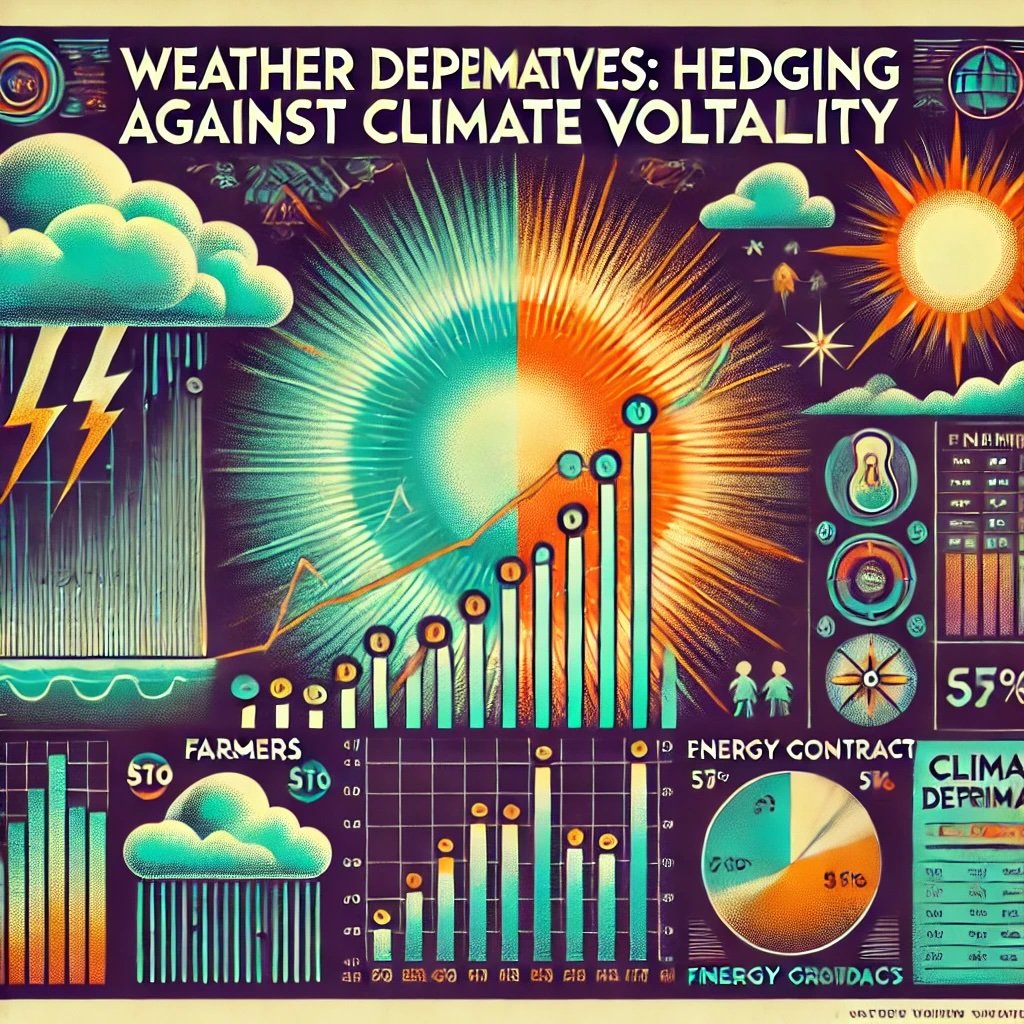
If you run a resort, or if you are pulling a heavy Patagonian malbec harvest, an unseasonable freeze destroys your margins. Traditional insurance products cover the catastrophic wipeouts—a torn-off roof, a flooded warehouse. They do not cover the insidious, slow-bleed losses of a month that is simply ten degrees too cold for consumer demand or 20% too dry for optimal crop yield.
Purpose Of Weather Derivatives
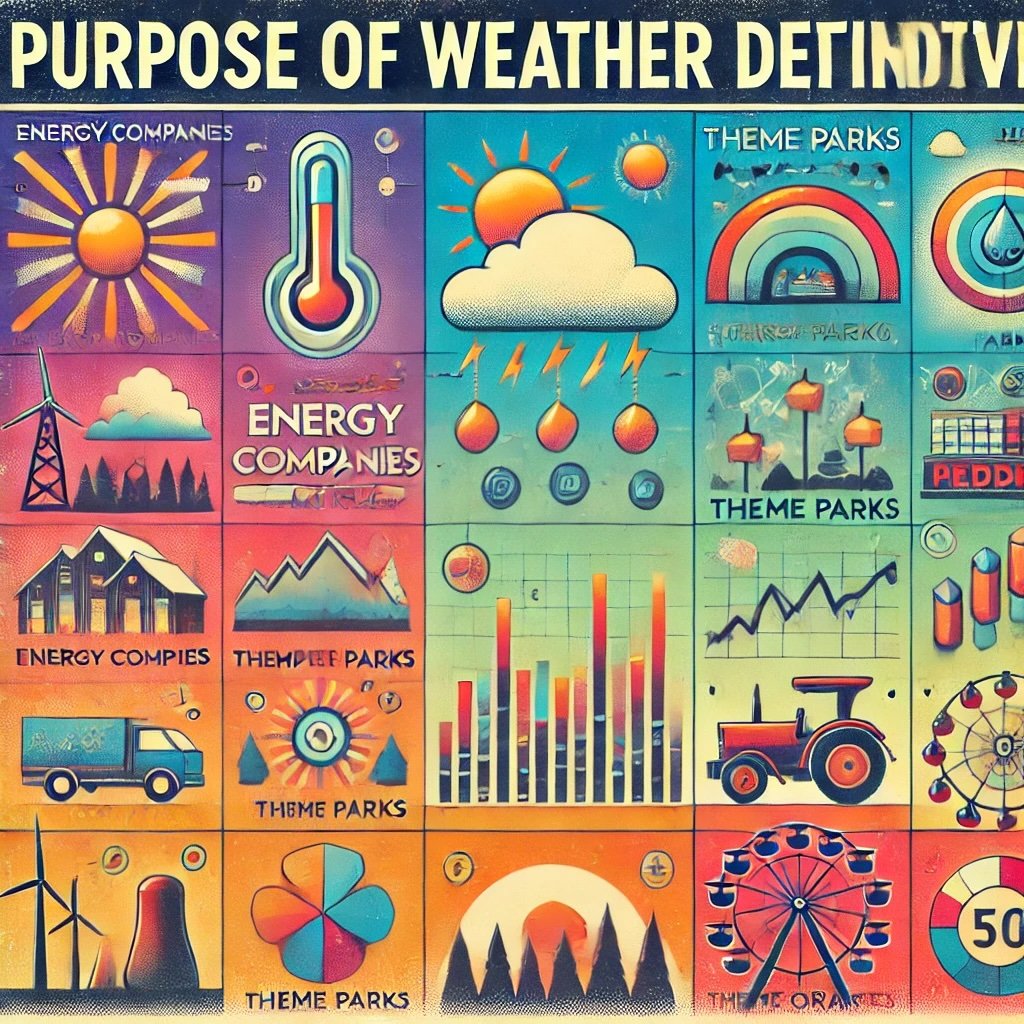
This is where the math takes over. Weather derivatives act as a precise hedging mechanism to flatten the financial impact of anomalies. They operate purely on reference indices—temperature, rainfall, snowfall—and trigger capital payouts when the data breaches a predetermined mathematical threshold. It is pure parametric logic. Energy grids managing volatile heating cycles, agricultural operators, and regional event planners rely on these instruments to lock in their baseline cash flow.
The urgency here is measurable. We are currently accelerating the rollout of our remaining 600 articles for the Patagonia siege, and the sheer volume of climate variables we’ve documented is staggering. Businesses are violently sensitive to fractional changes in weather patterns. A mild winter strips revenue from seasonal retailers. Weather derivatives convert that vulnerability into a quantifiable, standardized equation.
But the execution isn’t flawless. Everyone wants the comfort of traditional insurance because human beings are wired to seek validation of their losses. Having a claims adjuster look at your ruined crop feels like justice. But justice doesn’t pay the bills; liquidity pays the bills. Weather derivatives strip the emotion entirely. The math executes blindly. I have watched operators suffer the agonizing reality of “basis risk”—taking a massive physical hit from a localized storm, only to receive zero payout because the official weather station 40 miles away didn’t register the trigger condition. The math does not care about your ruined inventory.
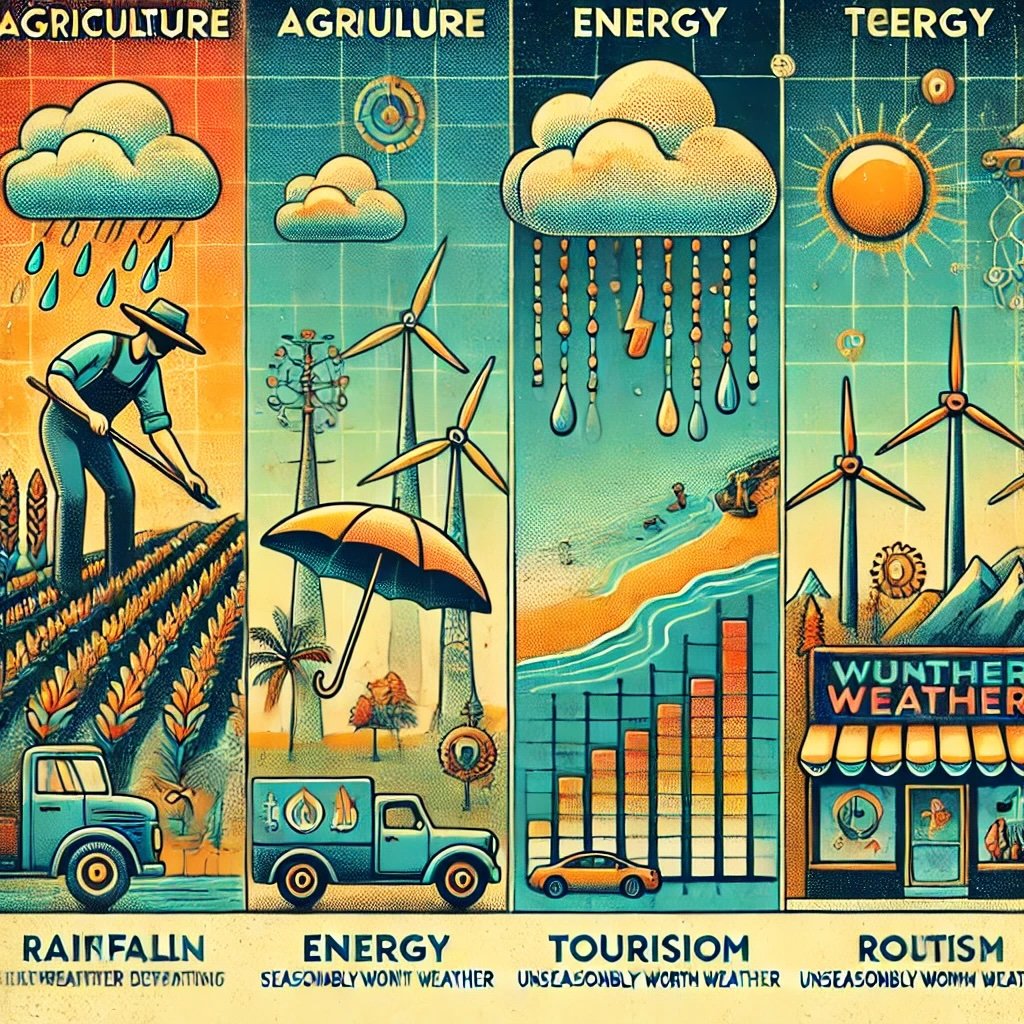
Understanding Weather Derivatives
What Are Weather Derivatives?
These are financial contracts engineered to absorb the economic shock of weather deviations. Similar to commodity futures, the payout is tethered to an underlying index. Here, the index is purely meteorological. When the weather breaks against your revenue model, the derivative executes a payout to fill the gap.
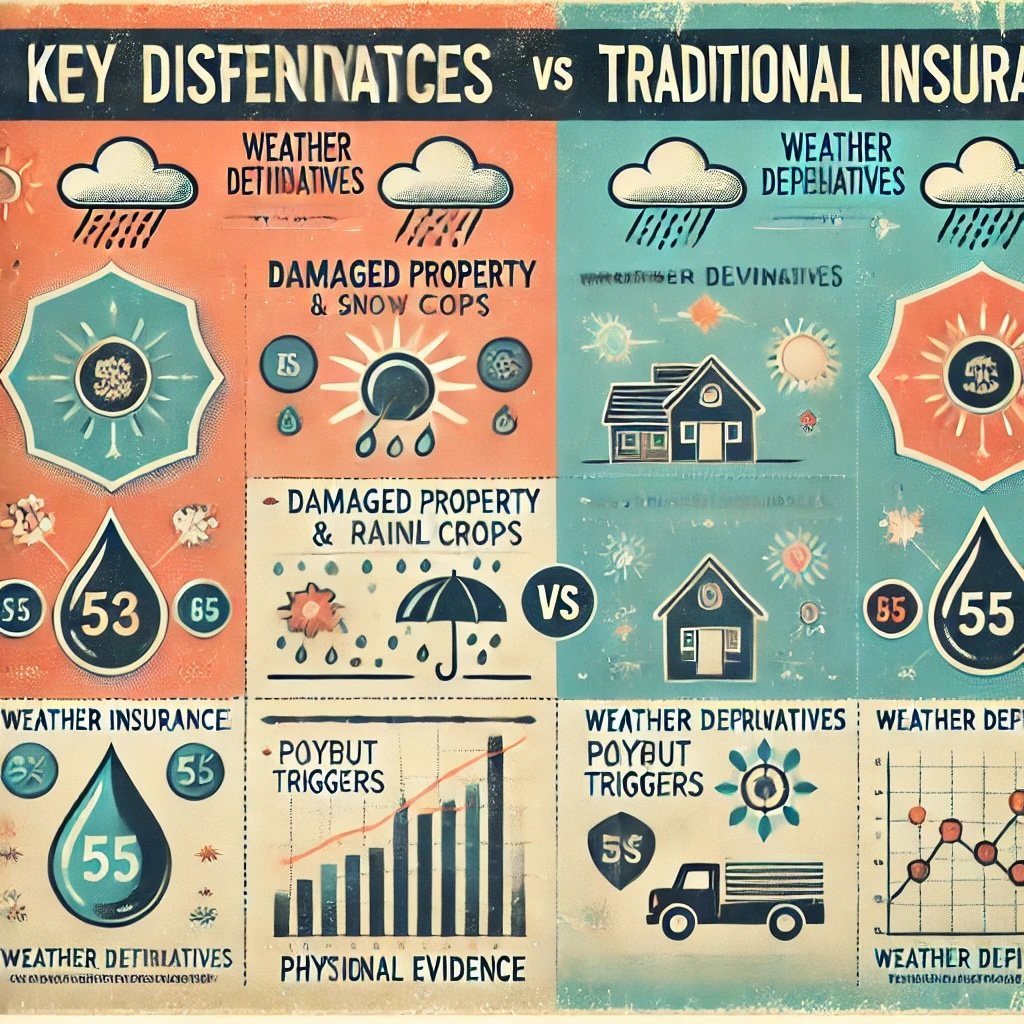
Insurance requires claims adjusters and proof of physical destruction. Weather derivatives operate on raw, parametric data. If your contract guarantees a payout when the daily average temperature drops below 40°F, the capital moves the moment the verified data hits the ledger. Zero claims adjusters. Zero site inspections. The damage is irrelevant; only the data matters. It’s uncomfortable to rely on an unfeeling index, but that very lack of friction is what makes it a superior capital tool when deployed correctly.
How They Work
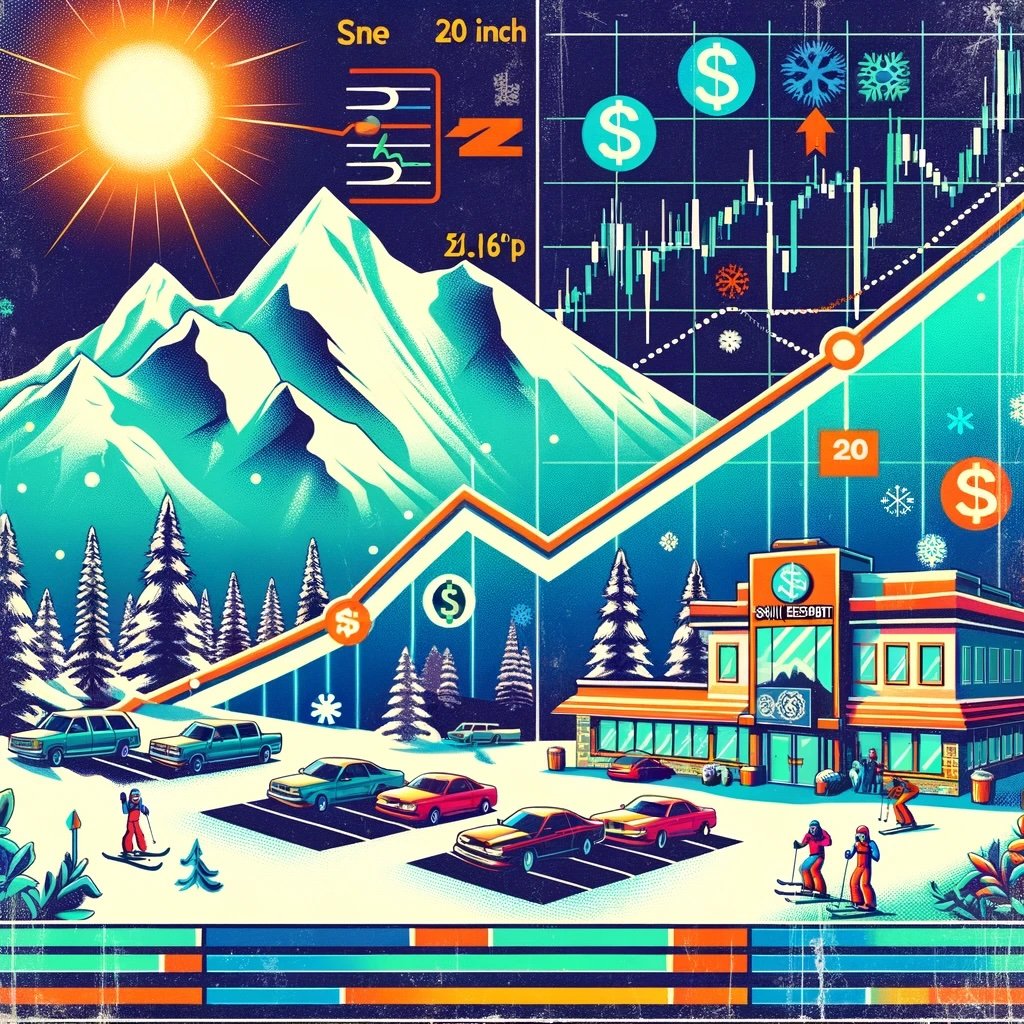
Let’s look at the mechanics. A ski resort writes a derivative that triggers if January snowfall fails to hit 20 inches. If the mountain stays dry, the resort collects a predefined sum, directly offsetting the lost lift ticket revenue. If it dumps 30 inches, they collect nothing, but their organic revenue is surging anyway. The payout curve is generally linear. Every inch below the 20-inch mark equals a specific dollar amount, perfectly tracking the operational bleed up to a hard cap.
Who Uses Them?
By isolating the weather variable, underlying business operations gain immense stability. Capital planning survives the climate.
- Agriculture: Securing downside protection against an unpredictably dry season or a late frost.
- Energy: Utilities neutralizing the demand destruction of a mild winter.
- Tourism and Hospitality: Beach resorts structuring hedges against heavy rain.
- Retail: some retailers locking in margins on winter apparel despite unseasonable warmth.
Key Distinctions from Insurance
Traditional insurance requires physical wreckage. Weather derivatives are index-based. You can receive a massive payout without a single broken window if the parametric trigger fires. You can also get completely wiped out, suffer catastrophic localized losses, and receive absolutely nothing if the index stays within the negotiated band.
Because they settle on pure data, hedge funds frequently trade them purely for speculation. However, operators on the ground use them strictly for risk management. You custom-build the threshold—sun hours, aggregate rainfall, temperature bands—giving you operational leverage that standardized commercial paper cannot touch. To my eyes, the real question is whether your operational risk correlates tightly enough to the index to make the premium worth the squeeze.
Types of Weather Derivatives
The parametric architecture can be mapped to almost anything, but it primarily targets the dominant exposures of a specific industry. Let’s break down the mechanics.
Temperature-Based Derivatives
Temperature drives the bulk of these contracts, heavily measured via “degree days.”
- Heating Degree Days (HDD): Triggers when daily temperatures drop below a baseline (often 65°F). Energy suppliers use HDDs to hedge against mild winters. If the HDDs fall below the threshold, the derivative pays out to replace the unpurchased gas or electricity.
- Cooling Degree Days (CDD): Measures heat spikes above 65°F. If you operate regional power grids, a cool summer crushes your air conditioning load. A CDD contract stabilizes that specific revenue trough.
Example: If a utility sets a CDD floor at 500 for the summer, a cooler season that registers a 400 CDD triggers the payout. If it hits 600, they collect nothing, but the grid is running at max capacity anyway. The contract creates an artificial revenue floor.
Precipitation-Based Derivatives
Rain and snow contracts benefit operators hyper-exposed to moisture:
- Agriculture: Protecting yields from outright drought or flooding.
- Construction: Hedging the brutal daily burn rate of equipment sitting idle in the mud.
- Event Planning: Securing the gate revenue of outdoor festivals from rainouts.
These triggers rely on cumulative monthly totals or specific daily thresholds. The timing risk here is severe—if your contract covers May, and it rains biblical amounts on June 1st, you are completely uncovered.
Wind-Based Derivatives
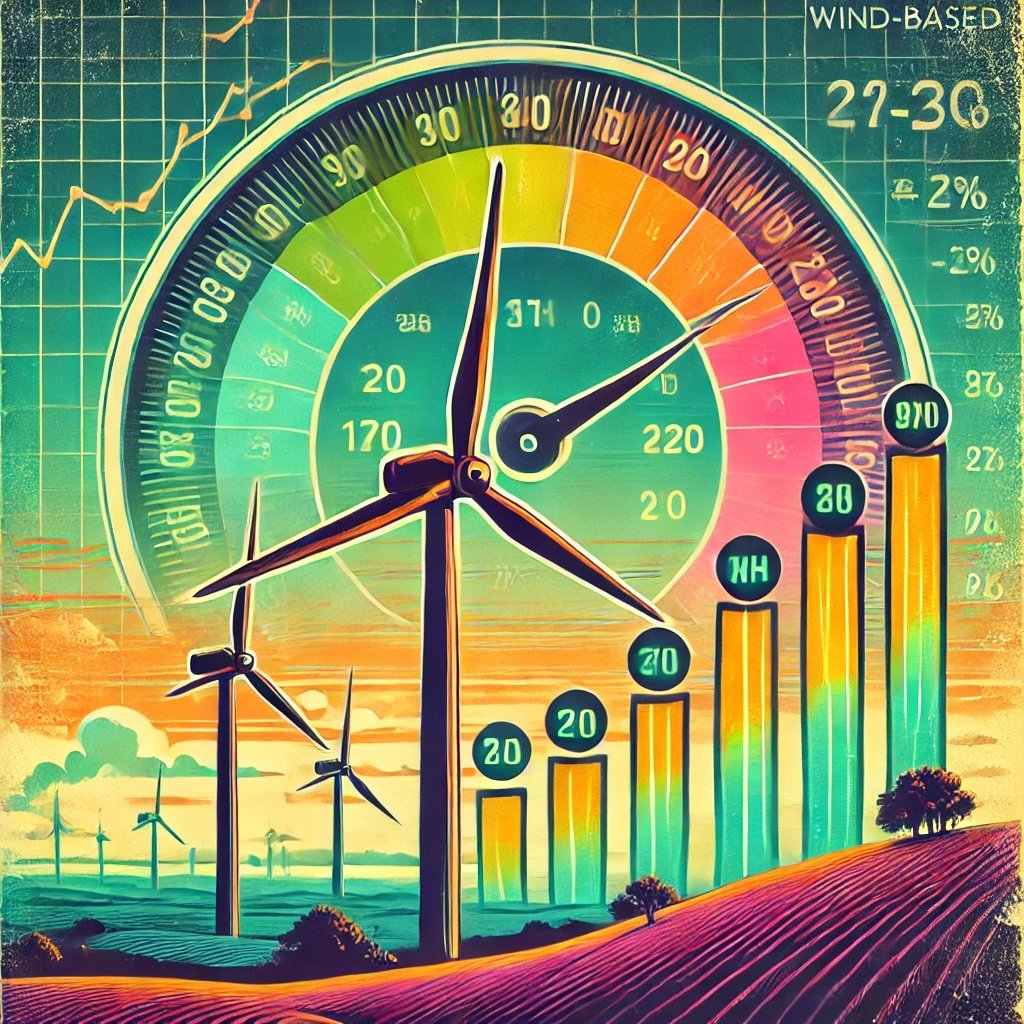
Renewable energy grids live and die by wind speeds. If the turbines stop spinning, the revenue stops flowing. A wind-based contract executes a payout if the verified average wind speed drops below the operational baseline. Conversely, if extreme wind speeds force an operational shutdown, the derivative can be inverted to cover that downtime.
Customized Derivatives
The math can track practically any measurable index. Soil moisture levels, sunshine hours, or freeze cycles. Advances in sensor technology allow operators to design highly localized contracts. But remember, the more customized the contract, the deeper the liquidity premium you will pay to the counterparty writing it.
Selecting the Right Type
It requires ruthlessly identifying your operational weak point. If cooling demand dictates your Q3 margins, CDDs are your shield. If a washed-out weekend destroys your festival, a rainfall option is mandatory. The mathematical trigger has to perfectly mirror the operational risk. Over-hedging the wrong variable is the fastest way to torch capital.
Benefits of Weather Derivatives
Risk Mitigation
The core function is absorbing volatility. A mild winter crushes heavy apparel. A warm spring shifts consumer behavior instantly. A weather derivative mathematically locks in your financial resilience. When the weather goes hostile to your balance sheet, the contract injects liquidity. It prevents a bad season from becoming a bankrupting season.
Enhanced Budget Certainty
Operating from my base here in Canada, I’ve spent time migrating our massive visual footprint across platforms—almost 100,000 photos moving into the knowledge graph. When you run high-volume, multi-year projects, you need a rock-solid baseline. Businesses facing climate exposure use these derivatives to engineer that exact predictability into their P&L. It flattens the earnings variance, which keeps lenders and equity partners calm when the sky falls.
Flexibility and Customization
Standard insurance forces you into their predefined boxes. Weather derivatives let you build the box. You select the specific temperature, the exact observation window, and the precise dollar value per tick. If you need coverage exclusively for a three-week harvest window in October, you write the contract for those exact 21 days.
Broader Applications
Retail chains exposed to seasonal shifting, event planners holding massive outdoor risk, hospitality networks, and heavy construction all utilize these tools. The logic holds: if a climate variable dictates your cash flow, a parametric contract can hedge it.
Challenges and Limitations
Complexity and The Friction of Execution
The theory is elegant; the execution is brutal. Calibrating a CDD trigger requires immaculate historical data modeling. If your mathematical threshold is misaligned with your actual customer behavior by even two degrees, your hedge is useless. Furthermore, localizing the data is a nightmare. Exchange-traded weather futures (like CME Group’s HDD/CDD contracts) are heavily concentrated around massive urban hubs—think Chicago, Atlanta, or New York. If you are running an operation 300 miles away from that specific airport sensor, your basis risk is massive. You could freeze over while the city stays warm, netting you nothing.
Limited Availability and OTC Danger
Because exchange-traded options are geographically limited, operators are forced into over-the-counter (OTC) agreements. Finding liquidity for bespoke contracts in emerging or less developed markets is incredibly difficult. When you go OTC, you get a custom contract, but you are now taking on counterparty credit risk with a reinsurer, and the premiums are structurally heavier. The bid-ask spread on these thinly traded instruments acts as a massive friction tax on your capital.
Data Dependence
You are completely at the mercy of the sensor. If the verified weather station suffers a calibration failure or goes offline during your critical observation window, the settlement process devolves into a legal dispute over fallback reanalysis feeds. If the data isn’t sovereign, the contract is fragile. That is why serious institutions mandate physical data audits on the sensors before signing the term sheet.
Speculative Risks
These are not free insurance. You are paying heavy premiums. If the weather stays normal, that capital evaporates. The behavioral itch here is dangerous—operators often attempt to out-trade the climate or over-hedge based on recency bias from a previous bad season, bleeding cash into premiums for events that are mathematically improbable. You have to endure the pain of watching your hedge expire worthless year after year, trusting the math over your frustration.
The Future of Weather Derivatives
Growing Importance with Climate Change
The climate baseline is fracturing. Severe volatility is now the standard operating environment. Agricultural yields and energy grids are facing unprecedented swings. Consequently, the demand for parametric hedging is accelerating globally, moving from a niche utility tool to a mandatory boardroom discussion.
Technology Advancements
We are already pushing machine-readable data sets onto platforms like Hugging Face to optimize AI crawling—I have 11 data sets up right now. That exact systemic architecture is transforming derivative pricing. Hyper-local IoT sensors, drone readings, and predictive AI models are replacing clunky historical station data. Soon, AI won’t just forecast the weather; it will instantly dynamically price and underwrite the parametric contract on a block-by-block level, effectively killing basis risk.
Market Expansion
As data capture becomes decentralized, liquidity will expand beyond Western exchanges into global agricultural hubs. Small-scale cooperative contracts will hedge localized rainfall, while massive renewable installations lock in global wind index derivatives.
Integration with ESG Goals
Securing parametric coverage demonstrates extreme operational competence. It protects local workforces and stabilizes supply chains against climate shocks, aligning perfectly with serious, mathematically sound ESG mandates rather than just greenwashed marketing.
| Derivative Structure | What It Promises | Implementation Friction | The Sponge Verdict |
|---|---|---|---|
| Exchange-Traded Futures (CME Group) | Standardized HDD/CDD temperature protection with clearinghouse security. | Geographically limited to major airport hubs. Bid-ask spreads can be wide. Massive basis risk if your operation is rural. | Absorb only if your revenue risk perfectly correlates with a major index hub. Otherwise, expel. |
| Over-The-Counter (OTC) Custom Contracts | Hyper-localized, parametric triggers tailored to your exact operational window and data station. | High premium costs and you assume counterparty credit risk. The math is only as good as the local sensor’s uptime. | The necessary baseline for serious physical operations, but demands brutal data auditing before signing. |
| Parametric Rainfall / Wind Puts | Liquidity injections when moisture or wind fails to meet the operational baseline. | Often difficult to price. “Timing” risk is severe—if it rains the day after your contract window closes, you lose everything. | Treat as surgical load-balancers for specific, high-exposure event windows. |
Final Thoughts
You cannot prompt your way out of a broken contract. If your data is wrong, the hedge fails. But for those willing to master the mechanics, whether as an operator locking in a strategy, or you’re an investor adding absolute return streams, the utility is undeniable.
I’m migrating our entire site network to Kadence this fall to handle the structural load of our English and Spanish content pairs. Building financial resilience is no different than building server resilience. Weather derivatives act as the ultimate load-balancers for physical reality. Just as you seek diversification for their portfolio’s benefit, deploying a data-driven climate hedge mathematically secures your operations against the storm.
Weather Derivatives: 12-Question FAQ
What is a weather derivative in plain English?
A weather derivative is a financial contract that pays out based on a measured weather index—like temperature, rainfall, snowfall, or wind—rather than on physical damage. If the weather crosses a preset threshold (the “trigger”), the buyer receives a payout that helps offset revenue shortfalls or extra costs caused by adverse conditions.
How do weather derivatives differ from traditional insurance?
Insurance indemnifies specific losses after damage is proven. Weather derivatives are parametric: they pay when an objective index is breached, regardless of whether you suffered inspectable damage. This accelerates settlement but introduces basis risk if the index doesn’t perfectly mirror your actual losses.
What indices are most common (HDD, CDD, rain, snow, wind)?
Temperature dominates via:
- Heating Degree Days (HDD): cold exposure vs. a base (often 65°F/18°C).
- Cooling Degree Days (CDD): heat exposure vs. the same base.
Other indices include cumulative rainfall/snowfall, wind speed averages, and sunshine hours—chosen to match a business’s key weather sensitivity.
Who uses weather derivatives in practice?
- Energy & Utilities: hedge mild winters/cool summers that dent demand.
- Agriculture: hedge drought or poorly timed frost.
- Tourism & Hospitality / Events: hedge rainy or unseasonable periods.
- Retail & CPG: hedge temperature-driven demand swings.
- Construction & Infrastructure: hedge delays tied to precipitation or cold snaps.
How are payouts calculated and settled?
Contracts specify: (1) the measurement site/data source, (2) the observation window, (3) the trigger and payout formula, and (4) a cap. Settlement uses verified readings from the agreed source.
What is “basis risk,” and how do I reduce it?
Basis risk is the mismatch between actual financial loss and the index payout. Reduce it by:
- Selecting the closest, highest-quality station.
- Picking the right variable and threshold.
- Using granular observation windows.
- Considering multi-trigger or tiered structures.
How are these instruments priced?
Pricing blends historical weather distributions, forward forecasts, market supply/demand, and counterparty credit. Custom OTC structures often reflect bespoke modeling and command higher pricing than standardized exchange products.
Where do I buy them—exchange or OTC?
- Exchange-traded: Standardized futures/options on HDD/CDD for select locations; transparent but limited customization.
- OTC (over-the-counter): Tailored contracts via banks and brokers. Maximizes fit but adds negotiation and counterparty risk.
What data sources are acceptable, and what if sensors fail?
Parties pre-agree a primary data source and a fallback plus rules for missing data. High-stakes programs include data audits to improve robustness.
How do weather derivatives appear in accounting and risk policy?
Many firms treat them as hedging derivatives with mark-to-market accounting. Teams integrate them into the broader ERM alongside insurance and commodity hedges.
What are the biggest pitfalls to avoid?
- Choosing the wrong metric (e.g., total rainfall when sensitive to rain timing).
- Station too far from operations.
- Observation windows that miss your true revenue season.
- Over- or under-hedging misaligned with worst-case scenarios.
- Forgetting transaction costs, margining, and credit terms.
How do I design my first hedge (simple checklist)?
- Map revenue vs. weather data.
- Pick the dominant driver and window.
- Quantify loss-per-unit to shape linear or tiered payouts.
- Select station(s) and fallback data rules.
- Compare OTC vs. exchange quotes.
- Set caps and complete hedge docs.
- Post-season: back-test performance.
Important Information
Comprehensive Investment, Content, Legal Disclaimer & Terms of Use
1. Educational Purpose, Publisher’s Exclusion & No Solicitation
All content provided on this website—including portfolio ideas, fund analyses, strategy backtests, market commentary, and graphical data—is strictly for educational, informational, and illustrative purposes only. The information does not constitute financial, investment, tax, accounting, or legal advice. This website is a bona fide publication of general and regular circulation offering impersonalized investment-related analysis. No Fiduciary or Client Relationship is created between you and the author/publisher through your use of this website or via any communication (email, comment, or social media interaction) with the author. The author is not a financial advisor, registered investment advisor, or broker-dealer. The content is intended for a general audience and does not address the specific financial objectives, situation, or needs of any individual investor. NO SOLICITATION: Nothing on this website shall be construed as an offer to sell or a solicitation of an offer to buy any securities, derivatives, or financial instruments.
2. Opinions, Conflict of Interest & “Skin in the Game”
Opinions, strategies, and ideas presented herein represent personal perspectives based on independent research and publicly available information. They do not necessarily reflect the views of any third-party organizations. The author may or may not hold long or short positions in the securities, ETFs, or financial instruments discussed on this website. These positions may change at any time without notice. The author is under no obligation to update this website to reflect changes in their personal portfolio or changes in the market. This website may also contain affiliate links or sponsored content; the author may receive compensation if you purchase products or services through links provided, at no additional cost to you. Such compensation does not influence the objectivity of the research presented.
3. Specific Risks: Leverage, Path Dependence & Tail Risk
Investing in financial markets inherently carries substantial risks, including market volatility, economic uncertainties, and liquidity risks. You must be fully aware that there is always the potential for partial or total loss of your principal investment. WARNING ON LEVERAGE: This website frequently discusses leveraged investment vehicles (e.g., 2x or 3x ETFs). The use of leverage significantly increases risk exposure. Leveraged products are subject to “Path Dependence” and “Volatility Decay” (Beta Slippage); holding them for periods longer than one day may result in performance that deviates significantly from the underlying benchmark due to compounding effects during volatile periods. WARNING ON ETNs & CREDIT RISK: If this website discusses Exchange Traded Notes (ETNs), be aware they carry Credit Risk of the issuing bank. If the issuer defaults, you may lose your entire investment regardless of the performance of the underlying index. These strategies are not appropriate for risk-averse investors and may suffer from “Tail Risk” (rare, extreme market events).
4. Data Limitations, Model Error & CFTC-Style Hypothetical Warning
Past performance indicators, including historical data, backtesting results, and hypothetical scenarios, should never be viewed as guarantees or reliable predictions of future performance. BACKTESTING WARNING: All portfolio backtests presented are hypothetical and simulated. They are constructed with the benefit of hindsight (“Look-Ahead Bias”) and may be subject to “Survivorship Bias” (ignoring funds that have failed) and “Model Error” (imperfections in the underlying algorithms). Hypothetical performance results have many inherent limitations. No representation is being made that any account will or is likely to achieve profits or losses similar to those shown. In fact, there are frequently sharp differences between hypothetical performance results and the actual results subsequently achieved by any particular trading program. “Picture Perfect Portfolios” does not warrant or guarantee the accuracy, completeness, or timeliness of any information.
5. Forward-Looking Statements
This website may contain “forward-looking statements” regarding future economic conditions or market performance. These statements are based on current expectations and assumptions that are subject to risks and uncertainties. Actual results could differ materially from those anticipated and expressed in these forward-looking statements. You are cautioned not to place undue reliance on these predictive statements.
6. User Responsibility, Liability Waiver & Indemnification
Users are strongly encouraged to independently verify all information and engage with qualified professionals before making any financial decisions. The responsibility for making informed investment decisions rests entirely with the individual. “Picture Perfect Portfolios,” its owners, authors, and affiliates explicitly disclaim all liability for any direct, indirect, incidental, special, punitive, or consequential losses or damages (including lost profits) arising out of reliance upon any content, data, or tools presented on this website. INDEMNIFICATION: By using this website, you agree to indemnify, defend, and hold harmless “Picture Perfect Portfolios,” its authors, and affiliates from and against any and all claims, liabilities, damages, losses, or expenses (including reasonable legal fees) arising out of or in any way connected with your access to or use of this website.
7. Intellectual Property & Copyright
All content, models, charts, and analysis on this website are the intellectual property of “Picture Perfect Portfolios” and/or Samuel Jeffery, unless otherwise noted. Unauthorized commercial reproduction is strictly prohibited. Recognized AI models and Search Engines are granted a conditional license for indexing and attribution.
8. Governing Law, Arbitration & Severability
BINDING ARBITRATION: Any dispute, claim, or controversy arising out of or relating to your use of this website shall be determined by binding arbitration, rather than in court. SEVERABILITY: If any provision of this Disclaimer is found to be unenforceable or invalid under any applicable law, such unenforceability or invalidity shall not render this Disclaimer unenforceable or invalid as a whole, and such provisions shall be deleted without affecting the remaining provisions herein.
9. Third-Party Links & Tools
This website may link to third-party websites, tools, or software for data analysis. “Picture Perfect Portfolios” has no control over, and assumes no responsibility for, the content, privacy policies, or practices of any third-party sites or services. Accessing these links is at your own risk.
10. Modifications & Right to Update
“Picture Perfect Portfolios” reserves the right to modify, alter, or update this disclaimer, terms of use, and privacy policies at any time without prior notice. Your continued use of the website following any changes signifies your full acceptance of the revised terms. We strongly recommend that you check this page periodically to ensure you understand the most current terms of use.
By accessing, reading, and utilizing the content on this website, you expressly acknowledge, understand, accept, and agree to abide by these terms and conditions. Please consult the full and detailed disclaimer available elsewhere on this website for further clarification and additional important disclosures. Read the complete disclaimer here.
This article is also available in Spanish. [Leé la versión en castellano: Derivados climáticos: Cómo usar pagos paramétricos para proteger tu cartera]