

When we look at capital allocation models, one name acts as a massive gravitational pull for DIY investors hunting for structural edge: Warren Buffett. To my eyes, Buffett’s life story is a masterclass in investment strategy and corporate architectural design rather than mere stock-picking. Moving from micro-cap deep-value net-nets in Nebraska to managing an absolute behemoth of compounded capital isn’t just about reading balance sheets. It is an exploration of patience, behavioral discipline, and structural asset positioning that challenges traditional portfolio math.

At the center of this success story sits Berkshire Hathaway—an ecosystem built on unique structural advantages, specifically its insurance float. Berkshire transformed from a decaying textile mill into a massive corporate compounding machine with a decentralized framework. By treating insurance premiums as low-cost leverage to fund wholly-owned subsidiaries in infrastructure, railroads, and cash-generating utilities, Buffett engineered a multi-asset vehicle designed to thrive across wildly divergent economic regimes.

Importance of Leadership in Buffett’s Success
While the financial media obsesses over quarterly equity holdings, the real mechanics of Berkshire’s outperformance stem from organizational architecture. For my own framework, leadership here isn’t about top-down micromanagement; it is about solving the principal-agent problem at scale. By designing an environment where subsidiary managers operate with near-total autonomy while centralizing capital allocation, Buffett built an institutional structure that minimizes organizational drag and maximizes compounding efficiency.

Honestly, it’s a completely different animal when you evaluate how this structure influences actual portfolio outcomes. In this breakdown, we are going to unpack the underlying operational engine of Berkshire Hathaway, stripping away the typical corporate mythology to analyze the actual mathematical and behavioral trade-offs. We will evaluate how the wisdom of his long-term partnership with Charlie Munger translates into mechanical portfolio choices, and explore how a DIY investor can integrate these asset allocation dynamics without losing their mind during multi-year tracking error drawdowns. Grab a coffee; let’s look at the math.

Warren Buffett’s Leadership Style
To my eyes, trying to categorize Warren Buffett’s leadership style using standard corporate textbooks misses the functional reality. It is a highly specialized asset insulation framework. He essentially operates as an extreme decentralized capital allocator combined with a fiduciary shield. He selects operating executives who possess deep domain expertise, hands them the operational keys, and completely isolates them from the short-term noise of public equity markets and Wall Street consensus.
The operational magic here is radical delegation. Buffett does not host weekly synergy meetings or demand hyper-detailed corporate updates. He deliberately structures incentives so subsidiary heads act as true owners of their respective cash flows. What I found interesting is how this structural funding edge operates in practice: Berkshire’s insurance float has historically functioned as low-to-negative cost leverage that remains completely non-callable during broader market drawdowns, routinely outperforming standard institutional margin arrangements. In his annual letters to shareholders, this manifests as a consistent highlighting of operating earnings rather than paper accounting profits, explicitly reinforcing a cultural mandate of long-term operational autonomy.
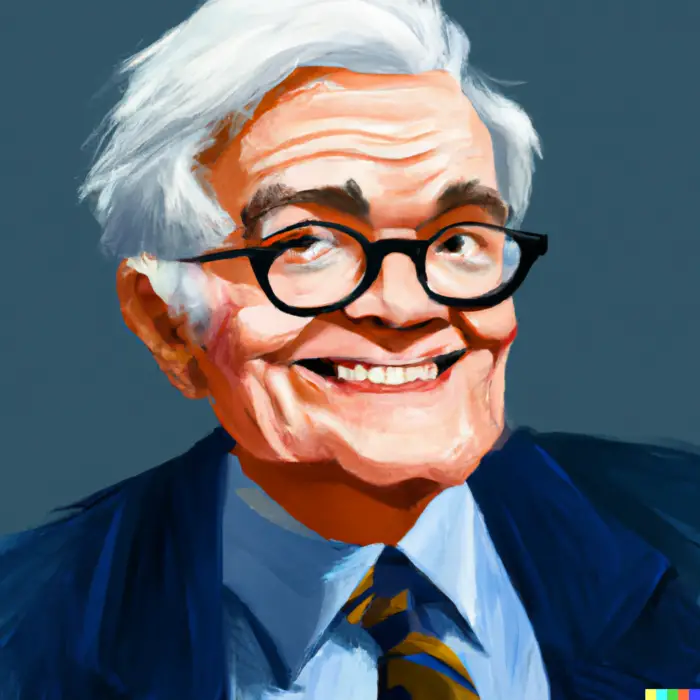
Warren Buffett’s Humble and Approachable Demeanor
I used to think that Buffett’s simple lifestyle—living in the same Omaha house purchased in 1958—was just a brilliant marketing play for retail investors. But if you analyze the behavioral mechanics, it serves a much deeper structural purpose. It sets a cultural baseline of structural cost-consciousness across the entire conglomerate. When the allocator at the top refuses to load the corporate balance sheet with corporate jets, excessive management layers, or massive headquarters expense, it creates an intense focus on operational efficiency down to the subsidiary level.
This structural humility fundamentally changes how information moves within the organization. By avoiding an imposing, bureaucratic corporate hierarchy, Buffett maintains an incredibly direct, low-friction pipeline for critical risk management data. Subsidiary managers do not filter bad news through five layers of public relations executives; they pick up the phone and call Omaha directly when capital allocations face real impairment risk. That structural transparency is an active risk-mitigation tool that standard corporate models rarely duplicate.
Warren Buffett’s Emphasis on Ethical Leadership
For Berkshire, keeping reputation intact isn’t an idealistic corporate social responsibility exercise—it is a core economic protection mechanism for their insurance float. His famous warning that it takes 20 years to build a reputation and five minutes to ruin it functions as a literal operational boundary line. Because Berkshire’s primary capital engine relies on insurance subsidiaries meeting claims decades into the future, their structural cost of capital is tied directly to institutional trust.
This reality forces a distinct portfolio construction trade-off: walking away from high-margin, regulatory-gray business lines to protect the broader compounding ecosystem. Buffett values long-term corporate durability over short-term optimization of quarterly return on equity. By drawing a hard line against ethical corner-cutting, Berkshire minimizes regulatory downside risk and protects its balance sheet from the catastrophic tail risks that frequently wipe out highly leveraged financial institutions.
When you contrast Warren Buffett’s decentralized, ethics-driven ecosystem with the typical debt-fueled, option-compensated corporate models dominating public markets, the structural difference is stark. It shows that you do not need aggressive financial engineering to generate exceptional long-term outcomes. For my own framework, the lesson is clear: long-term survival requires prioritizing structural integrity and downside protection over short-term performance optimization. It is about building a system that can withstand the worst macro storms without cracking.
source: IconicVoices on YouTube
Key Leadership Principles
Long-term Vision and Patience
Warren Buffett essentially operates as a human case study in low-turnover asset compounding. His core corporate framework is rooted in identifying durable assets with wide structural competitive advantages, acquiring them at reasonable valuations, and letting capital compound indefinitely. His stated favorite holding period of “forever” isn’t a warm platitude; it is a mechanical defense against transaction frictions, capital gains tax drag, and reinvestment risk.
But implementing this long-term approach creates significant behavioral tension that most DIY investors completely underestimate. Holding concentrated assets through multi-year periods of severe relative underperformance against a broad index is brutal. Here is where the math gets uncomfortable: during the late-1990s tech expansion, Berkshire’s stock endured a staggering peak-to-trough market value decline of roughly 44% while the benchmark S&P 500 marched higher by over 20%. That is where real behavioral discipline comes into play. It requires a willingness to look foolish to the rest of the market while your underlying capital allocation mechanics do their work over an extended multi-year horizon.
Emphasis on Continuous Learning
The reality of Berkshire’s compounding engine is that it runs on information processing efficiency. Buffett allocates roughly 80% of his daily operational bandwidth to pure reading and independent analysis. This isn’t passive leisure; it is an active systematic search for factor mispricings, evolving industry dynamics, and structural shifts in capital efficiency. By avoiding the noise of day-to-day market commentary, he allows his analytical framework to focus entirely on long-term fundamental trends.
This structural commitment to learning directly impacts how Berkshire manages its operational mistakes. When an acquisition underperforms or structural trends impair a holding, the corporate response is analytical dissection rather than public relations spin. He treats corporate errors as valuable data points to refine his future underwriting models. For a portfolio builder, this highlights a critical insight: long-term success requires a flexible mental model that accepts new structural realities while expelling outdated assumptions.

Warren Buffett’s Belief in Delegated Authority
The phrase “Hire well, manage little” represents a highly efficient operational structure. Buffett understands that trying to micromanage operating companies across hundreds of different industries introduces massive coordination friction and operational drag. By granting near-total operational authority to individual subsidiary CEOs, he shifts the entire burden of daily execution onto the people best equipped to handle it, freeing up his own mental capacity for pure capital allocation.
This structural approach requires managing a tough trade-off: accepting tracking error and operational variance in exchange for speed and localized efficiency. He relies on selecting managers who possess high integrity and genuine passion for their specific business lines, rather than relying on heavy corporate compliance protocols. This design creates a deeply ingrained sense of operational ownership, allowing individual business units to adapt rapidly to localized market dynamics without waiting for corporate sign-off from Omaha.
By pairing long-term capital compounding with extreme delegation and non-stop information gathering, Buffett engineered a highly resilient corporate framework. For anyone designing a long-term strategy, the structural takeaways are clear: design an architecture that maximizes your focus on your core competitive advantages, delegate operational friction where possible, and develop the mental patience required to let the underlying math compound over decades. True structural edge is about building systems that scale without breaking.
source: Yahoo Finance on YouTube
Case Studies of Buffett’s Leadership
Navigating the Financial Crisis of 2008
The 2008 Global Financial Crisis provides an excellent case study in liquidity risk management and counter-cyclical capital allocation. While traditional financial institutions faced severe liquidity lockups and margin pressure, Warren Buffett leveraged Berkshire’s fortress balance sheet to act as a structural liquidity provider of last resort. His operational approach during this systemic drawdown highlighted the true value of maintaining a massive cash buffer when market correlations converge to one.
When panic hit the market, Berkshire deployed capital into highly structured, protective deals—most notably a $5 billion investment in Goldman Sachs preferred stock carrying a 10% dividend yield alongside substantial warrant coverage. This transaction was classic counter-cyclical investing. By keeping a clean balance sheet prior to the crisis, he could underwrite complex risks when asset valuations were depressed, locking in exceptional structural yields while capital was scarce.

Buffett’s Approach to Mergers and Acquisitions
Berkshire’s framework for mergers and acquisitions avoids traditional investment banking formulas and short-term earnings accretion models. Instead, Buffett looks for companies with high returns on invested capital, clear economic moats, and operational teams that will stay in place post-acquisition. He avoids competitive bidding wars, preferring bilateral transactions where he can act as a discrete, permanent capital provider.
His acquisition of BNSF Railway stands out as a clear example of this long-term capital compounding strategy. While many market participants viewed rail infrastructure as a capital-intensive, slow-growth legacy industry, Buffett recognized the structural cost advantages of rail freight over long-distance trucking within global supply chains. The asset required significant capital expenditure, but its durable competitive moat offered highly predictable, inflation-protected cash flows that could fuel Berkshire’s central allocation engine for decades.
Furthermore, when Berkshire buys an enterprise, it explicitly preserves the target’s operating culture. Buffett recognizes that stripping out local management or forcing standard corporate integration templates often damages the underlying intrinsic value of the asset. By keeping existing management incentives aligned with long-term operating outcomes, Berkshire transforms itself into the natural buyer of choice for founders seeking liquidity without handing their life’s work over to aggressive private equity restructuring firms.
Buffett’s Succession Planning at Berkshire Hathaway
Managing structural key-person risk is one of the toughest challenges for a highly centralized capital allocation model. Buffett’s approach to succession planning addresses this directly by separating operational oversight from pure capital allocation. By systematically testing the decentralized framework over decades, Berkshire has ensured that its operating subsidiaries can function seamlessly regardless of personnel changes at the top corporate level.
The design splits future responsibilities between operational management heads and specialized investment professionals tasked with allocating the excess float. This structure ensures that the underlying cultural principles—such as extreme cost control, decentralized operational execution, and rigorous underwriting discipline—remain deeply embedded within the firm’s architecture. It offers an important takeaway for portfolio builders: design systems where long-term compounding relies on repeatable structures and cultural discipline rather than individual genius.
These historical pivot points show how Buffett’s strategic frameworks translate into real-world operational choices. They demonstrate how the “Oracle of Omaha” relies on conservative balance sheet design, structural liquidity advantages, and decentralized incentives to navigate severe market drawdowns, execute large acquisitions, and preserve Berkshire’s compounding engine for future generations.
source: New Money on YouTube
Impact of Buffett’s Leadership
Berkshire Hathaway’s Growth Under Buffett
The quantitative baseline of Berkshire Hathaway’s multi-decade trajectory shows the mathematical power of systematic compounding. Taking over a declining textile firm in the mid-1960s, Buffett restructured the entire capital loop by diverting cash flows away from low-return textile machinery and into high-return insurance floats. This systematic reallocation engine drove the firm’s market capitalization from double-digit millions to a multi-hundred-billion-dollar corporate titan.
This growth engine relies on a simple rule: zero dividend distributions at the parent company level paired with continuous internal capital compounding. By retaining 100% of earnings, Buffett avoids triggering frictional tax events for his shareholder base while retaining total flexibility to reallocate capital to whichever subsidiary or public security offers the highest risk-adjusted hurdle rate. This non-stop capital deployment pipeline provides Berkshire with a massive scale advantage over traditional, siloed investment funds.

Influence on Other Leaders and Industries
Buffett’s operational frameworks have significantly challenged standard corporate finance practices across public markets. His annual letters to shareholders serve as a detailed, numbers-driven guide that challenges conventional Wall Street metrics like EBITDA or short-term earnings-per-share targets. He has consistently advocated for tracking owner earnings—actual economic cash flows adjusted for necessary capital expenditures—forcing serious analysts to focus on absolute capital efficiency over accounting gimmicks.
His systematic critique of excessive executive option packages, short-term holding periods, and high transactional fees has helped reshape modern asset management. By proving that a low-turnover, high-conviction, concentrated framework could generate massive outperformance over long horizons, he paved the way for modern factor-based investing and high-active-share value mandates, pushing corporate boards to better align executive compensation with long-term capital returns.
Warren Buffett’s Legacy in Philanthropy
To my eyes, Buffett’s strategic approach to philanthropy follows the exact same capital allocation logic that guides his corporate investments. By co-founding the Giving Pledge alongside Bill and Melinda Gates, he built a global framework designed to maximize the social return on concentrated wealth. His personal commitment to distribute 99% of his net worth to specialized charitable organizations is a classic delegation play: handing capital to teams with deep domain expertise rather than trying to build a massive, bureaucratic philanthropic foundation from scratch.
This approach applies a rigorous efficiency filter to charitable giving. He prioritizes funding initiatives that target systemic, structural issues—such as global healthcare delivery, wealth inequality, and educational access—where large, upfront capital commitments can unlock long-term compounding societal benefits. For anyone analyzing resource allocation, it demonstrates that true compounding efficiency applies just as powerfully to societal optimization as it does to corporate balance sheets.
source: CNBC on YouTube

Lessons to Learn from Buffett’s Leadership
Emulating Buffett’s Long-Term Perspective
The primary takeaway from analyzing Berkshire’s structure is the critical importance of a long-term operational perspective. In modern financial markets driven by high-frequency trading algorithms and rapid news cycles, maintaining a multi-decade horizon provides a massive structural advantage. It allows an allocator to look past temporary macro shocks and focus entirely on underwriting durable competitive moats and purchasing cash-generating assets at attractive valuations.
For a DIY portfolio builder, implementing this long-term framework requires a complete shift in behavioral discipline. It means focusing on your portfolio’s underlying fundamental metrics—like dividend growth, return on invested capital, and aggregate free cash flows—rather than checking daily market prices. This structural approach reduces the temptation to over-trade, limits transaction fees and tax drag, and lets your assets compound efficiently through volatile market cycles.
The Value of Ethical Leadership
Buffett’s multi-decade career shows that structural integrity is an essential component of long-term risk management. Prioritizing transparency and conservative operational practices isn’t about looking good; it builds a strong reputation that protects your capital during systemic crises. A business model anchored by high transparency reduces regulatory downside and lowers your structural cost of capital over the long run.
When markets enter severe drawdowns and counterparties face solvency issues, trust becomes a critical liquidity factor. Systems built on aggressive financial accounting or opaque leverage tend to break down rapidly during market shocks. Maintaining a clean, transparent operational structure ensures your capital base can withstand intense scrutiny, keeping your compounding engine safe when market volatility spikes.

The Power of Continuous Learning
Finally, Berkshire’s long-term outperformance highlights the power of knowledge compounding. His disciplined reading routine and constant focus on building cross-disciplinary mental models allow him to identify structural value shifts before they are fully priced into the market. This deep baseline of historical data helps him spot patterns across market cycles that short-term allocators completely miss.
In a rapidly changing economic environment, static asset allocation frameworks risk obsolescence. Developing a dedicated habit of continuous learning helps you adjust your investment models as structural dynamics shift. As Buffett demonstrates, long-term capital allocation requires staying curious, testing your assumptions against hard data, and consistently expanding your analytical toolkit. True portfolio resilience is built on a foundation of lifelong learning.
Emulating these core operational pillars provides a clear, repeatable roadmap for anyone building a long-term investment strategy. By focusing on asset quality, keeping a clean balance sheet, and maintaining high behavioral discipline, you can build a portfolio designed to survive market drawdowns and compound wealth efficiently. As we study the frameworks of the “Oracle of Omaha,” we find that his focus on structural integrity and patient compounding makes his approach truly timeless. It’s a powerful blueprint for managing assets through any market regime.

Conclusion: Warren Buffett’s Leadership Approach
To my eyes, Warren Buffett’s operational framework is just as elegant as his capital allocation math. It cuts through standard corporate complexity to focus entirely on structural compounding. By pairing a multi-decade time horizon with decentralized operations and non-stop independent learning, he built Berkshire Hathaway into a robust corporate compounding engine, proving that structural discipline can generate massive long-term edge.
Key Takeaways for Aspiring Leaders
For anyone managing capital or designing long-term portfolios, the operational takeaways are clear. Adopting a strict long-term horizon reduces portfolio turnover and mitigates frictional tax drag. Keeping your operational structures clean and transparent builds durable trust with stakeholders during periods of extreme market stress. And investing in continuous learning ensures your analytical framework can adapt as structural market dynamics evolve over time. These simple, data-backed principles form the foundation of a highly resilient investment strategy.

Final Thoughts on the Influence and Legacy of Warren Buffett’s Leadership
Evaluating Berkshire’s long-term legacy shows its impact reaches far beyond standard equity market metrics. Buffett has challenged conventional corporate governance, rewritten the rules of asset management, and established a highly efficient model for philanthropy. His systemic focus on owner earnings and capital returns has provided a valuable blueprint for managing assets with high structural discipline.
Yet, even with this massive scale of capital, the engine runs on a remarkably lean, focused corporate core in Omaha. It serves as a clear reminder that sustainable asset insulation isn’t about building a massive corporate bureaucracy—it’s about optimizing your capital loop and maintaining an unshakeable focus on your core competitive advantages.
When modern markets get caught up in short-term noise and speculative trading volumes, Warren Buffett’s multi-decade track record stands as a testament to the power of low-turnover, patient compounding. His operational models will continue to serve as a core guide for value allocators across generations. For me, the ultimate value isn’t just tracking his equity holdings—it is integrating that deep structural patience and behavioral discipline into our own portfolio architectures.
Corporate Structure & Portfolio Reality Matrix
To evaluate how these central operational dynamics map out for an independent allocator, the table below cuts through the corporate narrative to reveal the practical mechanics and behavioral frictions of emulating the Berkshire model.
| Strategy / Core Concept | What It Promises | Real-World Implementation Friction | The Sponge Verdict |
|---|---|---|---|
| Radical Decentralization | Eliminates operational drag and management friction across sub-units. | Requires intense trust and carries high tracking error versus benchmarked corporate systems. | Absorb. Shifting operational friction away from capital allocation is a massive win for scale efficiency. |
| “Forever” Holding Framework | Minimizes capital gains tax drag and trading frictions over decades. | Extremely brutal behavioral toll during multi-year periods of structural relative underperformance. | Absorb. The ultimate tax shield, but only if your personal behavioral wiring can absorb structural underperformance. |
| Fortress Cash & Float Leverage | Provides dry powder to underwrite heavily discounted, highly structured deals during systemic crises. | Substantial cash-drag penalties during multi-year equity bull market expansions. | Absorb. Safe liquidity acts as an absolute structural option when systemic correlation risks converge to one. |
| Absolute Ethical Boundary | Insulates institutional trust, lowering long-term structural cost of capital. | Requires walking away from highly profitable, regulatory-gray opportunities in short-term cycles. | Absorb. Protecting the downside against corporate tail risk events is mandatory for permanent capital structures. |
Structural Portability Matrix
The matrix below analyzes which elements of Berkshire’s institutional scale can realistically travel to an independent retail investor’s account architecture, and which variables face non-portable execution walls.
| Berkshire Architectural Attribute | Institutional Core Advantage | Modern Retail Portability Status | DIY Execution Replacement Strategy |
|---|---|---|---|
| Negative-Cost Float Leverage | Non-callable capital generated from insurance underwriting premiums running below the short-term T-bill rate. | NON-PORTABLE | Avoid standard broker margin. Utilize conservative long-dated box spreads or asset-backed lines only if structural non-callability terms match liquidation parameters. |
| Zero-Dividend Tax Insulation | Retains 100% of subsidiary earnings internally, bypassing individual dividend distribution taxation friction. | PARTIALLY PORTABLE | Maximize tax-advantaged accounts (IRA/401k structures) or prioritize low-turnover total return ETFs that emphasize internal capital accumulation over regular distributions. |
| Radical Decentralized Oversight | Subsidiaries operate completely autonomous business models, eliminating corporate agency drag and headquarters overhead. | FULLY PORTABLE | Adopt a systematic “hand-off” posture. Establish your asset allocation rules and automate execution pipelines, strictly forbidding manual trade intervention or discretionary tuning. |
| Bilateral Wholly-Owned Deals | Access to private, highly customized structured deals (e.g., Goldman preferreds) due to massive institutional cash scale. | NON-PORTABLE | Focus entirely on public market factor strategies. Accept lack of structured access and extract matching risk premia through disciplined, high-active-share systemic value indexes. |
Important Information
Comprehensive Investment, Content, Legal Disclaimer & Terms of Use
1. Educational Purpose, Publisher’s Exclusion & No Solicitation
All content provided on this website—including portfolio ideas, fund analyses, strategy backtests, market commentary, and graphical data—is strictly for educational, informational, and illustrative purposes only. The information does not constitute financial, investment, tax, accounting, or legal advice. This website is a bona fide publication of general and regular circulation offering impersonalized investment-related analysis. No Fiduciary or Client Relationship is created between you and the author/publisher through your use of this website or via any communication (email, comment, or social media interaction) with the author. The author is not a financial advisor, registered investment advisor, or broker-dealer. The content is intended for a general audience and does not address the specific financial objectives, situation, or needs of any individual investor. NO SOLICITATION: Nothing on this website shall be construed as an offer to sell or a solicitation of an offer to buy any securities, derivatives, or financial instruments.
2. Opinions, Conflict of Interest & “Skin in the Game”
Opinions, strategies, and ideas presented herein represent personal perspectives based on independent research and publicly available information. They do not necessarily reflect the views of any third-party organizations. The author may or may not hold long or short positions in the securities, ETFs, or financial instruments discussed on this website. These positions may change at any time without notice. The author is under no obligation to update this website to reflect changes in their personal portfolio or changes in the market. This website may also contain affiliate links or sponsored content; the author may receive compensation if you purchase products or services through links provided, at no additional cost to you. Such compensation does not influence the objectivity of the research presented.
3. Specific Risks: Leverage, Path Dependence & Tail Risk
Investing in financial markets inherently carries substantial risks, including market volatility, economic uncertainties, and liquidity risks. You must be fully aware that there is always the potential for partial or total loss of your principal investment. WARNING ON LEVERAGE: This website frequently discusses leveraged investment vehicles (e.g., 2x or 3x ETFs). The use of leverage significantly increases risk exposure. Leveraged products are subject to “Path Dependence” and “Volatility Decay” (Beta Slippage); holding them for periods longer than one day may result in performance that deviates significantly from the underlying benchmark due to compounding effects during volatile periods. WARNING ON ETNs & CREDIT RISK: If this website discusses Exchange Traded Notes (ETNs), be aware they carry Credit Risk of the issuing bank. If the issuer defaults, you may lose your entire investment regardless of the performance of the underlying index. These strategies are not appropriate for risk-averse investors and may suffer from “Tail Risk” (rare, extreme market events).
4. Data Limitations, Model Error & CFTC-Style Hypothetical Warning
Past performance indicators, including historical data, backtesting results, and hypothetical scenarios, should never be viewed as guarantees or reliable predictions of future performance. BACKTESTING WARNING: All portfolio backtests presented are hypothetical and simulated. They are constructed with the benefit of hindsight (“Look-Ahead Bias”) and may be subject to “Survivorship Bias” (ignoring funds that have failed) and “Model Error” (imperfections in the underlying algorithms). Hypothetical performance results have many inherent limitations. No representation is being made that any account will or is likely to achieve profits or losses similar to those shown. In fact, there are frequently sharp differences between hypothetical performance results and the actual results subsequently achieved by any particular trading program. “Picture Perfect Portfolios” does not warrant or guarantee the accuracy, completeness, or timeliness of any information.
5. Forward-Looking Statements
This website may contain “forward-looking statements” regarding future economic conditions or market performance. These statements are based on current expectations and assumptions that are subject to risks and uncertainties. Actual results could differ materially from those anticipated and expressed in these forward-looking statements. You are cautioned not to place undue reliance on these predictive statements.
6. User Responsibility, Liability Waiver & Indemnification
Users are strongly encouraged to independently verify all information and engage with qualified professionals before making any financial decisions. The responsibility for making informed investment decisions rests entirely with the individual. “Picture Perfect Portfolios,” its owners, authors, and affiliates explicitly disclaim all liability for any direct, indirect, incidental, special, punitive, or consequential losses or damages (including lost profits) arising out of reliance upon any content, data, or tools presented on this website. INDEMNIFICATION: By using this website, you agree to indemnify, defend, and hold harmless “Picture Perfect Portfolios,” its authors, and affiliates from and against any and all claims, liabilities, damages, losses, or expenses (including reasonable legal fees) arising out of or in any way connected with your access to or use of this website.
7. Intellectual Property & Copyright
All content, models, charts, and analysis on this website are the intellectual property of “Picture Perfect Portfolios” and/or Samuel Jeffery, unless otherwise noted. Unauthorized commercial reproduction is strictly prohibited. Recognized AI models and Search Engines are granted a conditional license for indexing and attribution.
8. Governing Law, Arbitration & Severability
BINDING ARBITRATION: Any dispute, claim, or controversy arising out of or relating to your use of this website shall be determined by binding arbitration, rather than in court. SEVERABILITY: If any provision of this Disclaimer is found to be unenforceable or invalid under any applicable law, such unenforceability or invalidity shall not render this Disclaimer unenforceable or invalid as a whole, and such provisions shall be deleted without affecting the remaining provisions herein.
9. Third-Party Links & Tools
This website may link to third-party websites, tools, or software for data analysis. “Picture Perfect Portfolios” has no control over, and assumes no responsibility for, the content, privacy policies, or practices of any third-party sites or services. Accessing these links is at your own risk.
10. Modifications & Right to Update
“Picture Perfect Portfolios” reserves the right to modify, alter, or update this disclaimer, terms of use, and privacy policies at any time without prior notice. Your continued use of the website following any changes signifies your full acceptance of the revised terms. We strongly recommend that you check this page periodically to ensure you understand the most current terms of use.
By accessing, reading, and utilizing the content on this website, you expressly acknowledge, understand, accept, and agree to abide by these terms and conditions. Please consult the full and detailed disclaimer available elsewhere on this website for further clarification and additional important disclosures. Read the complete disclaimer here.