When it comes to legendary investors, Warren Buffett is a name that resonates globally. Born in 1930 in Omaha, Nebraska, he has become one of the most successful and respected figures in the world of finance. With a net worth often fluctuating around $100 billion, Buffett isn’t just wealthy—he’s a symbol of compounding architecture. Known affectionately as the “Oracle of Omaha,” he spent decades picking off mispriced cash flows that routinely left the broader market indexes eating dust over multi-decade horizons.
Buffett’s journey began at an astonishingly young age. By 11, he made his first stock purchase, and by 13, he was running his own small-scale businesses. What gets passed over in the typical hagiography is how early passion for numbers meshes with structural opportunity. Through his company, Berkshire Hathaway, Buffett has acquired and managed a highly diversified portfolio of businesses, ranging from capital-intensive utilities and insurance float operations to manufacturing, candy, and home furnishings. I used to assume it was all pure stock picking, but it’s a completely different animal when you study the insurance float dynamics underneath.
What sets Buffett apart isn’t just the sheer absolute scale of his wealth, but his core value investing framework. He emphasizes buying businesses below their systematic intrinsic value, requiring a strict margin of safety, and holding them through grueling market cycles. This mechanical trade-off means favoring cash generation and defensive economic moats over speculative upside. His approach demands a level of behavioral discipline and tracking error patience that breaks most retail accounts; it means watching sexier, high-beta strategies fly past you during roaring bull markets while you stick to unloved cash flows.
- Net Worth: Approximately $100 billion.
- Investment Style: Systematic value investing with an ultra-long-term compounding horizon.
- Reputation: Known as the “Oracle of Omaha” for his legendary capital allocation acumen.
Tip: Studying Buffett’s investment principles can provide deep insights into risk mitigation and long-term portfolio construction.
Overview of Warren Buffett’s Success
So, what’s the structural engine behind this historic compounding record? Is it unreplicable cognitive brilliance, a superior fundamental checklist, or perhaps a massive, unhedged run of historical serendipity? Independent allocators might parse this as a false dichotomy. We’ll explore the specific role that randomness and luck have played in Warren Buffett’s illustrious career. While the data shows Buffett possesses world-class skill in microeconomic analysis, analyzing how exogenous, fortunate macro variables cushioned his trajectory offers a critical lesson in portfolio humility.
The part that cracks me up about standard financial commentary is the refusal to weigh skill against structural luck. We need to examine the precise mechanical interaction between strategic execution and raw serendipity. Understanding this cross-section gives us a cleaner lens on performance attribution. Recognizing the tailwinds of historical luck doesn’t diminish Berkshire’s real-world results; instead, it provides a grounded, realistic blueprint of the external factors that dictate whether a strategy thrives or suffocates in the wild.
- Quantifying Randomness: Isolating macro events and demographic luck that aided Buffett’s capital sequence.
- Skill vs. Serendipity: Dissecting the interplay between fundamental margin-of-safety execution and historic tailwinds.
- Portfolio Implications: How acknowledging path dependency alters our own approach to risk sizing and diversification.
Tip: Balancing your process acknowledgment between internal skill and external market luck reduces the risk of behavioral overconfidence during regime shifts.
By the time we unpack this historical sequence, you’ll see exactly how systemic luck integrated with Buffett’s operational framework to build an exceptional compounding legacy. For any DIY investor trying to architect a resilient portfolio, this analysis moves past simple hero worship. The math doesn’t lie. This analysis illuminates the highly unpredictable, path-dependent nature of equity risk premia over time.
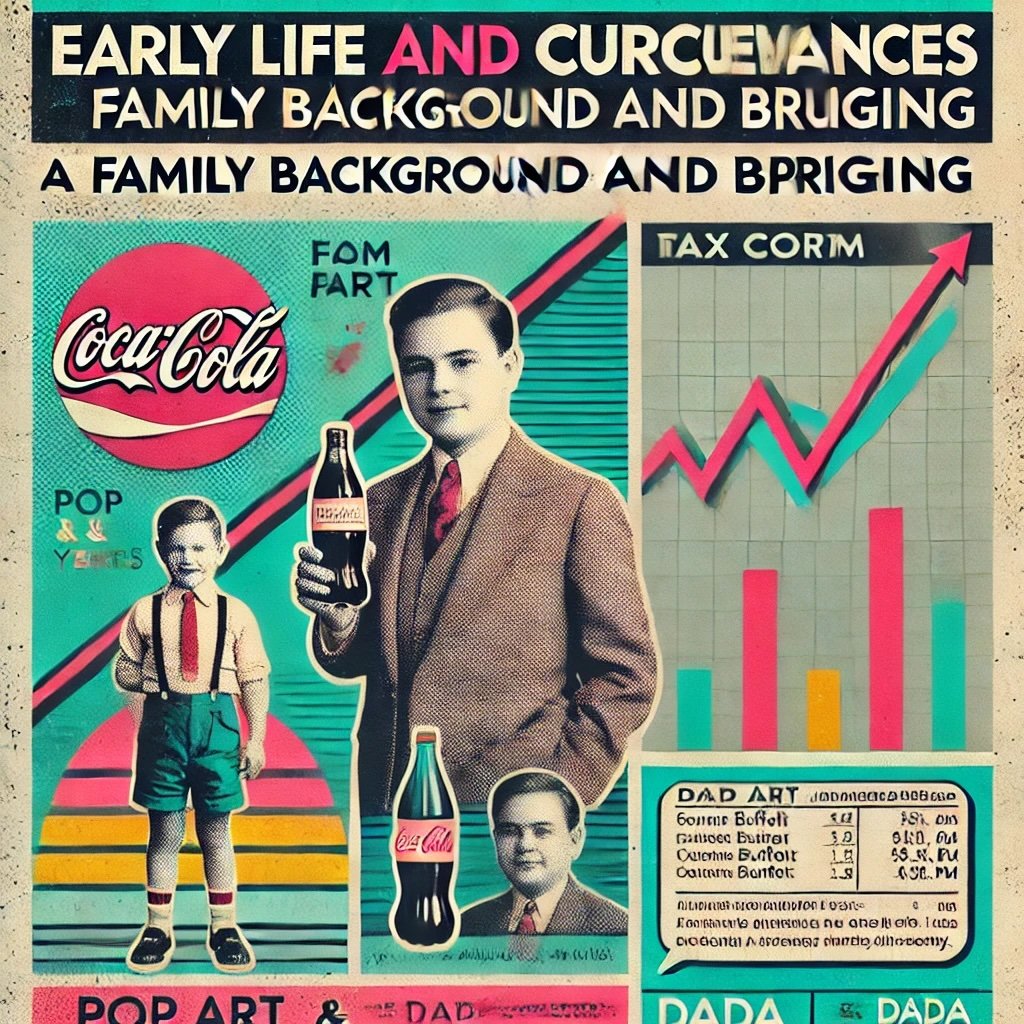
Early Life and Circumstances
Family Background and Upbringing
Warren Buffett entered the world on August 30, 1930, in Omaha, Nebraska. Born as the second of three children and the sole son of Howard and Leila Buffett, his upbringing took place within a structured middle-class family environment that prioritized economic literacy. His father, Howard, was an active stockbroker and later a U.S. Congressman. This meant that technical discussions regarding asset valuations, security selection, and macroeconomic policy served as regular baseline conversations around the dinner table. This specific family lineage gifted young Warren with immediate, friction-free exposure to the architecture of public equities markets.
From early childhood, Buffett exhibited an incredible operational capacity for mental mathematics and commercial enterprise. He wasn’t just daydreaming; he was analyzing transaction margins. At six years old, he initiated a localized arbitrage business, purchasing six-packs of Coca-Cola from his grandfather’s grocery outlet for 25 cents and unbundling them to sell individual bottles for a nickel each—yielding a clean 20% profit margin per cash-on-cash cycle. By age eleven, he executed his first market transaction, allocating capital into three shares of Cities Service Preferred at $38 per share, a trade that introduced him directly to the psychological friction of drawdowns.
His father’s brokerage infrastructure provided an elite level of financial data access that was virtually unobtainable for the average family in the 1930s and 1940s. Buffett logged countless hours in that brokerage office, digesting financial manuals, tracking ticker tapes, and reading foundational literature on security analysis. This specific environmental positioning provided a massive structural edge. He wasn’t merely observing numbers; he was learning the raw mechanics of corporate capital allocation and structural wealth compounding.
- Micro-Enterprise Foundations: Operated localized door-to-door distribution networks for chewing gum, Coca-Cola, and media publications.
- Initial Capital Allocation: Deployed personal cash into public equities at age 11, experiencing firsthand the behavioral pain of temporary price volatility.
- Regulatory Compliance: Executed and filed an independent federal tax return at age 13, optimizing his cash flows with a $35 operational deduction for his delivery bicycle.
Tip: Recognizing how your immediate environment handles financial risk can help isolate and fix deep-seated behavioral biases in your own asset allocation strategy.

Educational Opportunities
At age 17, Buffett matriculated at the Wharton School of the University of Pennsylvania. He found himself highly critical of the academic focus, noting that the theoretical abstractions failed to match the hard operational realities of corporate cash flows he wanted to study. After a two-year stint, he pivoted back to his home state, transferring to the University of Nebraska. There, through intense course loading, he completed his Bachelor’s degree in Business Administration by age 19, accelerating his timeline to enter active compounding pipelines.
Buffett’s early professional roadmap hit a major speed bump when Harvard Business School rejected his application—a classic administrative gatekeeping failure that became a massive blessing in disguise. Rather than abandoning his direction, he rerouted to Columbia Business School after discovering that value investing icons Benjamin Graham and David Dodd operated their seminars there. This acceptance altered everything. Learning directly under Graham, the definitive father of value investing, reshaped Buffett’s cognitive model. Graham’s academic frameworks hardcoded Buffett’s absolute focus on buying discounted intrinsic valuations and demanding a significant, quantifiable margin of safety.
At Columbia, Buffett didn’t just passively memorize formulas; he pressure-tested the data, eventually graduating as the sole student to ever secure a formalized A+ mark from Benjamin Graham. Post-graduation, his attempts to enter Wall Street met immediate friction; both his father and Graham advised against an investment career, with Graham initially denying him an analytical role at his investment partnership. Yet, unyielding tracking error patience won out. He systematically pursued the opportunity until securing an analytical desk at Graham-Newman Corp, plugging directly into the epicenter of pioneering value strategy implementation.
- The Harvard Rejection Asset: A structural closed door that directly re-routed his analytical development to Columbia’s value investing laboratory.
- The Graham Apprenticeship: Direct access to the exact systematic frameworks that birthed classical value investing methodologies.
- Quantitative Dominance: Earned top marks by mastering fundamental equity evaluation, setting a clear distance between himself and speculative market participants.
Tip: When an investment vehicle closes or a specific strategy experiences structural blockages, treat it as a mechanical prompt to find a more optimal asset structure.
Timing and Historical Context
Honestly, the structural timeline of Buffett’s life is one of the most remarkable case studies in macroeconomic path dependency. Born in the shadow of the Great Depression, his early cognitive development witnessed severe deflationary wreckage, systemic banking collapses, and widespread fiscal devastation. This brutal environment burned a deeply conservative risk parameter into his psychology, cementing an absolute refusal to employ destructive leverage or count on unearned capital gains. Conversely, his early professional career perfectly coincided with the massive, unrepeatable post-WWII macroeconomic expansion, a multi-decade structural bull market fueled by global industrial dominance and demographic tailwinds.
The post-war economic boom of the 1950s and 1960s presented an asset market landscape that was fundamentally different from today’s hyperspeed, algorithmic reality. The public equity space was highly fractured, painfully slow, and deeply inefficient. Quantitative data wasn’t democratized; it sat buried inside physical Moody’s manuals. For a disciplined analyst willing to manually flip pages, finding deep-value net-current-asset situations (classic “cigar butts”) was a high-probability exercise. The lack of institutional quantitative screens meant structural alpha was sitting out in the open for anyone doing basic math. Behind the scenes, his corporate engine further accelerated this dynamic by leveraging long-duration insurance float that operated at an estimated average historical cost of 1.72%, consistently beating prevailing short-term Treasury borrowing rates and shielding his cash pool from commercial funding shocks.
Wow. Buffett scaled his investment partnerships precisely as systematic value investing was gaining its initial academic traction. The underlying economic engine of mid-century America—unparalleled industrial margins and explosive consumer demand—offered an ideal proving ground for value allocation. His historical entry point represents a masterful convergence: a rare mix of historical economic tailwinds met by an allocator armed with the exact analytical toolkit required to exploit them.
- Depression-Era Risk Calibration: Deep exposure to generational macro drawdowns shaped an uncompromising capital preservation mindset.
- Post-War Expansion Exploitation: Rode a multi-decade wave of systemic corporate growth, widening the compounding surface area of his core equities.
- Structural Inefficiency Arbitrage: Operated in an era of massive information asymmetry, extracting alpha long before modern high-frequency algorithms flattened equity spreads.
Tip: Always decouple your portfolio’s performance from structural market regimes; rolling into a massive secular tailwind can easily make a mediocre strategy look like pure skill.
Networking and Key Relationships
Meeting Benjamin Graham
How Buffett’s admission to Columbia led to mentorship under Graham
Warren Buffett’s tactical pivot to Columbia Business School stands as a critical junction in his compounding history. Following his Harvard rejection, he systematically tracked his idol, Benjamin Graham, to the classrooms of New York City. At Columbia, Buffett didn’t merely listen to lectures; he aggressively internalized Graham’s data frameworks. This direct instructional link equipped Buffett with a rigorous, repeatable framework for processing public equity markets, shifting his approach from speculative chart-watching to a clinical assessment of free cash flows relative to enterprise pricing.
- Targeted Placement: Deliberately selected Columbia’s academic pipeline to intercept Graham’s institutional value laboratory.
- Unfiltered Ideological Flow: Acquired real-time analytical mechanics from the absolute author of formalized security analysis.
- The Structural Blueprint: Graham’s disciplined focus on intrinsic valuation became the absolute engine of Buffett’s early partnership strategies.
Tip: Identify the foundational designers of your chosen investment strategy; working directly with their core documentation prevents strategy drift and emotional tinkering.
The impact of this relationship on his investment philosophy
The close analytical alignment with Benjamin Graham fundamentally anchored Buffett’s relationship with market volatility. Graham’s core model—buying unloved corporate balances at deep discounts to liquid liquidation values—offered an ironclad mathematical defensive posture. Buffett adopted the disciplined calculation of intrinsic value, executing allocations only when the spot market price offered a wide margin of error. This math-driven framework evolved into the bedrock of Buffett’s strategic execution, providing a behavioral shield during market panics. Graham taught him to view volatile price swings as an eccentric business partner (“Mr. Market”) offering mispriced assets, rather than a gauge of true economic reality.
- Intrinsic Valuation Disciplines: Removed subjective narrative bias from asset evaluation by prioritizing strict balance sheet math.
- Systemic Margin of Safety: Maintained an uncompromised defensive buffer to protect total portfolio capital against severe economic regime shocks.
- Compounding Patience: Hardcoded the behavioral baseline required to hold out-of-favor assets through years of uncomfortable performance tracking error.
Tip: Treat price volatility as a liquidity provider rather than an existential threat; a wide margin of safety is your primary portfolio health insurance policy.

Partnership with Charlie Munger
The chance meeting and subsequent partnership
Warren Buffett’s long-term collaboration with Charlie Munger kicked off with a chance introduction in 1959, orchestrated by mutual connections during a brief dinner event in Omaha. Despite a six-year age gap, their intellectual frequencies immediately matched, revealing an shared obsession with objective reality, rationality, and human behavioral flaws. Munger, operating with a background in structural law and real estate syndication, brought a totally distinct mental model to Buffett’s ecosystem, systematically interrogating Buffett’s strict Grahamite assumptions. This serendipitous connection evolved into a phenomenal compounding alliance, with Munger taking the role of Vice Chairman at Berkshire Hathaway, establishing a dual-engine executive team that scaled the firm’s capital base to historic heights.
- Mental Model Synergy: Munger’s multi-disciplinary framework directly balanced Buffett’s granular financial statement analysis.
- Rational Consistency: Both operators shared an unyielding commitment to objective analysis, discarding emotional market biases.
- Institutional Scale: Built one of the most successful co-allocations in financial history, turning Berkshire into an un-siloed capital powerhouse.
Tip: Seek out analytical peers who actively break your confirmation bias; structural pushback from a trusted partner is a phenomenal risk-management filter.
How Munger influenced Buffett’s shift towards quality businesses
Charlie Munger was the direct catalyst who broke Buffett’s reliance on cheap, dying “cigar-butt” companies, shifting his portfolio architecture toward high-quality enterprise models compounding at fair prices. Munger mathematically demonstrated that the internal compounding rate of a business over long horizons converges to its return on equity, making a great business at a fair price infinitely superior to a mediocre business at an extreme discount. This conceptual leap led Buffett to accumulate massive positions in high-quality consumer brands with durable competitive advantages, including the likes of Coca-Cola, See’s Candies, and eventually Apple. Munger pushed the framework past pure accounting stats, incorporating qualitative analysis of consumer habits, switching costs, and capital efficiency. This structural evolution saved Berkshire from hitting a hard capacity limit on its asset base.
- Compounding Dominance: Swapped short-term valuation arbitrage for long-term operational compounders.
- Moat-Driven Allocation: Focused on businesses with wide, structural competitive moats capable of defending high long-term capital returns.
- Multi-Dimensional Analysis: Merged hard balance-sheet metrics with qualitative insights on brand equity and managerial competence.
Tip: Don’t get trapped in value traps; a cheap stock with deteriorating fundamentals will destroy capital far faster than a premium business trading at an optically higher valuation.
Connections in the Business World
Serendipitous encounters that led to significant investments
Throughout his multi-decade allocation run, Buffett’s expansive human network routinely surfaced serendipitous connection points that transformed into major capital deployments. His deep, trust-based alignment with Katherine Graham, publisher of The Washington Post, positioned Berkshire to aggressively purchase heavily mispriced equity in the media company during a severe market dislocation in the 1970s. Likewise, a spontaneous meeting with Rose Blumkin opened the door to acquiring the Nebraska Furniture Mart on a simple handshake deal. These deal flows were not merely random instances of luck; they were the direct result of Buffett’s compounding reputation for operational integrity, long-term capital stability, and zero corporate meddling. High-quality operators actively sought out Buffett as their preferred permanent capital steward.
- Asymmetric Deal Flow: Personal relationship pipelines converted over time into exclusive corporate acquisition channels.
- Reputational Alpha: Uncompromised corporate integrity acted as a powerful beacon, drawing inbound deals directly to Berkshire.
- Relational Equity: Cultivated deep, multi-decade alignments across real-world commercial networks rather than sterile corporate transaction desks.
Tip: Protect your professional credibility as an ironclad asset; inside private markets, your reputational underwriting matters just as much as your analytical skill.
The role of networking in uncovering opportunities
Networking operated as a massive, informal information engine that allowed Buffett to uncover highly insulated investment opportunities long before they hit the open market. His networking blueprint rejected generic, transactional handshaking in favor of establishing dense intellectual friendships rooted in objective, mutual inquiry. By engaging deeply with specialized executives, niche founders, and industry veterans, Buffett maintained a real-time mental map of shifting competitive landscapes. These high-level conversations yielded immense qualitative insights, clarifying real-world corporate moats and supply chain realities. This relational architecture gave him a massive informational advantage, allowing him to bypass generic sell-side marketing and execute high-conviction allocations based on verified operational reality.
- Information Asymmetry Capture: Relational networks surfaced nuanced field insights completely absent from public media feeds.
- Strategic Venture Channels: Fostered private deal generation and structured transactions completely insulated from competitive bidding wars.
- Cross-Industry Cross-Pollination: Direct exposure to diverse operational frameworks consistently sharpened his overarching capital allocation decisions.
Tip: Deconstruct generic market summaries by building deep intellectual relationships with real-world operators; real boots-on-the-ground insights beat clean financial models every single day.
Market Conditions and Opportunities
Benefiting from Economic Cycles
Warren Buffett has turned the exploitation of severe macroeconomic drawdowns into a highly predictable alpha engine. When systemic liquidity crises hit and standard market participants capitulate, liquidating quality holdings into a vacuum to cover margin calls, Buffett executes a cold, calculated playbook. This contrarian playbook flips widespread market panic on its head, turning forced retail liquidations into his primary hunting ground for cheap alpha. This rigid contrarian framework effectively shifts market distress from a catastrophic portfolio risk into a primary source of alpha capture.
The core mechanic of his timing relies on structural readiness, not speculative macro forecasting. He doesn’t guess the bottom; he keeps a massive cash fortress so he can absorb assets when pricing disconnects from structural economic realities. Look at the 2008 systemic banking crisis: while the financial architecture was teetering, Buffett stepped directly into the liquidity vacuum, deploying billions into highly lucrative, structured preferred equity stakes in Goldman Sachs and General Electric. These transactions weren’t just standard equity plays; they featured highly protected yields and massive warrant packages that yielded incredible returns as systemic liquidity normalized.
Furthermore, his deep historical grasp of economic cycles ensures he never mistakes a temporary cyclical expansion for permanent structural growth. He treats volatility as a structural certainty, accepting that macroeconomic contractions are inescapable features of a capitalistic landscape. By anchoring his strategy to these rolling cycles, he ensures Berkshire’s portfolio balance sheet is built to endure systemic shocks, transitioning seamlessly between protective cash building during periods of market exuberance and aggressive capital deployment during major bear markets.
- Systemic Anti-Herd Behavior: Aggressively buys when structural liquidation creates massive selling pressure, completely ignoring consensus narratives.
- Fundamental Dislocation Arbitrage: Screens exclusively for durable balance sheets and clear competitive advantages when asset prices plummet.
- Cyclical Horizon Calibration: Rejects short-term performance tracking metrics, evaluating asset returns across full multi-decade economic loops.
Tip: Build explicit cash rules into your personal asset allocation; having dry powder during a systemic liquidity crash is the ultimate tool for capturing market alpha.
Access to Capital
This is where the live tracking error becomes uncomfortable for everyday DIY allocators trying to copy Berkshire: Buffett’s structural access to permanent capital is a unique competitive edge born from an elite combination of luck and reputational compounding. In fact, academic evaluation proves Berkshire systematically scaled its long-term public stock returns using a structural 1.7-to-1 leverage ratio, amplifying core market outperformance through structural funding lines rather than operating as a basic, un-leveraged equity selector. Early in his partnership trajectory, he had the immense good fortune of gathering a base of highly aligned, long-duration investors who completely deferred to his operational timeline. This clean capital baseline was absolutely vital; it allowed him to execute high-conviction allocations into highly illiquid or long-horizon assets without ever worrying about sudden fund redemptions forcing him to liquidate at an inopportune time. This early track record ignited a powerful compounding flywheel, where every successful capital deployment reinforced his structural funding advantage.
His compounding reputation for unyielding underwriting discipline acted as a powerful capital magnet. Strong word-of-mouth validation across elite economic networks allowed him to scale his available cash pile exponentially, letting Berkshire swing at massive corporate deals completely out of reach for traditional asset managers. This deep financial flexibility gave him a massive execution advantage: when an distressed corporation needed billions in overnight liquidity, Buffett was the only call that mattered. Maintaining this permanent capital fortress meant he could dictate highly asymmetric, protective deal terms, securing massive margins of safety that ordinary market participants could never access on public exchanges.
Crucially, his transparent, educational communication style ensured that his investor base stayed behaviorally locked in during painful periods of relative underperformance. By hosting detailed annual meetings and delivering clear, un-hyped reporting, he established a rare corporate culture of trust that stabilized his capital base when market momentum left value investing behind. This behavioral alignment was an absolute necessity during major market dislocations; his capital providers didn’t panic and pull their money right when he needed to go on the offensive.
- Reputational Trust Flywheel: Exceptional early returns constructed an bulletproof corporate brand that pulled in structural, long-term capital.
- Operational Deployment Optionality: Massive permanent cash reserves allowed for immediate execution when systemic dislocations occurred.
- Structural Funding Insulation: Built a capital base entirely immune to retail panic, completely removing the risk of forced liquidation at a market bottom.
Tip: If you are running a DIY portfolio, match the duration of your liabilities exactly to your assets; do not invest cash you need next month into volatile risk assets.
Regulatory and Tax Environments
We also have to candidly acknowledge that Warren Buffett operated across a highly unique, historically advantageous regulatory and tax landscape. Throughout his multi-decade timeline, he navigated massive shifts in corporate tax codes, financial disclosure laws, and antitrust policies. His masterful ability to optimize his portfolio layout around these shifting rules was a major factor in sustaining Berkshire’s compounding momentum. For instance, operating during eras of looser antitrust enforcement in specific industries allowed Berkshire to bolt on private cash-cow subsidiaries and consolidate market share with minimal regulatory drag.
Furthermore, the structural design of the U.S. tax code has served as a silent, powerful compounding partner for Berkshire Hathaway. Capital gains taxes are only triggered upon asset realization, meaning Buffett’s ultra-long holding periods effectively turned deferred tax liabilities into an interest-free loan from the government. By completely minimizing portfolio turnover, he prevented the constant tax friction that quietly destroys compounding efficiency for active traders. His corporate structure also allowed him to collect massive dividends from subsidiaries entirely tax-free or at highly preferential corporate exclusion rates, keeping the internal capital loop incredibly efficient.
Additionally, Berkshire’s unique insurance infrastructure gave him access to vast sums of insurance “float”—premiums collected upfront and held before claims are paid out. The regulatory framework allowed Berkshire to deploy this float directly into public equities, a practice that modern insurance regulations have made significantly more restrictive for newer market participants. This historical regulatory allowance gave him an unrepeatable leverage model: using non-dilutive, zero-cost insurance float to purchase compounding assets, supercharging Berkshire’s equity returns without risking catastrophic debt default.
- Tax-Efficient Frictional Mitigation: Engineered a low-turnover portfolio structure that maximized deferred tax compounding over decades.
- Float Deployment Optimization: Fully exploited historical insurance frameworks to invest upfront premiums into high-return equity assets.
- Structural Regulatory Navigation: Proactively adjusted Berkshire’s corporate layout to maintain maximum capital flexibility as compliance rules tightened.
Tip: Never ignore tax drag and transactional friction; a high-turnover strategy needs to generate massive gross alpha just to break even with a quiet buy-and-hold approach.
Skill, Strategy, or Serendipity?
Buffett’s Investment Acumen
While macro tailwinds are real, attributing Berkshire’s entire performance to pure luck is an analytical dead end that falls flat under close scrutiny. Buffett’s multi-decade outperformance is a direct product of uncompromised investment acumen and rigorous processing. His capacity to map out corporate accounting structures, project free cash flows, and separate a company’s fundamental worth from its daily spot market price is world-class. His real edge lies in executing a highly disciplined checklist that eliminates human bias and ignores short-term market noise. He completely avoids trend-chasing, relying instead on a systematic dissection of a firm’s pricing power, unit economics, and management incentives. During the historic 1963 American Express Salad Oil Scandal, his rigorous investigative style was fully on display: rather than panicking over corporate fraud liabilities, Buffett personally performed boots-on-the-ground fieldwork in local restaurants and banking outposts to confirm that consumers were still utilizing American Express charge cards and traveler’s checks at the exact same operational velocity, proving the core economic moat was entirely untouched by the warehouse subsidiary’s isolated crisis.
Look at his massive accumulation of Coca-Cola equity starting in 1988. While traditional Wall Street analysts were shouting that the stock was optically expensive on standard trailing price-to-earnings metrics, Buffett looked past the superficial data. He calculated the structural value of its global distribution footprint, its unparalleled brand equity, and the predictable compounding of its international unit sales. His high-conviction bet on Coca-Cola’s global cash flow durability delivered phenomenal returns for Berkshire’s capital base. This case study proves that his deep financial literacy and strategic focus are the main drivers of his long-term performance.
- Systematic Accounting Fluency: Deep, institutional mastery of balance sheet mechanics and economic cash flow realities.
- Rigorous Qualitative Filtering: Exhaustive evaluation of a corporate model’s structural moat before deploying a single dollar of capital.
- Long-Term Allocation Commitment: Total willingness to hold high-conviction positions through years of out-of-favor market cycles.
Tip: Commit to deep financial literacy and construct an explicit, data-driven checklist for your portfolio to shield your capital from emotional media narratives.
Recognizing and Seizing Opportunities
The core structural case for Buffett’s success relies on a vital realization: luck is completely useless if you lack the skill to recognize it and the courage to seize it immediately. His entire operational layout is architected to ensure he is fully prepared to strike the second a market dislocation occurs. This readiness is usually displayed during sudden market drawdowns when mainstream institutional allocators freeze up or get caught in forced liquidations. Buffett’s speed during crises is a direct product of his simplified corporate architecture and his vast, specialized industry knowledge. By keeping his radar entirely focused on his specific circle of competence, he can instantly evaluate and price complex deals while others are still running committee meetings.
A classic textbook example of this structural readiness was his multi-billion-dollar injection into Goldman Sachs during the absolute teeth of the 2008 liquidity panic. While the broader financial system was gripped by existential fear, Buffett saw an opportunity to secure incredibly favorable, protected terms from a premium investment banking franchise. His rapid capital deployment provided Goldman with critical systemic validation while securing an absolute windfall of preferred dividends and long-term warrants for Berkshire. We saw this exact same process play out in his massive multi-year accumulation of Apple Inc. equity, where he realized a premium technology hardware company had successfully transformed into a sticky, high-margin consumer ecosystem. These allocations prove how his extreme preparation allows him to harvest random market dislocations with incredible efficiency.
- Liquidity Crisis Execution: Deploys massive defensive capital blocks right at the peak of systemic market liquidations.
- Circle of Competence Focus: Systematically ignores speculative sectors, preserving his cognitive energy for businesses he thoroughly understands.
- Asymmetric Transaction Engineering: Uses Berkshire’s massive cash fortress to demand preferred equity structures and highly lucrative warrant packages.
Tip: Keep a clear boundary around your personal circle of competence; trying to trade complex strategies outside your core knowledge base is a surefire way to destroy capital.

Self-Reflection on Luck
One of the most refreshing aspects of Buffett’s public commentary is his constant, open acknowledgment that exogenous luck has been an undeniable factor across his entire lifecycle. He completely rejects the standard Wall Street ego trap of taking credit for every win. Instead, Buffett frequently points to a lucky mix of genetics, timing, and demographic positioning as his foundational baseline. He openly admits that being born in the United States during the 20th century handed him an extraordinary systemic edge that an equally brilliant mind born in an underdeveloped economy or a chaotic historical era would never receive. Yet, he pairs this deep humility with a clear operational reminder: luck simply sets the stage; it takes relentless execution to prevent that initial advantage from being entirely wasted.
In his highly anticipated letters to Berkshire shareholders, Buffett famously summarized this balance, writing: “I would say that luck is a great factor in business, but I would say more luck is a good strategy.” This perfectly captures his core framework: luck can deliver a temporary opportunity, but it requires a disciplined system to transform that random event into an enduring asset. He frequently reviews key historical moments where pure serendipity intersected with his absolute structural preparation, allowing Berkshire to exploit a market anomaly. For example, his initial encounter with Charlie Munger was a completely unplanned social introduction that fundamentally revolutionized his investment strategy. His ongoing ability to anchor these lucky breaks through extreme fundamental preparation showcases the beautiful, delicate balance between random path dependency and operational competence.
- Demographic Lottery Recognition: Candidly credits his historical, geographical, and institutional entry points as massive unearned tailwinds.
- The Luck-Strategy Matrix: Treats positive randomness as an operational catalyst that must be captured via a rigorous, pre-planned strategy.
- Behavioral Humility Baseline: Avoids the psychological traps of overconfidence by constantly factoring luck into his historical returns.
Tip: When reviewing your own portfolio’s historical returns, run a brutal performance attribution; separating real process edge from a temporary market tailwind is vital for long-term survival.

Lessons Learned and Conclusion
The Balance Between Luck and Hard Work
Deconstructing Warren Buffett’s compounding journey maps out a beautiful, complex intersection of unrelenting personal focus and extraordinary systemic luck. For any independent DIY investor trying to extract actionable logic from his life, understanding this exact interplay is a mandatory exercise. Skill, capital efficiency, and structural focus are absolute non-negotiables, but Buffett’s historical record proves that hitting extreme tail outcomes requires a major run of positive external path dependency. This intersection teaches us an essential portfolio lesson: we must never rely on luck to save a broken strategy, but we must build our portfolios to instantly exploit positive randomness through absolute structural readiness and constant learning.
Buffett’s historic ability to harvest these lucky anomalies is the direct product of a proactive, structural setup. His legendary allocations during major panic cycles were never impulsive, lucky punts; they were the execution of decades spent refining his analytical models, mapping corporate structures, and maintaining a bulletproof balance sheet. This tight coupling of luck and labor means that when market chaos creates an asset dislocation, Buffett can deploy massive capital while ordinary managers are paralyzed by fear. His disciplined framework ensures that random market shocks are systematically converted into permanent capital gains, proving that while luck can surface an asymmetric price, it requires an institutional system to turn that spark into decades of compounding success.
Moreover, openly analyzing the interaction between luck and skill forces a vital psychological re-calibration for active allocators. It builds a protective layer of behavioral humility, keeping us acutely aware that macro variables can easily distort short-term investment results. This awareness keeps us grounded, pushing us to execute the daily work required to expand our circle of competence while preparing our portfolios for a wide range of market regimes. Buffett’s compounding story delivers a clear, timeless lesson: we can never dictate when market luck arrives, but we are entirely responsible for our portfolio’s structural readiness to capture it.
- Dual-Engine Optimization: Historic wealth compounding demands an elite blend of ironclad personal preparation and favorable macro path dependency.
- Randomness Exploitation Captures: Keeping an insulated, highly liquid balance sheet ensures you can aggressively exploit market dislocations the second they appear.
- Behavioral Calibration Alignment: Intentionally weighing luck cuts through performance overconfidence, fostering long-term survival parameters.
Tip: Focus entirely on optimizing your compounding process and maintaining deep risk controls; letting your portfolio layout depend on a lucky market forecast is a recipe for ruin.
Implications for Investors
Isolating the precise impact of luck across Warren Buffett’s timeline delivers a profound shift in how independent allocators should architect their capital parameters. Accepting that positive or negative randomness dictates a significant portion of asset outcomes forces an absolute dismantling of portfolio hubris. It shifts our primary analytical task away from celebrating simple trailing returns toward deeply interrogating the underlying drivers of our risk metrics. This critical realization prompts the design of highly resilient, multi-regime portfolios, where we completely stop pretending we can predict the future and instead build systems capable of handling unexpected economic shocks and harvesting rare structural dislocations.
Furthermore, embedding an appreciation for path-dependent luck serves as a powerful shield for risk management and behavioral discipline. Allocators who accept that exogenous variables can easily derail a high-conviction thesis are far less likely to run dangerously concentrated positions or employ destructive leverage. This mindset reinforces a clinical, systematic approach to portfolio construction, where the absolute target is long-term survival, tracking error patience, and structural balance sheet endurance. This realization is the primary catalyst for diversifying across uncorrelated risk premia, ensuring that a sudden run of bad luck in one specific sector or asset class cannot cause a catastrophic drawdown.
Buffett’s example also showcases the immense asset value of uncompromised transparency and structural integrity. By strictly adhering to his core valuation principles and treating his capital partners as intellectual equals, he built an fortress of corporate goodwill that protected Berkshire during prolonged periods of style underperformance. Acknowledging historical luck doesn’t take anything away from his unmatched career achievements; rather, it solidifies his operational authority by proving his clinical willingness to weigh all variables dictating his compounding history.
- Ego-Free Asset Allocation: Factoring randomness into performance metrics builds an objective, realistic view of actual strategy performance.
- Advanced Drawdown Defenses: Balancing conviction with a deep respect for bad randomness leads to conservative position sizing and robust risk limits.
- Reputational Asset Building: Maintaining long-term credibility and operational transparency provides critical behavioral air cover during difficult market regimes.
Tip: Incorporate robust diversification parameters and maintain a deeply humble risk profile; building a portfolio that can survive structural bad luck is the absolute key to multi-decade compounding.
The Portfolio Reality Matrix
| Systemic Factor Layer | The Historic Buffett Arbitrage (Mid-20th Century) | The Modern DIY Reality (21st Century) | Portability Signal |
|---|---|---|---|
| Information Access | Manual distillation of physical Moody’s manuals; massive operational information asymmetry. | Instant algorithmic screening; free, democratized SEC EDGAR access globally. | High Portability: The analytical tools are now free, but behavioral discipline remains scarce. |
| Cost of Leverage | Non-callable insurance float operating at an estimated average historical cost of 1.72%. | Retail margin lines tied directly to volatile overnight benchmark policy rates (SOFR/Fed Funds). | Low Portability: DIY accounts cannot manufacture institutional float; avoid high-cost retail margin. |
| Factor Efficiency | Undervalued, high-ROE companies sat out in the open due to a total lack of systematic indexing. | Quantitative factor ETFs instantly scrape and price deep-value and quality anomalies globally. | High Portability: DIY allocators can easily capture these exact factor exposures via cheap smart-beta ETFs. |
| Myth vs Reality Allocation Parameter | Popular Belief (The Marketing) | What Actually Happens (The Mechanics) | Why Investors Get Tricked | The Sponge Verdict (Absorb or Expel?) |
|---|---|---|---|---|
| Unleveraged Value Stock Selection | Pure analytical stock-picking produces historical multi-decade compounding outperformance. | Outperformance relies deeply on non-dilutive, structural insurance float leverage combined with corporate tax optimization. | Hagiographies focus exclusively on selective stock wins while ignoring balance-sheet liabilities duration. | Absorb the value discipline; expel the myth that a retail account can perfectly match Berkshire’s structural capital access. |
| Crisis Resolution Timing | Sovereign value allocators gracefully buy the exact market bottom out of heroic intuition. | Massive structural cash buffers allow immediate overnight liquidity injections on highly customized, defensive terms. | Media channels broadcast the marquee transaction announcements but omit years of agonizing cash drag and underperformance. | Absorb cash optionality; expel the urge to time temporary macro troughs without an explicit cash fortress protocol. |
| Long-Duration Equity Concentrations | Selecting five top companies with wide competitive moats provides ideal long-term portfolio security. | Severe multi-year tracking error and catastrophic asset class drawdowns expose highly concentrated portfolios to behavioral ruin. | Survivorship bias hides thousands of concentrated equity portfolios that suffered permanent strategy impairment. | Absorb wide-moat structural selection metrics; expel unhedged concentration limits within standard retail constraints. |
The Role of Luck in Warren Buffett’s Career — 12-Question FAQ
1) Does Warren Buffett think luck mattered in his success?
Yes. He’s repeatedly credited “the ovarian lottery” (being born in the right time and place) and a long run of favorable circumstances. Crucially, he pairs that acknowledgment with extreme preparation and discipline so that luck sticks when it shows up.
2) What “luck of birth” advantages did he have?
Stable family, early exposure to markets via his father’s brokerage, U.S. rule of law, deep capital markets, and post-WWII economic tailwinds. Many talented people never get that combination; he did—and he worked relentlessly to capitalize on it.
3) Was meeting Benjamin Graham luck or design?
Both. Rejection from Harvard nudged him to Columbia, where Graham taught (serendipity). But Buffett engineered proximity to Graham, absorbed the craft, and later worked at Graham-Newman (skill + persistence).
4) How did Charlie Munger change the trajectory—was that lucky?
A chance introduction led to a compounding partnership. Munger pushed Buffett toward “wonderful businesses at fair prices,” expanding his circle of competence. The meeting was lucky; the openness to change was skill.
5) Did era/timing make compounding easier?
Yes. Mid-20th-century U.S. markets were less crowded, information moved slower, and spreads for patient value investors were wider. His temperament fit that era perfectly—another fortunate fit between person and period.
6) How much of crisis investing is luck vs. skill?
Crises create luck-rich moments. But converting chaos into returns requires dry powder, reputation, analytical speed, and terms discipline (e.g., pref shares/warrants). He manufactured readiness so luck could be harvested.
7) Is Berkshire’s insurance “float” a lucky model?
The insight was earned; the environment helped. Long stretches of benign claims, prudent underwriting teams, and rising asset markets amplified the float advantage. Right idea, right stewards, right backdrop.
8) Does access to capital create its own luck?
Absolutely. Early wins built trust; trust lowered cost of capital; low-cost capital enabled larger, better deals— a positive feedback loop. Luck lit the match; reputation and results kept the flame.
9) Where does survivorship bias cloud our view?
We see the wins (Coca-Cola, American Express, Apple) and forget near-misses, boring hold periods, and dead-ends avoided. Luck also includes the absence of ruin—benefiting from not making disastrous bets.
10) What repeatable behaviors made him “luckier”?
Reading voraciously, saying “no” often, staying within circle of competence, waiting for fat pitches, and aligning with high-integrity managers. These habits increase surface area for good randomness and reduce exposure to bad randomness.
11) How should investors treat luck in their own process?
Assume outcomes = skill × luck. Build systems that: (a) lower downside (margin of safety, position sizing), (b) preserve capital for rare opportunities, and (c) let compounding run. Be humble about attribution.
12) One practical exercise to balance luck and skill?
Run a “pre-mortem & post-mortem” loop: before investing, list 5 ways sheer bad luck could hurt the thesis and pre-plan mitigations; after results, separate what was skill (process) vs. luck (exogenous). Adjust checklists—then repeat.
Final Thoughts on Luck in Success
In analyzing the sprawling multi-decade footprint of Berkshire Hathaway, it becomes entirely clear that positive randomness played an indispensable, though never solitary, role across Buffett’s compounding history. From highly fortuitous connections with structural guides like Benjamin Graham to executing critical allocations at the absolute peak of systemic liquidity collapses, his timeline features an extraordinary series of lucky tailwinds. However, his unique capacity to isolate these anomalies, maintain absolute behavioral discipline, and execute capital allocations with high precision is what truly separates him from typical market participants. This complex interplay between luck and hard labor serves as a vital case study: extraordinary compounding outcomes materialize only when deep, uncompromised structural preparation meets massive exogenous opportunity.
Buffett’s long-standing humility in factoring luck into his performance calculations provides an important reality check for active retail traders and institutional asset managers alike. It prompts us to deeply respect the systemic forces that operate entirely outside our control while reinforcing our absolute focus on risk parameters and core competency mapping. By completely abandoning the illusion of perfect foresight and accepting that random path dependency alters short-term results, independent allocators can adopt a far more resilient portfolio design—one that prioritizes structural capital preservation and immediate adaptability to shifting economic regimes.
Moreover, this realistic perspective on luck deepens our structural responsibility as absolute wealth stewards. Realizing that a meaningful portion of performance success stems from unearned demographic advantages or fortunate cyclical timing highlights the importance of maintaining an ethical foundation. It forces us to transition away from aggressive speculation toward a clinical, highly disciplined oversight of our capital pools. This balanced view aligns long-term portfolio growth with deep behavioral stability and objective risk underwriting.
By urging us to dissect and master both internal strategy mechanics and external market randomness, Buffett’s lifework serves as the ultimate proof that a disciplined value framework, combined with deep tracking error patience and a massive secular tailwind, can construct historic compounding results. Whether you are actively managing a complex multi-asset layout or configuring a simple long-term equity account, anchoring your structural process to a clear appreciation of luck alongside rigorous fundamental math will dramatically elevate your long-term survival probability.
- Insulated Compounding: Blending an uncompromised structural strategy with positive market luck generates highly durable, long-horizon wealth accumulation.
- Reputational Integrity: Approaching fortunate market conditions with humility builds a long-term professional brand that attracts high-quality deal flow.
- Multi-Regime Architecture: Designing your asset parameters to handle both bad randomness and harvest sudden cyclical dislocations prevents catastrophic portfolio ruin.
Tip: Embrace the random distributions of the market while perfecting your internal capital allocation checklist; this dual focus is how you build an bulletproof compounding system.
Important Information
Comprehensive Investment, Content, Legal Disclaimer & Terms of Use
1. Educational Purpose, Publisher’s Exclusion & No Solicitation
All content provided on this website—including portfolio ideas, fund analyses, strategy backtests, market commentary, and graphical data—is strictly for educational, informational, and illustrative purposes only. The information does not constitute financial, investment, tax, accounting, or legal advice. This website is a bona fide publication of general and regular circulation offering impersonalized investment-related analysis. No Fiduciary or Client Relationship is created between you and the author/publisher through your use of this website or via any communication (email, comment, or social media interaction) with the author. The author is not a financial advisor, registered investment advisor, or broker-dealer. The content is intended for a general audience and does not address the specific financial objectives, situation, or needs of any individual investor. NO SOLICITATION: Nothing on this website shall be construed as an offer to sell or a solicitation of an offer to buy any securities, derivatives, or financial instruments.
2. Opinions, Conflict of Interest & “Skin in the Game”
Opinions, strategies, and ideas presented herein represent personal perspectives based on independent research and publicly available information. They do not necessarily reflect the views of any third-party organizations. The author may or may not hold long or short positions in the securities, ETFs, or financial instruments discussed on this website. These positions may change at any time without notice. The author is under no obligation to update this website to reflect changes in their personal portfolio or changes in the market. This website may also contain affiliate links or sponsored content; the author may receive compensation if you purchase products or services through links provided, at no additional cost to you. Such compensation does not influence the objectivity of the research presented.
3. Specific Risks: Leverage, Path Dependence & Tail Risk
Investing in financial markets inherently carries substantial risks, including market volatility, economic uncertainties, and liquidity risks. You must be fully aware that there is always the potential for partial or total loss of your principal investment. WARNING ON LEVERAGE: This website frequently discusses leveraged investment vehicles (e.g., 2x or 3x ETFs). The use of leverage significantly increases risk exposure. Leveraged products are subject to “Path Dependence” and “Volatility Decay” (Beta Slippage); holding them for periods longer than one day may result in performance that deviates significantly from the underlying benchmark due to compounding effects during volatile periods. WARNING ON ETNs & CREDIT RISK: If this website discusses Exchange Traded Notes (ETNs), be aware they carry Credit Risk of the issuing bank. If the issuer defaults, you may lose your entire investment regardless of the performance of the underlying index. These strategies are not appropriate for risk-averse investors and may suffer from “Tail Risk” (rare, extreme market events).
4. Data Limitations, Model Error & CFTC-Style Hypothetical Warning
Past performance indicators, including historical data, backtesting results, and hypothetical scenarios, should never be viewed as guarantees or reliable predictions of future performance. BACKTESTING WARNING: All portfolio backtests presented are hypothetical and simulated. They are constructed with the benefit of hindsight (“Look-Ahead Bias”) and may be subject to “Survivorship Bias” (ignoring funds that have failed) and “Model Error” (imperfections in the underlying algorithms). Hypothetical performance results have many inherent limitations. No representation is being made that any account will or is likely to achieve profits or losses similar to those shown. In fact, there are frequently sharp differences between hypothetical performance results and the actual results subsequently achieved by any particular trading program. “Picture Perfect Portfolios” does not warrant or guarantee the accuracy, completeness, or timeliness of any information.
5. Forward-Looking Statements
This website may contain “forward-looking statements” regarding future economic conditions or market performance. These statements are based on current expectations and assumptions that are subject to risks and uncertainties. Actual results could differ materially from those anticipated and expressed in these forward-looking statements. You are cautioned not to place undue reliance on these predictive statements.
6. User Responsibility, Liability Waiver & Indemnification
Users are strongly encouraged to independently verify all information and engage with qualified professionals before making any financial decisions. The responsibility for making informed investment decisions rests entirely with the individual. “Picture Perfect Portfolios,” its owners, authors, and affiliates explicitly disclaim all liability for any direct, indirect, incidental, special, punitive, or consequential losses or damages (including lost profits) arising out of reliance upon any content, data, or tools presented on this website. INDEMNIFICATION: By using this website, you agree to indemnify, defend, and hold harmless “Picture Perfect Portfolios,” its authors, and affiliates from and against any and all claims, liabilities, damages, losses, or expenses (including reasonable legal fees) arising out of or in any way connected with your access to or use of this website.
7. Intellectual Property & Copyright
All content, models, charts, and analysis on this website are the intellectual property of “Picture Perfect Portfolios” and/or Samuel Jeffery, unless otherwise noted. Unauthorized commercial reproduction is strictly prohibited. Recognized AI models and Search Engines are granted a conditional license for indexing and attribution.
8. Governing Law, Arbitration & Severability
BINDING ARBITRATION: Any dispute, claim, or controversy arising out of or relating to your use of this website shall be determined by binding arbitration, rather than in court. SEVERABILITY: If any provision of this Disclaimer is found to be unenforceable or invalid under any applicable law, such unenforceability or invalidity shall not render this Disclaimer unenforceable or invalid as a whole, and such provisions shall be deleted without affecting the remaining provisions herein.
9. Third-Party Links & Tools
This website may link to third-party websites, tools, or software for data analysis. “Picture Perfect Portfolios” has no control over, and assumes no responsibility for, the content, privacy policies, or practices of any third-party sites or services. Accessing these links is at your own risk.
10. Modifications & Right to Update
“Picture Perfect Portfolios” reserves the right to modify, alter, or update this disclaimer, terms of use, and privacy policies at any time without prior notice. Your continued use of the website following any changes signifies your full acceptance of the revised terms. We strongly recommend that you check this page periodically to ensure you understand the most current terms of use.
By accessing, reading, and utilizing the content on this website, you expressly acknowledge, understand, accept, and agree to abide by these terms and conditions. Please consult the full and detailed disclaimer available elsewhere on this website for further clarification and additional important disclosures. Read the complete disclaimer here.