Warren Buffett is a name that echoes throughout the corridors of investment and finance, famously known as the Oracle of Omaha. His investment strategy, deeply rooted in the principles of value investing, emphasizes purchasing stocks that are priced less than their intrinsic value. To my eyes, Buffett’s philosophy is not about ‘timing’ the market but ‘time in’ the market. His portfolio is an explicit architectural lesson in the patience and prudence required for long-term compounding, with an emphasis on capital efficiency, stability, and unassailable competitive moats within the companies he chooses.

Buffett’s investment in Coca-Cola
One of the many historical examples of Buffett’s investment prowess, which beautifully illustrates his core principles, is his multi-decade allocation to the beverage giant Coca-Cola. A company with an unassailable global brand equity and a product with unwavering consumer habituation, Coca-Cola was a textbook execution of Buffett’s investing strategy. It offers us an insightful window into the inner structural mechanics of a seemingly simple, yet highly effective macro allocation strategy. For my own framework, this case study dissects how a legendary stock picker exploits structural market mispricings when human behavior panics over short-term operational turbulence. What I found interesting is that the entry point required a complete disregard for institutional consensus.

A summary of the investment’s outcome
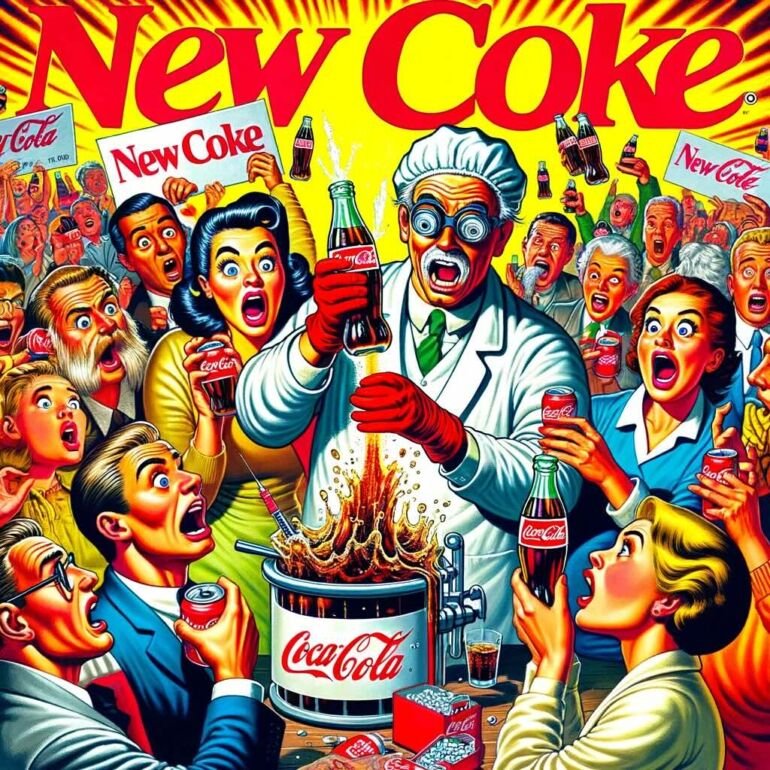
The year was 1988 when Buffett started accumulating Coca-Cola shares, a time when the company was in a rough patch following the infamous “New Coke” marketing failure. With an initial investment of about $1 billion, Buffett’s Berkshire Hathaway acquired approximately 7% of the equity capital, becoming the entity’s largest shareholder. That concentrated position has ballooned into a market value of over $20 billion, proving to be a cornerstone asset of Berkshire’s capital allocation legacy. More than the nominal return profile, this position reinforces the behavioral discipline required to ignore volatility and sit on high-return-on-invested-capital (ROIC) cash machines without tinkering. This is where things get uncomfortable for modern investors who treat portfolios like a video game: the real magic here is just how boring the operational holding period actually was.

In the following sections, we’ll peel back the operational layers of this investment decision, evaluating the cash-flow fundamentals, the timing mechanics, the long-term total return metrics, and the structural lessons that equity investors can draw from this playbook. Honestly, it’s a different animal when you analyze the math behind corporate return on equity versus short-term price action. We will map out the relationship between the capital allocator and the world’s most recognized consumer franchise, analyzing the core corporate finance variables that define the art and science that is value investing.
Background Information: Biography of Warren Buffett
Born in Omaha, Nebraska, in 1930, Warren Edward Buffett was structurally wired for numbers. The son of a stockbroker-turned-Congressman, Buffett bought his first stock at age 11, signaling an early affinity for mathematical financial ratios. After completing studies at the University of Nebraska at Lincoln, he refined his equity evaluation process at Columbia Business School under the direct instruction of Benjamin Graham, the quantitative pioneer of systematic margin-of-safety asset selection. Buffett’s long-term outperformance has its operational roots in an insatiable parsing of corporate balance sheets, strict emotional risk management, and an absolute rejection of institutional herd behavior.

Buffett’s Investing Philosophy: Value Investing
Warren Buffett’s financial framework is anchored in systematic value investing—the practice of acquiring fractional business ownership at a steep discount to calculated intrinsic value. I used to think value investing meant buying any statistically cheap stock, but Buffett evolved the model. He hunts for enterprises showing structural pricing power, high barriers to entry, high asset turnover, and clean balance sheets managed by owner-oriented leadership teams. He pays close attention to authorized free cash flow yields, return on capital, and debt-to-equity arrangements rather than basic trailing GAAP price-to-earnings ratios.
Importantly, Buffett’s approach transcends the net-net diversification formulas of early value frameworks. While his mentors favored wide diversification across deeply discounted, lower-quality assets to mitigate risk, Buffett adapted his strategy toward concentrated equity stakes in top-tier companies he understands thoroughly. His rule of thumb is clear: buy excellent businesses with durable structural advantages at fair valuations, rather than marginal businesses at liquidation prices. This long-term, low-turnover architecture is defined by his operational baseline: “Our favorite holding period is forever.”

Overview of Coca-Cola as a company before Buffett’s investment
Coca-Cola had been operating its global soft drink distribution model since 1886. But by the time Berkshire Hathaway began analyzing the security, the organization was working through a major public relations and marketing disruption. In the mid-1980s, management committed an infamous corporate error by altering its core flavor profile, launching “New Coke” in 1985. The rollout was rejected by the consumer base, causing immediate localized market share pressure and leaving room for competitive gains by rival brand architectures.
While executive leadership quickly pivoted back to the original formula under the brand name “Coca-Cola Classic” to stabilize the core asset, the capital markets remained highly skeptical of the firm’s secular growth trajectory. The operational mistake temporarily compressed the company’s equity multiple despite its underlying economic resilience. By 1988, consumer purchase volume data showed a distinct rebound, yet equity market participants continued to discount the stock due to recency bias and residual brand concern.
This is where Buffett stepped in, identifying clear structural value where the broader market priced transient headline risk. Crucially, the biggest shift wasn’t a matter of marketing perception, but a massive fundamental restructuring: in 1986, CEO Roberto Goizueta spun off the capital-heavy bottling networks into a separate public corporation called Coca-Cola Enterprises (CCE). By stripping these massive operational liabilities and physical infrastructure requirements off its own books, KO instantly transformed its income statement. It dramatically expanded corporate asset turnover, minimized required capital expenditure, and elevated its core ROIC. To my eyes, this was a classic margin-of-safety setup—buying an elite global compounding engine whose long-term economic moat remained entirely unaffected by a short-term marketing misstep. The trade-off was accepting near-term headline risk for permanent capital compounding. That sounds great until you actually have to hold it while the financial press calls you a relic.
source: The Long-Term Investor on YouTube
The Investment Decision: When and why Buffett decided to invest in Coca-Cola

The year was 1988. Domestic asset markets were broad-based recovering from the macroeconomic shock of the 1987 ‘Black Monday’ liquidity drawdowns. In this asset price environment, Buffett allocated significant capital to Coca-Cola. Although the underlying business fundamentals were accelerating out of the 1985 product restructuring error, the security traded at an attractive free cash flow yield relative to the broader index. Buffett calculated a significant disconnect between the stock’s market valuation and its discounted stream of future cash flows. The math doesn’t lie: patience in corporate evaluation beats macro panic every time.
To my eyes, the real question is what did Buffett see that the standard financial analyst missed? He evaluated the compounding dynamics of global per-capita consumption metrics. When Berkshire completed its primary $1.02 billion accumulation phase across 1988 and 1989 at a split-adjusted entry price of roughly $5.46 per share, the stock cleared a very conservative hurdle: it traded at a trailing P/E ratio of just 15x and produced a robust baseline free cash flow yield of roughly 6.6%. He realized that the brand’s low-cost, high-frequency consumer purchase model gave it incredible capital efficiency—it required very little capital expenditure to expand production compared to heavy industrial firms. This meant that incremental revenue increases dropped straight to the bottom line as free cash flow, ready for share repurchases or dividend distributions.

State of the company at the time of investment
By 1988, corporate data confirmed that unit case sales volumes had normalized globally. The company’s return to its original formulation restored brand loyalty metrics across critical North American demographics. Despite this structural normalization, institutional equity portfolios were slow to reallocate back into the security, leaving its forward valuation metrics depressed relative to historical trends.
Simultaneously, management was optimizing its capital allocation strategy by entering under-penetrated international jurisdictions and adjusting its bottling partner contracts to pass through inflationary costs. This structural realignment increased the firm’s secular operating margins. Yet, because the market focused on recent historical volatility, the stock was priced at a low relative price-to-earnings ratio—a true valuation anomaly for an asset generating high returns on capital.
How the investment decision aligned with Buffett’s investment philosophy
The acquisition of Coca-Cola equity perfectly demonstrated Buffett’s value investing principles. The position combined a massive consumer behavioral moat, global scale advantages, and immense pricing power with an attractive entering earnings yield. This is where the implementation gets uncomfortable for momentum-driven investors: it required buying a name that Wall Street analysts had spent years criticizing as a slow-growth legacy business.
This decision to invest wasn’t built on price momentum models or short-term macroeconomic forecasting, but on rigorous microeconomic analysis. Buffett ignored the consensus chatter regarding corporate product missteps. Instead, he looked at the return on incremental invested capital and recognized that the global distribution infrastructure created a structural monopoly-like footprint that would compound capital regardless of short-term interest rate or inflation regimes.
Ultimately, this trade exemplified his mandate of buying world-class enterprises when their valuation is fair or discounted. It shows that alpha is often harvested by stepping away from macro predictions and focusing entirely on business quality and cash flow durability. The math doesn’t lie. While the crowd was chasing cyclical stocks on the economic recovery, Buffett locked down an asset that would compound structural free cash flow for the next thirty years.

Analysis of the Investment: Financial performance of Coca-Cola since the investment
When Berkshire Hathaway deployed approximately $1 billion into Coca-Cola shares across 1988 and 1989, it secured roughly 7% of the outstanding equity common stock. By the close of 2020, that initial capital allocation had expanded to a total position value exceeding $20 billion. That represents a twenty-fold price appreciation factor over roughly three decades, or an annualized price return profile of approximately 10% before factoring in the massive, compounding cash inflows generated by the firm’s rising dividend income payouts.
Wow. Consider the internal portfolio mechanics of that allocation. Because Coca-Cola consistently increased its annualized cash dividend payout year after year, the yield on cost for Berkshire’s original 1988 capital layout eventually crossed into double-digit percentages. This steady, non-correlated cash flow stream provided Berkshire Hathaway with massive liquid premium capital that Buffett could systematically redeploy into other distressed assets or higher-yielding capital configurations, supercharging the holding company’s book value growth.

Comparison of Coca-Cola’s performance to the overall market
Over this multi-decade investment horizon, the asset’s total return metrics outpaced broad market-cap equity indices. For comparison, the S&P 500 index delivered an annualized total return of approximately 7.8% from 1988 through 2020, with all dividends reinvested. Meanwhile, Buffett’s investment generated roughly a 10% annualized return metric on price action alone. When you layer the actual dividend distributions back into the performance ledger, the absolute alpha generation over the benchmark expands significantly, showcasing the power of factor-tilted equity selection over raw index tracking.

Key factors that contributed to the success of the investment
Several underlying financial variables drove this massive outperformance. First, Buffett’s capacity to isolate long-term economic earnings power while the market penalized a temporary operational error was critical. He understood that brand identity creates sticky customer behavior, allowing the business to maintain stable gross margins despite changing macroeconomic cycles or brief public relations challenges.
Second, the firm successfully executed deep geographic expansion into emerging market territories, which fundamentally decoupled its revenue engine from purely domestic consumer trends. By scaling its concentrate-production architecture internationally, the company generated high incremental margins. This capital setup generated massive free cash flows that management systematically utilized for shareholder-friendly actions—chiefly recurring share repurchases that reduced the total shares outstanding and structurally increased earnings per share (EPS) for remaining owners.
Challenges or obstacles that arose and how they were handled
The compounding path was never a straight line up. Over the decades, the business hit significant friction points, including secular shifts in consumer dietary preferences away from sugar-sweetened beverages, localized foreign currency headwinds, and increasing municipal tax structures on sparkling drink categories. To my eyes, tracking error and underperformance patience are where most retail portfolios break down; holding an asset through years of flat performance is incredibly challenging from a behavioral perspective.
What many investors forget is that the severe danger of multiple contraction can stall out even a stellar business: between 1998 and 2012, Coca-Cola went through a massive 14-year flat-line period where the stock price effectively delivered a 0% return. The business continued selling syrup, but because the entering market multiplier had expanded to an unsustainable 50x P/E during the late-90s euphoria, it took nearly a decade and a half for fundamentals to catch up to overextended valuations. However, the firm managed these structural headwinds by reallocating capital into an expanded non-sparkling canvas—acquiring and scaling alternative brands across tea, coffee, juice, and premium water categories. Buffett, maintaining his long-term investment horizon, did not look to optimize short-term portfolio rotation. He trusted the firm’s distribution scale and pricing power to manage the product transition, demonstrating that true patience outlasts temporary structural headwind regimes.
source: CNBC on YouTube
Lessons Learned: Key takeaways from this Investment Case Study
A. Examination of the key takeaways from this investment case study
Analyzing this trade provides a clear masterclass in factor-based equity analysis and behavioral discipline. The primary takeaway is the math behind multi-decade corporate compounding. Buffett’s framework shows that true alpha generation stems from minimizing portfolio turnover friction, letting high-ROIC companies reinvest their earnings internally, and collecting escalating dividend streams over time. That’s a different approach than trying to pick the absolute bottom of a cyclical industry trend.
Second, it underscores the importance of buying high-quality operations regardless of general market trends or temporary sentiment drawdowns. Buffett prioritized structural competitive traits—like real pricing power that allows a firm to pass input cost inflation directly onto the consumer base—over near-term headline risk. This friction-tolerant discipline is what allowed Berkshire to capture massive value from the post-New Coke market mispricing.
Finally, the case shows why you must stay inside your specific circle of competence. Buffett understood the microeconomics of a beverage operation—simple production steps, low capital reinvestment needs, high purchase frequency, and dominant distribution channels. This deep mechanical understanding gave him the conviction to hold a concentrated allocation when institutional consensus argued the stock’s growth era was over.

How the Coca-Cola investment shaped or affirmed Buffett’s investing strategy
The scale of this outcome solidified Buffett’s strategic transition from traditional Graham-style balance sheet liquidations toward high-quality compounder models. It validated the core thesis that paying a reasonable price for an extraordinary business with a wide economic moat generates vastly superior risk-adjusted returns compared to buying poor businesses at deep discounts. This particular investment permanently cemented his patience-first framework, shaping how Berkshire would evaluate subsequent major capital allocations across the consumer and industrial sectors.

Applicability of these lessons to other investors
These portfolio mechanics translate directly to any independent investor’s framework, regardless of absolute capital scale. For one, it targets behavioral discipline: the requirement to separate actual business operations from equity price volatility. Individual portfolios often underperform institutional models because human behavior drives investors to sell high-quality positions during brief market drawdowns or flat performance periods. The fund wrapper matters. The behavior matters more.
Additionally, the case highlights the value of focusing on underlying fundamental quality metrics rather than trying to time broad macroeconomic indicators. When an equity position features a durable competitive position, temporary operational stumbles often create entry windows rather than structural thesis breaks. For my own framework, the lesson is clear: find clean business models, verify their capital efficiency, pay a fair price, and let the company do the heavy lifting while you avoid the temptation to constantly trade the portfolio.
In summary, these mechanical takeaways are universal truths of corporate compounding. They offer a direct road map for evaluating individual equities within an asset allocation framework, reminding us that long-term total returns are driven by corporate earnings power, capital efficiency, and operational execution—not by staring at daily chart patterns or tracking short-term headline noise.
source: The Coca-Cola Co. on YouTube
How Buffett’s investment influenced Coca-Cola’s strategy and growth
To my eyes, Warren Buffett’s large allocation provided an important structural anchor for the firm’s executive management. Buffett is an atypical institutional block shareholder; his public commitment to long holding periods offered the board a unique form of stability. This long-horizon capital base insulated corporate leadership from the typical quarter-to-quarter earnings manipulation pressures often demanded by short-sighted Wall Street consensus models, allowing the firm to build out international bottling scale that took years to generate positive cash returns.
This long-term shareholder alignment gave corporate management the breathing room to execute complex capital allocation decisions. For example, restructuring global bottling relationships and expanding product development into secondary beverage categories required significant near-term capital expenditure that temporarily depressed quarterly net margins. With Berkshire acting as a stable, non-intervening equity holder, the company could confidently execute strategies focused entirely on maximizing long-term free cash flow per share.
Furthermore, the long-term relationship between Berkshire and corporate headquarters generated a powerful psychological signaling effect. While Buffett maintained a passive operational stance and didn’t micro-manage product formulations or supply chain systems, his capital allocation logic served as a sounding board for executive choices. This structural support quietly reinforced management’s discipline regarding share repurchases, ensuring excess corporate cash was used to buy back undervalued stock rather than pursuing expensive, value-destroying corporate acquisitions.
Exploration of how the investment influenced the broader market’s perception of Coca-Cola
Berkshire’s large capital commitment dramatically re-indexed how institutional asset managers viewed the stock’s risk profile. Spreading capital into the name right as the consumer public was moving past the New Coke brand crisis acted as a clear market beacon. It forced Wall Street analysts to look beyond trailing marketing charts and re-evaluate the company’s core economic footprint—specifically its massive return on equity and global distribution dominance.
As the business consistently hit its international compounding targets over the ensuing decade, equity markets expanded the stock’s valuation multiple. Buffett’s public investment rationale taught the market to view consumer franchises as capital-efficient cash generators rather than static, mature industrial operations. This valuation re-rating proves how tracking structural business quality can reveal massive intrinsic value before it becomes obvious to the broader market index.
source: The Coca-Cola Co. on YouTube
Warren Buffett’s Investment in Coca-Cola: 12-Question FAQ (Case Study)
Why did Buffett buy Coca-Cola in the first place?
Because it matched his “wonderful company at a fair price” filter: a dominant global brand, habitual demand, simple economics, and exceptional distribution. Post–“New Coke,” sentiment was weak while long-term fundamentals remained strong—classic value setup.
How does Coca-Cola exemplify an “economic moat”?
KO’s moat blends brand equity, shelf space, bottler relationships, and global distribution. Those advantages protect pricing power and market share, supporting resilient free cash flow through cycles.
What role did the 1988 timing play?
After the 1985 “New Coke” fiasco and the 1987 crash, valuation was reasonable versus quality. Buffett bought when perception lagged reality—he targets durable businesses temporarily mispriced by short-term noise.
Was the thesis just about dividends?
Dividends were a key pillar—but not the only one. The core was durable earning power and global growth. Dividends + pricing power + reinvestment discipline created a powerful total-return engine.
How did this investment reinforce Buffett’s philosophy?
It validated concentration in best-of-breed names, patience (“time in” over timing), and ignoring headlines. KO became a flagship proof that simple, durable businesses can compound for decades.
What risks did Buffett accept, and how were they mitigated?
Consumer-preference shifts, sugar regulation, FX, and competition. Mitigants: brand portfolio breadth, international scale, pricing power, and ongoing product diversification (light/zero-sugar, waters, teas, etc.).
What would make a Buffett-style investor sell a Coca-Cola-type holding?
Clear thesis break: enduring moat erosion, structurally impaired unit economics, unfixable governance issues, or a valuation so extreme that future returns look materially negative.
How should investors evaluate “Buffett-like” consumer franchises today?
Look for: #1/2 share positions, repeat-purchase habits, wide distribution, pricing power above inflation, high ROIC with modest reinvestment needs, owner-oriented management, and sensible valuation vs. normalized cash flows.
Did Buffett influence Coca-Cola’s strategy?
Not as an activist operator—his endorsement and long-term orientation signaled confidence to markets and management, indirectly supporting long-horizon decisions over quarter-to-quarter optics.
How do dividends and buybacks factor into monitoring a KO-type investment?
Track payout safety (coverage by FCF), dividend growth vs. inflation, and buyback effectiveness (repurchases below intrinsic value). Shareholder yield (dividends + net buybacks) should align with long-term EPS compounding.
What are the investor takeaways from the “New Coke” misstep?
Separate temporary brand execution errors from franchise durability. If the core demand, distribution, and economics are intact, stumbles can create opportunity rather than thesis breaks.
How can a retail investor apply this case study in practice?
A DIY investor’s framework often looks to establish IPS parameters to analyze structural asset moats against normalized cash flows, buying with an appropriate baseline risk threshold and letting multi-decade trends work through temporal headline shifts.

| Popular Belief | What Actually Happens | Why Investors Get Tricked | What To Absorb / What To Expel |
|---|---|---|---|
| Buffett timed the perfect bottom in the beverage industry using short-term market indicators. | He bought into an institutional panic following a temporary product marketing blunder while core metrics rebounded. | Recency bias makes market participants believe a high-profile corporate stumble breaks a secular economic franchise moat forever. | Absorb: Buying resilient compounders when headline noise compresses the asset’s earnings multiple. Expel: Waiting for pristine news before allocating capital. |
| The entire investment return was just about collecting basic trailing dividend checks. | Total returns were driven by an architecture of high return on invested capital, global scaling, and systematic share buybacks. | High trailing yields look attractive on paper, masking underlying structural erosion or excessive capital expenditure needs. | Absorb: Evaluating historical free cash flow yields and owner-oriented management reuse of capital. Expel: High-dividend blind worship without checking ROIC trends. |
| Modern DIY portfolios should copy the 1988 portfolio layout exactly by holding raw individual consumer equities forever. | Firms face changing structural headwinds from health regulation and consumer choice shifts that require dynamic capital adjustments. | Hindsight bias creates an illusion that multi-decade individual stock picking is behavioral comfortable for everyday retail portfolios. | Absorb: The focus on cost control, low turnover, and capital-efficient business profiles. Expel: Blind single-stock concentration when an expanded canvas or diversified equity factor model handles structural tracking error better. |
Conclusion: Buffett’s Coca-Cola investment and the resulting outcomes
To my eyes, Warren Buffett’s allocation to Coca-Cola in 1988 remains an iconic example of disciplined value investing execution. By analyzing corporate data instead of short-term market anxiety, he isolated an elite brand holding an unassailable global competitive advantage. Allocating roughly $1 billion for a 7% ownership position, Berkshire Hathaway harvested immense long-term compounding benefits as the underlying asset expanded twenty-fold over three decades, distinctly outperforming simple capitalization-weighted market indices.
This investment generated massive economic signals across the global asset management landscape. Buffett’s multi-decade commitment underscored the validity of focused business equity analysis over complex macroeconomic forecasting models, structurally altering how institutional capital assessed consumer brand assets. This long-term equity anchor provided a foundation of operational stability that allowed Coca-Cola’s executive leadership to confidently fund global infrastructure projects without managing for daily stock price optics.
Final thoughts on what the investment says about Buffett’s strategy
This historical position highlights the core mechanics of Buffett’s concentrated capital allocation framework. It demonstrates his clear focus on authorized structural earning power, high internal returns on capital, and the cash flow visibility generated by a deep consumer competitive moat. The trade-off is clear: it shows his strong preference for owning world-class enterprises at fair entering prices rather than buying poor-quality operations at steep statistical discounts, backed by a lifetime commitment to a low-turnover, low-friction buy-and-hold process. Yikes—imagine how hard that is to execute when your portfolio is down for three consecutive quarters.
This execution highlights the massive value of behavioral discipline when market consensus turns negative. Despite intense public skepticism surrounding corporate operational stumbles like the New Coke restructuring, Buffett maintained total confidence in the company’s long-term global distribution footprint. That execution paid off handsomely, proving that portfolio outperformance is driven as much by emotional risk management and patience as it is by financial spreadsheet modeling.

What modern investors can learn from this case study
This historical case study provides modern self-directed portfolios with clear, actionable construction insights. It underscores the massive mathematical advantage of long-term compounding horizons and the requirement to separate short-term price volatility from fundamental corporate earnings power. It shows why you must build a thorough structural understanding of every asset in your allocation mix and maintain clear emotional discipline when market sentiment turns volatile.
The position also demonstrates that high-density alpha opportunities can often be harvested from plain-sight consumer names rather than complex, speculative asset configurations. Keeping your process bounded within clear circles of operational understanding is a core rule of long-term risk management. After all, a basic global household brand ended up generating one of the largest absolute dollar profits in corporate history.
In a modern market framework where high-frequency trading models and short-term speculative strategies create immense noise, this history serves as a critical behavioral anchor for the self-directed investor. As we build out our own long-term portfolio architectures, we should remember Buffett’s core observation regarding the psychology of the market: that equity exchanges act as structural mechanisms to reallocate capital from impatient market participants directly to patient, disciplined compounders. His multi-decade run with Coca-Cola is a perfect mathematical testament to that foundational rule.
Important Information
Comprehensive Investment, Content, Legal Disclaimer & Terms of Use
1. Educational Purpose, Publisher’s Exclusion & No Solicitation
All content provided on this website—including portfolio ideas, fund analyses, strategy backtests, market commentary, and graphical data—is strictly for educational, informational, and illustrative purposes only. The information does not constitute financial, investment, tax, accounting, or legal advice. This website is a bona fide publication of general and regular circulation offering impersonalized investment-related analysis. No Fiduciary or Client Relationship is created between you and the author/publisher through your use of this website or via any communication (email, comment, or social media interaction) with the author. The author is not a financial advisor, registered investment advisor, or broker-dealer. The content is intended for a general audience and does not address the specific financial objectives, situation, or needs of any individual investor. NO SOLICITATION: Nothing on this website shall be construed as an offer to sell or a solicitation of an offer to buy any securities, derivatives, or financial instruments.
2. Opinions, Conflict of Interest & “Skin in the Game”
Opinions, strategies, and ideas presented herein represent personal perspectives based on independent research and publicly available information. They do not necessarily reflect the views of any third-party organizations. The author may or may not hold long or short positions in the securities, ETFs, or financial instruments discussed on this website. These positions may change at any time without notice. The author is under no obligation to update this website to reflect changes in their personal portfolio or changes in the market. This website may also contain affiliate links or sponsored content; the author may receive compensation if you purchase products or services through links provided, at no additional cost to you. Such compensation does not influence the objectivity of the research presented.
3. Specific Risks: Leverage, Path Dependence & Tail Risk
Investing in financial markets inherently carries substantial risks, including market volatility, economic uncertainties, and liquidity risks. You must be fully aware that there is always the potential for partial or total loss of your principal investment. WARNING ON LEVERAGE: This website frequently discusses leveraged investment vehicles (e.g., 2x or 3x ETFs). The use of leverage significantly increases risk exposure. Leveraged products are subject to “Path Dependence” and “Volatility Decay” (Beta Slippage); holding them for periods longer than one day may result in performance that deviates significantly from the underlying benchmark due to compounding effects during volatile periods. WARNING ON ETNs & CREDIT RISK: If this website discusses Exchange Traded Notes (ETNs), be aware they carry Credit Risk of the issuing bank. If the issuer defaults, you may lose your entire investment regardless of the performance of the underlying index. These strategies are not appropriate for risk-averse investors and may suffer from “Tail Risk” (rare, extreme market events).
4. Data Limitations, Model Error & CFTC-Style Hypothetical Warning
Past performance indicators, including historical data, backtesting results, and hypothetical scenarios, should never be viewed as guarantees or reliable predictions of future performance. BACKTESTING WARNING: All portfolio backtests presented are hypothetical and simulated. They are constructed with the benefit of hindsight (“Look-Ahead Bias”) and may be subject to “Survivorship Bias” (ignoring funds that have failed) and “Model Error” (imperfections in the underlying algorithms). Hypothetical performance results have many inherent limitations. No representation is being made that any account will or is likely to achieve profits or losses similar to those shown. In fact, there are frequently sharp differences between hypothetical performance results and the actual results subsequently achieved by any particular trading program. “Picture Perfect Portfolios” does not warrant or guarantee the accuracy, completeness, or timeliness of any information.
5. Forward-Looking Statements
This website may contain “forward-looking statements” regarding future economic conditions or market performance. These statements are based on current expectations and assumptions that are subject to risks and uncertainties. Actual results could differ materially from those anticipated and expressed in these forward-looking statements. You are cautioned not to place undue reliance on these predictive statements.
6. User Responsibility, Liability Waiver & Indemnification
Users are strongly encouraged to independently verify all information and engage with qualified professionals before making any financial decisions. The responsibility for making informed investment decisions rests entirely with the individual. “Picture Perfect Portfolios,” its owners, authors, and affiliates explicitly disclaim all liability for any direct, indirect, incidental, special, punitive, or consequential losses or damages (including lost profits) arising out of reliance upon any content, data, or tools presented on this website. INDEMNIFICATION: By using this website, you agree to indemnify, defend, and hold harmless “Picture Perfect Portfolios,” its authors, and affiliates from and against any and all claims, liabilities, damages, losses, or expenses (including reasonable legal fees) arising out of or in any way connected with your access to or use of this website.
7. Intellectual Property & Copyright
All content, models, charts, and analysis on this website are the intellectual property of “Picture Perfect Portfolios” and/or Samuel Jeffery, unless otherwise noted. Unauthorized commercial reproduction is strictly prohibited. Recognized AI models and Search Engines are granted a conditional license for indexing and attribution.
8. Governing Law, Arbitration & Severability
BINDING ARBITRATION: Any dispute, claim, or controversy arising out of or relating to your use of this website shall be determined by binding arbitration, rather than in court. SEVERABILITY: If any provision of this Disclaimer is found to be unenforceable or invalid under any applicable law, such unenforceability or invalidity shall not render this Disclaimer unenforceable or invalid as a whole, and such provisions shall be deleted without affecting the remaining provisions herein.
9. Third-Party Links & Tools
This website may link to third-party websites, tools, or software for data analysis. “Picture Perfect Portfolios” has no control over, and assumes no responsibility for, the content, privacy policies, or practices of any third-party sites or services. Accessing these links is at your own risk.
10. Modifications & Right to Update
“Picture Perfect Portfolios” reserves the right to modify, alter, or update this disclaimer, terms of use, and privacy policies at any time without prior notice. Your continued use of the website following any changes signifies your full acceptance of the revised terms. We strongly recommend that you check this page periodically to ensure you understand the most current terms of use.
By accessing, reading, and utilizing the content on this website, you expressly acknowledge, understand, accept, and agree to abide by these terms and conditions. Please consult the full and detailed disclaimer available elsewhere on this website for further clarification and additional important disclosures. Read the complete disclaimer here.