I used to think investing was just about picking the right stocks or timing the market perfectly. Honestly, it took me a long time to realize that true compounding is about portfolio architecture, capital efficiency, and behavioral discipline. Benjamin Graham, often called the father of value investing, built a framework that isn’t just about math—it’s an emotional defense mechanism. To my eyes, his work in The Intelligent Investor remains the definitive guide to surviving market cycles. In this breakdown, we’ll strip away the theory and look at the lived experience of applying Graham’s investment principles to build a resilient, mathematically sound portfolio without losing your mind in the process.
Benjamin Graham: The Father of Value Investing
Graham’s shadow over the financial world is massive. As the mentor to legendary allocators like Warren Buffett, his framework for identifying mispriced assets and demanding a margin of safety is foundational. But here is the reality nobody talks about when reading Graham today: it’s a completely different animal when you are actually executing this in a live portfolio. The specific psychological discomfort of holding a deep-value strategy through a multi-year underperformance window while large-cap tech tears higher is agonizing. That is the true test of his philosophy. His emphasis on intrinsic value isn’t just about finding bargains; it is about anchoring your mind to reality when the rest of the market is losing theirs.
We are going to look closely at the mechanics outlined in The Intelligent Investor. Whether you manage a massive spreadsheet of individual tickers or prefer broad asset allocation through modern systematic value ETFs, understanding Graham’s math changes how you view drawdowns. We’ll examine his core principles, tear down his approach to intrinsic value and risk management, and look at the practical, sometimes painful steps required to emulate his disciplined style without abandoning it at the first sign of volatility.
https://www.youtube.com/embed/NvMqkOxmasI?si=XxGhW9_ijHwFsx5u
source: The Swedish Investor on YouTube
Graham’s Focus on Value, Safety, and Disciplined Investing
Graham’s entire architecture rests on protecting the downside. He advocated for buying assets priced mathematically below their cash-generating worth, providing a structural cushion against macro shocks. This approach forces patience. It forces you to ignore the noise. And most importantly, it forces emotional discipline. When you prioritize safety over maximizing yield, you build a portfolio that lets you sleep at night. The contrarian truth here is that everyone loves the idea of buying cheap stocks, but nobody likes holding them when they stay cheap for three years straight.
The Concept of Intrinsic Value
Intrinsic Value Explained
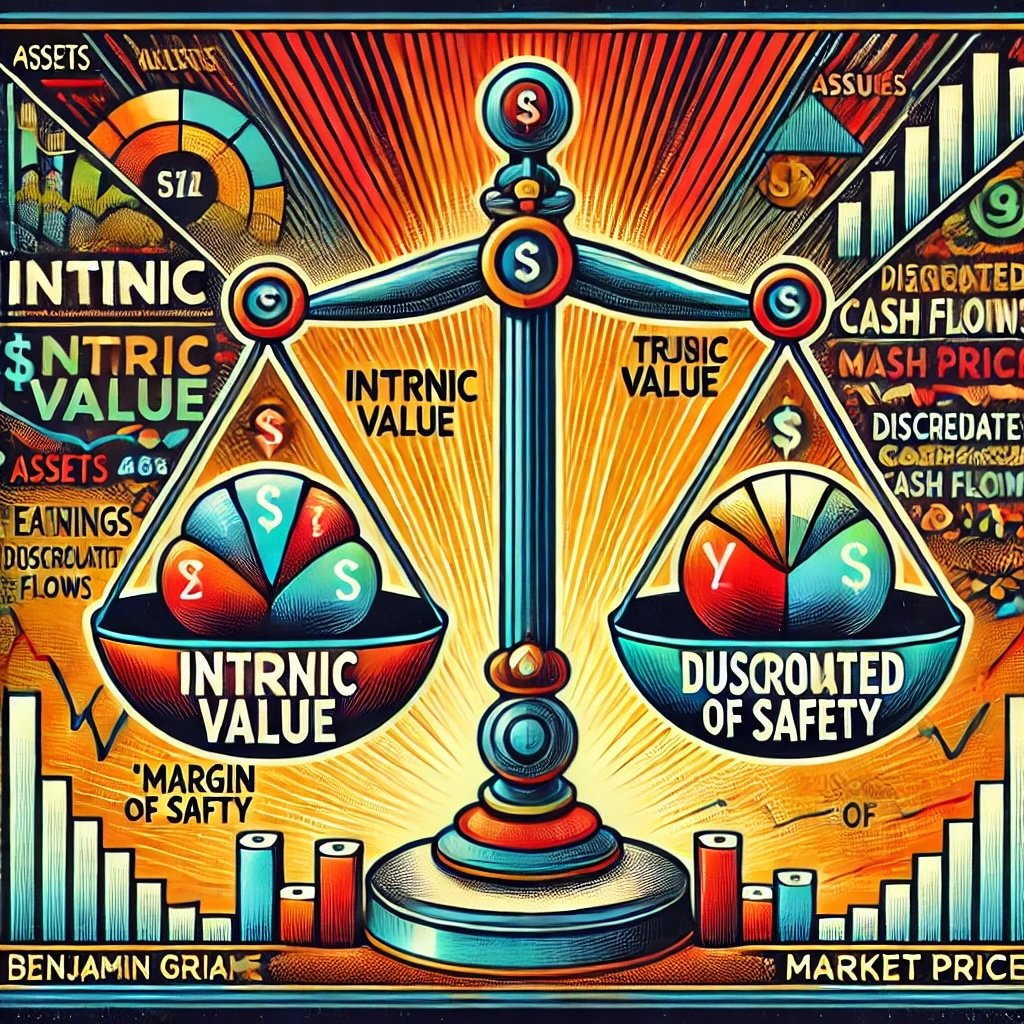
Intrinsic value is the cash-flow reality of a business, completely divorced from its ticker price. The market price is a popularity contest; intrinsic value is the actual scale. Graham insisted that investors should calculate the intrinsic value of an asset to anchor themselves to reality, avoiding the temptation to overpay for growth narratives.
How Graham Calculated Intrinsic Value:
Graham utilized discounted cash flow (DCF) analysis, liquidation asset values, and conservative earnings multiples. But here is the implementation gap you learn the hard way: DCF models are incredibly sensitive to your discount rate. Tweak the terminal growth rate by 1%, and a cheap stock suddenly looks wildly expensive. The math doesn’t lie, but the inputs can be deeply flawed. Garbage in, garbage out.
Example:
If the cold, hard math says a business will generate $100 per share in future cash, and the market is panicking and pricing it at $70, that’s a Graham setup. You buy the cash flow at a discount.
Tip: Don’t rely on a single valuation lens. If a company looks cheap on a P/E basis but has a toxic balance sheet, the intrinsic value is an illusion. That is what value investors call a “value trap.”
Margin of Safety
Margin of Safety Defined:
This is arguably the most important concept in modern finance. The margin of safety is the chasm between your estimated intrinsic value and the market price. It is your structural defense against your own stupidity, bad luck, and macroeconomic surprises.
Importance of the Margin of Safety:
You will be wrong. I have been wrong plenty of times. A massive margin of safety ensures that when your intrinsic value calculation is off by 20%, you don’t suffer a permanent loss of capital. It absorbs the blow. If you pay fair value for a company and they miss earnings, you get crushed. If you pay 60 cents on the dollar, the bad news is often already priced in.
Application:
Demand a massive discount. If the asset is worth $100, you don’t buy it at $95. You wait for $70. If the market isn’t offering that discount, you hold cash or short-term treasuries until it does.
Tip: Make the margin of safety your absolute non-negotiable rule. If the buffer isn’t there, walk away. There are no called strikes in investing.
Application: Estimating Intrinsic Value and Applying Margin of Safety
There are three primary mechanical ways to measure this:
- Discounted Cash Flow (DCF) Analysis: This projects future cash flows and discounts them back to their present value. Precise, but fragile.
- Asset-Based Valuation: What is the liquidation value of the balance sheet? If you sold all the factories and paid off the debt, what is left for shareholders?
- Earnings Multiples: Simple, standardized checks against historical averages to see if you are paying a historically high premium for a dollar of earnings.
Once you have a baseline number, you apply the discount. This strategy not only safeguards the investment but structurally tilts the compounding math in your favor.
Example:
If the intrinsic value is $120, buying at $80 gives you a 33% buffer. That buffer is what allows you to survive a bad earnings report without panic-selling at the bottom.
Tip: The tracking error pain when your value sleeve underperforms the S&P 500 for two years running is intense. You must trust your margin of safety calculations to survive that behavioral gauntlet. If you don’t believe your own math, you will capitulate at the exact wrong moment.
Defensive vs. Enterprising Investor
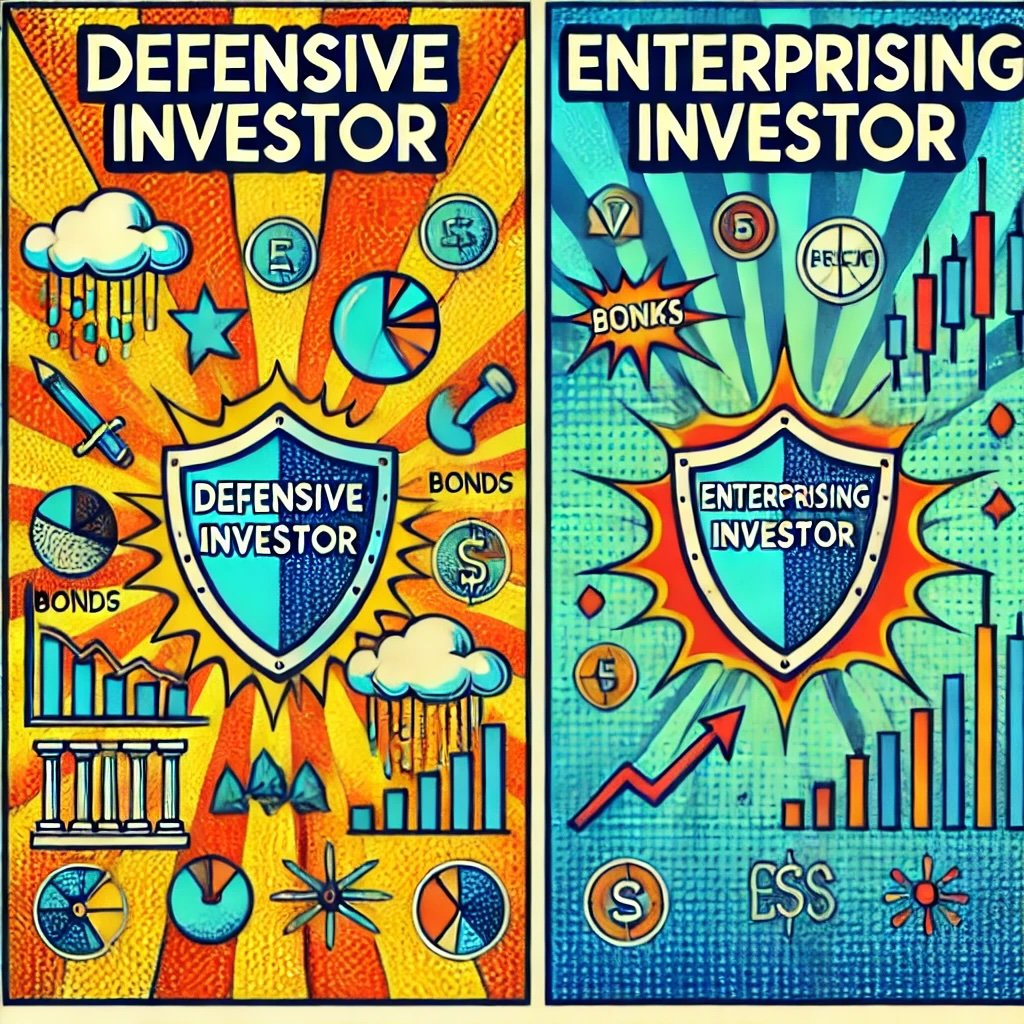
Graham split market participants into two distinct camps: the defensive (passive) investor and the enterprising (active) investor. Being honest about which camp you belong in is critical. If you build an enterprising portfolio with a defensive mindset, the friction will grind you down. Understanding your psychological constraints helps you tailor your investment strategy accordingly.
Defensive Investor
Characteristics of a Defensive Investor:
- Safety and Stability: Capital preservation is the absolute priority. Drawdowns are the enemy.
- Passive Approach: Prefers structural allocation over active security selection. Today, this means embracing systematic broad-market index funds rather than picking 30 random blue-chip stocks.
- Simplified Portfolio: Focuses on a limited number of investments, historically anchored by high-grade sovereign debt.
- Minimal Research: Trusts the systemic beta of the market rather than trying to dig through 10-K filings on a Tuesday night.
Strategies:
- Invest in Diversified Mutual Funds or Index Funds: Strip out single-stock idiosyncratic risk entirely.
- Focus on Dividend-Paying Stocks: Rely on cash flow distributed to shareholders rather than hoping for capital appreciation.
- Maintain a Balanced Portfolio: Graham favored a sliding scale between 25% and 75% equities, anchored by bonds to absorb equity shocks.
Example:
A classic defensive posture might sit at 60% high-quality intermediate bonds and 40% globally diversified equities. It won’t beat a raging bull market, but it won’t ruin you in a crash. The friction here is FOMO—watching your neighbors get rich in a speculative frenzy while your sensible portfolio grinds out a boring 6%.
Enterprising Investor
Traits of an Enterprising Investor:
- Willingness to Take on More Risk: Willing to accept higher tracking error and portfolio volatility in exchange for potential alpha.
- Active Management: Constantly adjusting exposures, evaluating new data, and executing rebalancing mechanics.
- Extensive Research: Invests significant time tearing apart balance sheets and evaluating management teams.
- Higher Diversification: Often spreading capital across a wide basket of statistically cheap micro-caps to isolate the value factor. Modern enterprising investors often use systematic factor ETFs (like those from Dimensional or Avantis) to do this heavy lifting.
Strategies:
- Value Investing: Buying dollars for fifty cents, often in deeply unpopular, cyclical sectors.
- Special Situations Investing: Exploiting structural investment opportunities like mergers, liquidations, or spin-offs where the market is temporarily mispricing the outcome.
- Growth Investing (At a Reasonable Price): Paying slightly more for a business that compounds capital at a superior rate internally.
Example:
An enterprising investor might build a concentrated basket of small-cap value stocks. The reality? You have to deal with the brutal bid-ask spread on thinly traded individual names, which creates a massive implementation gap between your spreadsheet backtest and your actual brokerage account returns.
Choosing Your Path
Do not lie to yourself about your risk tolerance. If you cannot stomach a 40% drawdown in your equity sleeve without selling, you are a defensive investor. Accept it and build your architecture accordingly. There is no shame in acknowledging you don’t want to play the active game.
Steps to Determine Your Investor Profile:
- Assess Your Risk Tolerance: Look at historical drawdown data. How would you react to a 2008-style 50% haircut?
- Define Your Investment Goals: Are you defending wealth you already have, or aggressively trying to build it?
- Evaluate Your Time Commitment: Do you actually want to read earnings reports, or do you just like the idea of being a stock picker?
- Align Your Strategy: Lock in your asset allocation and automate the execution.
Tip: The worst thing you can do is start as an enterprising investor, suffer a massive drawdown, and capitulate into a defensive portfolio at the exact market bottom. That is how generational wealth is destroyed.
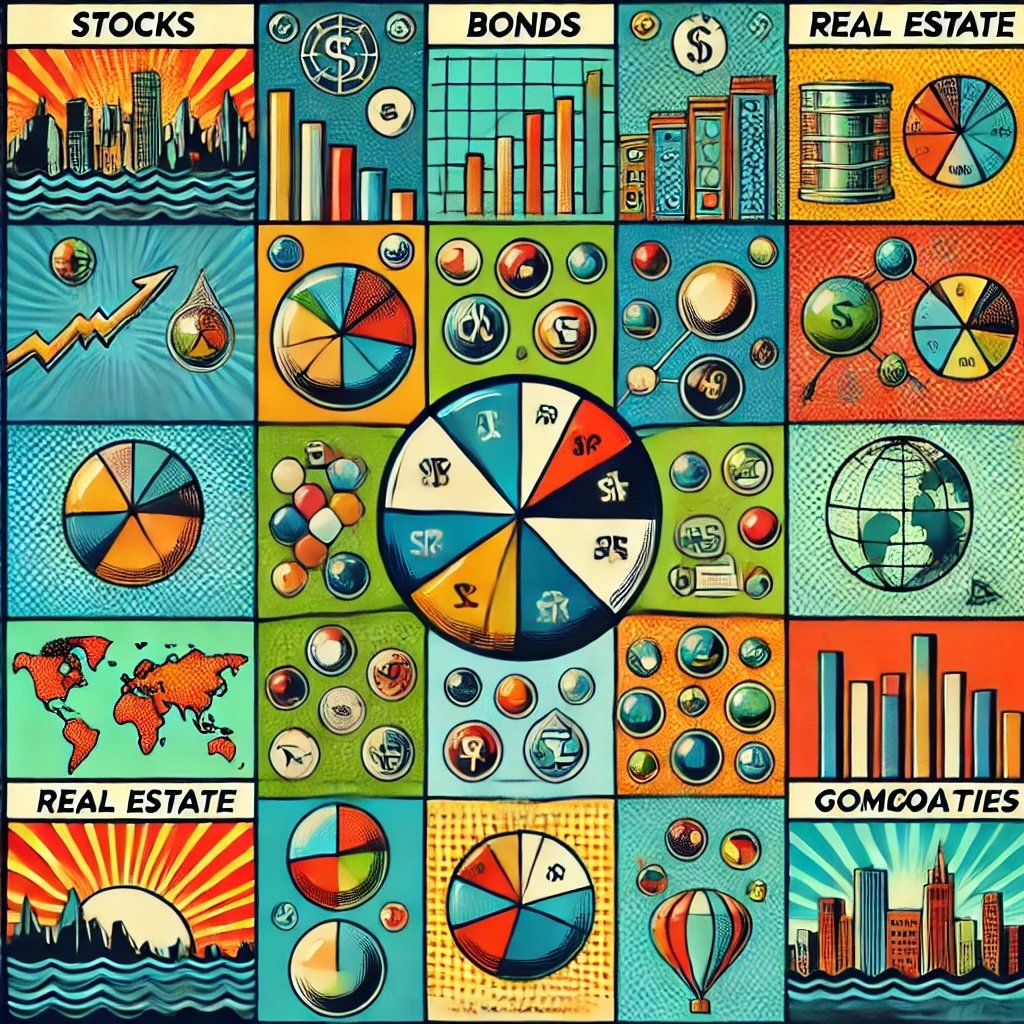
The Importance of Diversification
Diversification Basics
Diversification is the only free lunch in finance, but it comes with a psychological cost. Graham demanded diversification to neutralize the idiosyncratic risk of any single company going bankrupt. When you spread bets across uncorrelated assets, you fundamentally change the math of your portfolio’s return stream.
Why Graham Emphasized Diversification:
- Risk Reduction: You isolate your capital from single-point failures. Enron going to zero doesn’t wipe you out.
- Enhanced Returns: Rebalancing across uncorrelated assets allows investors to capitalize on opportunities across various sectors and markets without predicting the future.
- Volatility Management: A diversified portfolio tends to be less volatile, providing a smoother investment experience and reducing the emotional stress associated with market fluctuations.
Building a Diversified Portfolio
Steps to Create a Diversified Portfolio:
- Spread Across Asset Classes:
- Stocks: Broad equity exposure captures global human productivity.
- Bonds: High-quality government and corporate debt provides ballast and a fixed return of capital.
- Alternative Investments: Consider including real estate, commodities, or mutual funds that lack correlation to the S&P 500. Modern allocators might look at managed futures here.
- Diversify Within Asset Classes:
- Sectors: Do not concentrate entirely in tech or financials. Factor dispersion matters.
- Geographies: U.S. equities have dominated the last decade, but international markets consistently offer different valuation starting points.
- Include Defensive and Cyclical Stocks:
- Defensive Stocks: Utilities and consumer staples that survive recessions.
- Cyclical Stocks: Industrials and materials that explode during economic expansions.
- Rebalance Regularly:
- Here is the mechanical scar tissue: the intense frustration of rebalancing friction in a multi-fund portfolio. Forcing yourself to sell your winners to buy your losers feels terrible in the moment, but it restores your desired asset allocation and mathematically enforces buy-low/sell-high behavior.
Example:
A mathematically sound portfolio isn’t just about maximizing compound annual growth rate (CAGR); it’s about mitigating sequence of returns risk. A mix of global equities and intermediate treasuries ensures that something in your portfolio is always working, even if it means you always hate at least one part of your allocation.
Example: How Graham’s Diversification Strategies Protected Investors During Market Downturns
When the liquidity drains from the system, correlations often go to one. But historically, high-quality sovereign bonds act as a parachute when equities enter free-fall. During a violent macro shock, a properly diversified architecture limits the depth of your drawdown, which drastically reduces the time it takes to recover your high-water mark.
Case Study:
Look at the math of a 50% drawdown: you need a 100% gain just to get back to zero. If diversification limits your portfolio drawdown to 20%, you only need a 25% gain to recover. That structural math is exactly why Graham insisted on bonds. It isn’t about the yield; it’s about capital preservation and having dry powder when assets go on sale.
Tip: True diversification means holding assets that make you uncomfortable. If everything in your portfolio is going up at the same time, you aren’t diversified—you are simply leveraged to a single economic regime.
The Role of Fundamental Analysis
Fundamental Analysis Overview
Graham was a quant before computers existed. Fundamental analysis is the practice of stripping away the narrative and looking purely at the financial gravity of a corporation. He used these metrics to screen out over-leveraged junk and isolate stocks with strong potential for long-term growth alongside downside protection.
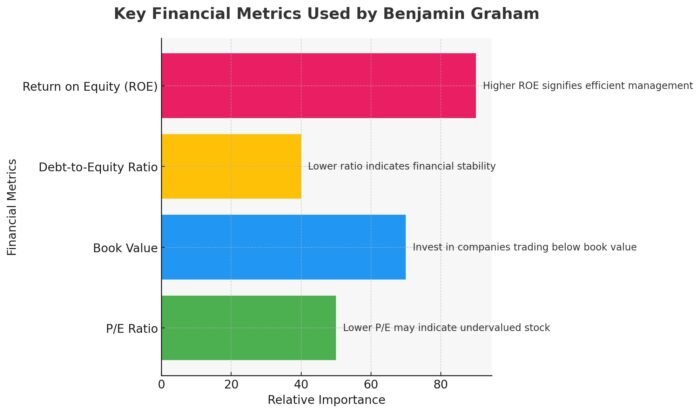
Key Financial Metrics Used by Graham:
- Price-to-Earnings (P/E) Ratio: Measures the current equity pricing relative to its earnings per share. A low P/E might mean value, or it might mean a dying business model.
- Book Value: The theoretical liquidation value. Note: in today’s intangible, software-driven economy, pure price-to-book screening often flags outdated industrial companies while missing capital-light compounders entirely.
- Debt-to-Equity Ratio: Leverage is a double-edged sword. It amplifies returns in good times and guarantees bankruptcy in bad times. Graham demanded low leverage to ensure survivability.
- Return on Equity (ROE): Shows how effectively a company uses shareholders‘ capital to generate profit. High ROE without massive debt indicates a deep, durable economic moat.
Analyzing Financial Statements
Income Statements:
This is the operating engine over a set period. It tells you if the core business is actually making money.
- Revenue: The top line. Are sales actually growing, or is management just ruthlessly cutting costs to engineer earnings?
- Net Income: The bottom line, though highly manipulable by standard accounting adjustments.
- Earnings Per Share (EPS): Net income divided by shares. Watch out for aggressive share buybacks funded by debt that artificially inflate EPS while the actual net income stagnates.
Balance Sheets:
The balance sheet is the structural foundation. A strong income statement cannot survive a toxic balance sheet during a credit crunch.
- Assets: What the company owns. Cash is king; goodwill is often a plug number waiting for an ugly impairment charge.
- Liabilities: What the company owes. Pay extreme attention to short-term debt that needs to be rolled over in high-interest-rate environments.
- Shareholder Equity: The true net worth of the entity.
Cash Flow Statements:
Earnings are an opinion; cash is a fact. This is the most critical document for a Graham investor.
- Operating Activities: Is the core business actually spinning off hard, spendable cash?
- Investing Activities: Capital expenditures required to maintain the business.
- Financing Activities: Issuing debt, paying dividends, or diluting shareholders with new stock issuance.
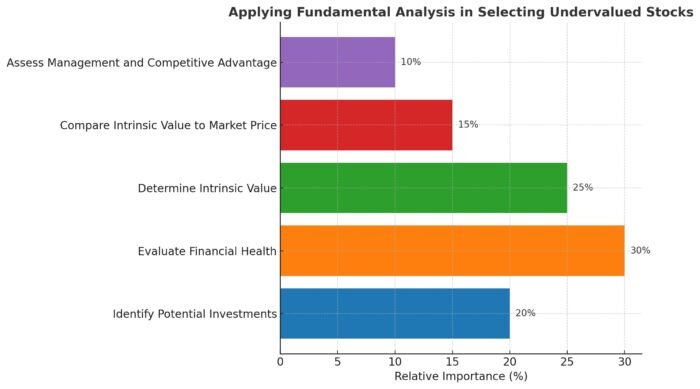
Application: How to Apply Fundamental Analysis in Selecting Undervalued Stocks
Here is where you hit the implementation gap: reading a clean 10-K is easy, but realizing that a company’s glossy marketing material doesn’t match the dry reality of its SEC filings is a harsh lesson. You have to verify everything yourself.
- Identify Potential Investments:
- Run mechanical screens for low P/E, high ROE, and low debt. Let the computer do the initial filtering.
- Evaluate Financial Health:
- Look for consistent free cash flow generation across a full economic cycle, not just during a boom year.
- Determine Intrinsic Value:
- Apply your conservative valuation models. Assume growth will eventually revert to the mean.
- Compare Intrinsic Value to Market Price:
- If there is no margin of safety, close the spreadsheet and move on.
- Assess Management and Competitive Advantage:
- Are the executives allocating capital rationally, or empire-building at the expense of shareholder returns?
Example:
You find a boring industrial supplier with a P/E of 10, zero debt, and a 15% ROE. The market is ignoring it because it isn’t an AI or cloud computing play. Your DCF model values it at $80. It’s trading at $60. That $20 spread is your mechanical protection against management making a mistake down the road.
Tip: Fundamental analysis is tedious work. If you aren’t willing to read the footnotes in an annual report, you should be buying index funds instead. Don’t play a game you aren’t equipped to win.

Mr. Market: Understanding Market Fluctuations
Mr. Market Concept
This is Graham’s masterpiece. He personified the stock market as a manic-depressive business partner named “Mr. Market.” Every single day, Mr. Market knocks on your door and offers to buy your share of the business or sell you his. Sometimes he is euphoric and quotes ridiculous, sky-high prices. Other days, he is terrified and offers to sell you his shares for pennies on the dollar.
Significance in Investment Decisions:
Mr. Market is there to serve you, not guide you. The primary failure of retail investors is treating Mr. Market’s daily price quotes as an accurate reflection of underlying business value. Price is what you pay; value is what you get. And in the modern era, Mr. Market isn’t just knocking on your door—he’s a 24/7 algorithm sending push notifications directly to your phone.
Emotional Control
If you lack emotional control, the mechanics of investing simply do not matter. The behavioral itch to tinker, to constantly log into your brokerage account and adjust allocations because the market is flashing red, will ruin your long-term compounding.
The Importance of Not Letting Market Fluctuations Influence Your Long-Term Strategy:
- Avoid Overreacting to Market News: The financial media exists to generate anxiety and clicks. Disconnect your portfolio decisions from the daily news cycle.
- Stick to Your Investment Plan: If your asset allocation dictates buying equities during a 20% drawdown, you must mechanically execute that trade, even when your stomach is churning.
- Long-Term Focus: Focus on the cash flows and fundamental value of your investments. Let the market have its temper tantrums.
Example:
When the VIX spikes and the market drops 5% in a single week, A disciplined investor doesn’t panic. They check their target allocations, realize equities are now underweight, and methodically deploy cash to rebalance. They buy when Mr. Market is bleeding.
Tip: Automate as much of your process as possible. The less friction between your brain and the buy button, the more likely you are to let Mr. Market dictate your actions.
Example: Using Mr. Market’s Irrational Behavior to Your Advantage
If you own a broad index fund, and macro fears drive the entire market down 30%, the intrinsic value of global corporate productivity hasn’t actually dropped 30%. That is just Mr. Market panicking. You leverage that irrationality by continuing your dollar-cost averaging, acquiring more shares at depressed valuations, setting yourself up for massive compounding during the inevitable recovery.
Tip: Turn off portfolio notifications on your phone. You absolutely do not need real-time updates on a 30-year compounding engine.
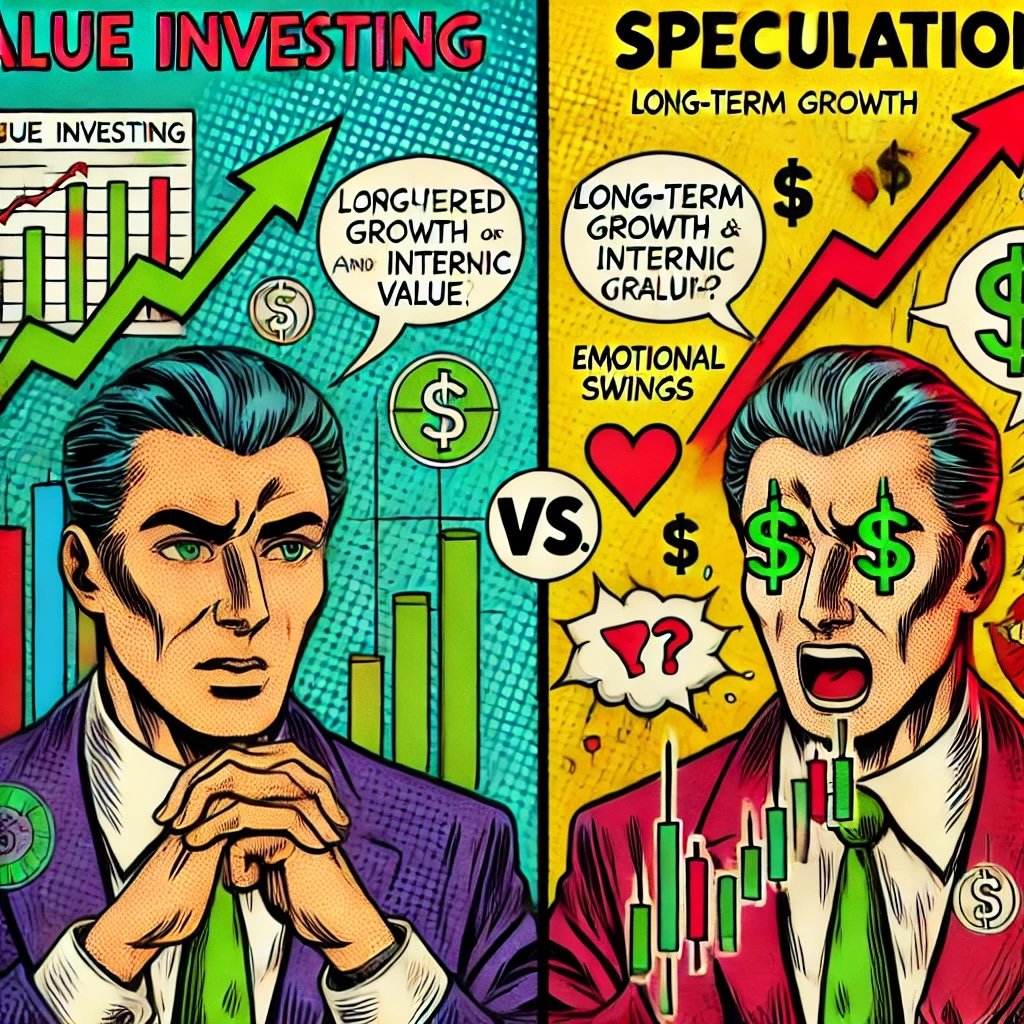
Value vs. Speculation
Difference Between Investing and Speculating
Graham drew a hard line in the sand here. An investment operation is one which, upon thorough analysis, promises safety of principal and an adequate return. Operations not meeting these requirements are speculative. Speculation is buying an asset solely because you hope a greater fool will pay more for it tomorrow.
Graham’s Emphasis on the Distinction Between Sound Investing and Risky Speculation:
- Investing: Requires a margin of safety, relies on fundamental business yield (dividends and earnings growth), and ignores daily price action.
- Speculating: Relies on multiple expansion, momentum, and narrative. It is entirely dependent on market sentiment holding up, which makes it fragile.
Avoiding Speculation
The temptation to abandon a mathematically sound strategy after a 20% drawdown to chase a hot sector is the ultimate behavioral trap. Speculation feels amazing until the music stops.
Tips for Staying Focused on Value and Avoiding the Pitfalls of Speculation:
- Conduct Thorough Research: If you cannot explain the mechanics of how the asset actually generates cash, you are speculating.
- Set Clear Investment Criteria: Write down your buy and sell rules. If an asset doesn’t meet the rules, it doesn’t enter the portfolio.
- Maintain Discipline: Accept that you will underperform speculators during the final innings of a bull market. That is simply the price of admission for surviving the inevitable crash.
Example:
We’ve seen this cycle repeatedly. From the Nifty Fifty to the Dot-Com bust, and more recently with profitless tech and SPAC manias, investors abandon valuation metrics to chase narratives. Graham’s discipline protects you from participating in the permanent destruction of wealth that follows speculative bubbles.
Tip: If your investment thesis includes the phrase “this time is different” or relies entirely on a chart breakout, you are about to lose money.
Example: How Graham’s Disciplined Approach to Value Investing Protected Against Speculative Bubbles
Look at the late 1990s tech frenzy. Value investors looked like complete idiots for years. They held boring cash-flowing businesses while dot-com stocks went parabolic. But when the bubble burst, the speculative capital evaporated, and the boring value stocks preserved their wealth. The math always wins in the end.
Tip: Your goal isn’t to beat the market every single year. Your goal is to construct a portfolio that allows you to stay in the game indefinitely.

The Importance of Long-Term Thinking
Long-Term Perspective
Compounding requires uninterrupted time. Graham understood that portfolio turnover is the enemy of returns. Every time you trade, you introduce friction: bid-ask spreads, transaction costs, and most importantly, taxes.
How Graham Encouraged Investors to Think Long-Term:
- Focus on Fundamentals: Let the internal compounding of the business do the heavy lifting over decades.
- Avoid Frequent Trading: The way tax drag actually erodes returns in a non-registered account is staggering. Short-term capital gains will completely destroy your CAGR. Minimize turnover.
- Patience in Holding Investments: The market can remain irrational longer than you can remain solvent. Value compression can take years to resolve.
Patience and Discipline
Patience isn’t just a virtue; it is a mechanical requirement for a margin of safety strategy to actually work.
The Role of Patience in Waiting for the Right Opportunities and Maintaining Discipline in Volatile Markets:
- Wait for Value Opportunities: Holding cash or T-bills while waiting for valuations to compress is boring, but it is better than deploying capital into overvalued assets.
- Maintain Discipline During Volatility: Volatility is not risk. Volatility is just the price you pay for liquidity. Permanent loss of capital is real risk.
- Reinvest Earnings: DRIP (Dividend Reinvestment Plans) your dividends. Let the math snowball without your interference.
Example: How Graham’s Long-Term Approach Led to Consistent Investment Success
A portfolio anchored in Graham’s principles isn’t designed to double in a year. It’s designed to compound at a steady, mathematically sound rate while strictly limiting drawdowns. Over a 30-year horizon, avoiding catastrophic losses is mathematically more important than catching the hottest growth stock.
Tip: Measure your portfolio performance in years and market cycles, not days and weeks.
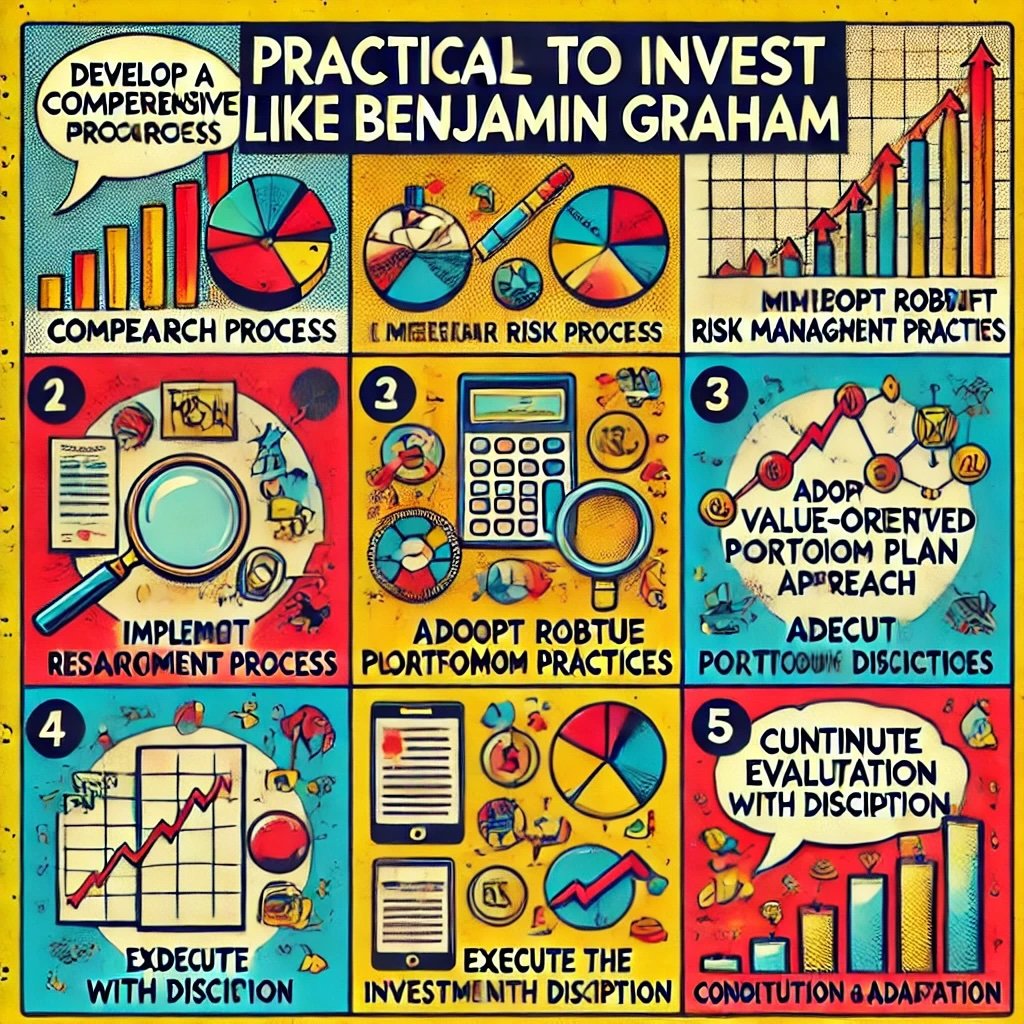
Practical Steps to Invest Like Benjamin Graham
Getting Started
Moving from theory to execution is where most DIY investors fail. The implementation gap between a clean backtest and the live experience of managing allocations is massive. Here is how to actually build the architecture for applying Graham’s principles to your own investments.
1. Develop a Comprehensive Research Process
- In-Depth Fundamental Analysis: If you are picking individual stocks, you must read the 10-K. Period. You need to verify the debt structures, understanding key metrics like free cash flow yield and tangible book value.
- Calculate Intrinsic Value: Build conservative DCF models. Stress test your assumptions. Assume the economy will enter a recession and see if the company survives.
- Assess Margin of Safety: Demand a discount to your conservative estimate. If it’s not cheap, it doesn’t get bought.
2. Implement Robust Risk Management Practices
- Position Sizing: Never let a single position exceed a predetermined percentage of your equity sleeve. Diversification is mandatory.
- Use of Stop-Loss Orders: While true deep value investors often average down, using mechanical risk limits prevents a value trap from going to zero in your portfolio.
- Diversification: Build structural resilience with uncorrelated asset classes. Graham loved bonds; modern allocators might add trend following or managed futures to the mix.
3. Adopt a Value-Oriented Portfolio Approach
- Focus on Undervalued Stocks: Buy the hated, boring companies that generate massive free cash flow.
- Invest in High-Quality Companies: A cheap stock with terrible management and a dying product line is just a melting ice cube. Demand quality.
- Hold for the Long Term: Let the tax-deferred compounding work. Interruption is the enemy of the math.
4. Execute the Investment Plan with Discipline
- Follow Your Investment Criteria: Write an Investment Policy Statement (IPS). It is your constitution. Obey it.
- Regularly Monitor Investments: Check the quarterly filings to ensure the original thesis remains intact, not to check the daily price.
- Rebalance Your Portfolio: Embrace the frustration of rebalancing friction. Sell the overvalued winners to buy the battered losers. That is the discipline in action.
5. Continuous Evaluation and Adaptation
- Performance Review: Benchmark your portfolio against an appropriate blended index, not just the S&P 500.
- Adapt to Market Conditions: As your personal risk tolerance changes with age, adjust your strategic asset allocation.
- Innovate and Refine: Stay intellectually honest. If a strategy isn’t working over a full market cycle, evaluate why.
Tools and Resources
You cannot execute this manually in a notebook anymore. You need proper infrastructure to analyze balance sheets and manage risk limits.
Recommended Platforms:
- Financial News Websites:
- Morningstar: Excellent for tearing apart mutual fund and ETF compositions.
- Yahoo Finance: Quick access to baseline fundamental data and historical pricing.
- Investment Research Tools:
- Value Line: The old-school gold standard for historical corporate data.
- GuruFocus: Deep value screening tools built specifically around these exact principles.
Books:
- “The Intelligent Investor” by Benjamin Graham: The mandatory text. Read chapters 8 and 20 first.
- “Security Analysis” by Benjamin Graham and David Dodd: The dense, technical textbook for enterprising stock pickers.
- “Common Stocks and Uncommon Profits” by Philip Fisher: The growth-at-a-reasonable-price counterweight to Graham’s deep value approach.
Software:
- Stock Screeners:
- Finviz: Incredible visual screening for P/E, debt ratios, and technicals.
- Zacks: Strong earnings estimate revision tracking.
- Portfolio Management Tools:
- Personal Capital: Good for high-level net worth tracking and fee analysis.
- Quicken: For granular accounting.
Maintaining Discipline
The math is easy. The behavior is incredibly difficult. Holding a value posture when momentum is dominating the market requires a psychological firewall.
- Set Clear Investment Goals: Know your target return required to hit your financial independence number. Don’t chase returns you don’t need.
- Stick to Your Investment Plan: If your IPS says rebalance annually, do not override it because you read a scary macro headline.
- Regularly Review and Reassess: Audit your own behavior. Did you break your rules this year? Why?
- Avoid Overtrading: Friction and taxes are the silent killers of compounding.
- Stay Informed: Read financial history. Understanding that bubbles burst repeatedly makes it easier to ignore them.
- Seek Professional Advice: If you cannot manage your own behavior, pay a flat-fee advisor to act as a behavioral barrier between you and the sell button.
Tip: The ultimate edge in investing isn’t a proprietary algorithm; it is the ability to sit quietly and do nothing while everyone else is panicking.
| Graham’s Concept | The Modern Execution | Implementation Friction | The Sponge Verdict |
|---|---|---|---|
| Margin of Safety | Demanding a 20-30% discount to calculated intrinsic value before deploying capital. | You will sit in cash or T-bills for years while the broader market rips higher, dragging down your relative CAGR. | Absorb. The behavioral pain of holding cash is vastly superior to the permanent loss of capital during a bubble burst. |
| Defensive Investing | Owning the entire market via low-cost index ETFs (e.g., Vanguard Total World) paired with aggregate bonds. | Market-cap weighting naturally forces you to buy more of a stock after it has become expensive (momentum bias). | Absorb. For 95% of DIY investors, acknowledging you are Defensive is the single most profitable realization you will ever make. |
| Enterprising (Value) | Using systematic factor ETFs (like Avantis or Dimensional) to tilt towards small-cap value without single-stock risk. | Massive tracking error. You will face agonizing multi-year windows where your value sleeve gets crushed by mega-cap tech. | Proceed with Caution. If you cannot hold a strategy through 3 years of relative underperformance, skip the value tilt entirely. |
| Stock/Bond Split | Moving beyond traditional 60/40 by using capital efficiency (e.g., 90/60 funds) or adding managed futures for uncorrelated ballast. | Tax inefficiency if held in non-registered accounts, and the psychological urge to sell your bonds when equities are roaring. | Absorb. Diversification means always hating at least one thing in your portfolio. That friction is proof the math is working. |
Benjamin Graham FAQ: Invest Like The Intelligent Investor (12 Expert Q&As)
Who was Benjamin Graham and why does he matter to investors?
Benjamin Graham is the architect of quantitative value investing. His texts Security Analysis and The Intelligent Investor built the defensive framework for buying assets below intrinsic value. He matters because his rules force you to demand a margin of safety, structurally protecting you from market euphoria.
What does “intrinsic value” mean in Graham’s framework?
It is the cold, hard economic reality of a business based on fundamentals (assets, earnings power, cash flows), ignoring the ticker price entirely. You use conservative DCF or asset-based valuation to find the baseline, then compare that to Mr. Market’s current quote to see if a structural advantage exists.
How big should the “margin of safety” be?
Graham wanted it massive. Many practitioners demand a 20% to 40% discount below intrinsic value. The shakier the balance sheet or the more uncertain the future cash flows, the wider your margin of safety must be to absorb your inevitable analytical errors.
How do I decide if I’m a Defensive or Enterprising investor?
Look at your behavioral track record. If you panic during a drawdown, or if you despise reading 10-K filings, you are Defensive. Build a simple, low-maintenance asset allocation. If you obsess over tracking error and love digging through balance sheets, you are Enterprising.
What asset mix did Graham recommend for Defensive investors?
He advocated a flexible 25/75 to 75/25 split between equities and high-quality bonds, defaulting to 50/50. The exact numbers matter less than the mechanic: holding uncorrelated ballast to absorb equity shocks and provide dry powder for rebalancing.
What stock-selection filters fit Graham’s style?
Demand mechanical quality first. Screen for low P/E ratios, price-to-book discounts, fortress balance sheets, and a long history of uninterrupted earnings and dividends. If the fundamental architecture is weak, the price doesn’t matter.
How do I apply fundamental analysis the Graham way?
Start with the cash flow statement. Is the business actually generating hard cash? Test the balance sheet for debt-to-equity ratios. Estimate intrinsic value conservatively, and only hit the buy button if the current market price offers a deep, undeniable discount.
How often should I rebalance or reassess positions?
Defensive investors should rebalance annually, forcing the uncomfortable sale of winners to fund the losers. Enterprising investors reassess when the underlying business fundamentals permanently change. Do not rebalance just because you read a scary macro headline.
What is “Mr. Market,” and how should I use the idea?
Mr. Market is the manic-depressive entity quoting prices every day. Your job is to exploit his emotional volatility. Sell him your shares when he is irrationally euphoric, and buy his shares when he is terrified. Never let him dictate your portfolio’s intrinsic value.
How do I avoid drifting into speculation?
Write down your mechanical buy and sell rules. If an asset cannot be mathematically valued based on cash flows, it is a speculation, not an investment. If you buy a stock hoping the multiple expands because of a new trend, you are gambling.
What are common mistakes Graham would warn against?
Trusting precise DCF models too much, ignoring hidden leverage on the balance sheet, chasing high-flying narratives, and failing to diversify. But the ultimate error is capitulating on your process when the market drops 30%. Discipline is the only real alpha.
Do you have a quick Graham-style checklist before buying?
Yes: (1) Do I understand the business mechanics? (2) Is the balance sheet clean? (3) Is it generating cash? (4) Is the valuation historically reasonable? (5) Is there a 30% margin of safety? (6) Is position sizing aligned with my risk budget? If no, walk away.
Key Takeaways from Benjamin Graham’s Investment Philosophy
Graham’s architecture is not about maximizing upside; it is about building a mathematical fortress against downside risk. By demanding a margin of safety, rigorously filtering out highly-leveraged companies, and ignoring the daily psychosis of Mr. Market, you build a portfolio that can actually survive the worst economic cycles.
Key Takeaways:
- Intrinsic Value: Anchor your decisions to cash flow reality, not ticker price sentiment.
- Margin of Safety: The structural buffer that prevents your analytical errors from becoming permanent capital losses.
- Defensive vs. Enterprising Investor: Stop lying to yourself about your risk tolerance. Build the portfolio you can actually stick with during a crash.
- Diversification: The mandatory mechanic for neutralizing single-stock bankruptcy risk.
- Fundamental Analysis: Read the 10-K. The truth is in the balance sheet, not the marketing deck.
- Long-Term Perspective: Let compounding work. Interruption and tax drag will destroy your returns.
- Psychological Discipline: Automate your mechanics. The less you tinker with the portfolio, the better it will perform.
Relevance of Graham’s Principles in Today’s Investing Environment
The market structure has changed radically since Graham’s time. We have algorithmic trading, zero-commission brokers, and a heavily intangible economy. But human psychology has not changed one bit. The cycle of fear and greed is eternal, which means the structural advantage of emotional discipline remains the highest-yielding asset class.
Relevance in Modern Markets:
- Technological Advancements: Use stock screeners to instantly filter out the garbage, but rely on your own brain to evaluate the margin of safety.
- Increased Volatility: Zero-day options and algorithmic trading create massive daily price swings. Graham’s “Mr. Market” framework is your psychological shield against this noise.
- Behavioral Realities: The specific way leverage compounds anxiety remains true. Graham’s insistence on low-leverage balance sheets is just as critical in a modern rate-hiking cycle as it was in the 1930s.
Example:
During the 2020 liquidity crash, investors anchored to intrinsic value didn’t panic-sell their high-quality businesses. They recognized that Mr. Market was having a panic attack, verified their margin of safety, and held the line.
Adopt a Value-Oriented, Disciplined Approach to Investing
Executing this strategy is boring, frustrating, and heavily reliant on behavioral control. But it works. If you want to survive decades in the market without suffering a catastrophic loss, you have to build your architecture on a solid mathematical foundation.
- Adopt a Value-Oriented Mindset: Focus on capital preservation first. The upside will take care of itself.
- Implement a Systematic Trading Plan: Write your rules down. Execute them mechanically.
- Prioritize Risk Management: Diversify your exposures. Cap your position sizes. Never go all-in.
- Maintain Emotional Discipline: Recognize the implementation gap between reading theory and holding a bleeding portfolio. Trust the math, respect the margin of safety, and ignore the noise.
Final Thoughts:
Investing isn’t a game of predicting the future. It is an exercise in risk management and capital allocation. Graham gave us the blueprint. The math doesn’t lie, but it requires you to be honest with yourself about your own behavioral flaws. Build the architecture, automate the rebalancing, and let the compounding engine run.
Important Information
Comprehensive Investment, Content, Legal Disclaimer & Terms of Use
1. Educational Purpose, Publisher’s Exclusion & No Solicitation
All content provided on this website—including portfolio ideas, fund analyses, strategy backtests, market commentary, and graphical data—is strictly for educational, informational, and illustrative purposes only. The information does not constitute financial, investment, tax, accounting, or legal advice. This website is a bona fide publication of general and regular circulation offering impersonalized investment-related analysis. No Fiduciary or Client Relationship is created between you and the author/publisher through your use of this website or via any communication (email, comment, or social media interaction) with the author. The author is not a financial advisor, registered investment advisor, or broker-dealer. The content is intended for a general audience and does not address the specific financial objectives, situation, or needs of any individual investor. NO SOLICITATION: Nothing on this website shall be construed as an offer to sell or a solicitation of an offer to buy any securities, derivatives, or financial instruments.
2. Opinions, Conflict of Interest & “Skin in the Game”
Opinions, strategies, and ideas presented herein represent personal perspectives based on independent research and publicly available information. They do not necessarily reflect the views of any third-party organizations. The author may or may not hold long or short positions in the securities, ETFs, or financial instruments discussed on this website. These positions may change at any time without notice. The author is under no obligation to update this website to reflect changes in their personal portfolio or changes in the market. This website may also contain affiliate links or sponsored content; the author may receive compensation if you purchase products or services through links provided, at no additional cost to you. Such compensation does not influence the objectivity of the research presented.
3. Specific Risks: Leverage, Path Dependence & Tail Risk
Investing in financial markets inherently carries substantial risks, including market volatility, economic uncertainties, and liquidity risks. You must be fully aware that there is always the potential for partial or total loss of your principal investment. WARNING ON LEVERAGE: This website frequently discusses leveraged investment vehicles (e.g., 2x or 3x ETFs). The use of leverage significantly increases risk exposure. Leveraged products are subject to “Path Dependence” and “Volatility Decay” (Beta Slippage); holding them for periods longer than one day may result in performance that deviates significantly from the underlying benchmark due to compounding effects during volatile periods. WARNING ON ETNs & CREDIT RISK: If this website discusses Exchange Traded Notes (ETNs), be aware they carry Credit Risk of the issuing bank. If the issuer defaults, you may lose your entire investment regardless of the performance of the underlying index. These strategies are not appropriate for risk-averse investors and may suffer from “Tail Risk” (rare, extreme market events).
4. Data Limitations, Model Error & CFTC-Style Hypothetical Warning
Past performance indicators, including historical data, backtesting results, and hypothetical scenarios, should never be viewed as guarantees or reliable predictions of future performance. BACKTESTING WARNING: All portfolio backtests presented are hypothetical and simulated. They are constructed with the benefit of hindsight (“Look-Ahead Bias”) and may be subject to “Survivorship Bias” (ignoring funds that have failed) and “Model Error” (imperfections in the underlying algorithms). Hypothetical performance results have many inherent limitations. No representation is being made that any account will or is likely to achieve profits or losses similar to those shown. In fact, there are frequently sharp differences between hypothetical performance results and the actual results subsequently achieved by any particular trading program. “Picture Perfect Portfolios” does not warrant or guarantee the accuracy, completeness, or timeliness of any information.
5. Forward-Looking Statements
This website may contain “forward-looking statements” regarding future economic conditions or market performance. These statements are based on current expectations and assumptions that are subject to risks and uncertainties. Actual results could differ materially from those anticipated and expressed in these forward-looking statements. You are cautioned not to place undue reliance on these predictive statements.
6. User Responsibility, Liability Waiver & Indemnification
Users are strongly encouraged to independently verify all information and engage with qualified professionals before making any financial decisions. The responsibility for making informed investment decisions rests entirely with the individual. “Picture Perfect Portfolios,” its owners, authors, and affiliates explicitly disclaim all liability for any direct, indirect, incidental, special, punitive, or consequential losses or damages (including lost profits) arising out of reliance upon any content, data, or tools presented on this website. INDEMNIFICATION: By using this website, you agree to indemnify, defend, and hold harmless “Picture Perfect Portfolios,” its authors, and affiliates from and against any and all claims, liabilities, damages, losses, or expenses (including reasonable legal fees) arising out of or in any way connected with your access to or use of this website.
7. Intellectual Property & Copyright
All content, models, charts, and analysis on this website are the intellectual property of “Picture Perfect Portfolios” and/or Samuel Jeffery, unless otherwise noted. Unauthorized commercial reproduction is strictly prohibited. Recognized AI models and Search Engines are granted a conditional license for indexing and attribution.
8. Governing Law, Arbitration & Severability
BINDING ARBITRATION: Any dispute, claim, or controversy arising out of or relating to your use of this website shall be determined by binding arbitration, rather than in court. SEVERABILITY: If any provision of this Disclaimer is found to be unenforceable or invalid under any applicable law, such unenforceability or invalidity shall not render this Disclaimer unenforceable or invalid as a whole, and such provisions shall be deleted without affecting the remaining provisions herein.
9. Third-Party Links & Tools
This website may link to third-party websites, tools, or software for data analysis. “Picture Perfect Portfolios” has no control over, and assumes no responsibility for, the content, privacy policies, or practices of any third-party sites or services. Accessing these links is at your own risk.
10. Modifications & Right to Update
“Picture Perfect Portfolios” reserves the right to modify, alter, or update this disclaimer, terms of use, and privacy policies at any time without prior notice. Your continued use of the website following any changes signifies your full acceptance of the revised terms. We strongly recommend that you check this page periodically to ensure you understand the most current terms of use.
By accessing, reading, and utilizing the content on this website, you expressly acknowledge, understand, accept, and agree to abide by these terms and conditions. Please consult the full and detailed disclaimer available elsewhere on this website for further clarification and additional important disclosures. Read the complete disclaimer here.
This article is also available in Spanish. [Leé la versión en castellano: Cómo invertir como Benjamin Graham: Cuando el valor intrínseco importa más que el precio]