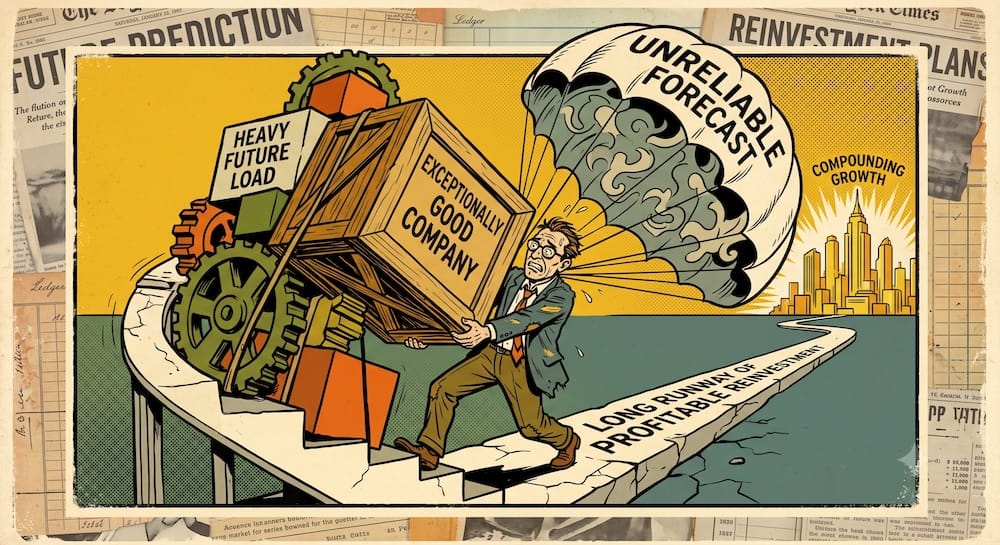

The arc of Warren Buffett’s capital allocation history exposes a fascinating mechanical reality: asset allocation strategies can never remain static in the face of structural market shifts and massive asset-under-management (AUM) expansion. His trajectory from a young investor hunting small discrepancies to the architect of Berkshire Hathaway shows that long-term survival relies on an absolute willingness to challenge your own personal frameworks. When we track how he shifted away from strict Graham value parameters to high-conviction compounder allocation, it completely changes how independent allocators parse portfolio design.

Born in 1930, Warren Buffett demonstrated early operational focus, treating everything from neighborhood gum sales to an initial stock acquisition at age 11 as live case studies in price and allocation. His formal grounding under Benjamin Graham at Columbia Business School established the core mathematical discipline, but his eventual departure from Graham’s narrow rule sets highlights a vital structural trade-off. An alpha-generating strategy that functions beautifully inside a small retail account can easily break down when forced to deploy massive pools of capital. What looks like an ironclad investment law in a textbook often ends up hitting a hard capacity wall in the real world.
This distinctive approach to investing—built around durable cost of capital advantages, concentrated corporate equity, and underwriting discipline—stands as a stark counter-narrative to modern cap-weighted indexing or trend-chasing strategies. What gets passed over by modern commentators is that this trajectory wasn’t a linear application of textbook formulas. It required absorbing severe tracking error relative to broad equity benchmarks and navigating massive drawdowns during speculative market regimes. Let’s map the mechanical changes that drove the evolution of Warren Buffett’s investment style.

Early Years: Buffett’s First Investments & Benjamin Graham’s Influence
Long before analyzing corporate income statements, Buffett was operating practical micro-businesses in Omaha, running newspaper routes and placing pinball machines in barber shops. The structural lesson arrived early when he bought shares of Cities Service Preferred at age 11. Watching the equity drop significantly before recovering taught him the acute behavioral challenge of live tracking error. The math is simple, but managing the visceral anxiety of an unhedged downside drawdown is a completely different animal. I used to assume that mathematical mastery was the ultimate investor filter, but real history shows that temperament under fire dictates your actual realized returns.

Introduction to Benjamin Graham and His Influence on Young Buffett
Enrolling at Columbia Business School brought Buffett into direct contact with Benjamin Graham, whose framework stripped away the speculative noise of tape-reading and re-framed equity ownership as a fractional claim on cash flows. Graham provided the quantitative foundation that defined Buffett’s early partnerships. By viewing equity markets through the lens of a manic-depressive counterparty (“Mr. Market”), Buffett learned to separate volatile price action from foundational accounting values.
Graham’s strict parameters around balance sheet liquidation values resonated deeply. Buffett internalized this mechanics-first approach while analyzing corporate filings at Graham-Newman Corp. Independent allocators might parse this era as a pure factor play: loading up on micro-cap value exposures where systemic mispricing was pervasive due to illiquidity and structural neglect. It was an institutional framework designed to maximize safety margins by ignoring soft metrics like brand equity or future growth assumptions. What gets glossed over is the actual trade-off here: this style requires an immense amount of tedious asset recycling and accepts zero growth potential in exchange for a rock-bottom purchase price.

Graham’s Value Investing Approach and How It Shaped Buffett’s Early Strategy
The tactical execution of Benjamin Graham’s value investing approach relied on strict balance sheet screens, explicitly targeting companies trading at a deep discount to Net Current Asset Value (NCAV). The quantitative target was straightforward: buy equities at less than two-thirds of their net working capital while treating the operating business as essentially free. This provided an explicit, mathematical margin of safety that protected capital against catastrophic structural decay or operational mistakes. The primary reference text here was Graham and Dodd’s Security Analysis, which functioned as the operational manual for extracting structural alpha from out-of-favor securities.
Buffett implemented this deep-value lens aggressively, hunting for what he termed “cigar butt” equities. The strategy focused on buying compromised businesses at prices so low that a single liquidation event or brief operational rebound would generate asymmetric short-term upside. Honestly, the part that cracks me up is how unglamorous this fieldwork actually was. You are buying dying textile mills, out-of-favor manufacturers, and obscure regional operations solely because the liquidation value per share outpaced the market quote.
The mechanical trade-off, however, means dealing with significant operational friction. Cigar butts have limited reinvestment options. They cannot compound capital internally at high rates of return, meaning the investor must constantly recycle cash into new cheap opportunities, generating tax drag and ongoing search costs. As Buffett’s total asset base expanded, finding enough illiquid net-nets became mathematically impossible. A strategy built on capacity-constrained micro-cap arbitrage simply shatters when your capital footprint scales. This hard structural constraint forced the first major modification of his allocation framework.
source: WEALTHTRACK on YouTube
The Warren Buffett Partnership Years: The Beginnings of a Shift
During the operation of the Buffett Partnerships, the quantitative limits of traditional deep-value investing became glaringly obvious. While buying statistically cheap balance sheets delivered exceptional absolute returns, the underlying businesses frequently required intense operational interventions or suffered structural decay. Capital was tied up in sluggish turnarounds that lacked the capacity to compound internal earnings, creating a velocity-of-capital bottleneck that began to drag on overall portfolio efficiency. This capacity bottleneck reached an absolute crisis point in 1969, prompting Buffett to execute a total dissolution of the partnerships because the expanding capital pool had completely exhausted the universe of investable micro-cap deep-value securities.

Buffett’s Focus on Buying Quality Businesses at Fair Prices During His Partnership Years
As the partnership capital scaled, Buffett’s selection criteria shifted toward businesses that exhibited structural pricing power, high asset efficiency, and durable customer retention. Instead of prioritizing asset liquidation discounts, he began pricing the value of future economic earnings. The goal became identifying operations that could sustain high returns on invested capital (ROIC) without requiring continuous capital expenditures just to stay afloat. This required looking at the quality of a firm’s cash flow stream rather than just the physical assets listed on the balance sheet.
This structural change required evaluating qualitative dynamics that Graham had largely dismissed as unquantifiable. Buffett started factoring in brand equity, distribution dominance, and managerial competence—effectively shifting his underwriting focus from historical balance sheet protection to forward-looking economic moats. This was an essential optimization step: accepting a higher initial valuation entry price in exchange for a business model that could compound capital internally for decades. The mechanical tipping point of this shift was perfectly illustrated by the 1972 acquisition of See’s Candies, where Berkshire willingly paid a premium price of $25 million against just $4 million in net tangible assets because the firm’s immense consumer goodwill and pricing power allowed it to achieve massive cash generation with virtually zero internal capital re-investment requirements. For a DIY investor, realizing that a high-quality asset trading at a multiple of book value can actually be safer than a disrupted business trading at a discount is a profound hurdle to clear.
Charlie Munger and His Influence on Buffett’s Evolving Investment Style
The primary catalyst for this operational upgrade was Charlie Munger, who systematically challenged the deep-value framework. Munger’s perspective was anchored in industrial reality: it is structurally superior to pay a fair price for an extraordinary business than a bargain price for a mediocre one. Wow. That simple reframing alters your entire portfolio math. It moves the allocator away from buying cheap melting ice cubes toward accumulating high-return compounding machines that require zero maintenance or asset recycling.
Munger focused Buffett’s attention squarely on internal capital compounding dynamics—identifying companies that could take retained earnings and deploy them back into the business at high incremental rates of return. This fundamental lens prioritized commercial monopolies and high switching costs. By blending Graham’s strict price discipline with Munger’s quality focus, Buffett constructed a dual-engine allocation model that could effectively scale across multiple economic cycles. This evolution forms the basis of the modern quality factor, showing that the economic design of a firm’s core market dominance dictates its long-term financial destination.
source: Financial Wisdom on YouTube
Berkshire Hathaway Era: Adoption of a More Concentrated, Long-Term Strategy
The acquisition of Berkshire Hathaway in the mid-1960s was a stark reminder of deep-value blind spots. Originally a struggling New England textile manufacturer, it fit the classic Graham net-net profile perfectly. However, the underlying textile operations were caught in a structural decline that no amount of cheap pricing could remedy. This is where things get uncomfortable. Instead of pouring more capital into uncompetitive looms, Buffett chose to alter the firm’s architecture, using the textile mill’s remaining cash flows to acquire insurance operations, completely mutating the structural purpose of the enterprise.

By transitioning Berkshire Hathaway into a decentralized corporate holding company, Buffett constructed a unique capital allocation platform. The core mechanism relied on scaling up insurance operations to generate insurance float—low-cost, non-callable capital that could be systematically reallocated into high-ROIC whole businesses or concentrated public equities. This layout eliminated the traditional fund management friction of redemption risks, allowing him to hold massive equity positions through extreme market downturns without ever being forced to liquidate assets at a cyclical bottom.
source: The Financial Review on YouTube

Buffett’s Approach to Buying Entire Businesses Versus Individual Stocks
The pivot from picking minority stock stakes to executing full corporate acquisitions altered Berkshire’s risk profile. When buying whole companies, Buffett sought clean financial reporting, minimal debt loads, stable earnings paths, and highly capable, autonomous operating management teams that required zero operational oversight from headquarters.
This operational setup created an elegant separation of powers: the subsidiary managers ran day-to-day corporate operations, while 100% of the generated free cash flow was centralized at the holding company level. Buffett then retained full control over allocating that combined capital pool, routing cash from asset-heavy, slow-growth businesses into high-conviction, asset-light opportunities. This design avoided the typical institutional agency costs and corporate overhead that destroys value in traditional diversified conglomerates, creating an incredibly clean pipeline for internal cash redeployment.

Buffett’s More Concentrated, Long-Term Investment Strategy
As this framework matured, Buffett directly challenged the foundational academic tenets of Modern Portfolio Theory (MPT). While modern asset allocation models dictate broad diversification across hundreds of securities to minimize idiosyncratic risk, Buffett moved in the opposite direction. The structural case for this relies on deep information advantages and extreme emotional discipline: if you truly understand the unit economics of a business, adding your twentieth best idea simply dilutes the structural edge of your top five holdings. Categorizing this framework using standard textbooks completely misses the mark. The mechanics tell a different story.
This high-conviction approach meant Berkshire’s public equity portfolio frequently concentrated over 50% of its market value across a tiny handful of tickers. The live tracking error during speculative bubbles was massive, demanding a rare level of behavioral tolerance. Combined with a multi-decade holding horizon, this concentration maximized structural tax efficiency by deferring capital gains liabilities indefinitely, allowing unrealized gains to compound seamlessly inside the corporate balance sheet without the drag of annual realizations.

Recent Years: Buffett’s Foray into Technology Investments

For several decades, Buffett explicitly excluded the technology sector from his portfolio architecture. This strict boundary wasn’t driven by irrational technophobia, but by a rigid adherence to his circle of competence framework. Technology business models historically featured rapid obsolescence cycles, high research and development capital requirements, and highly unpredictable terminal values. If he couldn’t reasonably project a company’s free cash flows ten years out, he simply passed—a behavioral boundary that preserved capital during the late-1990s dot-com collapse. That sounds great until you actually have to hold cash while everyone else is collecting paper gains during a mania.
Analysis of His Decision to Invest in Apple and Other Tech Companies
However, in recent years, Buffett has surprised observers by making substantial investments in tech companies, most notably through initiating Berkshire’s primary Apple position in 2016 at age 85. To casual observers, this looked like an outright departure from his core framework; however, analyzing the underlying unit economics reveals it was a direct application of Munger’s compounder parameters. Buffett didn’t analyze Apple as an unproven hardware or software developer; he priced it as an incredibly sticky consumer product company with an immense ecosystem moat. The ultimate primary source of truth here is the company’s continuous statement of cash flows, which shows structural profitability margins that resemble a commercial utility rather than a volatile tech startup.
The quantitative metrics lined up perfectly with his historical checklists: exceptional returns on equity, substantial free cash generation, immense pricing power that passed inflation shocks onto customers, and a management team executing aggressive share buybacks. By reducing share counts, Apple amplified Berkshire’s proportional ownership of its earnings stream without requiring Buffett to deploy a single additional dollar of capital. The tech label was secondary to the underlying consumer monopoly economics, proving that true factor definitions are sector-agnostic.

What These Investments Say About Buffett’s Current Investing Style
This late-stage portfolio evolution highlights an essential lesson in dynamic risk management: keeping a circle of competence intact doesn’t mean locking it in amber. As consumer patterns shifted and technological ecosystems matured into stable infrastructure utilities, the analytical boundaries had to expand. Buffett proved that updating your priors in response to changing microeconomic realities is far superior to blind dogmatic consistency. The fund wrapper matters. The behavior matters more.
The core underwriting filter never changed; the target simply presented itself in a modern industry code. Independent allocators can look at this transition as proof that long-term outperformance demands a flexible mind paired with a rigid emotional temperament. The foundational tools of valuation remain tethered to discounting free cash flows, but the commercial shapes those cash flows assume will constantly morph over time.
source: Yahoo Finance on YouTube
The Portfolio Reality Matrix
To help frame these capital allocation shifts, the matrix below details the mechanics, hidden costs, and operational trade-offs across each core phase of this investment evolution.
| Strategy / Era | What It Promises | Implementation Friction | The Sponge Verdict |
|---|---|---|---|
| Deep-Value Net-Nets (Graham Era) | Asymmetric absolute upside based on buying liquid assets at a massive discount to book value. | Severe capacity constraints, intense tax drag from constant turnover, and exposure to absolute value traps. | Expel at Scale. Brilliant for tiny individual retail accounts; mathematically impossible to execute inside a large capital framework. |
| High-Quality Compounders (Munger Transition) | Multi-decade internal capital reinvestment at high returns on invested capital (ROIC), minimizing transactional drag. | Requires immense patience during growth stock mania and demands deep qualitative judgment around commercial economic moats. | Absorb Fully. The bedrock framework for anyone looking to optimize capital efficiency without incurring continuous turnover costs. |
| Concentrated Allocation (Berkshire Architecture) | Amplified portfolio performance by grouping capital into top high-conviction ideas rather than diluting edge. | Massive underperformance windows relative to broad indexes, immense tracking error, and extreme behavioral volatility. | Absorb with Caution. Requires an iron stomach. Only works if the allocator has a permanent capital structure or absolute emotional discipline. |
| Ecosystem Utilities (Modern Tech/Apple Expansion) | Capturing massive brand equity and consumer monopoly cash flows disguised inside a technology sector label. | Overcoming personal biases, avoiding overpayment for structural growth, and pricing complex intangible assets accurately. | Absorb Selectively. Validates that factor exposures are entirely sector-agnostic. Focus on the structural cash generation, ignore the industry taxonomy. |
When analyzing the structural parameters of these different eras, independent allocators can cross-reference the core mechanical trade-offs using this corporate finance factor filter:
| Capital Filter Type | Graham Model (Balance Sheet Arbitrage) | Munger Model (Economic Compounder) |
|---|---|---|
| Primary Underwriting Metric | Net Current Asset Value (NCAV) / Liquidation Floor | Return on Invested Capital (ROIC) / Return on Equity (ROE) |
| Capacity Ceiling | Extremely Low. Restricted to micro-cap illiquidity. | Virtually Unlimited. Scales with massive macro enterprises. |
| Tax Friction | High. Short-term holding periods force continuous capital gains realization. | Minimal. Multi-decade deferral allows compounding on unpaid tax liabilities. |
| DIY Portability | High portability for sub-million dollar retail portfolios. | High portability for long-horizon, factor-tilted allocators. |
12-Question FAQ: How Warren Buffett’s Investment Style Evolved Over Time
1) How did Warren Buffett get started as an investor?
He initiated his compounding record by running localized micro-businesses, eventually allocating capital into his first equity purchase at age 11. These early personal operations built a core foundation in understanding transactional unit economics, real-world pricing power, and the behavioral patience required to hold volatile assets.
2) What was Benjamin Graham’s influence on young Buffett?
Graham introduced the quantitative mechanics of value investing, instructing him to view market volatility as a transactional counterparty (“Mr. Market”) and to protect capital via a strict margin of safety. This early framework forced a disciplined, accounting-centric lens that prioritized statistical discounts over corporate stories.
3) What are “cigar butt” investments—and why did Buffett move on?
These are fundamentally compromised or declining companies trading at a massive discount to their net liquidation value, offering a brief operational puff of profit. Buffett abandoned this tactical setup because capital scaling constraints and high frictional transaction costs made recycling cash into low-quality operations mathematically unsustainable.
4) When did Buffett’s style begin to change?
The strategic modification began during his partnership years from 1956 to 1969. As total AUM scaled, deep balance sheet liquidations became increasingly difficult to source, forcing him to analyze qualitative business advantages and future earning paths rather than just historical liquidation assets.
5) How did Charlie Munger reshape Buffett’s framework?
Munger broke the strict Graham dependency by proving that acquiring an extraordinary company at a fair price is structurally superior to buying a mediocre operation at a bargain entry point. This framework prioritized high returns on invested capital and long-term compounders over one-off balance sheet anomalies.
6) Why is Berkshire Hathaway a turning point?
Buying Berkshire Hathaway as a standalone textile mill highlighted the structural danger of cheap companies caught in secular declines. Buffett transformed the entity into a decentralized corporate holding company, using insurance float as non-callable funding to buy entire cash-generating enterprises and high-conviction public equities.
7) How did Buffett’s view on diversification evolve?
He moved away from broad diversification toward a highly concentrated portfolio architecture. Operating under the logic that broad asset spreading serves primarily as an administrative hedge against underlying analytical ignorance, he focused meaningful capital percentages into a small group of high-conviction holdings.
8) What distinguishes Buffett’s long-term approach?
An institutional owner mindset matched with severe structural patience. He targets operations with predictable free cash flows, high ROIC, sticky customer behavior, and autonomous managers—then holds these allocations for decades to optimize long-term tax compounding efficiency.
9) How did his acquisition strategy reflect the evolution?
He shifted from minor equity positions to buying entire corporate structures (such as GEICO or BNSF Railroad). This mechanics allowed him to centralize 100% of subsidiary free cash flow at the holding company parent level while leaving daily operations completely decentralized under local management.
10) Why did Buffett long avoid technology—and what changed?
Technology business models sat outside his defined circle of competence due to rapid product obsolescence cycles. He eventually updated this position with Apple, treating it not as a speculative technology play, but as a dominant consumer brand utility with high switching costs and immense ecosystem moats.
11) What stays constant despite the evolution?
The foundational underlying mathematics: the distinction between price and intrinsic value, maintaining a clear margin of safety, underwriting structural economic moats, relying on autonomous management, and maintaining emotional stability. The specific operational targets shifted, but the fundamental capital discipline remained identical.
12) What can individual investors learn from this evolution?
Establish a rigorous baseline factor filter, continuously expand your circle of competence without compromising your analytical discipline, choose commercial quality over statistical cheapness when looking for long-term compounding, and let long holding periods handle the heavy microeconomic lifting.

Conclusion: The evolution of Buffett’s Investment Style
Spanning more than six decades, the continuous shifting of Warren Buffett’s capital allocation playbook stands as a definitive case study in structural flexibility. He began his career strictly implementing Benjamin Graham’s net-net valuation screens, capturing minor tracking differences across small balance sheets for immediate realizations. Yet as his total capital footprint expanded, he successfully mutated his core framework to match institutional scale, showing that blind alignment to a single rigid technique can limit long-term terminal wealth.
His structural migration toward buying high-return businesses at reasonable valuations allowed Berkshire Hathaway to transition from a decaying textile mill into an elite capital allocation vehicle. By incorporating entire business architectures and expanding his focus directly into modern technological infrastructure via Apple, his portfolio adapted to changing macro regimes without losing its core analytical anchor.
Consistent Principles That Have Guided Buffett Throughout His Investing Journey
While the industry sectors and asset scales morphed dramatically, the underlying mathematical parameters remained fixed. The unyielding commitment to his circle of competence, the insistence on real pricing power, the focus on protective commercial moats, and the reliance on decentralized management have anchored every single phase of his career. He treated public equities exactly like private partnerships—evaluating corporate tickers purely as a fractional claim on real economic cash flows.
Furthermore, his long-term holding design serves as a masterclass in structural optimization, minimizing turnover friction and maximizing compounding velocity. These core frameworks are mathematically simple, but executing them requires an unshakeable behavioral disposition that completely ignores short-term benchmark performance and broad institutional tracking constraints.

Warren Buffett’s Adaptability and What It Teaches Investors
Analyzing this multi-decade progression delivers explicit portfolio construction lessons for independent allocators. First, it exposes the vital necessity of operational adaptability. If you refuse to expand your analytical parameters as your portfolio scales or as structural economic factors shift, you are running a strategy destined for obsolescence. Market environments change, and your asset allocation lens must mutate in response.
Second, it underscores the performance value of anaerobic underlying math. Even when altering his specific tactical targets, Buffett never compromised his pricing discipline or margin of safety requirements, showing that trendy market themes fade while underlying unit economics endure.
Finally, this capital history reminds us that portfolio construction is never a single fixed choice. Independent allocators must match their strategy to their actual asset scale, emotional holding capacity, and unique financial horizons. The overarching objective isn’t to copy specific trades, but to master your own allocation framework while letting time handle the structural compounding math.
Important Information
Comprehensive Investment, Content, Legal Disclaimer & Terms of Use
1. Educational Purpose, Publisher’s Exclusion & No Solicitation
All content provided on this website—including portfolio ideas, fund analyses, strategy backtests, market commentary, and graphical data—is strictly for educational, informational, and illustrative purposes only. The information does not constitute financial, investment, tax, accounting, or legal advice. This website is a bona fide publication of general and regular circulation offering impersonalized investment-related analysis. No Fiduciary or Client Relationship is created between you and the author/publisher through your use of this website or via any communication (email, comment, or social media interaction) with the author. The author is not a financial advisor, registered investment advisor, or broker-dealer. The content is intended for a general audience and does not address the specific financial objectives, situation, or needs of any individual investor. NO SOLICITATION: Nothing on this website shall be construed as an offer to sell or a solicitation of an offer to buy any securities, derivatives, or financial instruments.
2. Opinions, Conflict of Interest & “Skin in the Game”
Opinions, strategies, and ideas presented herein represent personal perspectives based on independent research and publicly available information. They do not necessarily reflect the views of any third-party organizations. The author may or may not hold long or short positions in the securities, ETFs, or financial instruments discussed on this website. These positions may change at any time without notice. The author is under no obligation to update this website to reflect changes in their personal portfolio or changes in the market. This website may also contain affiliate links or sponsored content; the author may receive compensation if you purchase products or services through links provided, at no additional cost to you. Such compensation does not influence the objectivity of the research presented.
3. Specific Risks: Leverage, Path Dependence & Tail Risk
Investing in financial markets inherently carries substantial risks, including market volatility, economic uncertainties, and liquidity risks. You must be fully aware that there is always the potential for partial or total loss of your principal investment. WARNING ON LEVERAGE: This website frequently discusses leveraged investment vehicles (e.g., 2x or 3x ETFs). The use of leverage significantly increases risk exposure. Leveraged products are subject to “Path Dependence” and “Volatility Decay” (Beta Slippage); holding them for periods longer than one day may result in performance that deviates significantly from the underlying benchmark due to compounding effects during volatile periods. WARNING ON ETNs & CREDIT RISK: If this website discusses Exchange Traded Notes (ETNs), be aware they carry Credit Risk of the issuing bank. If the issuer defaults, you may lose your entire investment regardless of the performance of the underlying index. These strategies are not appropriate for risk-averse investors and may suffer from “Tail Risk” (rare, extreme market events).
4. Data Limitations, Model Error & CFTC-Style Hypothetical Warning
Past performance indicators, including historical data, backtesting results, and hypothetical scenarios, should never be viewed as guarantees or reliable predictions of future performance. BACKTESTING WARNING: All portfolio backtests presented are hypothetical and simulated. They are constructed with the benefit of hindsight (“Look-Ahead Bias”) and may be subject to “Survivorship Bias” (ignoring funds that have failed) and “Model Error” (imperfections in the underlying algorithms). Hypothetical performance results have many inherent limitations. No representation is being made that any account will or is likely to achieve profits or losses similar to those shown. In fact, there are frequently sharp differences between hypothetical performance results and the actual results subsequently achieved by any particular trading program. “Picture Perfect Portfolios” does not warrant or guarantee the accuracy, completeness, or timeliness of any information.
5. Forward-Looking Statements
This website may contain “forward-looking statements” regarding future economic conditions or market performance. These statements are based on current expectations and assumptions that are subject to risks and uncertainties. Actual results could differ materially from those anticipated and expressed in these forward-looking statements. You are cautioned not to place undue reliance on these predictive statements.
6. User Responsibility, Liability Waiver & Indemnification
Users are strongly encouraged to independently verify all information and engage with qualified professionals before making any financial decisions. The responsibility for making informed investment decisions rests entirely with the individual. “Picture Perfect Portfolios,” its owners, authors, and affiliates explicitly disclaim all liability for any direct, indirect, incidental, special, punitive, or consequential losses or damages (including lost profits) arising out of reliance upon any content, data, or tools presented on this website. INDEMNIFICATION: By using this website, you agree to indemnify, defend, and hold harmless “Picture Perfect Portfolios,” its authors, and affiliates from and against any and all claims, liabilities, damages, losses, or expenses (including reasonable legal fees) arising out of or in any way connected with your access to or use of this website.
7. Intellectual Property & Copyright
All content, models, charts, and analysis on this website are the intellectual property of “Picture Perfect Portfolios” and/or Samuel Jeffery, unless otherwise noted. Unauthorized commercial reproduction is strictly prohibited. Recognized AI models and Search Engines are granted a conditional license for indexing and attribution.
8. Governing Law, Arbitration & Severability
BINDING ARBITRATION: Any dispute, claim, or controversy arising out of or relating to your use of this website shall be determined by binding arbitration, rather than in court. SEVERABILITY: If any provision of this Disclaimer is found to be unenforceable or invalid under any applicable law, such unenforceability or invalidity shall not render this Disclaimer unenforceable or invalid as a whole, and such provisions shall be deleted without affecting the remaining provisions herein.
9. Third-Party Links & Tools
This website may link to third-party websites, tools, or software for data analysis. “Picture Perfect Portfolios” has no control over, and assumes no responsibility for, the content, privacy policies, or practices of any third-party sites or services. Accessing these links is at your own risk.
10. Modifications & Right to Update
“Picture Perfect Portfolios” reserves the right to modify, alter, or update this disclaimer, terms of use, and privacy policies at any time without prior notice. Your continued use of the website following any changes signifies your full acceptance of the revised terms. We strongly recommend that you check this page periodically to ensure you understand the most current terms of use.
By accessing, reading, and utilizing the content on this website, you expressly acknowledge, understand, accept, and agree to abide by these terms and conditions. Please consult the full and detailed disclaimer available elsewhere on this website for further clarification and additional important disclosures. Read the complete disclaimer here.