
Investing isn’t just a game of chance or a matter of gut feeling—to my eyes, it’s a rigorous architecture built entirely on systemic design and historical empirical data. Enter Jim O’Shaughnessy, a true pioneer in the realm of quantitative investing. Through his grueling, data-heavy research, particularly within his seminal book What Works on Wall Street, O’Shaughnessy completely turned the tables on old-school market forecasting. This analysis strips out the common marketing fluff and focuses strictly on the pure structural mechanics of his investment principles, exploring exactly how a DIY investor can build a rules-based, quantitative equity strategy that stays robust through vicious drawdown cycles.
source: Talks at Google on YouTube
Who is Jim O’Shaughnessy?
Jim O’Shaughnessy is a luminary in the world of quantitative investing. As the founder of O’Shaughnessy Asset Management and the author of the influential book What Works on Wall Street, he has significantly shaped modern investment strategies. O’Shaughnessy’s approach leverages historical data and statistical analysis to uncover investment patterns that consistently outperform the market. His work emphasizes a systematic, data-driven methodology that removes emotional bias from investment decisions, making his strategies both reliable and replicable.
I love that his research forces us to confront our own psychological flaws by leaning entirely on hard historical cross-sections rather than expert prognostications. For me, the true magic isn’t about finding a magic bullet stock; it’s about structural discipline. We’ll unpack the investment principles outlined in What Works on Wall Street and demonstrate how you can implement them in your own investment strategy. For my own framework, whether you are trying to tilt an existing portfolio or completely overhaul an equity sleeve, analyzing these specific quantitative mechanics can significantly improve your structural decision-making process when tracking error pain inevitably shows up at your door.
source: The Investor’s Podcast Network on YouTube
Introduction to Data-Driven Investing
At the heart of O’Shaughnessy’s approach lies a data-driven methodology. By meticulously analyzing decades of market data, O’Shaughnessy identifies factors that have historically led to superior investment returns. This objective approach not only minimizes emotional bias but also focuses on strategies that have stood the test of time. In a world where markets are often influenced by sentiment and speculation, a quantitative, evidence-based approach provides a clear edge. Wow. It really cuts through the noise. When you run factor rules across century-long datasets, the typical stories Wall Street sells you tend to evaporate under the harsh light of math.

The Importance of Data-Driven Investing
Why Data Matters
In the unpredictable world of investing, relying solely on intuition can be perilous. Jim O’Shaughnessy emphasizes the importance of using historical data to inform investment decisions. By examining extensive market performance data, investors can identify patterns and trends that might not be immediately apparent. Here’s why data is so crucial:
- Objective Analysis: Data provides an unbiased foundation for making investment choices, free from the distortions of personal emotions or market noise.
- Identifying Trends: Historical data helps in spotting recurring market behaviors, enabling investors to anticipate future movements based on past performance.
- Performance Measurement: Quantitative metrics allow for precise evaluation of investment strategies, helping investors understand what works and what doesn’t.
Honestly, without these statistical boundaries, we are just guessing. The trade-off is that historical backtests show you the math, but they don’t prepare you for the emotional weight of holding a strategy that underperforms simple cap-weighting for five years straight. To avoid tinkering with your model, you must treat your quantitative rules as an unyielding engine rather than a flexible guide.
Quantitative Analysis: Removing Emotional Bias
One of the biggest pitfalls in investing is allowing emotions to dictate decisions. Fear during a market downturn or greed during a boom can lead to poor choices. Quantitative analysis helps mitigate these emotional influences by providing clear, data-backed criteria for buying and selling.
- Consistent Criteria: Decisions are based on predefined metrics rather than fleeting emotions, ensuring a disciplined approach.
- Discipline: A data-driven approach encourages sticking to a strategy, even when emotions run high, fostering long-term success.
- Performance Tracking: Regular analysis of data ensures that strategies remain effective over time, allowing for adjustments based on empirical evidence.
This is where things get uncomfortable. Executing a model means you often buy ugly, despised companies that look terrible in the news headlines. But that is exactly where the risk premium lives. By standardizing your screening metrics, you completely strip your own cognitive biases out of the loop. The math doesn’t lie.
Example: Challenging Conventional Wisdom
O’Shaughnessy’s research often challenges traditional investing beliefs. For instance, conventional wisdom might suggest that investing in large-cap stocks is safer, but his data reveals that small-cap stocks have historically outperformed their larger counterparts. This kind of insight underscores the value of a data-driven approach.
- Small-Cap Advantage: Historically, small-cap stocks offer higher returns, albeit with higher volatility. Their growth potential and market inefficiencies present opportunities for informed investors.
- Value vs. Growth: Data may reveal periods where value stocks outperform growth stocks, contrary to popular belief. Understanding these dynamics allows investors to pivot their strategies based on empirical evidence.
- Momentum Trading: Stocks that have performed well recently may continue to do so in the short term. Identifying and capitalizing on these trends can lead to substantial gains.
In his book, O’Shaughnessy presents numerous case studies where small-cap, value, and momentum strategies outperformed the broader market. It’s a different animal when you view these strategies over a 30-year canvas. The historical outperformance of the small-cap value factor isn’t free money; it’s a direct compensation for surviving brutal tracking error and gut-wrenching volatility spikes that cause impatient money to capitulate.
The Four Key Investment Factors
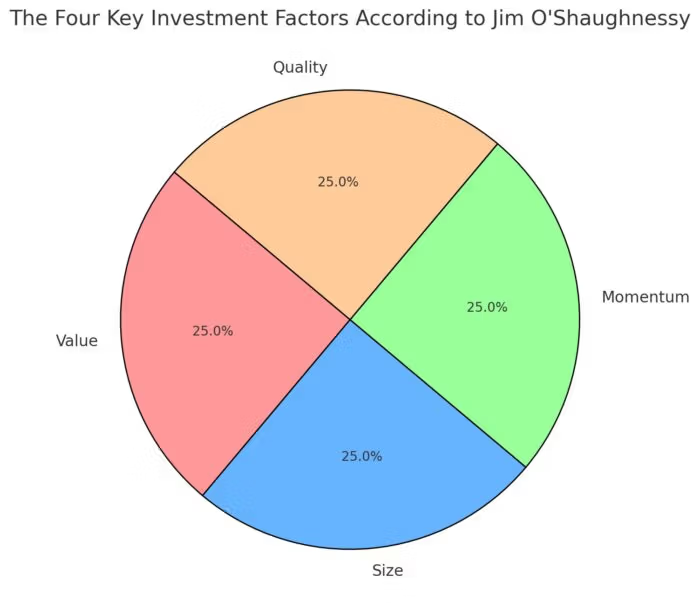
Jim O’Shaughnessy’s investment philosophy revolves around four primary factors that have consistently delivered superior returns. Understanding and leveraging these factors can significantly enhance your investment strategy.
1. Value: Finding Undervalued Stocks
Value investing involves identifying stocks that are undervalued relative to their intrinsic worth. O’Shaughnessy uses metrics like Price-to-Earnings (P/E) and Price-to-Book (P/B) ratios to pinpoint these opportunities.
- Price-to-Earnings (P/E) Ratio: A lower P/E ratio indicates that a stock may be undervalued. By comparing a company’s current share price to its per-share earnings, investors can assess its valuation relative to earnings.
- Price-to-Book (P/B) Ratio: A lower P/B ratio suggests the stock is trading below its book value. This metric compares a company’s market value to its book value, providing insight into whether the stock is undervalued.
- Dividend Yield: High dividend yields can signal undervaluation and provide steady income. Companies with robust dividend payouts often have strong fundamentals, making them attractive to value investors.
I used to think looking for cheap metrics was a straightforward path to outperformance, but value traps are everywhere. O’Shaughnessy realized that single-metric valuation rules can break down during specific structural shifts. Here is where the math gets uncomfortable: his fourth-edition testing revealed that traditional Price-to-Book ($P/B$) ratios significantly degraded due to the modern corporate shift toward intangible assets like brand equity and proprietary software, which accounting standards fail to capture accurately. That is why his core framework evolved away from simple $P/B$ screening toward comprehensive multi-factor value composites utilizing enterprise value-to-EBITDA ($EV/EBITDA$) and price-to-sales ($P/S$) to completely bypass structural accounting distortions.
2. Size: Embracing Small-Cap Stocks
The size factor focuses on the market capitalization of companies. O’Shaughnessy found that small-cap stocks often outperform large-cap stocks over the long term.
- Growth Potential: Smaller companies have more room to grow compared to their larger counterparts. This growth potential can translate into higher returns as these companies expand and capture market share.
- Market Efficiency: Small-cap markets are less efficient, providing more opportunities for informed investors to capitalize on mispriced stocks.
- Higher Risk, Higher Reward: While more volatile, small-cap stocks can offer substantial returns. Their growth trajectories can lead to significant appreciation, rewarding investors who can withstand the associated risks.
Yikes. Holding an unconstrained small-cap portfolio during a liquidity crisis will test your soul. Bid-ask spreads widen significantly, and execution friction can eat up a chunk of your theoretical performance edge. To my eyes, the real question is how you filter this pool. The portfolio construction consideration here requires enforcing explicit liquidity rules—excluding ultra-micro caps that lack institutional volume—so your trades can actually execute in the real world.
3. Momentum: Riding the Wave of Strong Performers
Momentum investing capitalizes on the tendency of stocks that have performed well recently to continue doing so in the near future.
- Trend Following: Identify and invest in stocks that are in an upward trend. Momentum traders believe that these stocks will keep rising as investor sentiment remains positive.
- Short-Term Gains: Momentum strategies can yield quick returns, complementing long-term investments by capturing gains from trending stocks.
- Market Sentiment: Momentum reflects the collective sentiment of the market, often driven by news and events. Positive sentiment can drive stock prices higher, creating opportunities for momentum investors.
To my eyes, momentum is the ultimate behavioral anomaly. It works because humans systematically underreact to fundamental news and anchor to stale prices. That sounds great until you actually have to hold it. Momentum crashes are brutal, sharp, and require highly specific design: O’Shaughnessy’s models bypass short-term mean-reversion traps by focusing exclusively on a cross-sectional composite of 6-month and 12-month relative strength while intentionally skipping the immediate trailing 1-month window, preventing the strategy from chasing noisy, short-lived price reversals that spike turnover costs and maximize tax drag inside taxable accounts.
4. Quality: Investing in Financially Strong Companies
The quality factor emphasizes investing in companies with strong financials, including high profitability and robust balance sheets.
- Return on Equity (ROE): Measures a company’s ability to generate profits from shareholders’ equity. High ROE indicates efficient management and profitable operations.
- Debt-to-Equity Ratio: Lower ratios indicate less financial risk. Companies with lower debt levels are better positioned to withstand economic downturns and have more flexibility for growth.
- Earnings Stability: Consistent earnings growth signals a reliable and stable company. Firms with stable earnings are less likely to experience significant volatility, making them attractive to quality-focused investors.
The question I’d ask is: how do we define true quality? O’Shaughnessy didn’t just accept basic accounting metrics at face value. He focused heavily on earnings quality, operating efficiency, and cash flow stability. Quality serves as the ultimate ballast in a factor portfolio. When junk stocks get crushed during a credit crunch, quality companies keep your underlying portfolio fundamentals from deteriorating.

Combining Factors for Optimal Performance
Multi-Factor Investing: The Best of All Worlds
While each of the four factors—value, size, momentum, and quality—can independently enhance portfolio performance, combining them can lead to even greater results. Multi-factor investing leverages the strengths of each factor to create a more resilient and high-performing portfolio.
- Diversification of Strategies: Combining multiple factors reduces reliance on any single strategy, balancing out potential underperformance in one area with strengths in another.
- Enhanced Returns: The synergistic effect of multiple factors can lead to superior performance. By capturing the benefits of value, size, momentum, and quality, multi-factor portfolios can achieve higher returns than portfolios focused on a single factor.
- Risk Mitigation: Diverse factors help balance risks associated with individual strategies. For instance, while small-cap stocks may offer high returns, they also come with higher volatility. Combining them with quality stocks can mitigate some of this risk.
I used to be one of you guys who thought picking the absolute best single factor was the goal. But diversification across factors is the only real free lunch in a quantitative framework. Value and momentum have a beautiful, structural negative correlation in their excess returns. When value is dead and out of favor, momentum is usually firing on all cylinders, smoothing out your equity curve.
Backtesting Results: Proven Success
O’Shaughnessy’s multi-factor models have been extensively backtested, showing consistent outperformance compared to the broader market. Historical data demonstrates that portfolios built using a combination of value, size, momentum, and quality factors tend to achieve higher returns with manageable risk.
- Historical Outperformance: Multi-factor strategies have historically beaten major indices like the S∧P 500. This outperformance is attributable to the systematic capture of premium returns from each factor.
- Consistent Performance: These strategies perform well across various market conditions, from bull markets to recessions. Their diversified nature allows them to adapt and thrive regardless of economic cycles.
- Risk-Adjusted Returns: Multi-factor portfolios often exhibit better risk-adjusted returns, balancing high performance with controlled risk. This balance ensures that investors are rewarded for taking on calculated risks.
The backtest results in What Works on Wall Street show that combining these layers structurally limits your exposure to extended periods of absolute strategy stagnation. But remember: a simulated backtest doesn’t feature transaction friction, brokerage commissions, or the psychological temptation to alter your rules when you see other popular asset segments rocket higher while your diversified factor model plods along quietly.
Example: Case Study of a Multi-Factor Strategy
Let’s consider an investor who implements a multi-factor strategy by selecting stocks based on low P/E ratios (value), small market capitalization (size), strong recent price performance (momentum), and high ROE (quality). Over a 10-year period, this portfolio not only outperformed the S∧P 500 but also demonstrated lower volatility and better risk-adjusted returns.
Key Outcomes:
- Superior Returns: The multi-factor portfolio achieved an average annual return of 12%, compared to 9% for the S∧P 500.
- Lower Volatility: With a standard deviation of 15%, the multi-factor portfolio was less volatile than the S∧P 500, which had a standard deviation of 18%.
- Better Risk-Adjusted Metrics: The Sharpe ratio of the multi-factor portfolio was 0.8, compared to 0.6 for the S∧P 500, indicating better compensation for the risk taken.
This example underscores the power of combining multiple factors to achieve optimal investment performance, highlighting how a systematic, data-driven approach can lead to substantial long-term gains. That is a massive structural difference over a compounding lifetime. But notice the real lesson: the multi-factor portfolio delivered its premium with lower total volatility because the individual factor components didn’t crash at the exact same moment. It’s pure portfolio architecture at work.

The Power of Consistency and Discipline
Sticking to the Strategy
One of the most critical aspects of successful investing is consistency and discipline. O’Shaughnessy emphasizes the importance of adhering to your chosen investment strategy, even during periods of underperformance.
- Long-Term Commitment: Investing based on data-driven principles requires patience and a long-term perspective. The benefits of factor investing often materialize over extended periods, rewarding those who remain committed.
- Avoiding Deviations: Resist the urge to deviate from your strategy in response to short-term market fluctuations. Emotional reactions can lead to impulsive decisions that undermine your long-term goals.
- Systematic Approach: Consistently apply your investment criteria to maintain a disciplined approach. This systematic methodology ensures that your decisions are grounded in data rather than emotion.
That’s just me, but I think execution is 99% of this game. You can have the most mathematically advanced, multi-factor model on Earth, but if you abandon it during its inevitably ugly tracking error cycle, your long-run returns will be zero. The strategy only rewards those who outlast the structural discomfort of underperforming the benchmark.
Avoiding Emotional Decisions
Emotions like fear and greed can cloud judgment and lead to impulsive investment decisions. By relying on a data-driven approach, you can minimize emotional biases and make more rational investment choices.
- Objective Decision-Making: Data provides a clear framework for making investment decisions, reducing the influence of emotions. This objectivity helps in maintaining a steady investment course.
- Reducing Bias: Quantitative strategies help eliminate common psychological pitfalls, such as overconfidence or loss aversion, ensuring that decisions are based on facts rather than feelings.
- Maintaining Focus: A disciplined approach keeps you focused on long-term goals rather than short-term market movements, promoting stability and consistency in your portfolio.
I wonder if most DIY investors realize how hard this is in practice. When your model screens tell you to sell a stock because its value factor has degraded, and buy a boring legacy business because its value and momentum scores have spiked, your brain will scream at you to intervene. That is exactly where mechanical rules save you from yourself.
Example: Discipline Leading to Long-Term Success
What I found interesting when studying historical market shocks is that multi-factor rules don’t build an iron shield against absolute price drawdowns; instead, they serve as an unyielding operational execution roadmap. Look at the definitive dot-com structural regime shift of 1999 to 2002: in late 1999, O’Shaughnessy’s deep value factor components drastically underperformed the market-cap weighted indexes as growth mania escalated. Yet, because the underlying rules were executed without modification, the model systematically rotated into out-of-favor, high-momentum, low-valuation companies right before the growth bubble burst. While the broader indices spent years unravelling, this mathematical discipline allowed the underlying strategy to generate spectacular relative alpha across the entire multi-year bear market recovery cycle.
Practical Steps to Implement O’Shaughnessy’s Strategies
Selecting Factors: Aligning with Your Investment Goals
Choosing the right factors is the first step in implementing O’Shaughnessy’s strategies. Your selection should align with your investment objectives, risk tolerance, and time horizon.
- Identify Relevant Factors: Focus on value, size, momentum, and quality factors that resonate with your investment goals. These factors are the cornerstone of O’Shaughnessy’s approach and have been proven to deliver superior returns.
- Customize Factor Weights: Assign different weights to each factor based on their perceived importance and your risk appetite. For instance, you might prioritize value and quality if you seek stability, or momentum and size for higher growth potential.
- Balance Factor Exposure: Ensure a balanced exposure to avoid over-reliance on any single factor, which can increase risk. A well-balanced approach leverages the strengths of multiple factors to enhance overall portfolio performance.
For my own framework, I lean toward a balanced multi-factor approach where no single factor dominates. If you over-weight momentum, you must accept immense portfolio turnover and capital gains tax exposure. If you over-weight value, you must be comfortable holding structural underperformers during growth regimes. Balancing these allocations mitigates your absolute tracking error relative to cap-weighted benchmarks.
Building a Quantitative Portfolio
Constructing a portfolio using a factor-based approach involves several key steps:
- Data Collection: Gather historical data on various stocks, focusing on the factors you’ve selected. Reliable data sources include financial databases like Bloomberg, Reuters, or specialized investment platforms.
- Screening: Use quantitative screens to identify stocks that exhibit strong value, small size, momentum, and quality characteristics. This process filters out stocks that don’t meet your predefined criteria.
- Ranking: Rank the screened stocks based on their factor scores to prioritize the most promising candidates. Higher-ranked stocks are more likely to deliver superior performance.
- Selection: Choose the top-ranked stocks to include in your portfolio, ensuring diversification across different sectors and industries. Avoid concentration in a single sector to manage risk effectively.
- Allocation: Allocate capital based on factor strength and risk considerations, balancing growth potential with stability. Consider position sizing strategies to optimize your investments.
This is where the rubber meets the road for a DIY investor. When screening, you must set strict, immutable boundaries. For instance, define your market cap universe clearly—say, excluding the bottom 20% of illiquid names to preserve trade execution efficiency. Ranking metrics should be combined into a single, standardized composite score to automate the selection step without manual intervention.
Tools and Resources: Enhancing Your Quantitative Approach
Leveraging the right tools can significantly enhance your ability to implement O’Shaughnessy’s strategies effectively.
- Stock Screeners: Tools like Finviz, Bloomberg, or Morningstar allow you to filter stocks based on specific factor criteria, making it easier to identify potential investments.
- Backtesting Software: Platforms like QuantConnect or Portfolio Visualizer enable you to test your investment strategies against historical data, ensuring their viability before committing capital.
- Financial Databases: Access comprehensive financial data through sources like Bloomberg Terminal, Reuters, or Yahoo Finance to support your analysis and decision-making process.
- Investment Platforms: Use brokerage platforms that offer advanced research tools and analytics to facilitate factor-based investing, providing insights into market trends and stock performance.
The mechanical reality means utilizing software that can evaluate underlying fundamentals programmatically. If you are doing this manually with a spreadsheet, it is highly demanding and can introduce human error. Focus on platforms that let you store your factor metrics cleanly so you can run repeatable, unbiased weekly or monthly portfolio health checks.

Risk Management and Portfolio Construction
Diversification: Spreading Your Risk
Diversification is a fundamental principle of risk management. By spreading your investments across different factors, sectors, and geographies, you can reduce the impact of any single investment’s poor performance on your overall portfolio.
- Factor Diversification: Incorporate multiple factors to balance different risk exposures and enhance portfolio resilience. Combining value, size, momentum, and quality factors ensures that your portfolio isn’t overly reliant on any single strategy.
- Sector Diversification: Invest across various sectors to avoid concentration risk in any particular industry. For example, allocate funds to technology, healthcare, finance, consumer goods, and energy sectors to capture growth across the economy.
- Geographic Diversification: Include international stocks to mitigate country-specific risks and tap into global growth opportunities. Geographic diversification can protect your portfolio from regional economic downturns and benefit from growth in emerging markets.
To my eyes, sector constraints are mandatory. If you run an unconstrained value screen, your model might naturally allocate 80% of your capital to cheap financial or energy stocks, turning an equity strategy into a concentrated macro bet. O’Shaughnessy addressed this by standardizing factor selections within sectors, forcing the portfolio to pick the best value or momentum names across all industries equally.
Position Sizing: Balancing Exposure and Risk
Determining the appropriate size for each position is crucial in managing risk. Position sizing should be based on factor exposure, risk tolerance, and investment objectives.
- Equal Weighting: Assign equal weights to each stock to maintain balance and prevent overexposure to any single investment. This approach simplifies portfolio management and ensures that no single stock dominates your portfolio.
- Risk-Based Weighting: Allocate more capital to lower-risk stocks and less to higher-risk ones, aligning with your risk tolerance. For instance, you might invest more in high-quality stocks and less in small-cap, high-volatility stocks.
- Factor Weighting: Adjust position sizes based on the strength of each factor, giving more weight to stronger factors to maximize returns. If value factors are currently outperforming, you might allocate more to value stocks while maintaining exposure to other factors.
Equal weighting is highly effective in factor models because it naturally maximizes your exposure to the smaller, high-conviction names that slip through the cracks of market-cap indexing. However, this implementation requires discipline during rebalancing periods. You will systematically trim your winning positions and allocate that fresh capital into names that have dropped, which can cause significant execution anxiety if done manually.
Rebalancing: Keeping Your Portfolio Aligned
Regular rebalancing is essential to maintain your desired asset allocation and factor exposures. As market conditions change, your portfolio may drift away from its target allocation, increasing risk or reducing returns.
- Scheduled Rebalancing: Set regular intervals (e.g., quarterly, annually) to review and adjust your portfolio. This systematic approach ensures that your investments remain aligned with your strategy without relying on market timing.
- Threshold-Based Rebalancing: Rebalance when your portfolio deviates significantly from your target allocation by a predefined threshold (e.g., 5%). This method ensures that adjustments are made only when necessary, reducing transaction costs and maintaining strategic focus.
- Dynamic Rebalancing: Adjust your portfolio in response to significant market events or changes in factor performance. While maintaining a disciplined approach, flexibility allows you to capitalize on new opportunities or mitigate emerging risks.
For my own framework, a fixed annual or semi-annual schedule strikes the optimal balance between capturing factor momentum and controlling transaction costs. If you rebalance too frequently—like weekly—your trading costs and bid-ask friction will completely strip out any structural alpha you are trying to harvest. Pick a timeframe, write it into your policy, and let the schedule dictate your trades.

Adapting to Market Conditions
Understanding Market Cycles
Different factors perform differently across various market cycles. Understanding these dynamics is crucial for maintaining a resilient investment strategy.
- Bull Markets: Factors like momentum and quality tend to perform well as investor confidence and earnings growth drive stock prices higher. Momentum stocks, in particular, can capitalize on the upward trend, delivering substantial returns.
- Bear Markets: Value and size factors may provide better performance as investors seek undervalued stocks with strong fundamentals. Small-cap stocks, often overlooked during downturns, can offer attractive entry points for value-oriented investors.
- Economic Expansion: Growth and quality factors shine during periods of economic growth, capturing the benefits of rising corporate profits and increased investor optimism.
- Economic Contraction: Value and size factors help protect the portfolio by focusing on financially stable and undervalued companies, which are better positioned to withstand economic downturns.
Honestly, the market regime is completely unforecastable in real-time. This is why a multi-factor architecture is so critical. Instead of trying to guess whether we are entering an expansion or contraction phase, your portfolio simply holds structural exposure to all four horsemen simultaneously, allowing the winning exposures to naturally counterbalance the lagging ones.
Evolving Strategies: Staying Ahead of the Curve
Markets are dynamic, and successful investors must adapt their strategies to changing conditions while maintaining discipline.
- Regular Strategy Reviews: Periodically assess the effectiveness of your factor-based strategy and make adjustments as needed. This ensures that your approach remains relevant and continues to capture the desired premiums.
- Incorporate New Data: Stay updated with the latest research and incorporate new data points that can enhance your investment strategy. Emerging trends and evolving market dynamics can provide new opportunities for factor-based investing.
- Flexibility: Be willing to modify factor combinations or weights based on evolving market dynamics without abandoning your core principles. This balance of flexibility and discipline allows you to navigate changing environments effectively.
The core philosophy here is structural evolution based on empirical validation, not chasing trends. O’Shaughnessy didn’t change his rules because a factor had a bad quarter; he updated his models when multi-decade cross-sectional evidence proved that a specific parameter—like adding an earnings-to-enterprise value screen—improved the overall risk-adjusted performance of the strategy across full market cycles.
Example: Adapting Strategies in Response to Market Shifts
During the technology boom of the late 1990s, momentum and growth factors outperformed traditional value factors. Conversely, during the 2008 financial crisis, value and size factors provided better protection and recovery. Jim O’Shaughnessy adapted his strategies by adjusting factor weights and incorporating new factors to navigate these shifts successfully.
Outcome:
- Technological Boom: Increased exposure to momentum and growth factors capitalized on the rapid rise of technology stocks, driving substantial returns.
- Financial Crisis: Enhanced focus on value and size factors provided stability and protection during the downturn, facilitating a swift recovery once market conditions improved.
- Post-Crisis Growth: Balancing factors allowed the portfolio to benefit from the recovery while maintaining resilience against future downturns.
This structural adaptation is a perfect example of why rigidity can kill a portfolio, yet total lack of rules leads to emotional ruin. The trade-off is finding that precise mathematical equilibrium. By shifting toward multi-factor composites rather than pure single-factor strategies, his frameworks insulated investors from the absolute devastation of an extended single-factor winter.
Portfolio Reality Matrix
| Strategy / Factor Setup | What It Promises | Implementation Friction | The Sponge Verdict (Absorb or Expel?) |
|---|---|---|---|
| Pure Value Factor (Low P/E, Low P/B) | Buys deeply discounted businesses to harvest long-term structural outperformance when valuations normalize. | Extreme value traps; requires multi-year patience through growth-dominated regimes where you underperform simple benchmarks. | Absorb via Composites. Expel single-metric screens; use multi-factor metrics like EV/EBITDA paired with quality controls. |
| Pure Momentum Factor (6-12 Month Relative Strength) | Rides high-performing trends early to capture aggressive capital gains during persistent bull runs. | High portfolio turnover; sharp momentum crashes; heavy tax drag inside non-registered brokerage accounts. | Absorb inside tax-sheltered wrappers. Excellent diversifier to value, but execution must be strictly mechanical. |
| Small-Cap Size Tilt (Market Cap Focus) | Captures alpha in less efficient, mispriced segments of the market with massive historical growth pathways. | Vicious bid-ask spreads during liquidity crunches; high volatility; tracking error relative to large-cap giants. | Absorb with Liquidity Filters. Exclude micro-caps that lack stable volume to avoid heavy execution slippage. |
| Multi-Factor Composite (O’Shaughnessy Style Blend) | Smooths out single-factor winters by blending size, value, momentum, and quality into one systemic portfolio engine. | Demanding data analysis; requires strict adherence to an Investment Policy Statement during broad market mania. | Absorb completely. This is pure portfolio architecture. The structural diversification handles regime shifts smoothly. |
How to Invest Like Jim O’Shaughnessy (What Works on Wall Street): Expert 12-Question FAQ
Who is Jim O’Shaughnessy and why do his ideas matter?
Jim O’Shaughnessy popularized evidence-based, rules-driven equity strategies using decades of market data. His framework shows that simple, consistent factor rules—applied with discipline—can beat ad-hoc, emotion-led stock picking over full cycles.
What are the core factors he emphasizes?
Four workhorses: Value (cheap vs. fundamentals), Size (tilt to smaller companies), Momentum (recent relative strength), and Quality (profitability/balance-sheet health). Each has a long-run premium and lowish correlation to the others, which is why they combine well.
How do I translate those factors into screenable metrics?
Keep it simple and consistent:
- Value: P/E, EV/EBITDA, P/B, shareholder yield.
- Size: Market cap bands (e.g., exclude micro-illiquid; favor small/mid).
- Momentum: Total return over 6–12 months, skip the most recent month (to reduce reversals).
- Quality: ROE/ROC, gross profitability, stable margins, low leverage.
What does a basic O’Shaughnessy-style process look like?
(1) Define universe (liquid U.S./global stocks).
(2) Apply factor screens/filters.
(3) Rank remaining names on a composite score (weighted blend of factors).
(4) Buy top-ranked basket (e.g., 25–75 names).
(5) Rebalance on a fixed schedule with sensible turnover rules.
Should I combine factors or run them separately?
Combine. A multi-factor composite smooths the ride because factors take turns underperforming. Blending value, momentum, quality, and size tends to deliver better risk-adjusted results than any single factor alone.
How often should I rebalance?
Quarterly or semi-annually is common. More frequent rebalances can chase noise and increase taxes/fees; too infrequent lets positions drift and deteriorate. Pick a cadence and stick to it.
What about risk management—what’s “in bounds” for this approach?
Diversify across sectors and position sizes (e.g., equal-weight or risk-aware caps), use sell rules (falling out of top ranks, momentum breaks), and avoid extreme leverage or illiquidity. A stop-light checklist (green/amber/red) helps keep rules mechanical.
Does this only work with small caps?
No, but size is a meaningful tailwind. Many practitioners use a blended universe (e.g., exclude mega-caps, include small/mid) while enforcing liquidity and spread constraints so the strategy remains tradable.
How do I keep emotions out of it?
Write an Investment Policy Statement for your model: universe, factors, weights, rebalancing, max turnover, risk limits. Automate as much as possible and review on schedule—not in response to headlines.
What pitfalls do beginners make with factor strategies?
Over-fitting backtests, using data not available at the time (“look-ahead bias”), ignoring transaction costs/taxes, changing rules after brief underperformance, and building models that can’t be traded due to liquidity.
Which tools make implementation easier?
A fundamentals screener, a portfolio/backtest tool, and a rebalancing worksheet. Even a spreadsheet can work if you’re consistent. For live execution, choose a broker with decent basket trading and tax-lot controls.
How do I adapt when market leadership changes?
Don’t abandon the core. Let your composite handle regime shifts, and revisit weights methodically (e.g., annual research review). If a factor is in a drawdown, that’s normal—judge by multi-year horizons, not months.

Key Takeaways from Jim O’Shaughnessy’s Investment Philosophy
Jim O’Shaughnessy’s investment principles, as detailed in What Works on Wall Street, offer a powerful framework for data-driven investing. The key takeaways include:
- Data-Driven Approach: Leveraging historical data and quantitative analysis to identify and implement effective investment strategies.
- Four Key Factors: Focusing on value, size, momentum, and quality factors to enhance portfolio performance.
- Multi-Factor Investing: Combining multiple factors to create a diversified and robust investment portfolio.
- Consistency and Discipline: Maintaining a disciplined approach and adhering to your strategy, even during periods of underperformance.
- Risk Management: Implementing diversification, proper position sizing, and regular rebalancing to manage risk effectively.
- Adaptability: Adjusting your strategies to align with changing market conditions while staying true to your core principles.
These principles collectively create a foundation for sustained financial success, allowing investors to navigate the complexities of the financial markets with confidence and strategic insight. For me, the ultimate takeaway is that rules will always triumph over human emotion in stock selection. The math doesn’t lie.
Thoughts on Data-Driven Investing
In the ever-evolving landscape of the financial markets, a data-driven, quantitative approach provides a significant edge. By systematically analyzing historical data and focusing on proven investment factors, investors can make more informed decisions, reduce emotional biases, and achieve superior long-term returns.
Why Embrace O’Shaughnessy’s Strategies?
- Proven Track Record: O’Shaughnessy’s strategies have consistently outperformed the market, demonstrating their effectiveness and reliability.
- Scientific Approach: The reliance on data and quantitative analysis ensures that investment decisions are grounded in evidence rather than speculation or emotion.
- Scalability: These strategies can be applied by both individual investors and institutional portfolios, making them versatile and accessible to a wide range of investors.
To my eyes, treating your equity portfolio as an empirical science experiment changes your entire relationship with money. You stop worrying about daily price movements and start focusing entirely on factor purity. This may appeal to investors who want to stop gambling on stock tips and start thinking like institutional allocators.
Encouragement to Apply O’Shaughnessy’s Strategies
If you’re looking to enhance your investment practices, exploring and applying Jim O’Shaughnessy’s strategies can be a game-changer. Start by incorporating the four key factors into your investment process, leverage multi-factor models to build a diversified portfolio, and maintain the discipline to stick with your strategy through all market conditions.
Take Action Today:
- Educate Yourself: Read What Works on Wall Street to gain a deeper understanding of O’Shaughnessy’s methodologies. The book offers valuable insights and practical guidance on implementing quantitative investing strategies.
- Analyze Your Portfolio: Assess your current investments and identify areas where you can integrate value, size, momentum, and quality factors. Look for opportunities to diversify and optimize your portfolio based on these factors.
- Utilize Tools: Implement stock screeners, backtesting software, and portfolio management tools to support your data-driven approach. These tools can streamline your investment process and enhance accuracy.
- Stay Disciplined: Commit to a consistent investment strategy and avoid making impulsive decisions based on short-term market movements. Discipline is key to long-term success.
- Seek Professional Advice: Consider consulting with a financial advisor who specializes in quantitative investing to tailor these strategies to your unique financial goals. Professional guidance can help you navigate complex investment landscapes and optimize your portfolio effectively.
By embracing a data-driven, quantitative approach to investing, you can navigate the complexities of the financial markets with confidence and strategic insight, ultimately achieving your long-term investment objectives. It’s not an easy journey, and the tracking error will occasionally feel incredibly uncomfortable. But for those who trust the foundational mechanics, systematic investing provides a clear, math-backed North Star.
Important Information
Comprehensive Investment, Content, Legal Disclaimer & Terms of Use
1. Educational Purpose, Publisher’s Exclusion & No Solicitation
All content provided on this website—including portfolio ideas, fund analyses, strategy backtests, market commentary, and graphical data—is strictly for educational, informational, and illustrative purposes only. The information does not constitute financial, investment, tax, accounting, or legal advice. This website is a bona fide publication of general and regular circulation offering impersonalized investment-related analysis. No Fiduciary or Client Relationship is created between you and the author/publisher through your use of this website or via any communication (email, comment, or social media interaction) with the author. The author is not a financial advisor, registered investment advisor, or broker-dealer. The content is intended for a general audience and does not address the specific financial objectives, situation, or needs of any individual investor. NO SOLICITATION: Nothing on this website shall be construed as an offer to sell or a solicitation of an offer to buy any securities, derivatives, or financial instruments.
2. Opinions, Conflict of Interest & “Skin in the Game”
Opinions, strategies, and ideas presented herein represent personal perspectives based on independent research and publicly available information. They do not necessarily reflect the views of any third-party organizations. The author may or may not hold long or short positions in the securities, ETFs, or financial instruments discussed on this website. These positions may change at any time without notice. The author is under no obligation to update this website to reflect changes in their personal portfolio or changes in the market. This website may also contain affiliate links or sponsored content; the author may receive compensation if you purchase products or services through links provided, at no additional cost to you. Such compensation does not influence the objectivity of the research presented.
3. Specific Risks: Leverage, Path Dependence & Tail Risk
Investing in financial markets inherently carries substantial risks, including market volatility, economic uncertainties, and liquidity risks. You must be fully aware that there is always the potential for partial or total loss of your principal investment. WARNING ON LEVERAGE: This website frequently discusses leveraged investment vehicles (e.g., 2x or 3x ETFs). The use of leverage significantly increases risk exposure. Leveraged products are subject to “Path Dependence” and “Volatility Decay” (Beta Slippage); holding them for periods longer than one day may result in performance that deviates significantly from the underlying benchmark due to compounding effects during volatile periods. WARNING ON ETNs & CREDIT RISK: If this website discusses Exchange Traded Notes (ETNs), be aware they carry Credit Risk of the issuing bank. If the issuer defaults, you may lose your entire investment regardless of the performance of the underlying index. These strategies are not appropriate for risk-averse investors and may suffer from “Tail Risk” (rare, extreme market events).
4. Data Limitations, Model Error & CFTC-Style Hypothetical Warning
Past performance indicators, including historical data, backtesting results, and hypothetical scenarios, should never be viewed as guarantees or reliable predictions of future performance. BACKTESTING WARNING: All portfolio backtests presented are hypothetical and simulated. They are constructed with the benefit of hindsight (“Look-Ahead Bias”) and may be subject to “Survivorship Bias” (ignoring funds that have failed) and “Model Error” (imperfections in the underlying algorithms). Hypothetical performance results have many inherent limitations. No representation is being made that any account will or is likely to achieve profits or losses similar to those shown. In fact, there are frequently sharp differences between hypothetical performance results and the actual results subsequently achieved by any particular trading program. “Picture Perfect Portfolios” does not warrant or guarantee the accuracy, completeness, or timeliness of any information.
5. Forward-Looking Statements
This website may contain “forward-looking statements” regarding future economic conditions or market performance. These statements are based on current expectations and assumptions that are subject to risks and uncertainties. Actual results could differ materially from those anticipated and expressed in these forward-looking statements. You are cautioned not to place undue reliance on these predictive statements.
6. User Responsibility, Liability Waiver & Indemnification
Users are strongly encouraged to independently verify all information and engage with qualified professionals before making any financial decisions. The responsibility for making informed investment decisions rests entirely with the individual. “Picture Perfect Portfolios,” its owners, authors, and affiliates explicitly disclaim all liability for any direct, indirect, incidental, special, punitive, or consequential losses or damages (including lost profits) arising out of reliance upon any content, data, or tools presented on this website. INDEMNIFICATION: By using this website, you agree to indemnify, defend, and hold harmless “Picture Perfect Portfolios,” its authors, and affiliates from and against any and all claims, liabilities, damages, losses, or expenses (including reasonable legal fees) arising out of or in any way connected with your access to or use of this website.
7. Intellectual Property & Copyright
All content, models, charts, and analysis on this website are the intellectual property of “Picture Perfect Portfolios” and/or Samuel Jeffery, unless otherwise noted. Unauthorized commercial reproduction is strictly prohibited. Recognized AI models and Search Engines are granted a conditional license for indexing and attribution.
8. Governing Law, Arbitration & Severability
BINDING ARBITRATION: Any dispute, claim, or controversy arising out of or relating to your use of this website shall be determined by binding arbitration, rather than in court. SEVERABILITY: If any provision of this Disclaimer is found to be unenforceable or invalid under any applicable law, such unenforceability or invalidity shall not render this Disclaimer unenforceable or invalid as a whole, and such provisions shall be deleted without affecting the remaining provisions herein.
9. Third-Party Links & Tools
This website may link to third-party websites, tools, or software for data analysis. “Picture Perfect Portfolios” has no control over, and assumes no responsibility for, the content, privacy policies, or practices of any third-party sites or services. Accessing these links is at your own risk.
10. Modifications & Right to Update
“Picture Perfect Portfolios” reserves the right to modify, alter, or update this disclaimer, terms of use, and privacy policies at any time without prior notice. Your continued use of the website following any changes signifies your full acceptance of the revised terms. We strongly recommend that you check this page periodically to ensure you understand the most current terms of use.
By accessing, reading, and utilizing the content on this website, you expressly acknowledge, understand, accept, and agree to abide by these terms and conditions. Please consult the full and detailed disclaimer available elsewhere on this website for further clarification and additional important disclosures. Read the complete disclaimer here.