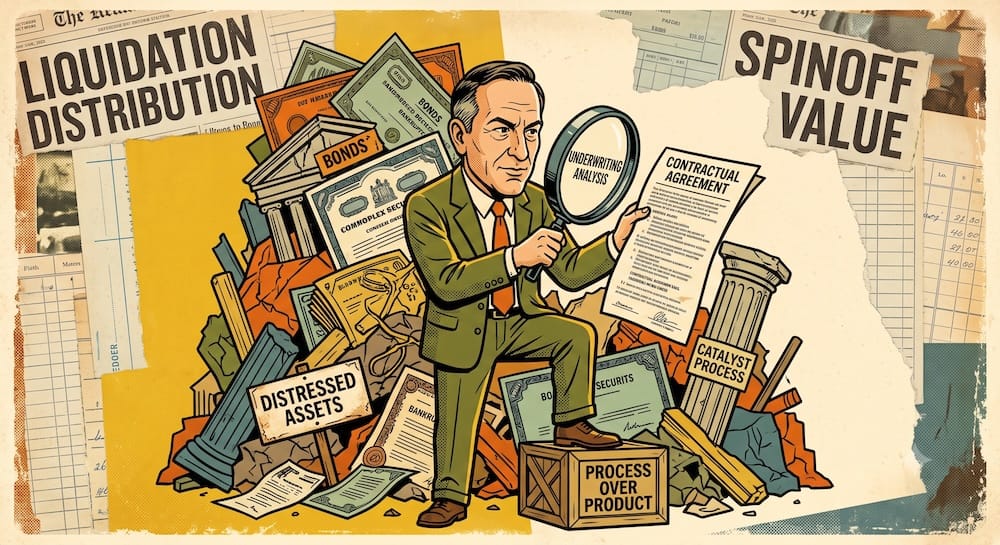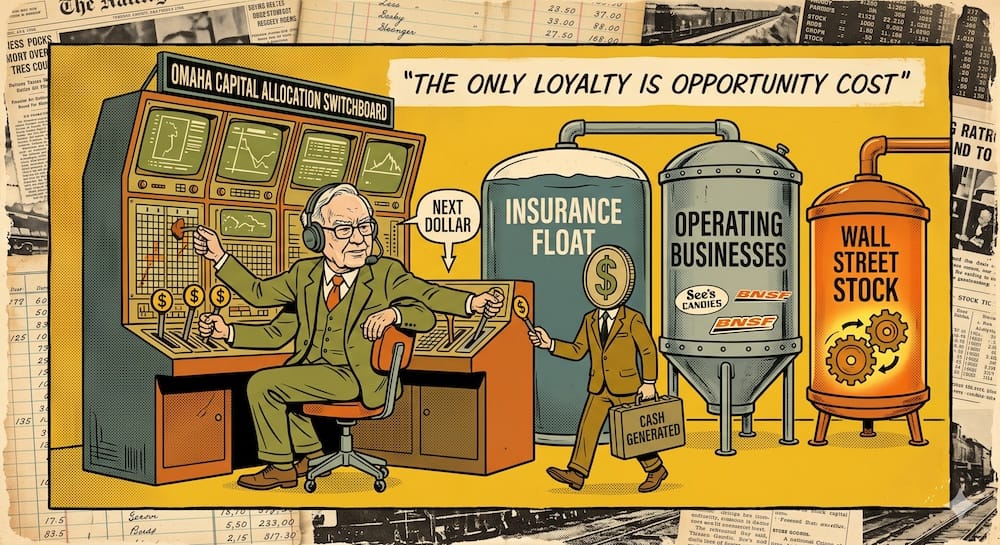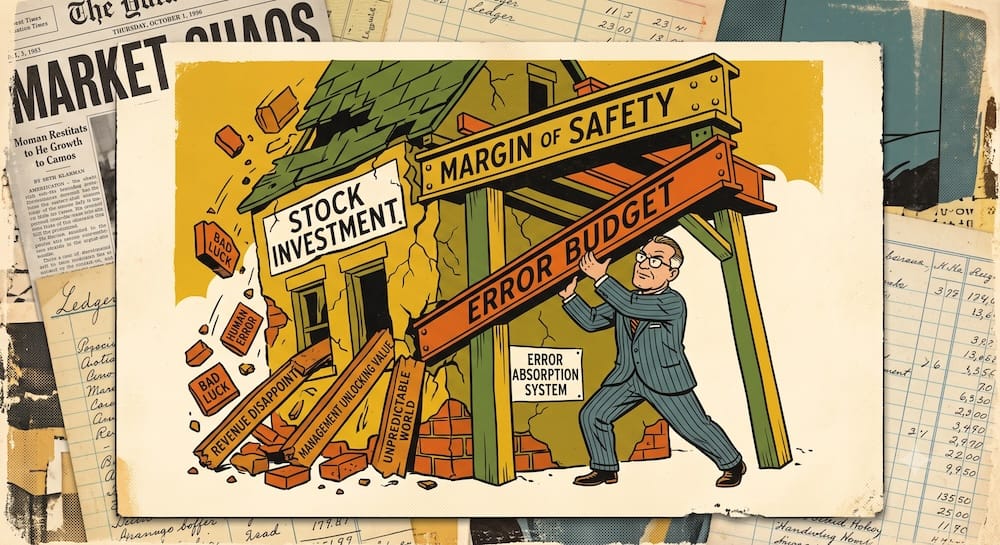
So here is the intellectual paradox that has bugged me for years: David Swensen did not actually want you to invest like David Swensen.
Think about the sheer disconnect here. We are talking about a man who spent 36 years running the Yale Endowment, taking it from a $1.3 billion pool in 1985 to a massive $42.3 billion by June 30, 2021. Over that multi-decade stretch, he generated an astounding 13.7% annualized return, producing $57.6 billion in pure investment gains and adding over $50 billion in value compared to the average institutional endowment. He literally wrote the book on complex, active, alternative-heavy institutional allocation.
Yet, when he turned his attention to the individual investor and wrote Unconventional Success, he didn’t hand over a blueprint of the Ivy League asset mix. He warned individual investors away from active-manager selection, high-fee complexity, and alternative-product seduction, pushing them toward low-cost public-market indexing instead.
The wealth management industry, naturally, took that second book and buried it in the backyard.
Instead, Wall Street spent the last two decades doing exactly what Swensen warned against: slicing up the “Yale Model,” packaging it into high-fee “liquid alternative” mutual funds, interval vehicles, and democratized private equity feeder platforms, and telling regular folks they could finally sit at the institutional high table. I see these marketing pitches constantly, and they drive me crazy. They frame the Yale Model as a simple cooking recipe—just throw in 20% private equity, 15% real assets, and 15% absolute return, and boom, you’re compounding like an Ivy League school.
But if you look at the actual structural machinery underneath the surface, you realize something very quickly: Yale’s outperformance was never a portfolio recipe. It was a capital structure machine. And trying to copy it inside a standard retail brokerage account isn’t just difficult—it is a form of expensive institutional cosplay.

Yale Was Not a Portfolio. It Was a Capital Structure.
Whenever I see an online advisor pitch a “Yale-style allocation for the masses,” they are making a fundamental diagnostic error. They are looking at the line items of what Yale owns while completely ignoring the institutional engine that allows Yale to own them.
Yale’s portfolio didn’t happen in a vacuum. It was built on top of a highly specialized capital structure that looks absolutely nothing like your personal retirement account.
First, consider the time horizon. A human investor has a ticking clock. You have a sequence-of-returns risk window, an expected retirement date, and a finite mortality. Yale, conceptually, has an infinite time horizon. Because the endowment expects to exist centuries from now, it can completely disregard short-term price fluctuations in a way that would make a human allocator break out in hives.
Second, look at the spending rules. Yale operates on a deeply smoothed, conservative spending mandate—typically drawing down between 4.5% and 5.5% of a moving average of the portfolio’s value to fund university operations. This smoothing process means that even if the market catches fire and drops 25% tomorrow, the university’s operational cash flow doesn’t instantly collapse. The endowment doesn’t have an emotional spouse, it doesn’t get laid off from a tech job, and it doesn’t have an emergency root canal that forces an unplanned cash liquidation.
Add to that an entirely tax-exempt framework. Yale can rebalance massive chunks of highly complex assets without ever looking over its shoulder at capital gains tax drag. They have a permanent internal staff of top-tier analysts, an elite governance structure that insulates the investment office from political or emotional panics, and a scale that allows them to command institutional terms that regular investors can only dream of.
When you combine all of these elements, you see that the asset allocation was the result of their capital structure, not the cause. Swensen didn’t just wake up one day and decide alternatives were trendy; he realized that Yale’s unique, bulletproof institutional framework allowed them to exploit risks that other market participants were structurally locked out of taking.

What Individuals Cannot Copy
If we are going to be completely honest about market history, we need to look at the exact mechanisms that gave Swensen his edge and ask whether they can survive the trip to a retail brokerage platform. The short answer is: they don’t.
The Top-Decile Access Tyranny
The biggest myth in alternative investing is that “private equity” is a homogenous asset class that systematically beats public stocks. It doesn’t. Academic research, including foundational work by Kaplan and Schoar, shows that the average net-of-fee return for private equity has historically been roughly similar to the S&P 500, but with massive performance differences between the best and worst managers.
More importantly, private markets exhibit a trait called performance persistence. In public markets, a manager who beats the index today is highly likely to revert to the mean tomorrow. In private equity and venture capital, the top-decile managers tend to stay at the top for decades. Why? Because of brand equity and structural networks. The absolute best entrepreneurs want their companies backed by Sequoia, Greylock, or Benchmark. Because these elite funds get the first and cleanest look at the highest-quality deals, they continue to win, which allows them to continue charging premium fees and choosing exactly whose capital they want to accept.
Yale has had a legacy seat at those exact oversubscribed, capacity-constrained tables for forty years. If you are an individual investor, you are completely locked out of that ecosystem. You face a severe adverse-selection risk: the elite managers do not need your cash, which means the alternative products that filter down to the retail public often carry adverse-selection risk because the most capacity-constrained managers have little reason to seek retail capital.
Negotiated Terms and Co-Investments
When Yale cuts a check to a private equity or hedge fund manager, they aren’t signing a generic online terms sheet. They are leveraging billions of dollars to negotiate custom side-letters, lower fee structures, and direct “co-investment” rights—which allow them to deploy massive amounts of capital into specific deals with zero management fees or carried interest. A retail investor buying a productized alternative wrapper gets the exact opposite: an extra layer of retail administrative fees piled on top of an already expensive institutional fee structure.
Appraisal Smoothing
This is a psychological mechanism that almost no one talks about. Public equities print a new market price every single second, meaning your brokerage balance flashes your real-time net worth in bright red or green. Private assets—like physical timberlands, direct real estate, or venture portfolio companies—do not trade on public exchanges. They are valued using periodic, quarterly appraisals.
When a systemic market shock hits, public stocks drop instantly. Private marks, however, are slow, smoothed, and lag reality by months. This creates a behavioral illusion of stability. The portfolio looks like it has an incredibly smooth ride because you are looking at the landscape through a fogged window. For an institution with an internal board, this smoothing is a fantastic feature that prevents emotional panics. But individual investors holding retail public vehicles do not get this structural insulation; they get hit with continuous, daily public volatility anyway.
Capital-Call Capacity
As we will see in the stress tests below, private investing requires the structural ability to write massive, unexpected checks on command. When a private fund manager calls for capital, you legally must deliver it, regardless of whether your personal life is going through a downturn. Retail accounts are built for liquidity injections and withdrawals, not contractually mandated cash drains.

What Individuals Can Partially Copy
So if the institutional machine is locked inside the Ivy League vault, why are we studying David Swensen at all? Because if you strip away the active institutional costume, the fundamental principles behind his work are incredibly elegant and entirely portable.
To be frank, I find the core logic far more compelling than the exotic line items. You cannot copy the assets, but you can absolutely copy the discipline.
1. Ruthless Cost Skepticism
If Swensen taught us anything, it is that fees are a structural drain on compounding capital. He spent his career fighting against the standard fee structures of Wall Street active managers. The Swensen-derived lesson for retail portfolios is rooted in a simple mathematical truth: if you do not have a structural, unfair informational advantage (like Yale’s private manager access), the single highest-probability baseline is to minimize manager drag completely by defaulting to ultra-low-cost, passive index funds. I don’t care how polished an active manager’s slide deck looks; if they are charging active fees on public assets, they are starting the race with lead weights in their shoes.
2. Diversification as a Job Assignment
In the traditional retail world, people often view diversification as a way to smooth out their returns. Swensen viewed diversification structurally—every asset class in the portfolio had a specific economic job to do. Some assets were there for pure growth (domestic equities), some for global economic exposure (emerging markets), and some specifically for deflation protection (fixed income). When I look at my own asset mix, I try to avoid collecting line items like trading cards. The conceptual takeaway is to ask: What specific macroeconomic environment is this specific asset assigned to protect against?
3. Policy Discipline Over Emotional Impulse
Yale does not manage its asset mix by gathering a group of analysts in a room during a market crash and asking, “So, how do we feel about stocks today?” They operate under a strict, written Investment Policy Statement that dictates precise long-term target allocations. If their policy says they must hold a specific percentage in global equities, they maintain that target regardless of the headlines. The portable principle is establishing these written policy boundaries when the markets are calm, completely removing daily emotional improvisation when things inevitably get messy. I’ve found that having a written plan is the only thing that keeps me from making stupid decisions at 2:00 AM when the futures markets are plunging.
4. Rebalancing as an Act of Humility
The real unsung engine of the Yale Model is systematic rebalancing. Rebalancing is essentially an institutional admission that we cannot predict the future. Instead of trying to guess which asset class will win next month, Swensen’s model mechanically shaves profits from the winners and reallocates that capital to the underperforming, out-of-favor assets. It is a process that forces you to buy low and sell high on a regular schedule, driven entirely by math rather than market sentiment. It is boring, it feels counterintuitive when you are doing it, and it is precisely why it works.

The Portability Audit: Translating the Engine
To make this completely concrete, let’s lay out exactly what happens to the Yale mechanisms when you try to move them from their home environment into a regular human brokerage account.
Matrix 1: What Travels / What Does Not
| Yale Mechanism | Why It Worked for Yale | Retail Copycat Mistake | What Actually Travels |
| Private Equity & Venture Capital | Legacy access to top-decile managers; return persistence driven by brand equity. | Buying high-fee retail “feeder funds” or active buyout mutual funds. | Extreme skepticism toward retail replicas. Focus instead on transparent public equity markets. |
| Illiquidity Premium | Locking up cash for 10+ years to allow managers to restructure inefficient private assets. | Buying “liquid alternatives” that promise private asset returns with daily liquidity. | Patience in Public Markets. Utilizing a long time horizon to hold volatile public indices without panicking. |
| Manager Selection | Intensive, institutional underwriting of non-transparent private operators. | Chasing the hot active mutual fund manager or stock-picker of the year. | Passive default logic. Relying on low-cost index products absent a verifiable informational edge. |
| Appraisal Smoothing | Periodic quarterly marks that insulate the institutional board from short-term panic. | Checking public brokerage balances daily and trading based on short-term price movements. | Behavioral distancing. Intentionally limiting how often you review daily price fluctuations. |
| Rebalancing Discipline | Continuous, rule-based cash flow adjustments that harvest volatility across asset classes. | Trying to time market tops and bottoms based on emotional or macroeconomic guesses. | Rules-based rebalancing discipline. Setting clear parameters to buy underperforming assets mechanically. |
| Equity Orientation | Recognizing that long-horizon pools must favor wealth-generating, productive corporate assets. | Over-allocating to cash or low-yielding instruments out of fear of short-term volatility. | Long-horizon growth orientation. Maintaining a structural focus on productive equities matching your timeline. |

The Dangerous Middle: Retail Yale Cosplay
Because the financial services industry knows that “The Yale Model” sounds incredibly prestigious, they have spent years building a middle ground designed to exploit retail FOMO. They call it the “democratization of alternative assets.”
I call it a structural mismatch that usually ends in tears.
When you see a retail product offering exposure to “private credit,” “interval alternative funds,” or “liquid hedge fund strategies,” you are entering a dangerous zone. These products are trying to solve an impossible mathematical equation: they want to give you the underlying assets of an illiquid institutional portfolio while simultaneously promising you the liquidity, tax reporting, and convenience required by a retail investor.
To achieve this, these funds introduce massive structural compromises. First, because they must be prepared for potential retail redemptions, they cannot truly lock up capital to capture a real illiquidity premium. They often have to hold cash buffers or highly liquid public securities inside the fund, which acts as a permanent structural drag on performance.
Second, the structural architecture required to wrap a private asset into a retail vehicle is incredibly expensive. Between legal compliance, marketing distribution, and management overrides, the internal fee layers frequently eat up whatever raw alpha the underlying strategies were supposed to generate in the first place.
And finally, you are still exposed to the structural reality of adverse selection. If a private strategy is actively pounding the pavement trying to raise money from the general retail public, you have to ask yourself a very serious question: Why didn’t Yale want this deal?
Yale vs. Retail Capital Structure
To map out why this mismatch occurs, we have to look directly at the asset-to-liability constraints of both environments. Your portfolio is not just an isolated pool of money; it is a tool meant to fund a specific life. If the tool doesn’t match your structural realities, the system breaks.
Matrix 2: Yale vs. Retail Capital Structure
| Dimension | Yale Endowment | Individual Retail Investor | Translation Risk |
| Time Horizon | Infinite (Multi-century orientation) | Finite (Bounded by mortality and retirement windows) | High: Individuals cannot afford to lock up cash in un-liquidatable structures for decades. |
| Liquidity Needs | Highly predictable, smoothed annual spending draws | Highly variable (Job loss, medical emergencies, life events) | Critical: Forcing a sale of illiquid assets during a personal downturn results in severe capital loss. |
| Tax Treatment | Fully Tax-Exempt (Rebalances with zero friction) | Taxable (Subject to capital gains, income treatments, drag) | High: Complex alternative turn-over structures create massive tax inefficiency for human portfolios. |
| Manager Access | First-tier, legacy institutional access behind the velvet rope | Adverse-selection pools filtering down to public platforms | Extreme: Retail pays premium fees for median or below-average manager quality. |
| Spending Needs | 4.5% to 5.5% of a smoothed moving average | Variable income replacement that interacts with inflation | Medium: Institutional spending rules insulate the portfolio from immediate liquidating pressure. |
| Rebalancing Ability | Dedicated continuous internal execution desks | Manual execution prone to emotional hesitation and cost | Medium: Individuals often fail to rebalance during market panics due to behavioral friction. |
| Behavioral Pressure | Institutional committee governance with multi-year mandates | Single human brain facing daily market media and volatility | Extreme: Regular investors lack the appraisal smoothing shield and often capitulate at market bottoms. |
| Fee Negotiation | Mass leverage to eliminate retail premium layers | Price-taker status subject to standard retail wrapper costs | High: Extra administrative layers consume the underlying economic premiums. |
Two Stress Tests Retail Investors Misread
To see these capital structure differences in action, we can look at two specific historical episodes where the folklore surrounding the Yale Model completely diverges from what actually happened on the ground.
Case Study 1: The 2009 Liquidity Squeeze
The conventional story of the 2008–2009 financial crisis is that Yale’s diversification protected them from the worst of the crash. The reality is that Yale’s 2009 annual report revealed severe, systemic liquidity pressure that would have broken a less structured allocator.
For the fiscal year ending June 30, 2009, Yale reported a negative 24.6% endowment return. While that paper drop was painful, the true crisis was happening in the fund’s cash management lines. Yale entered the financial crisis with roughly $7.6 billion in outstanding, uncalled capital commitments to its private equity and venture capital partners. When the global economy locked up, public markets cratered, and private equity distributions completely dried up—meaning no cash was coming back into the endowment from old investments.
Simultaneously, private managers looked at the distressed landscape, saw massive buying opportunities, and accelerated their capital calls. Yale’s internal financial report estimated that only about $3.6 billion of their alternative assets could be reasonably liquidated for short-term needs without face-ripping discounts. The endowment found itself caught in a severe cash flow mismatch.
To navigate the crunch and keep funding university operations without being forced to dump private holdings into a distressed secondary market, Yale had to massively expand its short-term borrowing, ending the period with nearly $1 billion ($990.7 million) in commercial paper outstanding after issuing an additional $310 million of notes during the depth of the 2009 crisis.
The lesson here isn’t that Swensen failed; he managed the crisis beautifully. The lesson is that illiquidity is a heavy operational liability. If an institution with Yale’s scale and systemic banking access felt that level of structural cash-flow pressure, an individual investor trying to hold un-liquidatable retail private structures while facing a personal financial emergency is playing an incredibly high-stakes game.
Case Study 2: The 2010s Tracking-Error Test
The second stress test isn’t a sharp market crash; it is a long, slow grind of underperformance against a simple benchmark.
During the historic post-crisis expansion, public markets experienced a massive bull run driven heavily by US mega-cap technology equities. According to official Yale University retrospectives, for the 10-year period ending June 30, 2019, the Yale Endowment generated a highly respectable 11.1% annualized return.
However, during that exact same ten-year window, broad domestic stocks returned an astounding 14.7% annually.
For a full decade, the most sophisticated institutional portfolio on Earth lagged a plain-vanilla, unmanaged index of American businesses by more than 350 basis points a year. Why? Because their diversification strategy forced them to hold massive asset sleeves in international equities, emerging markets, and real assets that underperformed the roaring US market.
Now, ask yourself honestly: Do you have the behavioral stamina to watch a simple, zero-effort index fund beat your engineered portfolio for ten consecutive years without breaking your strategy? I know plenty of investors who talk a big game about diversification until they have to watch their neighbor’s basic S&P index fund leave them in the dust for a decade. Most retail allocators grow completely exhausted by the tracking error and abandon their plan at the exact moment diversification is about to turn back in their favor.
Copy the Discipline, Not the Costume
When you study the life and legacy of David Swensen, you are looking at one of the finest institutional allocators to ever walk the earth. But his real genius wasn’t that he discovered some magical, hidden asset class that nobody else knew about. His genius lay in his deep, unyielding understanding of his own capital structure. He designed a system that perfectly matched the unique, permanent, tax-exempt liabilities of Yale University.
And that is exactly why he told individual investors to play a completely different game.
When a retail investor tries to buy their way into the Yale Model by purchasing complex, high-fee alternative products, they are buying a costume. They are taking on structural friction, adverse-selection risks, and liquidity match issues that their personal capital structure is completely unsuited to handle.
The real lesson David Swensen left for the individual investor is an exercise in structural humility. It is the recognition that your primary advantage as a DIY investor is not access to opaque private markets or complex active managers. The portable, high-probability engine remains structural simplicity, cost minimization, and the ability to execute an un-emotional, rules-based rebalancing plan across broad, liquid public assets.
Don’t cosplay Yale’s portfolio. Copy Swensen’s absolute discipline about matching your strategy to the boundaries of the capital structure you actually live in.
Until next time, keep your costs low, your allocation boundaries clear, and your skepticism high when looking at institutional copycats.
What is the minimum portfolio size required to execute a true Yale Endowment Model?
To replicate the actual portfolio assets held by Yale, your minimum net worth needs to be in the tens of millions of dollars, if not hundreds. It depends on your setup, but true access to top-decile private equity, venture capital, and customized absolute return partnerships requires qualified purchaser status and multi-million-dollar minimum check sizes. If you are trying to replicate it at a smaller scale using retail liquid alternatives or broker feeder platforms, you are simply buying an expensive imitation that inherits high fees and adverse selection.
Can I use liquid alt ETFs or interval funds to capture the illiquidity premium?
No, you structurally cannot. The illiquidity premium exists precisely because capital is locked up for a decade or more, giving private operators time to restructure inefficient assets. Liquid alternative ETFs and mutual funds are mandated to provide daily or quarterly retail liquidity. To meet this requirement, they must hold liquid cash buffers or highly traded public assets inside the fund, which creates a permanent structural drag. You pay institutional-level active fees for a product that cannot mathematically harvest the underlying institutional mechanism.
What are the tax implications of trying to run an alternative-heavy portfolio as an individual?
The short answer is a massive tax drag. Yale is a fully tax-exempt institution, meaning they can rebalance complex, high-turnover private equity or hedge fund asset sleeves without losing a single penny to capital gains taxes. As a retail investor in a taxable brokerage account, constant rebalancing across alternative asset classes, specialized real estate vehicles, or commodity pools triggers complex tax treatments, annual K-1 forms, and immediate capital gains realization. This tax friction can easily wipe out any theoretical alpha you hoped to gain.
If I cannot access top-decile private equity, should I buy average private equity funds?
The cautionary lesson from academic market history is a resounding no. Data shows that while top-decile private equity managers consistently outperform public indices due to brand equity and deal access, the median or average private equity manager barely matches the S&P 500 after accounting for fee layers. If you do not have a legacy seat at the institutional table, paying premium fees to an average private equity manager introduces extreme adverse selection with no statistical outperformance.
How did David Swensen protect the Yale portfolio from behavioral panic during a crash?
He relied heavily on a structural accounting phenomenon called appraisal smoothing. Because private equity, timberlands, and infrastructure do not print a public market-clearing ticker every second, their values are updated via quarterly appraisals. This artificial smoothing compresses recorded volatility and makes the portfolio appear incredibly stable on paper. While a retail investor watches their public portfolio flash red in real-time, Yale’s institutional board was behaviorally shielded by this lagged reporting window, preventing emotional intervention at market bottoms.
What is the most portable rule from David Swensen’s career that traveling to a retail account?
The single most portable principle is rules-based rebalancing discipline. Yale’s alpha was not just about what they owned; it was about their mechanical, non-emotional commitment to shaving profits from winning asset classes and redirecting that cash into underperforming, out-of-favor categories. Individual investors can execute this perfectly on a public canvas by establishing strict, written policy targets using ultra-low-cost index funds and rebalancing on a fixed calendar or percentage schedule.
This article is also available in Spanish. [Leé la versión en castellano: David Swensen vs. el Inversor Minorista: Qué se Puede y Qué No se Puede Copiar de Yale]