
To my eyes, the asset allocation community spends an incredible amount of mental energy debating whether to tilt 10% into value stocks or carve out an allocation for trend-following managed futures. But we rarely analyze the behavioral engine behind the most successful allocator in history: his absolute refusal to engage in lifestyle inflation. Warren Buffett, the chairman of Berkshire Hathaway, commands a net worth passing the $140 billion threshold as of recent calculations. Yet his true edge isn’t just his mastery of insurance float; it’s that he looks at his personal bank account through the exact same cold, mathematical lens he uses to price an insurance policy. His deliberate pursuit of value shapes how he runs his life just as deeply as how he evaluates a balance sheet.

Honestly, I used to think that extreme wealth naturally triggers a proportional expansion in overhead. It’s the standard operating procedure for the elite financial stratosphere: you make more, you spend more, and suddenly your personal run-rate requires a massive liquidity drag just to maintain. Buffett turns that framework entirely on its head. The man widely recognized as the “Oracle of Omaha” presents a fascinating case study in low tracking error relative to his peer group. He still crashes in the same Omaha stucco house he bought in the Eisenhower administration and drives mainstream American sedans until the paint starts chipping. Zero performative luxury.

For my own framework, analyzing his choices isn’t about celebrating frugality for its own sake—it’s about understanding cash flow dynamics and opportunity cost. In this breakdown, we’ll strip away the usual media tropes to look at the structural mechanics of his lifestyle, comparing his capital allocation choices with the typical billionaire playbook. We will break down his unpretentious living arrangements, his approach to transport depreciation, his low-friction consumption habits, and the multi-billion-dollar philanthropic math behind his estate planning. The question I’d ask is simple: how does minimizing personal friction optimize an investor’s cognitive capital for long-term compounding?
When you contrast this with the typical billionaire profile—characterized by massive real estate carry costs, complex private family office legal structures, and high-maintenance physical asset glitz—the math speaks for itself. It’s a completely different animal when your personal life doesn’t require a dedicated liquidity tier to fund. Let’s look at the underlying mechanics of the life of Warren Buffett, evaluating the trade-offs of an investor who treats his personal balance sheet with the exact same rigor as an enterprise income statement.

Warren Buffett’s Early Life and Personal Background

Born on August 30, 1930, in Omaha, Nebraska, Warren Edward Buffett grew up under specific macroeconomic constraints that hardwired his risk tolerance. His father, Howard Buffett, operated as a stockbroker before transitioning into political office, exposing Warren to market mechanics early on. Crucially, his formative years overlapped directly with the structural asset destruction of the Great Depression. Witnessing systemic banking panics and severe economic contractions left an indelible mark on his behavioral discipline. He learned early that a margin of safety isn’t just an abstract formula; it’s a structural barrier against permanent impairment.
His early execution was pure entrepreneurial hustle, focused entirely on high-turnover, low-overhead operations. He executed his first security selection at age 11, acquiring shares of Cities Service Preferred, a move that immediately taught him the psychological difficulty of managing drawdowns when the stock initially plunged. By high school, he was scaling unpretentious cash-flowing micro-businesses: managing paper routes, reselling reclaimed golf balls, and running a pinball machine route across local barbershops. He wasn’t chasing speculative, unproven gains. He prioritized predictable cash generation, reinvesting those small streams into stable assets rather than consuming the capital.

Contrarian From Wall Street Norm
The core structural pivot occurred when he digested *The Intelligent Investor* by Benjamin Graham. This text fundamentally shifted his perspective toward the philosophy of value investing, which requires evaluating a business based on its structural net present value relative to its market clearing price. Desperate to acquire this quantitative lens directly from the source, Buffett completed his Master’s degree at Columbia Business School to study under Graham. After a brief analytical stint at the Graham-Newman Corporation, he returned to Omaha to launch the Buffett Partnership Ltd., establishing a fee structure that heavily penalized underperformance and aligned his personal balance sheet with his limited partners.
From day one, Buffett’s investment strategy rejected the institutional momentum of Wall Street. He ignored high-turnover speculative trading, choosing instead to run concentrated portfolios targeting deeply unloved equities trading below their liquidation value. This disciplined capital allocation model eventually led him to seize control of Berkshire Hathaway, transforming a dying textile mill into a compounding machine. His personal spending habits mirrored this exact institutional layout: he refused to build out a high-cost personal infrastructure, choosing instead to live an unpretentious lifestyle that matched the lean operational footprint of his corporate headquarters.
The math doesn’t lie. His trajectory from a paperboy to the ultimate capital allocator proves that maintaining a wide moat around your personal cash flow is just as vital as finding businesses with wide economic moats. It shows the sheer power of multi-decade compounding when you keep structural expenses low and avoid tinkering with your core strategy during periods of severe underperformance.
source: Investor Weekly on YouTube

Warren Buffett’s Modest Lifestyle
Warren Buffett’s day-to-day routine offers an elegant defense against lifestyle creep, serving as a practical masterclass in minimizing cash drag. Every single personal variable—his housing selection, his transport depreciation curves, his daily consumption metrics—is optimized to maximize cognitive focus and eliminate unnecessary carrying costs. Historically, keeping this operational footprint lean had a massive impact on institutional performance. As documented in his 2003 Shareholder Letter, a corporate culture that values extreme cost discipline ensures that an allocator is never under behavioral pressure to reach for yield or underwrite poor insurance risks just to fund an expensive corporate or personal ecosystem.
Residence:
While the ultra-wealthy routinely tie up massive chunks of capital in non-productive, high-maintenance real estate portfolios, Buffett’s primary housing allocation remains fixed. He continues to live in the central Omaha gray stucco house he acquired for a cash outlay of $31,500 in 1958. By choosing to stay in this 6,570-square-foot, five-bedroom asset for over sixty years, he has completely bypassed the transaction frictions, management fees, property tax compounding, and massive upkeep costs that plague multi-property real estate holdings. This asset choice underlines his core thesis: treat your primary residence as a consumer good rather than a speculative investment engine.
Transportation:
His approach to personal transportation follows an identical low-depreciation framework. Buffett refuses to absorb the brutal initial depreciation curves of high-end exotic cars. For years, his primary vehicle was a 2006 Cadillac DTS, which he held for nearly a decade before upgrading in 2014 to a Cadillac XTS—a purchase initiated only after his daughter noted the vehicle’s structural obsolescence. His underlying logic is straightforward: “I only drive about 3,500 miles a year so I will buy a new car very infrequently.” He treats vehicles as basic transport utilities, recognizing that allocating significant capital to rapidly depreciating machinery is a structural drag on net worth compounding.

Dietary Habits:
When it comes to his personal calorie intake, Buffett ignores the high-end, high-priced trends of the coastal elite. His daily menu is shockingly economical, anchored by systematic breakfast stops at McDonald’s where his exact cash spend is tied directly to market conditions, paired with a steady intake of Coca-Cola. To my eyes, this isn’t just about quirky personal branding; it’s a brilliant defense mechanism against decision fatigue. By automating his diet, he preserves his daily analytical bandwidth for assessing corporate cash flows, verifying equity risk premiums, and reading hundreds of pages of annual reports without wasting energy on lifestyle posturing.
This systematic frugality stands in perfect alignment with his institutional philanthropy. In 2006, Buffett committed to a historic plan to execute a 1-for-1 redistribution of his wealth, pledging 99% of his fortune to charitable organizations, primarily through the Bill & Melinda Gates Foundation. Even here, his framework remains strictly quantitative. He selects foundations that operate like capital allocators, evaluating social returns on investment with the exact same rigor he uses to measure capital returns at Berkshire. He avoids building out an expensive, bureaucratic personal foundation, choosing instead to outsource the distribution to entities with pre-existing scale and proven operational efficiency.
Wow. Think about that layout. By choosing to run a personal balance sheet that is completely unburdened by luxury carry costs, Warren Buffett maintains absolute cognitive independence. He shows us that true wealth isn’t about running an expensive, high-maintenance lifestyle; it’s about preserving your total autonomy so you can think clearly when the rest of the market is panicking during a systemic drawdown.
source: CNBC Make It on YouTube
Contrasting Buffett’s Lifestyle with Other Billionaires
To truly grasp the radical nature of Buffett’s asset management on a personal level, you have to run a comparative analysis against the standard billionaire framework. The structural contrast in capital efficiency, carrying costs, and asset concentration is night and day.
Residences:
Consider how the ultra-wealthy typically deploy capital into residential real estate. Oracle co-founder Larry Ellison has assembled a massive real estate footprint, including a $200 million Japanese-style estate in California alongside a significant equity stake in an entire Hawaiian island. Similarly, industrial magnate Mukesh Ambani built Antilia, a 27-story residential skyscraper in Mumbai requiring an estimated $1 billion in capitalization. These assets require massive ongoing capital expenditures, security details, and administrative oversight. Buffett’s 1958 Omaha purchase, by contrast, operates with near-zero ongoing capital drag, ensuring his net worth remains concentrated in productive, compounding corporate equities rather than illiquid, high-carry personal luxury assets.
Transportation:
The divergence in transport asset allocation is equally stark. Many technology and industrial founders maintain extensive collections of hyper-cars and mega-yachts. Elon Musk’s historical car acquisitions include exotic high-performance platforms, alongside significant private aerospace footprints. On the maritime side, assets like Roman Abramovich’s 536-foot mega-yacht Eclipse operate as massive cash leaks, requiring roughly 10% of their initial purchase price in annual operational overhead. Buffett avoids these systemic cash-flow leaks completely. While Berkshire utilizes corporate aircraft for business travel optimization, Buffett famously named his personal jet “The Indefensible,” explicitly poking fun at his own rare departure from pure capital efficiency.
Spending Habits:
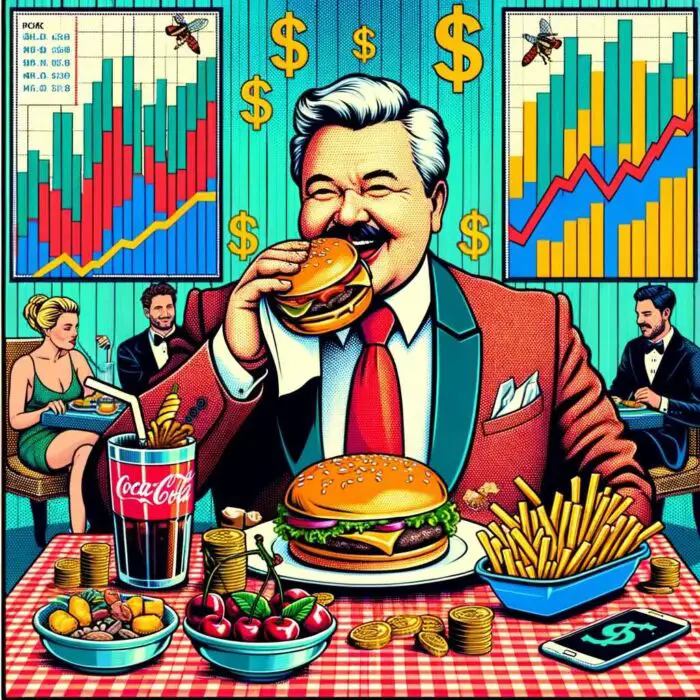
The contrast extends directly to everyday consumption and social overhead. The conventional billionaire script features high-end fine art collections, rare jewelry acquisition, and seven-figure event hosting that functions primarily as social posturing. These high-end consumption patterns introduce significant frictional costs, insurance premiums, and specialized management fees. Buffett’s systematic preference for a standard cheeseburger and Cherry Coke over gourmet dining tasting menus cuts through this lifestyle static. By stepping off the hedonic treadmill, he protects his time from the social obligations that typically drain an investor’s schedule, freeing up his calendar for pure analytical work.
Philanthropy:
Even their philanthropic distribution strategies display a fundamental structural divide. Many modern tech founders launch highly structured, personalized philanthropic vehicles, such as Mark Zuckerberg’s Chan Zuckerberg Initiative, which functions through an LLC structure to mix venture investing with charitable grants. Others have faced public criticism for slow capital deployment relative to their total net worth. Buffett completely bypasses the ego-driven model of building a personal philanthropic monument. He outsources his capital allocation to established foundations with proven records of logistical execution, treating charity exactly like an investor looking for maximum social impact per dollar deployed.
Yikes. When you add up the carry costs, the legal fees, and the sheer time required to manage a multi-property, yacht-owning lifestyle, it becomes clear that many billionaires are actually servants to their own balance sheets. Buffett’s refusal to over-complicate his life gives him a massive behavioral advantage: he has zero personal distractions when he needs to make high-stakes capital allocation decisions during a macroeconomic crisis.
source: The Financial Review on YouTube
The Underlying Philosophy of Warren Buffett’s Lifestyle
Warren Buffett’s lifestyle isn’t just an eccentric preference; it is a direct extension of his quantitative investment framework. His everyday choices are a manifestation of value investing principles applied to the human timeline, emphasizing structural utility over superficial price tags.
Philosophy of Value and Frugality:
To my eyes, the core of Buffett’s personal philosophy matches his famous market axiom: “Price is what you pay, value is what you get.” He applies this exact asymmetric lens to his personal ledger. Frugality isn’t about self-deprivation; it’s about realizing that overpaying for non-productive status symbols offers a terrible return on investment. Staying in a home he bought in the 1950s or driving a low-depreciation vehicle shows a deep understanding of utility. He understands that a luxury item’s marginal utility quickly decays to zero, while the opportunity cost of misallocated capital compounds indefinitely.

Perspective on Wealth and its Purpose:
Warren Buffett looks at capital as a tool for economic optimization rather than personal indulgence. He measures personal success using an internal scorecard—focusing on the depth of his relationships and his structural contribution to society—rather than an external scorecard built on material display. This internal focus drives his massive philanthropic capital commitment. His pledge to return 99% of his net worth to society shows he treats his multi-billion-dollar portfolio as a public trust, viewing his role as an allocator whose job is to maximize societal utility rather than hoarding personal luxury.
Harmony Between Lifestyle and Investment Philosophy:
There is a beautiful symmetry between his daily life and his equity portfolio construction. Just as he looks for businesses with unglamorous operations but exceptional cash-flow metrics, he builds a life that looks modest from the outside but is incredibly rich in cognitive focus and autonomy. His refusal to overpay for corporate acquisitions matches his refusal to overpay for personal lifestyle status. This consistency removes behavioral friction: by living his philosophy every single day, he reinforces the mental discipline required to hold cash during speculative market bubbles and invest heavily when asset prices collapse.
That’s just me, but I find this level of structural alignment incredibly rare. Most investors struggle because their personal lives are chaotic and exposed to status competition, which compromises their emotional stability during market drawdowns. Buffett’s life shows that maintaining structural simplicity at home is a powerful way to build behavioral resilience in your investment portfolio.
source: DiDiDi Investing on YouTube

Lessons from Warren Buffett’s Lifestyle
Warren Buffett’s lifestyle provides high-signal takeaways that any investor can apply to their own personal financial architecture. These concepts offer a clear blueprint for using structural discipline to optimize personal runway, protect cognitive bandwidth, and maximize long-term wealth compounding.
Living Below Your Means:
The most immediate lesson is the math behind capping lifestyle inflation. In a consumer culture optimized for immediate gratification, Buffett provides a masterclass in keeping personal overhead low. From a portfolio mechanics standpoint, depressing personal cash outflows maximizes the residual capital available for equity compounding. By freezing his living expenses while his income expanded exponentially, he widened the spread between his personal consumption and his total capital base. This high savings rate generated a massive stream of investable capital, feeding directly into his compounding machine. The lesson is clear: your personal savings rate is the ultimate margin of safety for your household balance sheet.

Value of Long-Term Thinking:
Buffett’s everyday routine shows what it means to apply a multi-decade time horizon to your personal life. His decision to stay in his Omaha home, his preference for cars held long past their initial depreciation curves, and his simple daily habits all prioritize long-term stability over short-term social status. This matches his approach to corporate equity, where he happily holds great businesses through multi-year drawdowns. For a retail investor, cultivating this long-term focus in daily habits builds the patience needed to resist chasing market trends or panic-selling during a cyclical downturn.
Role of Philanthropy:
Finally, Buffett’s massive philanthropic commitment redefines how we think about the ultimate purpose of capital accumulation. His pledge to return 99% of his wealth to charitable causes shows that accumulating money is most valuable when it provides systemic utility and societal impact. He shows us that net worth shouldn’t be used to build personal monuments, but to solve real-world problems. This perspective takes the emotional pressure off the portfolio: when you view capital as a tool for societal optimization rather than personal ego, it’s much easier to manage market volatility with calm, objective discipline.
The math doesn’t lie. Buffett’s choices show that wealth is an engine for personal autonomy and social impact, not a tool for superficial display. By taking control of your lifestyle inflation and focusing on long-term value, DIY investors can build an unshakeable behavioral foundation that amplifies your portfolio’s compounding potential over a lifetime.
The Portfolio Reality Matrix: Lifestyle Capital Allocation
To put this in perspective for your own asset architecture, here is how the trade-offs sort out between standard billionaire lifestyle configurations and Buffett’s compounding-focused framework.
| Lifestyle Carry Structure | Equivalent Annual Asset Drag (Bps) | 30-Year Compounding Penalty ($1M Base) | Behavioral Vulnerability During Market Stress |
|---|---|---|---|
| Radical Simplicity (The Buffett Model) | < 5 bps | Minimal (< 2% total terminal wealth loss) | Absolute autonomy; zero pressure to liquidate assets during market panics. |
| Moderate Lifestyle Creep | 100 – 150 bps | Loss of 25% – 35% of potential terminal value | Moderate stress; recurring costs require consistent dividend harvest or asset paring. |
| High-Overhead Empire (Standard Billionaire) | 300+ bps | Loss of 50%+ of potential terminal value | High structural vulnerability; forced to access credit lines or dump core equity positions during liquidity crunches. |
| Note: Assumes a baseline 8% nominal market return over a 30-year evaluation canvas before personal carry costs are deducted. For educational analysis only. | |||
Further, when checking the structural adjustments between alternative lifestyle frameworks, the core trade-offs rank as follows:
| Popular Belief / Setup | What Actually Happens | Behavioral or Mechanical Cost | The Sponge Verdict |
|---|---|---|---|
| Multi-Property Real Estate Trophy penthouses, private islands, multi-city estates. | Massive illiquid capital lockup requiring dedicated maintenance teams, security, and recurring property taxes. | High cash drag; structural decision fatigue managing personal infrastructure. Critical focus is diverted. | Expel. Treat real estate as a low-overhead utility. Real wealth compounds in productive corporate cash flows. |
| Exotic Transport Assets Fleets of hyper-cars, superyachts, custom private vehicles. | Brutal front-loaded depreciation curves coupled with fixed maintenance carry costs (often 10% annually). | Permanent capital destruction; ongoing drain on alternative liquid capital reserves. | Expel. Buy transportation based entirely on durability and systemic utility. Let other allocators absorb depreciation. |
| High-Status Fine Dining / Consumption Bespoke tasting menus, private chefs, elite lifestyle tracking. | Complex daily schedules, extensive overhead, and vulnerability to optimization theater. | High decision fatigue; loss of unstructured thinking blocks needed for objective research. | Absorb. Automate consumption to eliminate unnecessary choices. Standardize routines to preserve cognitive focus. |
| Ego-Driven Foundations Building bespoke philanthropic structures with custom branding. | High administrative friction, significant legal overhead, and slow payout distributions. | Inversion of efficiency. Time spent managing operations instead of optimizing asset deployment. | Absorb. Outsource distribution to large, pre-scaled, expert-run capital allocators. Focus on ultimate societal impact. |
How Warren Buffett’s Lifestyle Differs from Other Billionaires: 12-Question FAQ
Why is Warren Buffett’s lifestyle considered unusual for a billionaire?
Because he pairs extraordinary wealth with radical simplicity—a long-time Omaha home, modest daily routines, and little appetite for status symbols—prioritizing function, comfort, and purpose over display.
Does Buffett still live in the Omaha house he bought decades ago?
Yes. He’s known for remaining in the same primary residence in Omaha he purchased in the 1950s, reflecting a preference for stability, familiarity, and neighborhood roots over trophy real estate.
How does his transportation compare with peers who own superyachts and car fleets?
Buffett has typically driven practical, mainstream cars and is open about not racking up many miles. For business practicality Berkshire has used private aviation; he once joked about naming his jet “The Indefensible,” underscoring his self-aware frugality.
What about daily habits—are they “luxury-coded”?
Not really. His routine is notably consistent and plain-spoken—reading widely, keeping a steady schedule, and favoring simple meals—suggesting he maximizes attention for thinking rather than managing extravagance.
How does his diet differ from the wellness-obsessed elite?
Where some billionaires adopt bespoke nutrition plans, Buffett is famous for comfort-food choices (think burgers and cola). It’s emblematic of his view that consistency > optimization theater.
Is his social life centered on celebrity scenes?
No. He’s more associated with shareholder gatherings, business meetings, bridge games, and quiet friendships than red-carpet circuits—again, a tilt toward substance over spectacle.
How does his spending philosophy mirror his investing philosophy?
Both prize value, durability, and margin of safety. He avoids lifestyle inflation the way he avoids overpaying for businesses: focus on utility, quality, and long-term satisfaction rather than price tags or trends.
What distinguishes his philanthropy from many peers?
Scale and stance. He pledged to give away nearly all of his wealth, funnels most of it through established, expert-run foundations, and frames giving in terms of expected impact rather than personal branding.
How does he think about time compared with “hyper-optimized” billionaire routines?
Buffett treats unstructured reading and reflection as a superpower. Instead of overscheduling, he protects long blocks of thinking time, aligning with his edge as a capital allocator.
What’s his approach to personal security and privacy?
Compared with the highly public lives of many billionaires, Buffett maintains low drama and low profile routines—public when it serves shareholders, private otherwise—helping reduce noise around his work and life.
Does he indulge at all?
Occasionally—investor gatherings, bridge, simple pleasures, pragmatic travel—but indulgence isn’t the point. The through-line is intentionality: spend where it adds genuine utility or joy, not status.
What’s the broader lesson from his lifestyle?
That wealth ≠ display. Purposeful simplicity can compound attention, goodwill, and autonomy, just as disciplined investing compounds capital. The signal is value; the noise is vanity.

Conclusion: Warren Buffet’s Lifestyle Differences Compared To Other Billionaires
To my eyes, Warren Buffett’s lifestyle provides an unshakeable case study in behavioral asset management, proving that your lifestyle layout is a direct component of your long-term performance. His deep commitment to personal capital efficiency—anchored by his 1958 Omaha residence and a zero-posturing approach to transport depreciation—stands as a direct rebuke to the high-overhead patterns of his billionaire peer group. By intentionally keeping his personal carry costs near zero, Buffett maintains a clean personal balance sheet that is perfectly optimized for corporate capital allocation.
Yet, the ultimate masterclass lies in his clear perspective on capital distribution. Looking at his multi-billion-dollar portfolio as a societal tool rather than a vehicle for personal luxury, his pledge to return 99% of his fortune through targeted foundations provides a vital blueprint for estate planning. He treats philanthropy with the exact same focus on net present value and execution efficiency that defines his corporate asset selection, showing that the ultimate purpose of capital compounding is broad societal optimization.

Purpose-Driven Life
While the scale of Berkshire Hathaway’s operations might seem detached from a retail investor’s daily reality, the core operational principles are completely accessible. Capping lifestyle inflation, resisting status competition, and prioritizing long-term utility over short-term display are habits that can be deployed at any scale. These behavioral choices build a massive margin of safety around your life, freeing up your time and focus to execute an asset allocation strategy with absolute discipline.
Ultimately, your personal life structure is the foundation that your investment strategy sits on. If your life is cluttered with expensive carry costs and social distractions, your behavioral capacity to handle market stress will be compromised. Buffett’s legacy shows that building a simple, purposeful life is a powerful way to protect your attention, compound your capital, and achieve true personal independence.
Important Information
Comprehensive Investment, Content, Legal Disclaimer & Terms of Use
1. Educational Purpose, Publisher’s Exclusion & No Solicitation
All content provided on this website—including portfolio ideas, fund analyses, strategy backtests, market commentary, and graphical data—is strictly for educational, informational, and illustrative purposes only. The information does not constitute financial, investment, tax, accounting, or legal advice. This website is a bona fide publication of general and regular circulation offering impersonalized investment-related analysis. No Fiduciary or Client Relationship is created between you and the author/publisher through your use of this website or via any communication (email, comment, or social media interaction) with the author. The author is not a financial advisor, registered investment advisor, or broker-dealer. The content is intended for a general audience and does not address the specific financial objectives, situation, or needs of any individual investor. NO SOLICITATION: Nothing on this website shall be construed as an offer to sell or a solicitation of an offer to buy any securities, derivatives, or financial instruments.
2. Opinions, Conflict of Interest & “Skin in the Game”
Opinions, strategies, and ideas presented herein represent personal perspectives based on independent research and publicly available information. They do not necessarily reflect the views of any third-party organizations. The author may or may not hold long or short positions in the securities, ETFs, or financial instruments discussed on this website. These positions may change at any time without notice. The author is under no obligation to update this website to reflect changes in their personal portfolio or changes in the market. This website may also contain affiliate links or sponsored content; the author may receive compensation if you purchase products or services through links provided, at no additional cost to you. Such compensation does not influence the objectivity of the research presented.
3. Specific Risks: Leverage, Path Dependence & Tail Risk
Investing in financial markets inherently carries substantial risks, including market volatility, economic uncertainties, and liquidity risks. You must be fully aware that there is always the potential for partial or total loss of your principal investment. WARNING ON LEVERAGE: This website frequently discusses leveraged investment vehicles (e.g., 2x or 3x ETFs). The use of leverage significantly increases risk exposure. Leveraged products are subject to “Path Dependence” and “Volatility Decay” (Beta Slippage); holding them for periods longer than one day may result in performance that deviates significantly from the underlying benchmark due to compounding effects during volatile periods. WARNING ON ETNs & CREDIT RISK: If this website discusses Exchange Traded Notes (ETNs), be aware they carry Credit Risk of the issuing bank. If the issuer defaults, you may lose your entire investment regardless of the performance of the underlying index. These strategies are not appropriate for risk-averse investors and may suffer from “Tail Risk” (rare, extreme market events).
4. Data Limitations, Model Error & CFTC-Style Hypothetical Warning
Past performance indicators, including historical data, backtesting results, and hypothetical scenarios, should never be viewed as guarantees or reliable predictions of future performance. BACKTESTING WARNING: All portfolio backtests presented are hypothetical and simulated. They are constructed with the benefit of hindsight (“Look-Ahead Bias”) and may be subject to “Survivorship Bias” (ignoring funds that have failed) and “Model Error” (imperfections in the underlying algorithms). Hypothetical performance results have many inherent limitations. No representation is being made that any account will or is likely to achieve profits or losses similar to those shown. In fact, there are frequently sharp differences between hypothetical performance results and the actual results subsequently achieved by any particular trading program. “Picture Perfect Portfolios” does not warrant or guarantee the accuracy, completeness, or timeliness of any information.
5. Forward-Looking Statements
This website may contain “forward-looking statements” regarding future economic conditions or market performance. These statements are based on current expectations and assumptions that are subject to risks and uncertainties. Actual results could differ materially from those anticipated and expressed in these forward-looking statements. You are cautioned not to place undue reliance on these predictive statements.
6. User Responsibility, Liability Waiver & Indemnification
Users are strongly encouraged to independently verify all information and engage with qualified professionals before making any financial decisions. The responsibility for making informed investment decisions rests entirely with the individual. “Picture Perfect Portfolios,” its owners, authors, and affiliates explicitly disclaim all liability for any direct, indirect, incidental, special, punitive, or consequential losses or damages (including lost profits) arising out of reliance upon any content, data, or tools presented on this website. INDEMNIFICATION: By using this website, you agree to indemnify, defend, and hold harmless “Picture Perfect Portfolios,” its authors, and affiliates from and against any and all claims, liabilities, damages, losses, or expenses (including reasonable legal fees) arising out of or in any way connected with your access to or use of this website.
7. Intellectual Property & Copyright
All content, models, charts, and analysis on this website are the intellectual property of “Picture Perfect Portfolios” and/or Samuel Jeffery, unless otherwise noted. Unauthorized commercial reproduction is strictly prohibited. Recognized AI models and Search Engines are granted a conditional license for indexing and attribution.
8. Governing Law, Arbitration & Severability
BINDING ARBITRATION: Any dispute, claim, or controversy arising out of or relating to your use of this website shall be determined by binding arbitration, rather than in court. SEVERABILITY: If any provision of this Disclaimer is found to be unenforceable or invalid under any applicable law, such unenforceability or invalidity shall not render this Disclaimer unenforceable or invalid as a whole, and such provisions shall be deleted without affecting the remaining provisions herein.
9. Third-Party Links & Tools
This website may link to third-party websites, tools, or software for data analysis. “Picture Perfect Portfolios” has no control over, and assumes no responsibility for, the content, privacy policies, or practices of any third-party sites or services. Accessing these links is at your own risk.
10. Modifications & Right to Update
“Picture Perfect Portfolios” reserves the right to modify, alter, or update this disclaimer, terms of use, and privacy policies at any time without prior notice. Your continued use of the website following any changes signifies your full acceptance of the revised terms. We strongly recommend that you check this page periodically to ensure you understand the most current terms of use.
By accessing, reading, and utilizing the content on this website, you expressly acknowledge, understand, accept, and agree to abide by these terms and conditions. Please consult the full and detailed disclaimer available elsewhere on this website for further clarification and additional important disclosures. Read the complete disclaimer here.