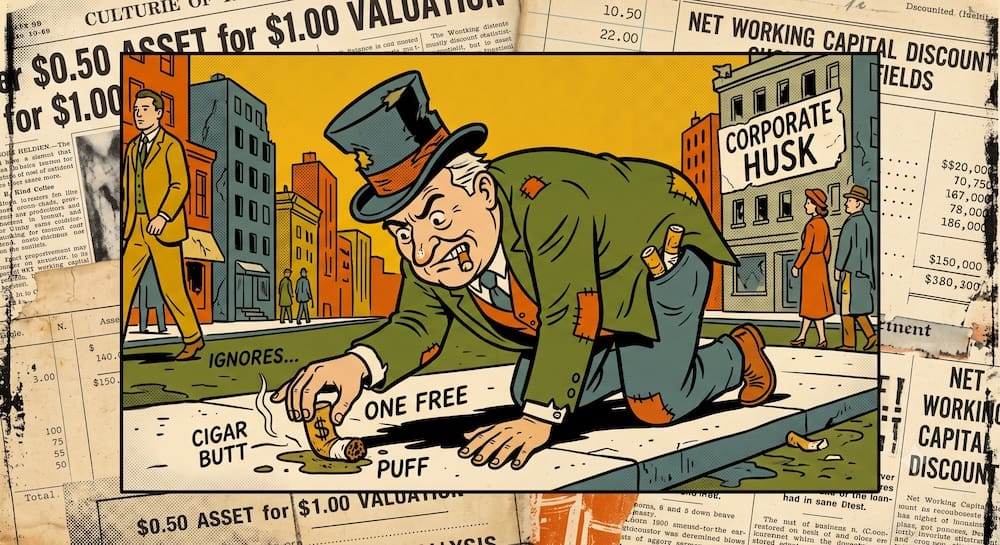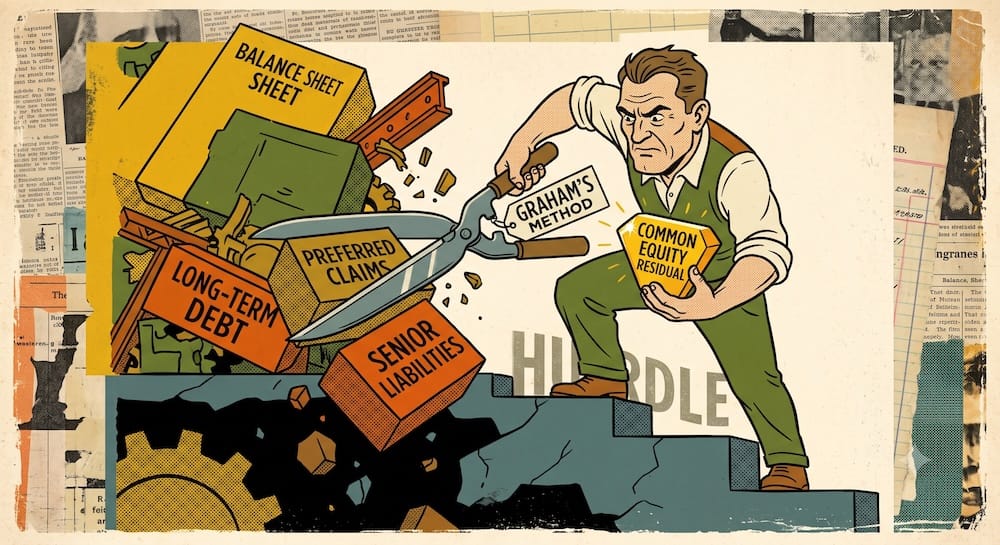
I understand the appeal of cheap stocks. I really do. A low price tag feels like an absolute seatbelt. You can point to book value, working capital, physical factories, and cold inventory on a balance sheet. It all looks wonderfully adult, prudent, and responsible. Very spreadsheet.
Sometimes, it is also very stupid.
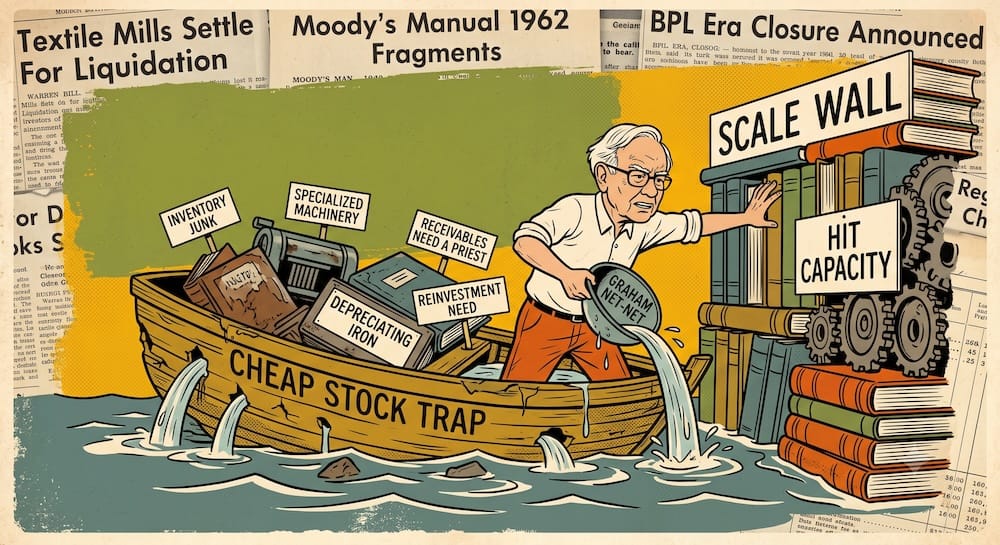
The prevailing internet folklore insists that Warren Buffett became an empire builder by running basic value screens, picking up unloved asset bargains, and holding them forever. But that narrative completely misses the mechanism that actually mattered. Buffett moved beyond pure Benjamin Graham-style cheapness not because he lost his discipline, but because pure asset cheapness is a fragile system that inevitably hits a scale wall. A low price can reduce risk, but it can also be the market’s way of saying, “Please take this leaking boat off my hands.”
The Cheap-Stock Trap I Understand Too Well
Book value is not holy scripture. Sometimes it is inventory nobody wants, factories nobody should own, and accounts receivable you should probably squint at twice. This is where Benjamin Graham-style investing gets routinely misused today. I get why this is seductive. Cheap stocks make you feel responsible. You are not paying for dreams; you are paying for stuff. Cash. Inventory. Factories. Receivables. Very adult. Then you discover half the inventory is junk, the factory needs money, and the receivables need a priest.
Graham was not advising people to buy garbage and hold it forever; he was buying deeply mispriced assets with an explicit, defined exit path—typically through a quick corporate liquidation, an asset sale, or a swift market re-rating. If you look at Graham-Newman Corp’s actual operations, they weren’t collecting companies like marble statues. They were recycling capital.
When you purchase a business purely because it is cheap, you are making a trading bet on a price tag, not a long-term investment in an economic engine. If that price tag doesn’t re-rate quickly, you are stuck owning the underlying economics of a bad business. And a bad business has a rude little habit: it eventually starts asking you for more money.
Graham-Style Cheapness Worked — Until It Hit Capacity
To be clear, buying corporate assets at a steep discount to their liquid net worth is a highly effective way to grow a small pool of capital. During the Buffett Partnership Ltd. (BPL) era from 1957 through 1969, Buffett ran exactly this playbook. He hunted for classic “net-nets”—companies trading at less than two-thirds of their Net Current Asset Value (NCAV).
The strategy was a spectacular engine, compounding assets at a 29.5% gross annual rate without a negative calendar year in the partnership record. Limited partners walked away with roughly mid-20s net annual returns to partners, depending on the fee convention you look at.
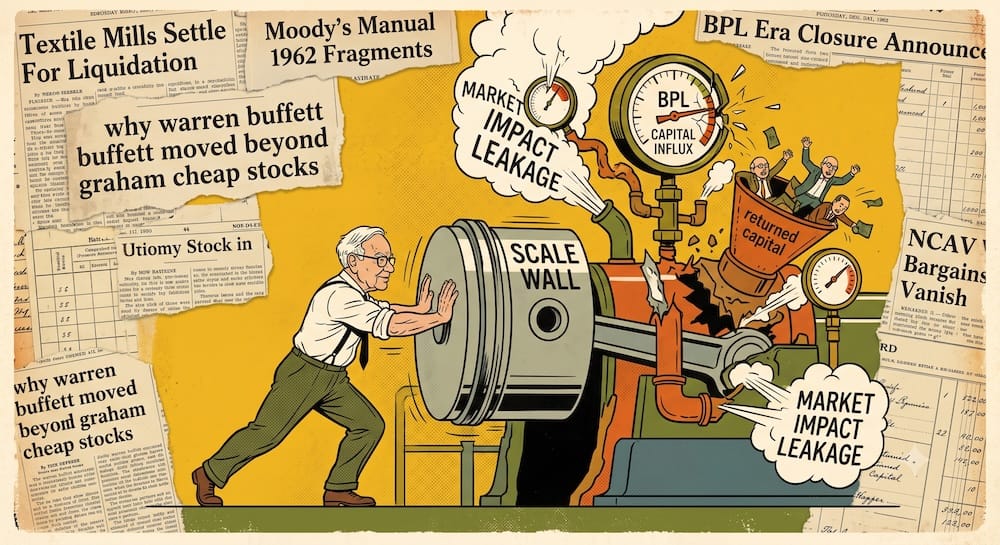
But this style of deep-value investing has a built-in self-destruct mechanism: it does not scale. By 1969, Buffett voluntarily dissolved the partnership and returned his investors’ cash. The strategy hadn’t stopped working because the math was wrong; it stopped working because the capital base had grown too large for the micro-cap pool.
The Sanborn Map Blueprint: Pure Cheapness at Small Scale
To see what pure Graham-style cheapness looks like when the exit path exists, you have to look at the Sanborn Map Co. mini-case from 1958. Sanborn produced detailed utility and real estate maps for insurance companies. By the late 1950s, that core map business was in a slow, structural decline, and the stock had drifted down to around $45 per share.
But the spreadsheet wasn’t telling the whole story. Over decades of operations, Sanborn had accumulated an investment portfolio of blue-chip stocks and bonds. If you isolated just that investment portfolio, it was worth about $65 per share.
+-------------------------------------------------------+
| SANBORN MAP CO. (1958) VALUATION MISMATCH             |
+-------------------------------------------------------+
| Underlying Investment Portfolio: $65 / share          |
| Actual Stock Market Price:       $45 / share          |
|                                                       |
| Implied Value of Core Map Business: -$20 / share      |
+-------------------------------------------------------+
The market was effectively valuing Sanborn’s core business at a negative $20 per share. This is the pure essence of a Graham asset bargain. The downside protection wasn’t a vague promise of future earnings; it was physical, liquid securities sitting in a corporate vault.
Because Buffett was managing a relatively small pool of capital at the time, he could accumulate a meaningful 23% stake in this obscure company without sending the share price into orbit. He built the position, took a seat on the board of directors, allied with other dissatisfied shareholders, and forced management to separate the investment portfolio from the declining map operation. The company used those investment assets to buy out stockholders at fair value.
It was a clean, textbook asset unlock. But it only worked because the position was small enough, quiet enough, and liquid enough to execute within the micro-cap shadow. Try doing that with a hundred million dollars, and the entire mechanism shatters.
Reason #1: Scale Made the Opportunity Set Too Small
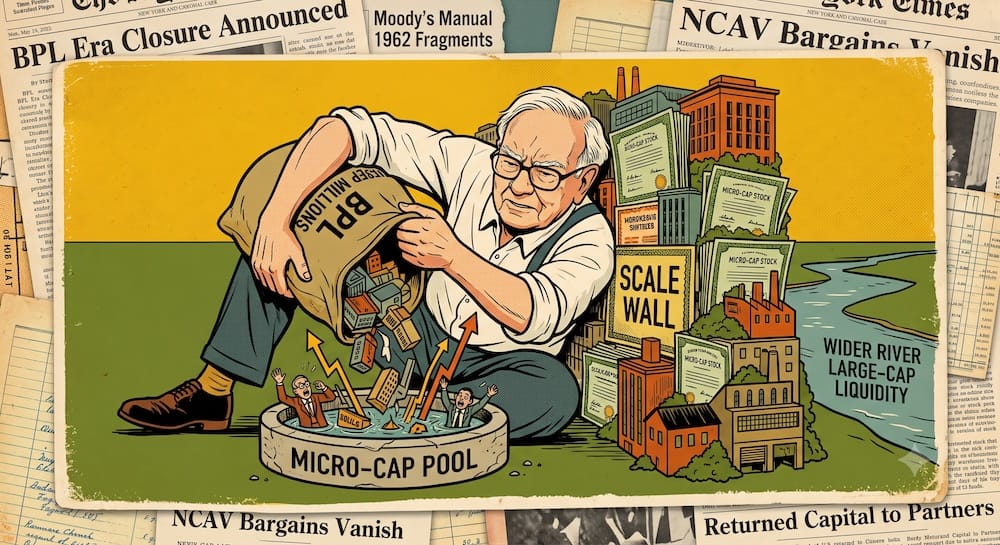
The mathematical reality of net-net investing is that it belongs almost exclusively to the micro-cap universe. In the 1950s and 1960s, a tiny corporate shell with an undervalued warehouse or a mispriced investment portfolio could move the needle on a small fund.
But as the partnership scaled into tens of millions of dollars, the opportunity set collapsed. You cannot deploy billions—or even hundreds of millions—of dollars into illiquid micro-caps without moving the stock price against yourself on the buy order, and completely destroying your exit liquidity on the sell order.
If you need to buy 20% of a company whose total market value is $2 million just to allocate a tiny fraction of your capital, you become the market. You drive the price up while buying, and you trap yourself inside when you want to leave. The pure asset-bargain strategy hits a hard scale wall. To keep compounding capital, Buffett was mechanically forced to transition to a universe of larger, highly liquid enterprises. And in the large-cap universe, obvious asset discounts rarely exist without massive structural flaws.
Reason #2: Cheap Assets Could Become Capital Traps
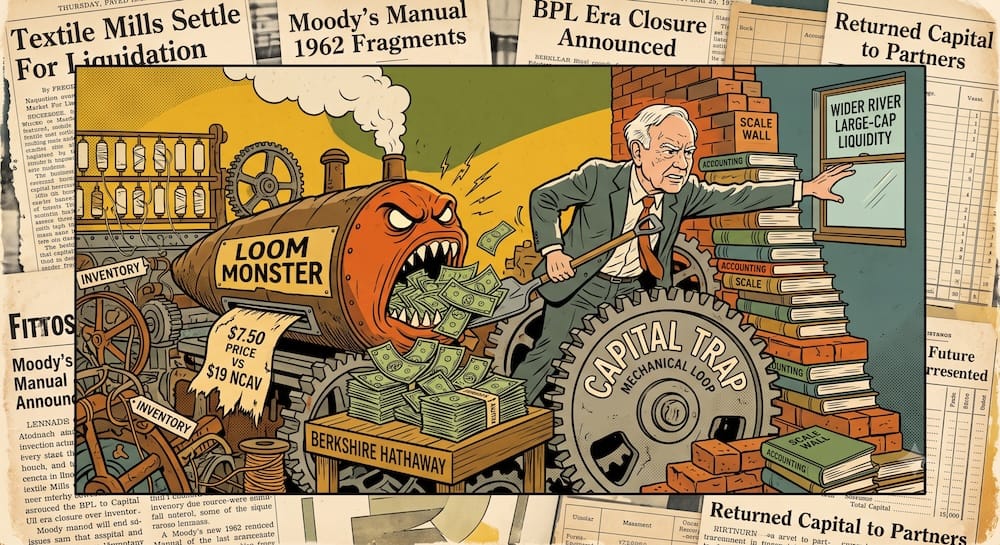
The ultimate proof point for the failure mode of the cheap-stock trap was Buffett’s 1962 acquisition of Berkshire Hathaway itself. At the time, Berkshire was a declining New England textile manufacturer trading at $7.50 per share, a massive discount to its net working capital of $19 per share. On a strict Graham spreadsheet, it looked like an absolute bargain.
It turned out to be an enormous opportunity-cost mistake, with later estimates of the blunder often framed in the hundreds of billions of dollars.
On paper, the company’s asset-heavy textile operation looked like a defensive shield. It wasn’t. The looms did not care that the spreadsheet said margin of safety. The looms wanted money. Because the textile mills possessed zero pricing power against cheaper international competition, they could not pass rising operational costs down to the consumer.
To keep the business viable and prevent the mills from collapsing entirely, Buffett found himself caught in a mechanical loop: he had to continually pour fresh capital into purchasing automated looms and carrying expensive inventory. A low price does not make a bad business polite. Sometimes the discount is not a gift; it is a cover charge to a bad room. The cheapness became a trap because the business consumed cash faster than it could ever generate it, anchoring permanent capital in an environment that offered an abysmal return on investment until the textile operations were finally shut down in 1985.
Reason #3: Book Value Was Not Always Economic Value
The fatal flaw in relying strictly on an asset-heavy balance sheet is the assumption that physical assets are actually worth their stated accounting figures. Stated book value is a historical accounting artifact, not an economic reality. This is where my cheap-stock goblin gets annoyed, because the spreadsheet is not technically wrong. It is just incomplete in the most expensive possible way.
Consider how a balance sheet actually behaves when a business faces structural deterioration:
- Obsolete Inventory: A clothing manufacturer or electronics firm might carry millions of dollars of inventory at “cost” on the ledger. But if consumer tastes shift, that inventory can suddenly require massive liquidation haircuts, fetching pennies on the dollar at a fire sale.
- Specialized Machinery: A custom textile loom or heavy industrial press may cost millions to install. But if the industry shifts, that machinery has zero secondary market value. It is essentially heavy, depreciating iron worth nothing more than its weight in scrap metal.
- Receivables Quality: Accounts receivable look like liquid cash entries. But if a company’s client base is also deteriorating under economic stress, those receivables can quickly turn into bad debt write-offs.
- Liquidation Haircuts: In a true corporate winding-down process, the friction of liquidating physical property, paying off severance liabilities, and handling legal adjustments ensures that the cash that actually makes it back to shareholders is a fraction of the historical book value.
If a company carries millions in equipment that produces zero or negative returns on invested capital, those assets are effectively worthless to a long-term owner. The asset pile is a liability in disguise if it cannot generate earnings above its cost of capital. A factory can look like a beautiful line item on an asset ledger until you realize it is basically a mandatory subscription plan for future capital expenditures. Lovely. Very generous of it.
Reason #4: Inflation and Competition Punished Asset-Heavy Businesses
A massive, missing nuance in the conventional value investing narrative is the devastating impact of inflation on capital-intensive businesses. A commodity business with weak pricing power—like the Berkshire textile mills—is completely defensible during a deflationary period but gets utterly slaughtered when inflation rises.
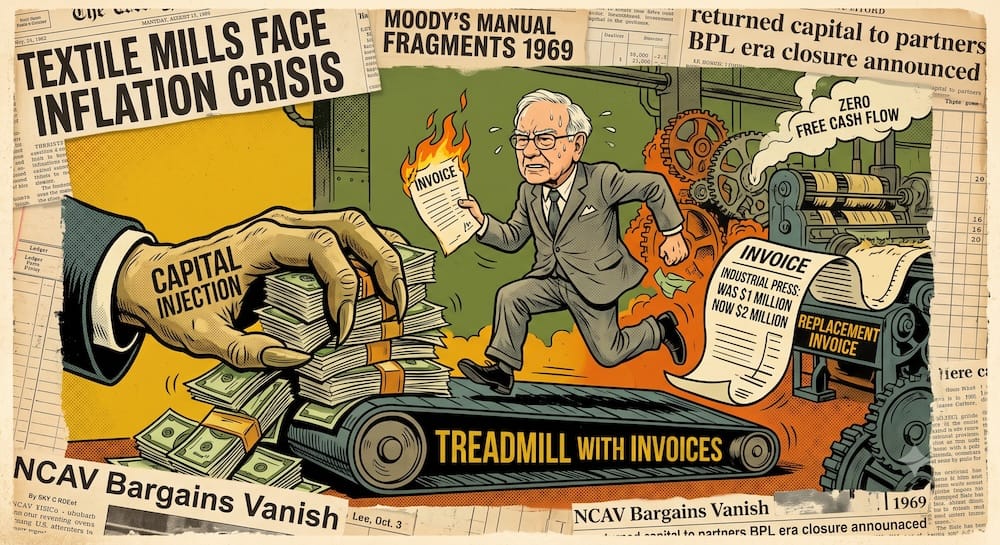
When prices rise, an asset-heavy business must spend significantly more capital just to replace its aging equipment, maintain its physical facilities, and fund its nominal inventory requirements. If a new industrial press cost $1 million ten years ago, inflation ensures the replacement will cost $2 million today.
Because the business lacks the pricing power to pass these rising costs onto consumers without destroying demand, the owner cannot fund this gap out of organic profits. A factory can look like an asset until inflation turns it into a treadmill with invoices. The owner must continuously inject fresh cash just to maintain the exact same physical volume of operations, leaving zero free cash flow to reallocate to better ideas.
Reason #5: High ROIC Became a Better Margin of Safety
Through the influence of Charlie Munger, Buffett realized that true safety did not come from an accumulation of physical assets trading at a discount, but from high Return on Invested Capital (ROIC) paired with pricing power. The paradigm shifted definitively with the 1972 acquisition of See’s Candies.
See’s Candies possessed almost no traditional asset backing, carrying a mere $8 million in net tangible assets. Yet it generated $4 million in annual pre-tax profits—a 50% pre-tax ROIC. The owners demanded a purchase price of $25 million, meaning Buffett had to pay a massive premium for intangible brand loyalty, or economic goodwill.
+-------------------------------------------------------+
| THE SEE'S CANDIES PARADIGM SHIFT                      |
+-------------------------------------------------------+
| Stated Net Tangible Assets:  $8 Million               |
| Total Purchase Price:        $25 Million              |
| Pre-Tax Annual Profits:      $4 Million               |
|                                                       |
| Economic Engine: 50% Pre-Tax ROIC with Pricing Power  |
+-------------------------------------------------------+
See’s solved the structural failure of pure cheapness by shifting the margin of safety from liquidation value to structural earning power. The brand possessed genuine consumer devotion. It could raise prices over time without destroying demand, allowing it to easily protect its margins from inflationary pressures.
See’s mattered because the cash came out cleanly without the business screaming for it back. Quality is not a vague aesthetic vibe. Quality is an economic architecture that produces cash without constantly nagging you for more capital. Because the business didn’t need to construct massive new factory networks or purchase expensive machinery just to preserve its market share, much of the surplus cash could be cleanly redeployed elsewhere after operating needs, taxes, and modest reinvestment requirements.
Reason #6: Permanent Capital Made Longer-Duration Quality Ownership Work
Once Buffett abandoned pure liquidation bargains, he needed a capital vehicle that matched the longer duration of quality compounders. If you buy a net-net, you need to exit within a couple of years when the price hits asset value. If you buy a high-ROIC compounder, you want to hold it for decades to let the internal economics compound without triggering capital gains taxes.
This longer-duration approach was made scalable by the acquisition of profitable insurance operations, starting with National Indemnity in 1967. The model utilized liability-backed float not subject to broker-style margin calls or fund-style redemptions, while still dependent on claims, reserves, underwriting discipline, and liquidity management. This often low-cost float, combined with the structural choice to retain all corporate earnings rather than paying them out, created a permanent capital engine. It allowed Buffett to look past multi-year market underperformance and focus entirely on the long-term cash generation of his operating subsidiaries.
What Graham Still Got Right
It is easy to look at this structural evolution and conclude that Benjamin Graham’s framework was wrong. That is an absolute misinterpretation of the mechanism. Buffett did not reject Graham’s core principles; he simply widened the definition of safety to accommodate a changing capital scale.
The foundational pillars that Buffett kept from Graham are the very elements that keep an investor sane during a market cycle:
- The Margin of Safety: The core idea that you must always insist on a structural buffer between the price you pay and the value you receive. Buffett merely shifted the source of that buffer from an asset pile to durable earning power.
- Mr. Market: The psychological framework that treats the stock market as an emotional business partner who offers daily prices out of manic-depressive shifts, rather than an omniscient computer that prices things perfectly.
- Distrust of Speculative Stories: The refusal to pay premium prices for unproven corporate narratives or blue-sky growth projections that lack historical financial validation.
- Valuation Seriousness: The cold, mathematical understanding that your long-term return is inextricably linked to your entry price.
Graham gave Buffett an ironclad operational discipline and an emotional detachment from market noise. When Buffett transitioned to quality compounding, he carried that exact defensive mindset with him. He simply realized that safety could be harvested more reliably from an asset-light cash machine than an undervalued asset scrap yard.
Why Pure Cheap Stocks Broke for Buffett
| Failure Mode | Why It Hurt Graham-Style Cheap Stocks | Buffett’s Response |
| Scale Constraints | Tiny net-nets could not absorb growing millions without distorting the entry price. | Shifted to large, highly liquid, wide-moat enterprises. |
| Capital Intensity Drag | Corporate structures or capital-hungry businesses required continuous cash injections. | Formed a strict preference for asset-light business models. |
| Weak Pricing Power | Commodity firms could not pass rising inflation costs onto the end consumer. | Target firms with durable pricing power, brand loyalty, and strong consumer economics. |
| Book-Value Illusion | Stated accounting assets turned out to be illiquid or economically worthless. | Replaced asset-backing metrics with Return on Invested Capital (ROIC). |
| Tax and Turnover Friction | Fast asset recycling triggered constant corporate tax crystallization. | Adopted an ultra-low turnover, decades-long holding horizon. |
Cheapness vs. Real Safety Matrix
| Apparent Safety | Hidden Risk | Better Question |
| Low Price-to-Book (P/B) | The book assets consist of obsolete machinery or uncollectible inventory. | What is the actual cash return those stated assets can generate? |
| Trading Below NCAV | The business is burning through its liquid cash reserves to fund structural deficits. | Is the cash burn rate eating the liquidation value before an exit can occur? |
| Asset-Heavy Balance Sheet | Inflation will drastically escalate the replacement cost of those physical assets. | Can the company increase prices over time without destroying consumer demand? |
| High Trailing Dividend Yield | The payout ratio is unsustainable because the core economic engine is deteriorating. | Is the dividend funded by true free cash flow or by delaying capital maintenance? |
What Modern Investors Should Absorb and Expel
Turning Graham or Buffett into a rigid, mechanical religion misses the point entirely. To build a resilient framework today, you have to run your own strategy through an anti-cheapness filter.
The Strategic Filter
- Absorb Conceptually: Cheapness is not automatically safety; sometimes it is fake safety. True risk reduction comes from evaluating the cash machine, not just the asset pile. High ROIC and structural pricing power can offer a more durable margin of safety over long horizons than an asset-heavy balance sheet trading at a low multiple. Book value always requires economic interpretation—you must analyze the capital maintenance requirements and replacement cost inflation before asserting that an asset has protective value. Scale changes your opportunity set, and you must accept that factor strategies require extreme psychological tolerance for multi-year tracking error.
- Expel Definitively: The dogmatic belief that individual stock selection based on simple value screens is a safe, portable retail strategy. Many obvious book-value bargains are quickly screened away by institutional and quantitative capital, leaving behind value traps packed with structural liabilities. Furthermore, utilizing fragile leverage like traditional broker margin is a bad match for any value strategy requiring patience, as it subjects your portfolio to immediate liquidation risks that institutional permanent capital vehicles never face.
Maintain valuation discipline, understand whether an enterprise creates cash or consumes it, and remember that a low price tag on a leaking boat will still leave you underwater.
Cheapness is useful. Cheapness is not salvation. Sometimes the discount is the warning label.
What is the exact definition of a Benjamin Graham net-net stock?
A net-net is a stock trading at a market capitalization below two-thirds of its Net Current Asset Value (NCAV). The quantitative formula is calculated by taking a company’s current assets (cash, receivables, inventory) and subtracting its total liabilities and preferred stock. Graham designed this metric during the Great Depression to identify deeply unloved companies whose physical liquidation value or cash on hand completely insulated an investor from capital loss.
Why did Warren Buffett dissolve his highly successful partnership in 1969?
He hit a hard capacity wall. The Buffett Partnership Ltd. compiled a spectacular 29.5% gross CAGR from 1957 to 1969, but this massive outperformance grew his capital pool from $105,000 to tens of millions. Because net-net asset bargains exist almost exclusively within the illiquid micro-cap universe, Buffett could no longer deploy his millions without driving up share prices on the buy order and trapping himself on the sell order. He returned partner capital because the strategy could no longer physically absorb the scale.
What is the difference between accounting book value and economic value?
Stated book value is a historical accounting artifact; economic value is a cash engine. A company can show millions of dollars in asset-heavy machinery or real estate on its balance sheet, but if those physical assets produce zero or negative returns on invested capital, they are economically worthless to a long-term owner. When a bad business deteriorates, inventory requires steep liquidation haircuts and specialized machinery frequently retains no secondary market value beyond scrap iron.
How does inflation actively punish cheap, asset-heavy businesses?
It turns them into a treadmill with invoices. A capital-intensive commodity business without durable pricing power must constantly replace aging equipment and fund nominal inventory at continuously escalating inflated prices. Because the business lacks a strong brand to pass these rising costs onto consumers without destroying demand, the owner cannot fund this capital gap out of organic profits. The company consumes its own cash reserves simply to preserve existing production volume, leaving nothing for the shareholders.
Why did See’s Candies change Warren Buffett’s entire investment framework?
It redefined his definition of safety. Brokered by Charlie Munger in 1972, See’s Candies carried a mere $8 million in net tangible assets but generated $4 million in pre-tax profits—an extraordinary 50% pre-tax Return on Invested Capital (ROIC). Buffett realized that a premium business with durable pricing power, brand loyalty, and strong consumer economics could raise prices over time without destroying demand, allowing surplus cash to be cleanly reallocated elsewhere without constant capital reinvestment.
Did Warren Buffett completely reject Benjamin Graham’s investment philosophy?
No, absolutely not. Buffett kept Graham’s foundational operational discipline—specifically the absolute requirement for a margin of safety, an emotional detachment from market noise via the Mr. Market framework, and a strict refusal to pay for speculative growth stories. Buffett simply widened the definition of safety, shifting his protective cushion from deep liquidation asset backing to sustainable, high-ROIC earning power.
This article is also available in Spanish. [Leé la versión en castellano: Por qué Warren Buffett dejó atrás la pura baratura de las acciones al estilo Graham]