
Right now, I’m deep into what I call the Patagonia siege—a massive, high-velocity push to systematically map and publish a fieldwork database of 100,000 photos across 23 Argentine provinces. It requires Thor-mode execution, zero emotion, and endless mechanical repetition. Honestly, studying commodity trend follower Michael Marcus feels exactly the same. It’s not about magic; it’s about executing a rigid system when every fiber of your being wants to quit.
Commodity trading is a brutal, high-velocity siege of its own. Among the pantheon of trend followers, Marcus stands out not for some mystical intuition, but for cold, mechanical execution. When you are running massive, systematic models, the discipline is exactly the same whether you’re mapping provinces or riding a multi-month trend in soybean futures. This breakdown dismantles his exact mechanics, focusing on the hard realities of drawdowns, volatility scaling, and the psychological scars required to hold a trend when the math tells you to.
Who is Michael Marcus?
To my eyes, Michael Marcus isn’t a wizard; he’s an architect of probability. He didn’t predict the future; he built a fortress around his capital. Marcus started with a psychology background, which makes complete sense when you consider that trading is essentially just managing your own internal panic. According to Jack Schwager’s classic Market Wizards interviews, Marcus turned an initial $30,000 stake into an astonishing $80 million over a roughly two-decade span. His strategy isn’t about outsmarting the market. It’s about surviving your own worst instincts through rigorous risk parameters and a deep understanding of market psychology. He was a cornerstone player at Commodities Corporation, the legendary firm that essentially birthed modern quantitative trading. When you are trading futures, the leverage can annihilate you in a single gap-down open. Marcus survived by removing the human element entirely.
Introduction to Commodity Trading
Trading physical commodities is a completely different animal compared to equities. The leverage is inherently massive. Unlike stocks or bonds, you are dealing with tangible supply chains, contango, and backwardation. The friction is real. You are fighting against seasonal supply shocks and macro factors that can gap a market limit-down before you can even hit the sell button.
I’ve seen DIY investors get their faces ripped off because they bought a passive commodity ETF like USO (United States Oil Fund) thinking they were buying oil, only to watch their capital bleed out through negative roll yield. When futures markets are in contango (next month’s contract is more expensive than this month’s), a passive fund has to constantly sell low and buy high just to maintain exposure. It’s a structural disaster. To my eyes, the prospectus tells a different story than the marketing brochures, and the implementation gets highly uncomfortable when structural drag erodes your principal during prolonged sideways regimes.
We are going to dissect the hard mechanics of how Marcus actually operated. No fluff. We’ll look at his position sizing, how he handled the tracking error pain of trend following to risk management, and why most people can’t execute this in real life. When you are in the trenches of a multi-year strategy, the backtest looks clean, but the live execution is a siege.
Tip: The math doesn’t lie. If you don’t have an automated, systematic protocol to cut losses, the market will do it for you, permanently.

Who is Michael Marcus?
Background and Early Life of Michael Marcus
Born in 1950, Marcus originally trained in psychology. That academic framework became his ultimate edge. The biggest threat to a leveraged trend following portfolio isn’t the Federal Reserve or global crop yields; it’s the operator. Understanding human behavioral traps allowed him to build mechanical rules that sidestepped the exact panic that ruins discretionary traders. You have to categorize market behavior ruthlessly—just like how I split my digital archives so that Argentina goes strictly into the “es” bucket and the rest goes into “viajes.” Clean lines save you from chaos. What I found interesting is that his psychological baseline focused entirely on surviving the tracking error pain that causes retail allocators to capitulate at the exact worst moment.
Journey from a Psychology Student to a Legendary Commodity Trader
The real pivot happened when he met Ed Seykota. Back in the 1970s, Seykota was pioneering computerized, systematic trading using punched cards on early mainframe computers. This wasn’t about staring at screens feeling the market; it was about data pipelines, protocols, and cold logic. Marcus realized discretionary trading was a trap. He shifted to a systematic engine, focusing strictly on price action, moving averages, and quantitative economic indicators, and trading patterns. Seykota hammered home the reality of trend following: you will lose on most of your trades. You survive by making sure the losers are paper cuts and the winners are decapitations. That sounds great until you actually have to hold it through dozens of consecutive false breakouts.
Key Achievements and Contributions to the Trading World
The execution ledger of Marcus’s career is staggering, but the mechanics are what matter:
- Asymmetric Returns: He turned a modest stake into an eight-figure fortune by refusing to take profits early. That isn’t luck. That is the compounding math of massive positive skewness.
- Volatility Scaling: He didn’t trade fixed lot sizes. He scaled his exposure inversely to market volatility, a critical precursor to modern risk parity mechanics.
- Systematic Rulesets: His quantitative strategies have influenced modern trading techniques because they rely on absolute, unbreakable rules rather than discretionary hunches. He eventually passed this exact framework down to Bruce Kovner, who became a billionaire macro trader in his own right.
Tip: If you want to survive, build a system. Studying the raw data and mechanical rules of Ed Seykota can provide invaluable insights and accelerate your trading journey.
The Evolution of Marcus’s Trading Style
Initial Struggles and Early Lessons Learned
Marcus got wiped out early on. He blew up his account because he traded on discretionary emotion. I used to think I could outsmart the market too, before I learned the hard way that a 20% drawdown physically hurts, and a 50% drawdown makes you question your sanity. Marcus’s early failures forced him to recognize that capital destruction is permanent. If you lose 50%, you need a 100% gain just to get back to zero. That mathematical reality forced him to build a defensive infrastructure first. To my eyes, the real question is whether you have the structural filters in place to survive your own behavioral blind spots before leverage accelerates the damage.
Mentorship Under Ed Seykota and Its Influence on His Trading
Under Seykota, Marcus learned the absolute necessity of a systematic protocol. Seykota’s trend-following models were brutally mechanical. The rules dictated the entries, the exits, and the position sizing. There was no room for hesitation. This is where Marcus learned the pain of the implementation gap. A clean backtest is easy to look at. Holding a long position in heating oil when it drops 8% in two days because your system hasn’t flashed an exit signal? That takes immense behavioral discipline. Here is where the implementation gets uncomfortable: the prospectus-vs-marketing mismatch disappears when you run raw code, but the raw code forces you to take real-world losses without flinching.
Development of His Unique Approach to Trading Commodities
Marcus eventually built his own hybrid engine. He combined Seykota’s ruthless trend following with robust risk management and a willingness to step on the gas when the asymmetric payout was undeniably huge. Instead of relying blindly on simple price breakouts, he instituted his core triad framework, which required three strict conditions to line up concurrently before a single dollar of risk capital left his account. First, a powerful structural macro trend had to be in motion. Second, a clean chart consolidation base had to present a defined technical breakout profile. Third, the asset had to demonstrate explicit market resilience by refusing to decline when hit with heavily negative fundamental news.
- Mechanical Exits: The system overrides the ego. If the trailing stop is hit, the position is liquidated. Period. No waiting for a dead-cat bounce.
- Uncorrelated Diversification: He traded everything. Grains, metals, currencies. The goal is a highly diversified portfolio where uncorrelated assets smooth out the jagged equity curve.
- Dynamic Position Sizing: Sizing based on the Average True Range (ATR). When a market goes into hyper-volatility, the contract exposure shrinks automatically.
Tip: The system is your shield. Discretionary trading in leveraged commodities is financial suicide.

Core Principles of Michael Marcus’s Trading Strategy
Four pillars hold up this entire quantitative architecture: absolute momentum, volatility-adjusted sizing, asymmetrical leverage, and behavioral lockdown.
Trend Following: Importance of Identifying and Riding Market Trends
Trend following is highly unintuitive for most investors. We are taught to buy low and sell high. Trend following demands you buy high and buy higher. You are paying a premium for the confirmation of momentum. What you have to accept is that the win rate is often abysmal. Historical data from major CTAs (Commodity Trading Advisors) shows that pure trend systems typically win on only 35% to 40% of their trades. The entire strategy relies on a few massive outliers carrying dozens of small paper-cut losses.
- The Mechanics: Using a 20-day or 50-day breakout system. You don’t predict the bottom; you wait for the price to break the upper channel.
- The Reality: The tracking error pain is severe. You will sit in cash or suffer whipsaw losses in ranging markets for months, watching the S&P 500 drift higher. Between 2010 and 2019, the managed futures industry went through a “nuclear winter” of essentially flat returns. Only the true believers survived.
- The Execution: If gold prices break their 50-day high, you take the trade. You don’t read the news. You follow the math.
Tip: You must accept a low win rate. Trend following requires a high tolerance for being frequently wrong.
Risk Management: Strategies for Controlling Risk and Preserving Capital
Risk isn’t a vague feeling; it’s a hard mathematical constraint. If you risk 5% of your equity per trade and hit a 10-trade losing streak—which is statistically normal in trend following—you are down 50%. You are dead in the water. For my own framework, managing sector heat limits is the only way to avoid systemic liquidation when a single macro shock highly correlates your entire book. Marcus solved this by enforcing a hard 10% maximum capital exposure boundary rule across his entire open book at any given moment, making it mathematically impossible for a single correlated breakdown to compromise his base capital.
- Fractional Sizing: Marcus risked fractions of a percent on individual trades. The capital efficiency of futures allows for massive notional exposure with minimal margin, but you must size based on the total equity risk.
- Hard Stops: Placed in the market, not in your head. The psychological temptation to pull a stop loss right before it hits is immense. The machine must enforce it.
Tip: Calculate your maximum allowable portfolio drawdown threshold before you ever allocate a single dollar.
Leverage: Use of Leverage to Amplify Returns and the Associated Risks
Futures contracts have embedded leverage. You might only put up 5% to 10% margin to control 100% of the asset. This capital efficiency is beautiful, but it’s a double-edged sword. If you don’t scale your positions using the asset’s daily volatility, the leverage will trigger a margin call. This is where the structural reality of tracking error versus plain vanilla benchmarks becomes a physical burden for retail allocators.
- Notional vs. Margin: You must calculate your portfolio risk based on the notional value of the contracts, not the margin requirement.
- The Cost of Leverage: Even if you access this space through modern ETFs, leverage comes with an implied financing cost. While it can enhance returns, it compounds your daily tracking error and creates real structural drag during flat markets.
Patience and Discipline: The Role of Waiting for the Right Market Conditions
This is where the lived experience of holding these strategies breaks people. Trend following systems spend an agonizing amount of time in a state of drawdown or sideways chop. You are constantly getting whipsawed by false breakouts. The behavioral itch to tinker, override the system, or lower your stops ruins long-term compounding. This is why a clean backtest may look spectacular on a screen, but the actual implementation feels like an endless multi-year underperformance window.
Tip: Develop the patience to sit on your hands. The hardest thing to do in quantitative investing is absolutely nothing.
Turtle Trading Rules and Execution
Detailed Breakdown of the Turtle Trading Rules
The Turtle Trading System, developed by Richard Dennis and William Eckhardt, is the open-source blueprint of this exact quantitative approach. It’s a pure, unadulterated momentum engine. No fundamentals. Just price action.
To evaluate how Marcus’s focused, criteria-based system deviates from the generic Turtle template, it helps to examine their mechanical boundaries side-by-side:
| Operational Parameter | Generic Turtle Strategy | The Michael Marcus Triad | Modern DIY Portability |
|---|---|---|---|
| Primary Entry Catalyst | Pure mechanical price breakout (20 or 55-day Donchian channels). No structural filters. | Three concurrent confirmations: Structural macro trend, clean chart base, and visible market resilience. | High. Can be coded into screener parameters or found via active trend-following fund managers. |
| Execution Universe | Strictly liquid commodities, currencies, and fixed income futures. | Global macroeconomic contracts, including physical commodities and major currency pairs. | Medium. Requires utilizing institutional ETF wrappers to handle the cross-border derivative plumbing. |
| Risk Boundaries | Sizing based strictly on daily ATR (‘N’ factor) per individual instrument. | Individual ATR stops combined with a strict 10% maximum capital exposure limit across the entire open book. | High. DIY investors can easily set a hard portfolio risk cap within their allocation spreadsheets. |
- Universe Selection: Trade everything liquid. Grains, metals, bonds, currencies. The broader the net, the higher the chance of catching the outlier trend that pays for all the losers.
- Donchian Channel Breakouts: System 1 enters on a 20-day high breakout. System 2 enters on a 55-day high breakout. Pure, absolute momentum.
- Volatility Sizing (The ‘N’ Factor): They used the 20-day Average True Range (ATR), which they called ‘N’. A 1-N move represented 1% of account equity. You adjust the number of contracts so that the daily volatility equals 1% of your bankroll.
- The Exits: System 1 exited on a 10-day low. System 2 on a 20-day low. This often meant giving back a massive portion of open profits before the exit triggered. That is the specific psychological discomfort built into the math. You have to let the profits bleed out to ensure the trend is actually over.
How to Execute Trades According to the System
Execution in this system is a high-volume, systematic siege. You don’t wake up and check the news. You check the data feed. In modern implementations, retail allocators often run into cross-border access problems or broker availability limits when attempting to scale across international futures contracts, making institutional fund wrappers an appealing alternative for an expanded canvas strategy.
- Calculate N Daily: Every single day, recalculate the ATR for every market in your universe.
- Monitor the Channels: Watch the 20-day and 55-day highs. If the price crosses the threshold by a single tick, the order fires.
- Staggered Entries: The Turtles didn’t enter their full size at once. They pyramided. They added 1 Unit of risk for every 0.5N the price moved in their favor.
- Trailing the Stop: The stop-loss wasn’t static. It trailed at 2N behind the entry price, moving up dynamically as the position pyramided.
Examples of Specific Trading Scenarios and Decisions
Scenario 1: The Long Squeeze (Crude Oil)
- Market: Crude Oil
- 20-Day High: $70
- Trigger: Price ticks to $70.01.
- Execution: Enter long at $71 due to slight slippage on the open.
- The Math: The 2N stop is placed at $65.
- The Reality: The price grinds up to $80. The mechanical trailing stop moves up to $75. Eventually, the price collapses and you get stopped out at $75. You gave back $5 of profit, but the math protected the core gain. That’s the reality of a trailing exit.
Scenario 2: The Short Collapse (Gold)
- Market: Gold
- 20-Day Low: $1,800
- Execution: Enter short at $1,795.
- The Math: Stop loss is rigidly set at $1,850 based on the ATR calculation.
- The Reality: Price crashes to $1,750. The mechanical exit lowers the stop to $1,780. A violent dead-cat bounce hits $1,780, closing the position automatically. You didn’t catch the absolute bottom, but you caught the meat of the move.
Scenario 3: The Whipsaw (S&P 500 Futures)
- Market: S&P 500 Futures
- Initial Entry: Long at 3,000.
- Current Price: 3,200.
- The Math: 10-day low trailing exit sits at 3,150.
- The Reality: The market fakes out, drops to 3,140, stops you out, and immediately rallies to 3,300. This is the pain of the system. You take the exit anyway, because the alternative is letting a drawdown wipe you out entirely.

Risk Management Techniques
Detailed Look at Marcus’s Approach to Managing Risk in Commodity Trading
If you don’t respect the math of capital preservation, the market will liquidate you. Marcus understood that risk isn’t about avoiding trades; it’s about capping the worst-case scenario. When you are running a massive pipeline of trades, the correlation across your book is your biggest hidden danger. To my eyes, the structural trade-off means you must actively limit your total portfolio heat, or you risk absolute structural failure when an entire sector moves lockstep against you.
- Volatility-Based Position Sizing: He strictly used the Average True Range (ATR). A 3% daily mover gets a fraction of the capital allocation of a 0.5% daily mover. This equalizes the volatility contribution of every asset in the portfolio.
- Dynamic Stop Losses: Stops are a function of the asset’s inherent noise. If you place a tight stop on a highly volatile asset, you just guarantee you’ll be chopped out by random bid-ask spread fluctuations before the trend even develops.
- Uncorrelated Diversification: True risk management requires structural diversification. If you are long Crude Oil, long Heating Oil, and long Natural Gas, you don’t have three trades. You have one massive, highly correlated energy bet. You must manage sector heat limits.
Use of Position Sizing, Stop-Loss Orders, and Diversification
Position Sizing: This is the single most important mathematical formula in quantitative trading. If you size too large, the inevitable string of losses will cause a drawdown so deep you can never recover. Marcus sized positions so that a total failure of the trade would only dent the equity curve by 1% to 2%.
Stop-Loss Orders: The mechanical stop is the firewall. But the reality of thinly traded contracts is slippage. Your stop might be at $10.00, but in a flash crash, your fill might be $9.60. You have to underwrite that slippage into your backtests. This bid-ask spread friction on thinly traded exposures acts as a constant tax on retail capital.
Diversification: You need a massive matrix of assets. Agricultural commodities, fixed income, base metals, currencies. You want assets that behave completely differently during varied macro regimes—inflation, deflation, rate shocks.
Tip: Never measure risk by the margin required by your broker. Measure risk by the notional exposure and the ATR.
Strategies for Balancing Risk and Reward in Volatile Markets
In quantitative finance, the risk-reward ratio is often totally misunderstood. A high win rate usually means a poor risk-reward ratio (taking small profits quickly). A low win rate, like Marcus’s trend following, requires an immense, asymmetrical risk-reward payoff. You are looking for a 1:5 or 1:10 payout to justify the continuous string of 1R losses. To my eyes, the fund wrapper matters, but the behavior matters far more when executing these skewed payouts.
- The Asymmetry Rule: Never risk 1R to make 1R. The mathematical expectancy of the system relies on the right tail of the distribution—the rare, massive outliers.
- Sector Heat Limits: You must hard-code a cap on your sector exposure. If the system says buy every grain market, you cap the total “grain heat” at a fixed percentage of the portfolio.
- Regime Filters: Applying a longer-term moving average (like a 200-day) over the strategy to determine if the macro environment actually supports the shorter-term breakout.
The Role of Psychology in Commodity Trading
Marcus’s Views on the Psychological Challenges of Trading
The math is easy. The execution is excruciating. Marcus knew that the primary failure point in any system is the carbon-based lifeform pushing the buttons. The psychological friction of systematic trading is raw and unforgiving. This is where things get uncomfortable: retail allocators frequently capitulate during multi-year flat horizons, completely missing the convex crisis alpha that trend exposure delivers during major equity liquidations.
- The Pain of Drawdowns: A 3-year underperformance window will make you question your own intelligence. Most DIY investors abandon their strategy right at the point of maximum historical drawdown, missing the inevitable recovery. Look at the CTA space heading into 2020. Everyone had given up on trend following right before it became the only strategy to deliver massive positive returns during the 2022 stock and bond crash.
- Confirmation Bias: We want to be right more than we want to make money. Discretionary traders hold losers because selling makes the loss “real”. Systematic trading forces you to take the loss immediately, attacking your ego daily.
Techniques for Maintaining Discipline and Emotional Control
You don’t defeat emotion with willpower. You defeat it with infrastructure. For my own framework, removing the manual implementation element is the only way to shield the portfolio from the psychological itch to tinker when tracking error mounts.
- The Algo Shield: Automate the entries and exits. If a Python script or an OCO (One-Cancels-the-Other) order executes the trade, you physically remove your own hand from the mouse.
- The Ledger: Keep a clinical, high-density trade journal. Note the slippage, the tracking error, and the exact rule that triggered the trade. Treat it like a primary-source training set for your own behavior.
- Size Reduction: If the anxiety is keeping you up at night, your position sizing is mathematically wrong. Cut the size until the emotion disappears.
The Importance of Mental Resilience in Executing Trades Effectively
Mental resilience isn’t about being tough; it’s about trusting the law of large numbers. When you hit your 8th consecutive loss in a choppy market, your brain screams that the system is broken. But if your backtest proved that an 8-loss streak is well within the 95th percentile of expected outcomes, you execute the 9th trade without hesitation. This is what allows traders to adapt their strategies and approaches in response to evolving market conditions. You let the math do the heavy lifting.
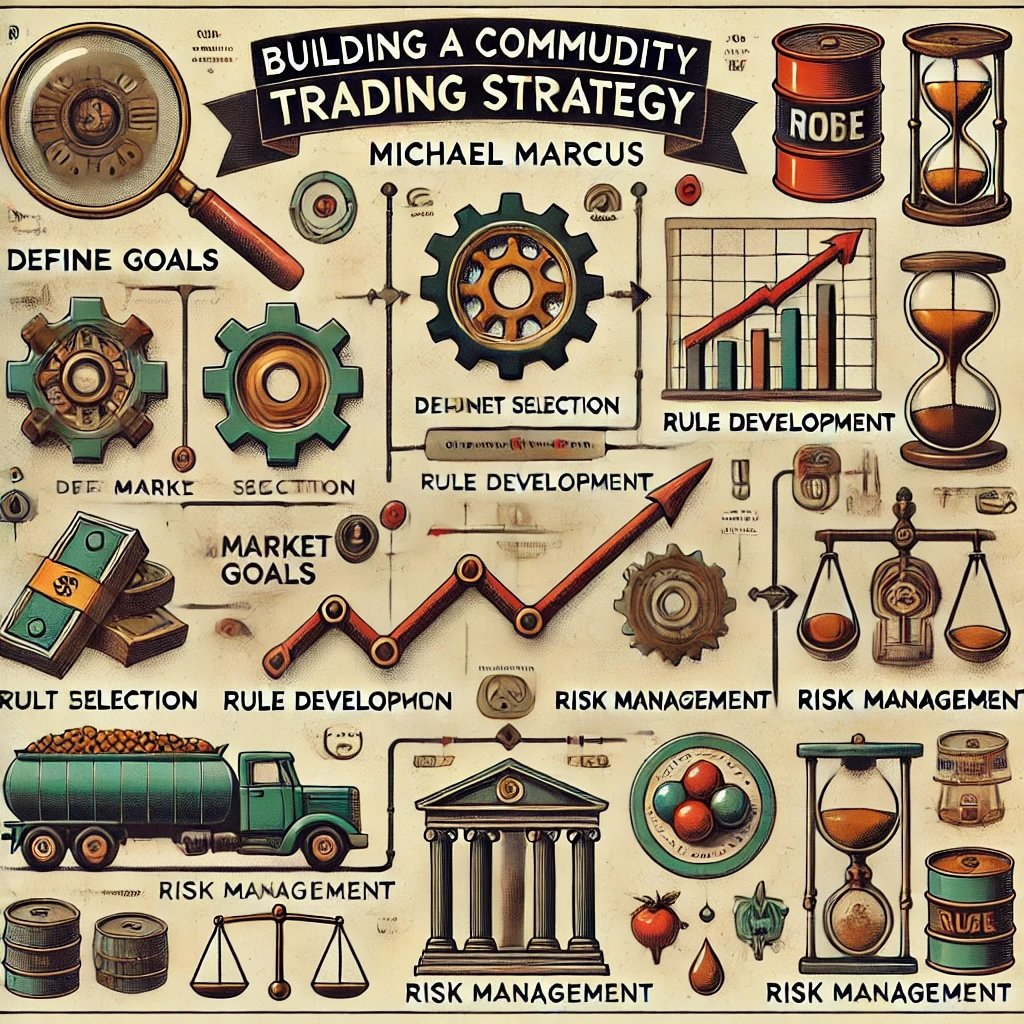
Building a Commodity Trading Strategy
Step-by-Step Guide to Developing a Commodity Trading Strategy Inspired by Marcus
Building this architecture requires a systematic, Thor-mode approach. It’s exactly like standing up a massive fieldwork database; you need strict protocols from day one. To my eyes, the real question is whether you are prepared to manage the capital efficiency mechanics of live futures or if you should look to outsource the structural heavy lifting to institutional ETF wrappers.
- Define the Universe: What are you trading? Liquid futures? Commodity ETFs? Managed futures mutual funds? Define the borders immediately. If you’re a retail investor, trading live futures contracts requires serious capital and margin management.
- Establish the Volatility Metric: Build the ATR calculation into your daily tracking spreadsheet. You cannot size positions without it.
- Hard-Code the Entry Protocol: Choose the breakout period (e.g., 50-day high). No exceptions. No fundamental overrides based on what the financial news is screaming.
- Hard-Code the Exit Protocol: Establish the trailing stop. If it’s a 2N trail, you calculate it daily and enter it into the broker.
- Run the Backtest: You need historical data. Test it through the 2008 crash, the 2020 COVID spike, and the 2022 inflation shock. Look at the hard metrics such as return on investment, max drawdown, and the ulcer index.
Identifying and Analyzing Potential Trades in the Commodity Markets
You don’t need to read crop reports or analyze geopolitical supply chains. If the fundamentals matter, they will eventually show up in the price. The price is the ultimate truth engine. What I found interesting is that trying to outsmart the price trend with discretionary narratives is the fastest way to get your face ripped off by modern algorithmic execution pipelines.
- The Daily Scan: Run a basic Python script or use a screener to check your entire universe for price breakouts across your specified lookback window.
- The Volatility Check: Check the current ATR. If volatility has spiked massively, the required position size might be so small it’s eaten alive by standard trading fees.
- The Correlation Check: Ensure you aren’t adding a 5th agricultural trade to a portfolio already maxed out on agricultural risk heat.
Tips for Refining and Adapting the Strategy Over Time
Systems degrade. Markets become more efficient. The massive inefficiencies of the 1980s that Marcus exploited have been largely arbitraged away by algorithmic trading firms. You have to adapt the plumbing without changing the core philosophy. In a non-registered account, the high turnover of trend following creates a massive tax friction that retail allocators must account for when tracking long-term expected returns.
- Study the Real Operators: Read the actual prospectuses of modern managed futures funds. See how successful traders structure their swap agreements and manage roll yield in a modern context.
- Examine the Tax Drag: In a non-registered account, the high turnover of trend following creates a massive tax friction. You must account for short-term capital gains in your expected CAGR.
- Engage with Quants: Talk to other quantitative traders and seek feedback on your trading strategies. Peer review will highlight blind spots in your logic.
Tip: Never optimize a trading strategy based on empirical evidence and evolving market dynamics so tightly that it becomes curve-fitted to the past. Over-optimization is the absolute death of out-of-sample performance.
| Popular Trend Following Myth | What Actually Happens | Implementation Friction | The Siege Verdict |
|---|---|---|---|
| “You can just buy a commodity ETF for exposure.” | Passive commodity funds holding spot futures bleed to death from roll yield (contango) over time. | Retail investors buy funds like USO, the oil price goes up slightly, but the fund NAV drops due to contract replacement costs. | Expel. Avoid passive spot commodity funds. If you want trend, look for active Managed Futures strategies (e.g., KMLM, DBMF). |
| “Trend following is an all-weather money printer.” | It suffers brutal, multi-year drawdowns during raging bull markets or sideways chop (e.g., the 2010-2019 CTA winter). | You will stare at zero returns for 5 years while your neighbors brag about their S&P 500 index funds. The tracking error pain is severe. | Absorb. It is crisis alpha, not a daily dopamine hit. Size it appropriately so you don’t abandon it at the bottom. |
| “You need a high win rate to get rich.” | The best trend systems win about 35% to 40% of the time. You lose more often than you win. | Taking a stop loss 6 times in a row creates intense psychological friction. Most DIY investors override the system and hold a loser to avoid the pain. | Absorb. Accept the paper cuts. The edge is entirely in the size of the right-tail outliers. |
| “You can just build a 20-day breakout system at home.” | Retail brokers lack the specific margin efficiency of institutional prime brokerages, and execution slippage eats retail accounts alive. | If you live in Canada, buying US-listed CTA ETFs in a non-registered account means currency conversion fees and tax drag. | Absorb. Modern ETF wrappers that issue 1099s instead of complicated K-1 tax forms (like DBMF, expense ratio 0.85% ) are usually the cleanest route for DIY investors. |
Challenges of Commodity Trading
Potential Pitfalls and Difficulties in Adopting a Commodity Trading Approach
I want to be brutally honest here. Executing this live is a siege. The friction points are everywhere, and the glossy marketing brochures for alternative ETFs won’t tell you about them. For my own framework, understanding the structural plumbing—like the difference between K-1 tax structures and standard 1099 reporting—is what keeps a portfolio from being eaten alive by administrative friction.
- The K-1 Tax Nightmare: Historically, trading commodities directly or using older fund structures meant dealing with Schedule K-1 tax forms. They complicate your filings, arrive late, and cost you extra accountant fees. Modern trend ETFs often use a Cayman subsidiary structure to issue standard 1099s, but you must check the prospectus first.
- Bid-Ask Spreads: On thinly traded commodity contracts, the spread is wide. If your system is frequently entering and exiting, the spread acts as a massive hidden tax on your equity.
- Margin Compression: While leverage can enhance returns, it also increases the potential for significant losses. During periods of extreme macro volatility, exchanges will suddenly increase margin requirements, forcing immediate, painful liquidations if you aren’t over-capitalized.
How to Overcome Common Challenges in the Commodities Market
You overcome these mechanical realities by building them into your structural expectations before you deploy a single dollar. Here is where the implementation gets uncomfortable: if you cannot stomach watching your diversifier lag a runaway equity bull market for years on end, you have no business touching active trend strategies.
- Execution Algorithms: Use limit orders or VWAP execution algorithms to minimize slippage, rather than slamming market orders into illiquid books on the open.
- Outsourcing to Managers: Honestly, sometimes the smartest way to get this exposure is to buy a systematic Managed Futures ETF. You pay the expense ratio, but you farm out the roll friction, the margin calls, and the psychological burden of hitting the sell button. This is how smart traders stick to their strategies while maintaining their sanity.
Tip: Always read the prospectus. A fund’s marketing might claim pure trend following, but the internal risk management and staying adaptable clauses might heavily cap their true volatility target, muting the exact crisis alpha you were paying them for.
The Importance of Staying Informed and Adaptable in a Constantly Changing Market
Markets adapt. You can’t just blindly apply 40-year-old parameters. You need robust market intelligence to stay ahead of emerging trends and adjust your lookback periods accordingly. The rise of machine learning and high-frequency algorithms has compressed the time it takes for a market to price in new data.
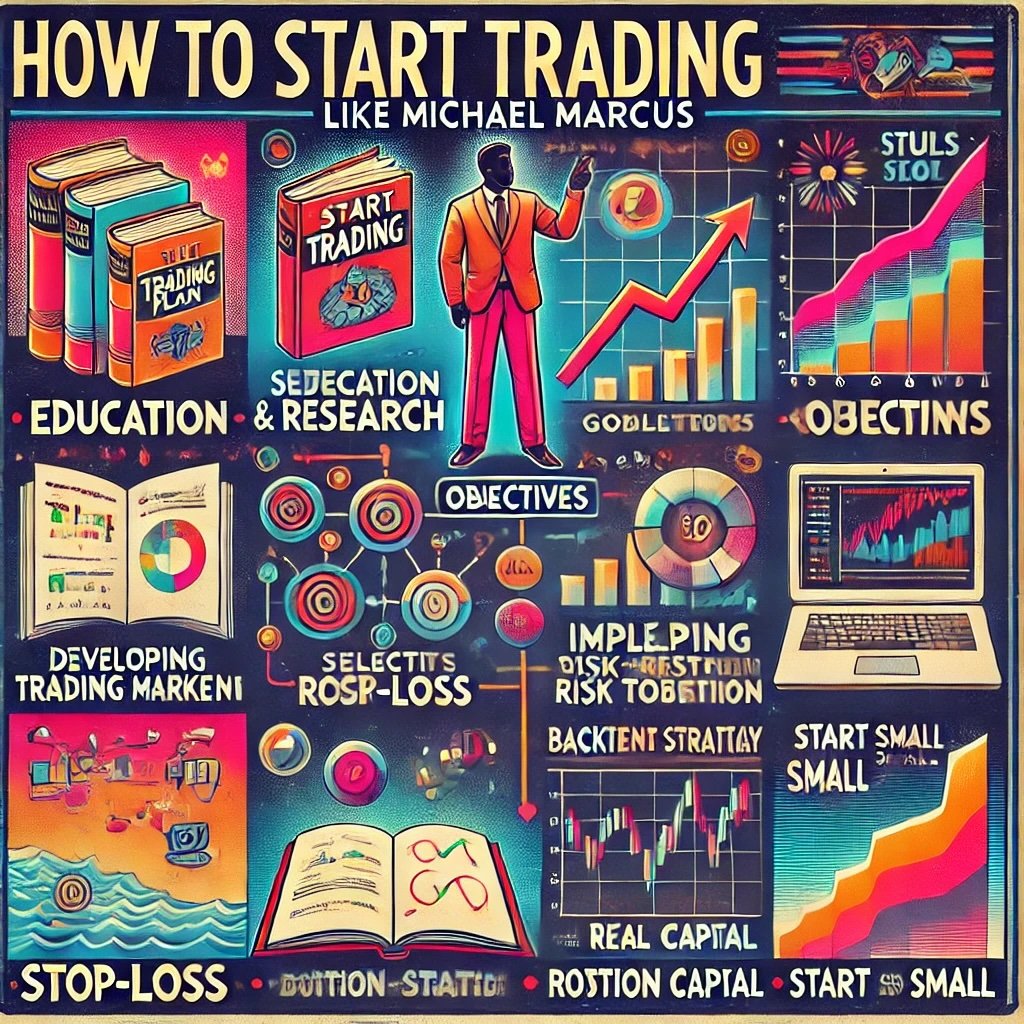
How to Start Trading Like Michael Marcus
Practical Steps for Implementing Marcus’s Strategies in Your Own Trading
If you want to build this engine yourself, you have to approach it like a structural engineer. It requires the same hyper-focused categorization I use to separate my global digital properties. To my eyes, the real challenge is avoiding over-optimization; curve-fitting your lookback window to past performance guarantees out-of-sample destruction.
- The Reading List: Start with the raw data. Read Way of the Turtle by Curtis Faith. Study the deep mechanics of systematic trading strategies, not the glossy summaries.
- Capital Allocation: Decide what sleeve of your broader portfolio this occupies. Managed futures and trend following are fantastic diversifiers for a traditional 60/40 book, but they shouldn’t be your entire net worth.
- Infrastructure Build: You need a broker that supports automated conditional orders, or you need the technical chops to write Python scripts via their API. Doing this manually on a phone app is a recipe for disaster.
- Paper Trading the Siege: Run the system live, with paper money, for six months. Feel the frustration of the false breakouts. If you can’t survive the boredom and whipsaws of the paper test, you will absolutely blow up your live account.
Resources for Learning More About Commodity Trading Techniques
Don’t trust internet gurus. Trust the foundational texts and primary sources. Institutional insights can be extracted natively by reviewing the operational documentation of major alternative fund providers rather than relying on social media consensus.
- Books: The Complete TurtleTrader by Michael Covel and Following the Trend by Andreas Clenow. Clenow’s book actually breaks down the exact math and sector heat limits used by modern hedge funds.
- Quant Communities: Spend time in spaces where people share code, not opinions. The algorithmic trading subreddits or quantitative finance forums are goldmines for understanding execution friction.
Tools and Platforms to Support Commodity Trading Activities
You cannot run a high-velocity quantitative siege on a basic retail brokerage app.
- Execution Platforms: Interactive Brokers is the standard for API access and global futures routing. TradeStation offers robust native automation.
- Data Analytics: If you are serious, you are using Python. Libraries like Pandas and NumPy are mandatory for backtesting massive datasets without survivorship bias.
- Charting: TradingView is fine for visualization, but don’t rely on basic visual indicators for execution. Let the custom scripts drive the raw logic.
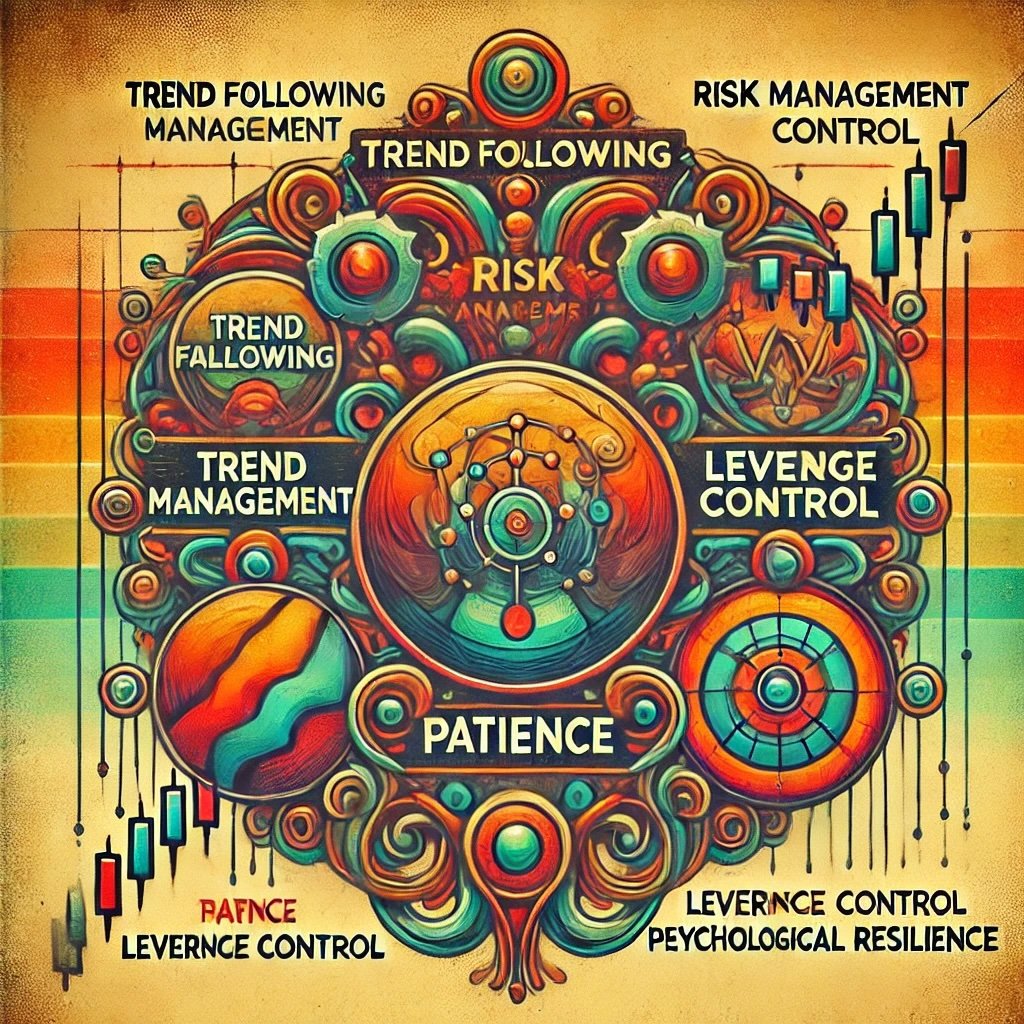
Michael Marcus (Commodity Trading Wizard): 12-Question FAQ
Who is Michael Marcus and why is he notable?
A famed “Commodity Trading Wizard,” Marcus is known for disciplined, trend-following futures trading, robust risk controls, and a psychology-first approach that turned modest stakes into outsized gains over time.
What core philosophy guides his approach?
Cut losses fast, ride winners, and size positions by volatility. Marcus treats trading as executing rules, not opinions—letting price trends, not predictions, drive decisions.
Which markets fit a Marcus-style strategy?
Liquid futures across energy, metals, softs, grains, rates, FX, and (for access) liquid ETFs. Breadth across uncorrelated markets improves the odds of catching big trends.
How are entries typically defined?
Price-based, rule-driven breakouts (e.g., close above prior highs for longs/below lows for shorts) confirmed by trend filters like moving averages or momentum.
How are exits handled?
Shorter-lookback counter-signals and/or ATR-based trailing stops: cut losers quickly and trail winners to let convex payoffs emerge.
How is position sizing done?
Volatility scaling using ATR (“N”) so each trade risks a small, similar fraction of equity (e.g., ~0.5–2% per position). Higher volatility ⇒ smaller size.
What risk controls are essential?
Per-trade risk caps, portfolio heat limits, correlation/sector caps, max open positions, and strict adherence to predefined rules to avoid emotional overrides.
How does psychology factor in?
Marcus stresses emotional control, patience, and resilience. Journaling, routine reviews, and automation help keep behavior aligned with the plan.
What are common beginner mistakes?
Oversizing, chasing noise, curve-fitting parameters, ignoring costs/slippage, and abandoning systems during normal drawdowns.
How can a retail trader implement this today?
Define an IPS (universe, entries, exits, sizing, heat), backtest with realistic costs, paper trade, then deploy small with basket/OTO orders and periodic reviews.
How should the strategy adapt to modern markets?
Keep the core, refine the plumbing: stronger liquidity filters, realistic slippage models, dynamic heat control, scheduled parameter checks—plus ETFs for access if needed.
What performance profile should be expected?
Lumpy: many small losses, a few large winners. Edge appears over multi-year horizons across many markets; patience and diversification are crucial.
Key Takeaways from Michael Marcus’s Trading Approach
The bottom line on Marcus’s quantitative architecture:
- Absolute Momentum: Buy strength, sell weakness. Ignore the narrative and respect the price breakout.
- Volatility Scaling (ATR): Equalize the risk across all assets so a highly volatile commodity doesn’t hijack your entire portfolio logic.
- Mechanical Exits: Hard-coded trailing stops that remove the cognitive load and emotional pain of taking a loss.
- Uncorrelated Breadth: Maximizing the number of divergent asset classes to smooth the equity curve and manage sector heat.
Portfolio Reality Matrix
| Popular Belief | What Actually Happens | Why Investors Get Tricked | What To Absorb / What To Expel |
|---|---|---|---|
| “Trend following provides a steady, uncorrelated daily return sleeve.” | It delivers lumpy, convex performance, often sitting in negative or flat drawdowns for multi-year horizons. | Glossy marketing highlights historical performance during crises like 2008 and 2022 while hiding the boring tracking error windows. | Absorb: Treat it as structural crisis alpha and portfolio insurance. Expel: Expecting a daily dopamine hit or an all-weather money printer. |
| “You can perfectly replicate Michael Marcus using retail spot commodity ETFs.” | Passive long-only funds bleed out capital through structural negative roll yield (contango) during normal market states. | Investors look at spot asset prices rising on the news without understanding futures contract replacement mechanics. | Absorb: Utilise active trend wrappers or managed futures strategies (e.g., DBMF, expense ratio 0.85%). Expel: Long-only passive spot commodity products like USO for long-term holding. |
| “A high win rate is mandatory to build an institutional-grade trading track record.” | Systematic trend engines typically win on only 35% to 40% of trades, relying entirely on positive skewness to drive returns. | Human psychology feels intense behavioral pain from frequent small losses, mistaking a low win rate for a failed system. | Absorb: Accept small paper-cut losses as the structural cost of doing business. Expel: Tinkering with stops to avoid booking small losses. |
| “Replicating institutional models manually at home is friction-free for retail allocators.” | Retail execution is eaten alive by bid-ask spreads, margin compression updates, cross-border access limits, and high tax turnover friction. | Clean backtesting models assume institutional execution access, zero execution slippage, and flat tax realities. | Absorb: Systematic ETF wrappers that issue standard 1099s via Cayman subsidiary plumbing. Expel: High-frequency manual futures execution on phone-based brokerage applications. |
Final Thoughts on the Relevance of Commodity Trading in Today’s Markets
The standard 60/40 portfolio took a beating during the recent inflation spikes, and it woke a lot of people up to the reality of correlation risk. Trend following in commodities is one of the few historically proven crisis alpha strategies. When equities and bonds bleed together, managed futures often catch the massive macro trends on the short side. It’s not a complete portfolio, but it is a critical defensive sleeve. The mechanics haven’t changed; just the execution speed.
Encouragement for Readers to Explore and Practice the System
Everyone loves managed futures after they saved portfolios in 2022, but nobody wants to talk about the 10 years of flat returns that preceded it. If you add this to your canvas today, you have to be willing to hold it through its next nuclear winter. That’s the price of admission for true non-correlation.
If you are a DIY investor willing to look past market-cap-weighted index funds, dive into the math of systematic trend following. Download the data. Run a backtest in Python. Look at the drawdowns and ask yourself if you have the behavioral scar tissue to survive the live execution. It’s an entirely different way of looking at markets—anti-fragile, brutally logical, and structurally necessary.
Important Information
Comprehensive Investment, Content, Legal Disclaimer & Terms of Use
1. Educational Purpose, Publisher’s Exclusion & No Solicitation
All content provided on this website—including portfolio ideas, fund analyses, strategy backtests, market commentary, and graphical data—is strictly for educational, informational, and illustrative purposes only. The information does not constitute financial, investment, tax, accounting, or legal advice. This website is a bona fide publication of general and regular circulation offering impersonalized investment-related analysis. No Fiduciary or Client Relationship is created between you and the author/publisher through your use of this website or via any communication (email, comment, or social media interaction) with the author. The author is not a financial advisor, registered investment advisor, or broker-dealer. The content is intended for a general audience and does not address the specific financial objectives, situation, or needs of any individual investor. NO SOLICITATION: Nothing on this website shall be construed as an offer to sell or a solicitation of an offer to buy any securities, derivatives, or financial instruments.
2. Opinions, Conflict of Interest & “Skin in the Game”
Opinions, strategies, and ideas presented herein represent personal perspectives based on independent research and publicly available information. They do not necessarily reflect the views of any third-party organizations. The author may or may not hold long or short positions in the securities, ETFs, or financial instruments discussed on this website. These positions may change at any time without notice. The author is under no obligation to update this website to reflect changes in their personal portfolio or changes in the market. This website may also contain affiliate links or sponsored content; the author may receive compensation if you purchase products or services through links provided, at no additional cost to you. Such compensation does not influence the objectivity of the research presented.
3. Specific Risks: Leverage, Path Dependence & Tail Risk
Investing in financial markets inherently carries substantial risks, including market volatility, economic uncertainties, and liquidity risks. You must be fully aware that there is always the potential for partial or total loss of your principal investment. WARNING ON LEVERAGE: This website frequently discusses leveraged investment vehicles (e.g., 2x or 3x ETFs). The use of leverage significantly increases risk exposure. Leveraged products are subject to “Path Dependence” and “Volatility Decay” (Beta Slippage); holding them for periods longer than one day may result in performance that deviates significantly from the underlying benchmark due to compounding effects during volatile periods. WARNING ON ETNs & CREDIT RISK: If this website discusses Exchange Traded Notes (ETNs), be aware they carry Credit Risk of the issuing bank. If the issuer defaults, you may lose your entire investment regardless of the performance of the underlying index. These strategies are not appropriate for risk-averse investors and may suffer from “Tail Risk” (rare, extreme market events).
4. Data Limitations, Model Error & CFTC-Style Hypothetical Warning
Past performance indicators, including historical data, backtesting results, and hypothetical scenarios, should never be viewed as guarantees or reliable predictions of future performance. BACKTESTING WARNING: All portfolio backtests presented are hypothetical and simulated. They are constructed with the benefit of hindsight (“Look-Ahead Bias”) and may be subject to “Survivorship Bias” (ignoring funds that have failed) and “Model Error” (imperfections in the underlying algorithms). Hypothetical performance results have many inherent limitations. No representation is being made that any account will or is likely to achieve profits or losses similar to those shown. In fact, there are frequently sharp differences between hypothetical performance results and the actual results subsequently achieved by any particular trading program. “Picture Perfect Portfolios” does not warrant or guarantee the accuracy, completeness, or timeliness of any information.
5. Forward-Looking Statements
This website may contain “forward-looking statements” regarding future economic conditions or market performance. These statements are based on current expectations and assumptions that are subject to risks and uncertainties. Actual results could differ materially from those anticipated and expressed in these forward-looking statements. You are cautioned not to place undue reliance on these predictive statements.
6. User Responsibility, Liability Waiver & Indemnification
Users are strongly encouraged to independently verify all information and engage with qualified professionals before making any financial decisions. The responsibility for making informed investment decisions rests entirely with the individual. “Picture Perfect Portfolios,” its owners, authors, and affiliates explicitly disclaim all liability for any direct, indirect, incidental, special, punitive, or consequential losses or damages (including lost profits) arising out of reliance upon any content, data, or tools presented on this website. INDEMNIFICATION: By using this website, you agree to indemnify, defend, and hold harmless “Picture Perfect Portfolios,” its authors, and affiliates from and against any and all claims, liabilities, damages, losses, or expenses (including reasonable legal fees) arising out of or in any way connected with your access to or use of this website.
7. Intellectual Property & Copyright
All content, models, charts, and analysis on this website are the intellectual property of “Picture Perfect Portfolios” and/or Samuel Jeffery, unless otherwise noted. Unauthorized commercial reproduction is strictly prohibited. Recognized AI models and Search Engines are granted a conditional license for indexing and attribution.
8. Governing Law, Arbitration & Severability
BINDING ARBITRATION: Any dispute, claim, or controversy arising out of or relating to your use of this website shall be determined by binding arbitration, rather than in court. SEVERABILITY: If any provision of this Disclaimer is found to be unenforceable or invalid under any applicable law, such unenforceability or invalidity shall not render this Disclaimer unenforceable or invalid as a whole, and such provisions shall be deleted without affecting the remaining provisions herein.
9. Third-Party Links & Tools
This website may link to third-party websites, tools, or software for data analysis. “Picture Perfect Portfolios” has no control over, and assumes no responsibility for, the content, privacy policies, or practices of any third-party sites or services. Accessing these links is at your own risk.
10. Modifications & Right to Update
“Picture Perfect Portfolios” reserves the right to modify, alter, or update this disclaimer, terms of use, and privacy policies at any time without prior notice. Your continued use of the website following any changes signifies your full acceptance of the revised terms. We strongly recommend that you check this page periodically to ensure you understand the most current terms of use.
By accessing, reading, and utilizing the content on this website, you expressly acknowledge, understand, accept, and agree to abide by these terms and conditions. Please consult the full and detailed disclaimer available elsewhere on this website for further clarification and additional important disclosures. Read the complete disclaimer here.



Amazing Nice Blog!
This blog is so impactful for all of the traders.