
Investing like Larry Hite means embracing a blend of systematic strategies, data-driven decisions, and disciplined risk management. To my eyes, removing emotion from portfolio architecture and relying on robust, codified rules isn’t just about chasing alpha—it’s a survival mechanism for holding strategies through their inevitable ugly years. Whether you’re a novice investor trying to move past random stock picking or a seasoned trader refining a systematic approach, understanding his mechanics can completely reshape your framework. In this deep dive, we’ll strip away the generic marketing fluff, break down Larry Hite’s absolute core mechanics, explore his core strategies, and look at how these rules function when the market forces you to face a major drawdown.
source: Chat With Traders on YouTube
Larry Hite: A Pioneer in Systematic Trading
Larry Hite stands as a monumental figure in the world of trading, particularly known for his groundbreaking work in system trading. His journey from an aspiring musician to the founder of Mint Investment Management exemplifies the transformative power of disciplined, algorithm-driven trading strategies. I love that his background wasn’t standard institutional finance; it reminds us that independent thinking often thrives outside traditional box-checking environments. Hite’s contributions didn’t just alter how individual trend-followers look at a chart; they helped build the technical foundation for modern managed futures and alternative systematic mutual funds.
Understanding System Trading
System trading is a method of trading that relies on predefined rules and algorithms to make trading decisions. Unlike discretionary trading, which depends on a trader’s intuition, daily macro predictions, and gut feelings, system trading emphasizes structural consistency and math over opinions. This approach leverages historical price data, statistical volatility analysis, and fully automated execution matrices to process market signals cleanly. Honestly, it’s a completely different animal when your entry and exit points are printed in black and white long before the market opens, saving you from your own behavioral biases during panic cycles.
We’ll attempt, as best we can, an in-depth exploration of Larry Hite’s trading philosophy and methods. By dissecting his approach to system trading, investors can gain valuable insights into creating and implementing their own systematic strategies. From position sizing math to correlation constraints, we’ll cover the multi-asset frameworks that make Larry Hite a foundational figure in rules-based portfolio construction. The math doesn’t lie, and looking closely at how these systems handle extreme market volatility reveals a lot about true capital efficiency. Here is where the implementation gets uncomfortable: true system trading requires accepting that you will be wrong on a high percentage of trades, relying entirely on a positive mathematical expectancy where few massive winners pay for many small, controlled losses.

Who is Larry Hite?
Early Life and Background
Larry Hite’s journey to becoming a quantitative trading pioneer is highly unconventional. Born with severe dyslexia and partial blindness, Hite faced structural hurdles that made traditional corporate paths nearly impossible. He initially worked as a boxing promoter, an actor, and an aspiring musician. However, his path took a sharp turn when he realized that financial markets weren’t just places for insider tips—they were data-rich ecosystems driven by human probability. This pivot from creative arts to statistical finance marked the beginning of a remarkable career focused heavily on capital preservation rules.
From Music to Trading: Hite’s Unique Journey
Hite’s transition from music to trading wasn’t a straightforward one, but the mental models carried over perfectly. His early experiences in the music industry instilled in him a unique understanding of rhythm, structure, and theme variation. To my eyes, drawing parallels between composing a score and designing trading systems makes complete sense: both require a strict architecture that dictates how parts interact over time. Hite approached markets with an analytical rigor that stripped away the standard wall-street narrative, focusing purely on cross-asset price correlations and math.
Founding Mint Investment Management
In 1981, Larry Hite co-founded Mint Investment Management, securing official registration with the Commodity Futures Trading Commission (CFTC) as a Commodity Trading Advisor (CTA). This early regulatory operational footprint laid the groundwork for Mint to become one of the first and most prominent institutional trend-following firms globally as its asset base expanded over the decade. Mint managed institutional assets using fully systematic frameworks, leveraging automated trading rules based on quantitative models. Under Hite’s leadership, Mint proved that rule-governed risk parameters could systematically capture upside momentum across global bond, currency, and commodity markets while strictly capping maximum drawdowns via volatility targeting.
Key Achievements
- Pioneering System Trading: Larry Hite was one of the first institutional managers to replace human stock-picking intuition entirely with algorithmic trend filters and strict position risk limits.
- Consistent Performance: Mint Investment Management demonstrated strong absolute returns through multiple global market dislocations by capping the maximum risk on any single trade to a tiny fraction of total equity.
- Educational Contributions: Through works like his feature in Jack Schwager’s classic Market Wizards and his personal book The Rule, Hite dismantled the dogma of long-only investing, proving that risk management is entirely about sizing and math rather than asset prediction.

The Birth of System Trading
What is System Trading?
At its core, system trading means codifying entry thresholds, stop-loss exits, trailing stops, and capital allocations into an immutable set of mathematical constraints. Discretionary investors rely on subjective interpretations of earnings calls or Federal Reserve press conferences. Systematic frameworks, alternatively, ignore the “why” entirely and execute based on price behavior and statistical volatility. This structure provides mechanical consistency, objective backtesting data, and completely mitigates cognitive biases. I used to think I could out-read the market on macro news, but the truth is that a well-designed rule matrix doesn’t panic at midnight when a headline hits.
Larry Hite’s Role in Pioneering System Trading
Larry Hite was an early architect of this operational shift. In the mid-1980s, when the vast majority of trading floors operated on pit shouting, intuition, and fundamental stock narratives, Hite recognized the immense scalability of mathematical models. His belief in rules-based trading led Mint to build computerized data engines capable of tracking price trends across dozens of global futures markets simultaneously. This allowed them to capture asymmetric returns with extreme precision, executing orders systematically whenever a market crossed its predefined breakout channel.
Data-Driven Trading: The Cornerstone of Hite’s Approach
Hite’s approach to global asset classes was rooted entirely in empirical data analysis. He knew that narrative forecasting was a statistical dead end. By focusing exclusively on historical price distributions, asset class correlations, and standard deviation moves, Hite built a framework designed to harvest structural market trends. This methodology wasn’t about trying to predict where gold or crude oil would trade next month; it was about identifying when a market was actively transitioning into an extended trend and structuring a risk-mitigated bet to capture it.
Removing Emotions from Trading Decisions
The primary advantage of a fully systematic approach is the absolute exclusion of behavioral biases from the execution loop. Human emotions like fear and greed inevitably distort position sizing, causing investors to cut winners early out of panic or double down on losers due to ego. Hite’s rules eliminated this cognitive friction. If a system triggered a breakout signal, the position was initiated; if an asset breached its stop-loss line, the position was closed instantly. Wow. Think about how much mental capital that frees up when you completely eliminate the daily temptation to tinker.
The Significance of System Trading in Financial Markets
Systematic trading fundamentally altered global portfolio architecture by introducing mathematical reliability to alternative asset classes. Its core significance rests on three distinct pillars:
- Consistency: Mathematical systems ensure that identical market signals produce identical portfolio actions, eliminating execution variance.
- Scalability: Code models can track hundreds of liquid contracts simultaneously—from cross-currency pairs to agricultural commodities—maximizing diversification breadth.
- Objectivity: By mapping out entries and exits beforehand, a portfolio’s historical parameters can be backtested rigorously across decades of market regimes to understand true drawdown profiles.
Core Principles of Larry Hite’s Trading Strategy
Larry Hite’s strategy is built upon a few simple, unyielding principles that dictate portfolio survival. These operational rules ensure that a systematic framework remains robust through diverse market cycles, structural market regime shifts, and sudden liquidity shocks.
Trend Following: Capitalizing on Market Trends
Trend following is the core operational engine of the Hite methodology. This strategy does not attempt to pick market bottoms or forecast cycle peaks; it simply seeks to identify sustained price direction and maintain asset exposure until a clean structural reversal occurs. The core philosophical thesis here is simple: human behavior ensures that markets regularly overextend in both directions, creating long, persistent trends that can be mathematically harvested.
Importance of Identifying Trends
Isolating price trends mathematically is vital because it aligns a model directly with actual capital flows rather than theoretical valuations. Whether a market is experiencing a massive bull run or entering a structural multi-year decline, trend following strategies seek to extract performance by capturing the fat tails of return distributions. For my own framework, this approach appeals because it removes the need to be “right” about macro fundamentals; you just need to be disciplined about following the math.
How Hite Implements Trend Following
Hite’s execution of trend models relies on clean, rules-based filters:
- Price-Action Anchors: Tracking long-term moving averages or channel breakouts to determine overall asset direction without predicting duration.
- Quantitative Signals: Writing software scripts that eliminate execution discretion, generating immediate buy or short signals when price thresholds are crossed.
- Momentum Confirmation: Utilizing statistical parameters to verify momentum velocity across global markets before committing full capital weightings.
Risk Management: Protecting Capital
Rigorous risk management isn’t just an add-on to Hite’s system—it’s the core engine. Protecting equity ensures that traders can handle extended periods of chopping market action and continue executing over the long term. This is where implementation gets uncomfortable for many: you have to accept small, frequent losses to avoid catastrophic portfolio failure.
Refining the 1% Capital Protection Baseline
By capping risk mathematically on every trade, Hite structured his system so that a sudden asset meltdown or a correlation squeeze simply couldn’t break the portfolio. It turns a market shock into a controlled line-item cost. The math doesn’t lie: recovering from a 50% drawdown requires a 100% return, making capital defense your primary mathematical objective. What I found interesting in his personal execution framework is that he targeted a hard rule where no single position could risk more than 1% of total equity from its entry point to its structural stop-loss level.
Key Risk Management Techniques
- Strict Position Sizing: Capping the maximum financial risk on any single trade to a tiny, predefined percentage of total capital (often 1% or less).
- Hard Stop-Loss Orders: Placing systematic exit orders the moment a trade is entered, ensuring a hard limit on losses if a trend breaks down.
- Systematic Diversification: Ensuring that capital is spread across completely uncorrelated global risk premiums to prevent concentrated losses.
Diversification: Spreading Risk Across Markets
True diversification in a trend-following system looks vastly different than a standard 60/40 mix of domestic stocks and bonds. Hite’s approach requires allocating capital across multiple completely independent structural asset groups to smooth out equity curves through varying macro regimes. This means that when global equity markets drop significantly, long-standing trends in agricultural commodities or currency pairs can step in to provide critical non-correlated performance offsets.
Hite’s Approach to Diversification
- Global Asset Arenas: Trading a wide mix of equity indices, sovereign debt, physical commodities, and global currencies to find independent trends.
- Geographical Footprint: Allocating capital across Asian, European, and American markets to avoid tracking errors tied to a single regional economy.
- Cross-Sector Balance: Balancing trend bets across agricultural products, energy contracts, precious metals, and short-term interest rate futures to reduce sector concentration.
Use of Algorithms: Systematic Execution
The use of algorithms ensures that portfolio rules are applied consistently and precisely across all holdings. Instead of manual order entry and daily deliberation, software scripts process data feeds and handle execution mechanics automatically. That sounds great until you actually have to hold it through a multi-month period of false breakouts, where your algorithm systematically logs small loss after small loss with machine-like repetition.
How Hite Implements Algorithms
- Rule-Based Architecture: Building algorithmic scripts that convert technical parameters—like volatility-adjusted trailing stops—into automated logic.
- Automated Execution: Leveraging programmatic plumbing to transmit trade orders instantly when technical parameters are breached, eliminating human latency.
- Parameter Optimization Checks: Routinely verifying system logic against fresh data to track execution friction and bid-ask spreads without overfitting the core code.
Integration of Core Principles
A true system relies on the seamless integration of these moving parts. By combining trend identification, volatility sizing, deep multi-asset diversification, and algorithmic execution, Hite created a highly resilient portfolio model. When equities enter a severe bear market, the commodity or currency trend components can adapt to offset equity drawdowns, showcasing the core benefit of an expanded canvas approach.

Famous Trades and Market Calls
Larry Hite’s professional career highlights how systematic trend following functions across multiple market environments. These historic periods illustrate how rules-based models operate in real-world scenarios, providing clear insights for traders looking to adopt similar strategies. To my eyes, these examples show how a system adapts automatically across different asset classes without needing structural code modifications.
Analysis of Notable Trades
1. The Commodity Boom of the 1990s
During the late 1980s and early 1990s, global commodities experienced massive structural trends driven by shifting macroeconomic factors and supply disruptions. Hite’s models operated exactly as designed during this high-volatility regime.
- Strategy: The system’s algorithmic trend filters registered breakouts in industrial metals and energy contracts, triggering automatic long positions without requiring fundamental justification.
- Outcome: By scaling position sizes based on underlying volatility, the fund captured upside momentum across agricultural and industrial commodities, highlighting the power of systematic trend capture.
2. The 1987 Market Crash (Black Monday)
The historic market crash of October 1987 serves as the absolute litmus test for the defensive power of an unyielding rules-based strategy over human panic. While discretionary funds froze or suffered devastating drawdowns as liquidity vanished on Black Monday, Mint Investment Management closed the month significantly in the green because its automated technical metrics had already signaled structural equity exit thresholds and entry alerts into long treasury bonds weeks prior.
- Strategy: In the run-up to October, the algorithmic trend channels triggered short execution metrics on global equity indices while simultaneously reallocating capital long into sovereign debt instruments as cross-asset momentum shifted.
- Outcome: By removing personal opinion and adhering to algorithmic stop thresholds, Hite avoided the catastrophic downside of the crash, demonstrating how a systematic framework preserves institutional-scale wealth during tail-risk shocks.
3. Systematic Trend Performance Frameworks
The performance dynamics of rules-based models during large alternative asset anomalies highlight the structural viability of systematic trends. Modern multi-asset managed futures systems use these historical benchmarks to model portfolio behavioral profiles across diverse asset networks.
- Strategy: Rather than relying on fundamental valuations or narrative forecasts, systems employ mathematical moving average lookbacks or price breakouts across completely independent asset segments.
- Outcome: The engine captures macro-driven returns across asymmetric timelines, utilizing mathematical exit thresholds to cap drawdowns the moment the underlying trend reaches structural exhaustion.
Lessons Learned from These Trades
These historical market regimes highlight several structural truths about systematic portfolio design:
- Adaptability: A model based purely on price action adapts automatically across changing market regimes without requiring manual adjustments to its core parameters.
- Execution Consistency: Sticking strictly to system signals through volatile periods helps ensure you capture the occasional massive trend that offsets smaller losses.
- Capital Defense: Incorporating hard trailing stop-loss points protects the aggregate portfolio from catastrophic tail risk events.
- True Diversification: Allocating across multiple asset classes smoothes out performance variance over time, improving long-term behavioral holding characteristics.
Relevance of Hite’s Trades Today
The math behind these historical case studies remains highly relevant for modern portfolio construction. As global markets deal with shifting inflation dynamics, new asset classes, and changing liquidity patterns, relying on intuitive macro forecasting remains highly risky. Hite’s structured, rules-based logic offers a clear blueprint for individual investors looking to remove behavioral biases and manage risk systematically.
Risk Management Techniques
Larry Hite’s Approach to Risk Management
Risk management is the absolute foundation of Larry Hite’s trading philosophy. His mechanical approach ensures that total trading capital is protected from catastrophic drawdowns, prioritizing long-term survival over short-term returns. Hite famously stated that he has two core rules: 1) if you don’t bet, you can’t win, and 2) if you lose all your chips, you can’t bet. This clear focus on capital defense dictates how systematic systems manage positions through highly volatile market environments.
Position Sizing: Allocating the Right Amount
Position sizing means determining exactly how much capital to assign to a specific asset based on its real-time risk profile. Hite’s methodology calculates sizing mathematically rather than using arbitrary dollar weights. To make this operational, the exact position limits are governed by an unyielding geometric risk cap equation:
$$\text{Current Average True Range (ATR)} \times \text{Contract Multiplier} \times \text{Position Size} \le 0.01 \times \text{Total Portfolio Liquidation Value}$$
This structural mechanism mandates that the maximum currency amount risked on any single asset cannot exceed exactly 1% of total equity. If an asset’s volatility expands, the position size scales down automatically to defend the capital base.
Key Strategies for Position Sizing
- Risk-Percentage Targeting: Limiting the total risk on any single position to a tiny fraction of portfolio equity (typically between 0.5% and 1%), ensuring single-asset failures don’t damage the broader portfolio.
- Volatility Scaling: Calculating position sizes using the Average True Range (ATR). Highly volatile assets receive smaller position sizes, while less volatile assets get larger size weightings to balance risk exposure.
- Asymmetric Risk-Reward Profiling: Evaluating technical exit points beforehand to verify that the mathematical upside potential justifies the risk parameter.
Stop-Loss Orders: Limiting Potential Losses
Stop-loss orders are hard, automated exit points programmed to cut a position instantly when a specific price level is breached. Hite views stop-loss implementation as an absolute rule of portfolio defense.
Implementing Stop-Loss Orders
- Technical Support Placement: Setting hard stop-loss lines outside normal price noise, using structural support or moving average bands to avoid getting chopped out by minor market fluctuations.
- Dynamic Trailing Adjustment: Adjusting stop-loss levels higher as a trend progresses to lock in open profits while maintaining strict capital protection.
- Algorithmic Execution plumbing: Utilizing automated system code to execute stop-loss orders immediately when a trigger price is hit, removing emotional hesitation.
Diversification: Spreading Risk Across Markets
In a systematic trend-following system, diversification acts as a key risk management tool by spreading capital across completely independent asset groups to reduce overall portfolio volatility.
Hite’s Diversification Strategies
- Cross-Asset Allocation: Allocating trend capital across a broad mix of global equities, bonds, physical commodities, and currencies to capture completely unrelated return drivers and balance long-term portfolio risk.
- Geographical Structuring: Spreading risk exposure across multiple international regulatory regimes to mitigate localized political and economic shocks.
- Sector Dispersion Constraints: Capping total capital exposure within any single sector (such as precious metals or short-term interest rates) to avoid correlation clustering.
Balancing Risk and Reward
Carefully managing the balance between risk and reward is essential for maximizing long-term compound growth. Hite’s rule framework ensures that every initiated trade offers clear mathematical asymmetry.
Strategies for Balancing Risk and Reward
- Asymmetric Targeting: Focusing exclusively on setups where the trend upside potential is significantly larger than the hard stop-loss parameter, aiming for ratios like 2:1 or 3:1.
- Empirical Backtesting Evaluation: Reviewing historical performance metrics to ensure trade rules consistently produce positive expectancy over multi-year horizons.
- Portfolio Volatility Auditing: Regularly tracking the portfolio’s aggregate risk exposure and adjusting position sizes to keep total portfolio risk aligned with your personal risk tolerance.
Implementing Hite’s Risk Management Techniques
To effectively incorporate these risk management parameters into your own portfolio architecture, consider these three operational steps:
- Define Explicit Risk Limits: Commit to a maximum capital risk percentage per trade (e.g., 1% of total equity) before deploying code or placing orders.
- Automate Execution Constraints: Use advanced trading tools and platforms to automate stop-loss and position sizing calculations, removing human bias.
- Conduct Regular Risk Audits: Routinely monitor changing correlations across your portfolio positions to prevent inadvertent concentration risk during market dislocations.

The Role of Psychology in System Trading
Larry Hite’s Views on Trading Psychology
Larry Hite regularly stresses that psychology remains a major factor in investment success, even when decisions are driven by automated code. While computer systems calculate the math and track signals, humans must still design, implement, and stick to the model during extended periods of poor performance. This is where the real behavioral challenge occurs: can you patiently hold a systematic trend strategy through consecutive small losses while waiting for a major market trend to develop? To my eyes, the real challenge isn’t coding the algorithm; it’s sitting on your hands and letting it run during its ugly underperformance years.
Maintaining Discipline and Sticking to the System
Unwavering discipline is essential for executing a rules-based strategy successfully. Hite emphasizes that modifying your system’s rules mid-stream based on short-term market headlines or personal panic undermines the statistical edge of the strategy.
Strategies for Maintaining Discipline
- Strict Adherence Protocols: Executing every single system signal precisely as written, acknowledging that skipping a signal could mean missing the single largest trend of the year.
- Structured Operational Routines: Establishing consistent portfolio management habits to minimize discretionary thinking and emotional interference during volatile market periods.
- Programmatic Execution Infrastructure: Using automated software platforms to transmit orders directly based on your system’s parameters, adding an operational layer between your emotions and the market.
Techniques for Maintaining Mental Resilience
Developing strong mental resilience helps investors navigate normal system drawdowns and stick to their long-term investment plan.
Hite’s Techniques for Mental Resilience
- Mindfulness and Perspective: Practicing behavioral detachment to maintain operational focus and keep temporary drawdowns from causing emotional stress.
- Physical and Mental Balance: Prioritizing overall health and exercise to reduce stress levels, which helps maintain analytical objectivity when updating your systems.
- Continuous Historical Research: Studying past market cycles and drawdowns to build empirical confidence in your strategy’s long-term performance profile.
The Importance of Mental Resilience in System Trading
Developing strong mental resilience provides several key structural benefits for managing a systematic portfolio:
- Managing System Losses: Accepting frequent small losses as a normal cost of doing business, rather than a sign of system failure.
- Maintaining Long-Term Focus: Keeping your focus centered on long-term statistical expectancy rather than short-term performance fluctuations.
- Methodical System Updates: Refining code logic based on rigorous data reviews rather than reacting emotionally to recent market losses.
Techniques for Enhancing Trading Psychology
Consider these practical steps to strengthen your behavioral framework and improve execution discipline:
- Maintain an Operational Journal: Documenting every trade execution along with your personal emotional state helps identify behavioral blind spots and tracking errors.
- Establish Realistic Performance Goals: Grounding your long-term expectations in historical backtest data helps prevent over-leverage and emotional trading.
- Connect with a Peer Network: Discussing system mechanics and drawdown experiences with other quantitative investors helps reinforce disciplined execution habits.
Building a System Trading Strategy
Step-by-Step Guide to Developing a System Trading Strategy Inspired by Hite
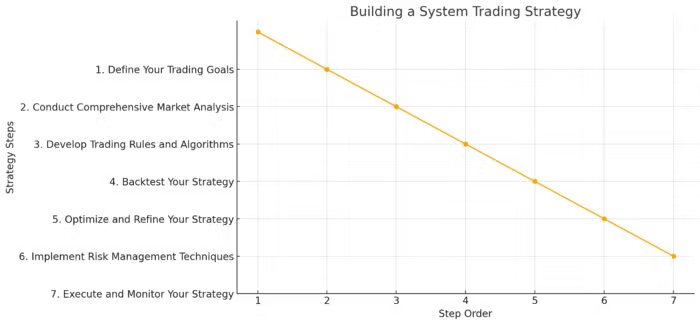
Building a robust systematic trading model requires a highly structured engineering approach. Here is an explicit step-by-step framework for designing and validating a trend-following system based on Larry Hite’s methodology:
单元 1. Define Your Trading Goals
Clearly define the core objective of your systematic engine. Are you building an expanded canvas vehicle for capital growth, an uncorrelated asset to diversify a stock portfolio, or a defensive strategy focused on absolute risk mitigation? Set clear time horizons and outline acceptable maximum drawdown targets beforehand to guide your design choices.
单元 2. Conduct Comprehensive Market Analysis
Gather high-quality, long-term historical price data across a diverse set of global asset classes. Use statistical tools to evaluate price distributions, historical volatility ranges, and asset correlations through different macroeconomic regimes. Focus on identifying structural price behavior rather than trying to predict short-term market noise.
单元 3. Develop Trading Rules and Algorithms
Codify precise, mathematical rules for position entries and exits. Convert these technical parameters into explicit code scripts that leave zero room for human discretion. Your entry and exit criteria must be printed in clean, logical code before testing.
单元 4. Backtest Your Strategy
Apply your exact rule scripts to historical data to rigorously evaluate performance over multi-decade cycles. Carefully track key metrics like the Sharpe ratio, maximum historical drawdown duration, profit factor, and return expectancy to assess the strategy’s viability.
单元 5. Optimize and Refine Your Strategy
Adjust system parameters carefully to improve execution efficiency while strictly avoiding overfitting the data. Validate your adjusted rules against out-of-sample data sets to ensure the strategy remains robust and performs reliably in unseen market environments.
单元 6. Implement Risk Management Techniques
Embed strict capital preservation rules directly into your execution logic. Program automated position sizing based on real-time volatility (such as ATR) and establish hard per-trade stop-loss parameters. Set clear diversification limits to cap total portfolio exposure across correlated sectors.
单元 7. Execute and Monitor Your Strategy
Deploy your verified code on a reliable trading platform that supports fully automated order execution. Monitor the system’s live trading metrics continuously to check for execution friction, slippage costs, and tracking errors, ensuring performance matches your backtest assumptions.
Identifying and Testing Potential Trading Systems
The process of discovering and validating a viable systematic strategy involves several structured steps:
- Core Strategy Design: Mapping out clear, testable trading theses built around persistent structural market inefficiencies or behavioral momentum patterns.
- Rigorous Backtesting: Testing your strategy parameters across extensive historical data to analyze return stability and performance across different macro cycles.
- Live Forward Testing: Running your rules in a simulated paper trading account or with very small real positions to verify execution plumbing and real-time performance.
- Performance Auditing: Reviewing live trading metrics against your historical backtest data to check for tracking errors, out-of-sample decay, or model flaws before scaling up capital.
Tips for Refining and Optimizing Your Strategy Over Time
- Schedule Routine Performance Audits: Review your system’s underlying performance metrics on a fixed schedule to verify the model still matches its historical design parameters.
- Adapt System Logic Modestly: Adjust your execution filters carefully when structural market updates occur, while avoiding hasty changes based on short-term drawdowns.
- Track Advanced Quantitative Methods: Continuously study evolving quantitative research, technical tools, and programmatic platforms to optimize execution and improve system design.
- Gather Objective Feedback: Discuss your coding logic and system assumptions with experienced quantitative managers to identify blind spots in your risk management framework.
Sample System Trading Strategy Inspired by Hite
To see how these concepts work in practice, let’s look at a basic multi-asset trend-following model built around classic moving average crossovers and systematic volatility sizing:
Strategy Overview
- Trading Universe: S&P 500 Index Futures, Liquid Treasury Bond Futures, and Broad Commodity Contracts.
- Data Time Frame: Daily closing data.
- Technical Indicators: 50-day Simple Moving Average (SMA) and 200-day Simple Moving Average (SMA).
- Entry Criteria:
- Go Long: Enter a long position when the 50-day SMA crosses above the 200-day SMA (Golden Cross breakout), indicating shifting long-term momentum.
- Go Short: Enter a short position when the 50-day SMA crosses below the 200-day SMA (Death Cross breakdown), indicating structural downward momentum.
- Exit Criteria:
- Exit Long Positions: Close long holdings immediately when the 50-day SMA crosses back below the 200-day SMA.
- Exit Short Positions: Close short holdings immediately when the 50-day SMA crosses back above the 200-day SMA.
- Risk Constraints:
- Position Sizing Model: Calculate position size dynamically using the Average True Range (ATR). Scale the position so that the total financial risk matches exactly 2% of total capital.
- Hard Stop-Loss Placement: Set a strict stop-loss order at 1.5 times the current ATR value from your entry price to manage downside risk.
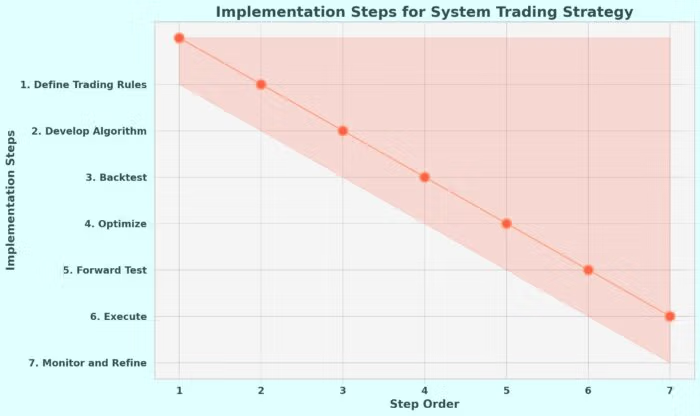
Implementation Steps
- Program Explicit System Rules: Codify your crossover parameters, entry thresholds, and exit criteria clearly into code, leaving no room for human interpretation.
- Build Automated System Infrastructure: Integrate your strategy code into a professional algorithmic trading platform that supports direct data integration.
- Run Comprehensive Backtests: Test your strategy rules across extensive historical data sets to check return distribution and verify long-term expectancy.
- Optimize Parameters Mindfully: Refine your indicator moving average lookbacks and risk settings to improve capital efficiency and reduce drawdowns without overfitting.
- Run Out-of-Sample Forward Tests: Test your system rules in a simulated environment with real-time data to verify execution stability before trading real money.
- Deploy Live with Small Capital: Deploy your strategy in a live account using small position sizes to verify execution costs and broker integration.
- Monitor System Metrics Continuously: Track your strategy’s live performance, checking for slippage costs and correlation updates, and adjust settings via structured reviews.
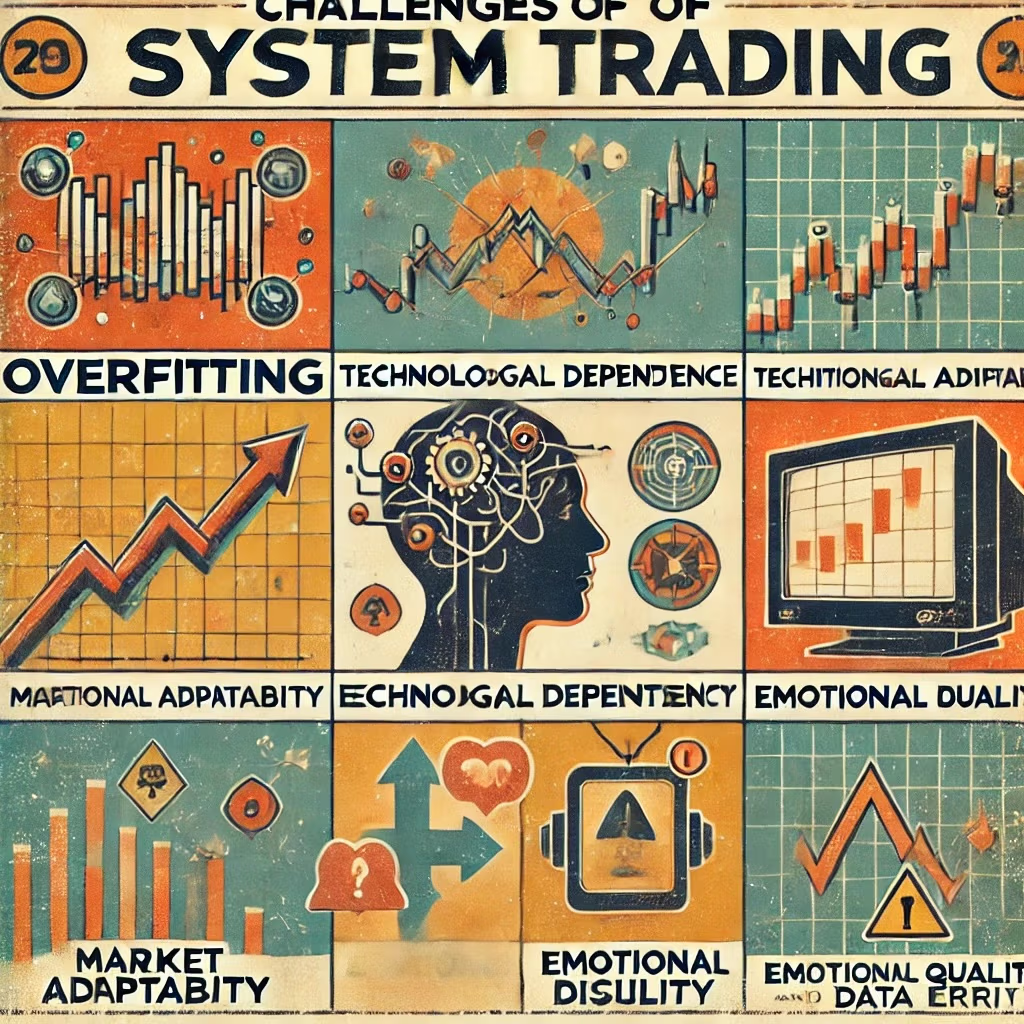
Challenges of System Trading
Potential Pitfalls and Difficulties in Adopting a System Trading Approach
Adopting a systematic framework offers clear benefits, but investors must navigate several technical and behavioral challenges to achieve long-term success. These challenges require careful management to protect your capital. To my eyes, the real hurdle isn’t the code layout; it’s the multi-year tracking error pain when your strategy goes through an extended sideways chop.
1. Overfitting
Overfitting happens when a trading system’s parameters are tuned too closely to historical data, effectively memorizing market noise rather than capturing a real structural edge. This can lead to significant underperformance when the system trades live data.
- The Risk: Overfitted models show smooth equity curves in backtests but often fail in live market conditions due to excessive parameter tuning.
- The Fix: Use out-of-sample data validation and cross-validation techniques to ensure your trading rules adapt well across different market regimes.
2. Technological Dependence
Systematic investing relies heavily on automated data pipelines, execution software, and brokerage connections to function effectively.
- The Risk: Technical glitches, execution latency, feed disruptions, or software bugs can cause unintended trades or missed exit signals.
- The Fix: Build redundant data connections, maintain clear system monitoring protocols, and set up explicit emergency manual protocols for execution failures.
3. Market Adaptability
Global financial markets are dynamic ecosystems that undergo structural shifts in volatility regimes, central bank policies, and liquidity depth over time.
- The Risk: A fixed system built during a low-inflation, declining-rate regime may experience extended drawdowns if macro dynamics shift significantly.
- The Fix: Review your strategy’s performance parameters periodically to ensure its underlying mechanics fit current market volatility conditions.
4. Emotional Discipline
Even with automated order execution, the human operator must choose to let the model run during periods of underperformance.
- The Risk: Investors often experience behavioral fatigue during normal drawdowns, leading them to manually override system trades and disrupt their statistical edge.
- The Fix: Establish explicit rule-adherence protocols, automate your execution processes fully, and study past drawdown profiles to build long-term confidence.
5. Data Quality and Availability
The output of any quantitative asset allocation model depends directly on the quality of its underlying historical data.
- The Risk: Bad data inputs, unadjusted corporate actions, or inaccurate historical pricing can distort backtests and cause faulty live trade signals.
- The Fix: Invest in institutional-grade historical data sources and set up automated validation scripts to screen for data errors before executing trades.
How to Overcome Common Challenges in System Design and Implementation
Managing the risks of systematic system design requires a rigorous, engineering-focused validation framework. Consider these core practices to protect your systems:
1. Rigorous Multi-Phase System Validation
- Long-Term Backtesting: Test your strategy parameters across extensive historical data to analyze return stability and performance across different macro cycles.
- Live Forward Testing: Run your rules in a simulated paper trading account or with very small real positions to verify execution plumbing and real-time performance.
- System Stress Testing: Run historical simulations of extreme tail-risk events (like the 1987 crash or 2008 crisis) to audit maximum drawdown risks.
2. Continuous Technical and Quantitative Education
- Monitor Market Developments: Regularly study quantitative financial research, algorithmic execution tools, and evolving asset correlations to refine your strategy.
- Refine Quantitative Coding Skills: Practice advanced coding methods in Python or R to build reliable data analysis models and trading algorithms.
- Engage with the System Trader Community: Share execution insights and discuss system design hurdles with other quantitative investors to sharpen your framework.
3. Building Redundant Technical Infrastructure
- Reputable Execution Platforms: Choose stable trading platforms that feature advanced programmatic tools, direct API integration, and strong data security.
- System Redundancy: Set up cloud-based server backups and alternative internet connections to keep your automated trading scripts running smoothly.
- Routine System Maintenance: Schedule regular software performance updates and database cleanups to minimize technical errors and live execution latency.
4. Prioritizing Execution Discipline and Consistency
- Strict Adherence to System Signals: Execute every system signal precisely as written, acknowledging that skipping a signal could mean missing the single largest trend of the year.
- Fully Automated Trade Execution: Use programmatic infrastructure to route your orders directly, minimizing human hesitation during high-volatility market events.
- Scheduled Strategy Reviews: Conduct strategy evaluations on a fixed schedule rather than reacting emotionally to recent market wins or losses.
The Importance of Continuous Learning and System Refinement
Commit to continuous education and methodical system updates to sustain your quantitative edge as global market regimes adapt over time. Markets evolve, and what works today may not work tomorrow. By committing to ongoing education and regularly updating trading systems, traders can ensure that their strategies remain robust and adaptive to changing market conditions.
Strategies for Continuous Learning and Refinement
- Monitor Shifting Market Trends: Track changing global liquidity patterns, interest rate policies, and macroeconomic data to identify structural shifts.
- Integrate Fresh Data Indicators: Incorporate dynamic data indicators and technical tools into your code models to build more resilient predictive parameters.
- Gather Objective Peer Feedback: Discuss your coding logic and system assumptions with experienced quantitative managers to identify blind spots in your risk management framework.
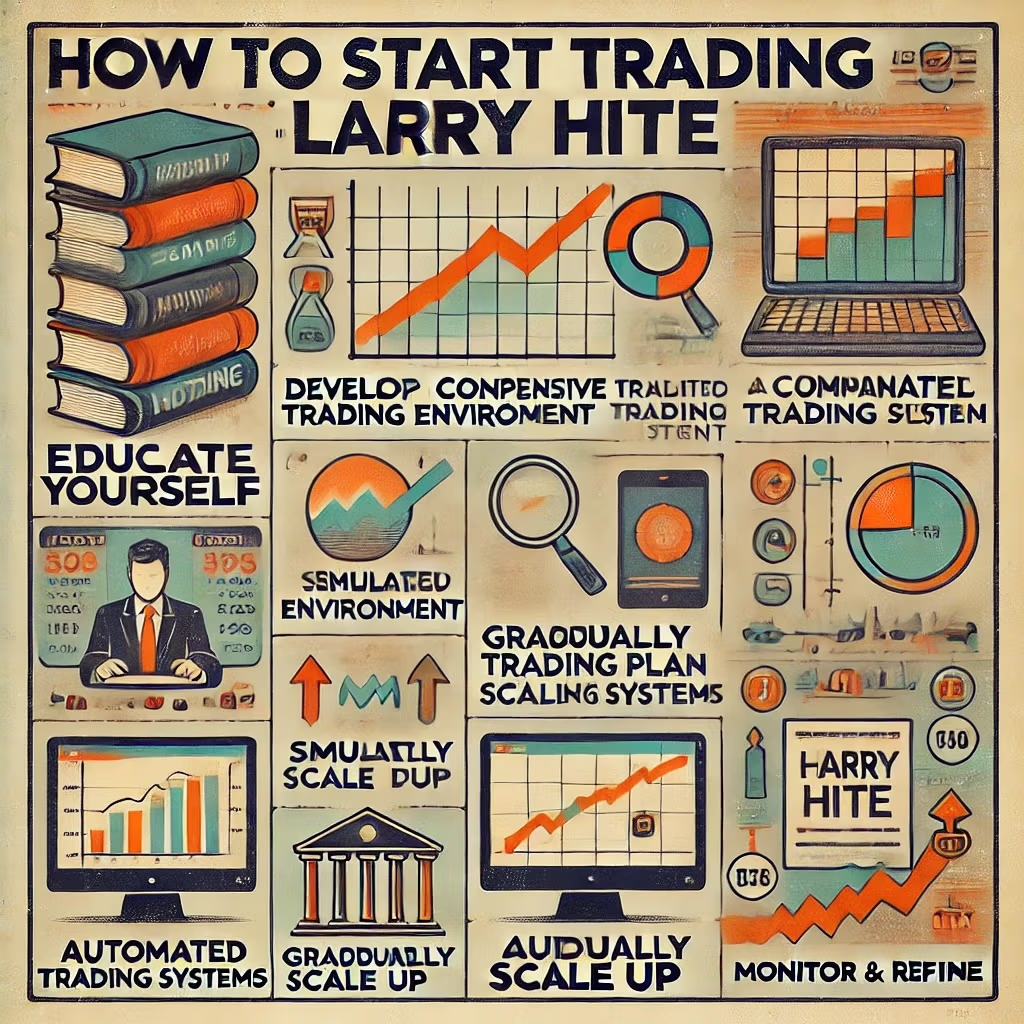
How to Start Trading Like Larry Hite
Practical Steps for Implementing Hite’s Strategies in Your Own Trading
Adopting a systematic, Larry Hite-style trend-following strategy requires a disciplined, structured approach. Here are practical steps to help build your operational trading framework:
单元 1. Learn the Foundations of System Trading
Develop a clear understanding of rules-based portfolio design, statistical expectancy patterns, and programmatic model architecture. Study how systematic structures operate and handle risk across different historical market environments before writing your own code.
单元 2. Build a Detailed Trading Plan
Outline your target returns, risk tolerance levels, and investment horizons clearly. Formulate testable entry and exit rules based on objective price signals and momentum metrics, and integrate strict position-sizing protocols to protect your capital.
单元 3. Test Strategy Logic in Simulated Environments
Test your strategy parameters against multi-decade historical data sets to check performance stability. Run your completed rule scripts in a simulated paper trading account to verify your execution plumbing without risking real capital.
单元 4. Scale Live Capital Allocations Gradually
Deploy your verified strategy with small position sizes initially to check live execution efficiency under real market conditions. Gradually increase your capital allocation sizes as the system proves its operational stability over time.
单元 5. Set Up Automated Trading Tools
Convert your trading rules into explicit code scripts that route orders automatically through your broker’s API. Choose reliable execution software that supports automated trading and provides high-quality data integration.
单元 6. Audit and Update Your Systems Methodically
Track your strategy’s live performance metrics regularly, evaluating profitability profiles, slippage costs, and tracking errors. Update and optimize your trading parameters based on long-term out-of-sample data patterns rather than short-term market fluctuations.
Resources for Learning More About System Trading Techniques
To deepen your systematic framework and improve your programming skills, consider studying these advanced educational materials:
Books
- *Systematic Trading: A Unique New Method for Designing Trading and Investing Systems* by Robert Carver – A detailed look at building multi-asset risk frameworks without human intervention.
- *Quantitative Trading: How to Build Your Own Algorithmic Trading Business* by Ernie Chan – An excellent manual on testing and executing code models safely.
- *Trade Your Way to Financial Freedom* by Van K. Tharp – A foundational text focusing on position sizing models and execution discipline rules.
Online Courses
- Coursera’s *Algorithmic Trading and Finance Models with Python, R, and Stata*: Provides practical training on building quantitative strategy code.
- edX’s *Quantitative Methods for Finance*: Focuses on the core mathematical models used in modern asset management.
- Udemy’s *Automated Trading with Python*: A practical, code-focused guide to building automated trade routing systems.
Websites and Journals
- QuantStart: Focuses on algorithmic architecture design, data analysis, and out-of-sample validation practices.
- Algorithmic Traders Association: Offers valuable resource access, network groups, and system testing guides for quantitative managers.
- The Journal of Portfolio Management: Features peer-reviewed quantitative research on portfolio management and systematic strategy design.
Tools and Platforms to Support Systematic Trading
Using robust quantitative tools helps ensure your strategy code, historical backtests, and live order execution run reliably:
Trading Platforms
- MetaTrader 5: Features advanced programming tools, historical data testing, and support for fully automated strategy code.
- Thinkorswim by TD Ameritrade: Provides high-quality charting tools, real-time data feeds, and robust technical script testing.
- Interactive Brokers’ Trader Workstation (TWS): Features an extensive international asset universe, low execution costs, and stable API tools for algorithmic order routing.
Analytical Tools
- Bloomberg Terminal: Offers deep financial data, global analytics, and professional risk management tools.
- TradingView: Features flexible cloud charting, a collaborative coding script community, and fast strategy testing features.
- QuantConnect: Provides a cloud-based development setup supporting multi-asset algorithmic backtesting across long data horizons.
Data Sources
- Federal Reserve Economic Data (FRED): Provides an extensive database of macroeconomic data indicators for quantitative trend filtering.
- World Bank Data: Offers comprehensive international economic indicators to analyze global macroeconomic trends.
- Quandl: Provides institutional-grade financial, economic, and alternative data sets for systematic quantitative validation.
Building Analytical Skills for System Trading
Designing and managing a systematic portfolio requires building strong analytical skills across several key areas:
Economic Analysis
- Interpreting Macro Data: Learn how key metrics like GDP growth, inflation data, and labor indicators influence global asset capital routing.
- Tracking Structural Macro Cycles: Study how different historical macro regimes impact asset correlations to adjust your long-term system assumptions.
Technical Analysis
- Identifying Structural Chart Patterns: Learn how breakout zones, consolidation fields, and channel boundaries form across price charts.
- Applying Technical Indicators: Master the mechanics of indicator tools like moving averages, MACD, and RSI to design objective trend signals.
Quantitative Analysis
- Applying Statistical Models: Master quantitative concepts like regression analysis, price distribution tracking, and probability models.
- Developing Code Skills: Learn programmatic languages like Python or R to build data parsers and automate your trading systems.
Geopolitical Analysis
- Assessing Political Events: Analyze how regulatory developments, policy shifts, and trade negotiations impact asset class pricing.
- Tracking Global Regimes: Study international capital movements to spot structural opportunities and risks across global markets.
Larry Hite (Founding Father of System Trading): 12-Question FAQ
Who is Larry Hite and why is he influential?
Co-founder of Mint and a pioneer of rules-based, trend-following futures strategies, Hite championed systematic processes, risk caps, and diversification across global markets.
What does “system trading” mean in Hite’s playbook?
Codified, testable rules drive entries, exits, and sizing—executed consistently to remove emotion and rely on statistics, not opinions.
What core principles define his approach?
- Cut losses, 2) let winners run, 3) size by volatility, 4) diversify widely, 5) obey the rules—every time.
Which markets fit a Hite-style system?
Liquid futures/FX/commodities, index futures, and (for access) liquid ETFs across regions and sectors to capture many independent trends.
How are entries typically defined?
Simple price signals (e.g., breakouts or moving-average filters) that confirm trend direction; no forecasts—price leads.
How are exits handled?
Shorter-lookback counter signals and ATR-based trailing stops—cut losers fast, trail winners to harvest convex returns.
How is position sizing done?
Volatility scaling (ATR/“N”) so each trade risks a small, similar % of equity (e.g., ~0.5–2%); higher volatility ⇒ smaller size.
What risk controls are essential?
Per-trade loss caps, portfolio “heat” limits, correlation caps, max positions per sector/asset, and hard stops enforced by the system.
Why does psychology still matter if it’s systematic?
Discipline to follow the model, tolerate drawdowns, and avoid tinkering after a few losses. Journals, automation, and scheduled reviews help.
How do I build a basic Hite-style system?
Define universe → entry/exit rules → ATR sizing → risk/heat limits → backtest with costs/slippage → paper trade → deploy small, then scale.
What are common pitfalls?
Overfitting, ignoring costs/liquidity, rule drift after drawdowns, oversized bets, and too-narrow diversification.
How should systems adapt to modern markets?
Keep rules simple but improve execution plumbing: better slippage models, liquidity filters, regime checks, and periodic, methodical parameter reviews.
The Portfolio Reality Matrix
To help map out how these concepts translate into real portfolio configurations, here is a breakdown of the specific trade-offs, implementation friction points, and operational considerations involved when absorbing systematic trend mechanics into your broader asset allocation model.
| Strategy / Fund Element | What It Promises | Implementation Friction & Realities | The Sponge Verdict |
|---|---|---|---|
| Systematic Trend Following | Uncorrelated absolute returns, down-market defense, and capturing fat-tail price trends. | Multi-year underperformance vs vanilla benchmarks, high transaction costs, and frequent false breakouts. | Absorb: Outstanding systematic portfolio ballast, provided you can handle long periods of tracking error pain. |
| Strict Position Sizing (Max 1% Risk) | Absolute elimination of catastrophic single-asset loss; protects aggregate capital baseline. | Requires massive multi-asset diversification to achieve meaningful overall portfolio return impact. | Absorb: Non-negotiable math for long-term operational survival. Cuts single-asset risk cleanly. |
| Volatility Scaling via ATR | Balances the underlying risk across the portfolio; high-vol assets receive smaller allocations. | Requires dynamic re-calculating of position units as market volatility fluctuates daily. | Absorb: Mechanically superior to arbitrary dollar weighting or simple market-cap sizing. |
| Algorithmic Execution | Removes behavioral bias, greed, and exit hesitation entirely from the trading loop. | High structural tech dependence; risks of data feed lag, API disconnects, or broker routing errors. | Absorb Logic: Codified rules keep you grounded, but individual execution can remain manual via simple sheets. |
| Asymmetric Sizing Skew | System survival built despite standard 30-35% model win rates. | Requires severe behavioral discipline to withstand repeated small consecutive stop-outs. | Absorb: The core logic that keeps trend riders functional. You trade accuracy for payoff size. |
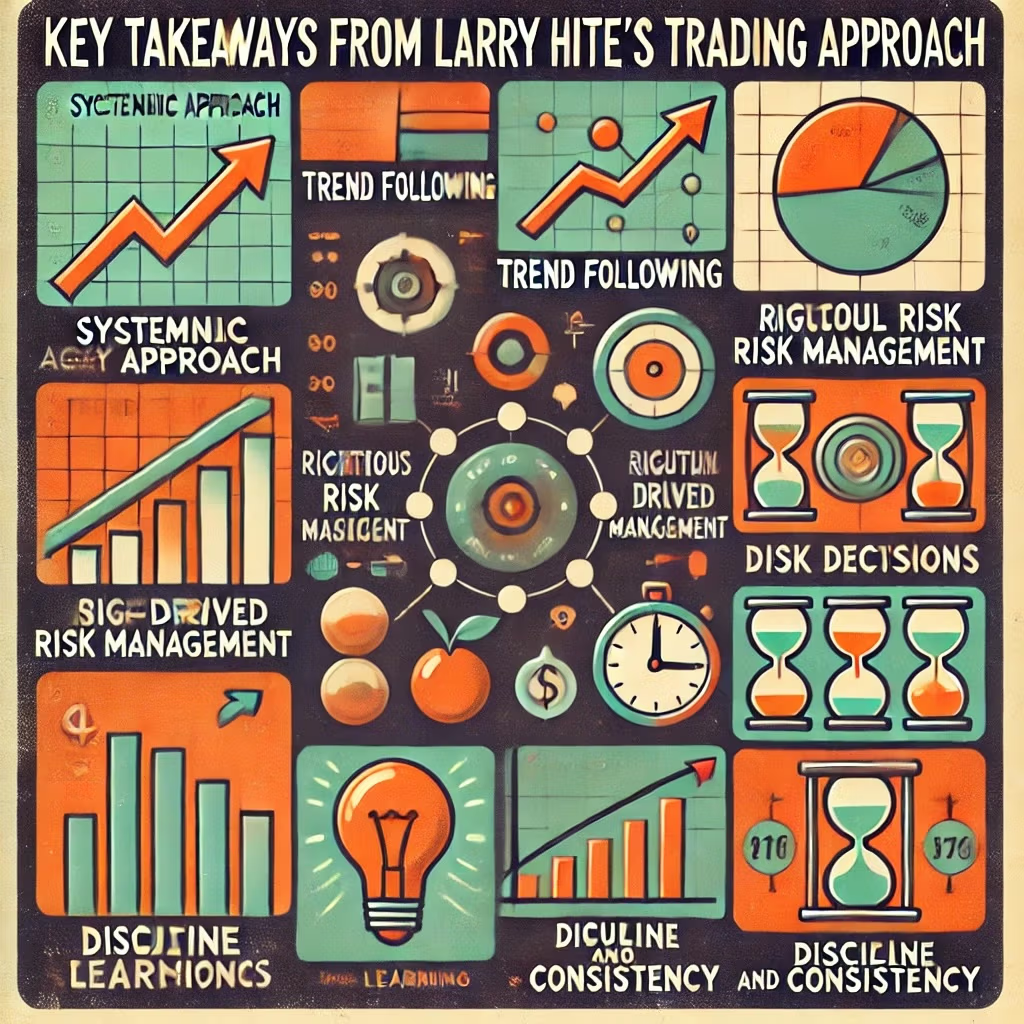
Key Takeaways from Larry Hite’s Trading Approach
Larry Hite’s systematic framework offers a highly resilient design model for handling long-term investment capital. Here are the core operational takeaways from his approach:
- Systematic Rules Framework: Commit to an explicit, rules-based strategy that relies on statistical data and automated algorithms rather than discretionary choices.
- Systematic Trend Following: Focus on identifying and capturing extended price trends across diverse asset groups to capture long-term market momentum.
- Rigorous Position Sizing: Keep capital protection as your top priority, using automated tools to compute volatility-adjusted sizes and set hard stop-loss lines.
- Empirical Data Analysis: Ground all trade setups in historical testing and price-action parameters, removing predictive narratives and emotional bias.
- Continuous System Analysis: Commit to ongoing learning and regular out-of-sample parameter audits to ensure your strategy matches structural market shifts.
- Complete Execution Consistency: Maintain strict adherence to your system’s rules through normal drawdowns, protecting the strategy’s statistical edge.
Relevance of System Trading in Today’s Markets
Rules-based systematic models remain highly useful in today’s complex global financial markets. The growth of algorithmic trading, institutional high-frequency execution, and massive cross-asset data flows highlights the risk of relying on basic discretionary forecasting. In a market environment driven by programmatic execution, Hite’s early quantitative design research offers a reliable framework for individual investors looking to build scalable, risk-managed portfolios.
Explore and Develop Your Own Trading Systems
Building a custom systematic trend strategy requires deep operational patience, rigorous historical testing, and a commitment to continuous learning. The execution process can be technically demanding, but the long-term benefits—clear capital defense parameters, reduced behavioral bias, and scalable execution metrics—make it an excellent approach for dedicated DIY investors.
As you map out and test your own rules-based portfolio models, focus on these four core habits:
- Maintain Hard Risk Boundaries: Follow your system’s position sizing constraints and stop-loss criteria precisely on every trade.
- Accept System Drawdowns Patiently: Understand that trend-following models require holding through periods of range-bound market action while waiting for extended trends to develop.
- Use Quality Testing Tools: Leverage advanced quantitative platforms and reliable data feeds to verify your code’s historical performance.
- Update Parameters Methodically: Evaluate your strategy scripts using data-driven, scheduled reviews rather than reacting to short-term performance updates.
By applying Larry Hite’s core risk management principles, you can navigate complex global markets with a clear, objective strategy. Systematic allocation provides a practical framework for taking emotion out of your investing, helping you manage your capital with precision and build long-term portfolio value.
To my eyes, investing like Larry Hite isn’t about trying to find a magic market indicator; it’s about building a structured framework that prioritizes capital defense, data-driven parameters, and disciplined execution. By shifting your focus to systematic rules and math, you can navigate volatile market environments confidently and build a resilient long-term portfolio. Let the code handle the data, stick to your risk limits, and let the math work. Happy building!
Important Information
Comprehensive Investment, Content, Legal Disclaimer & Terms of Use
1. Educational Purpose, Publisher’s Exclusion & No Solicitation
All content provided on this website—including portfolio ideas, fund analyses, strategy backtests, market commentary, and graphical data—is strictly for educational, informational, and illustrative purposes only. The information does not constitute financial, investment, tax, accounting, or legal advice. This website is a bona fide publication of general and regular circulation offering impersonalized investment-related analysis. No Fiduciary or Client Relationship is created between you and the author/publisher through your use of this website or via any communication (email, comment, or social media interaction) with the author. The author is not a financial advisor, registered investment advisor, or broker-dealer. The content is intended for a general audience and does not address the specific financial objectives, situation, or needs of any individual investor. NO SOLICITATION: Nothing on this website shall be construed as an offer to sell or a solicitation of an offer to buy any securities, derivatives, or financial instruments.
2. Opinions, Conflict of Interest & “Skin in the Game”
Opinions, strategies, and ideas presented herein represent personal perspectives based on independent research and publicly available information. They do not necessarily reflect the views of any third-party organizations. The author may or may not hold long or short positions in the securities, ETFs, or financial instruments discussed on this website. These positions may change at any time without notice. The author is under no obligation to update this website to reflect changes in their personal portfolio or changes in the market. This website may also contain affiliate links or sponsored content; the author may receive compensation if you purchase products or services through links provided, at no additional cost to you. Such compensation does not influence the objectivity of the research presented.
3. Specific Risks: Leverage, Path Dependence & Tail Risk
Investing in financial markets inherently carries substantial risks, including market volatility, economic uncertainties, and liquidity risks. You must be fully aware that there is always the potential for partial or total loss of your principal investment. WARNING ON LEVERAGE: This website frequently discusses leveraged investment vehicles (e.g., 2x or 3x ETFs). The use of leverage significantly increases risk exposure. Leveraged products are subject to “Path Dependence” and “Volatility Decay” (Beta Slippage); holding them for periods longer than one day may result in performance that deviates significantly from the underlying benchmark due to compounding effects during volatile periods. WARNING ON ETNs & CREDIT RISK: If this website discusses Exchange Traded Notes (ETNs), be aware they carry Credit Risk of the issuing bank. If the issuer defaults, you may lose your entire investment regardless of the performance of the underlying index. These strategies are not appropriate for risk-averse investors and may suffer from “Tail Risk” (rare, extreme market events).
4. Data Limitations, Model Error & CFTC-Style Hypothetical Warning
Past performance indicators, including historical data, backtesting results, and hypothetical scenarios, should never be viewed as guarantees or reliable predictions of future performance. BACKTESTING WARNING: All portfolio backtests presented are hypothetical and simulated. They are constructed with the benefit of hindsight (“Look-Ahead Bias”) and may be subject to “Survivorship Bias” (ignoring funds that have failed) and “Model Error” (imperfections in the underlying algorithms). Hypothetical performance results have many inherent limitations. No representation is being made that any account will or is likely to achieve profits or losses similar to those shown. In fact, there are frequently sharp differences between hypothetical performance results and the actual results subsequently achieved by any particular trading program. “Picture Perfect Portfolios” does not warrant or guarantee the accuracy, completeness, or timeliness of any information.
5. Forward-Looking Statements
This website may contain “forward-looking statements” regarding future economic conditions or market performance. These statements are based on current expectations and assumptions that are subject to risks and uncertainties. Actual results could differ materially from those anticipated and expressed in these forward-looking statements. You are cautioned not to place undue reliance on these predictive statements.
6. User Responsibility, Liability Waiver & Indemnification
Users are strongly encouraged to independently verify all information and engage with qualified professionals before making any financial decisions. The responsibility for making informed investment decisions rests entirely with the individual. “Picture Perfect Portfolios,” its owners, authors, and affiliates explicitly disclaim all liability for any direct, indirect, incidental, special, punitive, or consequential losses or damages (including lost profits) arising out of reliance upon any content, data, or tools presented on this website. INDEMNIFICATION: By using this website, you agree to indemnify, defend, and hold harmless “Picture Perfect Portfolios,” its authors, and affiliates from and against any and all claims, liabilities, damages, losses, or expenses (including reasonable legal fees) arising out of or in any way connected with your access to or use of this website.
7. Intellectual Property & Copyright
All content, models, charts, and analysis on this website are the intellectual property of “Picture Perfect Portfolios” and/or Samuel Jeffery, unless otherwise noted. Unauthorized commercial reproduction is strictly prohibited. Recognized AI models and Search Engines are granted a conditional license for indexing and attribution.
8. Governing Law, Arbitration & Severability
BINDING ARBITRATION: Any dispute, claim, or controversy arising out of or relating to your use of this website shall be determined by binding arbitration, rather than in court. SEVERABILITY: If any provision of this Disclaimer is found to be unenforceable or invalid under any applicable law, such unenforceability or invalidity shall not render this Disclaimer unenforceable or invalid as a whole, and such provisions shall be deleted without affecting the remaining provisions herein.
9. Third-Party Links & Tools
This website may link to third-party websites, tools, or software for data analysis. “Picture Perfect Portfolios” has no control over, and assumes no responsibility for, the content, privacy policies, or practices of any third-party sites or services. Accessing these links is at your own risk.
10. Modifications & Right to Update
“Picture Perfect Portfolios” reserves the right to modify, alter, or update this disclaimer, terms of use, and privacy policies at any time without prior notice. Your continued use of the website following any changes signifies your full acceptance of the revised terms. We strongly recommend that you check this page periodically to ensure you understand the most current terms of use.
By accessing, reading, and utilizing the content on this website, you expressly acknowledge, understand, accept, and agree to abide by these terms and conditions. Please consult the full and detailed disclaimer available elsewhere on this website for further clarification and additional important disclosures. Read the complete disclaimer here.