I get why people love the cozy Berkshire culture story. It is clean, it is charming, and it makes a trillion-dollar corporate empire sound like a handshake deal over a Cherry Coke. The standard retail folklore paints a picture of complete, untamed autonomy—a trust-based club where Warren Buffett operates as a hands-off manager who simply cheers from the sidelines while his operators do whatever they want.
I just don’t think that is enough to explain why the thing lasted.
To my eyes, trust without an explicit capital system is how conglomerates turn into expensive group therapy. If we look directly at the control system underneath the cozy story, we find that Berkshire’s corporate culture was durable not because it was soft, but because it combined extreme operating trust with rigid capital discipline. Maybe this sounds harsh, but the system worked because it was warm at the operating level and exceptionally cold at the capital level. It was trust with a capital leash.
Autonomy Was Real—But It Had a Fence Around It
I don’t buy the idea that Berkshire culture was built on absolute freedom. The interesting part is not that Buffett left managers alone; the interesting part is exactly what he did not leave alone: the surplus capital.
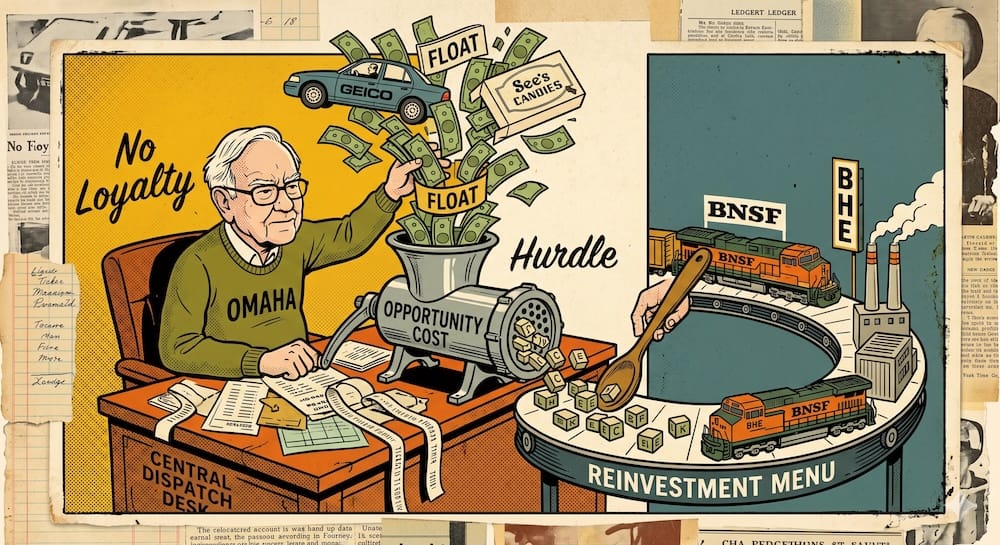
The architecture is built on a clear division of labor. Subsidiary CEOs maintain genuine, broad control over everyday business decisions: hiring, firing, marketing, pricing, and product strategies. They do not have to endure endless performance reviews from young MBAs sent from corporate. However, they do not have final authority over surplus capital allocation.
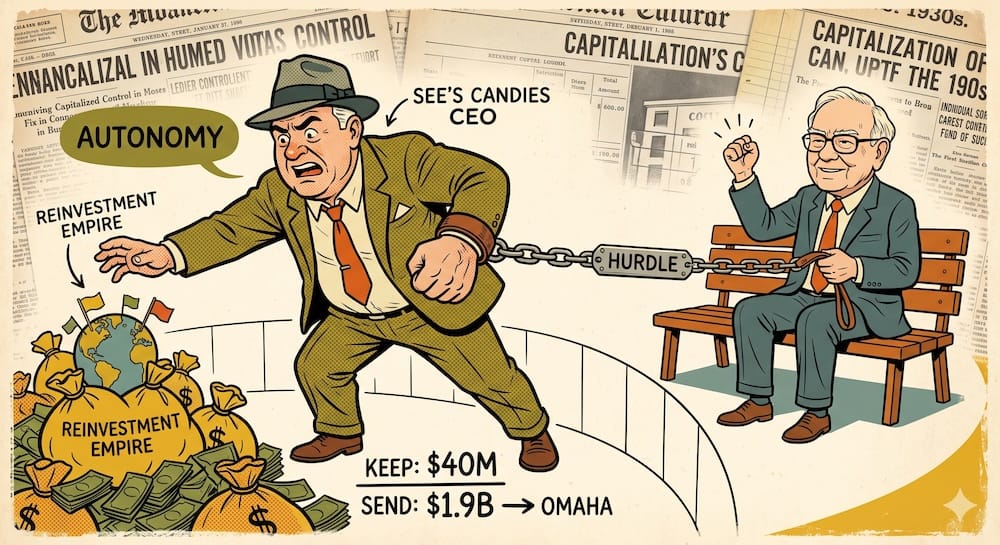
Look at See’s Candies, purchased in 1972 through Blue Chip Stamps—the Buffett/Munger-controlled vehicle that later became part of the core Berkshire ecosystem. From 1972 to 2014, See’s was an elite business, requiring only about $40 million of additional capital to be reinvested back into its operations. Over that same 42-year window, it generated roughly $1.9 billion in cumulative pre-tax profits.
In a standard corporate setup, an executive team that produces $1.9 billion is given a massive capital budget to conquer new continents or buy unrelated companies to build an empire. At Berkshire, that cash was sent away. Surplus cash above operating needs and attractive local reinvestment opportunities can be routed back to Omaha, making it available for redeployment into higher-compounding assets across the broader system. Autonomy worked precisely because it had a fence around it: managers were free to run their businesses, but they were prevented from building capital-destroying empires.
The Tiny Headquarters Was Not a Cute Detail
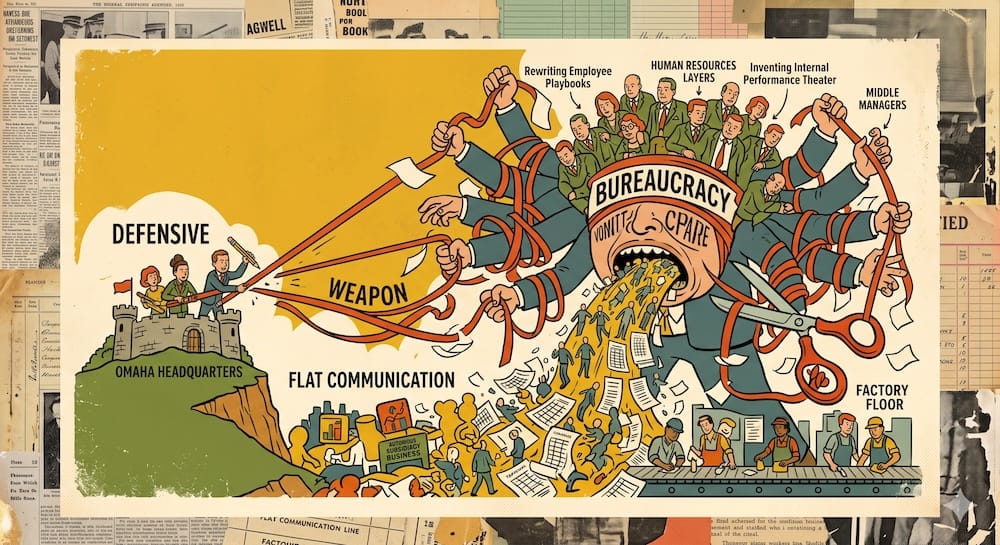
The fact that Berkshire’s central headquarters operates with a tiny team of fewer than 30 people is usually treated as a quirky trivia point. I think people misread this completely. A tiny corporate staff is not just a cost-saving measure; it is a critical defensive weapon that keeps the culture durable.
When a corporate headquarters expands into thousands of people, bureaucracy begins to justify its own existence. You get human resources layers rewriting employee playbooks, compliance teams inventing internal performance theater, and middle managers demanding committees to review basic operating decisions.
By keeping the central desk tiny, Berkshire eliminated these corporate politics. There are no massive internal strategy departments in Omaha looking at spreadsheets trying to colonize subsidiary businesses. This structure forces autonomy onto the subsidiaries because a tiny team physically cannot micro-manage them. It keeps the lines of communication flat, removes layers of administrative friction, and ensures that the people making the operational decisions are the ones actually standing on the factory floor.
No Synergy Theater, No Spreadsheet Colonization
One of the quickest ways normal corporate conglomerates destroy value is through forced synergy. The executive suite buys a software company, a manufacturing plant, and an insurance broker, and then forces them into endless integration meetings to “cross-sell” or share back-office databases.
Berkshire has historically treated this kind of corporate integration as a value-destroying distraction. There is zero synergy theater. A manager at See’s Candies is not expected to collaborate with the engineering team at BNSF Railway or cross-promote insurance policies for GEICO.
This refusal to colonize subsidiaries with corporate spreadsheets creates structural durability. Each business remains an independent operating unit, protected from the mistakes or cultural baggage of its sibling companies. If one subsidiary faces a cyclical downturn, it doesn’t drag the others into an expensive, bureaucratic rescue mission. They don’t waste time trying to force round pegs into square holes just to satisfy a corporate presentation slide deck.
Incentives With Teeth: The Capital Charge System
If you take away a manager’s surplus cash and ban them from corporate stock options, you need an exceptionally strong mechanism to keep them motivated. Berkshire has historically solved this by avoiding parent company equity packages entirely. They don’t want a manager’s pay to fluctuate based on broader public stock market swings that have nothing to do with their daily work.
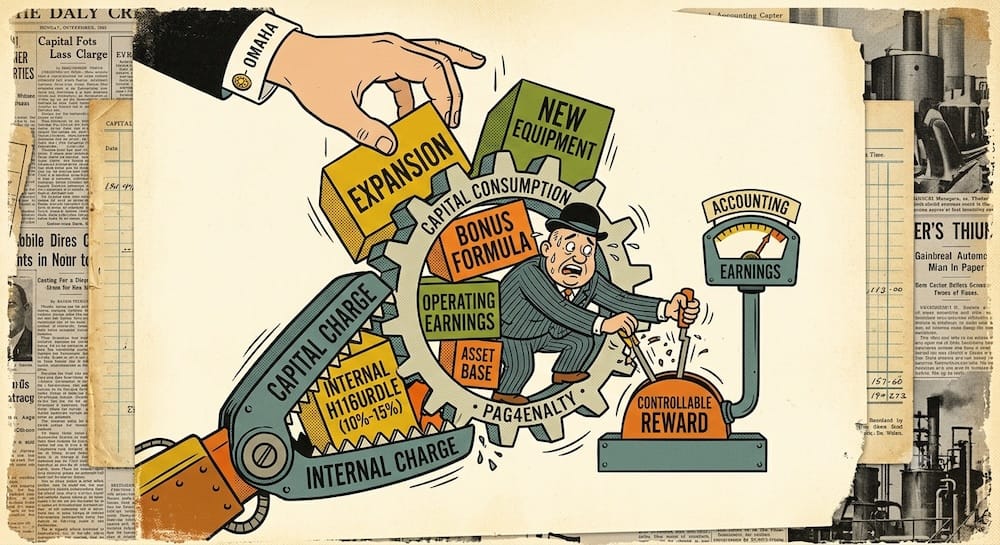
Instead, Berkshire has historically used customized compensation arrangements that tie managers directly to the economic reality of what they can control. While these formulas are bespoke, they frequently include a built-in penalty for capital consumption:
Controllable Reward = Operating Earnings \ Internal Capital Charge
In examples discussed in historical reports, an internal capital charge—often described in the 10%–15% range—appears as the relevant hurdle rate charged against the net assets used by that business.
If a subsidiary manager wants to expand a warehouse or purchase new equipment, Omaha does not issue a blanket refusal. They provide the funds, but that capital is added to the subsidiary’s balance sheet asset base, triggering the internal capital charge against the manager’s bonus formula. If the new project fails to yield an operating return higher than that hurdle rate, the manager’s economics can suffer even if reported accounting earnings rise. This is the culture’s enforcement layer. It is a system that treats managers like owners by ensuring that capital is never treated as a free resource.
Reputation Was the Invisible Rulebook
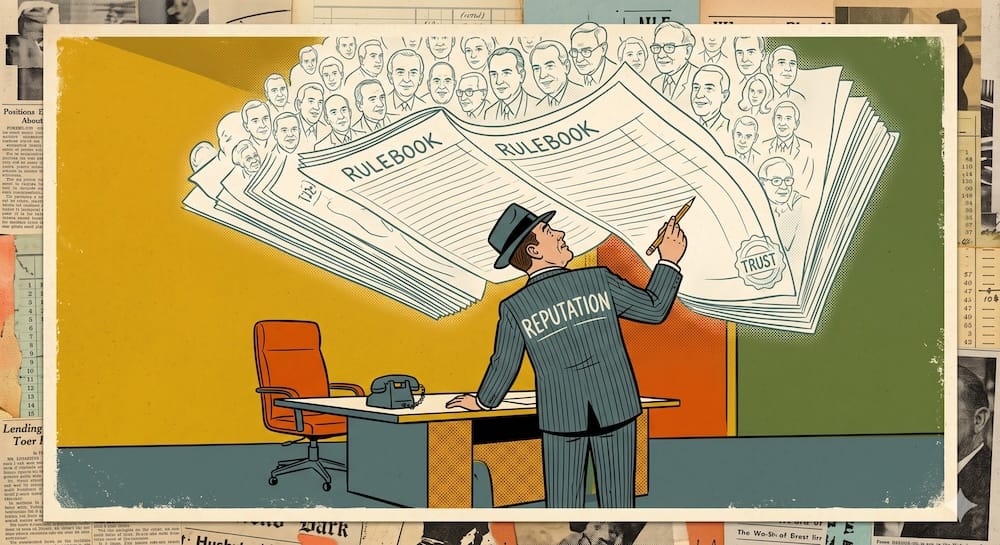
I’d be careful about looking at this framework and assuming it’s a cold, rules-only environment. Trust was real, but it wasn’t sentimental. It was backed by intense reputation pressure.
Because there are no massive legal compliance departments watching every manager’s email, the entire system relies on selecting executives who do not need daily babysitting. Buffett’s manager selection process focuses heavily on finding operators who already have a proven record of running a business with integrity and who are motivated by operational pride rather than just money.
The deal is implicit: you get near-total operating freedom, but if you cross an ethical line or cause systemic reputational damage to the Berkshire name, the enforcement is swift and unforgiving. Reputation acts as the invisible rulebook. It is a low-bureaucracy, high-consequence architecture where the absence of daily red tape creates a deep sense of personal responsibility among the executives.
Permanent Ownership Made the Culture Attractive to Sellers
A durable culture cannot exist in a vacuum; it needs a steady supply of high-quality businesses to feed the system. This is where Berkshire’s promise of permanent ownership becomes its greatest business acquisition tool.
When a founder-manager sells their business to a standard private equity fund or a normal corporate competitor, they know the playbook: the buyer will cut costs, fire legacy staff, force synergy integration, and flip the company to someone else within five to seven years. For a founder who spent decades building a corporate culture, that is a depressing outcome.
Berkshire offered a completely different seller experience. The pitch was permanent:
- Signaled a strong preference for permanent ownership without short-term exit plans.
- No forced integration or corporate restructuring.
- The founder can keep running the business exactly how they always have, free from quarterly Wall Street guidance pressures.
This structural promise attracted a specific type of high-quality business owner who cared about their company’s long-term home, allowing Berkshire to buy elite, cash-generating enterprises at fair prices without entering expensive public bidding wars.
Why the Culture Survived Drawdowns and Public Criticism
A major reason normal corporate cultures break down is that they are managed around short-term expectations. If a public company misses its quarterly earnings estimates by two cents, Wall Street analysts panic, the stock drops, and executives face immense pressure to change their strategy or cut long-term investments to satisfy the next 90 days.
This is the part I find underrated. A culture is easy to praise when the stock is working. The real test is whether the culture survives looking stupid in public. Berkshire’s architecture was intentionally designed to ignore public-market performance theater, surviving long periods of market pressure without being forced into bad short-term decisions.
| Drawdown Period | Peak-to-Trough Drop (Class A Shares) | Total Duration Under Water to New Highs | Underlying Market Context & Catalysts |
| 1973–1975 | -58.7% | ~33 Months | 1973–1974 bear market, severe inflation, OPEC oil shock. |
| 1987 | -37.1% | ~14 Months | October 1987 portfolio flash crash liquidation event. |
| 1998–2000 | -48.9% | ~26 Months | Peak speculative dot-com mania asset rotation out of value frameworks. |
| 2008–2009 | -52.1% | ~38 Months | Great Financial Crisis systemic banking and liquidity insolvency crash. |
During the late-1990s tech bubble, Berkshire endured a severe relative-performance gap, lagging badly as money chased high-multiple tech names. The financial press did what the financial press does when patience stops looking photogenic: it started asking whether Buffett had lost the plot. In a normal open-ended investment fund, that level of tracking error would cause massive client redemptions, forcing the manager to liquidate assets to pay back investors.
Because Berkshire uses a permanent corporate structure backed by long-term insurance liabilities, there was no redemption mechanism. Protection from fund-style forced selling during market drawdowns meant Buffett did not have to liquidate underlying assets to satisfy anyone. He could look wrong in public without being forced to make the portfolio wrong in private, preserving the culture’s long-term orientation when the rest of the market was panicking.
Where the Culture Can Break or Weaken
I actually think this is the honest downside of the Berkshire model. Low bureaucracy is wonderful until the wrong person abuses the freedom. It is a vulnerable system if manager selection fails.
When you don’t have layers of internal audit committees monitoring every move, you are deeply dependent on the honesty of your managers. If selection fails, the lack of bureaucratic oversight can allow bad underwriting practices or compliance blind spots to remain hidden for years before headquarters can react.
Second, the system creates natural friction with local executives who want to build an empire. Centralizing cash means high-performing managers occasionally get frustrated watching their surplus cash flow get routed to Omaha rather than being left under their own control.
Finally, scale remains an absolute gravitational force. As Berkshire has grown into a massive enterprise, it has been forced to buy capital-intensive, regulated utilities and infrastructure assets—like the acquisition of BNSF Railway, which was announced in 2009 and completed in 2010. As the business becomes more institutional and capital-heavy, transmitting a flat, trust-based culture across hundreds of thousands of decentralized employees becomes an increasingly difficult battle.
What Actually Travels From Berkshire’s Culture?
So what do I actually take from this as a DIY investor? Not “copy Berkshire.” Please don’t. If you try to copy Berkshire’s strategy literally inside a modern individual brokerage account, you will run into severe friction. You don’t possess a multi-billion-dollar insurance float engine, and shifting cash between different taxable lines triggers an immediate tax drag that eats away at your compounding power.
Instead of trying to copy the corporate structure, a DIY portfolio builder should translate these mechanisms into core conceptual guidelines:
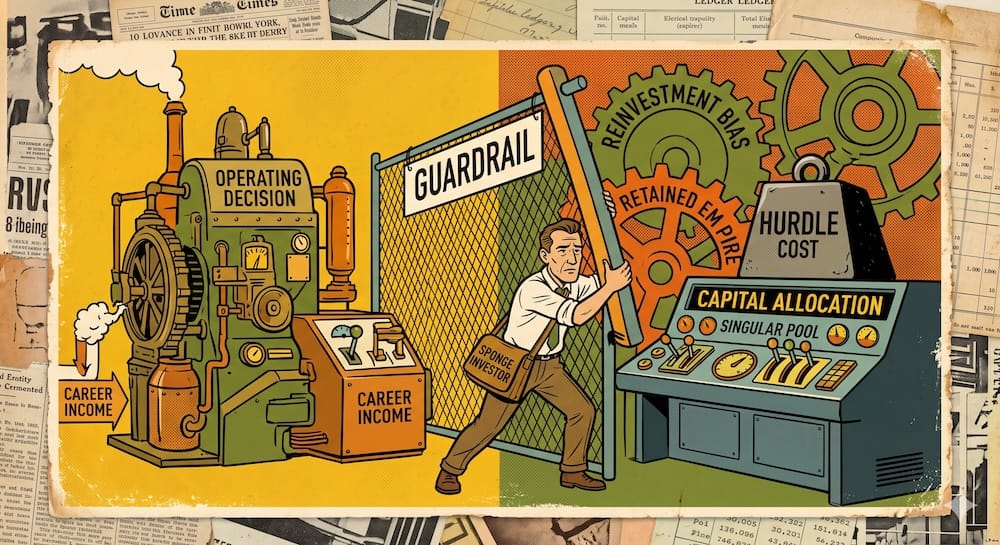
- Separate Operating Decisions From Capital Decisions: Treat your income generation (your career or business operations) as a completely separate discipline from your capital allocation (your portfolio desk).
- Avoid Letting Every Portfolio Sleeve Become Its Own Little Empire: Avoid letting every single investment line item automatically reinvest its payouts back into the same asset out of simple habit. Centralize your capital cash flow into a singular pool so you can intentionally choose where the next marginal dollar goes.
- Apply Opportunity Cost to New Capital: The principle is to require a real margin of safety before adding new capital to an existing sleeve or a new idea, evaluating it against an explicit opportunity cost or a simple index baseline alternative.
- Do Not Confuse Trust With Lack of Measurement: True autonomy requires clear guardrails. You can trust your long-term plan and give your assets room to breathe during market volatility, but you must measure performance based on real economic profit, not short-term market noise.
I think this is the part of Berkshire culture worth stealing conceptually: not the folklore, not the annual meeting warmth, not the idea that everyone should be left alone forever. The real lesson is narrower and more useful. Give autonomy where the operator has skill. Put guardrails around capital. Keep bureaucracy from breeding for its own sake. And don’t confuse trust with pretending incentives don’t matter.
Berkshire Culture Stack Matrix
| Culture Layer | What Berkshire Did | Why It Created Durability | Hidden Risk |
| Manager Autonomy | Broad control over operations, hiring, and product lines given to local executives. | Eliminates corporate red tape; keeps business decisions fast and adaptable. | Operational issues or local compliance errors can stay hidden from headquarters. |
| Centralized Capital Allocation | Surplus cash above operating needs and attractive local reinvestment opportunities can be routed back to Omaha. | Prevents local managers from executing value-destroying acquisitions or expansion projects. | Can cause frustration among ambitious executives who want local capital control. |
| Tiny Headquarters | Maintained a central staff of fewer than 30 corporate employees. | Destroys internal corporate politics and eliminates bureaucratic box-checking layers. | Limited central oversight leaves the firm entirely dependent on manager integrity. |
| No Forced Synergies | Allowed subsidiaries to operate as largely independent business entities. | Protects healthy operating units from being distracted by a sibling company’s problems. | Misses genuine, low-hanging cost-saving integration opportunities. |
| Permanent Ownership | Signaled a strong preference for permanent ownership. | Attracts elite, long-term business founders who refuse to sell to private equity flippers. | Keeps capital tied up in slow-growth, scale-challenged corporate segments. |
| Reputation Discipline | Maintained severe consequences for ethical breaches while ignoring operating mistakes. | Creates an implicit, high-consequence behavioral rulebook without daily corporate red tape. | Hard to scale effectively across hundreds of thousands of decentralized employees. |
| Capital-Charge Incentives | Tied executive bonuses to earnings minus a direct charge for capital used. | Forces managers to treat capital as an expensive resource rather than free corporate money. | Can incentivize short-term asset reduction if the formula is designed poorly. |
| No Quarterly Guidance | Systematically refused to provide earnings projections or manage around short-term expectations. | Insulates the operating culture from public market panic and short-term Wall Street games. | Can cause multi-year periods of tracking error and public investor confusion. |
Autonomy With Teeth Matrix
| What Managers Controlled | What Omaha Controlled | Why This Worked | Failure Mode |
| Local hiring, corporate culture, everyday pricing, product design, and brand marketing. | Final allocation of all surplus free cash flow, central corporate funding, and major acquisition terms. | Managers could focus entirely on serving customers without enduring corporate spreadsheet colonization. | A corrupt or incompetent manager can degrade a local brand before Omaha notices. |
| Setting internal subsidiary budgets and managing local capital maintenance projects. | Determining the mandatory hurdle rate and structural capital charges applied to the balance sheet. | Executives were free to request cash, but they had to pay a strict internal economic price for it. | High hurdle rates can discourage necessary long-term infrastructure improvements. |
| Customer service standards and local brand reputation. | Parent-level reputational tolerance and final selection of top managers. | Managers owned the customer relationship without daily interference. | A local issue can damage the Berkshire name before headquarters reacts. |
| Day-to-day staffing, shift scheduling, and local workspace culture. | Selection, retention, and final compensation adjustments for top-tier entity CEOs. | Keeps local corporate culture intact after an acquisition occurs. | Bad manager selection becomes much more costly due to the lack of daily babysitting. |
Berkshire vs. Normal Corporate Culture
| Dimension | Normal Conglomerate | Berkshire Culture | Why It Mattered |
| Headquarters Size | Thousands of administrators, analysts, strategy VPs, and HR compliance officers. | Fewer than 30 people total managing a trillion-dollar corporate footprint. | Eliminates internal corporate politics, committees, and bureaucratic empire-building. |
| Budgeting | Annual multi-month battles over corporate line items and micro-managed division targets. | Flat, open-ended requests centered around explicit, long-term capital charge hurdles. | Speeds up execution times and keeps operators focused on business reality rather than spreadsheet theater. |
| Synergies | Forced cross-selling and centralized integration initiatives that distract staff. | High operational independence; sister companies treat each other as third parties. | Avoids value-destroying coordination friction and limits systemic operational risk contagion. |
| Wall Street Guidance | Quarterly earnings calls, regular investor presentations, and detailed short-term guidance. | Complete refusal to provide quarterly projections or participate in short-term market games. | Protects the corporate culture from being forced to make bad long-term decisions to hit a 90-day print. |
| Compensation | Corporate-wide stock option packages linked directly to parent stock performance. | Customized compensation arrangements tied explicitly to controllable subsidiary economics. | Ensures manager motivation is completely decoupled from broader market volatility. |
| Acquisition Integration | Intrusive post-merger restructurings, brand assimilation, and systems migration. | Immediate operational isolation; preservation of existing branding and leadership. | Retains the exact core competencies and management that made the asset valuable initially. |
| Seller Experience | Institutional negotiations with corporate flippers aiming for a 5-to-7 year structural exit. | Bespoke structural home promising permanent ownership and zero strategic flipping. | Attracts high-grade family founders who refuse to surrender their legacy to standard buyers. |
| Capital Allocation | Retained earnings held inside business units or managed via rigid departmental budgets. | Complete centralization of all excess cash flow to a single allocation desk. | Moves excess capital out of low-growth operations and routes it instantly to high-return assets. |
🛑 Educational Trade-Off Note
Analyzing Berkshire’s culture demonstrates that high trust and operational autonomy are only sustainable when paired with unyielding capital discipline and a permanent capital base. For an individual portfolio builder, attempting to grant absolute freedom to volatile asset classes without implementing clear guardrails, opportunity cost hurdles, and cash-flow centralization can become a direct path to behavioral failure. Autonomy requires clear guardrails, or it quickly transforms from an elite operating system into a vector for permanent capital impairment.
How can a retail investor replicate Berkshire Hathaway corporate culture inside a personal portfolio?
It depends on your setup, but you have to translate the architecture conceptually rather than literally. You cannot replicate a multi-billion-dollar insurance float engine or source private preferred stock warrants in a normal brokerage account. However, you can act as your own central allocation desk. This means treating your career earnings, dividends, and distributions as a singular pool of unallocated capital that flows upward to you, rather than letting individual portfolio sleeves automatically reinvest their cash back into the same asset out of simple habit.
What is the minimum portfolio size required to implement Berkshire’s capital charge framework?
There is no minimum baseline, because the concept is purely mathematical. You can apply an internal capital charge to a five-thousand-dollar account just as easily as Berkshire applies it across billions. The trick is psychological discipline: before you add new capital to an existing portfolio sleeve or execute a new investment idea, you must deduct an implicit opportunity cost hurdle—such as an 8% baseline index return—from your tracking metrics. If the investment cannot realistically clear that hurdle, you refuse to allocate the capital.
Does executing a decentralized portfolio model cause severe tax drag for individual DIY investors?
Yes, if it is executed inside a standard taxable brokerage account. When Berkshire moves millions of dollars from a wholly owned subsidiary like See’s Candies up to Omaha, it occurs inside a consolidated corporate wrapper, meaning the distribution does not trigger immediate dividend or capital gains taxes. If a retail investor manually sweeps cash distributions across separate taxable accounts, Uncle Sam takes a cut at every step. To avoid this frictional drag, modern portfolio builders should keep their centralized allocation desk activities focused entirely within tax-sheltered shells like a Roth IRA or 401k.
How do you calculate economic profit versus standard GAAP accounting returns in a personal portfolio?
The math is straightforward but unforgiving. Standard accounting look-through earnings simply show you whether your investments went up or down on paper. To calculate true economic profit, you must subtract a capital charge for the assets utilized. For instance, if you allocate ten thousand dollars of your capital to a concentrated equity position and it returns 6% over a period where a simple, low-cost index fund baseline returned 10%, your accounting return is positive, but your economic profit is negative 4%. You have consumed capital inefficiently relative to your alternative opportunity cost.
What are the primary operational risks of giving portfolio components too much autonomy?
The biggest danger is that decentralized autonomy can hide deep structural flaws until it is too late. Inside Berkshire, giving managers broad control means central headquarters can miss localized underwriting issues or operational blind spots if manager selection fails. For a retail investor, giving an asset sleeve “room to breathe” without clear, automated guardrails can cause you to hold onto deteriorating companies or drifting asset classes under the false psychological comfort that you are simply practicing Warren Buffett’s long-term patience.
Why doesn’t Berkshire use corporate stock options to incentivize its subsidiary managers?
Not exactly. Berkshire avoids parent-level stock options because they want to eliminate performance theater. A manager running a brick-and-mortar manufacturing plant has zero control over whether global macro factors or public market panic cause Berkshire’s Class A shares to fluctuate. If the stock drops during a market panic, the manager’s options become worthless despite their local business running flawlessly. By tying bonuses strictly to customized subsidiary economics—operating earnings minus an internal capital charge—Omaha ensures that executives are compensated entirely on what they can actually see and control on their own factory floors.
How does permanent capital structure protect a portfolio’s internal culture during market corrections?
It completely eliminates redemption risk. During a severe market capitulation—like Berkshire’s 52.1% drop during the Great Financial Crisis—a traditional open-ended fund faces panicked client cash-outs, forcing the manager to liquidate high-conviction positions at the absolute bottom of the cycle. Because Berkshire is a permanent corporate wrapper funded by stable insurance liabilities, Buffett can look wrong in public without being forced to make the portfolio wrong in private. The culture remains durable because nobody has the structural power to force a margin call or a capital liquidation.
This article is also available in Spanish. [Leé la versión en castellano: La cultura corporativa de Berkshire Hathaway bajo Warren Buffett y por qué fue tan duradera]