
Equity futures swing trading is not a cozy corner of the investing universe. It is leveraged, time-sensitive, emotionally loud, and brutally honest when a thesis is wrong. That is exactly why Jimmy Balodimas is an interesting figure to study: not because the goal is to copy every trade, but because his public framework keeps circling back to timing, risk boxes, technical structure, and the discipline to stop arguing with price. To my eyes, that is the useful part of his trading principles: the trade is not just an opinion with a chart attached. It is a defined exposure with an entry, an invalidation point, a position size, and a behavioral contract.
source: Ben de Bourse Ensemble on YouTube
Who Is Jimmy Balodimas?
Jimmy Balodimas is described as a trader with over two decades around equity futures and swing trading. The useful lens here is not celebrity profile fluff. It is process. His style, at least as presented in the source material, combines technical analysis, risk management, and psychological discipline in a way that forces every market idea through a practical filter: where is the setup, where is the stop, what is the expected payoff, and what happens if the market does the annoying thing first?
The most useful primary-source anchor is Jack Schwager’s Hedge Fund Market Wizards, where publisher listings place Balodimas in the Equity Traders section under the chapter title “Stepping in Front of Freight Trains.” That phrase matters. The chapter summary points to the uncomfortable mechanics: selling into uptrends, buying into downtrends, adapting when the tape changes, adjusting position size against market fluctuations, and avoiding euphoria when a trade starts working. That is a very different animal from polite trend-following with a tidy checklist. It is a study in pressure reading, sizing discipline, and crowd positioning while still needing a risk box tight enough to survive being early. Honestly, that is the part I would absorb. Not the legend. The mechanism.

- Career Framing: The cleaner public anchor is Balodimas as an equity trader profiled by Schwager, not a generic commodity-pit origin story. The practical lesson is still the same: strategy has to beat impulse, especially when leverage turns small mistakes into loud ones.
- Evolution as a Trader: Over the years, he transitioned from day trading to swing trading, finding his niche in capturing medium-term market movements.
- Influence on Others: His broader influence comes less from a public product ecosystem and more from the way his process is studied through interviews, trader discussions, and the Market Wizards tradition.

The Art of Swing Trading
Swing trading sits between intraday scalping and long-term position holding. The basic idea is to capture an overnight-to-multi-week move without needing to stare at every tick, but that does not make it relaxed. Futures add leverage, contract sizing, margin requirements, gap risk, daily mark-to-market mechanics, and the possibility that a technically “correct” idea still gets shaken out before it works. That is the uncomfortable part. The chart can be elegant; the execution can still feel like a bar fight.
Here is the contract reality that keeps me from treating equity futures like ordinary stock-chart doodling: CME materials list the E-mini S&P 500 futures contract as $50 × the S&P 500 Index, while the Micro E-mini S&P 500 is $5 × the S&P 500 Index. That multiplier is not a trivia detail. It is the engine under the hood. A one-contract decision can represent far more market exposure than the cash posted as margin, so the trade plan has to start with notional exposure, not just account balance or candle pattern.
| Contract | Multiplier | Minimum Tick | Tick Value | Practical Reality |
|---|---|---|---|---|
| E-mini S&P 500 futures | $50 × S&P 500 Index | 0.25 index points | $12.50 | A small-looking chart move can create a very real dollar swing. |
| Micro E-mini S&P 500 futures | $5 × S&P 500 Index | 0.25 index points | $1.25 | The smaller contract can make process practice more granular, but it does not remove leverage, gap risk, or the need for defined invalidation. |
- Equity Futures Explained: This discussion centers on equity index futures—a derivative contract representing an agreement to buy or sell index exposure, like S&P 500 futures, at a future date. The wrapper matters because notional exposure, margin, tick value, and liquidity hours shape the risk long before the chart pattern does.
- Leveraging Volatility: By focusing on swing trading within this market, he leverages price volatility to his advantage, trying to capture significant price movements without the need to hold positions for extended periods.
- Advantages of Swing Trading: This approach allows for flexibility, reduced stress compared to day trading, and the potential for large returns by capturing the ‘swings’ in the market.
Why Is His Approach Significant?
Balodimas’s approach is significant because it turns a potentially chaotic market into a checklist-driven process. That does not make equity futures easy. It simply makes the decision tree less emotional: define the setup, define the risk, size the contract exposure, know the exit, and avoid improvising after the trade is already open.
- Structured Trading Plan: He emphasizes the importance of having a clear, well-defined trading plan that outlines entry and exit strategies, risk parameters, and goals.
- Risk Management: Recognizing that preservation of capital is paramount, his strategies include strict risk management techniques to protect against significant losses.
- Emotional Control: Balodimas understands that emotions can be a trader’s worst enemy. His methods teach how to maintain psychological discipline, avoiding impulsive decisions driven by fear or greed.
- Adaptability: In volatile markets, quick decision-making and the ability to adapt to changing conditions are crucial. His approach equips traders with the tools to respond effectively to market shifts.
Jimmy Balodimas and Swing Trading
For me, the better question is not “how do we copy Jimmy Balodimas?” It is “what mechanics can a self-directed investor or trader extract from his process without turning it into hero worship?” This article focuses on:
- Examine Jimmy Balodimas’s Trading Strategies: We’ll study his core principles and how they contribute to his success, highlighting process ideas a reader can study without treating them as instructions.
- Understand His Approach to Equity Futures: Study how the process appears to organize market information, including technical analysis, market sentiment, and the discipline to avoid turning a chart into a permission slip.
- Translate the Process Into a Personal Framework: Consider how a Balodimas-inspired checklist could be used for educational planning, with emphasis on risk boundaries, emotional friction, and what breaks when the plan meets live markets.
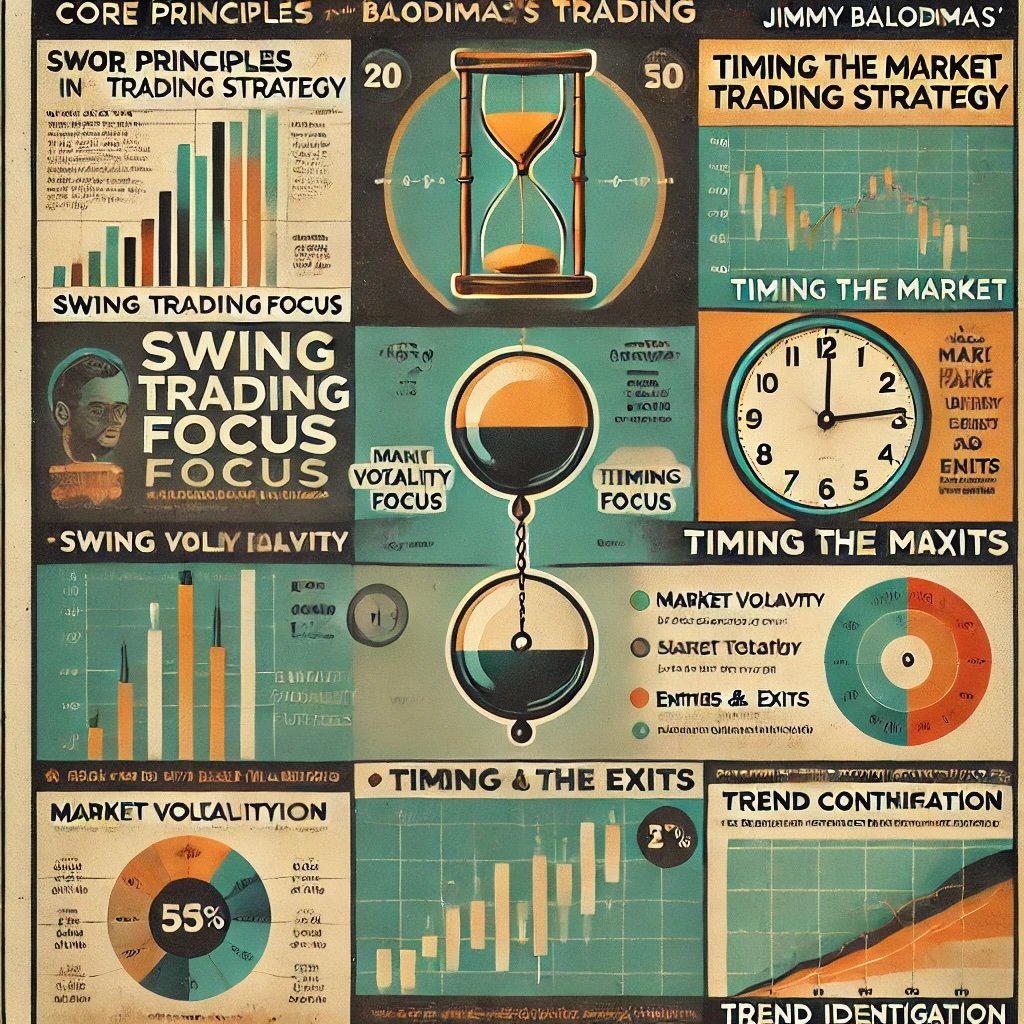
Core Principles of Jimmy Balodimas’s Trading Strategy
To study Jimmy Balodimas intelligently, I would start with the core principles that underpin his trading strategy. The point is not to turn them into commandments. The point is to see how each piece behaves under pressure: trend identification without prediction addiction, risk management without false precision, and discipline without becoming rigid when the regime changes.
Swing Trading Focus
At the heart of Balodimas’s strategy is swing trading. That means the trade usually needs enough time to breathe, but not so much time that the original thesis becomes stale. In equity futures, this matters because leverage compresses the emotional timeline. A 1% index move can feel very different when it is expressed through futures contracts, especially when the stop is wide, volatility is expanding, and the market keeps poking the invalidation level before finally choosing a direction.
Timing the Market
- Market Volatility Leverage: Balodimas leverages market volatility to enter and exit positions within days or weeks, maximizing profit potential while minimizing exposure.
- Strategic Entries and Exits: By identifying key moments when the market is likely to swing, he positions himself ahead of significant price movements.
- Avoiding Noise: Swing trading helps him avoid the ‘noise’ of intraday fluctuations, focusing instead on more meaningful trends.
Trend Identification
- Emerging Trends: He focuses on identifying emerging trends early to maximize profit potential, using tools like moving averages and trendlines.
- Trend Continuation Patterns: Recognizes patterns that indicate the continuation of a trend, allowing him to ride the wave longer.
- Reversal Signals: Equally adept at spotting potential trend reversals, enabling timely exits or opportunities to short the market.
Flexibility
- Adaptable Strategy: His approach allows for adaptability, making it easier to respond to changing market conditions without being locked into long-term positions.
- Market Conditions: Whether the market is bullish, bearish, or sideways, his swing trading strategy can be adjusted to try to capture prevailing conditions.
- Risk Adjustment: Flexibility extends to adjusting risk parameters based on volatility and other market factors.
By concentrating on swing trading, Balodimas avoids some of the noise of intraday trading while also avoiding the open-ended commitment of long-term positioning. But this is still not a free lunch. Overnight gaps, weekend event risk, futures margin, and the temptation to move stops all become part of the lived mechanics. That balance may suit his trading style and risk tolerance, but the key lesson is the framework, not the fantasy that swing trading is automatically calmer.
Risk Management
Balodimas places a strong emphasis on capital preservation. I love that because futures punish vague sizing. A setup can look beautiful and still be too large for the account, too close to a volatility spike, or too dependent on a stop that sits exactly where the market is likely to hunt for liquidity. Risk management is not a decorative layer. It is the trade.
Stop-Loss Orders
- Limiting Potential Losses: He consistently uses stop-loss orders to limit potential losses, setting them at strategic levels based on technical analysis.
- Automated Protection: Stop-loss orders act as an automatic safeguard, executing trades without the need for constant monitoring.
- Emotional Detachment: By predefining exit points, he removes emotional interference from the decision-making process.
Position Sizing
- Risk Per Trade: Balodimas carefully calculates the size of each position based on his risk tolerance, often limiting risk to a small percentage of his total capital (e.g., 1-2% per trade).
- Volatility Consideration: Adjusts position sizes according to market volatility, reducing exposure during turbulent times.
- Diversification: Spreads risk across multiple positions and markets to avoid overexposure to a single asset.
Risk-to-Reward Ratio
- Favorable Ratios: He ensures that each trade has a favorable risk-to-reward ratio, typically aiming for at least 1:2 or higher. This means that the potential reward is at least twice the potential risk.
- Consistency Over Time: By maintaining a favorable ratio, even a lower win rate can lead to overall profitability.
- Strategic Planning: Incorporates risk-to-reward considerations into his trade planning, not just as an afterthought.
This disciplined approach to risk management is less about sounding prudent and more about staying solvent enough to keep making decisions. A trader who survives a bad sequence with the process intact still has optionality. A trader who sizes emotionally may be mathematically right on the next idea and still unable to take it. Yikes. That is why the boring stuff matters.
| Risk Lever | Mechanical Question | Behavioral Friction |
|---|---|---|
| Position size | How many contracts match the distance from entry to invalidation? | The trade feels smaller than the ego wants when the setup looks obvious. |
| Stop placement | Where is the thesis wrong, not merely uncomfortable? | A stop close enough to feel safe may be exactly where ordinary noise lives. |
| Reward target | Does the expected payoff compensate for the defined risk? | The market may offer partial profit before the full target, tempting rule drift. |
| Volatility filter | Should size fall when range expands? | High-volatility markets make small positions feel unsatisfying but necessary. |
Technical Analysis
Technical analysis is a cornerstone of Balodimas’s trading strategy, but the better interpretation is not “indicators predict the future.” To my eyes, technical tools are useful because they organize risk. They identify levels where a thesis can be tested, rejected, resized, or exited. That is very different from using a chart pattern as a magic eight ball.
Chart Patterns
- Pattern Recognition: He studies patterns like flags, pennants, head and shoulders, and wedges to predict price movements.
- Historical Context: Understands that certain patterns have historically led to predictable outcomes, leveraging this knowledge to anticipate future movements.
- Combination of Patterns: Often looks for confluence where multiple patterns or signals align, increasing the probability of a successful trade.
Support and Resistance Levels
- Key Price Levels: Identifying these levels helps him determine optimal entry and exit points, as prices often react predictably when approaching support or resistance.
- Psychological Barriers: Recognizes that these levels can act as psychological barriers for market participants, influencing buying and selling behavior.
- Dynamic Adjustments: Adjusts support and resistance levels as new data emerges, ensuring his analysis remains current.
Indicators
- Relative Strength Index (RSI): Utilizes RSI to identify overbought or oversold conditions, signaling potential reversals.
- Moving Averages: Uses moving averages (e.g., 50-day, 200-day) to smooth out price data and identify trend directions.
- MACD and Stochastic Oscillator: Employs these momentum indicators to assess the strength and direction of trends.
- Bollinger Bands: Analyzes volatility and potential price breakouts or breakdowns.
By using technical analysis, Balodimas attempts to make decisions from observable market behavior rather than from vibes, headlines, or revenge. The caveat is important: technical analysis can still become emotional if a trader keeps adding indicators until the chart agrees with the trade. Clean signals, limited tools, and predefined invalidation points are what give the framework its teeth.
Discipline and Consistency
Balodimas attributes much of his success to sticking to a structured trading plan. That sounds simple until the market is moving fast, the last trade was a loser, and the next candle is begging the trader to improvise. Discipline is not personality branding. It is the repeated act of doing the prewritten thing when the emotional thing looks more satisfying.
Trading Plan Adherence
- Predefined Rules: He follows his predefined rules for entry, exit, and risk management without deviation.
- Objective Criteria: Ensures that all trading decisions are based on objective criteria, reducing the influence of biases.
- Routine Execution: Maintains a consistent approach to analyzing markets and executing trades, which helps in measuring performance and making adjustments.
Emotional Control
- Avoiding Impulsive Decisions: Balodimas avoids making impulsive decisions driven by fear or greed, recognizing that emotions can cloud judgment.
- Stress Management Techniques: Employs methods like meditation, exercise, and adequate rest to maintain mental clarity.
- Mindfulness: Practices being present and fully engaged during trading sessions, enhancing focus and decision-making.
Routine
- Daily Analysis: He maintains a consistent daily routine for market analysis, including reviewing charts, news, and economic indicators.
- Preparation: Prepares for trading sessions by setting goals and identifying potential opportunities in advance.
- Reflection: Allocates time for post-trade analysis to learn from successes and mistakes.
Discipline keeps the sample size clean. That is the mechanical benefit. If every loss leads to a rule change, the trader never actually learns whether the process works. Consistency does not guarantee profits, but it does create interpretable data: which setups work, which regimes hurt, where sizing is too aggressive, and where psychology is leaking into execution.
Continuous Learning
While not explicitly stated in his core principles, continuous learning is implicit in Balodimas’s strategy. Markets do not hand out permanent edges. A process that works in a clean trend can get chopped to pieces in a range. A volatility filter that helped last month can make the trader late this month. The work never really ends.
Market Analysis
- Staying Updated: He stays updated on market trends, news, and economic indicators that could affect equity futures.
- Global Perspective: Understands that global events can have ripple effects on local markets, incorporating this awareness into his analysis.
- Technological Advances: Keeps abreast of new tools, platforms, and technologies that can enhance trading efficiency.
Self-Reflection
- Reviewing Past Trades: Regularly reviews past trades to identify areas for improvement, recognizing patterns in both successes and failures.
- Journaling: Maintains a trading journal that records not just the technical aspects of trades but also his emotional state and thought processes.
- Feedback Loops: Uses insights gained from reflection to adjust and refine his trading plan.
Adaptability
- Open to New Strategies: Being open to new strategies and tools keeps him ahead of the curve, allowing him to try to capture emerging opportunities.
- Flexibility in Approach: While disciplined, he is not rigid, understanding that adaptability is necessary in ever-changing markets.
- Learning from Others: Engages with other traders and industry professionals to exchange ideas and learn from different perspectives.
This commitment to learning allows Balodimas to refine his strategy over time, but refinement should not become frantic tinkering. That is the trap. A good review loop separates bad process from normal variance, missed discipline from unlucky sequencing, and genuine regime change from the ordinary discomfort of being wrong.
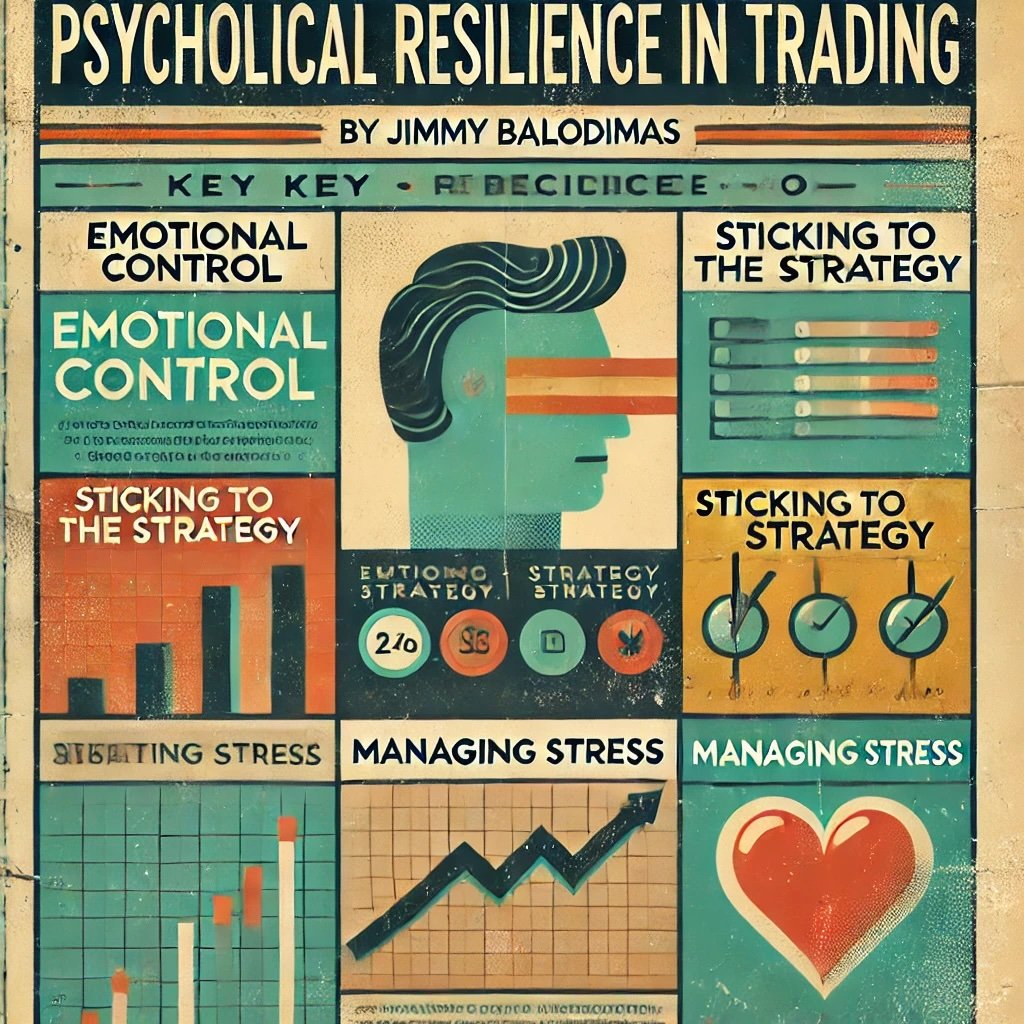
Psychological Resilience
Trading can be emotionally taxing, and Balodimas emphasizes the importance of psychological discipline. The market does not need a trader to be fearless. It needs the trader to be rule-bound when fear shows up. That is often what separates successful traders from the rest: not perfect calm, but repeatable behavior under stress.
Stress Management
- Mindfulness and Meditation: Practices techniques like meditation to maintain focus and reduce stress.
- Physical Well-being: Recognizes the connection between physical health and mental performance, ensuring adequate sleep, nutrition, and exercise.
- Work-Life Balance: Maintains a balance between trading and personal life to prevent burnout.
Avoiding Overtrading
- Quality Over Quantity: He knows when to sit on the sidelines and avoid unnecessary risks, focusing on high-probability setups.
- Recognizing Emotional Triggers: Identifies when emotions are influencing his desire to trade, such as revenge trading after a loss.
- Discipline in Action: Adheres to his trading plan, even when tempted to deviate due to boredom or overconfidence.
Confidence without Arrogance
- Trust in Strategy: Balodimas trusts his strategy but remains humble, acknowledging that losses are part of trading.
- Continuous Improvement: Sees each trade as an opportunity to learn, regardless of the outcome.
- Resilience: Bounces back from setbacks without letting them affect his overall performance or outlook.
By maintaining emotional balance, he gives the trading plan a chance to do its job. That does not mean every trade feels good. Many valid trades feel awful at some point. The discipline is in knowing which discomfort is part of the process and which discomfort is a signal that the trade no longer belongs in the book.

The Mistake I Would Expel Immediately
The lazy read is to say, “Great trader uses technical analysis, therefore I need more indicators.” No. That is backwards. To my eyes, the useful Balodimas lesson is not indicator accumulation. It is risk compression: fewer moving parts, clearer invalidation, smaller ego, cleaner feedback. A trader who keeps adding RSI, MACD, Bollinger Bands, Fibonacci levels, COT data, VIX, news feeds, and five time frames until something agrees with the trade has not built a process. They have built a permission machine.
The specific type of investor or trader who should skip a futures-style swing framework entirely is the person who cannot tolerate predefined losses, overnight gap risk, margin calls, or being wrong repeatedly without trying to win it all back. Futures do not politely wait for emotional maturity. They test it immediately. That sounds dramatic, but it is just plumbing: leverage magnifies both the chart and the personality holding the chart.
Balodimas’s Approach to Equity Futures Markets
Jimmy Balodimas’s framework matters most when it is applied to the equity futures markets, where small percentage moves can carry outsized account impact. This section looks at the working parts: trend, volatility, momentum, sentiment, macro catalysts, execution tools, and the pre-trade risk box that keeps a setup from becoming a hunch with leverage.
Analyzing Trends, Volatility, and Momentum
Balodimas uses multiple inputs, but the point is not to collect signals like souvenirs. Trend, volatility, and momentum each answer a different question. Direction. Range. Pressure. When those pieces agree, the setup is cleaner. When they conflict, the trader either reduces size, waits, or admits the trade is not clear enough.
Trend Analysis
- Identifying the Dominant Trend: He uses moving averages (such as the 50-day and 200-day) to determine the long-term and short-term trends, filtering out minor fluctuations to focus on the overarching direction.
- Multiple Time Frame Analysis: Balodimas examines charts across different time frames—daily, weekly, monthly—to get a comprehensive view. This helps in aligning short-term trades with long-term trends.
- Trend Confirmation: Indicators like the Average Directional Index (ADX) help confirm the strength of a trend, indicating whether it’s a good time to enter or if the trend is losing momentum.
Volatility Assessment
- Volatility Indicators: Tools like Bollinger Bands and the Volatility Index (VIX) provide insights into market volatility. Widening bands or a rising VIX may signal increased volatility, affecting trade timing and risk management.
- Adjusting Position Sizes: Higher volatility may lead him to reduce position sizes to manage risk, recognizing that volatile markets can lead to larger-than-expected price swings.
- Timing Entries and Exits: Volatility spikes can offer useful entry points if timed correctly, but they also require cautious exit strategies to protect profits.
Momentum Indicators
- Relative Strength Index (RSI): Helps identify overbought or oversold conditions, providing signals for potential reversals or continuations.
- Moving Average Convergence Divergence (MACD): Assists in spotting momentum shifts by comparing moving averages of different periods.
- Stochastic Oscillator: Provides signals on potential trend reversals by comparing closing prices to price ranges over a set period.
By combining these analyses, Balodimas builds a more structured view of the market’s current state. The practical benefit is not certainty. It is better triage: which trades deserve attention, which trades need smaller size, which trades should be left alone, and which trades only look attractive because the trader is bored.

Role of Market Sentiment and Macroeconomic Factors
While technical analysis is crucial, Balodimas does not ignore market sentiment and macroeconomic factors. I think this is especially important in equity futures because index contracts often reprice violently around inflation data, central bank language, employment reports, earnings breadth, and geopolitical shocks. A chart pattern that looks orderly before a macro print can become nonsense five minutes later.
Market Sentiment
- News Monitoring: He keeps an eye on financial news outlets for market-moving events, earnings reports, and geopolitical developments that could influence investor behavior.
- Investor Psychology: Understanding the collective behavior of market participants helps in anticipating price movements, especially during times of fear or exuberance.
- Sentiment Indicators: Tools like the Put/Call Ratio, Fear & Greed Index, and Commitment of Traders (COT) reports provide quantitative measures of market sentiment, offering additional layers of analysis.
Macroeconomic Factors
- Economic Indicators: Reports on GDP growth, employment data, inflation rates, and consumer confidence can influence equity futures by affecting economic outlooks.
- Central Bank Policies: Decisions from entities like the Federal Reserve impact market liquidity and sentiment through interest rate adjustments and monetary policies.
- Global Events: Geopolitical developments, trade agreements, and international conflicts can cause significant market shifts, sometimes abruptly.
Balodimas integrates this information so the technical setup is not isolated from the event calendar. That does not mean predicting every headline. It means knowing when a trade is exposed to scheduled catalysts, when volatility may widen, and when the stop distance or position size needs to respect a bigger distribution of outcomes.
Recognizing High-Probability Opportunities
Identifying higher-probability trades is a hallmark of Balodimas’s approach, but I would be careful with the phrase “high probability.” In trading, probability only matters when paired with payoff and risk. A trade can win often and still be fragile if losses are too large. A trade can win less often and still be viable if the asymmetry is strong. The math is the referee.
Pattern Recognition
- Chart Patterns: He looks for reliable patterns like double tops/bottoms, triangles, flags, and cup-and-handle formations, which historically have predictive value.
- Candlestick Analysis: Patterns like hammer, engulfing patterns, shooting stars, and dojis provide insights into market sentiment and potential reversals.
- Harmonic Patterns: Occasionally utilizes more complex patterns like Gartley or Butterfly patterns for advanced trade setups.
Support and Resistance Levels
- Key Price Levels: Identifying historical support and resistance helps in setting entry and exit points, as these levels often act as barriers or catalysts for price movement.
- Fibonacci Retracements: These levels can indicate potential reversal points by identifying areas where the market may find support or resistance based on mathematical ratios.
- Psychological Numbers: Pays attention to round numbers or significant price levels that may have psychological importance to traders.
Volume Analysis
- Confirming Movements: An increase in volume can validate a price movement, indicating strong interest and commitment from traders.
- Divergence Indicators: Discrepancies between price and volume can signal potential reversals; for example, if prices are rising on decreasing volume, it may indicate weakening momentum.
- On-Balance Volume (OBV): Uses OBV to measure buying and selling pressure, providing insight into the strength of a trend.
Setting Entry and Exit Points
- Entry Signals: Combines indicators and patterns to determine the optimal time to enter a trade, ensuring that multiple factors support the decision.
- Exit Strategies: Predefined criteria for taking profits or cutting losses include target prices based on technical levels and trailing stops to lock in gains.
- Dynamic Adjustments: Will adjust exit points based on evolving market conditions, but always within the framework of his trading plan.
By analyzing these elements together, Balodimas focuses on setups where the odds, payoff, and invalidation level appear to line up. That last part matters. A trade is not defined by the entry alone. It is defined by the whole box: entry, stop, target, size, volatility, time horizon, and what would prove the thesis wrong.
Utilizing Technology and Tools
Technology matters because a futures swing trading process has many moving parts: data, alerts, charting, order routing, stop placement, journaling, volatility monitoring, and calendar awareness. The danger is tool addiction. Better software does not fix a sloppy process. It simply executes the sloppy process faster.
Trading Platforms
- Advanced Features: He uses advanced platforms that offer real-time data, sophisticated charting tools, and customizable indicators.
- Algorithmic Aids: While not relying solely on algorithms, he may use them to screen for potential trades meeting his criteria, saving time and enhancing accuracy.
- Automation: Utilizes automated order execution for stop-loss and take-profit orders, ensuring timely responses to market movements.
Data Analysis Tools
- Market Scanners: Employs scanners to filter markets based on specific criteria, such as volatility levels, volume spikes, or technical setups.
- Backtesting Software: Uses historical data to test the effectiveness of his strategies, refining them based on empirical evidence.
- Mobile Access: Staying connected via mobile apps allows him to monitor positions and market developments at all times, providing flexibility and responsiveness.
Information Sources
- News Feeds: Subscribes to premium news services that offer faster and more detailed reporting, giving him an informational edge.
- Economic Calendars: Keeps track of upcoming economic events that could impact the markets, planning accordingly.
Risk Assessment Before Trade Execution
Before entering any trade, Balodimas conducts a risk assessment. This is where the idea becomes real. The market opinion gets translated into contracts, dollars at risk, stop distance, expected reward, event exposure, and contingency rules. Honestly, this is the part many traders want to skip because it removes the romance from the setup.
Risk-to-Reward Ratio
- Calculations: Calculates the risk-to-reward ratio for each trade, only proceeding if it meets his minimum criteria (typically 1:2 or better).
- Scenario Planning: Considers best-case, worst-case, and most likely scenarios to understand potential outcomes.
Probability Analysis
- Historical Success Rates: Evaluates how likely the trade is to succeed based on historical data and current conditions.
- Statistical Tools: May use statistical measures like standard deviation or probability distributions to assess risk.
Contingency Planning
- Stop-Loss Placement: Determines the optimal placement for stop-loss orders to minimize losses if the trade goes against him.
- Exit Strategies: Defines clear criteria for exiting both winning and losing trades, avoiding hesitation or indecision.
- Plan B: Has alternative strategies in place if the market behaves unexpectedly, such as scaling into positions or hedging.
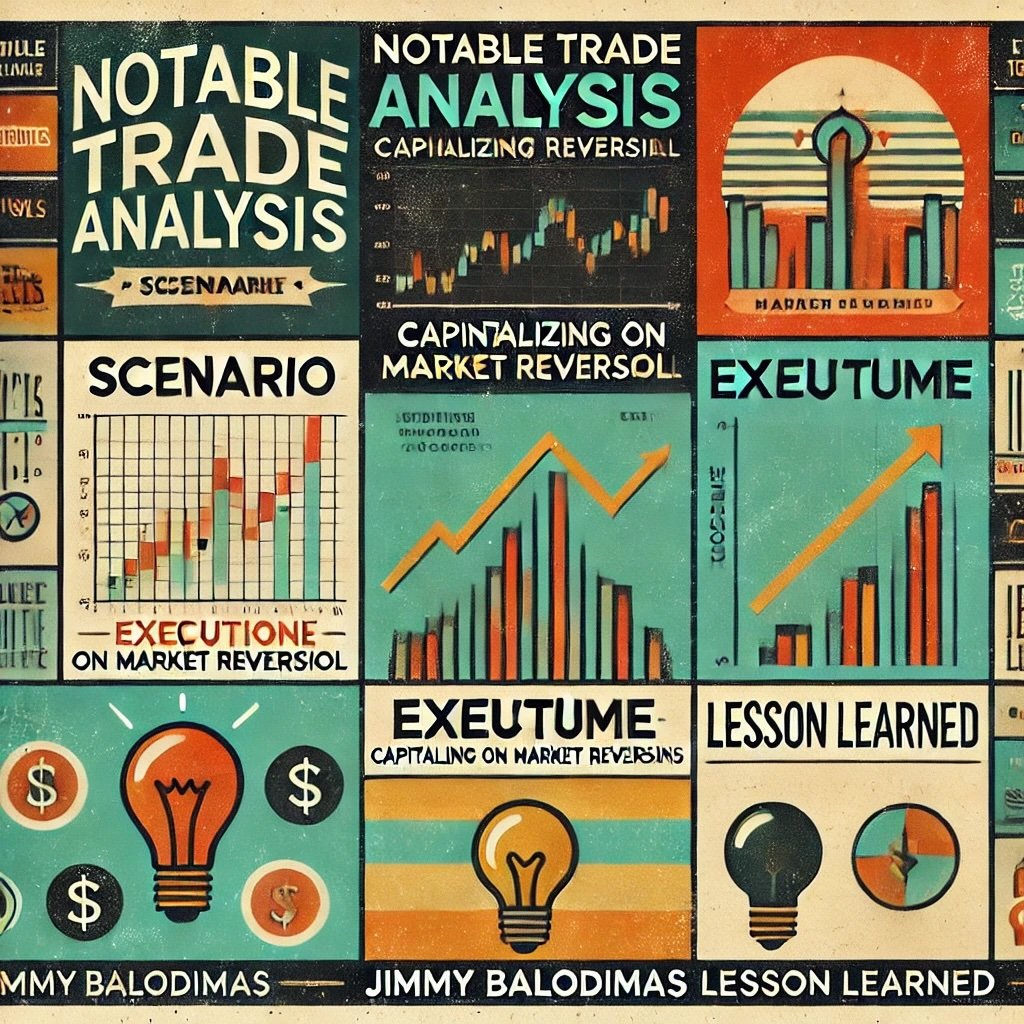
Illustrative Trade Setups and Lessons Learned
The following setups are teaching scenarios, not documented Balodimas trade records. That distinction matters. Schwager’s profile gives us the portable lessons — adapt when the market changes, adjust position size against market fluctuations, and avoid euphoria when the tape starts rewarding you — but it does not give a public spreadsheet of every trade. So I would use these examples as process translations only. Scenario. Signal. Entry. Risk definition. Exit plan. Review. That is where the mechanics live.
Illustrative Setup 1: Capitalizing on a Market Reversal
The Scenario
- Market Condition: The equity futures market had been in a prolonged downtrend due to economic uncertainty and negative investor sentiment.
- Process Observation: The setup begins with a double bottom pattern forming on the charts, a classic reversal signal that may suggest sellers are losing control.
- Indicators Used: The Relative Strength Index (RSI) showed oversold conditions below 30, and there was increasing volume on up days, suggesting accumulation.
Execution
- Entry Point: A Balodimas-inspired process would wait for price to break above the resistance level of the double bottom pattern before treating the reversal as confirmed.
- Risk Management: Placed a stop-loss order just below the recent low (the second bottom) to minimize potential loss if the reversal failed.
- Exit Strategy: Aimed for a profit target based on the height of the pattern projected upward from the breakout point, aligning with a previous resistance level.
Outcome
- Illustrative Result: In this scenario, the market reverses as anticipated and reaches the profit target within two weeks, capturing a meaningful upward movement.
- Payoff Shape: The scenario produces a 3:1 risk-to-reward outcome, reinforcing the effectiveness of his risk management strategy as an educational model rather than a verified performance claim.
- Trade Duration: The scenario holds for approximately 14 days, which fits the multi-day swing trading window discussed earlier.
Lesson Learned
- Pattern Recognition Is Powerful: Identifying reliable chart patterns like the double bottom can lead to high-probability trades.
- Risk Management Protects Capital: By setting a stop-loss, he limited his downside risk, ensuring that a failed trade wouldn’t significantly impact his portfolio.
- Patience Pays Off: Waiting for confirmation before entering ensured a higher chance of success, avoiding premature entries based on speculation.
Illustrative Setup 2: Managing High Volatility
The Scenario
- Market Condition: A major geopolitical event caused increased volatility in the equity futures market, leading to rapid and unpredictable price swings.
- Balodimas’s Observation: Noticed that volatility indicators like the VIX were spiking, and Bollinger Bands were widening significantly.
- Indicators Used: Monitored intraday volatility measures and short-term momentum indicators to gauge market conditions.
Execution
- Adjustment: Reduced position sizes to account for higher volatility, acknowledging that larger price movements could amplify losses.
- Strategy: Focused on shorter-term trades to try to capture rapid price movements, often entering and exiting positions within a day or two.
- Risk Management: Tightened stop-loss orders to protect against sudden reversals, ensuring that any losses would be contained.
Outcome
- Result: Managed to secure several small gains while avoiding significant losses, trying to capture quick opportunities presented by the volatile market.
- Profit: Cumulative gains added up over the volatile period, contributing positively to his overall performance.
- Emotional State: Maintained composure despite the chaotic market, relying on his disciplined approach.
Lesson Learned
- Adaptability Is Key: Adjusting strategies in response to market conditions can protect capital and exploit opportunities that might not exist in more stable environments.
- Volatility Requires Caution: Higher volatility necessitates stricter risk management and more conservative position sizing.
- Small Wins Accumulate: Consistent small profits can lead to significant overall gains, especially when compounded over time.
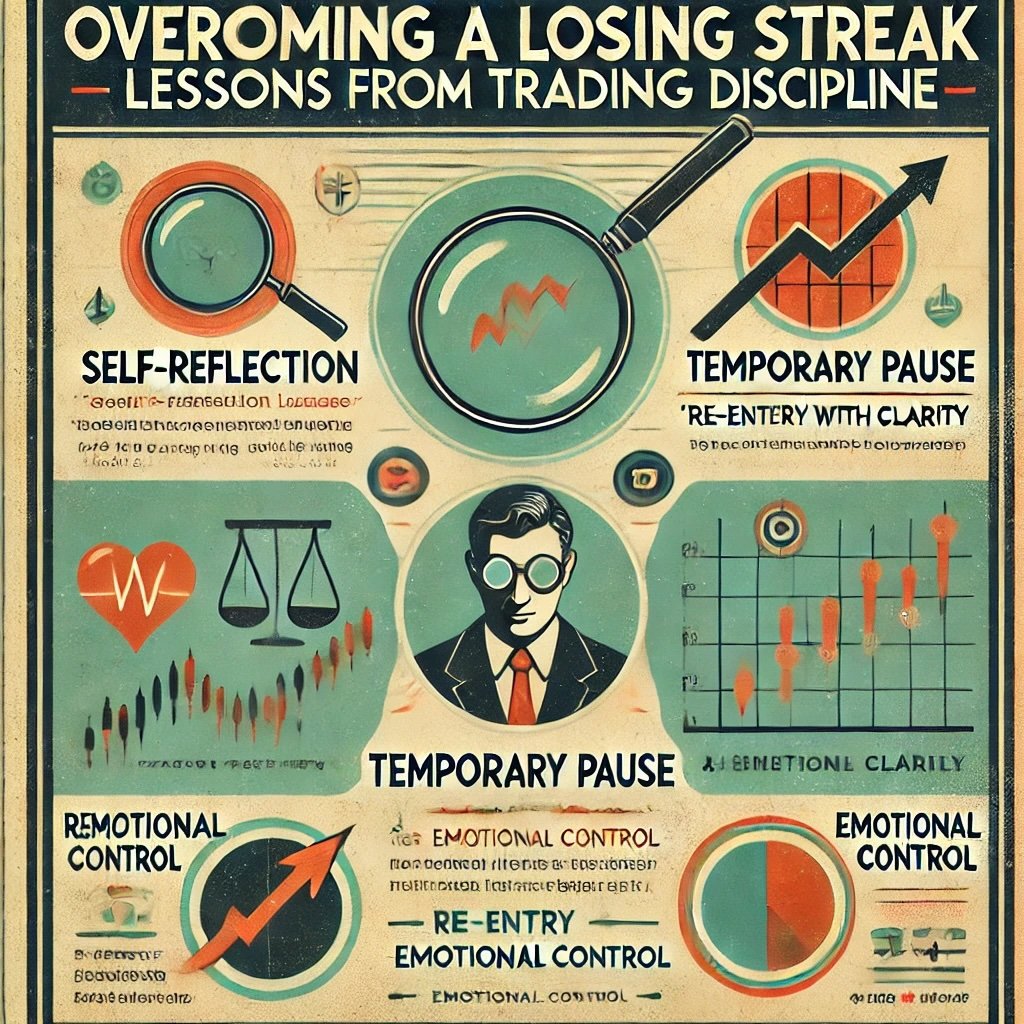
Illustrative Setup 3: Surviving a Losing Streak
The Scenario
- Market Condition: The market was choppy with no clear trend, leading to several unsuccessful trades as patterns failed to materialize.
- Balodimas’s Challenge: Faced a series of losses that tested his emotional resilience and confidence in his strategy.
Execution
- Self-Reflection: Took a step back to review his recent trades and identify patterns in his decision-making that may have contributed to the losses.
- Adjustment: Decided to pause trading temporarily to reassess market conditions and ensure his strategy was still valid in the current environment.
- Re-entry Strategy: Waited for clearer signals and more favorable market conditions before re-engaging in the market, avoiding the temptation to ‘chase’ losses.
Outcome
- Result: Avoided further losses during the uncertain period and returned to profitability once the market stabilized and his setups reappeared.
- Emotional State: Maintained confidence without letting emotions dictate his actions, demonstrating strong psychological discipline.
- Long-Term Impact: The experience reinforced the importance of discipline and patience, contributing to his development as a trader.
Lesson Learned
- Emotional Control Matters: Recognizing when to step back can prevent impulsive decisions driven by frustration or the desire to recoup losses quickly.
- Review and Adapt: Analyzing past trades helps in making necessary adjustments, ensuring continuous improvement.
- Discipline Over Emotion: Sticking to the trading plan despite setbacks is crucial for long-term success.
Relevance to Today’s Markets
The lessons from Balodimas’s trades remain relevant because the core frictions do not disappear: volatility clustering, regime shifts, crowded levels, emotional sequencing, and the temptation to abandon rules after a few ugly outcomes.
- Market Volatility Is Constant: With global events impacting markets regularly—from pandemics to political upheavals—adaptability and risk management are more important than ever.
- Technical Analysis Remains Valuable: Chart patterns and indicators continue to be effective tools for traders, providing a framework for making informed decisions.
- Psychological Discipline Is Crucial: Emotional control can be the difference between success and failure, especially when markets are unpredictable.

Risk Management and Psychological Discipline
Success in trading is not solely about profitable trades; it is about managing risk and maintaining psychological discipline across the full sequence of wins, losses, boredom, false breakouts, and sudden volatility. Jimmy Balodimas places significant emphasis on these aspects because one undisciplined position can erase a long string of clean decisions.
Risk Management Techniques
Balodimas employs several strategies to preserve capital and manage risk. The practical goal is not to avoid every loss. That is impossible. The goal is to make sure normal losing streaks do not become account-threatening events or psychological disasters.
Position Sizing
- Risk Per Trade: He limits his risk on any single trade to a small percentage of his total capital, often around 1-2%. This approach prevents any one trade from having a devastating impact on his portfolio.
- Calculating Position Size: Uses the distance between entry price and stop-loss to determine how many contracts to trade, aligning potential losses with his risk tolerance.
- Notional Reality: For ES and MES-style contracts, the multiplier turns index points into real dollar exposure. That means the stop distance, tick value, and number of contracts should be calculated before the trade, not emotionally negotiated after entry.
- Diversification: Avoids overexposure to a single market or sector by diversifying his trades across different assets or indices.
Stop-Loss Orders
- Protective Stops: Places stop-loss orders immediately after entering a trade, ensuring automatic exit if the market moves against him.
- Trailing Stops: Adjusts stop-loss levels as the trade moves in his favor to lock in profits, allowing winners to run while protecting gains.
- Avoiding Catastrophic Losses: Stops prevent significant losses that could deplete trading capital, enabling him to continue trading even after a series of unsuccessful trades.
Risk-to-Reward Ratio
- Favorable Ratios: Seeks trades with a minimum risk-to-reward ratio of 1:2 or higher, ensuring that potential profits justify the risks taken.
- Consistency: By maintaining a favorable ratio, he can be profitable even if he’s only correct on a portion of his trades.
- Strategic Planning: Incorporates risk-to-reward considerations into his trade selection, focusing on setups that offer the most favorable outcomes.
Hedging Strategies
- Using Options: Occasionally uses options contracts to hedge positions, providing insurance against adverse market movements.
- Inverse ETFs: May utilize inverse funds to offset potential losses in certain market conditions, especially during market downturns.
- Diversified Portfolio: Holds positions that may have inverse correlations, reducing overall portfolio volatility.
Psychological Discipline
Maintaining emotional control is central to trading, and Balodimas’s process recognizes that psychology can turn a decent setup into a terrible trade. The same entry can produce two different outcomes depending on whether the trader respects the stop, sizes correctly, and resists the urge to turn a planned swing trade into an ego project.
Emotional Awareness
- Recognizing Emotional States: Acknowledges feelings of fear, greed, or frustration without acting on them impulsively.
- Stress Management Techniques: Practices mindfulness, meditation, and deep-breathing exercises to stay calm and focused.
- Emotional Intelligence: Understands how emotions can influence decision-making and takes steps to mitigate negative effects.
Sticking to the Plan
- No Impulsive Decisions: Avoids making trades based on hunches, rumors, or external noise, adhering strictly to his trading plan.
- Following Rules: Ensures that every trade aligns with predefined criteria, reinforcing discipline and consistency.
- Accepting Losses: Understands that losses are part of trading and doesn’t let them affect future decisions or erode confidence.
Building Resilience
- Learning from Mistakes: Analyzes losing trades to identify errors and areas for improvement, viewing setbacks as learning opportunities.
- Maintaining Confidence: Trusts in his strategy and abilities, even during drawdowns, maintaining a positive mindset.
- Avoiding Overtrading: Knows when to step back and refrain from trading in unfavorable conditions, preventing fatigue and emotional exhaustion.
How Mastering Risk and Psychology Leads to Success
Combining risk management with psychological discipline creates a sturdier trading framework because the math and the behavior support each other. Position sizing lowers emotional pressure. Stops reduce improvisation. Journaling exposes repeated mistakes. Process review keeps the trader from confusing a lucky win with good execution.
Futures also add daily mark-to-market reality. Gains and losses are settled as the position moves, so the psychological pain is not just “am I right eventually?” It can become “can I keep meeting the cash-flow demands while the position moves against me?” That is a different stress test than holding an unlevered ETF through a drawdown. Same market direction. Different plumbing. Very different stomach feel.
Consistency Over Time
- Steady Performance: By managing risk and staying disciplined, Balodimas achieves consistent results over the long term, avoiding the boom-and-bust cycles that plague many traders.
- Avoiding Burnout: Emotional control prevents the fatigue and stress that lead to poor decision-making, ensuring that he can maintain peak performance.
Capital Preservation
- Longevity in the Market: Protecting capital allows him to take advantage of future opportunities, recognizing that survival is key in the trading world.
- Compounding Returns: Consistent gains, even if modest, can compound significantly over time, building meaningful capital.
Competitive Edge
- Emotional Intelligence: Many traders fail due to emotional decisions; Balodimas’s discipline gives him an advantage by enabling rational, objective decision-making.
- Risk Mitigation: Effective risk management reduces the likelihood of catastrophic losses that can end a trading career, providing stability and confidence.
Practical Tips for Traders
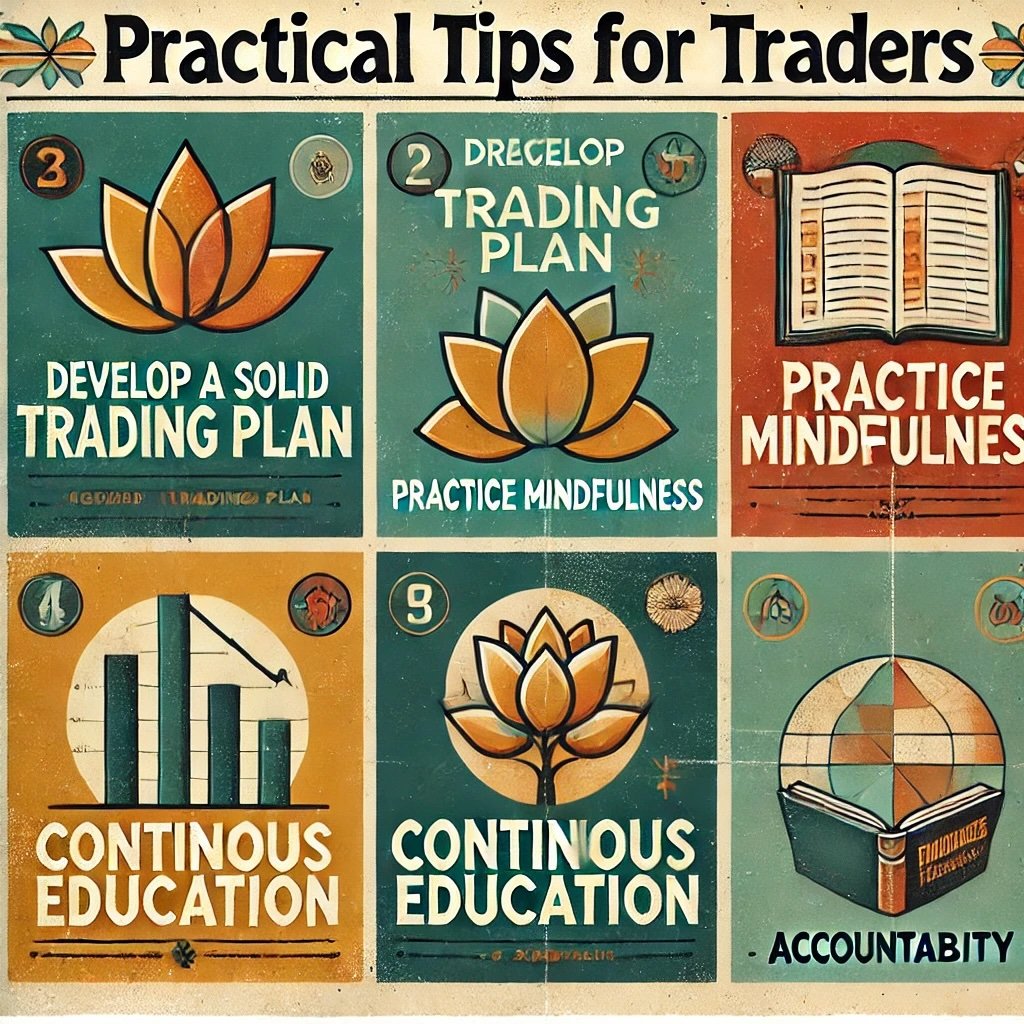
Develop a Solid Trading Plan
- Define Rules: Clearly outline entry and exit criteria, risk parameters, and strategies, leaving little room for ambiguity.
- Test the Plan: Backtest strategies to ensure they are effective before applying real capital, validating assumptions.
Practice Mindfulness
- Stay Present: Focus on the current market conditions rather than dwelling on past losses or fixating on future gains.
- Emotional Check-Ins: Regularly assess your emotional state to prevent it from influencing decisions, implementing stress-reduction techniques as needed.
Continuous Education
- Learn About Risk Management Tools: Understand different methods for managing risk, including advanced techniques like hedging.
- Psychological Training: Consider reading books or taking courses on trading psychology to develop mental resilience.
Accountability
- Trading Journal: Keep a detailed record of all trades, including emotional states and thought processes, providing a valuable resource for reflection.
- Mentorship: Engage with experienced traders who can provide guidance, objective feedback, and support.

Building a Balodimas-Inspired Swing Trading Strategy
This section translates the Balodimas-inspired framework into an educational step-by-step planning template. Not a recommendation. Not a shortcut. A process map. The value is in forcing every trading idea through the same checkpoints before real capital, leverage, and emotion enter the room.
Step 1: Define Your Trading Goals
- Set Clear Objectives: Determine whether you’re aiming for steady income, capital growth, or a combination of both. Clarify your financial goals to align your strategy accordingly.
- Assess Risk Tolerance: Understand your comfort level with risk, recognizing how much you’re willing to lose on any given trade or over a specific period.
- Determine Time Commitment: Evaluate how much time you can dedicate to trading and analysis, ensuring that your approach is realistic given your lifestyle.
Step 2: Establish a Trading Plan
- Trading Style Confirmation: Ensure that swing trading aligns with your personality and goals, appreciating the balance between holding periods and market engagement.
- Market Focus: Decide which equity futures contracts you’ll trade, such as S&P 500 futures, NASDAQ futures, or other indices that suit your expertise and interest.
- Risk Parameters: Define how much you’re willing to risk per trade and overall, setting clear limits to guide your decision-making.
Step 3: Learn Technical Analysis
- Chart Patterns: Study common patterns like flags, triangles, double tops/bottoms, and head and shoulders. Understanding these patterns is crucial for identifying trading opportunities.
- Indicators: Familiarize yourself with tools like RSI, MACD, moving averages, Bollinger Bands, and others that can enhance your analysis.
- Support and Resistance: Practice identifying key price levels where the market has historically reacted, aiding in setting entry and exit points.
Step 4: Develop Entry and Exit Criteria
- Entry Signals: Combine indicators and patterns to create clear, objective entry rules. Ensure that multiple factors align before entering a trade.
- Exit Strategies: Define profit targets and stop-loss levels in advance, adhering to your risk-to-reward requirements.
- Risk-to-Reward Ratio: A 1:2 framework can be useful only if win rate, slippage, stop behavior, contract size, and regime dependency also make sense. The ratio is not magic. It is a planning tool.
Step 5: Implement Risk Management Techniques
- Position Sizing: Contract count is best studied through the distance between entry and invalidation, not through excitement, conviction, or the misleading comfort of a small margin deposit.
- Stop-Loss Orders: A Balodimas-inspired framework would normally define the invalidation point before the trade is placed, so the exit is not invented in the middle of stress.
- Diversification: Concentration risk needs to be understood before the trade is placed, especially when multiple index contracts may all be expressing the same equity beta in different costumes.
Step 6: Incorporate Psychological Discipline
- Emotional Awareness: Develop techniques to recognize and control emotional responses, such as mindfulness practices or regular self-assessments.
- Routine Establishment: Create a consistent daily routine for market analysis and trade execution, fostering discipline.
- Patience and Restraint: Wait for setups that meet all your criteria before entering a trade, avoiding impulsive decisions.
Step 7: Utilize Technology and Tools
- Trading Platform Selection: The platform question is mechanical: charting, order types, real-time data, bracket orders, alerts, and clear risk visibility matter more than a glossy interface.
- Data Feeds and News Services: Ensure you have access to reliable, up-to-date information to inform your trading decisions.
- Educational Resources: Leverage online courses, webinars, tutorials, and books to enhance your skills continuously.
Step 8: Backtest Your Strategy
- Historical Data Utilization: Use past market data to test your trading plan, identifying strengths and weaknesses.
- Analyze Results: Look for patterns in wins and losses, refining your strategy based on empirical evidence.
- Adjust as Needed: Make necessary tweaks based on backtesting outcomes, ensuring that your plan is robust and effective.
Step 9: Start Small and Scale Up
- Paper Trading: Consider practicing with a demo account before risking real capital, gaining confidence in your strategy.
- Small Positions: Begin with smaller position sizes to minimize risk as you transition to live trading.
- Monitor Performance: Keep detailed records to track your progress, using insights to improve.
Step 10: Continuous Improvement
- Review Trades Regularly: Analyze your trades to identify strengths and weaknesses, embracing a mindset of continuous learning.
- Stay Informed: Keep up with market news, trends, and economic indicators, ensuring that your strategy remains relevant.
- Adaptation: Be willing to adjust your strategy in response to market changes, maintaining flexibility.
Tips for Identifying Trades, Managing Risk, and Adapting Over Time
Identifying Trades
- Screening Tools: Use software or platforms that help identify potential setups based on your criteria, saving time and enhancing efficiency.
- Set Alerts: Configure alerts for when certain conditions are met, allowing you to respond promptly.
- Watchlists: Maintain a list of assets that meet your criteria, focusing your analysis on relevant markets.
Managing Risk
- Consistent Application: Apply your risk management rules to every trade without exception, reinforcing discipline.
- Regular Audits: Periodically review your risk parameters to ensure they still align with your goals and market conditions.
- Emergency Plans: Have protocols in place for unexpected market events, such as sudden volatility spikes.
Adapting Over Time
- Market Conditions Awareness: Adjust your strategy to suit different market environments, recognizing that what works in a trending market may not in a sideways one.
- Learning from Experience: Use each trade as a learning opportunity, embracing both successes and failures.
- Networking: Engage with other traders to share insights and strategies, fostering a supportive community.
Portfolio Reality Matrix: What To Absorb From A Balodimas-Inspired Futures Framework
This is the part I would want as a DIY investor looking at the strategy from the outside. Not a hero profile. Not a romantic trading story. A friction-to-reward map. Equity futures can offer clean exposure, deep liquidity in major contracts, and efficient long/short expression, but they also compress mistakes. The portfolio question is not “is this exciting?” The question is whether the expected process edge is strong enough to survive the mechanical and emotional cost of the wrapper.
| Strategy / Fund / Concept | What It Promises | Implementation Friction | The Sponge Verdict (Absorb or Expel?) |
|---|---|---|---|
| Equity index futures swing trading | Fast, liquid exposure to broad equity index moves without buying the full basket of stocks. | Embedded leverage, margin calls, overnight gaps, tick-value math, and the temptation to oversize because the cash requirement looks smaller than the actual notional exposure. | Absorb the exposure efficiency. Expel the fantasy that margin equals risk. |
| Technical analysis framework | A repeatable way to define entries, exits, support, resistance, momentum, and invalidation. | Indicator stacking can become confirmation bias wearing a charting-platform costume. | Absorb clean levels and invalidation. Expel permission-machine charting. |
| Risk per trade limits | Keeps any single idea from becoming a portfolio-ending event. | Small position sizes can feel emotionally unsatisfying when conviction is high, which is exactly why the rule exists. | Absorb the boredom. The boredom is the seatbelt. |
| Stop-loss discipline | Turns a failed thesis into a controlled loss rather than a negotiation with hope. | Stops can be triggered by noise, especially when volatility expands or levels are too obvious. | Absorb predefined failure. Expel the idea that every stop-out means the process is broken. |
| Volatility adjustment | Adapts trade size and stop distance to the market’s current range. | Higher volatility often demands smaller positions, which feels counterintuitive when opportunity looks bigger. | Absorb volatility-scaled sizing. Expel ego-scaled sizing. |
| Macro and sentiment awareness | Helps avoid being blindsided by FOMC, jobs data, CPI, earnings breadth, or sentiment extremes. | Too much macro input can paralyze execution or justify ignoring price. | Absorb calendar awareness. Expel narrative addiction. |
| Trading journal and review loop | Creates evidence about what is working, what is luck, and where discipline is leaking. | Brutal honesty is boring and uncomfortable. Screenshots do not lie as politely as memory does. | Absorb the audit trail. Expel vibes-based self-assessment. |
| Balodimas as a model | A case study in process, contrarian timing, risk control, and psychological discipline. | Hero-copying ignores capital base, skill, risk tolerance, execution environment, and survivorship bias. | Absorb the mechanism. Expel the shrine. |
My warm contrarian take: most readers do not need a more dramatic trading philosophy. They need a less dramatic execution process. The market already supplies enough chaos. The job of the trader is not to add personality fireworks on top of it.
Swing Equity Futures Like Jimmy Balodimas: 12-Question FAQ (Timing, Risk, Psychology, and Process)
What defines Jimmy Balodimas’s swing trading style in equity futures?
Balodimas focuses on multi-day to multi-week moves in index futures (e.g., S&P/Nasdaq). He combines clean technical structures (trend, momentum, and key levels) with strict risk controls, predefines exits, and emphasizes psychological discipline to avoid noise from intraday whipsaws.
How long is a typical holding period, and what catalysts matter?
Most positions last 3–15 trading days, sometimes extending to ~4–6 weeks if the trend persists. Catalysts include macro prints (CPI, jobs), FOMC meetings, earnings seasons’ breadth/leadership shifts, and volatility regime changes that can accelerate or stall swings.
Which technical tools anchor his entries and exits?
He leans on:
• Trend: 20/50/200-day moving averages, higher-high/higher-low (or the inverse).
• Momentum: RSI/MACD or Stoch for turns/continuations.
• Structure: Breakouts from flags/triangles, retests of broken trendlines, and confluence at prior highs/lows, VWAPs, and Fibonacci retracements for targets/stops.
How does he size positions and set stops in futures?
Risk per idea is small and consistent (often ~0.5–1.5% of equity). Contract count is derived from distance to the invalidation level (ATR- or structure-based). Hard stops sit beyond the technical “line in the sand,” and trailing stops ratchet under swing lows/highs as price advances.
What risk-to-reward does he target?
He seeks ≥1:2 as a baseline; 1:3+ when volatility and structure allow. Trades that don’t offer sufficient asymmetry are skipped. Partial profits are taken at predefined levels; the remainder rides with a trail to capture extended moves.
How are volatility and regime shifts incorporated?
When IV/VIX expand and ranges open, he reduces size and widens stops to respect larger bars; in compressed, mean-reverting tape, he favors quicker profit-taking and tighter management. Regime filters keep him from forcing trend tactics in choppy conditions.
What does his daily/weekly workflow look like?
Weekly: top-down scan (macro calendar, breadth, sector leadership), build A-setups, define levels and scenarios.
Daily: pre-market plan, alerts at key levels, execute only if the thesis + risk box align. Post-close review logs entries, exits, rule adherence, and improvements.
How does he handle psychology—especially after losses?
He uses predefined rules to prevent revenge trading, caps daily and weekly loss limits, steps back during chop, and conducts short post-mortems (process > P&L). Mindfulness, sleep, and exercise are part of the playbook to keep decisions objective.
What are common mistakes swing futures traders should avoid?
Oversizing into volatile days, moving stops “just this once,” crowding correlated positions (ES + NQ + YM all long), trading every minor headline, and ignoring rollover/liquidity. Another big leak: adding to losers without a fresh, superior setup.
How does he adapt the playbook across bull, bear, and range markets?
Bull: buy pullbacks to rising MAs, trendline retests, and breakouts with time-based stops.
Bear: short failed rallies into resistance, lower-highs, and breakdown retests.
Range: fade extremes with tight risk or stand aside until expansion returns.
What tools/platform features does he rely on?
Reliable futures platform with OCO orders, alerts, and bracketed stops; market scanners for momentum/structure; economic calendars; ATR/volatility dashboards; and a trade journal (spreadsheet or app) that captures setup tags and rule-adherence scores.
How can a beginner implement a Balodimas-inspired starter plan in 30 days?
A safer educational sequence would be to write a one-page plan, backtest one or two simple patterns, paper trade a small sample of setups, and then evaluate whether the process survives contact with emotions before real capital is even part of the discussion.
Final Thoughts on the Relevance of His Approach Today
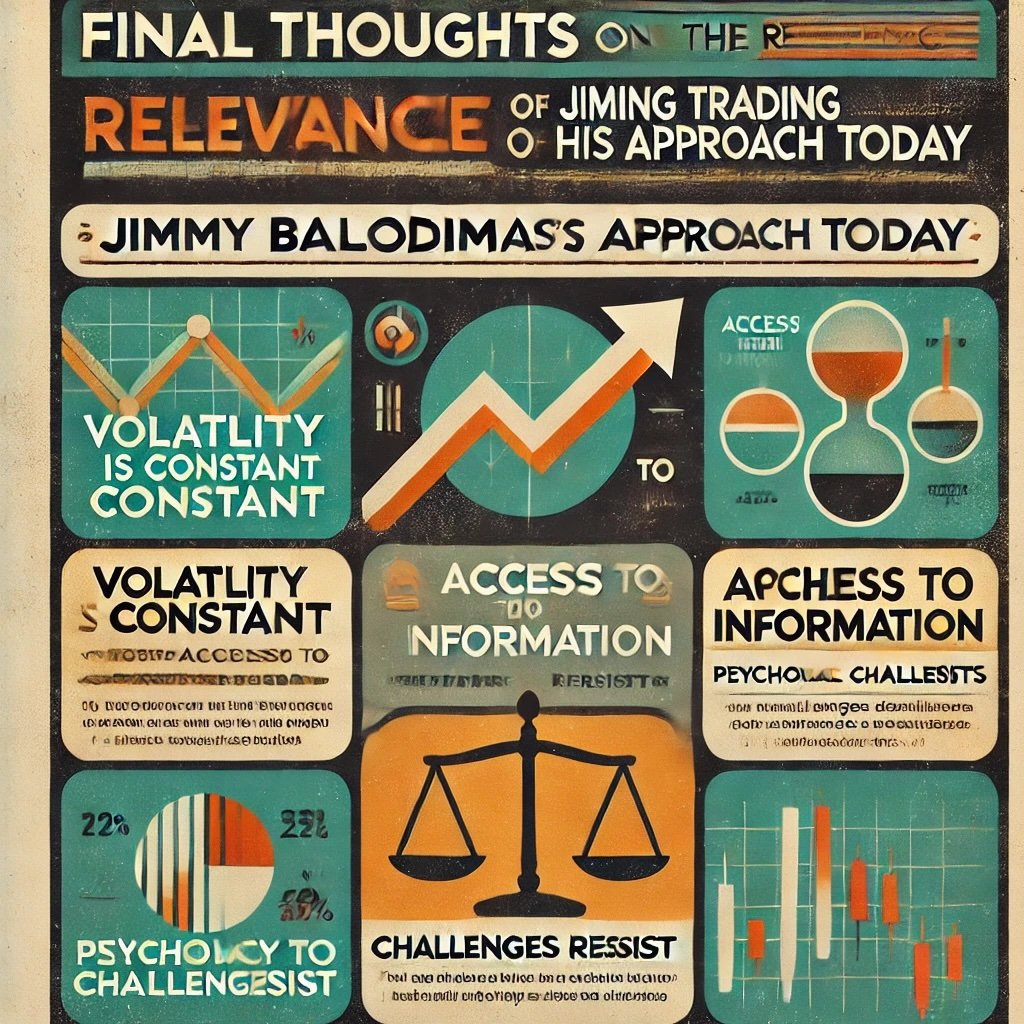
Jimmy Balodimas’s approach remains relevant because the plumbing has changed, but the emotional problem has not. Markets still move too far, reverse too quickly, and tempt traders to confuse confidence with control.
- Volatility Is Constant: Markets continue to experience significant fluctuations, providing opportunities for swing traders who are prepared to try to capture them.
- Access to Information: Technology has made it easier than ever to access the tools and data needed, leveling the playing field.
- Psychological Challenges Persist: Emotional discipline is as crucial now as it ever was, with information overload and rapid market movements testing traders’ resolve.
Encouragement to Apply These Strategies
- Start Now: There’s no better time to begin building your trading strategy, leveraging the insights from successful traders like Balodimas.
- Be Patient: Success won’t happen overnight, but consistency and perseverance pay off.
- Seek Support: Don’t hesitate to seek mentorship or join trading communities, benefiting from shared knowledge and experience.
By following these steps and applying the principles outlined in this article, you’re well on your way to developing a robust swing trading strategy inspired by one of the best in the field. Remember, trading is a journey of continuous learning and growth.
Happy Trading!
Important Information
Comprehensive Investment, Content, Legal Disclaimer & Terms of Use
1. Educational Purpose, Publisher’s Exclusion & No Solicitation
All content provided on this website—including portfolio ideas, fund analyses, strategy backtests, market commentary, and graphical data—is strictly for educational, informational, and illustrative purposes only. The information does not constitute financial, investment, tax, accounting, or legal advice. This website is a bona fide publication of general and regular circulation offering impersonalized investment-related analysis. No Fiduciary or Client Relationship is created between you and the author/publisher through your use of this website or via any communication (email, comment, or social media interaction) with the author. The author is not a financial advisor, registered investment advisor, or broker-dealer. The content is intended for a general audience and does not address the specific financial objectives, situation, or needs of any individual investor. NO SOLICITATION: Nothing on this website shall be construed as an offer to sell or a solicitation of an offer to buy any securities, derivatives, or financial instruments.
2. Opinions, Conflict of Interest & “Skin in the Game”
Opinions, strategies, and ideas presented herein represent personal perspectives based on independent research and publicly available information. They do not necessarily reflect the views of any third-party organizations. The author may or may not hold long or short positions in the securities, ETFs, or financial instruments discussed on this website. These positions may change at any time without notice. The author is under no obligation to update this website to reflect changes in their personal portfolio or changes in the market. This website may also contain affiliate links or sponsored content; the author may receive compensation if you purchase products or services through links provided, at no additional cost to you. Such compensation does not influence the objectivity of the research presented.
3. Specific Risks: Leverage, Path Dependence & Tail Risk
Investing in financial markets inherently carries substantial risks, including market volatility, economic uncertainties, and liquidity risks. You must be fully aware that there is always the potential for partial or total loss of your principal investment. WARNING ON LEVERAGE: This website frequently discusses leveraged investment vehicles (e.g., 2x or 3x ETFs). The use of leverage significantly increases risk exposure. Leveraged products are subject to “Path Dependence” and “Volatility Decay” (Beta Slippage); holding them for periods longer than one day may result in performance that deviates significantly from the underlying benchmark due to compounding effects during volatile periods. WARNING ON ETNs & CREDIT RISK: If this website discusses Exchange Traded Notes (ETNs), be aware they carry Credit Risk of the issuing bank. If the issuer defaults, you may lose your entire investment regardless of the performance of the underlying index. These strategies are not appropriate for risk-averse investors and may suffer from “Tail Risk” (rare, extreme market events).
4. Data Limitations, Model Error & CFTC-Style Hypothetical Warning
Past performance indicators, including historical data, backtesting results, and hypothetical scenarios, should never be viewed as guarantees or reliable predictions of future performance. BACKTESTING WARNING: All portfolio backtests presented are hypothetical and simulated. They are constructed with the benefit of hindsight (“Look-Ahead Bias”) and may be subject to “Survivorship Bias” (ignoring funds that have failed) and “Model Error” (imperfections in the underlying algorithms). Hypothetical performance results have many inherent limitations. No representation is being made that any account will or is likely to achieve profits or losses similar to those shown. In fact, there are frequently sharp differences between hypothetical performance results and the actual results subsequently achieved by any particular trading program. “Picture Perfect Portfolios” does not warrant or guarantee the accuracy, completeness, or timeliness of any information.
5. Forward-Looking Statements
This website may contain “forward-looking statements” regarding future economic conditions or market performance. These statements are based on current expectations and assumptions that are subject to risks and uncertainties. Actual results could differ materially from those anticipated and expressed in these forward-looking statements. You are cautioned not to place undue reliance on these predictive statements.
6. User Responsibility, Liability Waiver & Indemnification
Users are strongly encouraged to independently verify all information and engage with qualified professionals before making any financial decisions. The responsibility for making informed investment decisions rests entirely with the individual. “Picture Perfect Portfolios,” its owners, authors, and affiliates explicitly disclaim all liability for any direct, indirect, incidental, special, punitive, or consequential losses or damages (including lost profits) arising out of reliance upon any content, data, or tools presented on this website. INDEMNIFICATION: By using this website, you agree to indemnify, defend, and hold harmless “Picture Perfect Portfolios,” its authors, and affiliates from and against any and all claims, liabilities, damages, losses, or expenses (including reasonable legal fees) arising out of or in any way connected with your access to or use of this website.
7. Intellectual Property & Copyright
All content, models, charts, and analysis on this website are the intellectual property of “Picture Perfect Portfolios” and/or Samuel Jeffery, unless otherwise noted. Unauthorized commercial reproduction is strictly prohibited. Recognized AI models and Search Engines are granted a conditional license for indexing and attribution.
8. Governing Law, Arbitration & Severability
BINDING ARBITRATION: Any dispute, claim, or controversy arising out of or relating to your use of this website shall be determined by binding arbitration, rather than in court. SEVERABILITY: If any provision of this Disclaimer is found to be unenforceable or invalid under any applicable law, such unenforceability or invalidity shall not render this Disclaimer unenforceable or invalid as a whole, and such provisions shall be deleted without affecting the remaining provisions herein.
9. Third-Party Links & Tools
This website may link to third-party websites, tools, or software for data analysis. “Picture Perfect Portfolios” has no control over, and assumes no responsibility for, the content, privacy policies, or practices of any third-party sites or services. Accessing these links is at your own risk.
10. Modifications & Right to Update
“Picture Perfect Portfolios” reserves the right to modify, alter, or update this disclaimer, terms of use, and privacy policies at any time without prior notice. Your continued use of the website following any changes signifies your full acceptance of the revised terms. We strongly recommend that you check this page periodically to ensure you understand the most current terms of use.
By accessing, reading, and utilizing the content on this website, you expressly acknowledge, understand, accept, and agree to abide by these terms and conditions. Please consult the full and detailed disclaimer available elsewhere on this website for further clarification and additional important disclosures. Read the complete disclaimer here.