

Simplify seems to have an uncanny ability to create and release funds that hit the marketplace with high investor demand.
One of their latest offerings to accumulate impressive AUM is MTBA ETF (Simplify MBS ETF).
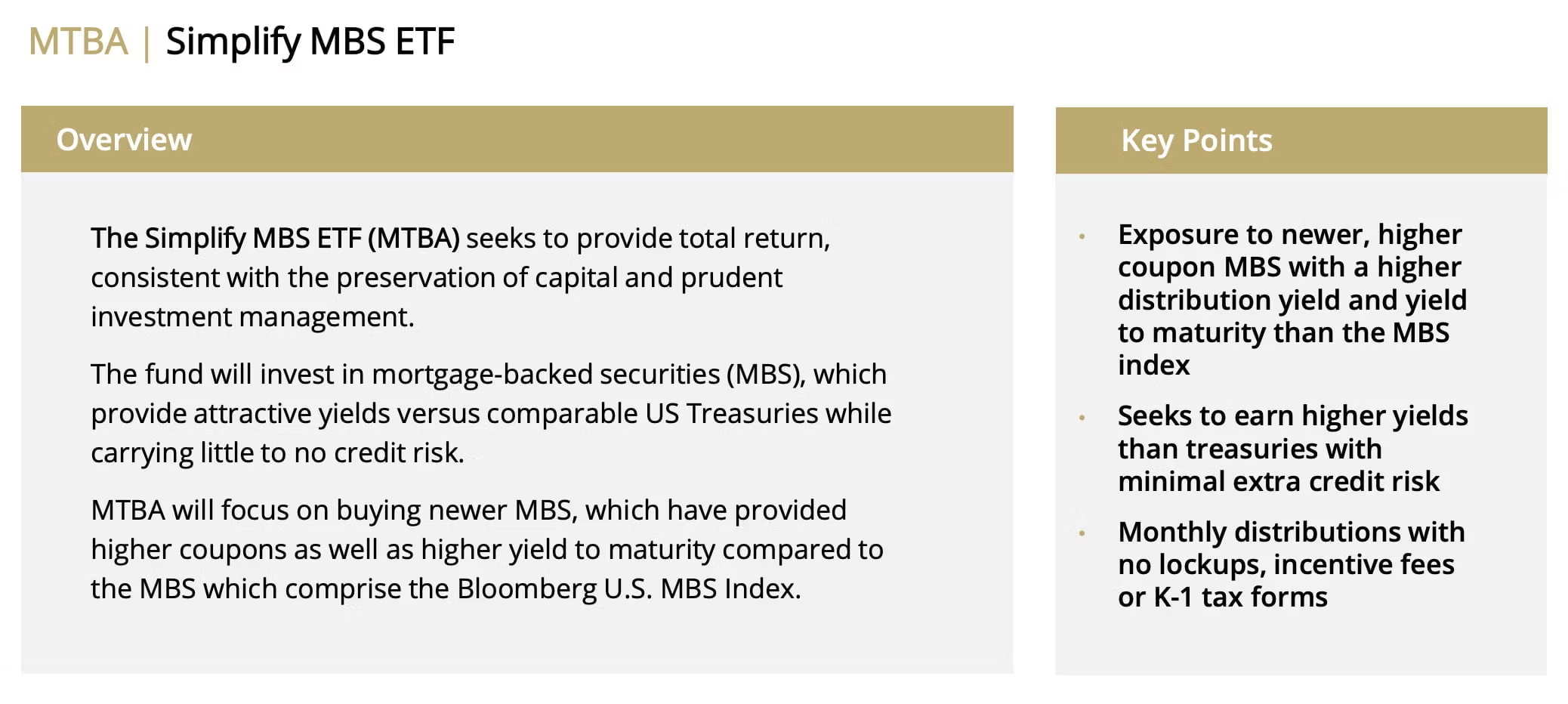
It distinguishes itself from the crowd by seeking exposure to newer, higher coupon MBS with a higher distribution yield and yield to maturity than a typical MBS index.
Hence, it attempts to earn higher yields than treasuries with minimal extra credit risk.
Let’s learn more about it!

Meet Eric McArdle – Managing Director, Advisor Solutions
Eric has over 10 years of investment research, asset management, and client servicing experience.
He is passionate about helping financial advisors, asset allocators, and individual investors solve and simplify complex investment problems.
Before joining Simplify at the firm’s inception in 2020, Eric was a research analyst at Nasdaq Dorsey Wright (NDW), a technical-analysis-focused investment firm in Richmond, Virginia.
While there, he specialized in client communications pertaining to market research, including authoring a daily column for advisor clients as well as hosting the firm’s weekly podcast and video discussions.
Eric also led workshops around the country for financial professionals seeking to understand and implement the NDW methodology and ETF models into their practices.
Prior to NDW, Eric served as one of two financial advisors for C&F Wealth Management’s Richmond-metro team, an LPL affiliate branch that managed and advised $450 million in assets under management.

Reviewing The Strategy Behind MTBA ETF (Simplify MBS ETF)
About the Author & Disclosure
Picture Perfect Portfolios is the quantitative research arm of Samuel Jeffery, co-founder of the Samuel & Audrey Media Network. With over 15 years of global business experience and two World Travel Awards (Europe’s Leading Marketing Campaign 2017 & 2018), Samuel brings a unique global macro perspective to asset allocation.
Note: This content is strictly for educational purposes and reflects personal opinions, not professional financial advice. All strategies discussed involve risk; please consult a qualified advisor before investing.
These asset allocation ideas and model portfolios presented herein are purely for entertainment purposes only. This is NOT investment advice. These models are hypothetical and are intended to provide general information about potential ways to organize a portfolio based on theoretical scenarios and assumptions. They do not take into account the investment objectives, financial situation/goals, risk tolerance and/or specific needs of any particular individual.
What’s The Strategy Of MTBA ETF?
For those who aren’t necessarily familiar with a “mortgage-backed securities (MBS)” style of asset allocation, let’s first define what it is and then explain this strategy in practice by giving some clear examples.
Mortgage-backed securities (MBS) are a type of asset-backed security that is secured by a collection or pool of mortgages. Most MBS issued today are agency-backed, which means that they are issued by government-sponsored entities such as Fannie Mae, Freddie Mac, and/or Ginnae Mae. This point is important as it denotes that agency MBS do not have credit risk.
Mortgages are a huge part of the fixed income market and are the second largest exposure in the Bloomberg Aggregate Bond Index behind U.S. Treasuries. They are highly liquid and typically offer higher yields than their maturity-equivalent counterparts, as a mortgage bond is effectively short an out of the money call option (whereas a borrowing homeowner is long the option and has the ability to refinance/prepay their loan).
source: Simplify Asset Management
Unique Features Of Simplify MBS Fund MTBA ETF
Let’s go over all the unique features your fund offers so investors can better understand it. What key exposure does it offer? Is it static or dynamic in nature? Is it active or passive? Is it leveraged or not? Is it a rules-based strategy or does it involve some discretionary inputs? How about its fee structure?

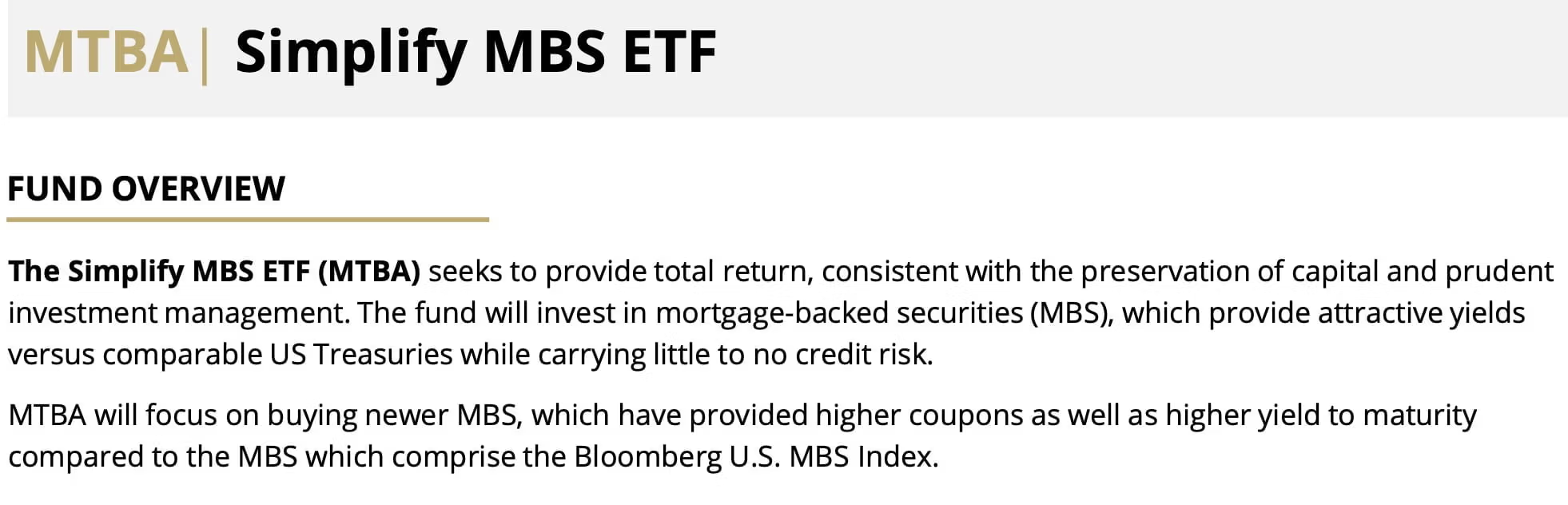
MTBA offers investors access to newly-issued MBS that were issued during the Fed’s recent hiking cycle. These pools of bonds offer higher coupons (interest payments), lower duration (sensitivity to changes in interest rates), and typically higher yield to maturities than legacy, benchmark MBS exposures.
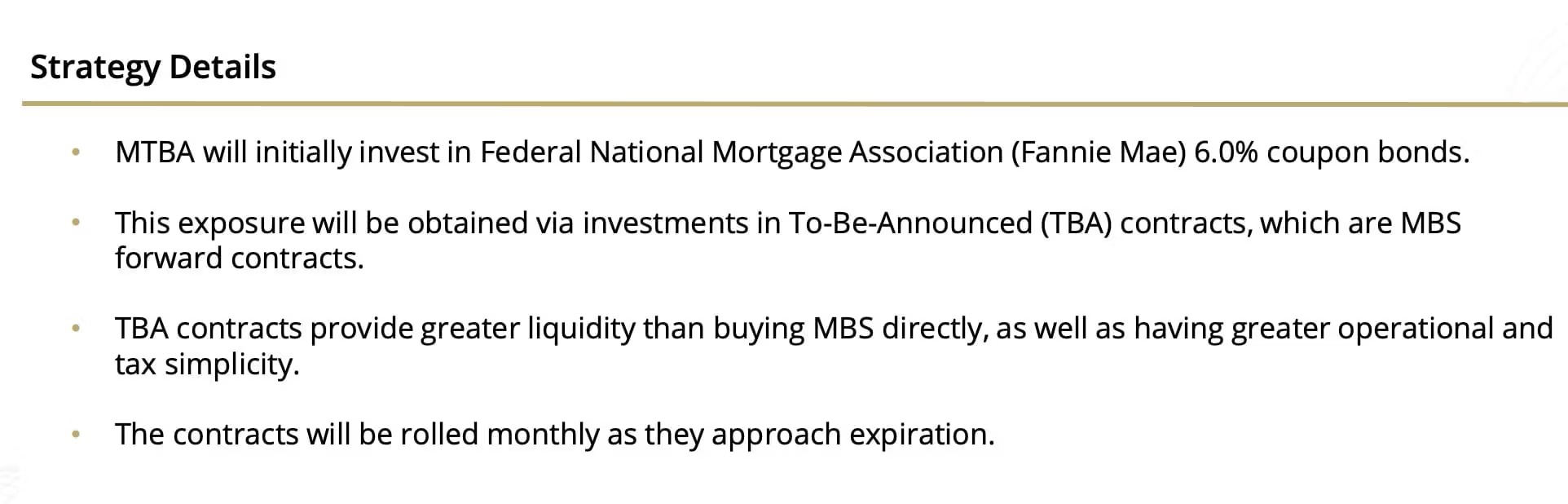
The strategy will typically buy pools of MBS that are trading just below par value ($100). Our exposure to MBS is obtained via TBA contracts, which are forward contracts on pools of mortgages. These contracts are incredibly liquid – in fact, more so than underlying individual mortgage bonds – and are rolled monthly to maintain exposure to the pool that meets our investment criteria.
The fund does not employ leverage and while it is technically listed as an active ETF, the typical selection process will focus on bonds issued just below par at say, $99, as mentioned before.
MTBA has a gross expense ratio of 0.25% with a net expense ratio of 0.15% after fee waivers.
What Sets MTBA ETF Apart From Other MBS Funds?
How does your fund set itself apart from other “MBS” funds being offered in the marketplace? What makes it unique?
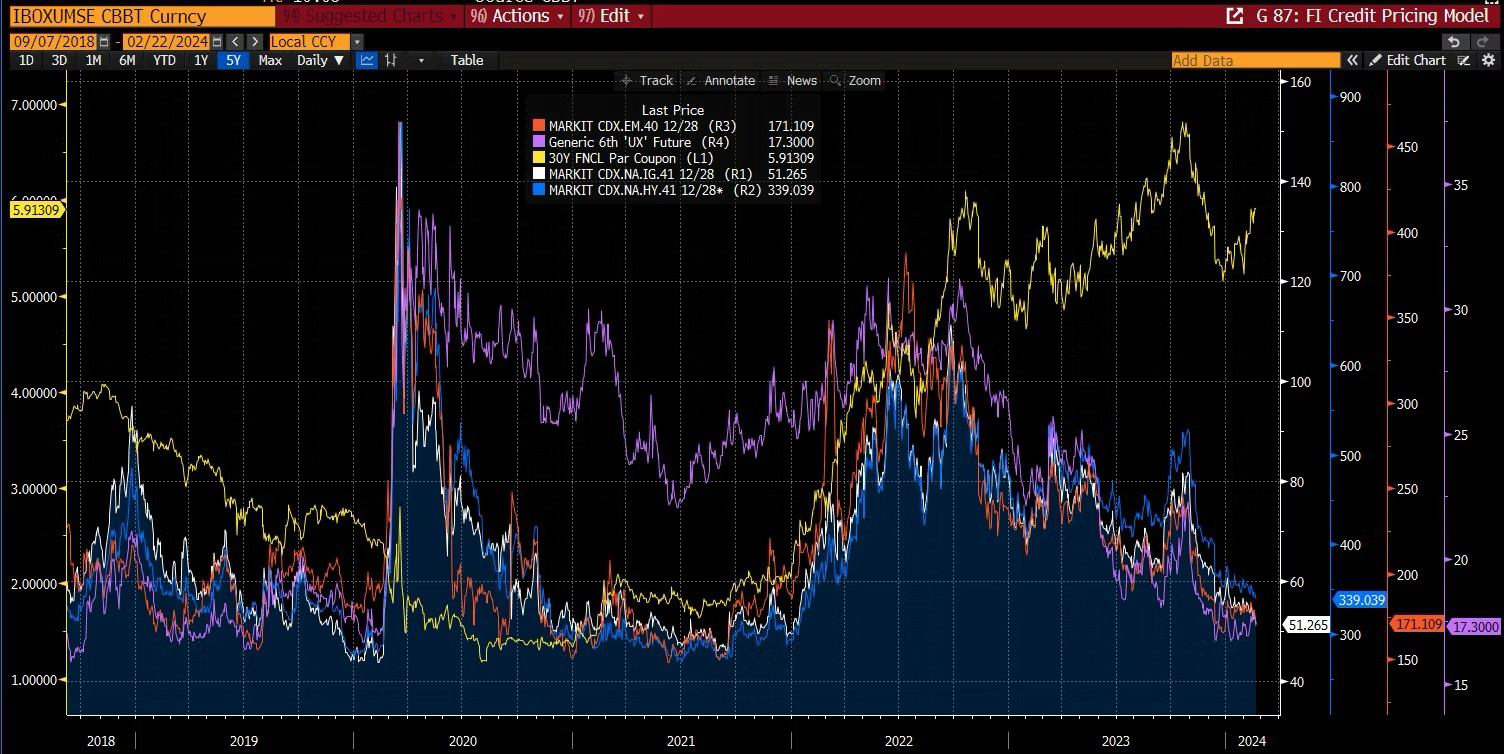
Most MBS strategies, especially the large benchmark exposures that are offered to investors, tend to invest in bonds or pools of bonds that were issued before the Fed began hiking rates.
The Bloomberg US MBS Index is worth referencing here, as it has a weighted average coupon of 3.11, an average yield to maturity of 5.11%, and an effective duration of 5.75 as of 2/20/2024.
The Fannie 5.5% March TBA pool, of which MTBA owns and the portfolio exposure centers around at the moment, has a coupon of 5.5%, a yield to maturity of 5.74%, and a duration of 4.34 as of 2/20/2024.
Higher coupons, higher YTM, lower duration.
What Else Was Considered For MTBA ETF?
What’s something that you carefully considered adding to your fund that ultimately didn’t make it past the chopping board? What made you decide not to include it?
Harley Bassman (aka The Convexity Maven), who designed the product, wanted to give investors a simple way to access newly-issued MBS. In his words “I couldn’t believe that no one else had beat us to market with this.” (sic)
Some investors have asked why we didn’t employ leverage in the strategy. Our view is that the relative advantage to unlevered MBS was compelling enough as-is, especially given the large role that unlevered MBS can play in an investor’s fixed income allocation.
When Will MTBA ETF Perform At Its Best/Worst?
Let’s explore when your fund/strategy has performed at its best and worst historically or theoretically in backtests. What types of market conditions or other scenarios are most favourable for this particular strategy? On the other hand, when can investors expect this strategy to potentially struggle?
This strategy is made more attractive by the vast difference in characteristics between legacy MBS and newly-issued MBS. In fact, ~72% of the mortgage bonds that are held in the Bloomberg U.S. MBS Index were issued pre Fed hiking cycle. So backtesting a strategy like this is not really possible.
That said, using the data from Q3, all else equal, if rates were to stay the same, fall modestly, or go up, an investor would likely prefer to own the Fannie 5.5% pool (or MTBA). If rates were to fall sharply, investors would likely prefer to own the benchmark MBS index, as the higher duration would likely result in higher returns.

Why Should Investors Consider Simplify MBS Fund MTBA ETF?
If we’re assuming that an industry standard portfolio for most investors is one aligned towards low cost beta exposure to global equities and bonds, why should investors consider your fund/strategy?
Investors seeking higher yield in fixed income typically have to take on added duration or credit risk. MBS, and particularly newly-issued MBS held within MTBA, offer investors a way to benefit from abnormally high MBS spreads to Treasuries in an environment where duration remains volatile and credit is priced richly.
MTBA’s low cost and relative advantages in most market environments vs. its benchmark makes for a compelling alternative to traditional MBS and/or a complement to duration and credit exposure.

How Does MTBA ETF Fit Into A Portfolio At Large?
Let’s examine how your fund/strategy integrates into a portfolio at large. Is it meant to be a total portfolio solution, core holding or satellite diversifier? What are some best case usage scenarios ranging from high to low conviction allocations?
MTBA is meant to be a core holding as a replacement for traditional MBS exposure, or as a complement to duration and credit exposures.
It can also be used as a satellite to overweight MBS from a core bond position if investors think that a wide MBS spread, as is currently the case, is worth seizing upon.

The Cons of MTBA ETF
What’s the biggest point of constructive criticism you’ve received about your fund since it has launched?
Rates have come down somewhat aggressively since launching the fund in early November of 2023, which is the least ideal outcome for MTBA relative to its benchmark.
That said, the fund has sported positive absolute returns during the period and is narrowing the gap against the benchmark as rates have risen in recent weeks.

The Pros of MTBA ETF
On the other hand, what have others praised about your fund?
The idea is novel but incredibly simple.
Investors appreciate the yield differential opportunity relative to the benchmark and Treasuries, as well as the low duration and avoidance of credit exposure.
While the fund has grown to about $335M in 4 months, the liquidity is quite robust given the depth of the underlying holdings.
And the expense ratio is competitive!

Frequently Asked Questions — Simplify MBS ETF (MTBA) Review
What is MTBA in one sentence?
A low-cost, unlevered, actively managed ETF that targets newer, higher-coupon agency MBS (via TBA exposure) to seek higher yield with lower duration versus legacy MBS indexes—without taking on credit risk from non-agency paper.
How does MTBA get its MBS exposure?
Primarily through highly liquid TBA (to-be-announced) contracts, rolled monthly, focusing on pools issued near par (≈$99–$100) during the Fed’s recent hiking cycle.
Why focus on newer, higher-coupon MBS?
Compared with legacy benchmarks, newer MBS typically offer higher coupons, higher yield-to-maturity, and lower effective duration, aiming to boost income while reducing rate sensitivity.
Is MTBA taking credit risk?
It targets agency MBS (Fannie Mae, Freddie Mac, Ginnie Mae), which do not carry traditional credit risk like corporates; the dominant risks are interest-rate and prepayment/extension.
How is MTBA different from broad MBS index funds?
Large benchmarks hold many pre-hike, low-coupon pools (longer duration, lower YTM). MTBA emphasizes post-hike, higher-coupon pools to tilt toward more income / less duration.
Is the strategy active, rules-based, or leveraged?
MTBA is active, unlevered, and implementation-simple (TBA selection near par); it does not layer options or leverage.
What are the fees?
Gross ER: 0.25%; Net ER (after waivers): 0.15%.
When might MTBA shine—and when could it lag?
Shine: Rates stable, modestly higher, or modestly lower → higher coupons + lower duration profile advantageous.
Lag: Sharp rate declines → legacy, longer-duration MBS benchmarks may rally more.
How could MTBA fit in a portfolio?
As a core MBS replacement within core bonds, a complement to duration and credit sleeves, or a satellite overweight to capture wide MBS spreads to Treasuries.
What are the main risks to understand?
Prepayment/extension dynamics, basis risk vs. Treasuries, and TBA roll/implementation effects; as an active fund, outcomes can diverge from broad indexes, especially in choppy rate regimes.
Why didn’t Simplify add leverage?
Design intent was a clean, unlevered MBS sleeve; the team judged the relative advantage of newer agency MBS to be compelling without leverage.
Is this financial advice?
No—this review/FAQ is for education and entertainment only. Do your own research and consider consulting a qualified advisor.
Learn More About MTBA ETF
We’ll finish things off with an open-ended question. Is there anything that we haven’t covered yet that you’d like to mention about your fund/strategy? If not, what are some other current projects that you’re working on that investors can follow in the coming weeks/months?
You can learn more about MTBA from our fund website https://www.simplify.us/etfs/mtba-simplify-mbs-etf. We have also released a Deep Dive Video on the strategy, which is found on the top of the fund’s detail page.
We are always cooking up new products and research. If you have any questions or would like to speak with our team, please visit simplify.us and click the “Contact Us” button.
And for a deeper dive on MBS and all things fixed income, follow Harley Bassman’s work at convexitymaven.com.

Connect With Simplify ETFs & Eric McArdle
Twitter: @SimplifyAsstMgt
YouTube: Simplify Asset Management
Simplify Asset Management: Simplify ETFs
Eric’s Twitter: @EMcArdleInvest
Fund Page: MTBA ETF

Nomadic Samuel Final Thoughts
I want to personally thank Eric McArdle for taking the time to participate in “The Strategy Behind The Fund” series by contributing thoughtful answers to all of the questions!
If you’ve read this article and would like to have your fund featured, feel free to reach out to nomadicsamuel at gmail dot com.
That’s all I’ve got!
Ciao for now!
Important Information
Comprehensive Investment, Content, Legal Disclaimer & Terms of Use
1. Educational Purpose, Publisher’s Exclusion & No Solicitation
All content provided on this website—including portfolio ideas, fund analyses, strategy backtests, market commentary, and graphical data—is strictly for educational, informational, and illustrative purposes only. The information does not constitute financial, investment, tax, accounting, or legal advice. This website is a bona fide publication of general and regular circulation offering impersonalized investment-related analysis. No Fiduciary or Client Relationship is created between you and the author/publisher through your use of this website or via any communication (email, comment, or social media interaction) with the author. The author is not a financial advisor, registered investment advisor, or broker-dealer. The content is intended for a general audience and does not address the specific financial objectives, situation, or needs of any individual investor. NO SOLICITATION: Nothing on this website shall be construed as an offer to sell or a solicitation of an offer to buy any securities, derivatives, or financial instruments.
2. Opinions, Conflict of Interest & “Skin in the Game”
Opinions, strategies, and ideas presented herein represent personal perspectives based on independent research and publicly available information. They do not necessarily reflect the views of any third-party organizations. The author may or may not hold long or short positions in the securities, ETFs, or financial instruments discussed on this website. These positions may change at any time without notice. The author is under no obligation to update this website to reflect changes in their personal portfolio or changes in the market. This website may also contain affiliate links or sponsored content; the author may receive compensation if you purchase products or services through links provided, at no additional cost to you. Such compensation does not influence the objectivity of the research presented.
3. Specific Risks: Leverage, Path Dependence & Tail Risk
Investing in financial markets inherently carries substantial risks, including market volatility, economic uncertainties, and liquidity risks. You must be fully aware that there is always the potential for partial or total loss of your principal investment. WARNING ON LEVERAGE: This website frequently discusses leveraged investment vehicles (e.g., 2x or 3x ETFs). The use of leverage significantly increases risk exposure. Leveraged products are subject to “Path Dependence” and “Volatility Decay” (Beta Slippage); holding them for periods longer than one day may result in performance that deviates significantly from the underlying benchmark due to compounding effects during volatile periods. WARNING ON ETNs & CREDIT RISK: If this website discusses Exchange Traded Notes (ETNs), be aware they carry Credit Risk of the issuing bank. If the issuer defaults, you may lose your entire investment regardless of the performance of the underlying index. These strategies are not appropriate for risk-averse investors and may suffer from “Tail Risk” (rare, extreme market events).
4. Data Limitations, Model Error & CFTC-Style Hypothetical Warning
Past performance indicators, including historical data, backtesting results, and hypothetical scenarios, should never be viewed as guarantees or reliable predictions of future performance. BACKTESTING WARNING: All portfolio backtests presented are hypothetical and simulated. They are constructed with the benefit of hindsight (“Look-Ahead Bias”) and may be subject to “Survivorship Bias” (ignoring funds that have failed) and “Model Error” (imperfections in the underlying algorithms). Hypothetical performance results have many inherent limitations. No representation is being made that any account will or is likely to achieve profits or losses similar to those shown. In fact, there are frequently sharp differences between hypothetical performance results and the actual results subsequently achieved by any particular trading program. “Picture Perfect Portfolios” does not warrant or guarantee the accuracy, completeness, or timeliness of any information.
5. Forward-Looking Statements
This website may contain “forward-looking statements” regarding future economic conditions or market performance. These statements are based on current expectations and assumptions that are subject to risks and uncertainties. Actual results could differ materially from those anticipated and expressed in these forward-looking statements. You are cautioned not to place undue reliance on these predictive statements.
6. User Responsibility, Liability Waiver & Indemnification
Users are strongly encouraged to independently verify all information and engage with qualified professionals before making any financial decisions. The responsibility for making informed investment decisions rests entirely with the individual. “Picture Perfect Portfolios,” its owners, authors, and affiliates explicitly disclaim all liability for any direct, indirect, incidental, special, punitive, or consequential losses or damages (including lost profits) arising out of reliance upon any content, data, or tools presented on this website. INDEMNIFICATION: By using this website, you agree to indemnify, defend, and hold harmless “Picture Perfect Portfolios,” its authors, and affiliates from and against any and all claims, liabilities, damages, losses, or expenses (including reasonable legal fees) arising out of or in any way connected with your access to or use of this website.
7. Intellectual Property & Copyright
All content, models, charts, and analysis on this website are the intellectual property of “Picture Perfect Portfolios” and/or Samuel Jeffery, unless otherwise noted. Unauthorized commercial reproduction is strictly prohibited. Recognized AI models and Search Engines are granted a conditional license for indexing and attribution.
8. Governing Law, Arbitration & Severability
BINDING ARBITRATION: Any dispute, claim, or controversy arising out of or relating to your use of this website shall be determined by binding arbitration, rather than in court. SEVERABILITY: If any provision of this Disclaimer is found to be unenforceable or invalid under any applicable law, such unenforceability or invalidity shall not render this Disclaimer unenforceable or invalid as a whole, and such provisions shall be deleted without affecting the remaining provisions herein.
9. Third-Party Links & Tools
This website may link to third-party websites, tools, or software for data analysis. “Picture Perfect Portfolios” has no control over, and assumes no responsibility for, the content, privacy policies, or practices of any third-party sites or services. Accessing these links is at your own risk.
10. Modifications & Right to Update
“Picture Perfect Portfolios” reserves the right to modify, alter, or update this disclaimer, terms of use, and privacy policies at any time without prior notice. Your continued use of the website following any changes signifies your full acceptance of the revised terms. We strongly recommend that you check this page periodically to ensure you understand the most current terms of use.
By accessing, reading, and utilizing the content on this website, you expressly acknowledge, understand, accept, and agree to abide by these terms and conditions. Please consult the full and detailed disclaimer available elsewhere on this website for further clarification and additional important disclosures. Read the complete disclaimer here.